Hi-Fi Speakers
Nine Standout Bookshelf Speakers Worth Considering
A practical roundup of nine speakers that stood out over a year of listening, covering the strengths, trade-offs, and placement notes that matter before you buy.
Introduction
Choosing a speaker is less about finding the single best model and more about finding the one that fits your room, your amplifier, and the way you listen. Over the past year of testing, nine speakers stood out enough to be worth writing about, and they cover a wide spread of prices, from a pair that costs less than a good set of headphones to a premium standmount with serious dynamic capability.
This list is a personal selection rather than a ranked chart. Each speaker is here for a different reason: some earn their place on value, some on neutrality, and some on how well they hold up when the volume climbs. Every one of them has a trade-off worth knowing about before you buy, and most of them will sound their best with a subwoofer in the system.
How These Speakers Were Chosen
Four things carried the most weight. The first is neutrality, both on axis and as an estimated in-room response, because a speaker that behaves smoothly tends to sound natural across a wide range of recordings. The second is directivity, or how evenly the speaker radiates sound off to the sides, since that determines how much the room contributes to what you hear and how well the speaker responds to equalization.
The third is compression and dynamic range at higher playback levels, which is where small cabinets often give themselves away. The fourth is bass extension, and this is the criterion that pushes several of these speakers into a two-piece system: most of them run out of output somewhere between 50 and 80 Hz, so a subwoofer is the natural companion rather than an optional extra.
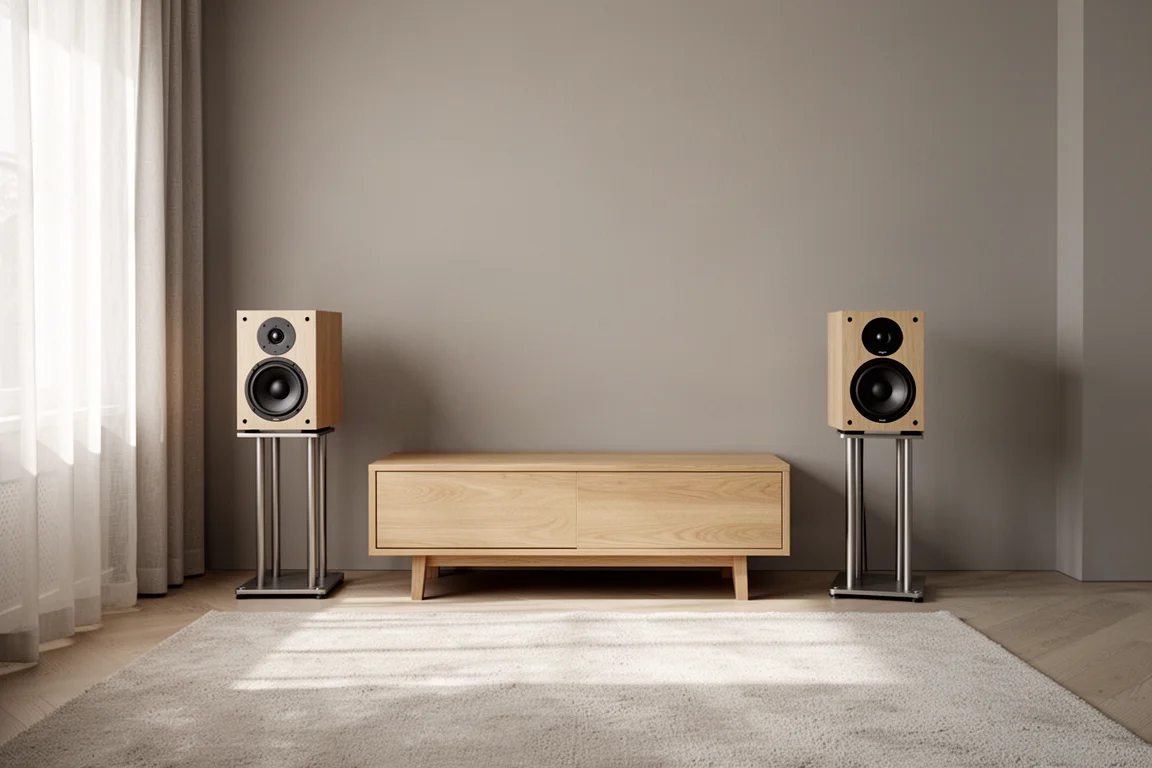
Placement and aiming came up repeatedly as well. Several of the speakers here sound their best aimed slightly off axis rather than directly at the listening seat, and one of them benefits noticeably from being placed close to a wall.
Neumi Silk 4: Compact and Inexpensive
At roughly $150 per pair, the Neumi Silk 4 is the least expensive speaker on this list and the one with the most obvious limits. It is a small cabinet, and in-room bass reaches only about 80 Hz, so it needs a subwoofer to cover the bottom end of most music and film soundtracks.
It is not the most capable speaker here, and it is not trying to be. What it offers is genuine value at a very low price, particularly for anyone who needs a small bookshelf speaker for a secondary system or a compact surround channel in a home theater setup.
Monoprice THX Certified Satellite Speakers: Small but Capable
These satellites are tiny, built around a 4-inch coaxial driver, with an F3 around 80 Hz that makes a subwoofer mandatory. What makes them interesting is how well they behave for the size and the price. Directivity is excellent, and they are at their best aimed about 30 degrees off axis, so a little toe-out from the listening position pays off.
Neutrality is strong for the money. There is a small dip around 1.6 kHz, but it is mild enough to ignore, and a gentle dip is generally easier to live with than a peak you cannot correct.
The satellites retail for around $250, and they are also sold as part of a 5.1 kit with a subwoofer. That kit has appeared at both roughly $300 and roughly $400, and at the lower figure it is one of the better bargains in home theater audio.
Swissonic A306: Active Monitors with Strong Directivity
The A306 is an active powered monitor rather than a passive bookshelf speaker, sold direct from a German manufacturer and shipped from Germany. In the United States it sells for roughly the equivalent of $350 to $370, which makes it an unusual value in the powered monitor category.
On-axis neutrality is excellent, directivity is just as good, and that combination means the speaker responds well to equalization. The radiation width is slightly wider than the waveguide design would suggest, which helps the speaker integrate into a normal room rather than demanding a heavily treated space.
For buyers in the European Union, this is one of the easier recommendations on the list.
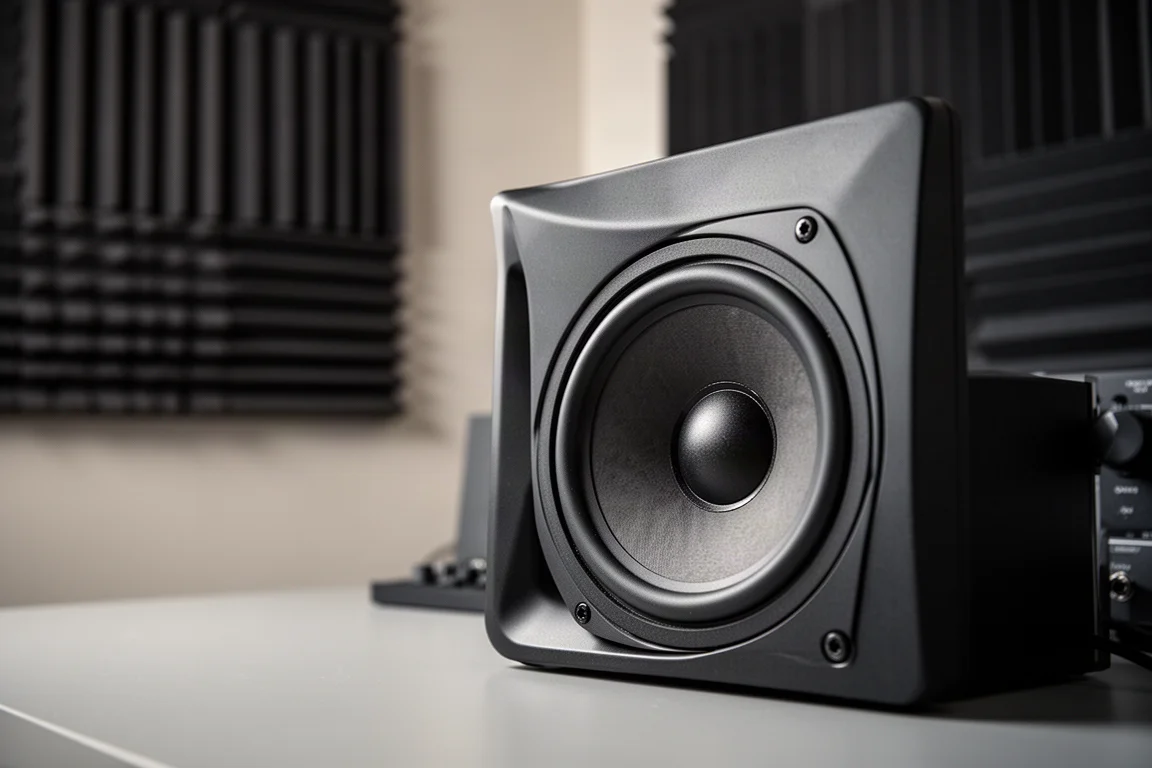
The main thing to plan for is the system around it. As an active design it brings its own amplification, so it pairs with a preamp or a source that has a volume control rather than a separate power amplifier. Like most of the compact speakers here, it will also benefit from a subwoofer if you want full-range output.
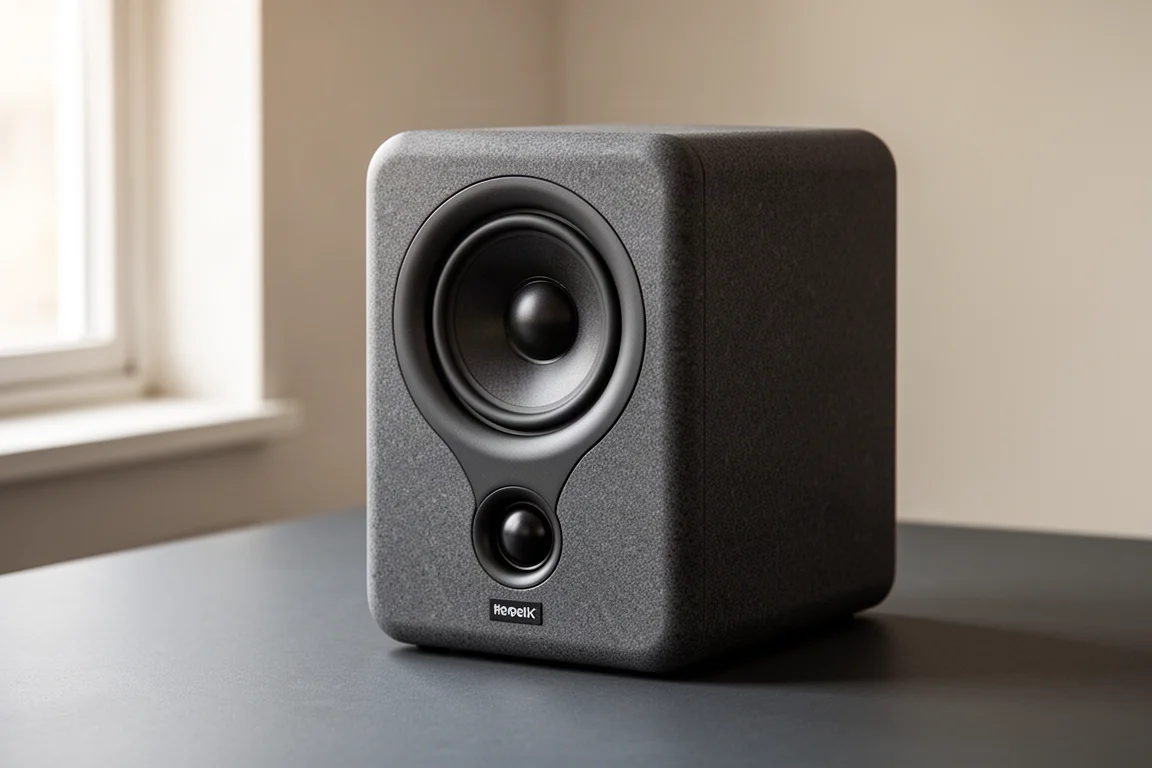
ELAC Debut Reference DBR62: Neutral with a Touch of Top-End Lift
The DBR62 has a typical retail price of $750 per pair, though it is regularly discounted to around $550, which changes the value calculation considerably. It is a baffle-ported design with a 6.5-inch midwoofer and a 1-inch dome tweeter in a fairly large cabinet.
Neutrality is good overall, with a slight lift in the top end. That lift is easiest to manage by aiming: the speaker works best toed out about 30 degrees, and pointing it directly at the listener tends to emphasize the treble further. A room with plenty of soft furnishings also helps by absorbing some of the sidewall reflections.
The weak point is compression, which sets in around 80 Hz. At moderate levels it is not an issue, but anyone who listens loudly will want a subwoofer to take the low bass away from the main drivers.
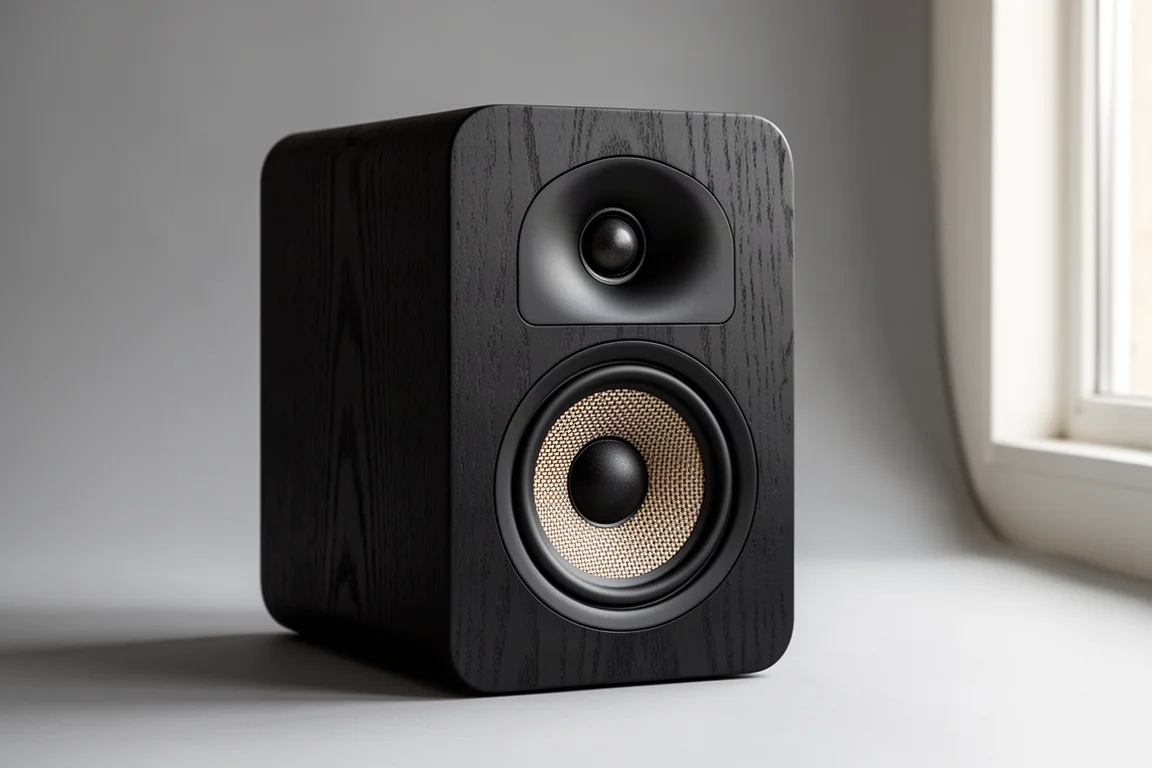
Ascend Acoustics Sierra 1 V2: Tuned for the Room, Not the Chart
The Sierra 1 V2 sells for about $999 per pair, and it is an interesting case study in priorities. Rather than chasing a perfectly flat on-axis response, the design targets a smooth estimated in-room response and gives up a little on-axis linearity to get there. That trade-off looks like the right call: in a reflective room, the in-room estimate lines up very closely with what you actually hear, and in some cases it describes the sound better than the direct on-axis measurement does.
Horizontal radiation is about 60 degrees either side of the axis, which sits in a comfortable middle ground. Wider than that tends to smear the image in a live room, while much narrower starts to feel constrained.
Compression and distortion are the limiting factors for high-output use, so a subwoofer is the sensible partner unless you listen at moderate levels and sit fairly close to the speakers.
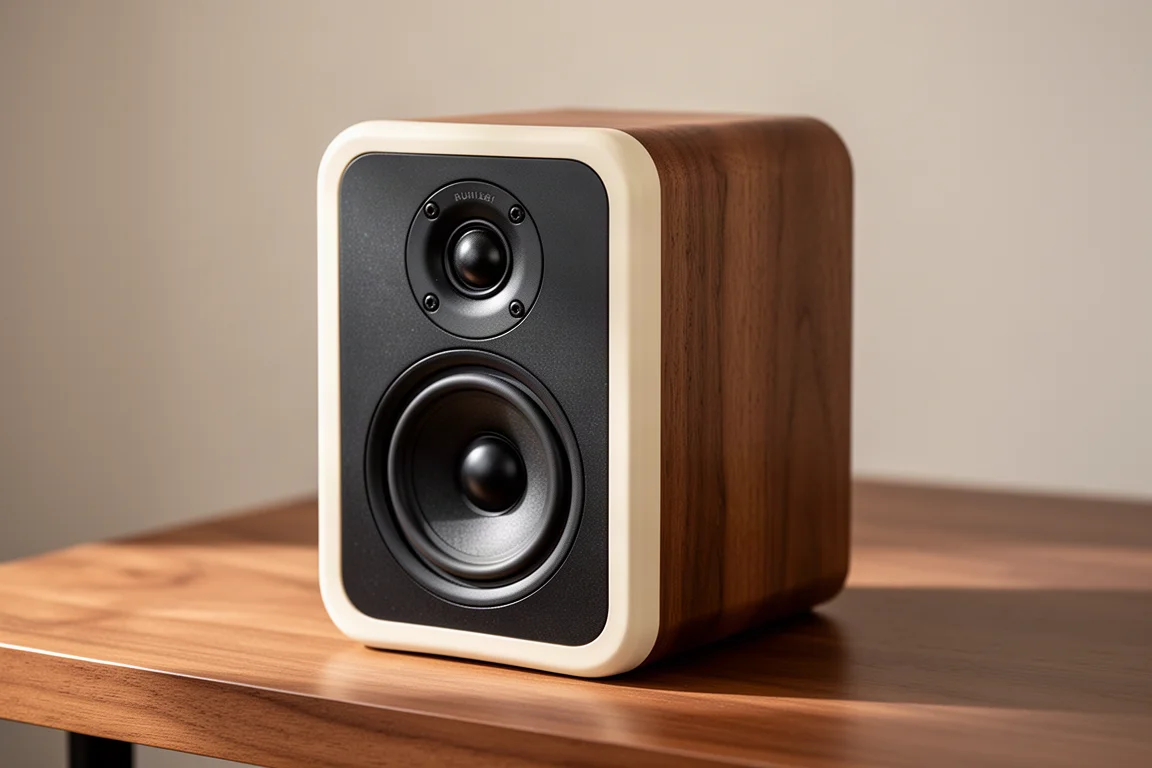
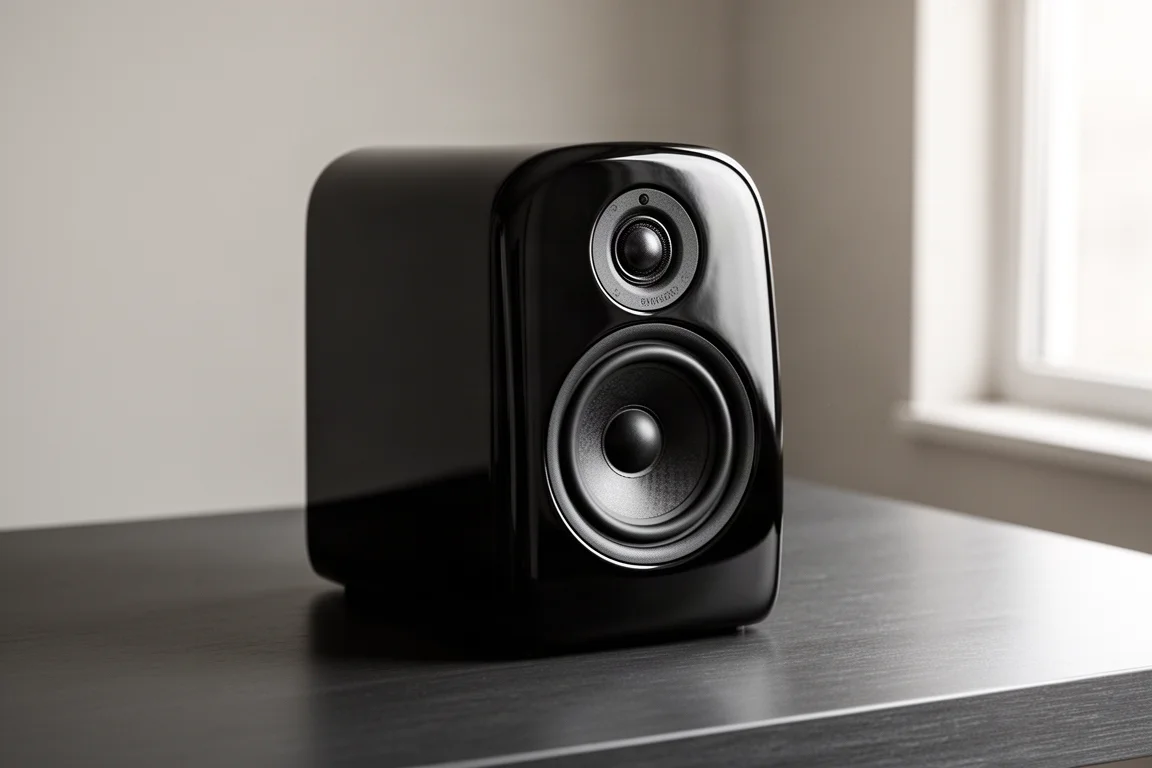
KEF LS50 Meta: Compact, Neutral, and Slightly Recessed
The LS50 Meta normally sells for around $1,600 per pair and has been available on sale for about $999, which makes it considerably more attractive than the list price suggests. It is a two-way coincident design, with the tweeter mounted at the center of the midwoofer, in a compact cabinet whose baffle shape is a big part of the appeal.
Neutrality is close to spot on apart from a dip between roughly 2 and 4 kHz. That dip takes some attack and detail out of the presentation and slightly reduces the sense of dynamic drive, and it appears to be a deliberate design choice rather than an accident. If you have equalization available, a modest boost in that region brings back the missing bite.
Output is limited, which is expected from a 5.25-inch midwoofer, so a subwoofer is advisable for louder listening. Aiming it slightly off axis, as with several speakers here, gets the best from it.
The compact size and distinctive look make it an easy speaker to live with in a normal room, and that practical side is a big part of why it remains a compelling option at the sale price.
KEF R3 Meta: A Three-Way with Impressive Linearity
At $2,200 per pair, the R3 Meta is a newer design and a clear step up in capability. Linearity and in-room neutrality at the listening position are excellent, and the overall balance is smooth and easy to listen to for long sessions.
Bass is the interesting part. Pulled well away from the wall, extension is modest. Pushed closer to the wall, the combination of a ported and sealed alignment produces an extended bass shelf: the speaker rolls off like a sealed cabinet and then adds a lift around 50 Hz for extra output without turning boomy. Placement is therefore a real tool here rather than a compromise. Below 50 Hz there is very little output, so a subwoofer is still the right call.
Radiation is narrower than average at about 50 degrees either side, in keeping with the brand’s approach. Compression is better controlled than on the LS50 Meta, which makes sense for a three-way design. Aiming anywhere from 10 to 20 degrees off axis is the sweet spot.
MoFi SourcePoint 8: The Most Complete All-Rounder
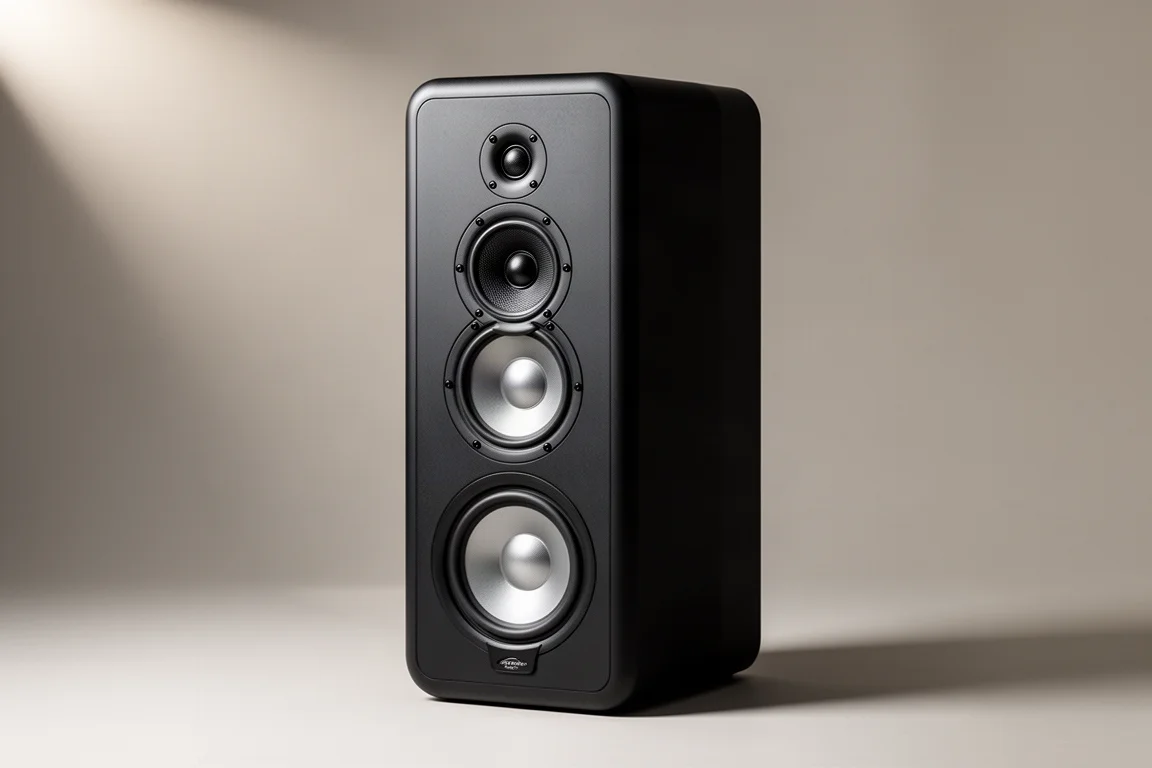
At around $2,750 per pair, the SourcePoint 8 is the most complete speaker on this list. It finishes in satin or wood grain rather than high gloss, and its angled front baffle gives it a distinctive look that is a deliberate design decision rather than decoration.
Linearity is very good, though not perfectly smooth, with some diffraction-related dips and peaks. The estimated in-room response is strong as well, and the speaker is unusually flexible about aiming: you can point it directly at the listening position or toe it out as much as 30 degrees and it still sounds convincing. It also takes well to equalization.
The one clear limitation is output below roughly 50 to the mid-50s Hz range, where there simply is not much energy. A subwoofer fills that in. Above 50 Hz, compression and dynamic range are both good, which is what makes the speaker so easy to recommend.
Dynaudio Special Forty: Dynamic and Distinctive
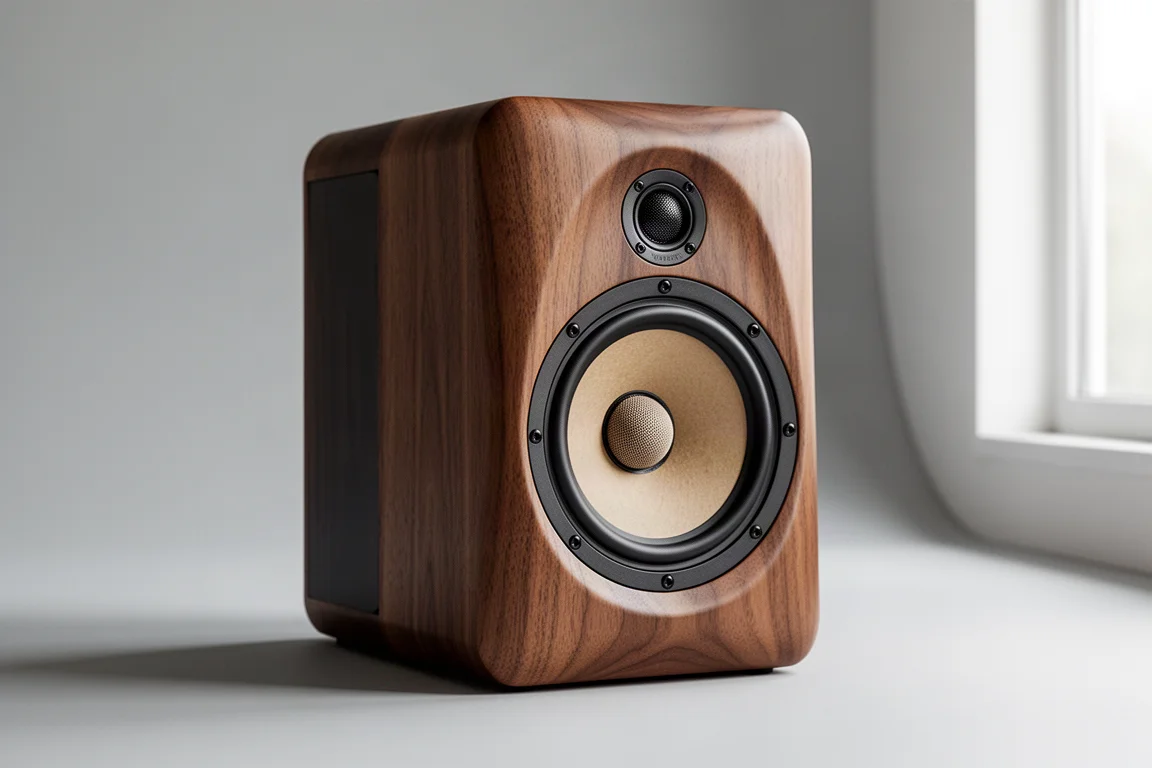
The Special Forty is not a neutral speaker in the way most of the others here are. Its response sits within about 3 dB, which is still respectable, but there is additional energy around 4 to 5 kHz and a dip between 1 and 2 kHz. Those choices give it a specific tonal character that sounds clearly different from a flat-response design, in the same way the LS50 Meta’s midrange dip shapes its presentation.
The elevated 4 to 5 kHz region is the part that would benefit most from being brought down, and it is the more noticeable of the two deviations. Set that aside and the strengths are considerable. Bass output, compression, and dynamic range are all excellent, and the speaker can be played very loudly without audible distortion. Even at around 102 dB at 10 feet for the pair, nothing in the upper midrange or treble became objectionable. Radiation is wide at about 60 degrees either side, which suits reflective rooms.
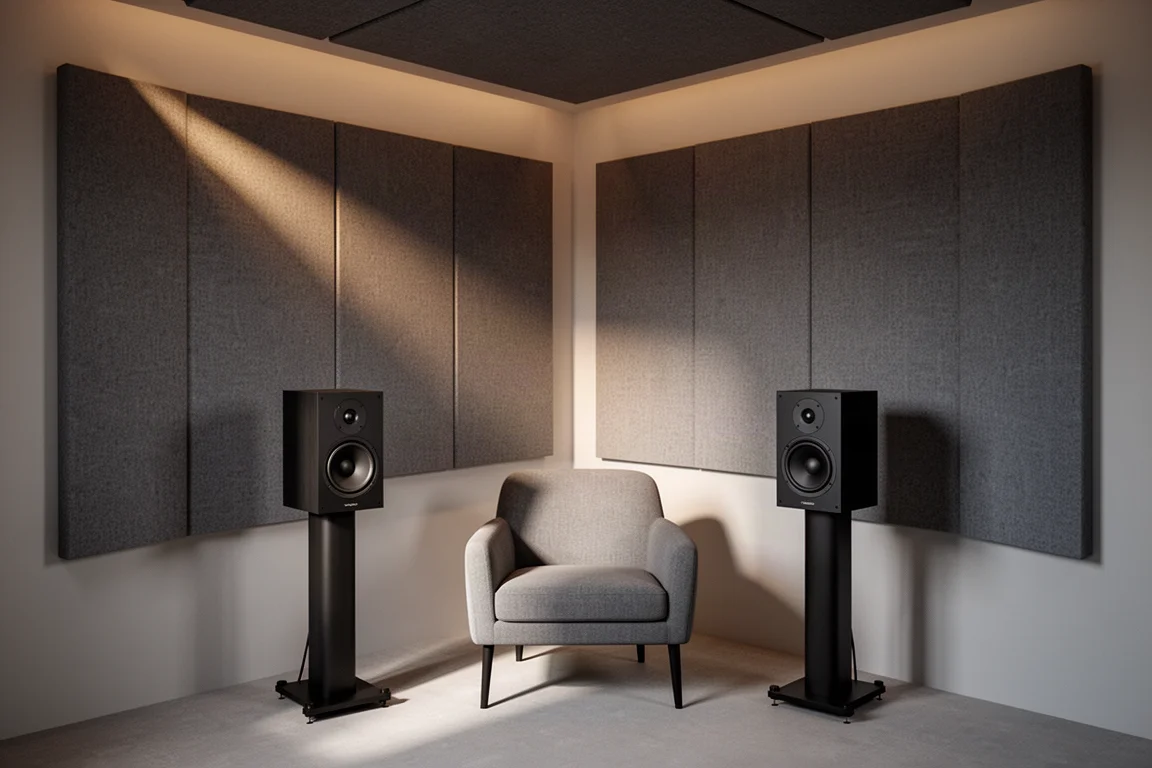
If your priority is a speaker that stays composed and dynamic when the volume climbs, and you are willing to accept a deliberately voiced tonal signature rather than a neutral one, this is the model that delivers on that brief.
Buying Advice: Matching the Speaker to the Room
The single most useful thing to plan for is bass. Most of the speakers here run out of useful output between roughly 50 and 80 Hz, and even the ones that reach lowest fall away below about 50 Hz. Budgeting for a subwoofer is not a sign that a speaker is weak; it is how these designs are meant to be used in a full-range system.
Aiming matters as much as placement. The Monoprice satellites, the ELAC DBR62, and both KEF models all sound better aimed slightly off axis, while the MoFi SourcePoint 8 is unusually tolerant and works either way. If you have equalization available, the LS50 Meta, the A306, and the SourcePoint 8 all respond well to it.
Room furnishings are worth a thought too. A reflective room with hard floors and bare walls will emphasize the top-end lift of the DBR62 and the 4 to 5 kHz region of the Special Forty, while a room with rugs, curtains, and soft seating will temper both. For the R3 Meta, closeness to a wall is an asset rather than a problem.
Finally, match the speaker to how loudly you listen. Compression and distortion are the limiting factors on the smaller models, and a subwoofer with a sensible crossover solves most of it.
Conclusion
Nine speakers, nine different sets of priorities. The Neumi Silk 4 is the value pick for a small system. The Monoprice satellites make a compelling case for a compact home theater setup, particularly when the 5.1 kit is discounted. The Swissonic A306 is a strong active option, especially in Europe. The ELAC DBR62 delivers a lot of speaker for the sale price if you can manage its top end. The Ascend Sierra 1 V2 is the thoughtful choice for reflective rooms, and the LS50 Meta remains hard to beat on looks and neutrality at its discounted price.
At the top of the range, the KEF R3 Meta, the MoFi SourcePoint 8, and the Dynaudio Special Forty each justify their cost in different ways: linearity, all-round balance, and dynamic headroom respectively. Whichever you choose, plan for the subwoofer and spend a little time on aiming. Those two decisions do more for the final result than any difference between the speakers themselves.
Further reading
Related Reviews
Hi-Fi Speakers
1723 THX Tower vs 1528 Bookshelf: Which Speaker Fits Your Room?
Two speakers at roughly the same price, built very differently. How the 1723 THX tower and the 1528 bookshelf compare on construction, bass, power needs, and sound.
Hi-Fi Speakers
Acoustic Energy AE 300 Review: Deep Bass From a Compact Standmount
A two-way standmount with real wood veneer, surprising low-end weight, and a warm, easygoing character. Here is what to know before buying.
Hi-Fi Speakers
Acoustic Energy AE1 40th Anniversary Review: A Modern Take on a British Classic
A compact standmount that revives a 1980s favorite with all-new parts, a warm mid-centric balance, and a price of £1,499 per pair.