Camping Tents
Nightcat Cot Tent First Look: A Cot and Shelter in One Package
An early hands-on look at the Nightcat Cot Tent, a one-person cot and tent system for car camping, with strong airflow, real trade-offs, and one stitch worth sealing.
Introduction
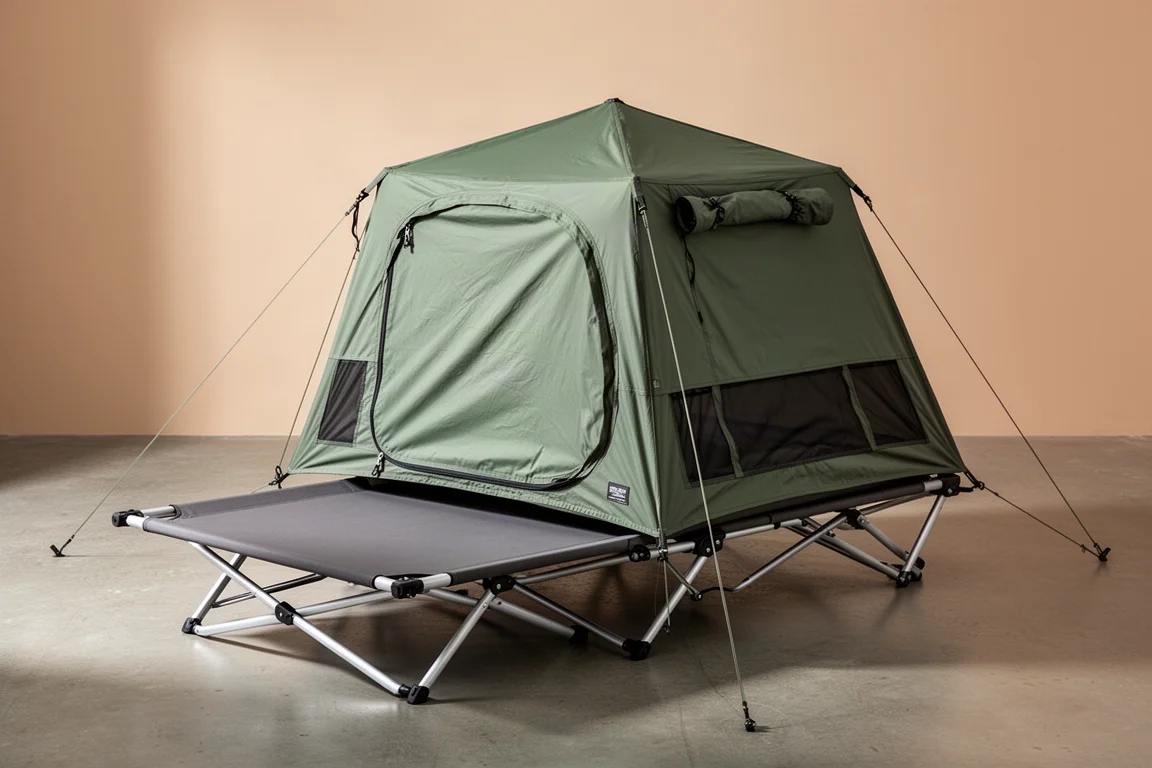
The Nightcat Cot Tent is a one-person sleep system that pairs a folding cot with a purpose-built tent mounted on top of it. Instead of sleeping on the ground, you sleep raised off it, inside a mesh-heavy shelter that straps directly to the cot frame. The complete system costs $200 at the time of writing, and the tent portion can be purchased on its own for $100 if you already have a cot to pair it with.
This is an early hands-on assessment rather than a final verdict. It is based on a wet, cool overnight trip with heavy rain that ran from the afternoon through the night and into the morning, plus thick fog. Setup is straightforward but lengthy, because the cot goes up first and the tent goes on second, so there are more steps than a conventional tent. Nothing in that sequence is confusing or fiddly, it simply takes time.
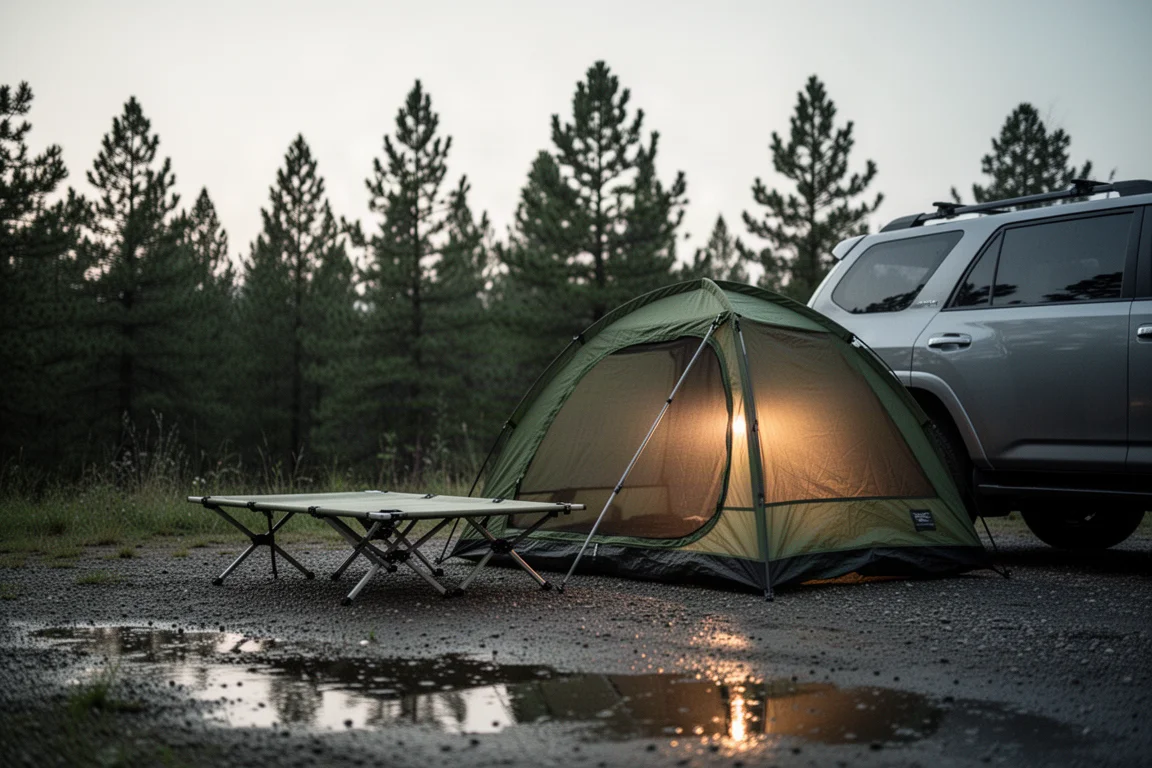
The appeal here is the raised sleeping position. Air moves underneath the cot as well as around it, which shapes almost everything about how this shelter performs.
Who This Tent Is For
This is a three-season, one-person shelter with a single door and two vents. It comes in two green shades, a regular green that already reads quite dark and a dark green option.
The clearest fit is car camping and truck camping. It is also a strong candidate for warm-weather trips, because the design keeps air moving on every side of the sleeper. Anyone who dislikes getting up off the ground, or who wants a seat-height edge to sit on while getting dressed, will immediately understand the point of the format.
It is not a backpacking product. The full kit weighs 12.5 lb, and the cot alone would consume a substantial amount of pack space. Even though the manufacturer describes the design as suitable for backpacking and hiking, the weight and packed volume do not support that use in practice.
Main Strengths: Airflow and Weather Protection
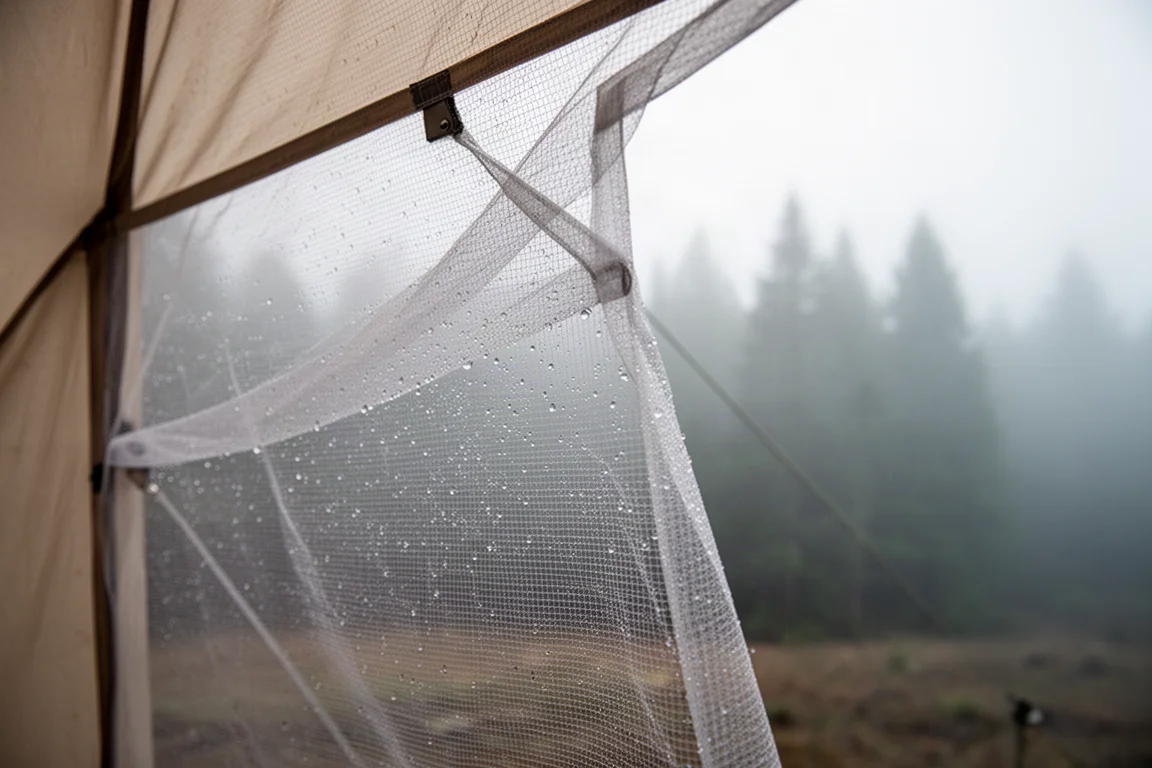
Airflow is the standout quality. The inner body uses generous mesh on the sides, plus large mesh sections at the door and at the back, so the shelter breathes far more than a typical single-wall tent. Because the cot lifts the sleeping platform off the ground and the fly sits clear of the mesh, air circulates underneath and through the body. Condensation stays minimal, and on hot summer nights this is a genuinely strong performer.
Weather protection held up better than expected. Through a full day and night of heavy rain and morning fog, the inner stayed dry. Water did not reach the sleeping area, and the shelter remained comfortable throughout.
There is one specific exception to that waterproofing, and it is covered below. Outside of it, the tent sheds rain as intended.
Space, Sizing, and Setup
The cot measures 86 in long and 27 3/4 in wide. Without its legs it stands 8 in high, and with the legs fitted it stands 16 in high, which is tall enough to use as a seat. The cot is rated to a 330 lb weight limit.
Inside, the tent offers roughly 78 in of length, 33 in of height at the peak, and 27 in of width. That is workable for most people up to 6 ft 6 in, with the honest caveat that this is a narrow shelter. There is enough room to sit up and pull on a jacket before climbing out, but taller users will need to lean forward to keep their head clear of the fabric. The cot has no storage pockets and just one hanging hook inside.
Assembly runs in two stages. The cot goes up first, then the tent attaches to it with a strap at each corner that cinches the body into place. From there the shelter is anchored to the ground using the fly at the door and the far side, and it can also be guyed out from the vents. The single door uses two-way zippers, and each door panel rolls up and stows out of the way. Rolling one panel up opens a usable patch of vestibule space.
Build Quality and Waterproofing
Overall build quality is good rather than exceptional. There are loose threads in several places across the fly, the body, and the cot. Nothing there is a deal breaker, but it is worth knowing before the first trip.
The materials are a PU-coated 190T polyester taffeta with a 2000 mm hydrostatic head rating, supported by aluminium poles and aluminium stakes. Marketing materials also mention a ripstop nylon element without specifying which part of the system uses it, so treat that detail as unconfirmed.
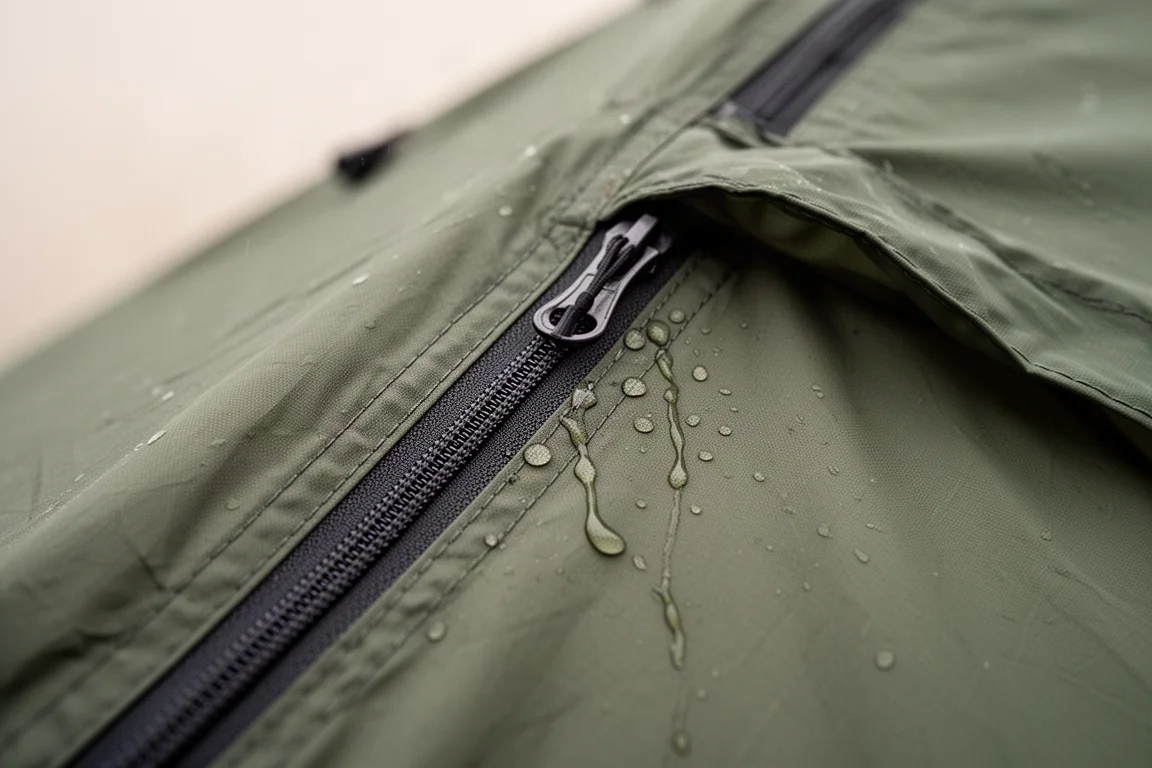
The one real flaw concerns the storm flap over the door zipper. The stitching inside that flap has not been seam sealed, so in sustained heavy rain water soaks through the stitching. In practice it does not reach the inner, because the water runs down the fly and onto the ground, which is why the shelter still kept its interior dry through a full night of rain. Sealing that single stitch line after purchase is a small job that closes the gap entirely.
Things to Consider Before Buying
Weight and volume are the first consideration. At 12.5 lb for the complete kit, and with a cot that takes up real space, this is a vehicle-based setup. It makes little sense for anyone walking any distance to camp.
Width is the second. The shelter is long enough and tall enough for most users, but it is not roomy across the shoulders. It is a compact one-person design, and that is the trade-off for the small footprint.
Third, the tent can be pitched on the ground if you want, but a large snow skirt runs all the way around the base. On the ground that skirt restricts airflow considerably, which works against the ventilation that makes this shelter so comfortable when it is raised on the cot.
Finally, plan for the setup time and for the seam sealing step. Both are manageable, and both are better handled before you are standing in the rain.
Buying Advice
If the raised sleeping position appeals to you, and your camping happens out of a car or truck, this system delivers on its core promise. The airflow and condensation control are the reasons to buy it, and they are not small advantages on warm, humid nights.
Buying decisions come down to two options. The full cot and tent package costs $200, while the tent alone costs $100 if you already own a suitable cot. Anyone starting from scratch should weigh the complete kit against their existing gear before choosing.
Whichever route you take, seam seal the storm flap stitching over the door as soon as the shelter arrives. It is the one weak point in an otherwise capable design, and addressing it turns the tent into a fully waterproof package rather than a nearly waterproof one.
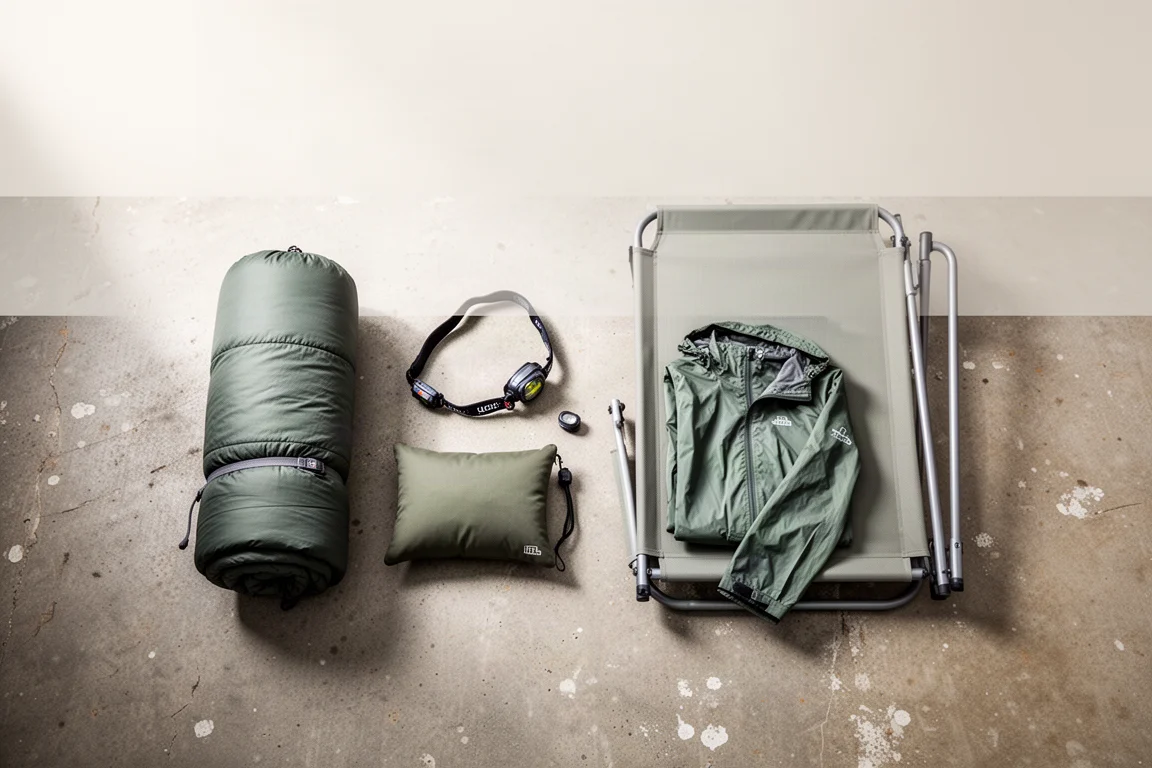
For hot-weather car campers who want to sleep off the ground, the fundamentals here are sound. For backpackers, the weight settles the question on its own.
Conclusion
The Nightcat Cot Tent gets the important parts right. Sleeping raised off the ground keeps air moving underneath you, the mesh-heavy body keeps condensation low, and the interior stayed dry through a full night of heavy rain. It is easy to assemble in concept, slower in practice, and best suited to car and truck camping.
The flaws are specific and correctable: some loose threads, a narrow interior, and one unsealed stitch line over the door zipper. None of them undermine the design. If you want a compact, well-ventilated one-person shelter for vehicle-based trips, this is a system worth a close look.
Product link
View more details for Nightcat Cot Tent
This product is mentioned in the review. Check the specifications, options, and compatibility before buying.
View more details for Nightcat Cot TentFurther reading
Related Reviews
Camping Tents
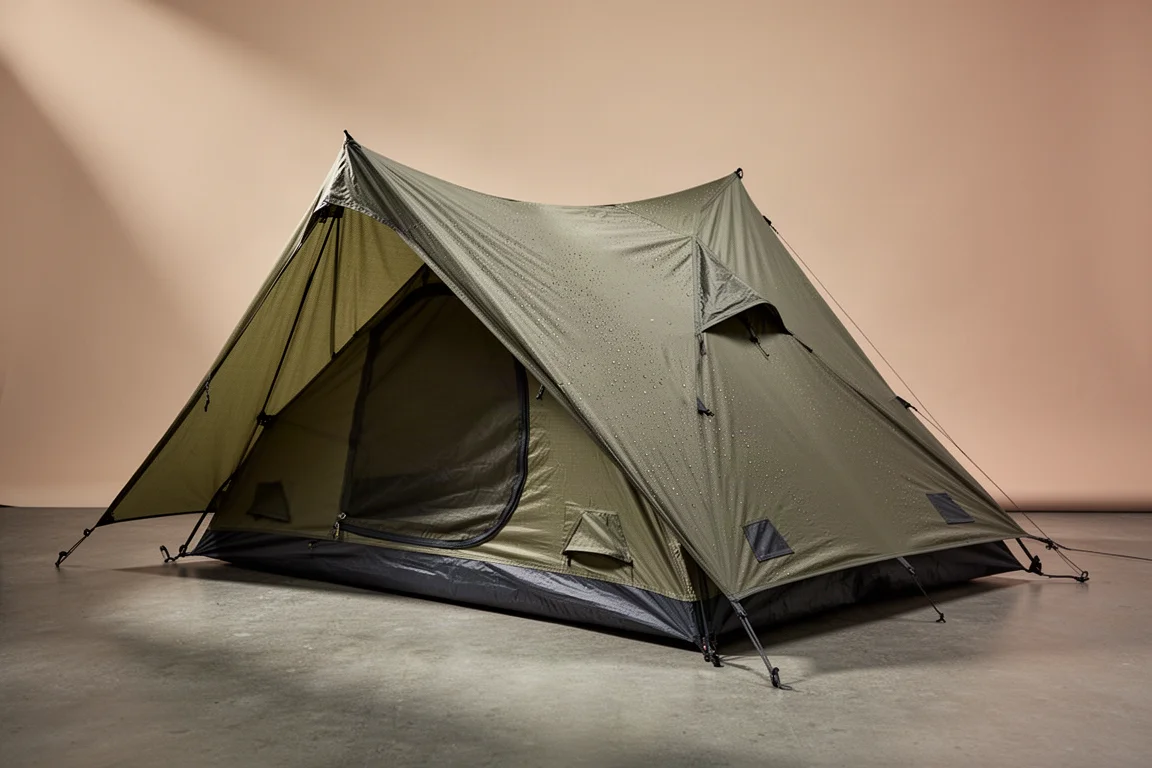
3F UL Gear Taiji Two-Person Tent Review: Field Waterproofing Results and Buying Advice
The Taiji pairs an attached fly with a removable inner, but sustained rain exposed untaped vent seams that need sealing before this shelter can be trusted.
Camping Tents
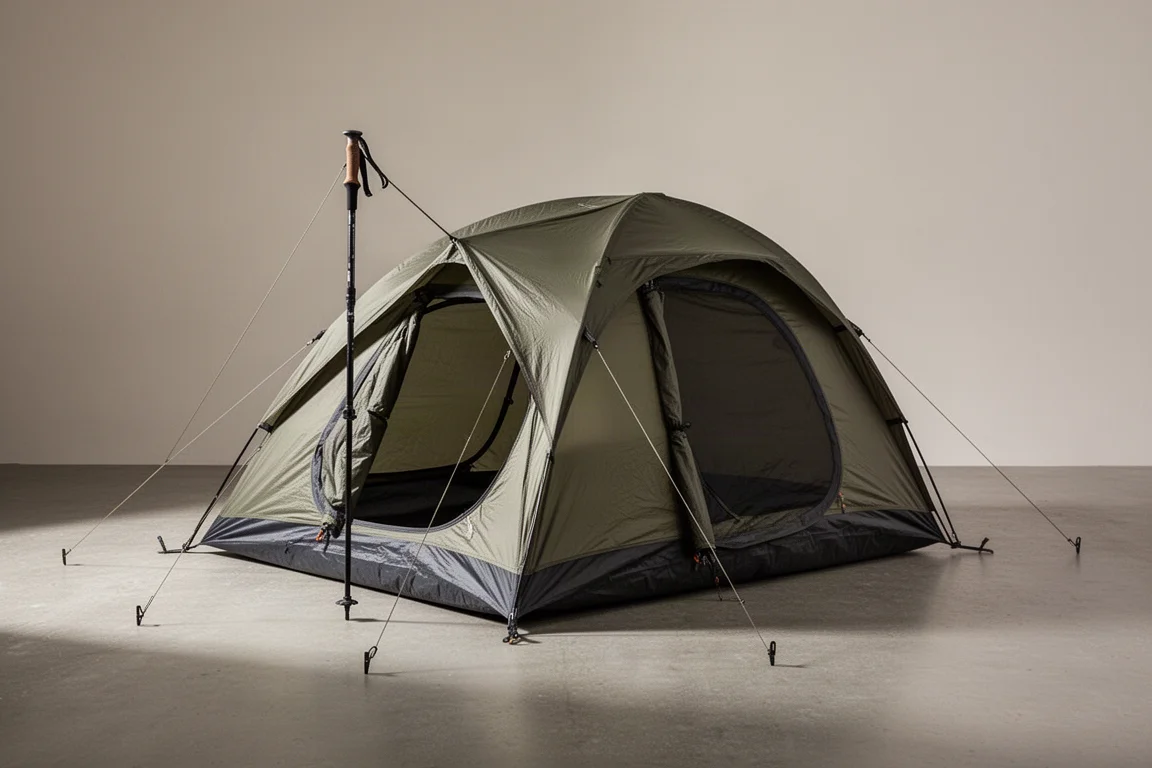
3FUL Gear Lanshan 2 Pro 4-Season Review: A Sub-$200 Single-Wall Trekking Pole Tent
An early look at the 3FUL Gear Lanshan 2 Pro 4-Season, covering its straightforward pitch, generous interior space, and the condensation and seam-sealing questions that come with any single-wall shelter.
Camping Tents
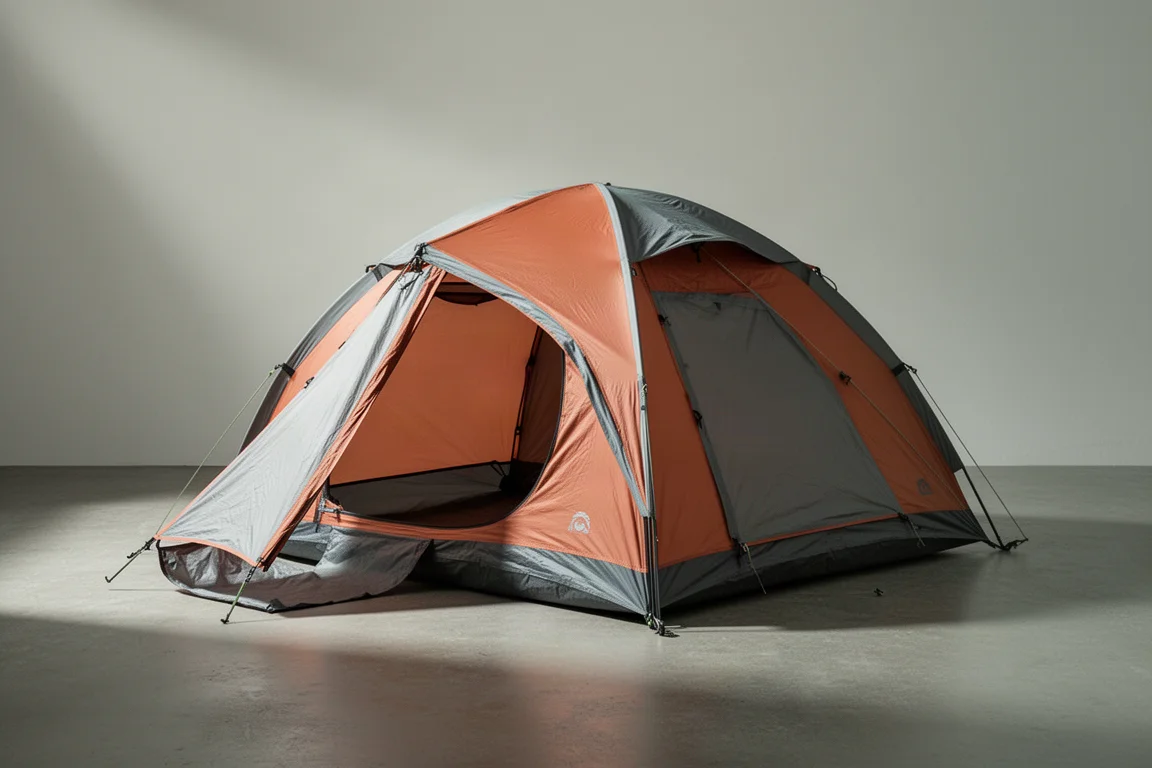
Alps Mountaineering Lynx 1-Person Tent Review: Big Value in a Small Budget Tent
A close look at the Alps Mountaineering Lynx 1-Person Tent, covering real interior dimensions, materials, setup time, ventilation limits, and who should buy it.