Japanese Kitchen Knives
New Japanese Knife Arrivals: Kasumi, Damascus, and Single Bevel Standouts
A fresh wave of Japanese knives lands, from kasumi-finish Tetsujin blades to copper-clad Yodokobi gyutos and a rare sakimaru sujihiki from Nigara Hamono.
Introduction
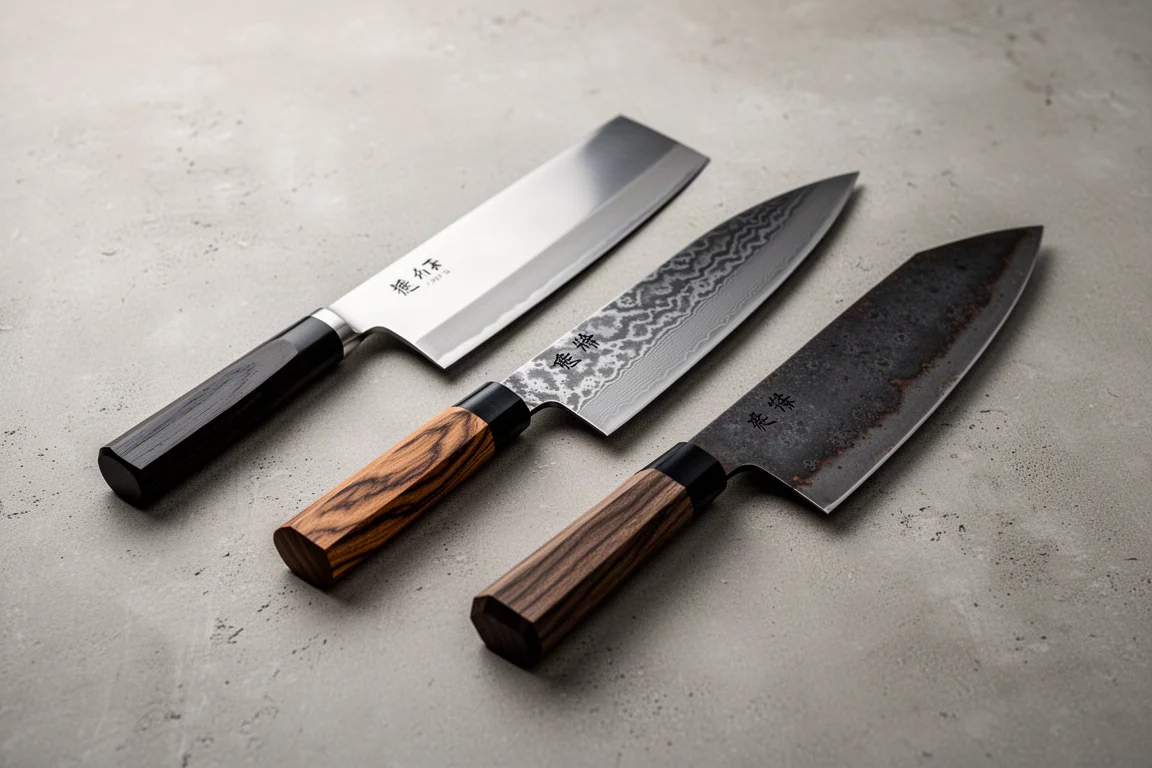
This month’s wave of new Japanese knife arrivals is one of the strongest we have seen in a while. It spans nearly every category a serious home cook or professional could ask for: kasumi-finish double bevels, single bevel yanagiba and deba work, stainless damascus sujihiki, a rare sakimaru profile, and a copper-clad gyuto that is genuinely striking in person.
Below is a walkthrough of the standout arrivals, what each is made of, and who each knife is really for.
Tetsujin Kasumi: Nakiri and Sujihiki with Ebony Handles
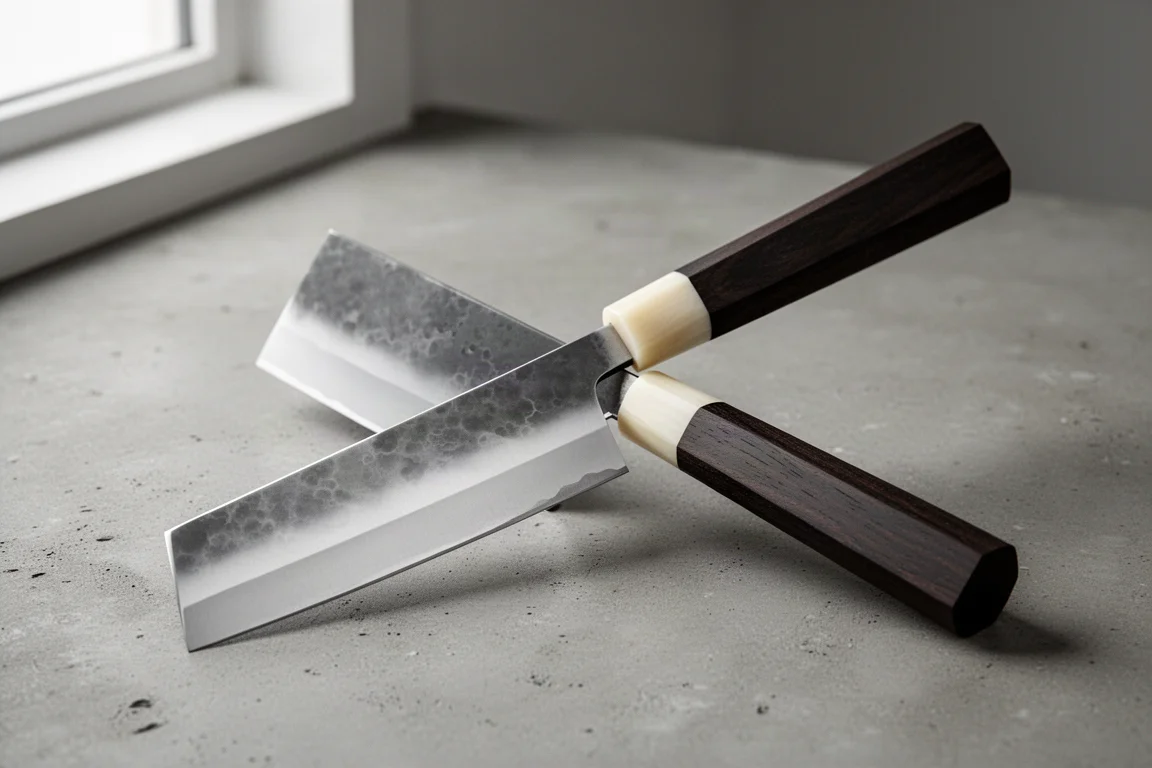
The Tetsujin Kasumi line arrives in a 180mm nakiri and a 270mm kiritzuke-style sujihiki, both built on Aogami #2 with iron cladding. The kasumi finish refers to the hazy transition from the soft iron cladding into the polished core steel, and it looks beautiful in person. Fit and finish sit very close to flawless, with nicely rounded and sanded spines and choils.
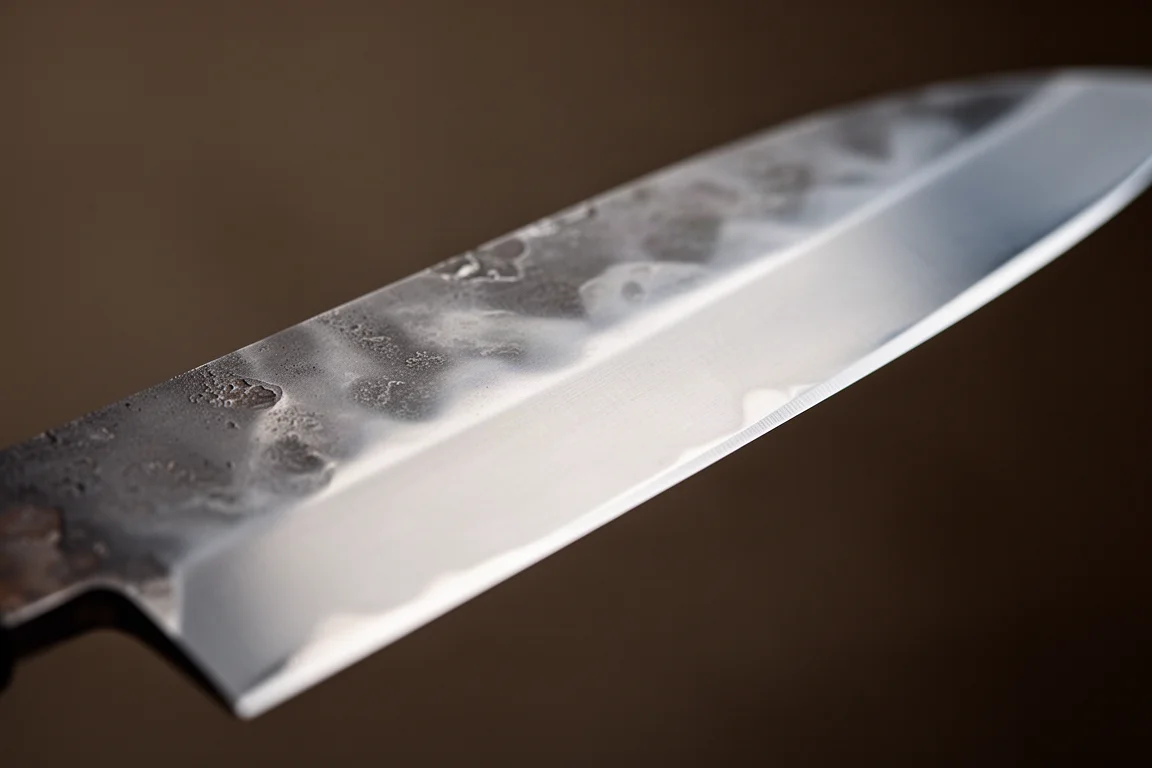
Both knives are double bevelled, so they suit right-handed and left-handed users alike. Handles are ebony with white buffalo horn ferrules, and there is an intentional small notch near the bolster, a detail carried over from samurai sword-making tradition where it helped lock the blade into a scabbard. They are not lightweight knives, but the balance point on the nakiri sits comfortably at the bolster, and the geometry is very thin behind the edge, which makes them easy to sharpen and a joy to use.
Shigeki Tanaka: Single Bevel Damascus Knives
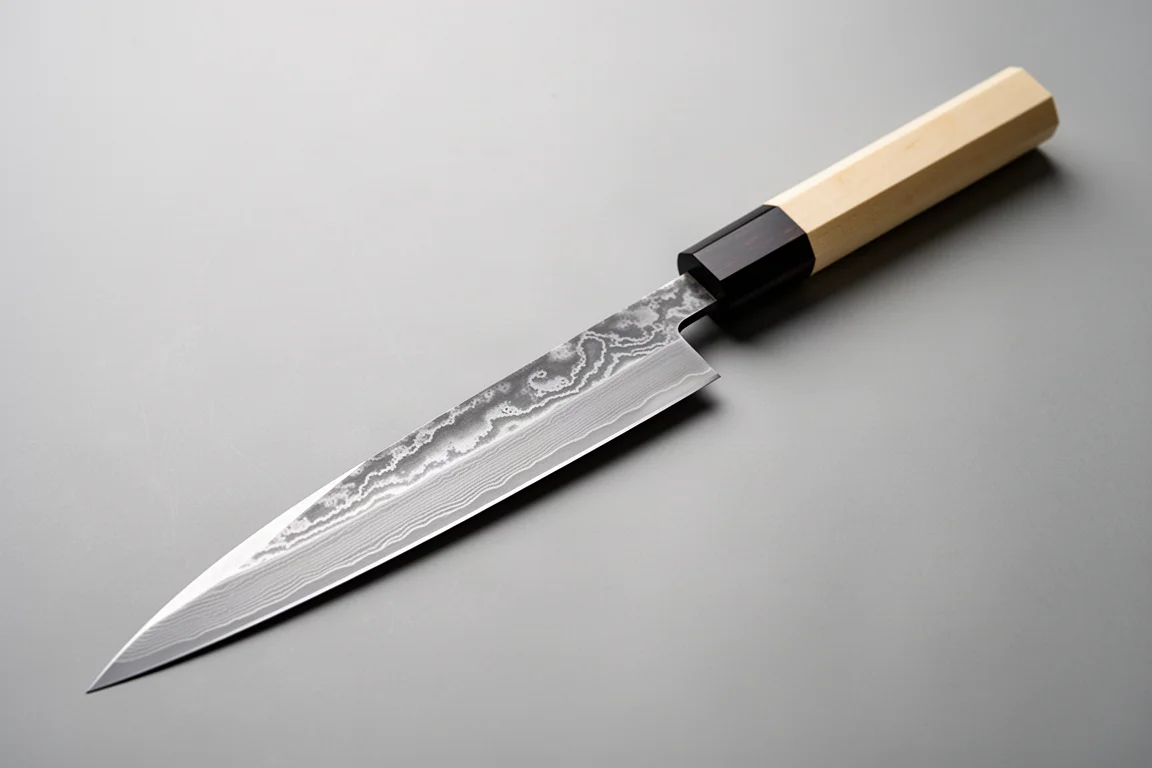
This is the first batch of single bevel work we have carried from Shigeki Tanaka, and the quality is a pleasant surprise. The lineup includes a 210mm yanagiba and a 180mm deba, both in Aogami #2 with a damascus finish, paired with magnolia handles and buffalo horn ferrules. Note that these are single bevelled, so they are only suitable for right-handed users.
More affordable versions are also arriving, roughly in the 100mm, 150mm, and 165mm range, with the same Aogami #2 steel but a plain migaki finish and the same handle treatment. This is just the start of a broader push to expand single bevel offerings, with more coming soon.
Rusen Hamono Okakuru: SG2 Damascus with Stabilised Poplar Handles
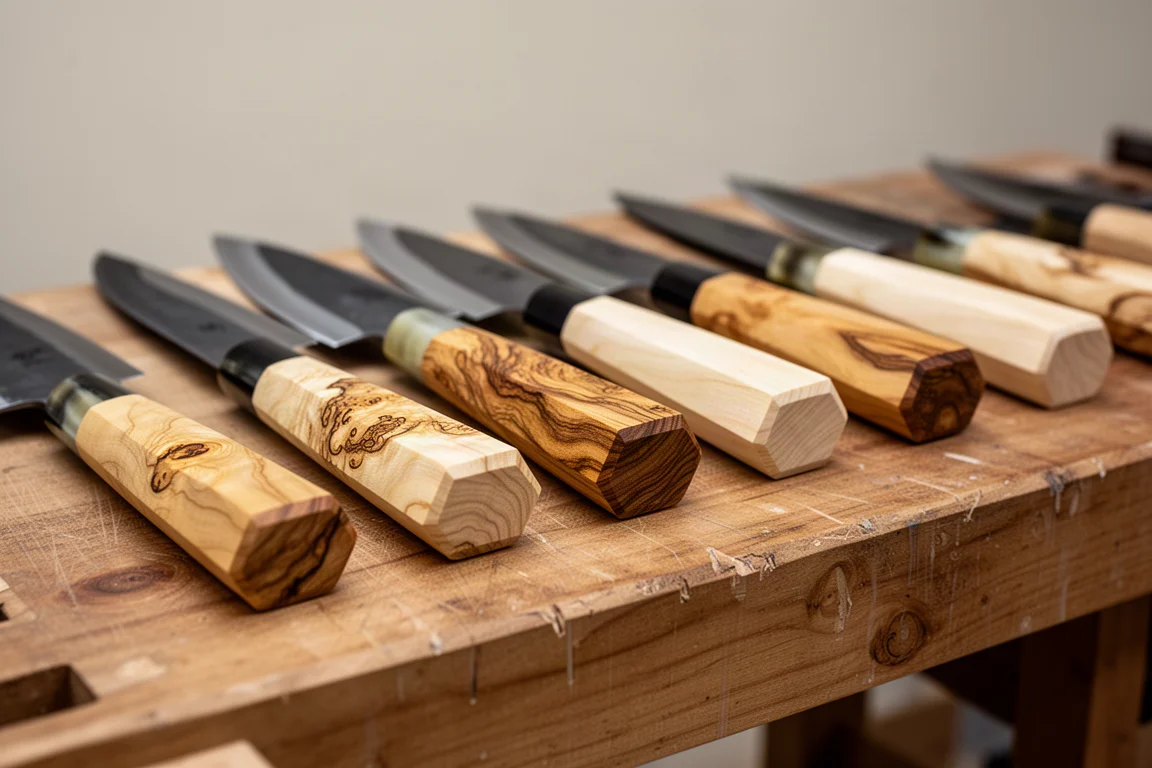
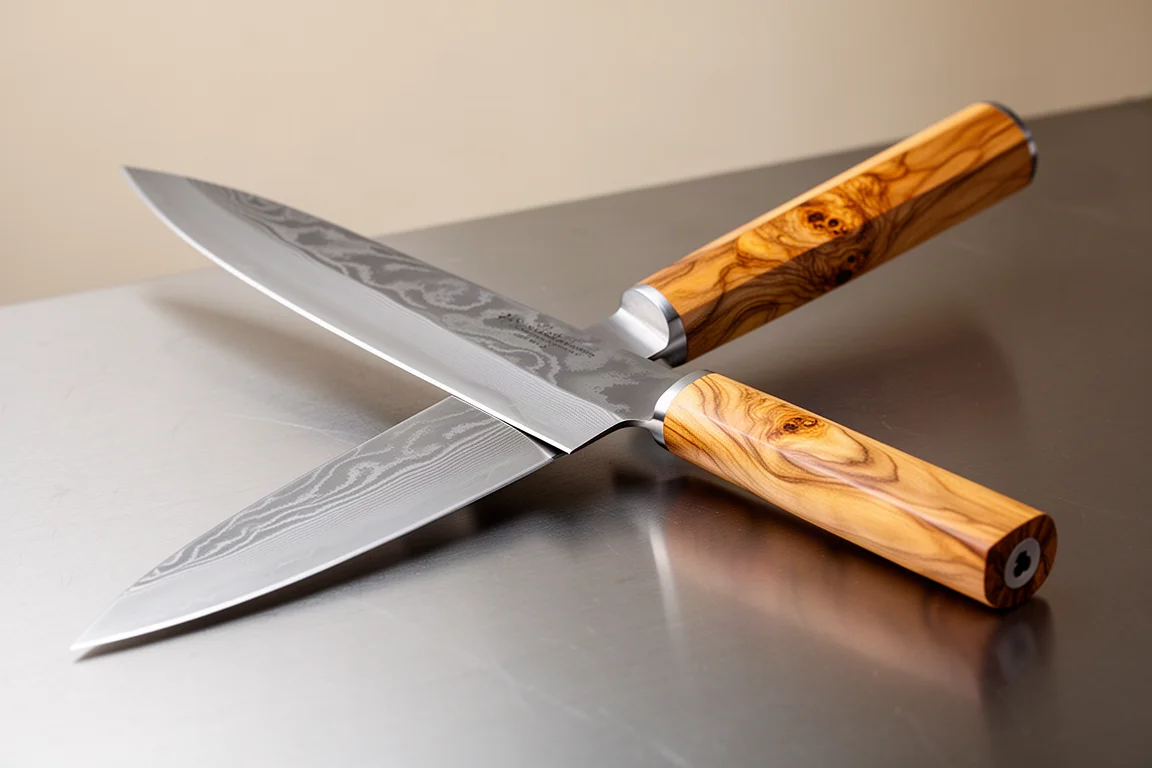
The new Okakuru series from Rusen Hamono covers a 270mm kiritzuke-style sujihiki and a 240mm gyuto, which is more accurately described as a kiritzuke-style gyuto given its aggressively shaped tip. Both are made from SG2 (R2) stainless steel with damascus cladding.
The stabilised poplar wood handles are the highlight here: every handle has its own unique figuring, so no two are alike. Fit and finish on Rusen knives is genuinely top notch, with beautifully sanded spines and choils and small extra touches like a machined butt cap. The thin-behind-the-edge geometry makes them high performers out of the box.
Rusen Hamono Fukakuru: ATS 314 Performance with Maple Handles
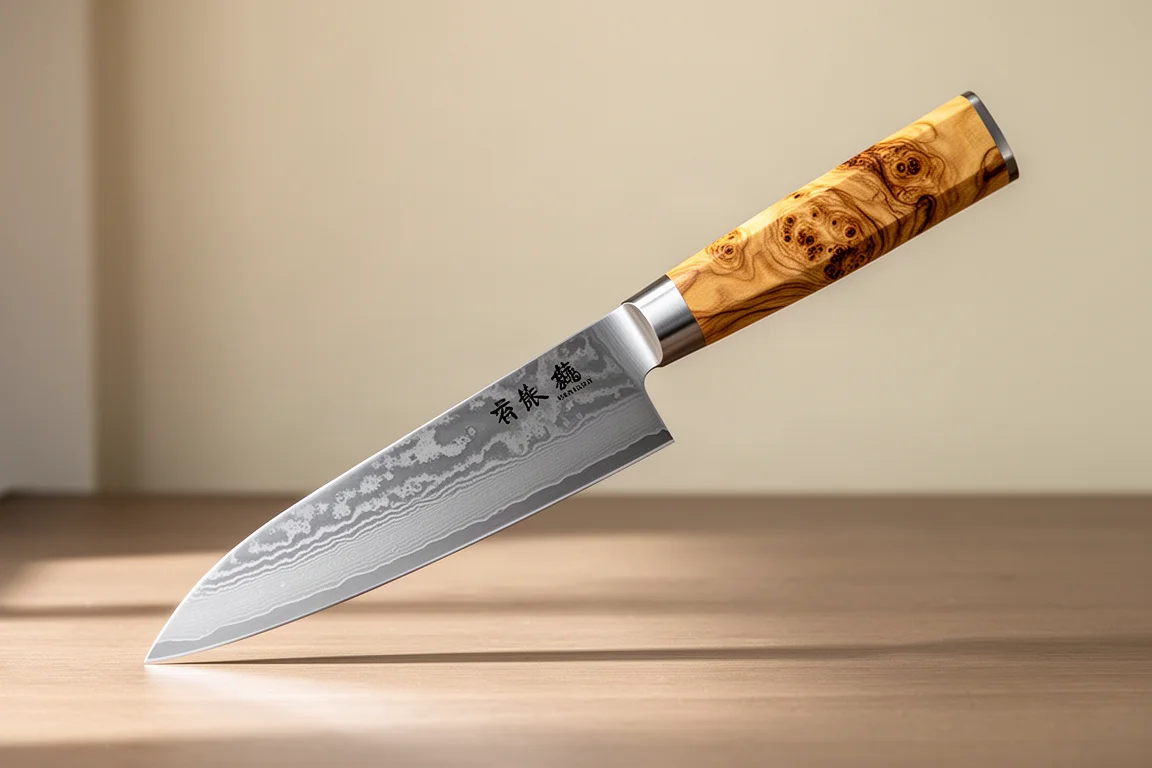
The Fukakuru series gets a restock plus a new 270mm kiritzuke-style sujihiki and 240mm gyuto, alongside 210mm gyutos. These are made from ATS 314 steel, which in use sharpens and performs essentially identically to SG2 or R2; the elemental differences are in the range of tiny fractions of a percent.
The Canadian maple handles show flame and burled figuring, and like the Okakuru series, every handle is unique. These are relatively easy to sharpen, hold an edge for a very long time, and arrive with the same meticulous spine and choil finishing Rusen is known for.
Nigara Hamono Sakimaru Sujihiki 300mm
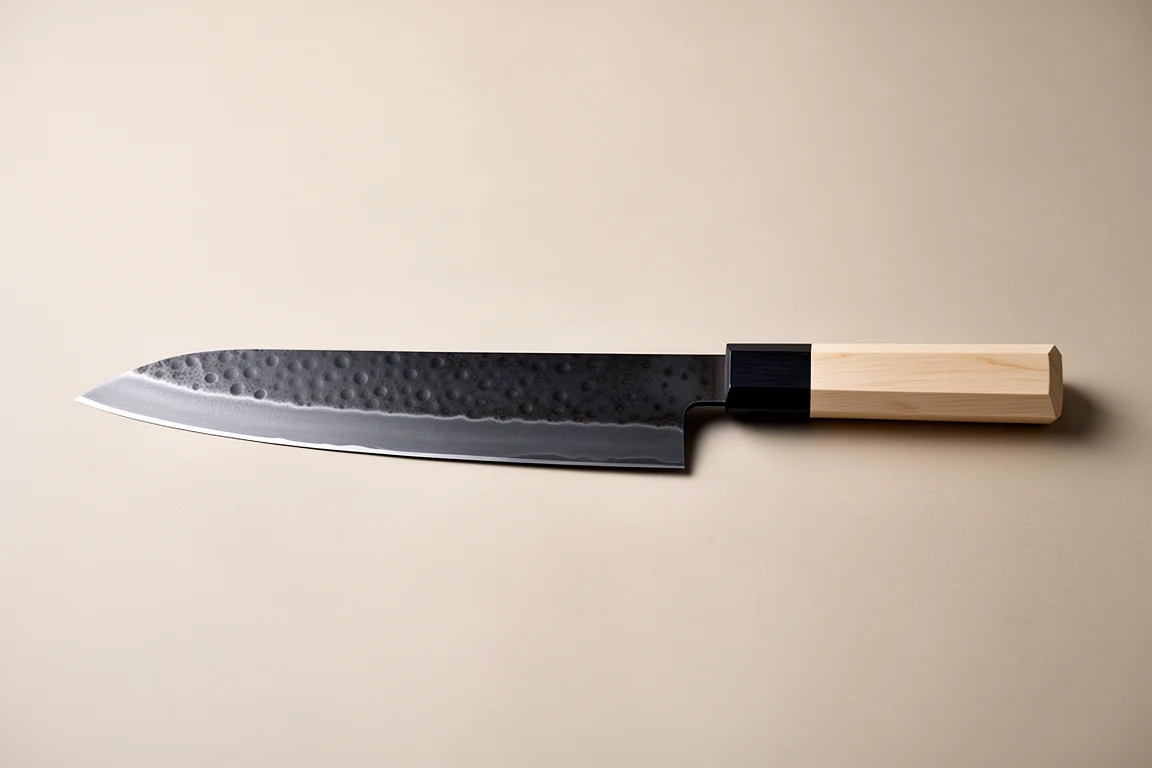
A genuinely unusual arrival: a 300mm sakimaru sujihiki from Nigara Hamono, in SG2 (R2) steel with a kurouchi tsuchime finish and an octagonal maple handle that works for both right- and left-handed users. Sakimaru-style sujihiki are rare, and this may be the only one of its kind in stock anywhere.
The curved rising spine profile can make sharpening intimidating, but the factory edge on these is impressively sharp right to the tip, which speaks to the quality of the finishing work. Only one is available, which says something about how uncommon this shape is.
Hatsukokoro Shirasagi Kurouchi Kuritsuke
This is the real deal: a single bevelled kuritsuke made from Aogami #2 in the Shirasagi kurouchi line, suitable only for right-handed users. Unlike the many double bevelled kiritzuke-style gyutos on the market, this is the traditional tool, generally used by the head chef in a Japanese restaurant.
The kuritsuke is often described as one of the most versatile knives ever made, combining attributes of a deba, a yanagiba, and an usuba in a single blade. The trade-off is a learning curve: the single bevel makes it want to steer into your hand until you adapt your technique. Once you get the hang of it, though, it is an awesome tool.
Hatsukokoro Kurukaze Gyuto 210mm
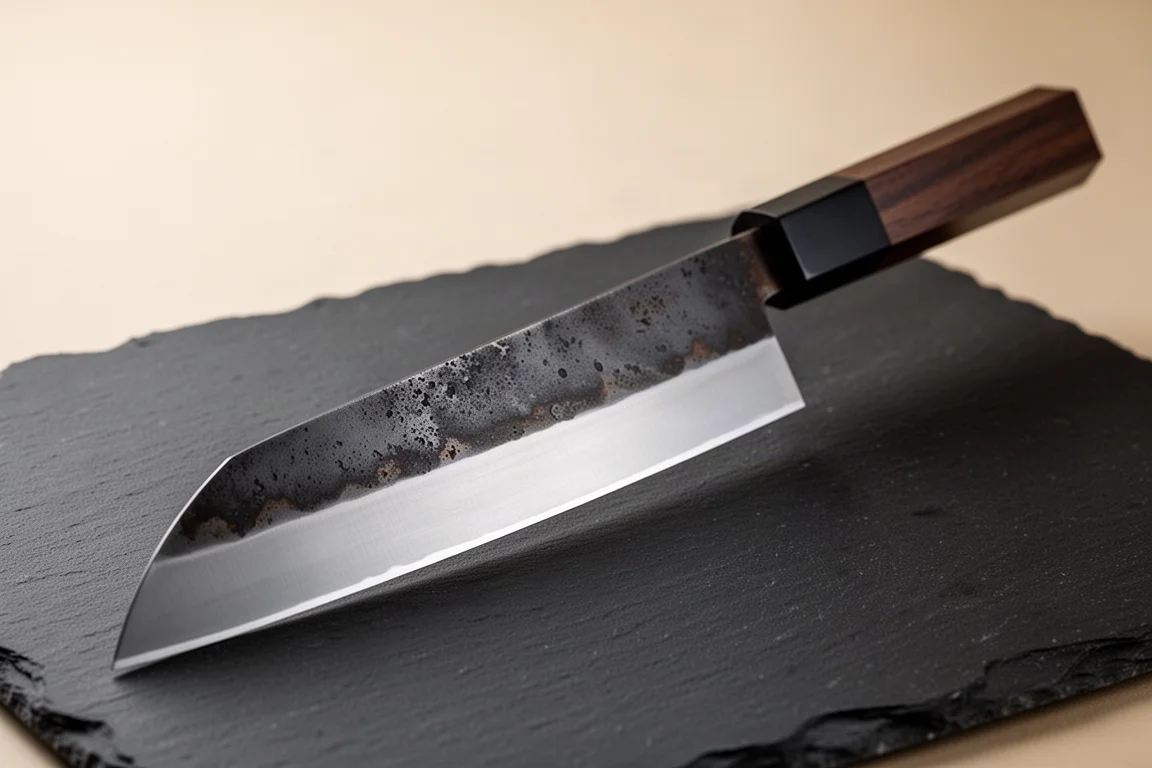
The Kurukaze series returns with its 210mm gyuto in shirogami #2 (White #2) steel with stainless cladding and a kurouchi finish. This batch looks slightly flatter in the kurouchi than the previous run, but it still looks great, with wenge handles, buffalo horn ferrules, and octagonal shaping that suits both handedness.
Spine and choil are nicely sanded, the balance point sits comfortably, and the blade runs nicely tall. The series sold well previously, and more shapes are scheduled to arrive over the coming months with the aim of a fuller Kurukaze lineup.
Hatsukokoro Shirasagi White #2: Deba and Yanagiba
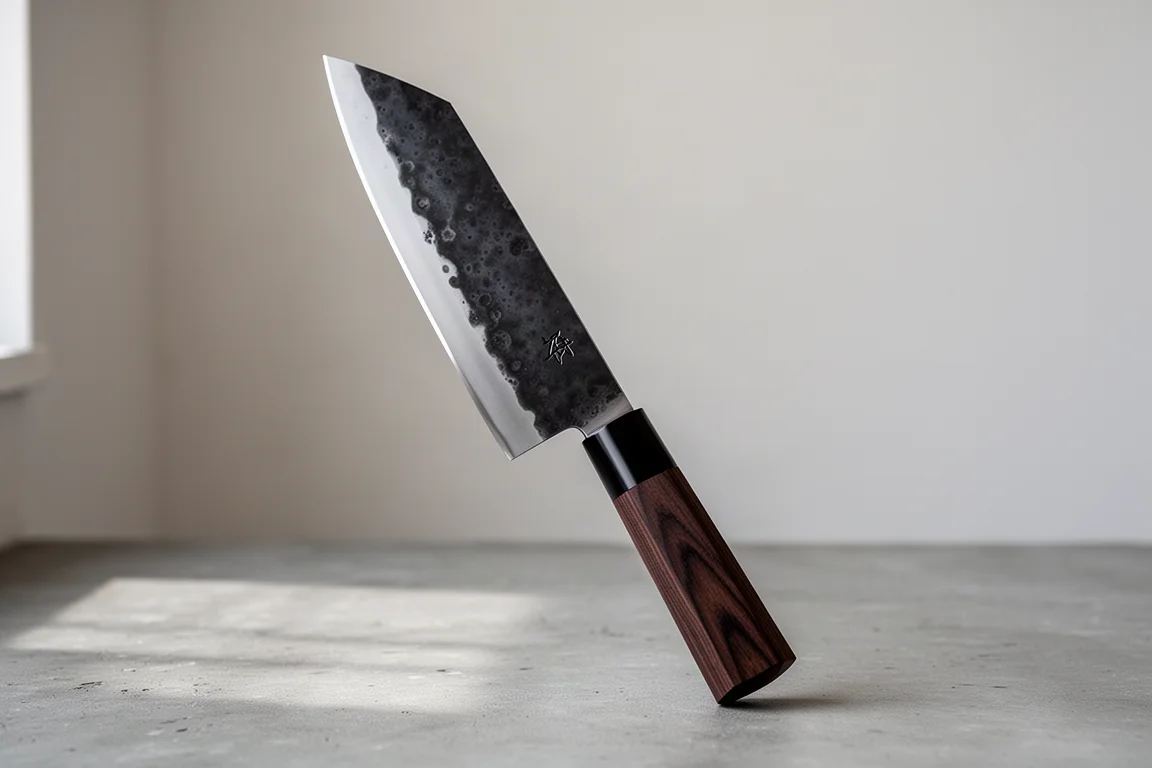
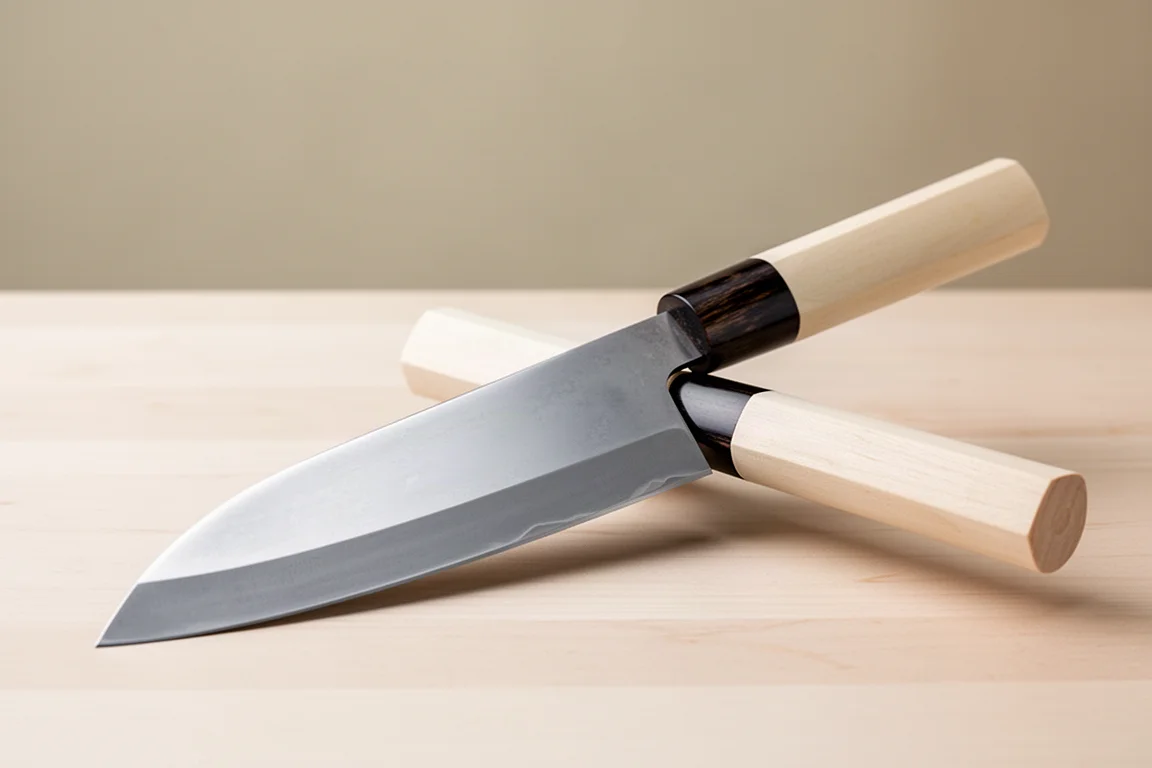
Also from the Shirasagi series, this batch is migaki (polished) and made from White #2 steel. The lineup covers a 180mm deba plus 270mm and 300mm yanagiba. These are simple, elegant knives with an understated rustic appeal.
Fit and finish is excellent, the urasuki work on the concave back side is beautifully done, and White #2 takes a very sharp edge that is easy to maintain. For anyone building out single bevel skills, these are a very approachable entry point.
Yodokobi Gyuto 210mm: Copper Damascus on SKD Steel
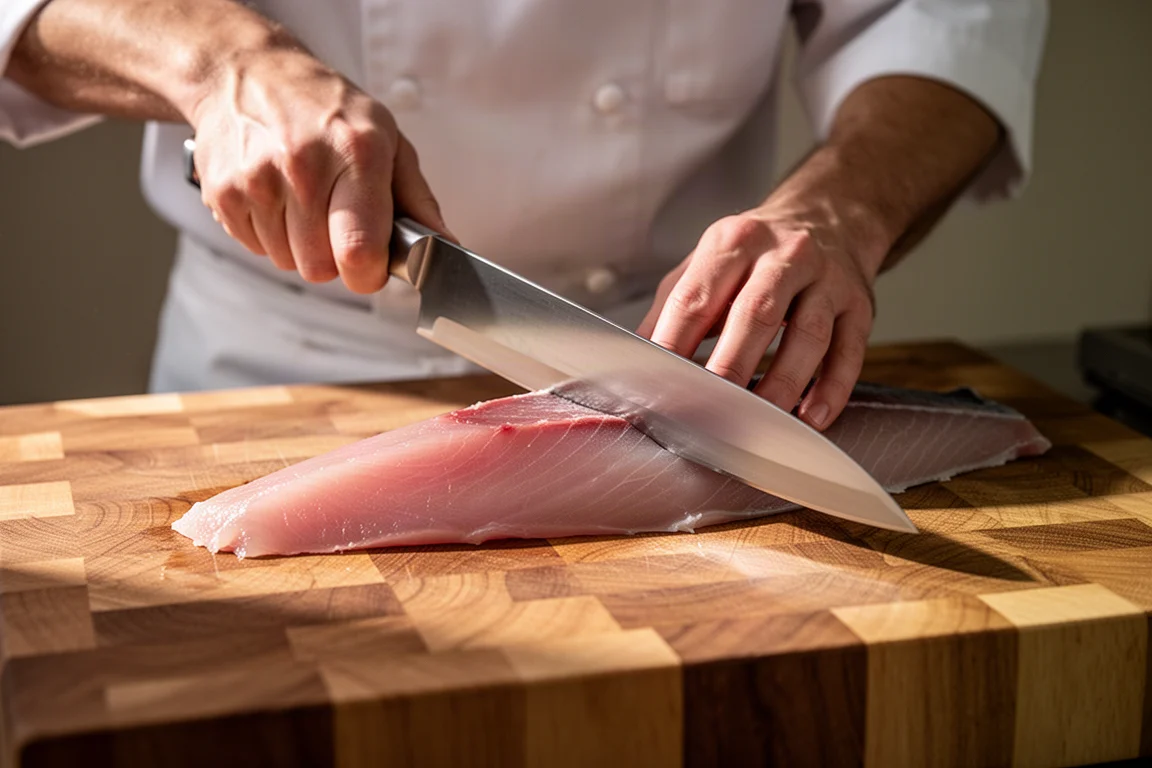
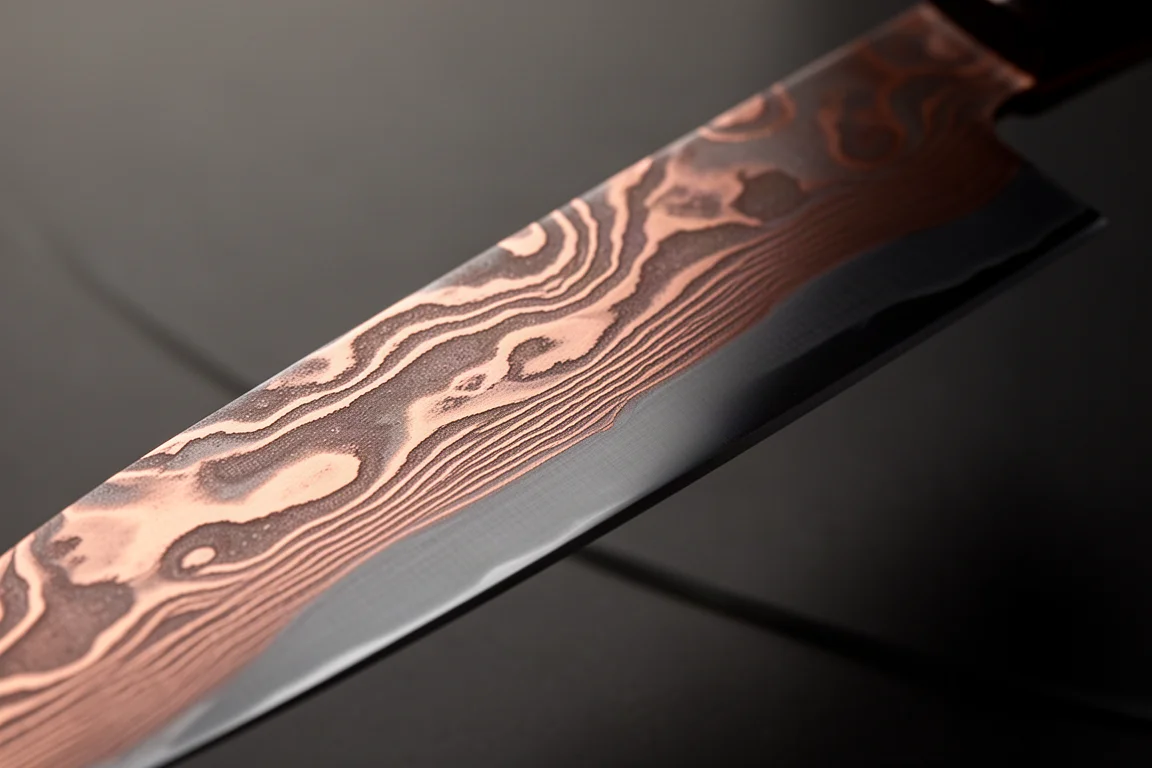
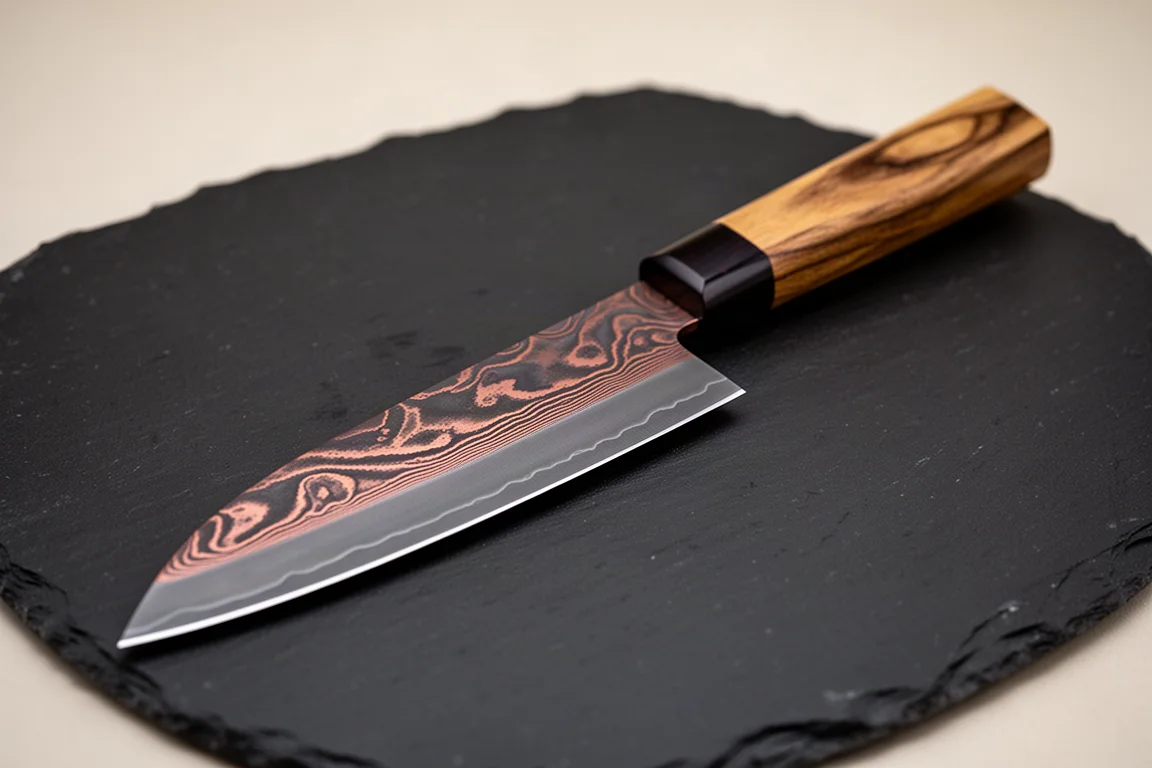
One of the most exciting arrivals: a 210mm gyuto from Yodokobi with a stabilised oak handle, what appears to be a G10 or Micarta liner, and an SKD (SLD) stainless core wrapped in copper damascus cladding. The cladding is stunning, and every one of the six units received has a noticeably different damascus pattern, so buyers can request a specific one when ordering.
Edge geometry is stellar, extremely thin behind the edge, with beautifully sanded spine and choil. Balance sits slightly behind the pinch grip, which some may notice, but the stainless core keeps maintenance easy and performance high.
Azuma Aogami Super Gyuto
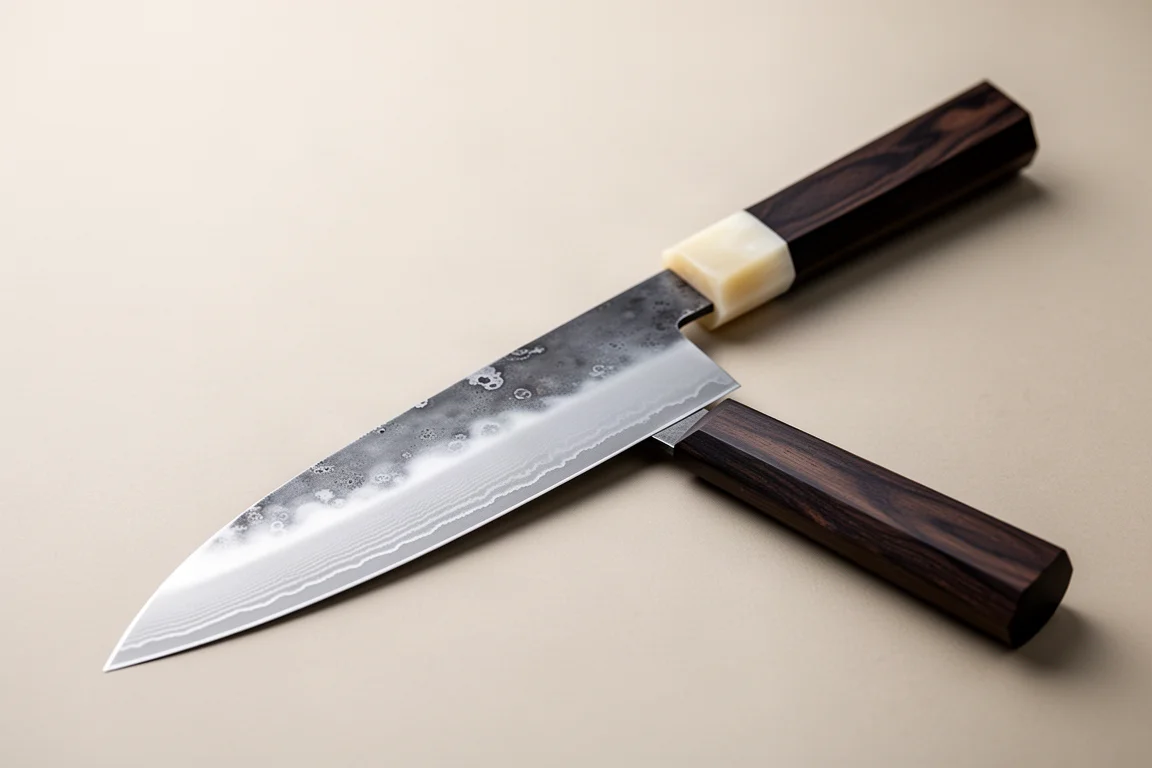
The Azuma series returns with a new finish. These gyutos use Aogami Super with iron cladding, with damascus on the bevels that reads almost like a kasumi finish, hazy at the transition and nearly mirror-like on the bevel itself.
They are very light and very thin, with edge geometry that makes them extremely high performing. That performance comes with a caveat: these are delicate knives, so first-time Japanese knife buyers should look elsewhere, because misuse will show. Notably, this batch drops the previous tsuchime hammer marks, and going forward the whole Azuma series will ship without that finish. Handles are wenge with buffalo horn ferrules, octagonal, and suitable for both handedness.
Buying Advice: Which of These Should You Consider
If you want maximum polish and a traditional aesthetic, the Tetsujin Kasumi pair is hard to beat. Left-handed cooks finally have strong options here, since both the Tetsujin and the Nigara sakimaru are fully ambidextrous. For single bevel beginners, the polished Shirasagi White #2 deba and yanagiba are the gentlest entry, while the kuritsuke should be reserved for cooks ready to invest in technique.
Stainless fans should look at the Rusen Okakuru and Fukakuru series for effortless maintenance with top-tier fit and finish, and the Yodokobi gyuto for anyone who wants a conversation-piece blade that is still practical daily. The Azuma is the purist’s pick: super light, razor thin, and unforgiving of abuse in the best way.
Conclusion
From kasumi-finished Aogami #2 workhorses to a one-of-a-kind sakimaru sujihiki, this round of arrivals covers an unusually wide range of steels, finishes, and grinds. Whether you are picking your first single bevel knife or adding a copper damascus showpiece to the block, there is something here worth a close look.
Further reading
Related Reviews
Japanese Kitchen Knives
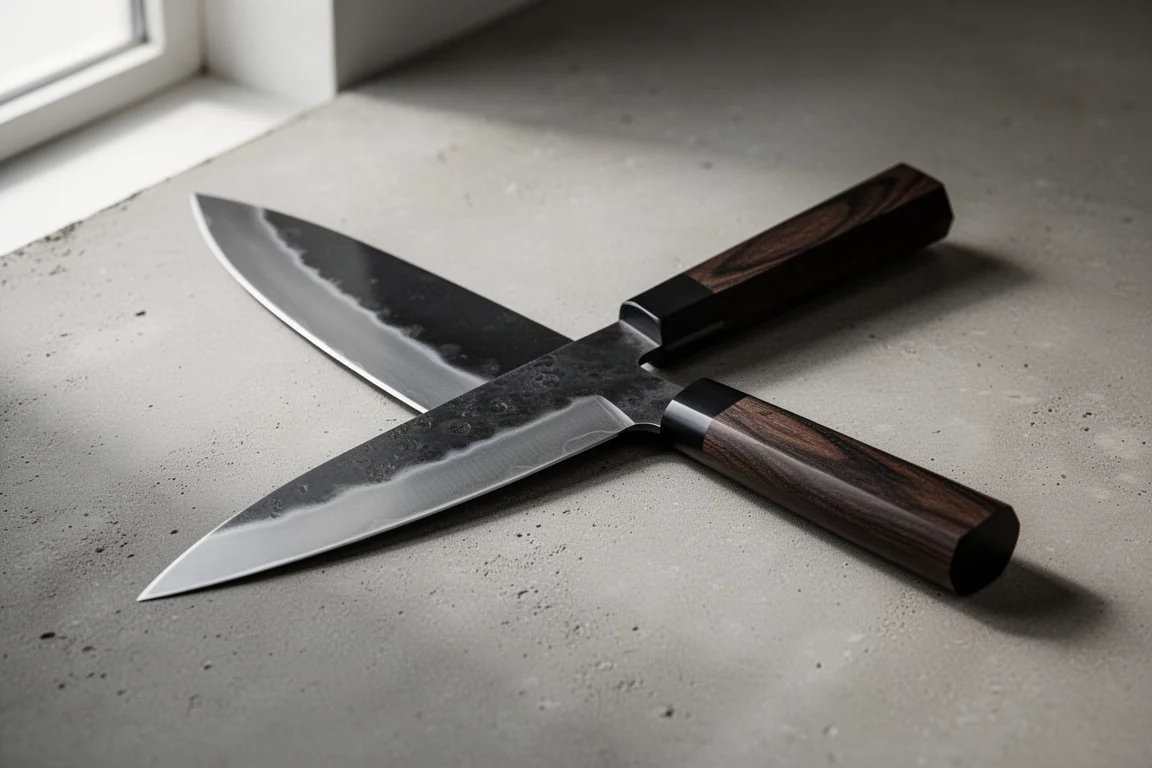
Isamitsu 230mm Kitsuke Review: A New Favorite Japanese Kitchen Knife
A 230mm kitsuke with kurouchi tsuchime finish, stainless cladding, and a two-tone yamamomo handle that pairs striking looks with outstanding cutting performance.
Japanese Kitchen Knives
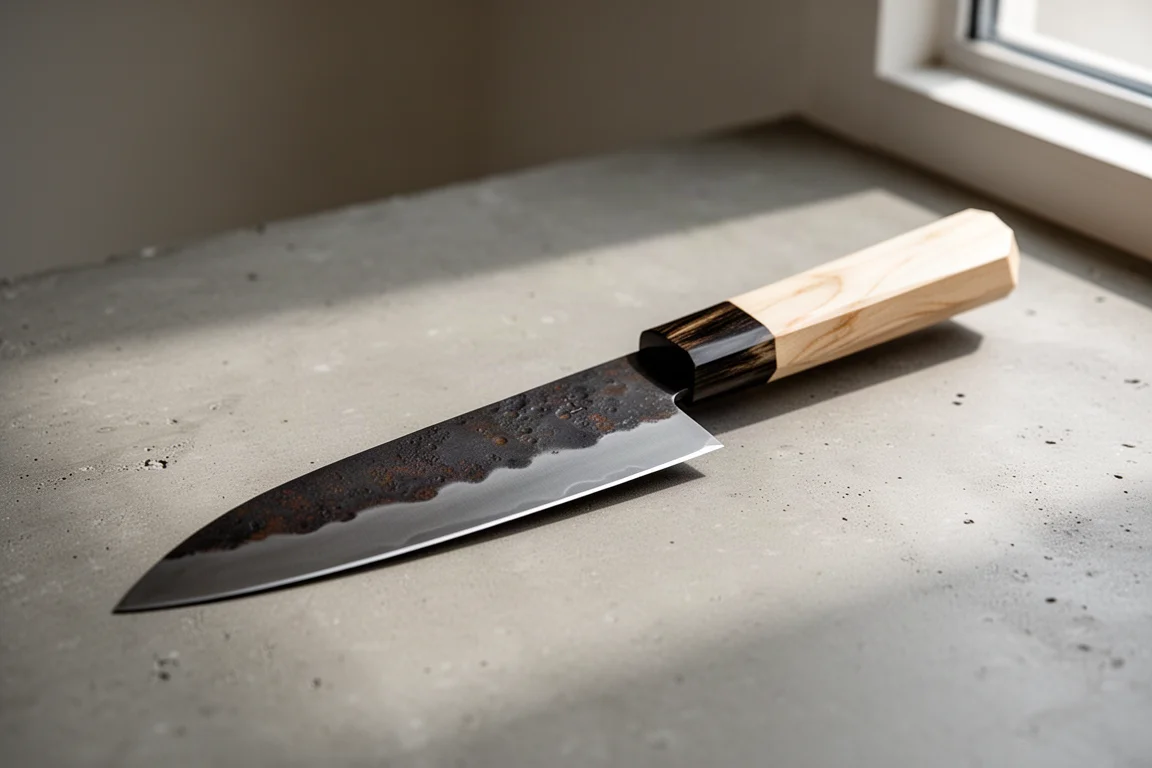
Kyohei Shindo Funayuki Review: A Lightweight Tosa Traditional Japanese Knife
A light, thin-bladed funayuki from an up-and-coming Tosa blacksmith, available with a custom handle and a hand-refined edge from Tokushu Knife.
Japanese Kitchen Knives
Teryasu Fujiwara Denka Knife Series: A Rustic Icon Worth the Quirks
The Denka series pairs stainless-clad Aogami Super steel with remarkable edge geometry, but expect handcrafted imperfections along the way.