Japanese Kitchen Knives
Kyohei Shindo Funayuki Review: A Lightweight Tosa Traditional Japanese Knife
A light, thin-bladed funayuki from an up-and-coming Tosa blacksmith, available with a custom handle and a hand-refined edge from Tokushu Knife.
Introduction
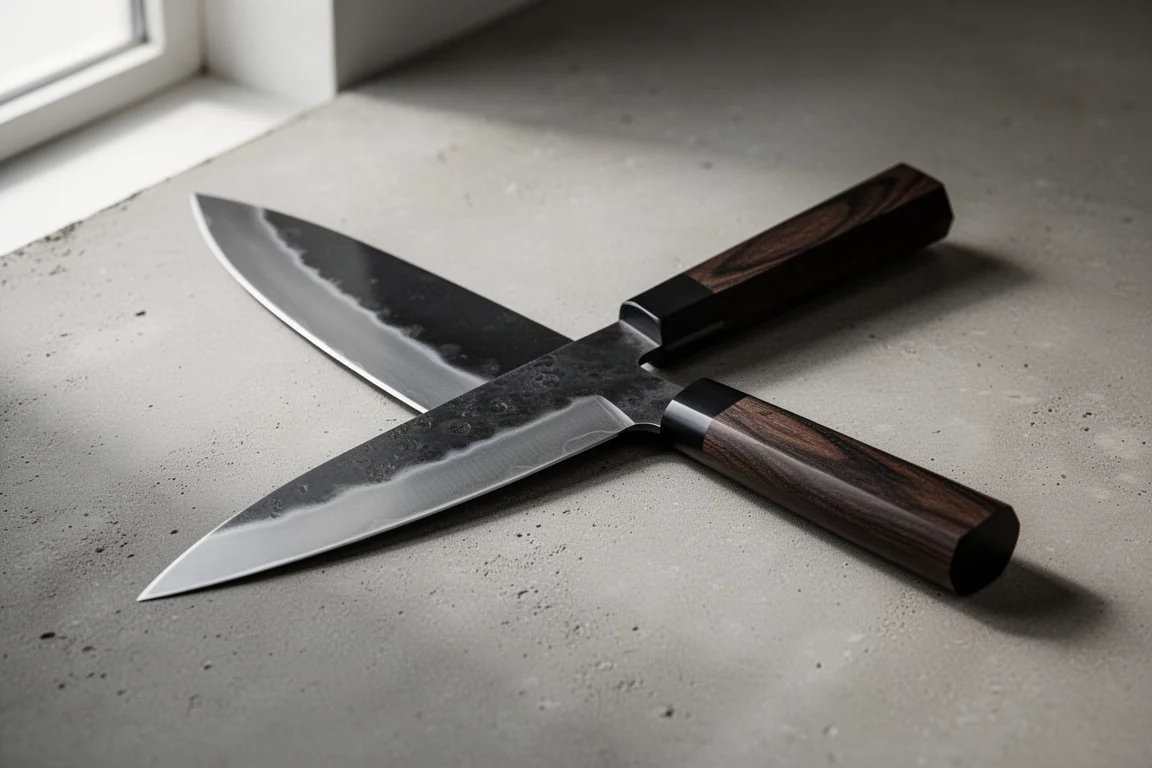
The funayuki is a traditional Japanese knife with a working past. The name translates roughly as “going into the boat,” and it was historically the all-purpose blade for fishermen: a knife that handled filleting the catch as well as everyday meal prep on board. In profile it sits somewhere between a modern deba and a usuba-style shape, usually a little thinner than a deba but capable of taking on a wider range of tasks.
This particular funayuki comes from Kyohei Shindo, a blacksmith working out of the Tosa region in Kochi Prefecture, and it arrives by way of Tokushu Knife. It is a genuinely interesting pick for anyone looking at Japanese traditional blades from smiths outside the mainstream names.
First Impressions: Design and Finish
The review unit features a custom handle; the stock version is also available. The handle here pairs a light-colored padauk section, a tropical hardwood from the pea family related to rosewood, with a contoured ebony ferrule. The shaping is excellent, and despite looking slightly chunkier than usual, it feels comfortable even in smaller hands.
Out of the box, the first thing you notice is how light the knife is. The balance point sits almost exactly where you would pinch-grip the blade, which makes the knife feel nimble rather than blade-heavy. The knife also ships with a fitted saya cover, a nice touch of protection that many knives in this range skip.
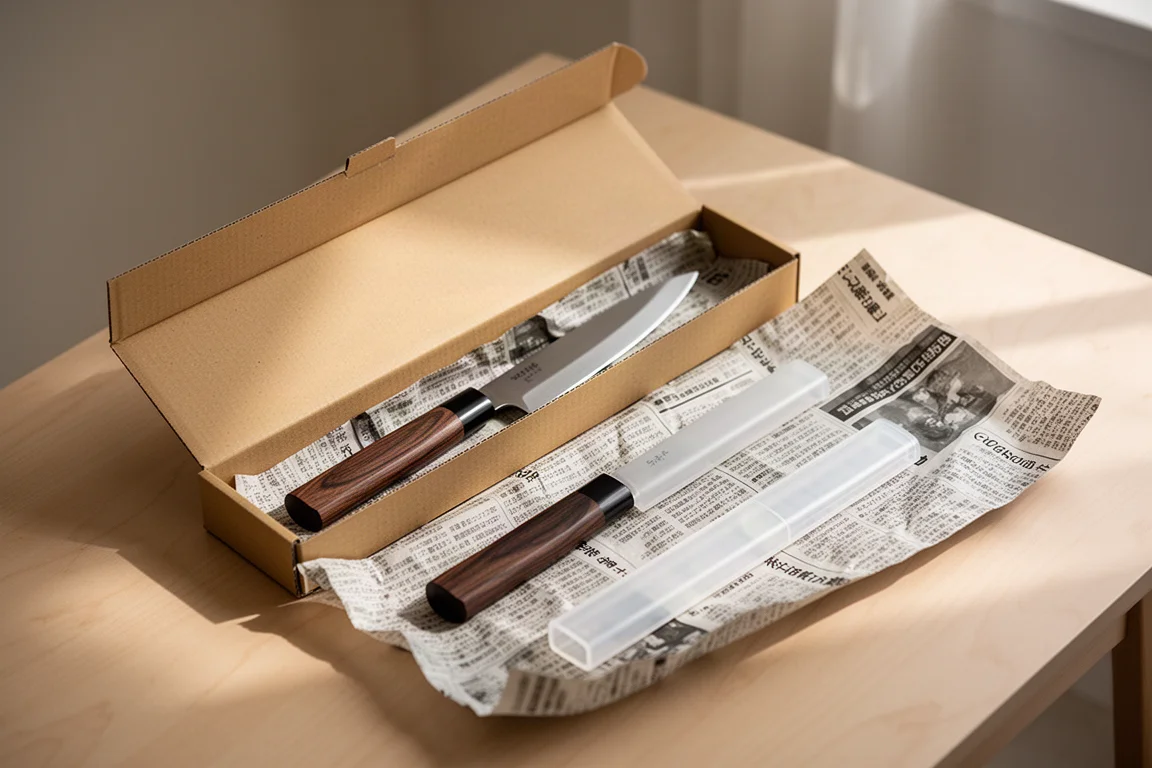
The finish is a kurouchi in the Tosa style, which leans noticeably glossier, almost lacquered. It is not for everyone, but the reflective sheen tends to mute with use. The cladding line runs high on the blade, leaving plenty of exposed core steel, which helps with sharpening since you are not working around the cladding for long.
Blade Construction: Wari-Komi, Not San Mai
The blade is forged from blue steel number two, also known as aogami number two, and it is iron-clad rather than stainless-clad. Interestingly, the construction is not the more common san mai sandwich. Instead it uses wari-komi construction: a single piece of iron that is wedged through but not fully split, with the core steel inserted and the whole thing closed, more like a taco shell than a sandwich.
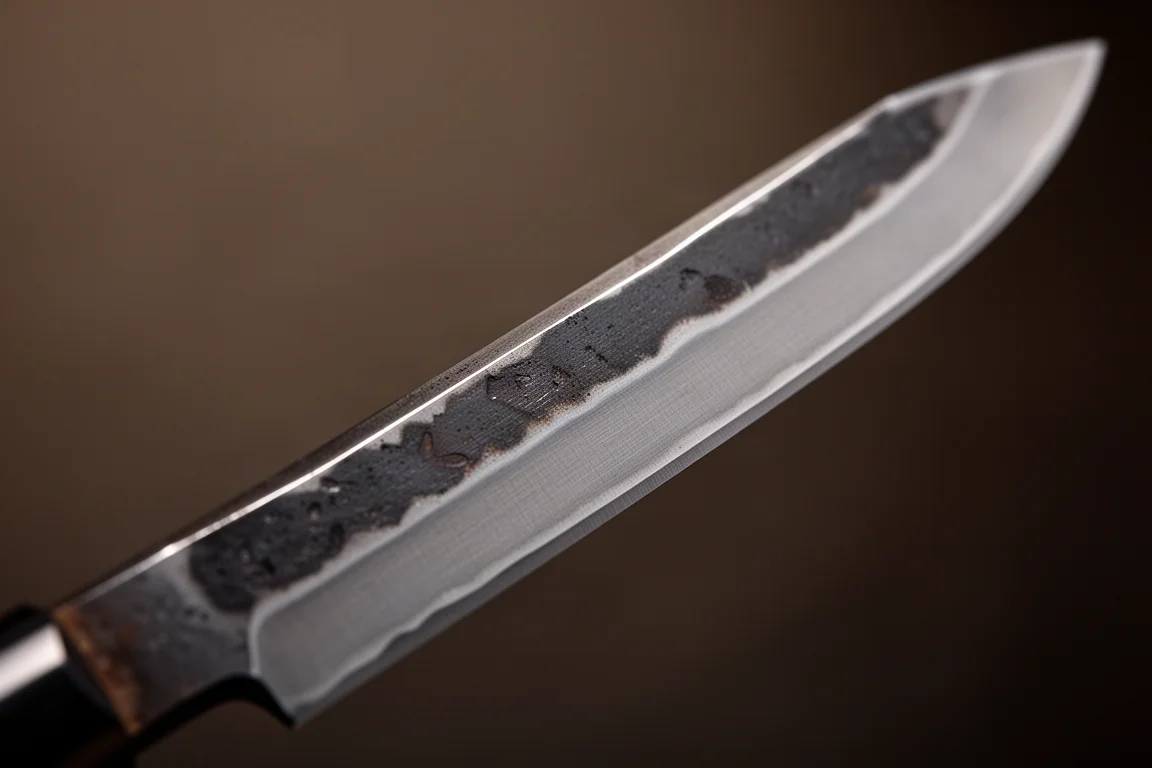
This matters for the funayuki’s intended character. Because it was historically built to be a resilient do-everything boat knife, the blade is deliberately thin at the edge while retaining enough spine thickness to resist chipping. In hand, the taper is very noticeable: the blade is thinner than expected at first touch, and that resiliency is exactly the point of the design.
Practical Details Worth Knowing
The choil and spine are a little rough out of the box. This is normal for a knife in this price class and is not a real flaw: a few minutes with sandpaper smooths both to a comfortable finish. It is rough enough that a quick cleanup is worthwhile, but not so rough that the knife is unpleasant to use as-is.
The review unit is 165mm in blade length, with Tokushu Knife offering both stock and custom configurations. The stock knife is $89 USD, with an optional $10 sharpening service where Zach, who handles the sharpening, takes the edge anywhere from a 1000-grit stone up to a Japanese natural stone depending on the knife to optimize cutting performance. The custom handle version shown here retails at $159 USD.
Cutting Performance: Paper Test and Onion
The edge on the review unit was sharpened by Tokushu Knife before shipping, and the paper test showed it off well: silky, smooth cuts with no snagging. A paper test never tells the whole story, but it confirms the edge out of the box is excellent.
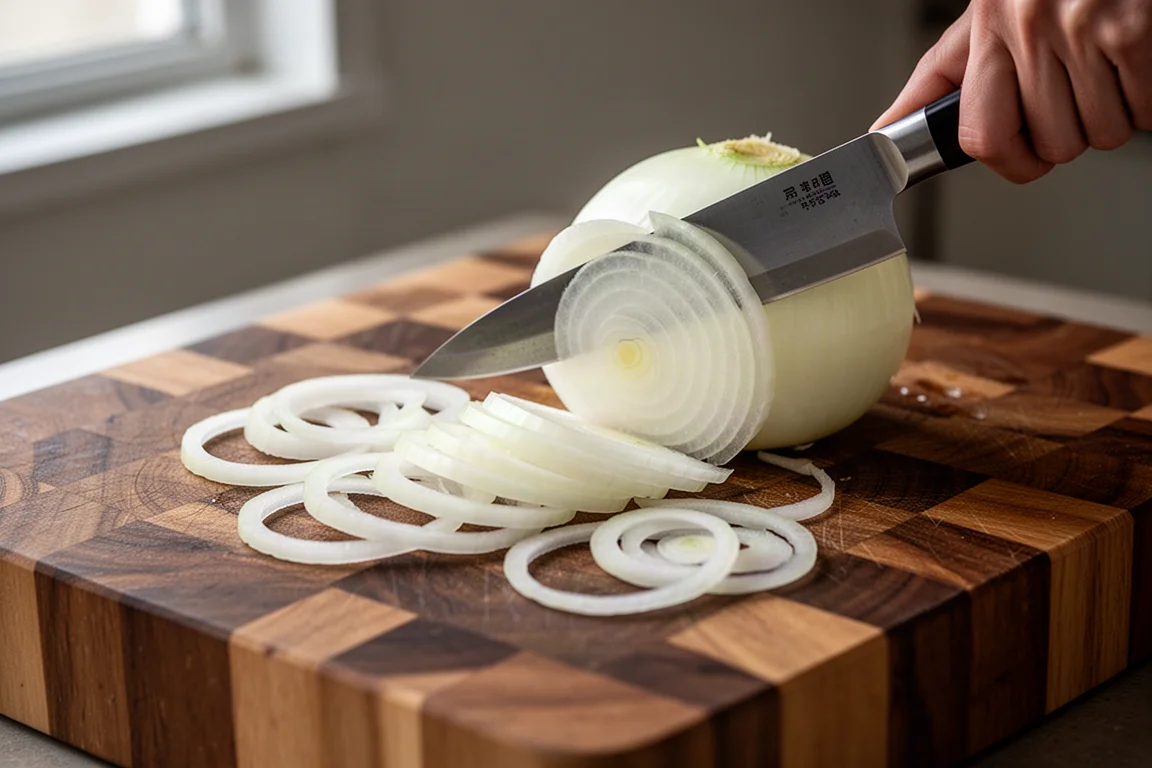
The blade’s thin profile and the high cladding line suggest this is a knife that will be easy to maintain at home, with plenty of exposed core steel to work with when sharpening. Combined with the light, well-balanced feel, it points toward a tool best suited to precision slicing and everyday prep rather than heavy-duty work.
Who Is Kyohei Shindo?
Part of the appeal of a knife like this is the maker. Kyohei Shindo was born February 22, 1988 in Hokkaido, and entered the Department of Marine and Natural Sciences at Ryukyu University in Okinawa in 2006. He had wanted to pursue craftsmanship since childhood and dreamed of becoming a blacksmith, which led him to Seki City in Gifu Prefecture, one of Japan’s leading cutlery production areas.
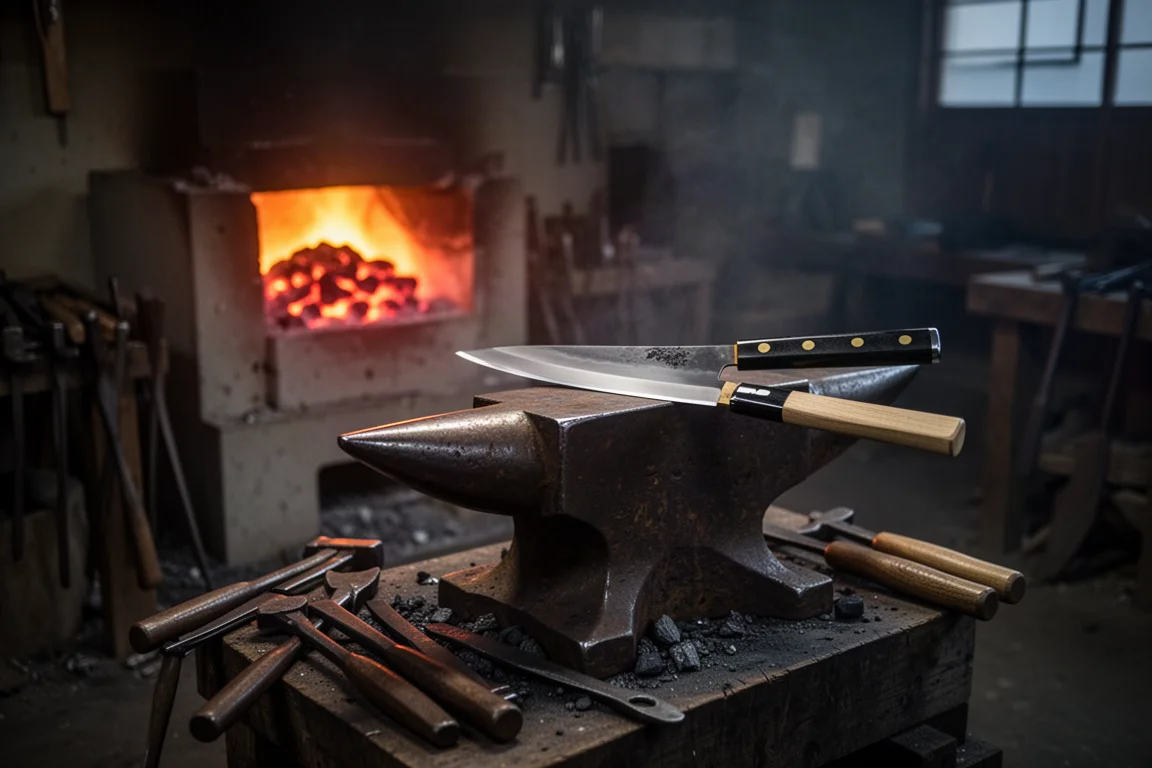
Hearing that many smiths worked in Kochi Prefecture, he eventually settled in Kami City there in April 2010, working for a company that wholesaled Tosa uchihamono. From December 2012, he rented a retired smith’s factory and practiced blacksmithing on weekends. When the wholesale company he had long worked for went out of business in October 2017, Shindo took over the business while preparing for his own independent workshop. In October 2019 he founded Kyohei Forging as a sole proprietor, and in May 2020 his long-planned factory was completed. He also spent time as an instructor with the Tosa Knife Cooperative Association’s smith training program. Outside the forge, he enjoys fishing, camping, and the outdoors generally, which feels fitting for a knife rooted in fishing tradition.
Things to Consider Before Buying
- The glossy Tosa-style kurouchi finish may not suit everyone, though it tends to mellow with use.
- The choil and spine need a short sanding session before they are fully comfortable.
- Blue steel number two is carbon steel, so it needs basic care: drying after use and occasional maintenance.
- The stock handle version is the budget entry point; the custom handle ups the price meaningfully.
Buying Advice
If you want an authentic traditional Japanese knife from an emerging Tosa smith, this funayuki is a compelling option at either price point. At $89 USD for the stock knife, it is an accessible way into hand-forged blue steel from a smith with a genuine story. If you value a standout handle and a professionally refined edge, the $159 USD custom version with Zach’s sharpening service is the version to aim for.
Conclusion
The Kyohei Shindo funayuki delivers on the traditional brief: light, resilient, thin at the edge, and versatile enough for everything its boat-bound origins demanded. Add a beautifully contoured custom handle, a high cladding line that makes sharpening straightforward, and an edge that cut paper like silk out of the box, and it is easy to recommend. For anyone curious about Tosa uchihamono or looking to support an up-and-coming blacksmith, this knife is worth a close look.
Product link
View more details for Kyohei Shindo Funayuki
This product is mentioned in the review. Check the specifications, options, and compatibility before buying.
View more details for Kyohei Shindo FunayukiFurther reading
Related Reviews
Japanese Kitchen Knives
Isamitsu 230mm Kitsuke Review: A New Favorite Japanese Kitchen Knife
A 230mm kitsuke with kurouchi tsuchime finish, stainless cladding, and a two-tone yamamomo handle that pairs striking looks with outstanding cutting performance.
Japanese Kitchen Knives
Teryasu Fujiwara Denka Knife Series: A Rustic Icon Worth the Quirks
The Denka series pairs stainless-clad Aogami Super steel with remarkable edge geometry, but expect handcrafted imperfections along the way.
Japanese Kitchen Knives
Top 10 Japanese Kitchen Knives for 2026: Our Favorite Picks
Ten Japanese kitchen knives with great stories, standout craftsmanship, and real performance for 2026, from a Canadian-made bunka to a razor-thin sujihiki.