Japanese Kitchen Knives
Isamitsu 230mm Kitsuke Review: A New Favorite Japanese Kitchen Knife
A 230mm kitsuke with kurouchi tsuchime finish, stainless cladding, and a two-tone yamamomo handle that pairs striking looks with outstanding cutting performance.
Introduction
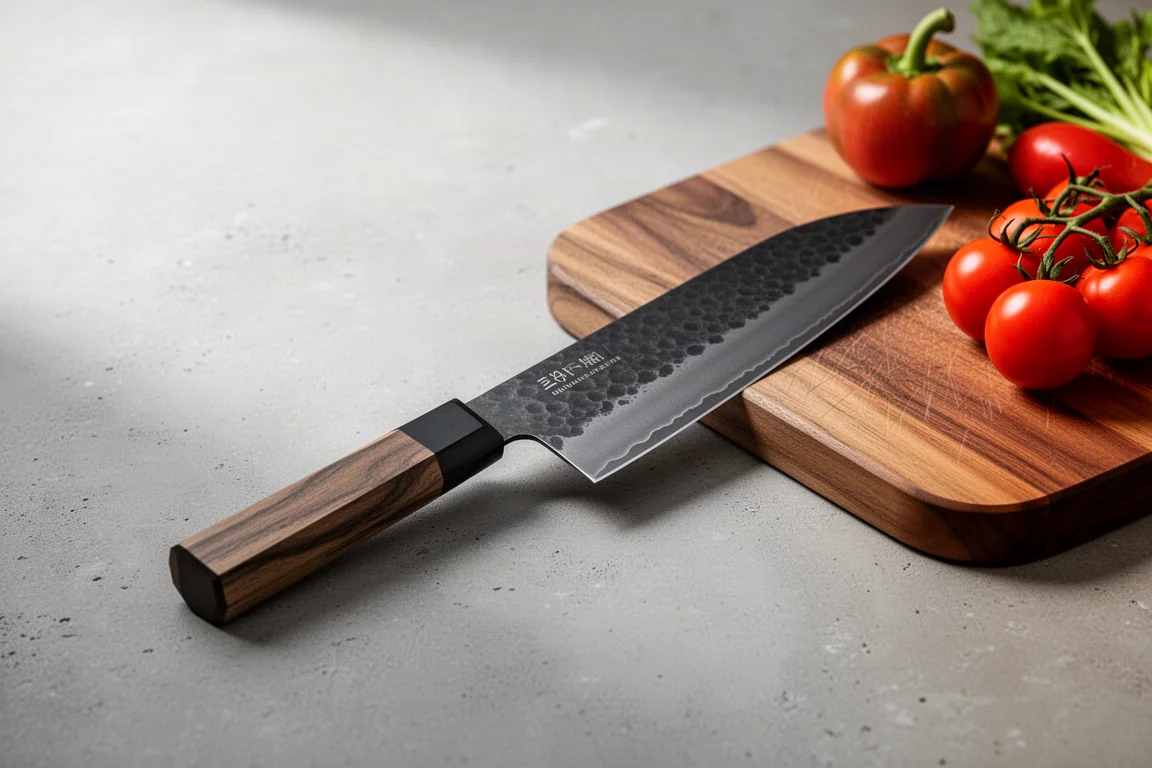
Some knives earn a place in a rotation through pure performance, and some earn it through story. The Isamitsu 230mm kitsuke manages both. It arrives with a distinctive profile that borrows a hint of Hakata-style shape, a kurouchi tsuchime blade finish, stainless cladding over a favorite core steel, and a two-tone yamamomo wood handle in the classic Isamitsu pentagonal style. After extended time on the cutting board, it is hard not to call it a new favorite.
Design and Finish: Kurouchi Tsuchime with a Two-Tone Handle
The unboxing experience is deliberately simple: a clean black box with the Isamitsu logo, the knife held securely in place, and the kurouchi blade as the beauty within. The tsuchime pattern across the blade is a standout detail, with a squiggled texture that catches light in an unusual way.
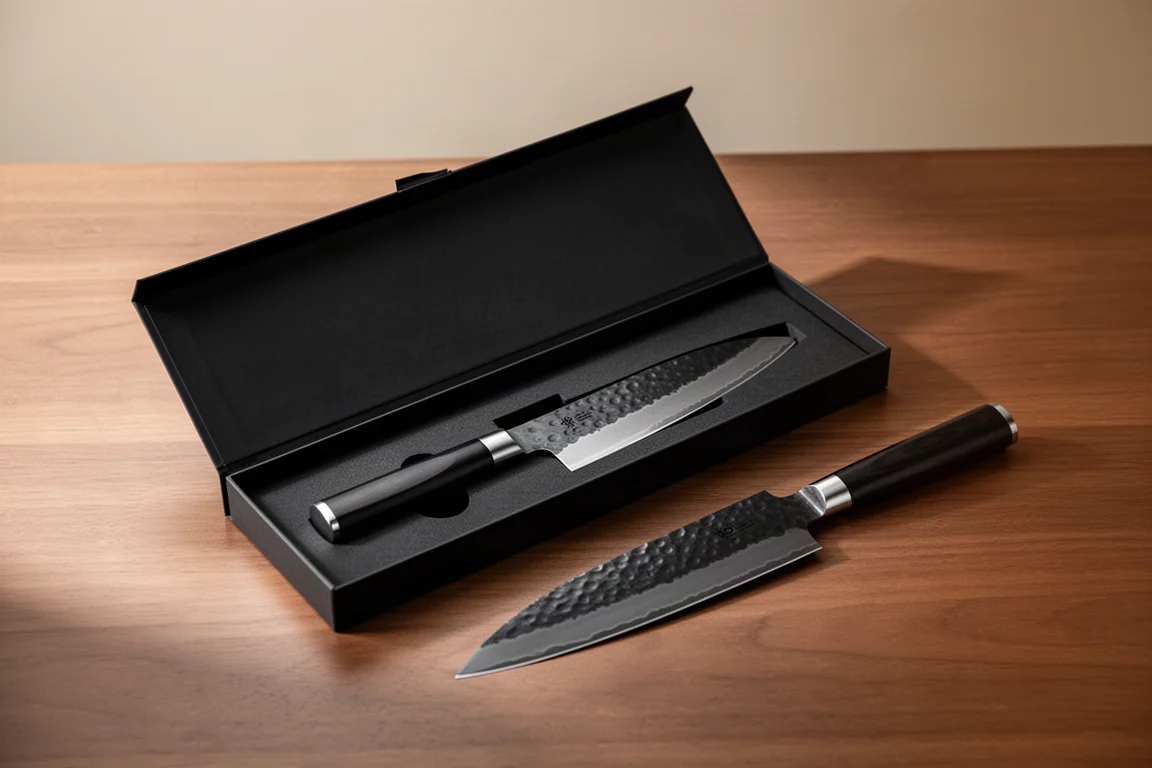
The profile does bring a Hakata-style santoku to mind, particularly with that upswept tip. Why Isamitsu calls it a kitsuke rather than a Hakata is not entirely clear, but the name fits well enough. The blade keeps plenty of belly curvature, yet there is enough straight section near the heel to cut food cleanly without any accordion-style wedging. The finish is a kurouchi with tsuchime patterning over stainless cladding and a core steel chosen for performance.
The handle is the emotional highlight: two-tone yamamomo wood in the classic Isamitsu pentagonal shape. The two-tone line sits unusually close to the butt of the handle, which is uncommon and gives it a look that feels traditional yet different at the same time. Rich, clean, and distinctive.
Comfort and Balance in Hand
In hand, the knife is very comfortable, with a slight heft that some cooks will genuinely appreciate. The balance point sits noticeably forward of the pinch grip, giving the blade a sense of authority through the cut.
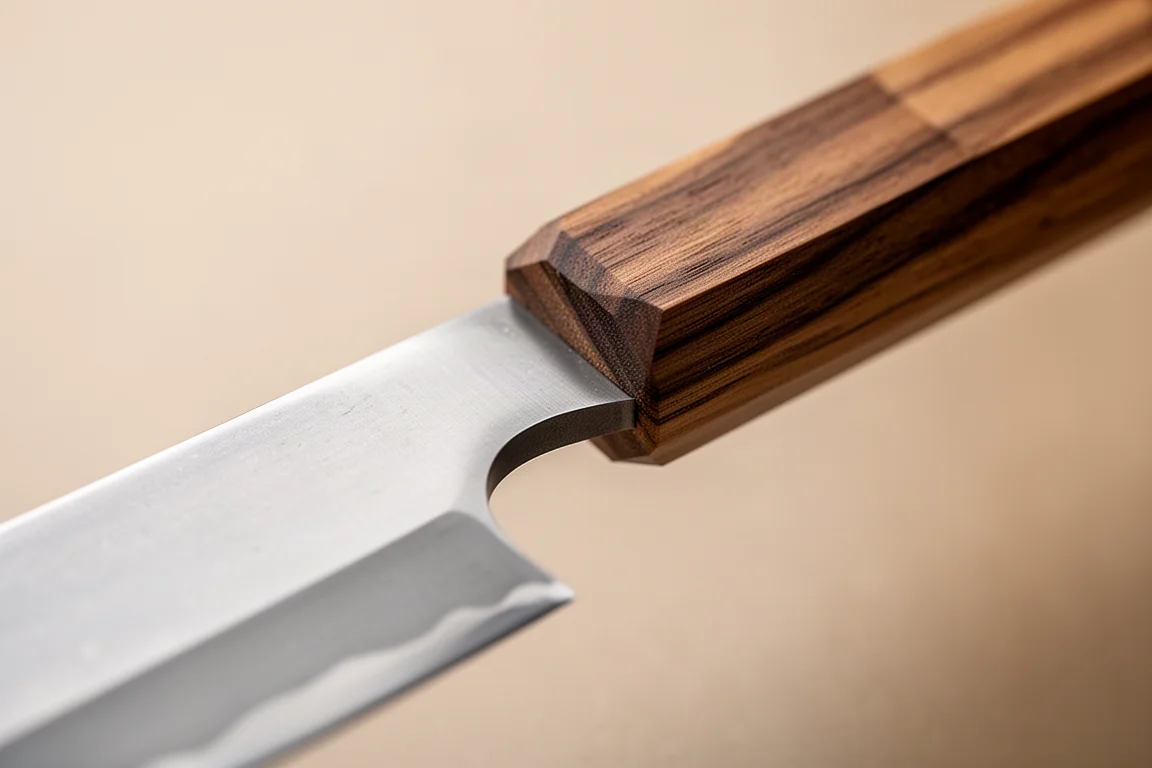
There is no dedicated finger notch, but the finger choil is not completely right-angled either. Its slight curvature means a choked-up finger still nests into it comfortably, even without the molded notch found on other knives. One small nitpick: the spine and finger choil could be polished a little more out of the box. It is an easy fix with sandpaper at home, but worth knowing before purchase.
Performance on the Cutting Board
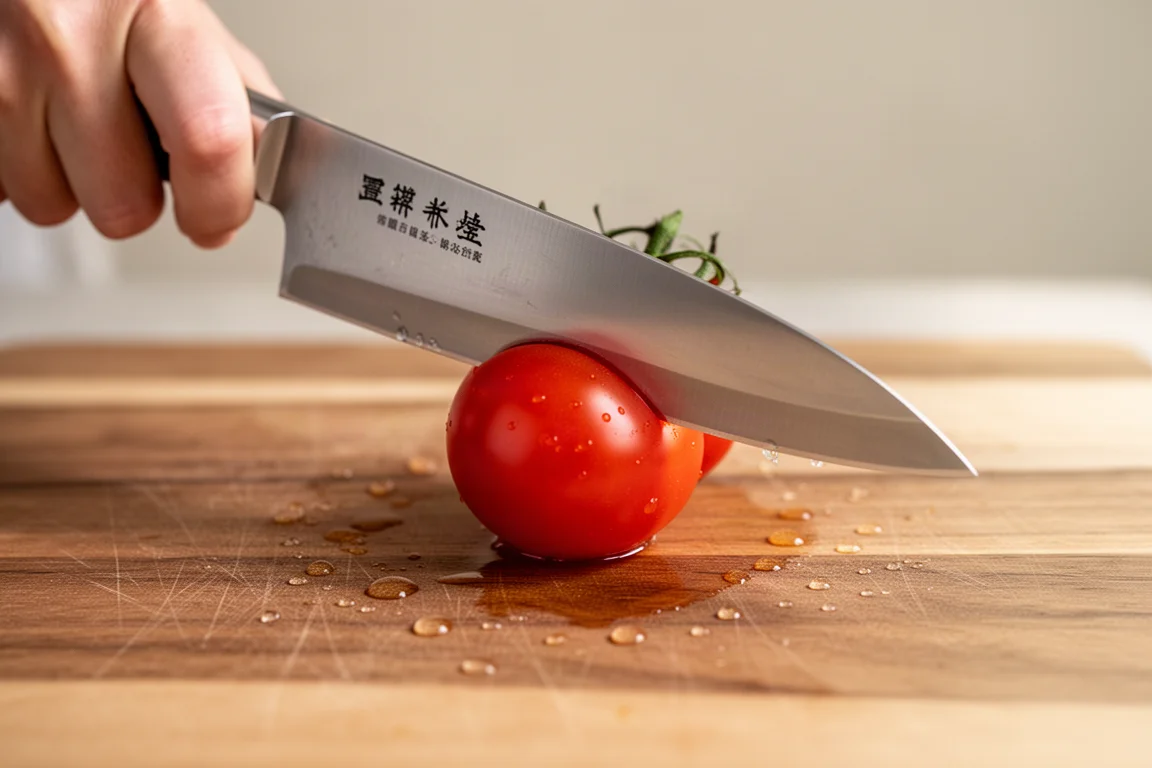
Performance is where this knife makes its strongest case. The cherry tomato test was effortless: with barely any pressure, the blade fell straight through the skin. Items with tougher skin also gave way without resistance.
The pineapple test was the real experiment. Pineapple is highly acidic, which can streak a kurouchi finish and darken the core steel or cladding quickly, so it is not a test most owners would run casually. The reason for trying it was the blade size and profile, and the knife handled it convincingly. On produce of that scale, with that acidity, it simply performed.
Should You Buy the Isamitsu 230mm Kitsuke?
The case for this knife rests on four pillars: the geometry and profile are genuinely impressive, the two-tone yamamomo handle is beautiful and comfortable, cutting performance is excellent across everything from delicate tomatoes to dense, acidic fruit, and there is a personal connection to the makers that adds meaning to ownership.
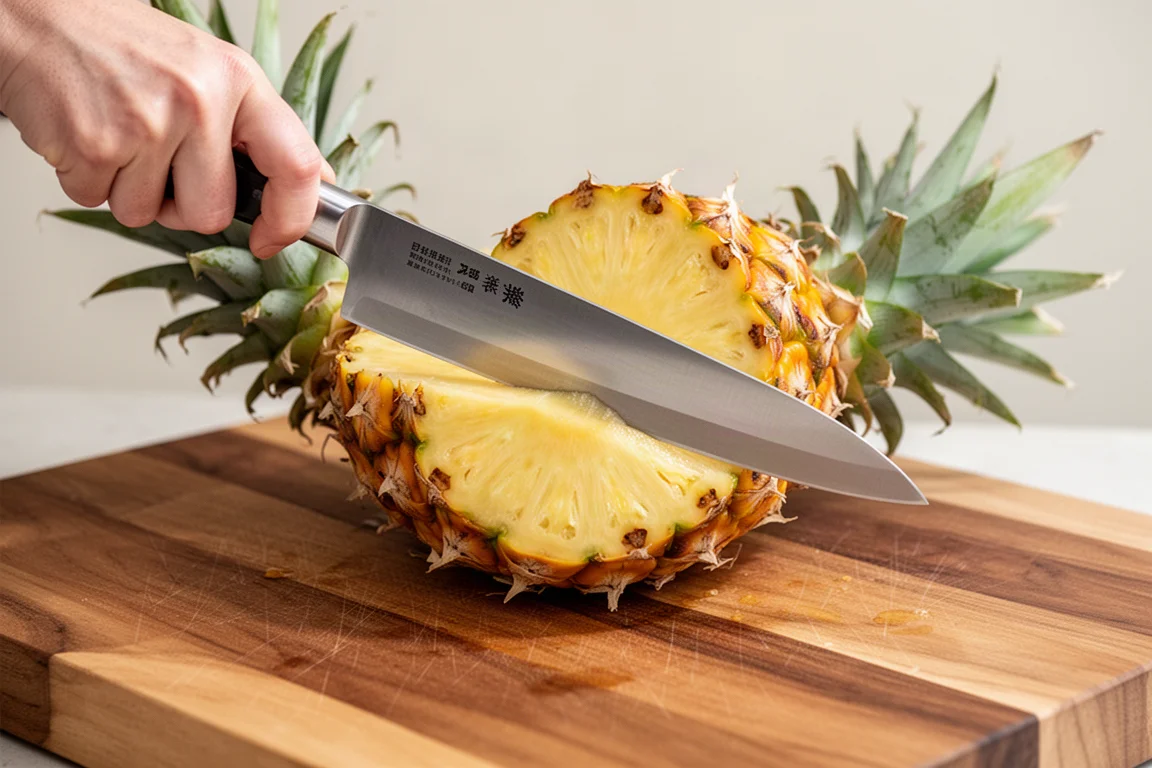
That last point matters more than it might seem. Japanese kitchen knives are often about the story behind them, and this one carries a real one. But even setting story aside, it is simply one hell of a performer. For anyone seeking a distinctive 230mm blade that blends a Hakata-inspired tip with kitsuke proportions, this is an easy recommendation.
Conclusion
The Isamitsu 230mm kitsuke combines striking looks, thoughtful ergonomics, and outstanding cutting performance in a single package. The unpolished spine and choil are a minor quibble, easily resolved at home. Everything else, from the tsuchime finish to the forward balance and effortless cuts, points toward a knife that can genuinely earn favorite-knife status. For cooks who value both character and capability in a Japanese blade, it deserves serious consideration.
Product link
View more details for Isamitsu 230mm Kitsuke
This product is mentioned in the review. Check the specifications, options, and compatibility before buying.
View more details for Isamitsu 230mm KitsukeFurther reading
Related Reviews
Japanese Kitchen Knives
Kyohei Shindo Funayuki Review: A Lightweight Tosa Traditional Japanese Knife
A light, thin-bladed funayuki from an up-and-coming Tosa blacksmith, available with a custom handle and a hand-refined edge from Tokushu Knife.
Japanese Kitchen Knives
Teryasu Fujiwara Denka Knife Series: A Rustic Icon Worth the Quirks
The Denka series pairs stainless-clad Aogami Super steel with remarkable edge geometry, but expect handcrafted imperfections along the way.
Japanese Kitchen Knives
Top 10 Japanese Kitchen Knives for 2026: Our Favorite Picks
Ten Japanese kitchen knives with great stories, standout craftsmanship, and real performance for 2026, from a Canadian-made bunka to a razor-thin sujihiki.