Hi-Fi Audio
New Hi-Fi Gear Worth Watching in 2026: GanFET Amplifiers, Tube Buffers, and Compact DACs
Nine new hi-fi releases reviewed on their merits, from a $99 tube buffer and three GanFET class D amplifiers to a touchscreen power amp, a USB bridge, and an active desktop speaker.
Introduction
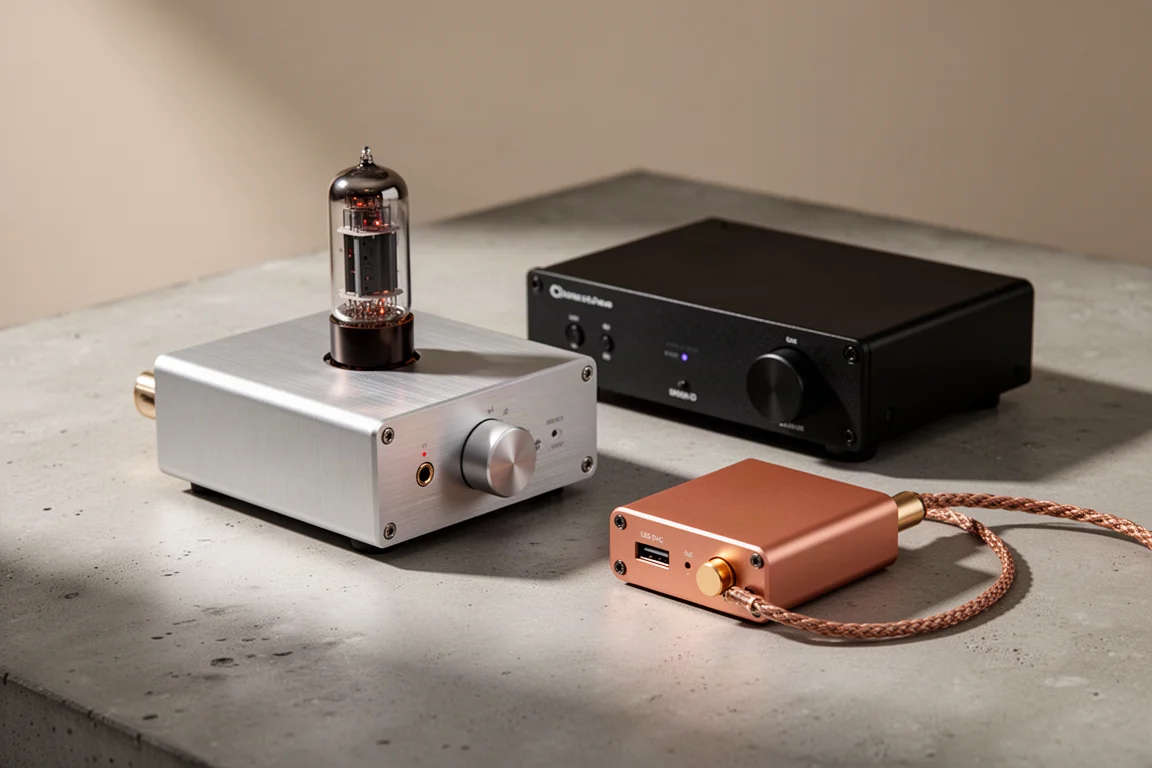
New hi-fi components tend to arrive in clusters, and the last few months have produced an unusually varied one. This roundup covers nine releases: a $99 tube buffer, three very different GanFET class D power amplifiers, a matched DAC and headphone amplifier from the same brand, a compact USB DAC built with tablet streaming in mind, a USB bridge for computer-based systems, and a small active desktop speaker.
They do not compete with one another. A tube buffer and an 800 W monoblock have almost nothing in common except a place in the signal chain, and that is the point. The useful question is not which of these is best, but which one addresses a real limitation in a specific system.
What to Look For in This Roundup
Four things separate a component worth buying from one that merely looks good on paper.
The first is function. Some of these products exist to change the sound of a system, and some exist to protect it. A tube buffer deliberately adds harmonic character. A USB bridge deliberately removes noise and jitter before the signal reaches a DAC. Both are legitimate goals, but they appeal to very different listeners.
The second is the relationship between measurements and results. A component can measure worse and sound more enjoyable, or measure better and make no audible difference at all. Several of the products here sit on opposite sides of that line, and it is worth being honest about which side you care about.
The third is connectivity. Inputs and outputs decide whether a component can actually be added to an existing system. Single-ended only, balanced only, digital only, analog only: each of those choices narrows the list of systems a product will suit.
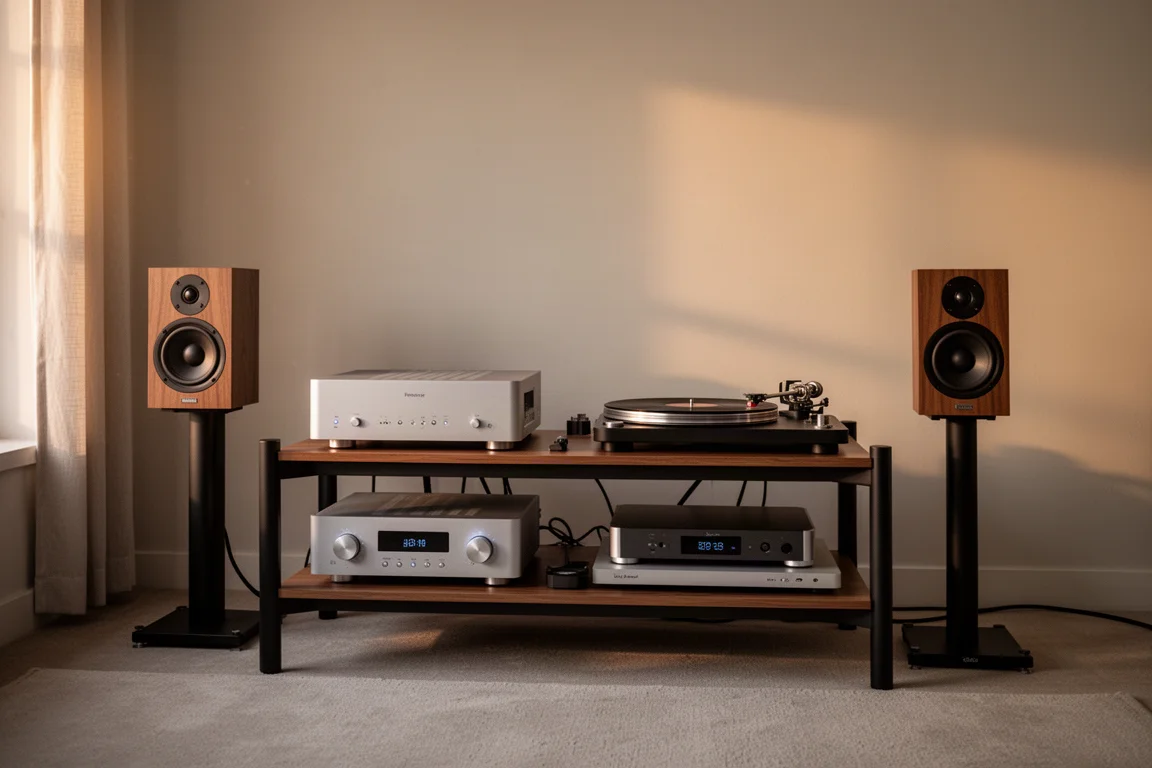
The fourth is physical practicality. Weight, chassis size, cable stiffness and the placement of sockets matter more than they are usually given credit for, particularly when a component is going to sit on a desk or hang off the end of a tablet.
The sections below take each product in turn, with the caveats that matter most for a buying decision.
Schiit Bof Tube Buffer: A $99 Entry Into Tube Tone
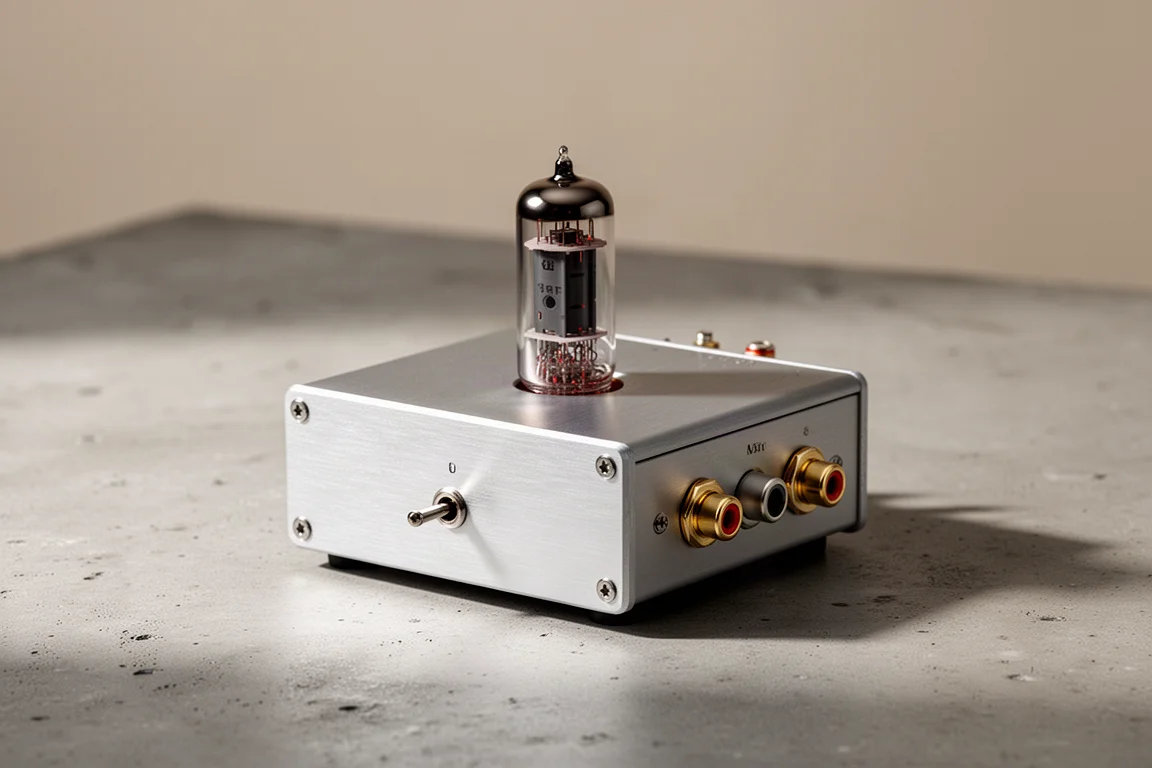
The Bof is a single-ended tube buffer, which means it sits between a source and an amplifier rather than replacing either. You run an RCA cable from a CD player, DAC or streamer into it, and another RCA cable out to your amplifier or preamplifier.
Inside there is one tube, a NOS 6N1P, handling both channels, and the circuit runs in class A. The tube protrudes from the top of the chassis, which makes it unusually easy to swap: it is compatible with 6922, ECC88 and 6DJ8 types, and changing it takes seconds rather than a session with a screwdriver.
What the buffer does is add a measure of harmonic richness to the signal. That is the audible character many listeners describe as warmth, and it is exactly the kind of distortion that flatters a lean-sounding budget DAC. It is also, by design, a change that will visibly worsen measured performance, and Schiit says so plainly. If you value a DAC for its measurement figures, this is the wrong accessory.
Unusually for this kind of product, there are two gain settings: 0 dB and 12 dB, selectable from the front panel. The power supply is linear, and the price is $99.
Availability is the main caveat. Schiit sells factory direct in the United States, where the buffer is easy to buy, but international distribution runs through a third party that rarely holds stock. Buyers in Europe, Australia and elsewhere often find it difficult to get hold of.
Live Crescendo Chorus: GanFET Class D at $995
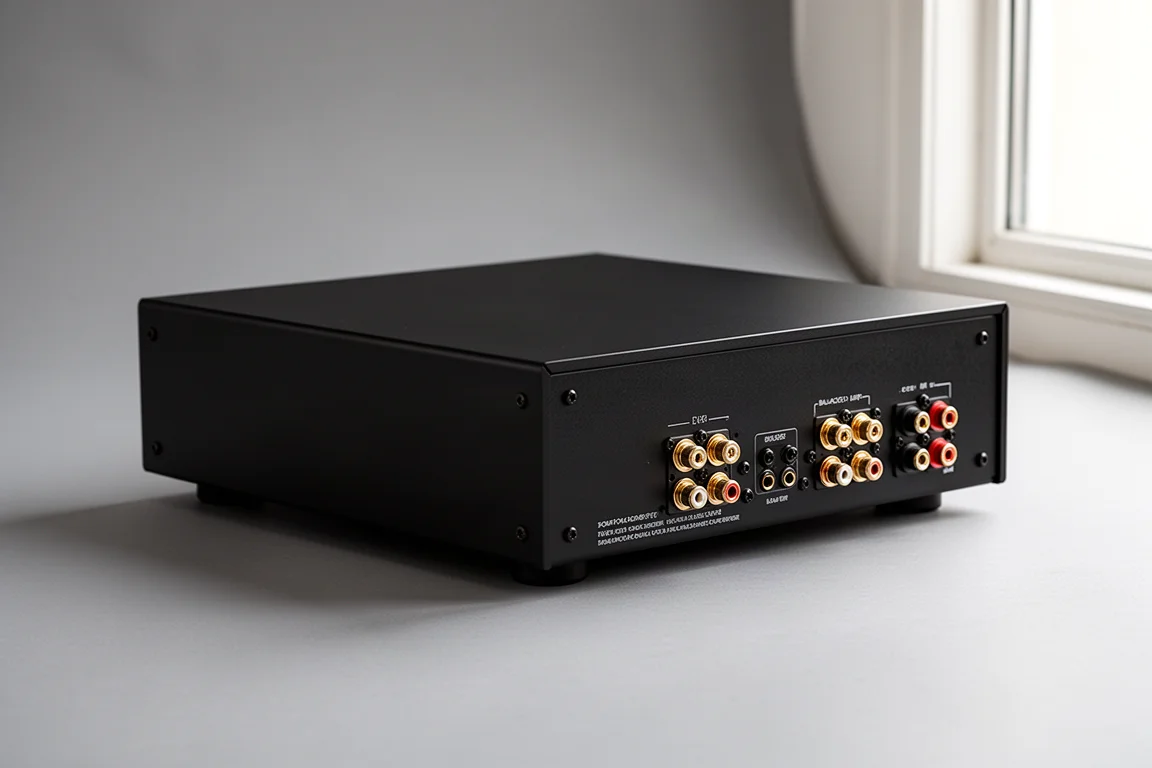
The Crescendo Chorus is a stereo power amplifier rated at 50 W into 8 ohms and 80 W into 4 ohms, and it can be bridged for 120 W into either load. It uses two GanFET output devices per channel, one for the positive half of the waveform and one for the negative half, switched at 768 kHz. That is twice the switching rate of the brand’s earlier GanFET monoblocks.
Power comes from a 160 W switch-mode supply. The argument for a high switching frequency in a supply is straightforward: the noise sits far above the audible band, where it is easier to filter, rather than in the middle of it.
At $995 it is priced well below the brand’s larger monoblocks. In one system it replaced a pair of roughly $3,000 stereo class AB amplifiers rated at 250 W with very wide bandwidth, which makes it a useful reference point for what a well-implemented class D design can do at a lower price and in a smaller box.
Why GanFET Switching Matters for Class D
Gallium nitride transistors are the reason class D amplification has moved upmarket over the past few years. Depending on whom you ask, they switch between 10 and 100 times faster than silicon-based MOSFETs, and that speed has consequences.
Every switching device has a dead time, the brief transitional gap between the on and off states. Nothing switches instantaneously. The shorter that gap, the more precisely the waveform can be reconstructed, and because dead time is itself a mechanism that generates distortion, reducing it lowers total harmonic distortion as a side effect.
Faster switching also opens the door to class D designs that run with little or no global feedback, since the switching behaviour is clean enough not to need correction. Other designers take the opposite view and apply heavy feedback instead, sometimes 60 dB or more. Both approaches can work.
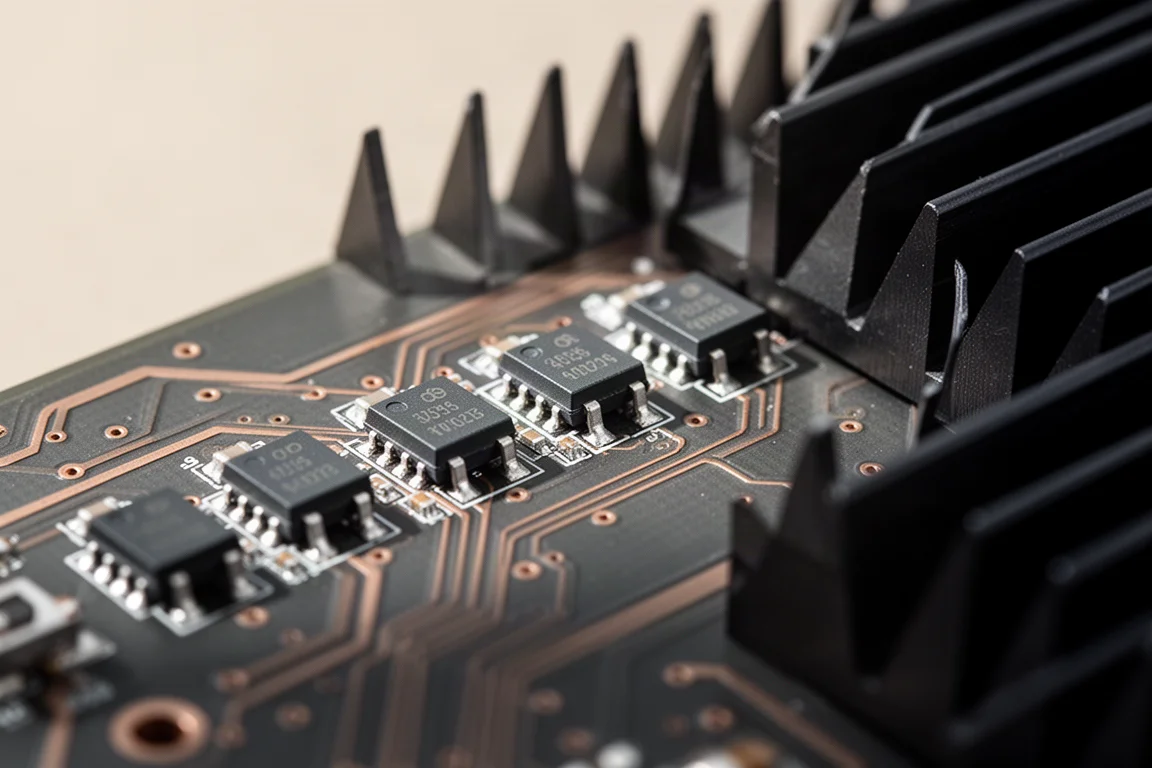
What the current generation of GanFET amplifiers offers is a combination that was hard to achieve before: very high power, very low distortion, smaller chassis, better efficiency and lower cost than traditional class A or class AB designs. The character can be tuned toward class A or toward class AB depending on the designer’s choices, which means the technology no longer dictates a single sound.
HiFi Rose RA80: A Touchscreen Power Amplifier
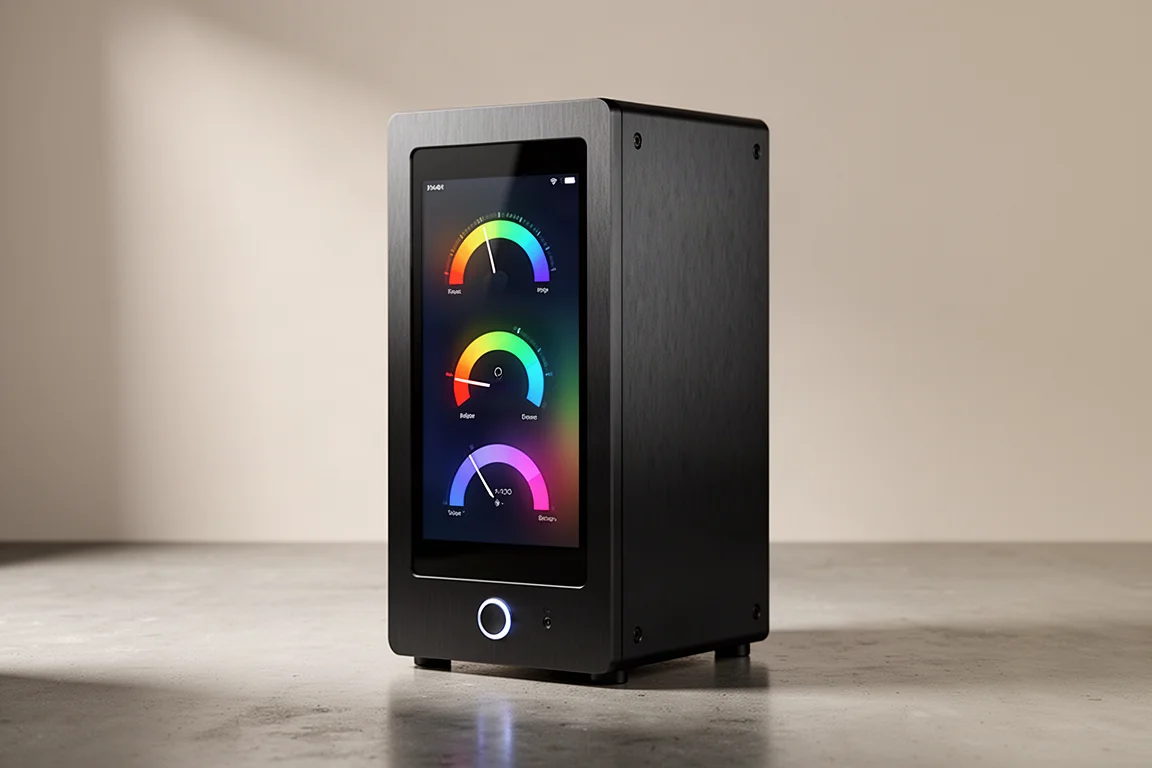
The RA80 is the most powerful amplifier in this roundup. It delivers 500 W into 8 ohms and 1,000 W into 4 ohms, with a claimed 2 kW peak into 2 ohms, from a 3,000 W switch-mode power supply.
It is also the most unusual to look at. The chassis is a mini tower, taller than it is wide, with a portrait orientation and a full-colour touchscreen across the front panel. In a power amplifier, that screen is the detail most people notice first, and it raises an obvious question about what it is for.
The display modes are software-driven, and early demonstrations showed a large VU meter in the centre with four smaller meters around it. There is room here for more than metering: a screen of that size could show album artwork, a static image, or something ambient that suits the room. The risk is that the same screen reads as a gimmick and distracts from the amplifier’s actual capability. Useful functions such as showing real-time power draw would help justify it.
The RA80 is expected to retail at around €8,000 per pair, and at the time of writing it was not yet shipping.
Ixie Core Monoblocks: Amplifier Specs That Rival Digital Sources
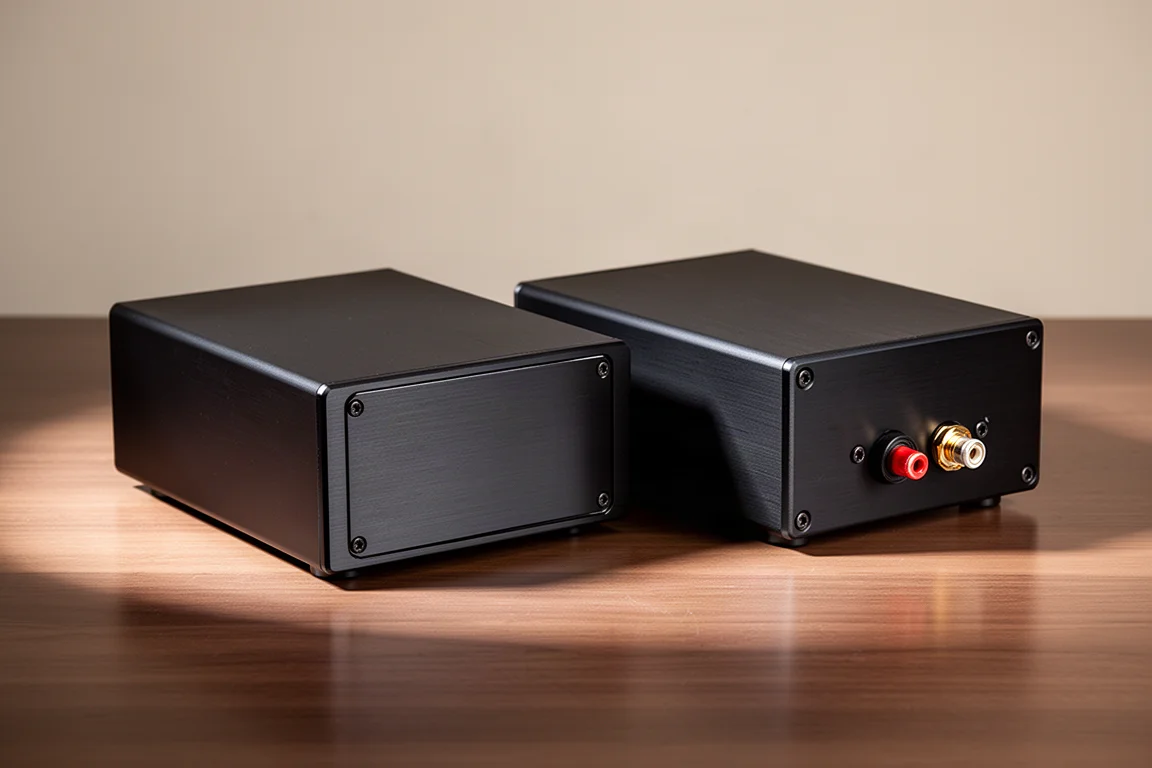
The Ixie Core monoblocks are the most spec-focused design in this roundup. They are rated at 200 W into 8 ohms, 400 W into 4 ohms and 800 W into 2 ohms, with the power doubling as impedance halves. The output devices are GanFETs switching in the megahertz range, and the power supply is a 300 W GanFET design as well.
The numbers are striking for an amplifier: output impedance of 63 micro-ohms, a damping factor of 20,000, total harmonic distortion below 0.00005%, and a signal-to-noise ratio of 140 dB. There is also selectable gain and a choice of AC or DC coupling.
Those figures matter because they let an amplifier match a modern digital source. A DAC with a 140 dB signal-to-noise ratio connected to a tube amplifier that manages 80 dB is a mismatch in the most literal sense, and there is no way to recover the difference further down the chain.
The circuit is not new. It is based on a 2005 patent that attracted attention at an Audio Engineering Society convention, where it used a linear power supply with dual 500 VA toroidal transformers and produced around 250 W into 4 ohms. Two decades later the same topology is being revisited with GanFET output devices and a GanFET supply, and the designers report that reduced dead time lowers distortion as well as allowing lower or zero feedback.
At the time of writing, no finished amplifier had been shown and no price had been announced. First production units were expected to ship later in the year.
Luxsin BD9: A DAC With a Detachable Control Knob
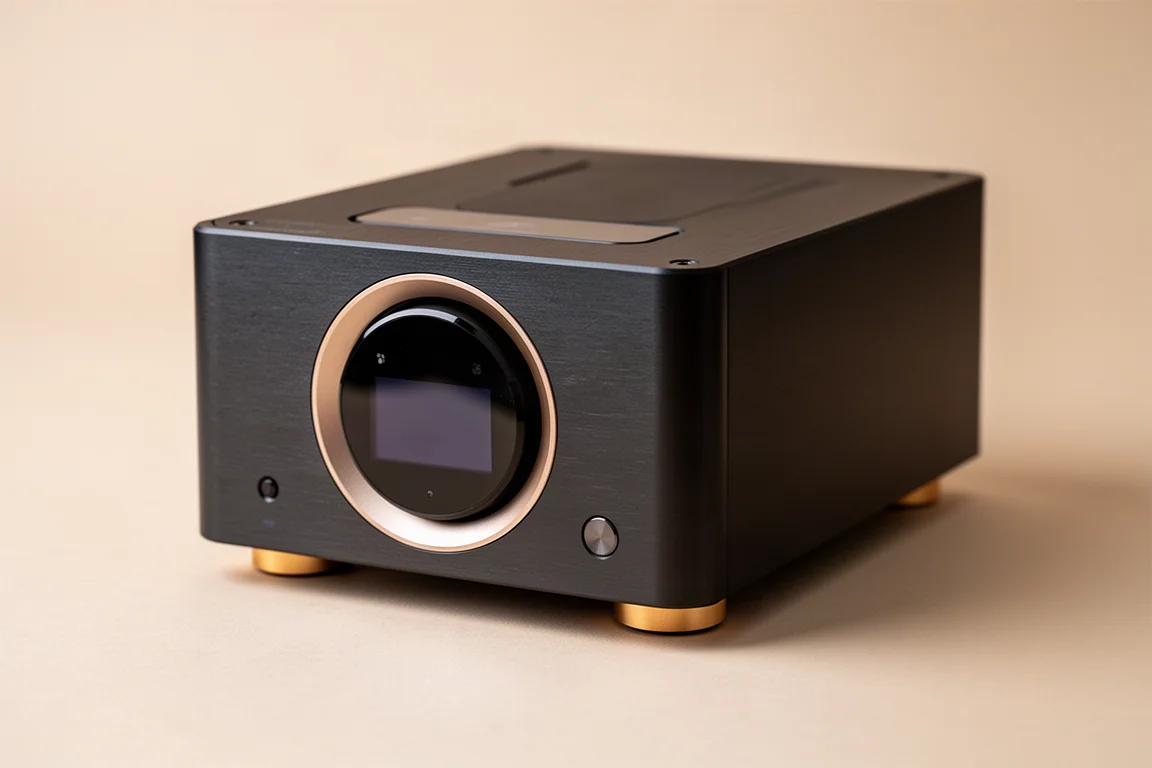
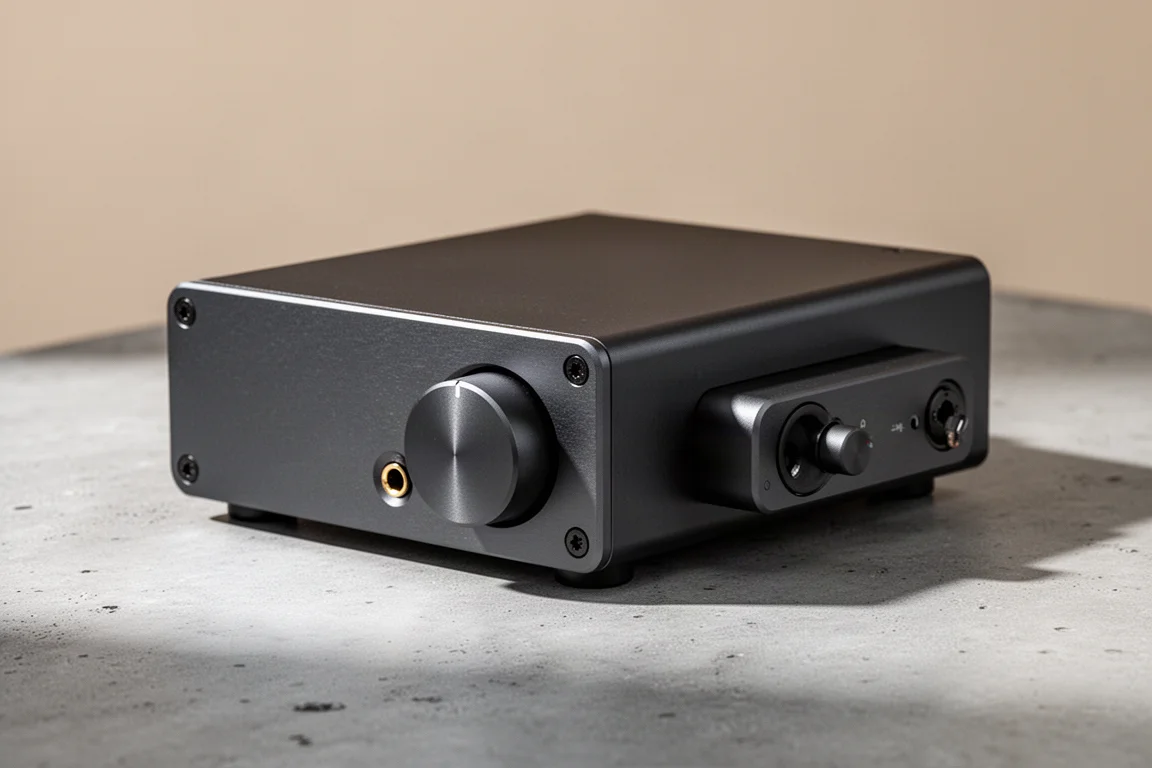
The BD9 is a DAC priced at around €1,250, and its most interesting feature is its control knob. The knob sits on the front panel and contains a small touchscreen display in the middle, which you use to scroll through inputs.
Then you lift it off. The knob detaches and works as a remote control, and when you are finished you set it back on the chassis and it returns to being a control knob.
The idea only works if the implementation is right. A remote that is too light will slide around when you turn it, and a knob that rocks on a table is worse than no knob at all. The unit shown has a metal knob roughly an inch thick and about an inch and a half across, with a gold-coloured plinth at the base that makes contact with the front of the chassis. That suggests enough mass to sit still, though the final judgement belongs to the shipping product.
Luxsin is the sister brand of EverSolo, and the BD9 was introduced alongside a matching headphone amplifier.
Luxsin BH9: The Matching Headphone Amplifier
The BH9 is the companion piece to the BD9, and it is priced at the same level, around €1,250. The naming is straightforward: the D in BD9 stands for DAC, and the H in BH9 stands for headphone amplifier.
For listeners building a small desktop system, the appeal of a matched pair is practical. Two components with the same footprint, the same finish and the same design language are easier to live with than two boxes from different brands, and the two units were developed together.
As with the DAC, the detail worth watching is the execution rather than the concept.
AudioQuest DragonFly Copper: A Dongle DAC for iPad Streaming
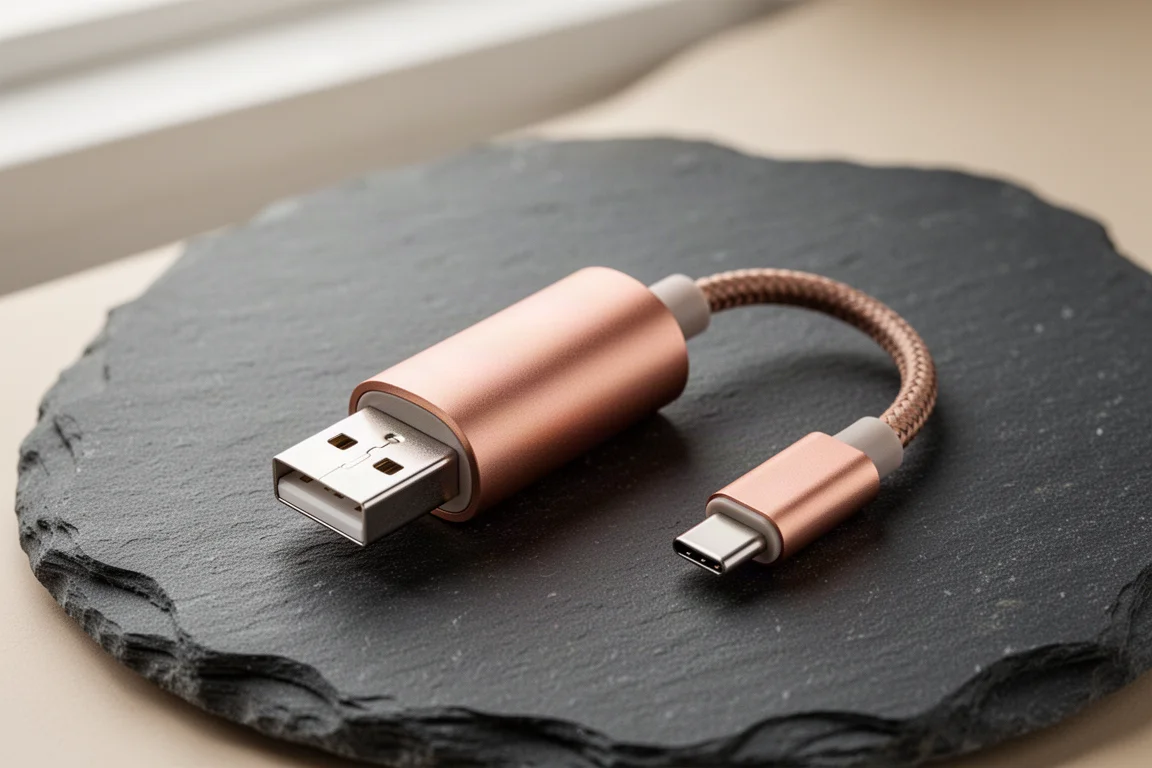
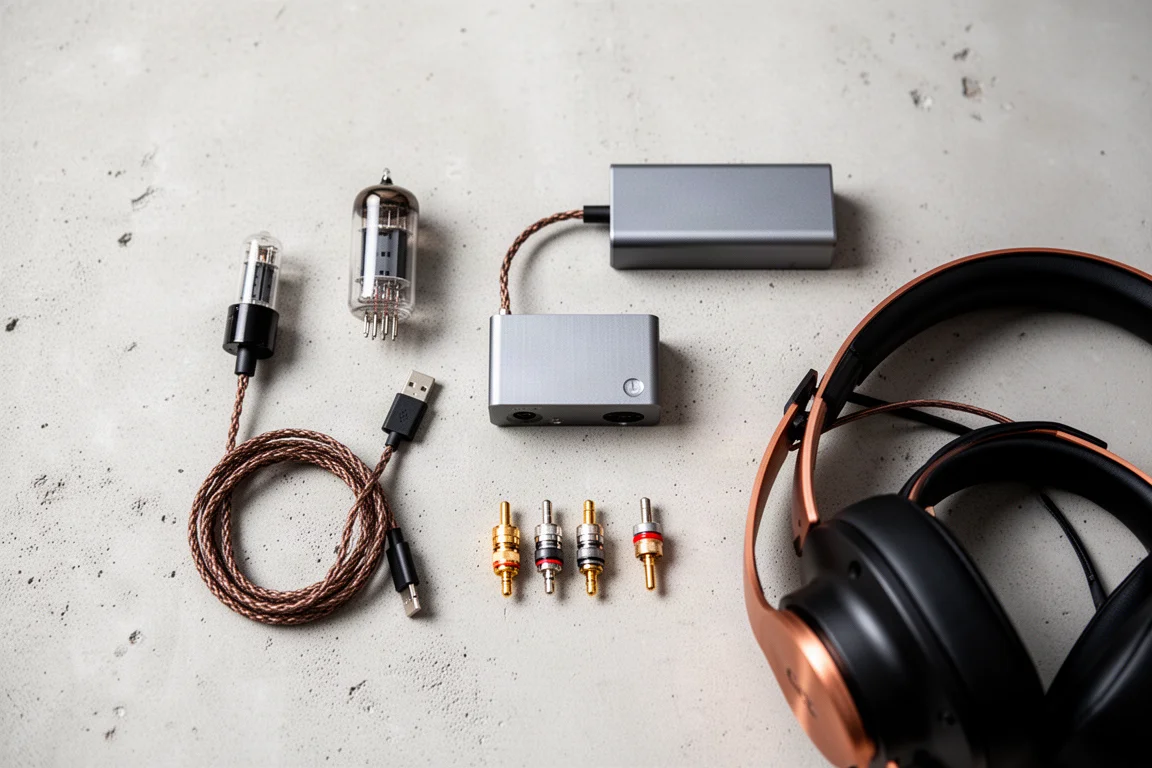
The DragonFly Copper is a compact USB DAC with a copper case, a USB-A plug at one end and a single 3.5 mm output at the other. It ships with a DragonTail adapter that converts the connection to USB-C at no extra cost, which is what makes it usable with a tablet. The 3.5 mm output can also feed an amplifier if you run it at full volume, effectively as a line-level source.
The copper version is a meaningful update rather than a cosmetic one. With MQA support no longer part of the design, AudioQuest was able to move to a new USB microcontroller and a new DAC and headphone amplifier chip, described as more powerful while drawing less power than earlier versions. Power draw is not a trivial detail: phones and tablets reject devices that ask for too much current, which is why the original DragonFly from 2012 only worked with laptops, and why phone and tablet support only arrived with the 2016 models.
The iPad connection is the reason this DAC matters right now. An iPad or iPhone is one of the simplest ways to get high-resolution audio out of a streaming service without dealing with sample rate conversion elsewhere in the chain. Add a DAC like this one and the tablet becomes a legitimate digital front end.
Why Weight and Outputs Matter With iPad Streaming
Sound quality is not the only thing to consider when choosing a compact USB DAC for a tablet. It may not even be the first thing.
Weight is the obvious problem. A heavier DAC hangs off the USB socket and pulls on the connector, which is uncomfortable in a pocket and hard on the port. A lighter one stays put. A flexible adapter helps because it absorbs some of the load, but it also makes the assembly more awkward to carry.
Output sockets matter just as much. A single-ended 3.5 mm output is simple and light. A balanced output offers a better connection but needs an adapter, and those adapters are often bulky and heavy enough to undo the benefit by dragging on the socket.
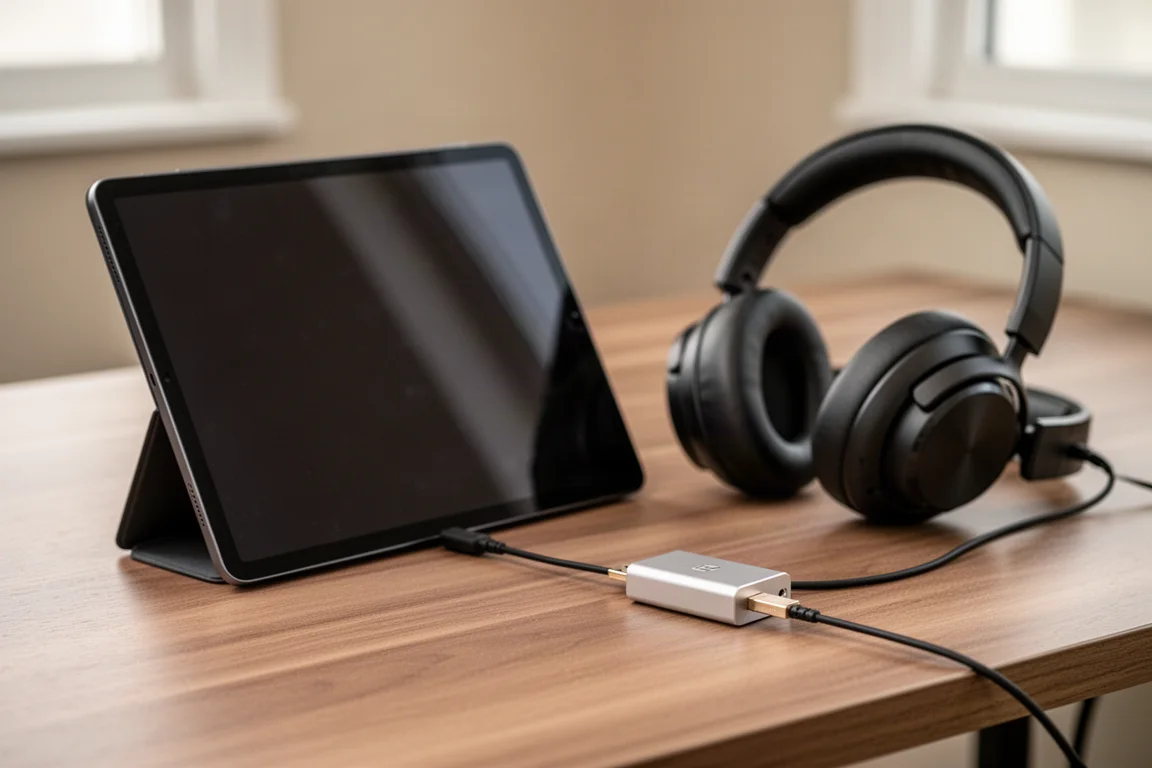
Cable routing is the third factor. If a headphone cable leaves the DAC at a right angle, it survives a pocket. If it leaves straight out, it is the first thing to be crushed. If you plan to use the DAC at a desk rather than in the street, a detachable cable and a longer run to the tablet solves most of these problems at once.
The practical conclusion is that the best compact DAC for a tablet is the one that stays connected and stays out of the way, and that the differences between these devices are small enough that comfort and configuration deserve as much attention as the chip inside.
Gustard U26: A USB Bridge for Computer-Based Systems
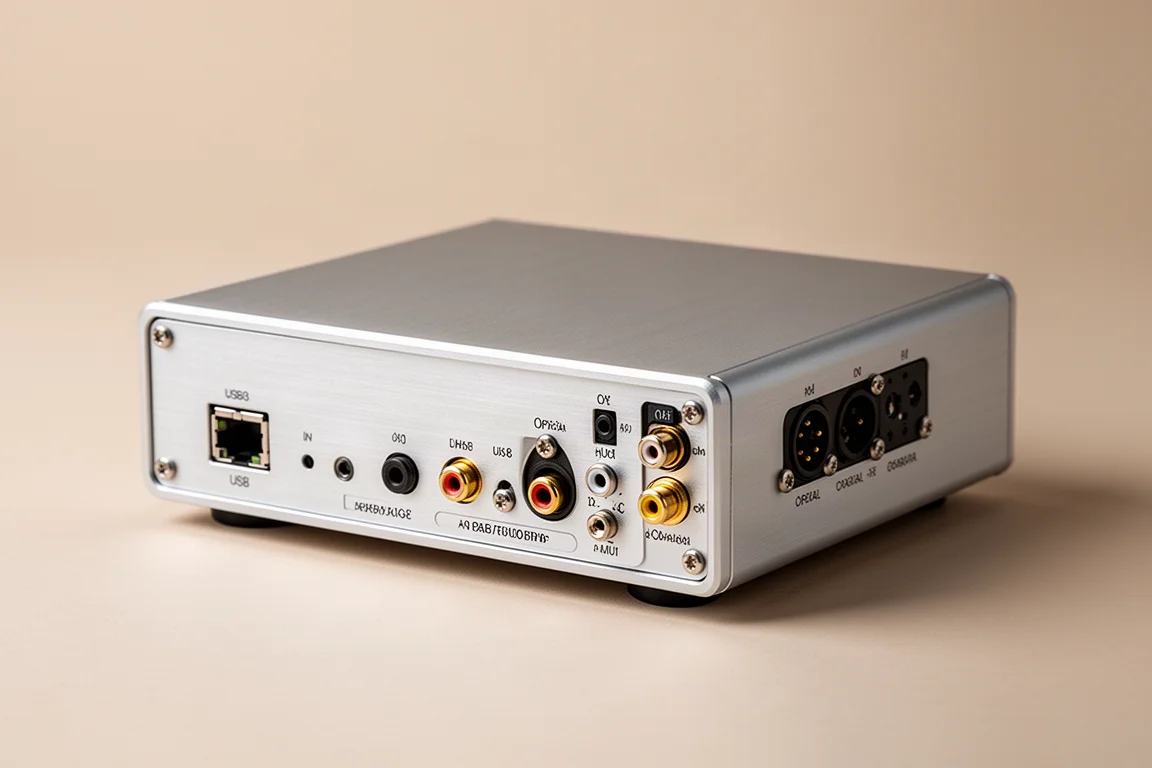
The U26 is a USB bridge, which means it takes a USB signal from a computer and converts it to the digital formats a DAC expects. There are no analog outputs at all. Inputs are USB only; outputs include optical, I2S in two formats, AES/EBU, and S/PDIF on both coaxial and BNC connections. There is also a 10 MHz input for an external clock.
The price is $990, roughly €1,000. The unit was co-developed with Amanero, one of the companies that specialises in USB transceiver design, and the signal passes through multiple isolation stages before it reaches the internal circuitry. It supports PCM up to 1536 and DSD up to 2048.
Those rates look excessive until you consider software upsampling. Players such as Roon and HQPlayer can take a standard 44.1 kHz or 48 kHz file and resample it to a high-rate DSD stream before it leaves the computer. Doing that work on a computer, which usually has more processing power than the converter inside a DAC, takes the load off the DAC itself.
The real argument for a bridge like this is financial. If you own a DAC costing up to around €4,000 and want better performance, you can sell it, lose roughly half its value, and buy something twice as expensive, or you can keep it and add a bridge in front of it. On a €1,500 DAC the improvement was the most pronounced; on a more expensive DAC it was smaller, and smaller again when the source was already a low-noise transport rather than a computer hardwired to the internet. The noisier the source, the more the bridge has to do.
Aune Desktop Speaker: Active, Analog, and Compact
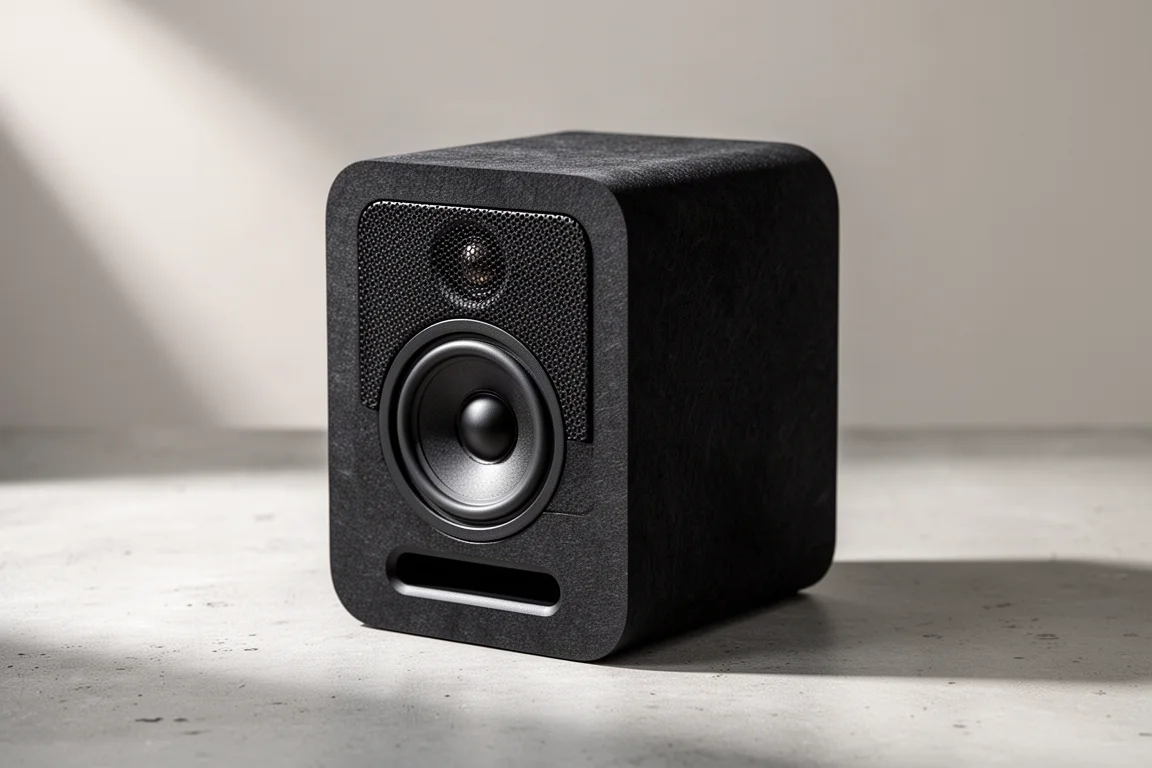
The Aune desktop speaker is the brand’s first loudspeaker, and it is built around a specific idea of what a desktop speaker should be: active, coaxial, and analog.
The driver layout is coaxial, with a 5.5-inch mid-bass unit and a 1-inch soft-dome tweeter at its centre. Coaxial drivers place both sources on the same axis, which improves imaging at the close listening distances a desk demands. Amplification is class AB for both drivers, with 60 W feeding the mid-bass and 40 W feeding the tweeter, and it is a true dual mono design: each speaker has its own power cord, so there is no primary and secondary unit.
The crossover is active analog rather than DSP-based, which means no digital latency and analog inputs only. RCA and XLR connections are provided, along with a bass attenuator on the rear panel offering settings from -6 dB to +2 dB. The cabinet uses high-density fibreboard rather than the more common medium-density fibreboard, weighs 8 kg per speaker, and is available in black or white. A slot-loaded port on the front helps with placement close to a wall, and the rated response extends down to 45 Hz.
The price is around €600 per pair, and it is sold through Amazon, where the delivered cost to some markets lands closer to €895 once VAT, shipping and import duty are included.
Overall Buying Advice
If your system sounds lean and you want to change its character rather than its resolution, the $99 tube buffer is the cheapest way to find out whether you enjoy tube colouration. It will not improve the measurements, and it is not meant to.
If you are moving to class D, the three amplifiers here show how wide that category has become. A $995 stereo amplifier with 768 kHz GanFET switching and bridgeable output covers most small and medium systems. An 800 W monoblock with a 140 dB signal-to-noise ratio and selectable gain is aimed at listeners whose digital front end already outperforms their amplification. The touchscreen tower sits at the other end: maximum power, maximum presence, and a display concept that still needs to prove its usefulness.
If your source is a computer, a USB bridge is the least disruptive upgrade path, because it lets you keep the DAC you already own. The benefit scales with how much noise your source produces, so a dedicated low-noise transport gains less.
For desktop systems, the analog active speaker is the simplest route to good sound in a small space, provided you already have a DAC or preamplifier with RCA or XLR outputs. And for tablet streaming, the practical differences between compact DACs come down to weight, output type and cable routing as much as anything else.
One general note: availability varies. Some of these products ship direct, some go through Amazon, and some were still in development at the time of writing. Checking the shipping and returns policy before ordering is worth more than another hour of spec comparison.
Conclusion
Nine components, and no single winner, because they do not solve the same problem. A tube buffer for tone. GanFET class D for power and efficiency at several price points. A detachable knob for people who misplace remotes. A USB bridge for computer-based systems. A compact active speaker for a desk. The right choice depends on which part of your system is holding it back.
Further reading
Related Reviews
Hi-Fi Audio
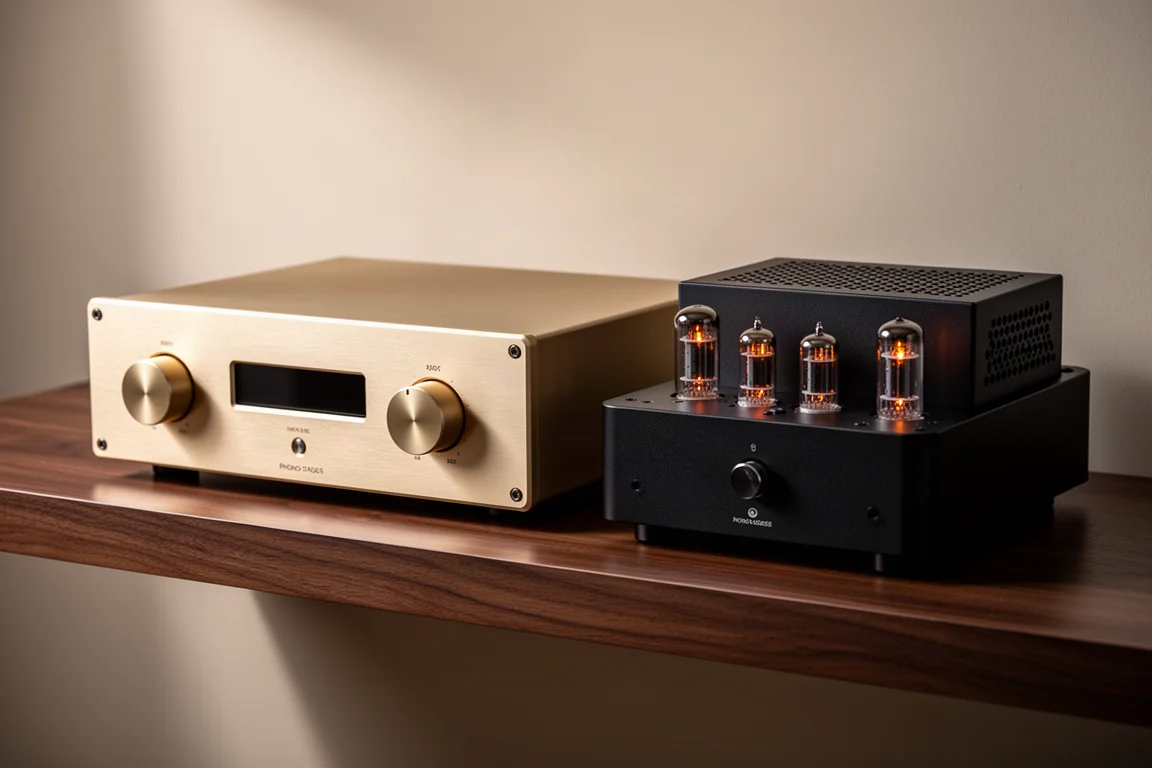
Accuphase C-57 vs Allnic H-7000V: Two High-End Phono Stages Compared
A fully balanced solid-state phono stage with a pitch-black noise floor meets a tube design built for well-loved records. Here is how to choose between them.
Hi-Fi Audio
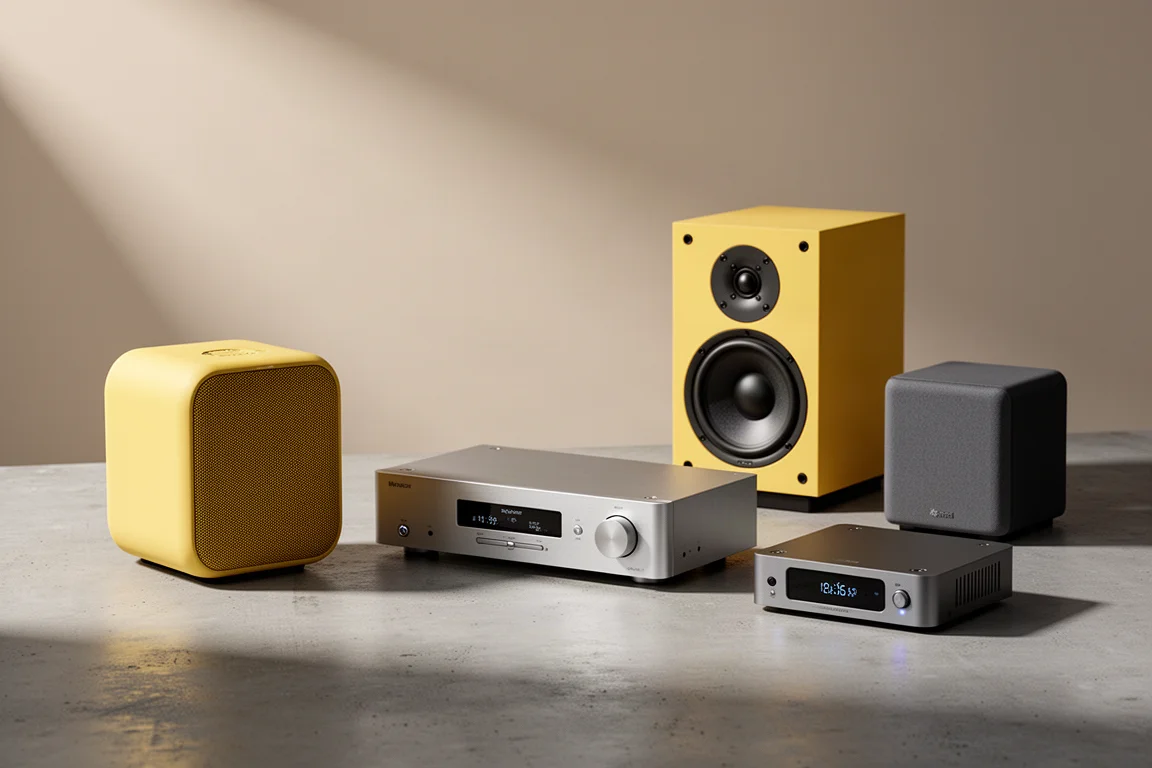
Active vs Passive Hi-Fi: Five Components for a Modern System
Five components that define modern active and passive hi-fi systems, with the strengths, trade-offs and setup details worth weighing before you buy.
Hi-Fi Audio
Advance Paris A10 Apex Review: A Hybrid Integrated Amplifier That Covers a Lot of Ground
A French hybrid integrated amplifier with a class A tube preamp stage, analogue power meters, and an internal DAC and phono stage good enough to make extra boxes unnecessary.