Hi-Fi Audio
New Hi-Fi Gear Worth Knowing About: Nine Products From CD Players to Crossover DACs
Nine recent hi-fi products, from a compact CD player with a balanced headphone output to an eight-channel crossover DAC, a budget hi-fi rack, and a streaming amplifier that can drive wireless surrounds.
Introduction
The hi-fi market has a habit of announcing products many months before anyone can actually buy them. This roundup takes a different approach: nine pieces of gear that are either available now or close to it, each with a clear job to do. They range from a compact CD player with a balanced headphone output to an eight-channel crossover DAC, a flat-packed hi-fi rack that costs less than most shelves, and a streaming amplifier that can drive a center channel and wireless surround speakers.
Not everything here suits everyone. Some of these products are aimed at listeners who want one box to do several jobs. Others are built for people who already know how they want to cross a subwoofer over to their main speakers. The notes below focus on what each product actually does, where it fits, and what to check before buying.
Shanling CD80 Mark I: A CD Player With a Headphone Focus
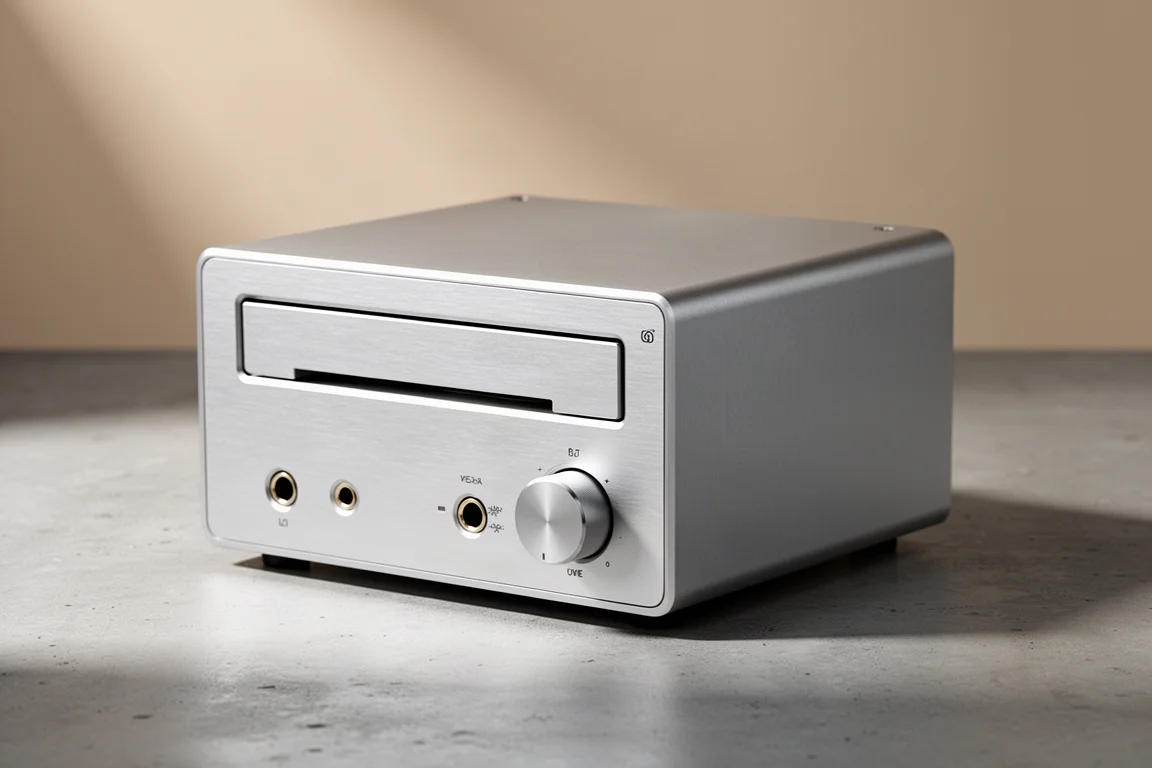
The CD80 Mark I is the successor to the CD80, and it addresses the most common complaint about the original. That model used a slot-loading mechanism and, in some situations, did not play gaplessly. The Mark I moves to a tray, and Shanling states that it plays CDs gaplessly. That alone matters for anyone who listens to live albums or continuous mixes, where a gap between tracks breaks the illusion.
There is a USB-A socket on the front, so you can plug in a thumb drive or a hard drive and play files from it. File playback is gapless as well, but it runs through Shanling’s Eddict app, which is worth trying before you commit if that is how you plan to listen. The app is a required part of that workflow rather than an optional extra.
The headline feature for desktop listeners sits on the front panel: a 3.5 mm single-ended headphone socket and a 4.4 mm balanced one. Balanced headphone outputs are rare on CD players. The balanced socket delivers up to 850 mW into 32 ohms, and the output impedance is under 1 ohm, which suits the low impedance of most in-ear monitors. There is also a Bluetooth input, RCA outputs for a conventional system, a coaxial output for an external DAC, and a volume control that lets the player double as a preamp.
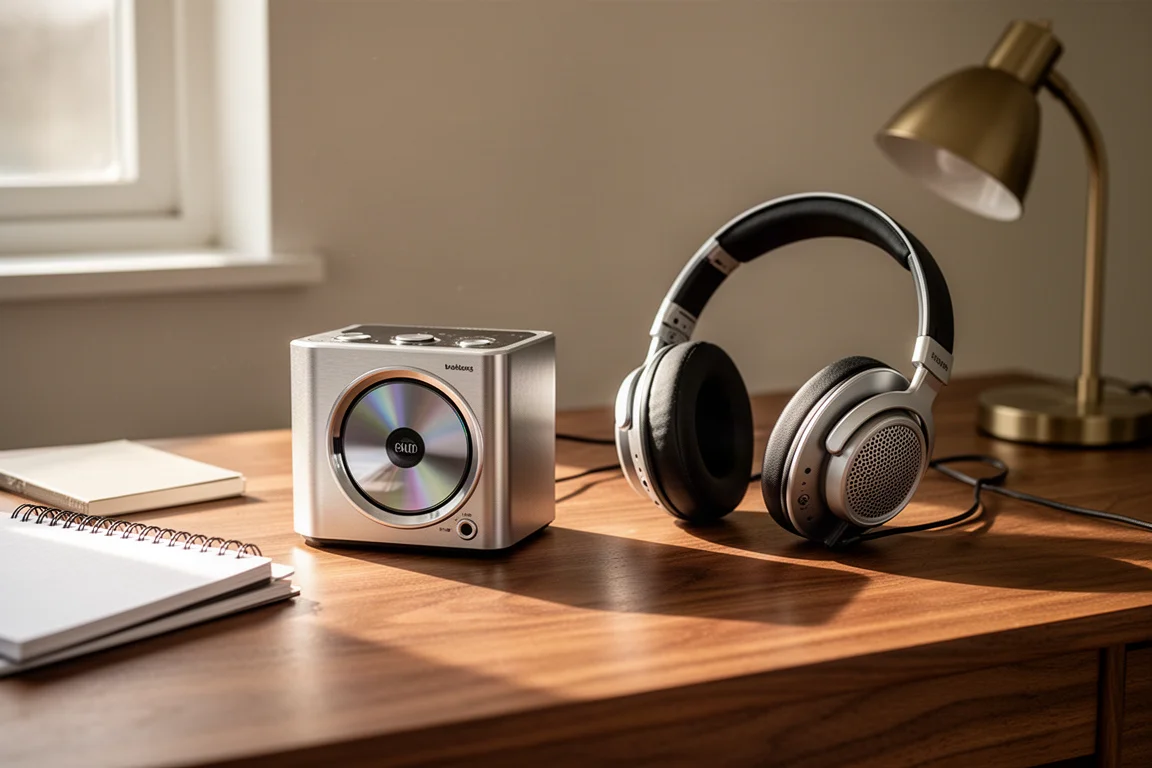
That preamp function is worth keeping in perspective. It is likely a passive attenuator rather than a gain stage, which is fine for a pair of desktop powered speakers but less suited to a high-end system, where it is more likely to be exposed. At $359, the CD80 Mark I sits alongside entry-level CD players from established brands while packing a headphone amplifier, a USB file player, and a preamp into a three-quarter width chassis. For a desk system, that combination is hard to argue with.
Virtual Hi-Fi Viper: A Small Speaker With a Subwoofer Input Built In
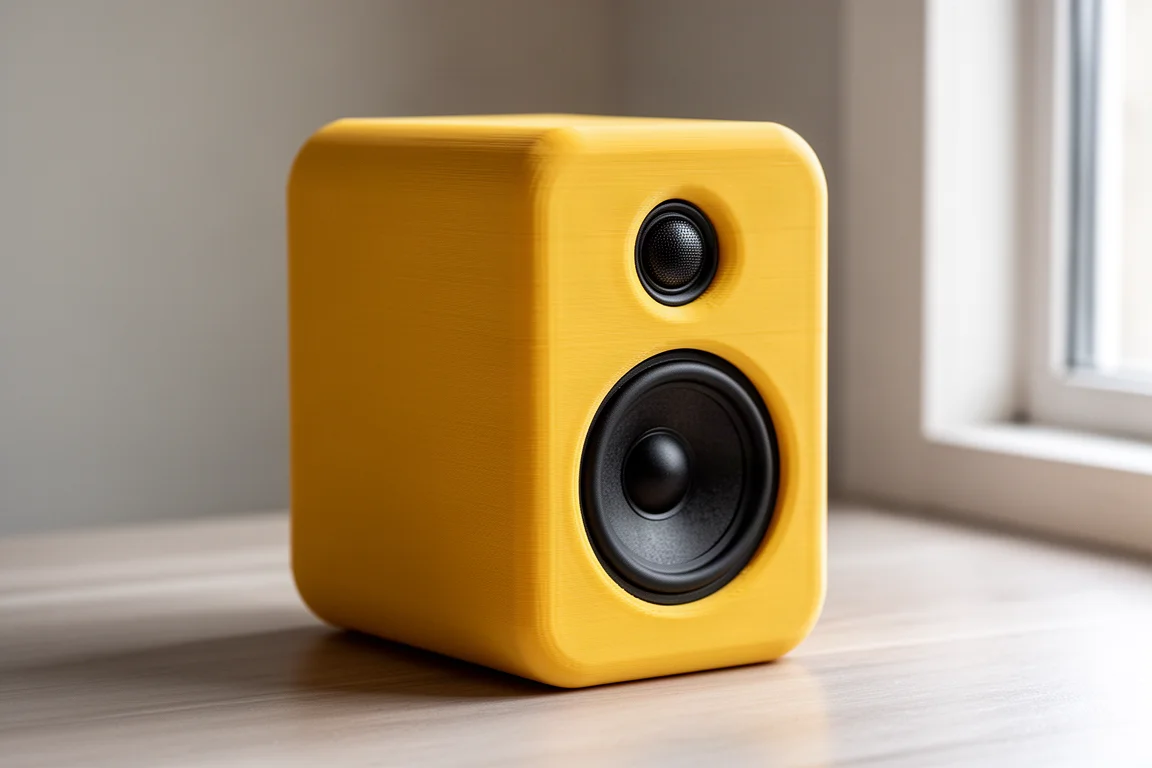
The Viper is a compact Polish speaker with a 3D printed cabinet, available in several colors. The back panel is where it gets interesting. Alongside the usual pair of binding posts, labeled 4 ohm nominal, there is a third post labeled “amp plus 80 Hz.”
That third post is an 80 Hz high-pass input, not a subwoofer output. Wiring the amplifier to it means the speaker never sees the lowest two octaves, which has two practical effects. First, the woofer no longer has to move as far to produce bass, which reduces the distortion tied to excursion and to stopping the cone. Second, the voice coil stays cooler during long, bass-heavy sessions, which limits the thermal compression that gradually makes a system sound brighter as the bass loses level.
The crossover uses a large 220 microfarad capacitor, a costly part that sits in the signal path for everything above the crossover point. Components of that quality rarely appear in a speaker of this size, which is part of what makes the high-pass input unusual. The designer added the feature after finding that the speaker could be overdriven in a 40 square meter room with loud, low, synthetic bass. The trade-off is that the high-pass only helps when a subwoofer is handling the bass, so the feature makes most sense in a 2.1 system.
Collinear Acoustics DSP8C: An Eight-Channel Crossover DAC
Collinear Acoustics is a UK company serving both professional and consumer markets, and the DSP8C is its first model. It is an eight-channel DAC with a volume control, which makes it a variable DAC or a digital preamplifier depending on how you use it.
Inputs include USB, coaxial, and optical, with coaxial and optical outputs as well. The analog side offers eight outputs on both XLR and RCA. A browser-based interface handles configuration, with FIR filters running up to 192 kHz at 24-bit, EQ, and full crossover control. Filter shapes include Bessel, Butterworth, Chebyshev 1, Chebyshev 2, and Linkwitz-Riley, and you can set frequency, slope steepness, gain, phase, and delay per channel. Each channel can be assigned to RCA or XLR and muted individually, and a remote handles volume.
A full three-way crossover would use six channels plus two for subwoofers, but the more common use case is simpler: an outboard crossover that adds a subwoofer to a pair of stand mounts. Set Linkwitz-Riley, choose 80, 70, or 60 Hz, adjust the gain, and you are done. Digital delay is the one feature analog crossovers cannot match. If a subwoofer sits in a corner three meters behind the main speakers, you can delay the mains so that everything arrives together, and the bass stops sounding like it is hanging behind the rest of the music. The built-in DAC is an ESS Sabre 9039.
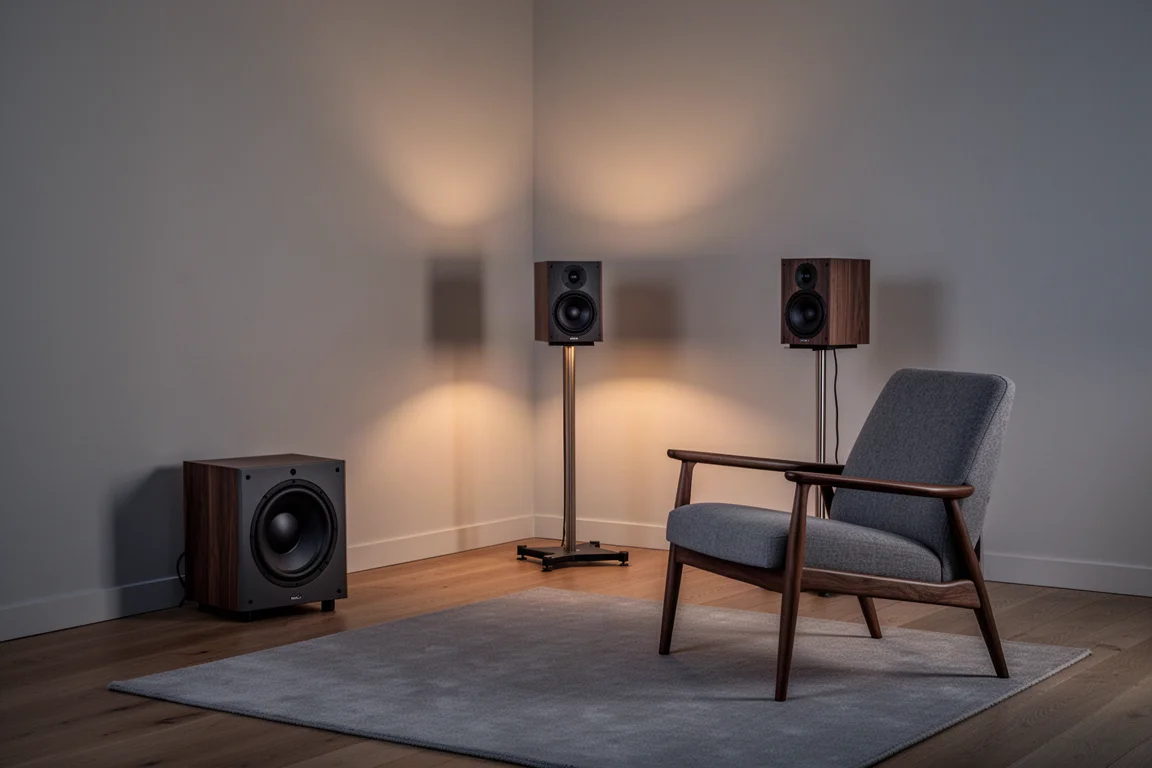
The catch is the interface. There is no automated room correction and no measurement microphone, so anything beyond a basic crossover setting requires knowing what you are doing. A short beginner’s guide covering just the three channels needed for subwoofer integration would go a long way, because the screens can look intimidating at first glance. For a simple subwoofer crossover the unit is priced well below what capable analog crossovers tend to cost, which is the strongest argument in its favor.
FITUEYES Hi-Fi Rack: Furniture Money, Real Load Ratings
Most racks at this price look like racks. The FITUEYES design leans the other way. The shelves are trapezoidal, tapering toward the rear, and the two front uprights angle back, which gives the whole thing the look of a mid-century side table rather than an equipment stand. There are four shelves, it ships flat packed, and assembly is straightforward.
The numbers matter more than the styling. The top and bottom shelves are rated to 50 kg each, while the two middle shelves are rated to 20 kg. The outer shelves are supported by metal, and the middle shelves bolt in from the rear with long bolts, with L-brackets at the front so that no bolt holes show on the uprights. That bracket arrangement has a useful side effect: headphone hangers slot in without tools and stay put under the weight of the component resting above them.
The design has also been revised since launch. The rear MDF slats have been replaced by a much thinner metal frame, which is stronger and leaves more open space behind the shelves. The trade-off is that the L-shaped bracket intended to hold a power bar no longer fits. The four feet use M8 threads with rubber bumpers, so you can swap in isolators if you want to decouple the rack from the floor. The uprights are hollow rather than solid, which is expected at this price.
Pricing is where it gets surprising: around 129 euros including VAT, with the version that adds LED strip lighting running closer to 180 euros on Amazon UK. The company behind it is a large one, selling across a much wider catalog than hi-fi furniture, with fulfillment centers in several regions.

Bluesound Power Node: A Streaming Amplifier That Reaches Into Surround
The Power Node is a shoebox-sized streaming amplifier running BluOS, with Spotify Connect, Tidal Connect, AirPlay 2, and Roon Ready support, plus a touch plate on top for volume and basic transport controls. The new version adds a third pair of binding posts for a center channel, which turns a stereo system into a 3.1 setup without a separate processor.
That center channel matters more than it sounds. Once more than one person is spread across a wide couch, the center image drifts off to one side of the television, and a dedicated center speaker pulls it back.
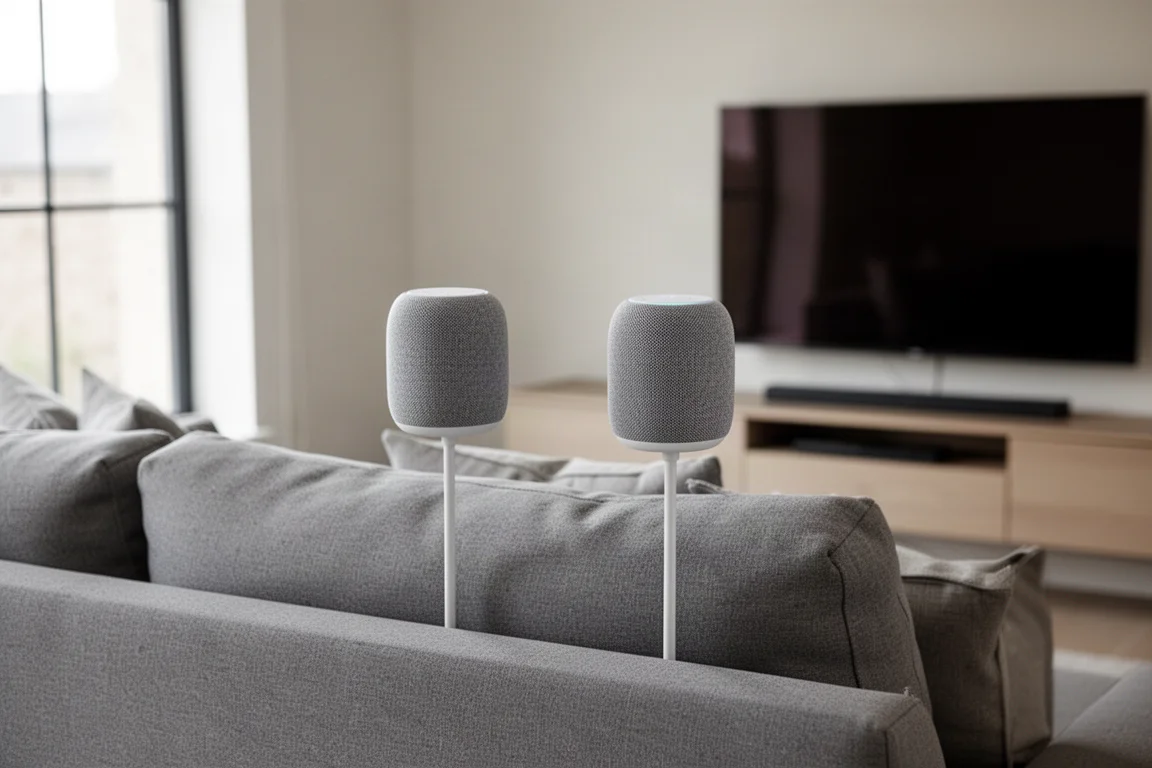
The bigger addition is wireless. The Power Node can stream to a pair of Pulse Flex speakers over a proprietary BluOS bonded speaker link, which covers the rear channels without running cable behind the couch. Stereo output is 100 watts per channel into 8 ohms, dropping to 80 watts per channel once the center channel is in play. There is HDMI on the back and a headphone socket on the front. Bass management has long been part of the package, with low-pass filtering for a subwoofer, though there is no digital delay control here.
Amplification has changed as well. This generation uses a direct digital amplifier with GaN FETs on the output stage rather than a conventional class D layout, and the faster switching speeds of GaN devices are becoming more common across the industry. At $1,099 to $1,200 for the amplifier, plus a few hundred dollars for the surround speakers, a complete 5.1 system lands in a reasonable place for the feature set.
Bluesound Pulse Flex: Surround Channels Without the Cable Run
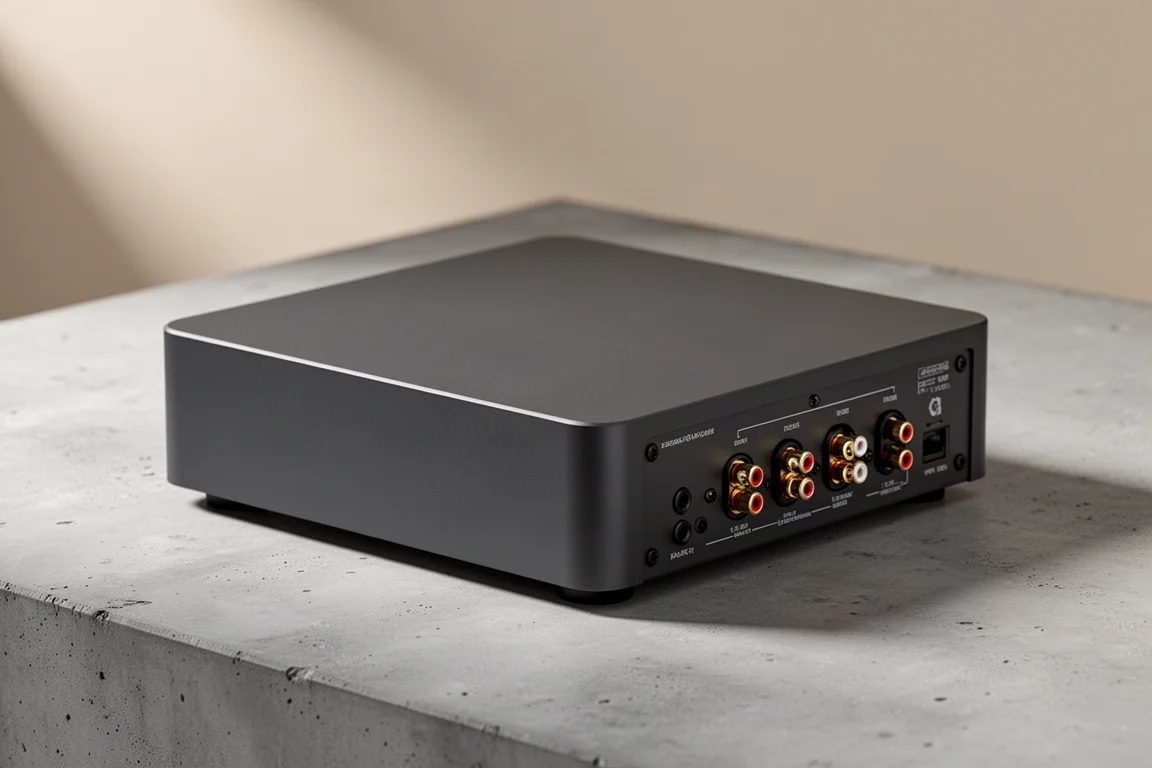
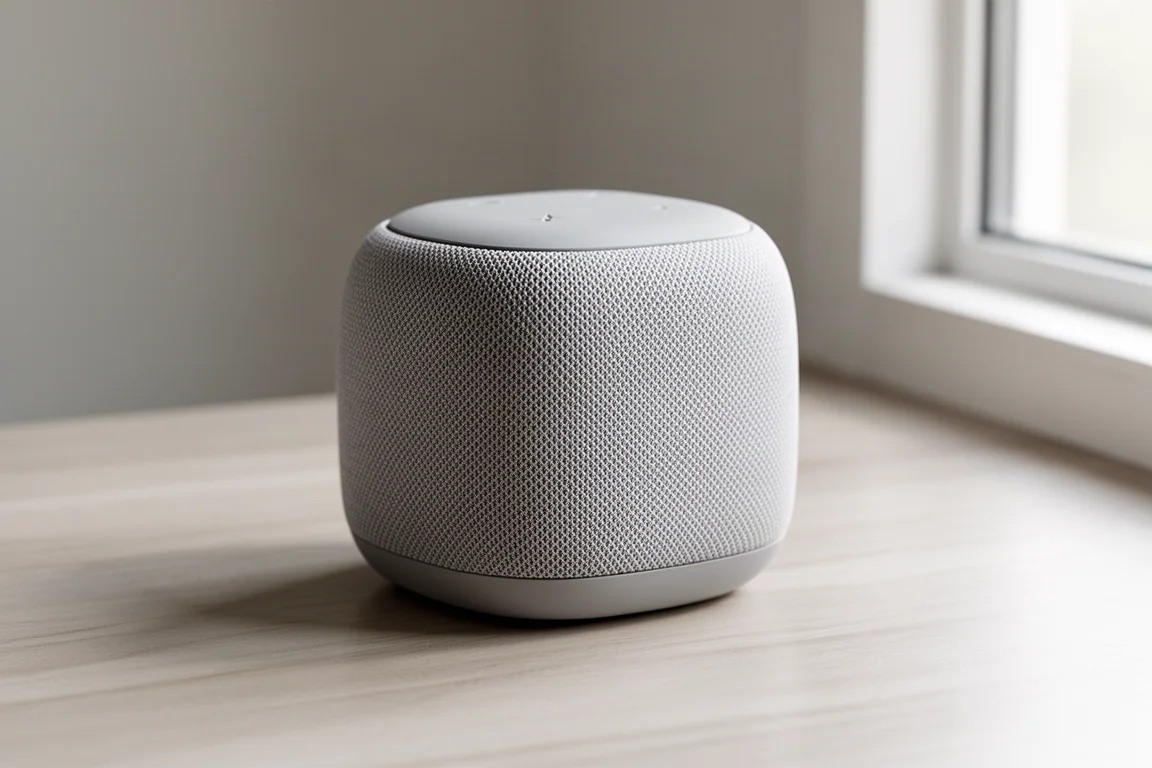
Pulse Flex speakers are compact wireless models that look like the small smart speakers common in living rooms. Paired with a Power Node over the BluOS bonded speaker link, they handle the rear channels in a surround setup without any cable run from the amplifier. They still need power, so each rear position needs an outlet, but the hardest part of adding surrounds to an existing room disappears.
At a few hundred dollars, they make the most sense for listeners who are already inside the BluOS ecosystem, where the pairing is handled by the same app that controls everything else.
Qualio Audio IQ30: A Larger Flagship From a Polish Specialist
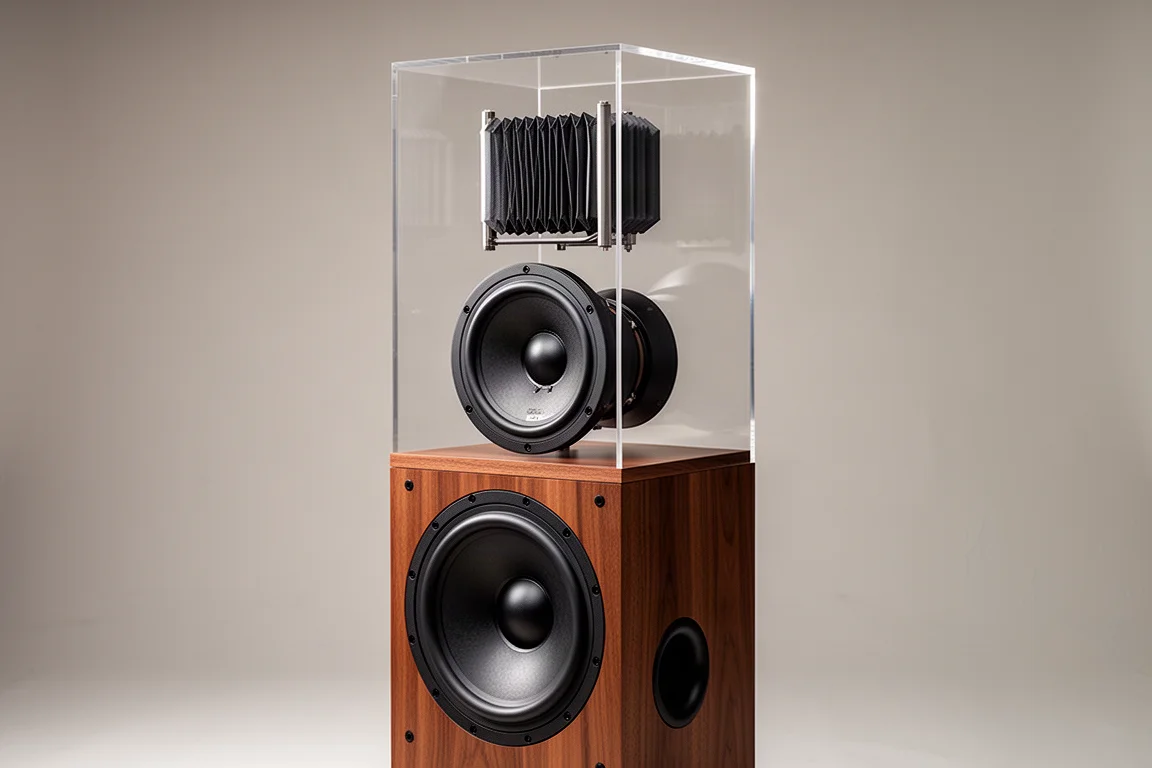
Qualio Audio is the sister brand to Cube Audio, and its IQ model is a bass bin with a rear port and a 9.5-inch SB Acoustics woofer, topped by an open acrylic baffle carrying a 6-inch SB Acoustics midrange and a Mundorf air motion transformer. The IQ30 is the new flagship, and the numbers grow in every direction: a 30 cm, or 12-inch, woofer, a 7.5-inch midrange, and the larger version of the air motion transformer. The cabinet measures 50 cm wide, 35 cm deep, and 110 cm tall.
Crossover details are not published yet, but the parts list points upward: Mundorf and Jantzen components, and Mundorf silver gold copper hookup wire. Each speaker ships in its own crate at around 70 kg crated, which matters for anyone who has to get a pair through a doorway and into a room. Pricing has not been announced, and the current IQ is listed at 6,900 euros, so this is a flagship positioned above that.
HiBy UC10: A Tiny USB-to-Coaxial Converter
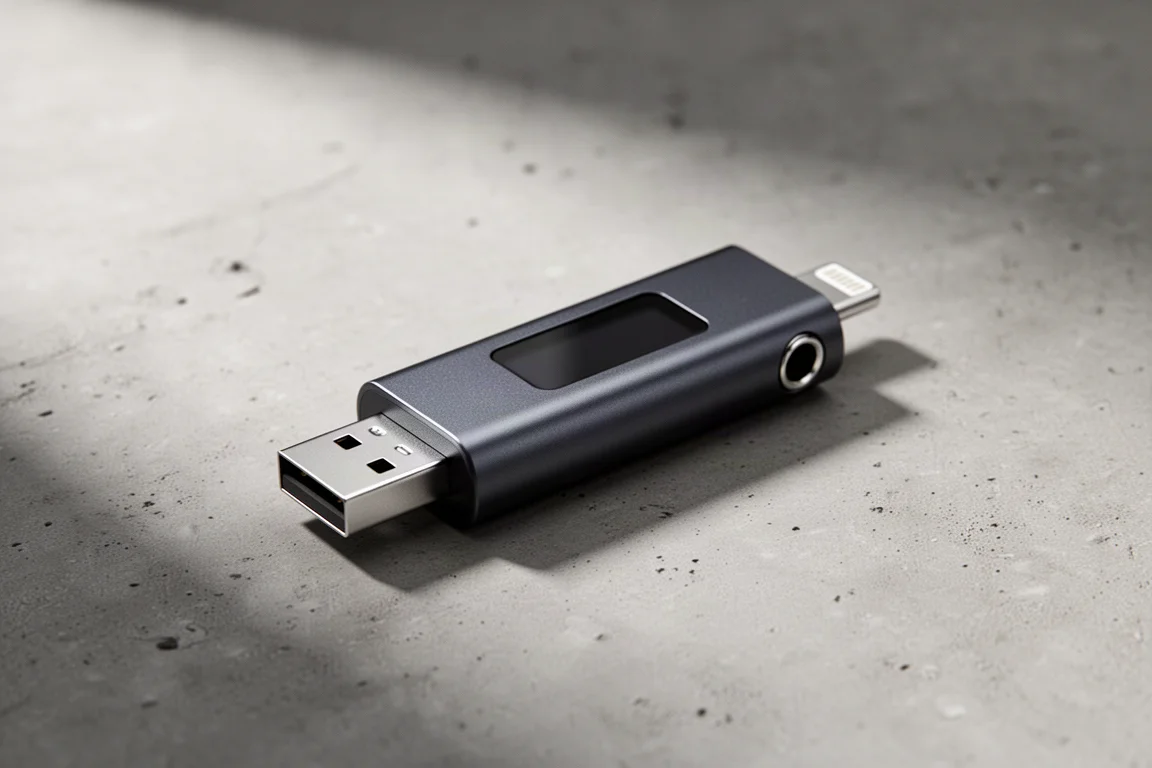
The UC10 is a USB to S/PDIF converter in a dongle format, aimed at phones, tablets, and computers. USB goes in and coaxial comes out through a 3.5 mm socket. It is bus powered, so it draws what it needs from the host device rather than carrying its own battery.
The appeal is practical. Plenty of DACs have coaxial or optical inputs but no USB input, and plenty of sources have a USB output and nothing else. The UC10 bridges that gap. It also has a small display showing the incoming signal format, which is genuinely useful if you want to know whether a phone or tablet is resampling everything before it leaves the device. It supports DSD64 over DoP.
The catch is the output connector. A 3.5 mm coaxial socket is not the standard coaxial output, so you need the right cable. HiBy offers two: a 3.5 mm to 3.5 mm cable, or a 3.5 mm to standard coaxial socket cable, each an extra $10 on top of the $29 unit. There is no optical output, so a DAC with only an optical input will need a different solution.
iFi Silent Power Omni USB: Fiber Isolation for a USB Chain
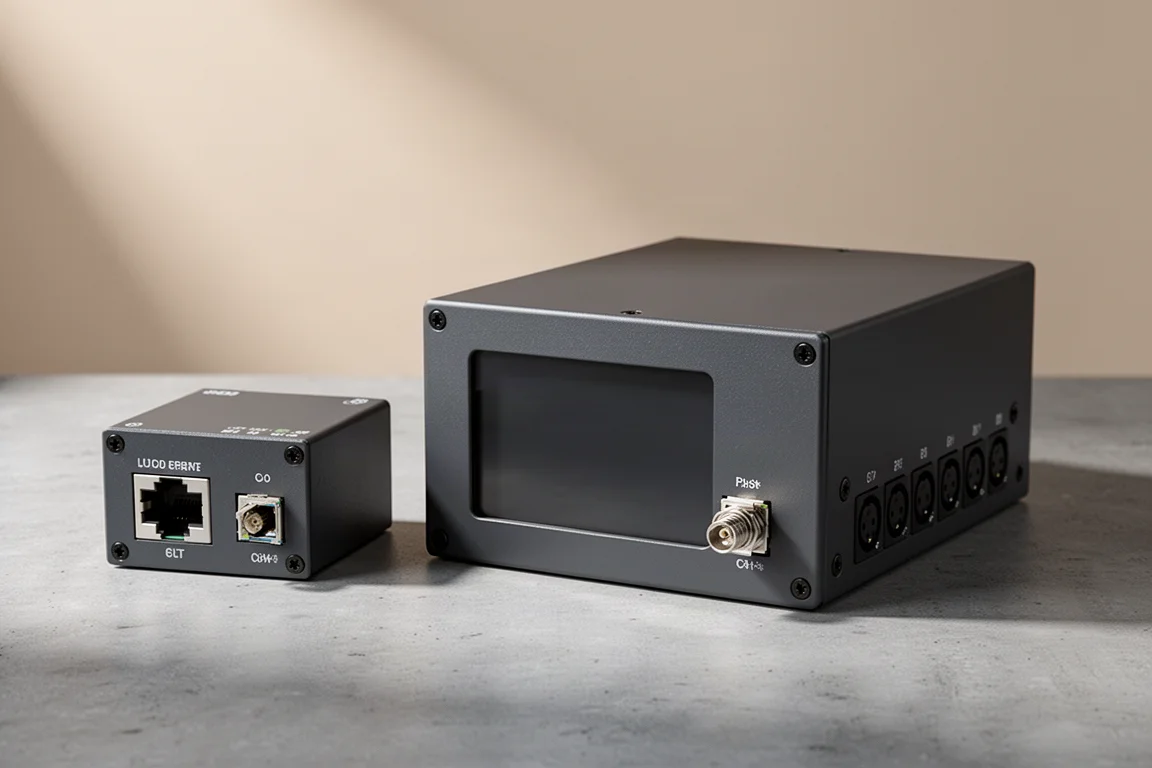
The Omni USB is a two-box system. The first box works as a media converter: Ethernet from your router goes in and fiber comes out. The second, larger box takes that fiber and outputs USB-C, USB-B, coaxial, or optical. Come in over Ethernet and leave over coaxial or optical, and it works as a digital-to-digital converter. Come in over fiber and leave over USB, and the signal passes through with the network isolated on the far side of the fiber link.
There are two fiber ports, and the difference matters. The 1.25 GHz port is for USB 2, which is the standard for audio. The 10 GHz port is for USB 3.0 and 3.2 and is intended for video, where the higher bandwidth keeps high-resolution streams intact.
The unit is battery powered and has a front display. A companion app shows which ports are active, how much power is being drawn, and the battery status, which saves a trip to the shelf. What the product page does not advertise is that Wi-Fi and Bluetooth are always on. The manufacturer has confirmed that a firmware update will make both defeatable, and that the change will roll out across the wider range. That is a meaningful commitment for listeners who would rather not run wireless radios inside a hi-fi system, whether for health reasons or simply because they want to remove a potential noise source.
At $899, the Omni USB is a specialist purchase, but it addresses a specific problem: keeping a computer or streamer physically separated from the network while still feeding a DAC over USB, coaxial, or optical.
Buying Advice: Matching Each Product to a Real System Need
The products in this roundup do not compete with each other, which makes the decision easier. Start with the job you need done rather than with a specification sheet, and the shortlist usually picks itself.
If you want CD playback with a good headphone output on a desk, the Shanling CD80 Mark I covers several roles at once, and the balanced 4.4 mm socket is unusual at the price. If you are adding a subwoofer to a compact speaker, the Virtual Hi-Fi Viper builds the high-pass into the speaker itself, while the Collinear Acoustics DSP8C puts that control in a box and adds delay, EQ, and filter options that analog crossovers cannot offer.
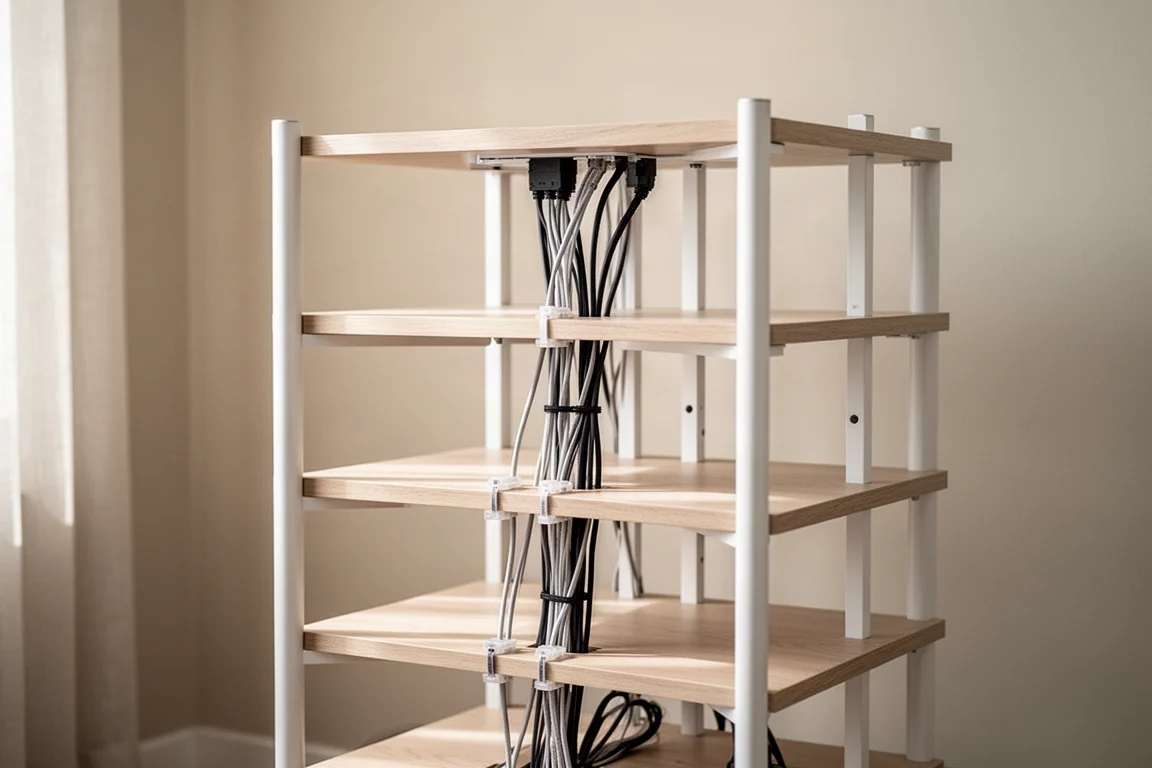
If the problem is furniture rather than electronics, the FITUEYES rack delivers 50 kg ratings on the outer shelves for around 129 euros including VAT, with M8 feet that accept aftermarket isolators. For a system that needs to grow from stereo into surround, the Bluesound Power Node and Pulse Flex combination adds a center channel and wireless rear speakers without pulling cable. The Qualio Audio IQ30 is the flagship option for a large room, and the HiBy UC10 is the cheapest fix on the list for a source that only has USB and a DAC that only has coaxial.
The iFi Silent Power Omni USB sits at the other end of the price range, and it makes sense when network noise and USB isolation are the actual problem you are trying to solve. It is worth noting that several of these products are, in effect, computers with audio circuitry attached, and the ones that stand out are the ones that use that processing power to solve a real problem.
Conclusion
Nine products, nine different jobs. The strongest theme running through this list is integration: speakers with built-in high-pass filters, crossovers with digital delay, streaming amplifiers with center-channel outputs and wireless surrounds, and network isolators that keep the digital chain clean. Hi-fi is increasingly built around software and DSP, and the products worth your attention are the ones where that power serves a specific purpose rather than padding out a feature list.
Further reading
Related Reviews
Hi-Fi Audio
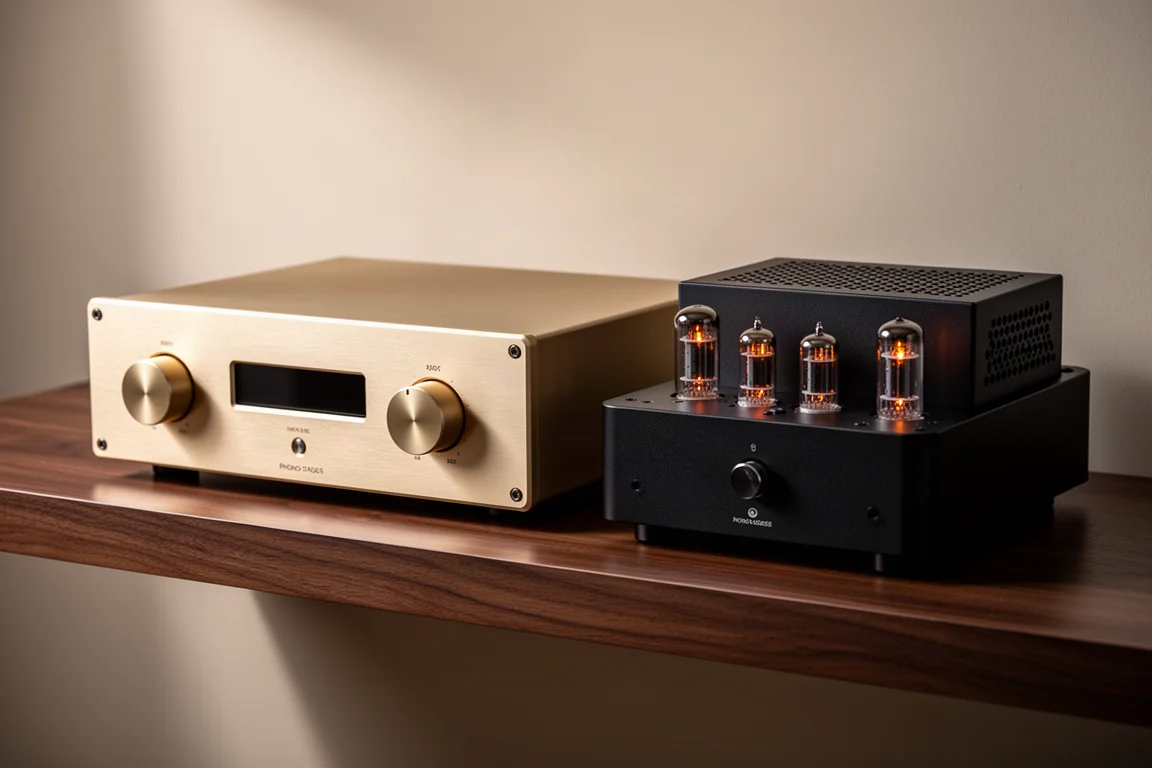
Accuphase C-57 vs Allnic H-7000V: Two High-End Phono Stages Compared
A fully balanced solid-state phono stage with a pitch-black noise floor meets a tube design built for well-loved records. Here is how to choose between them.
Hi-Fi Audio
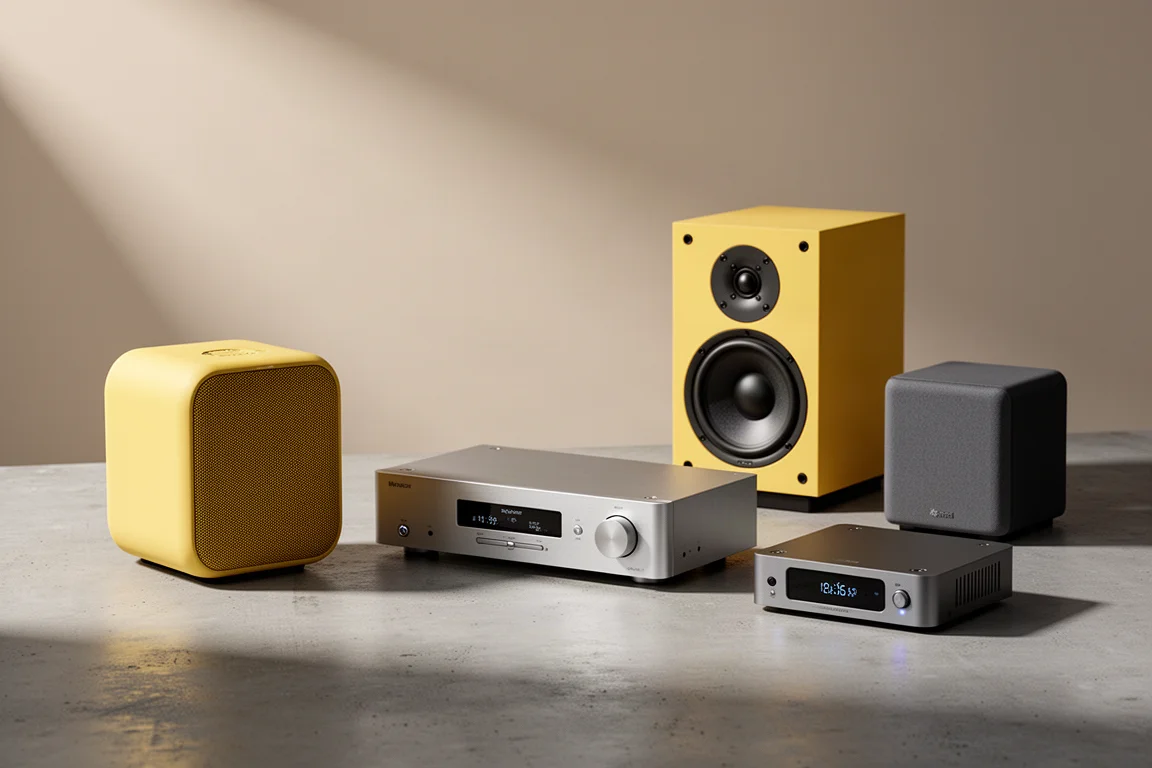
Active vs Passive Hi-Fi: Five Components for a Modern System
Five components that define modern active and passive hi-fi systems, with the strengths, trade-offs and setup details worth weighing before you buy.
Hi-Fi Audio
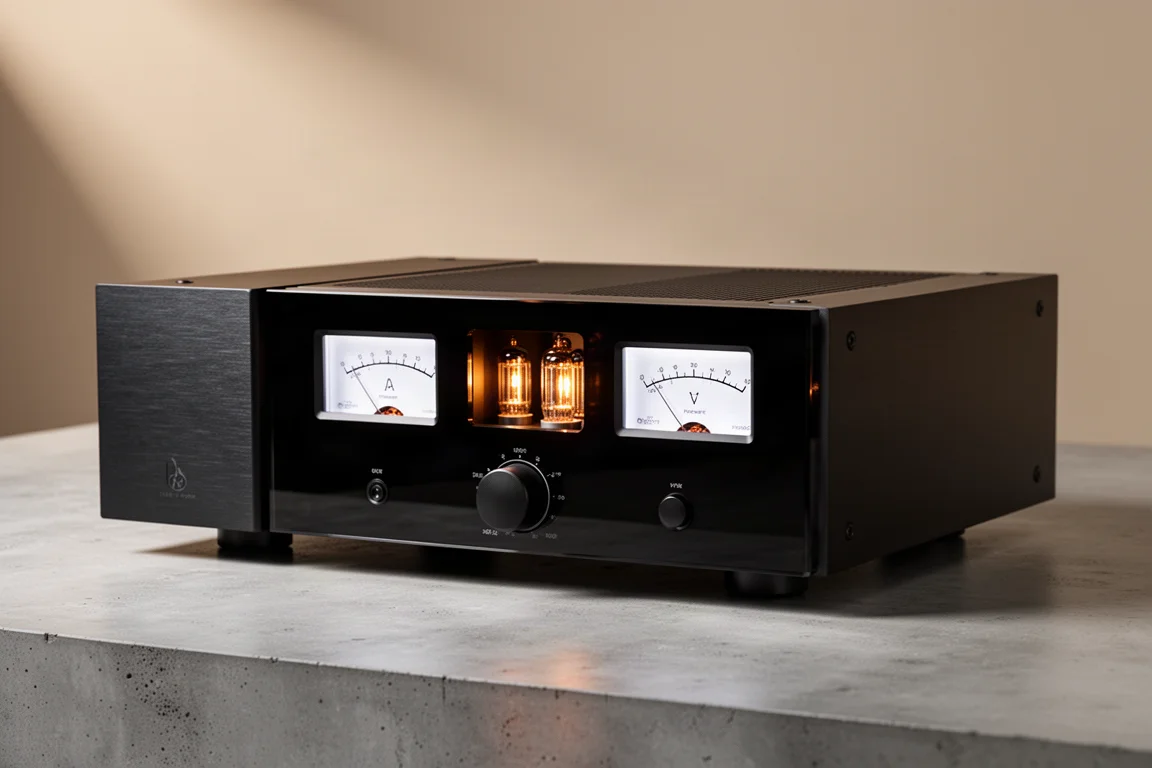
Advance Paris A10 Apex Review: A Hybrid Integrated Amplifier That Covers a Lot of Ground
A French hybrid integrated amplifier with a class A tube preamp stage, analogue power meters, and an internal DAC and phono stage good enough to make extra boxes unnecessary.