Backpacking Gear
New Backpacking Gear 2026: Ultralight Picks Tested in the Field
Five new ultralight backpacking items went onto a windy ridge for an overnight test, from a $130 sleeping pad with an R-value of 5.6 to a sub-800 g tent. Here is what held up and what still needs more time.
Introduction
New ultralight gear turns up every season, and the spec sheet is usually the least interesting part. What matters is how a piece behaves once it is carrying weight, holding air, or standing up to wind in the middle of the night.
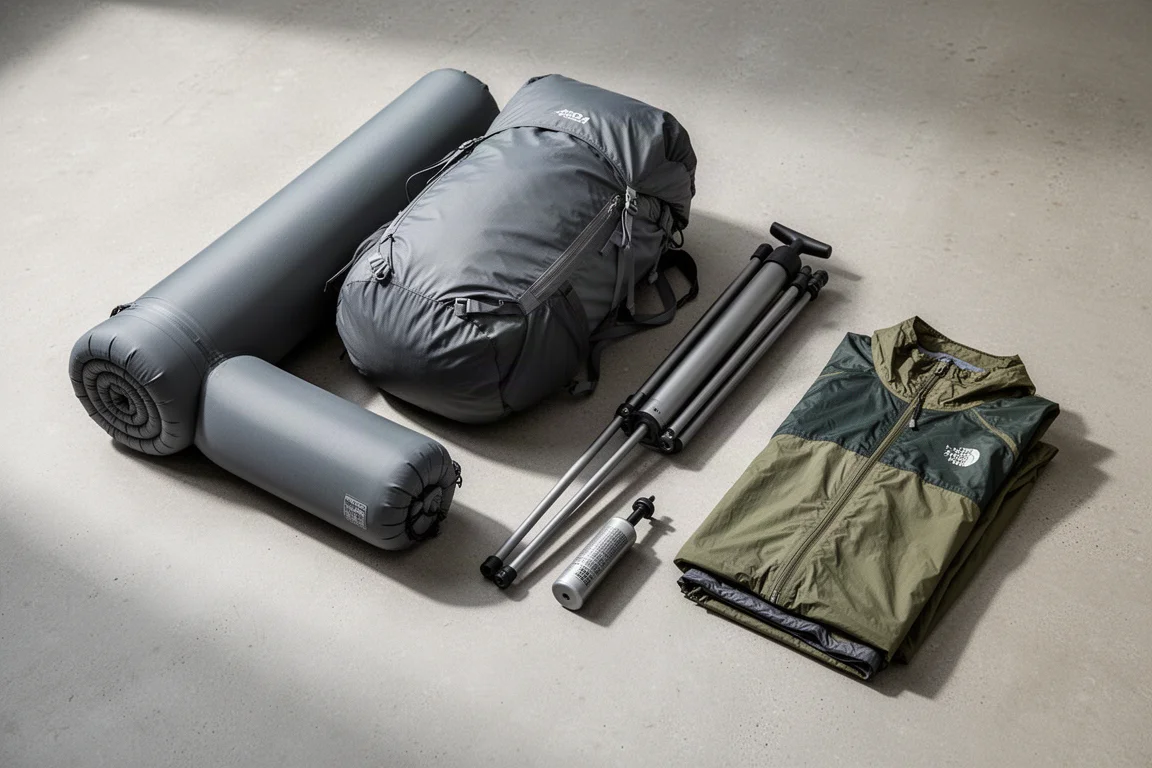
Five new items earned a place on an overnight ridge test: a redesigned sleeping pad, a high-volume pack with an unusual frame, a semi-freestanding tent that comes in under 800 g, a tiny cable-free inflation pump, and a refreshed rain shell. One long-standing favorite pad is covered as well, because it sets the standard the new sleeping pad is being measured against.
What This Gear Has in Common
All of these items sit in the same corner of the market: gear for three-season backpackers who want to move efficiently without stripping out capability. Two are clearly price-led, with the sleeping pad at $130 and the one-person tent at $140. The others trade a little weight or money for features that are harder to find at this level, such as an adjustable torso on a load-hauling pack or an inflation pump that carries no battery.
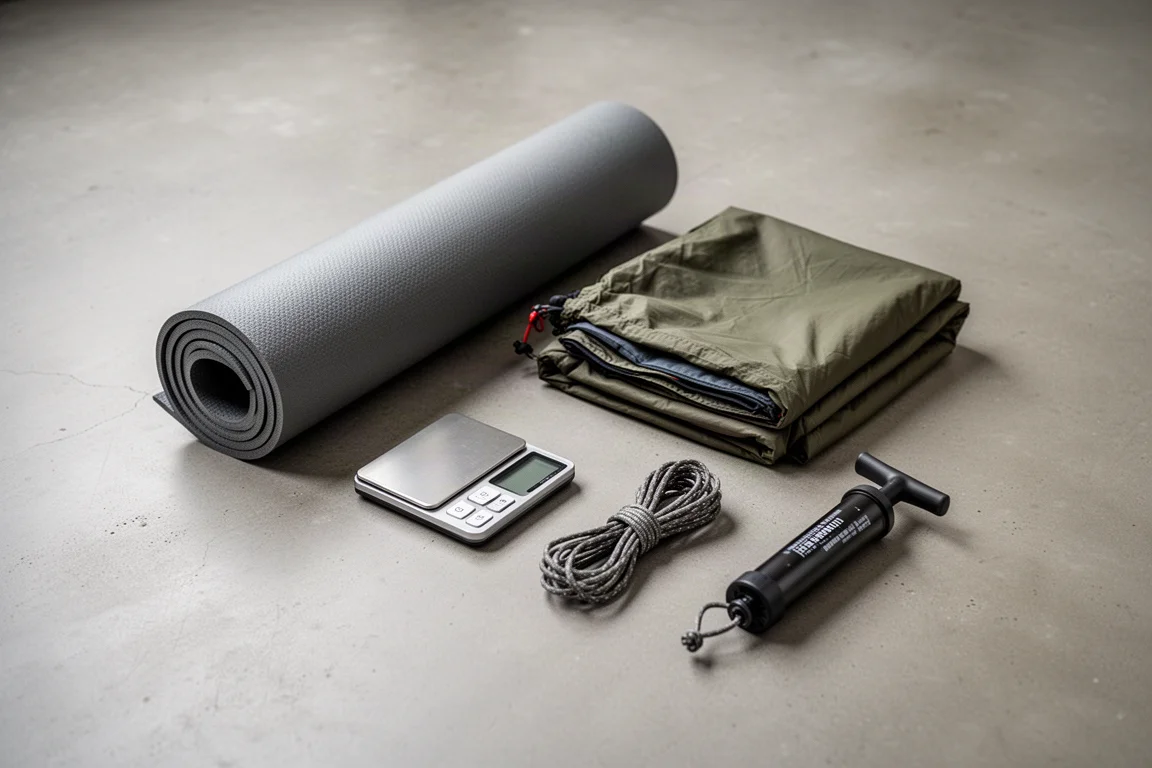
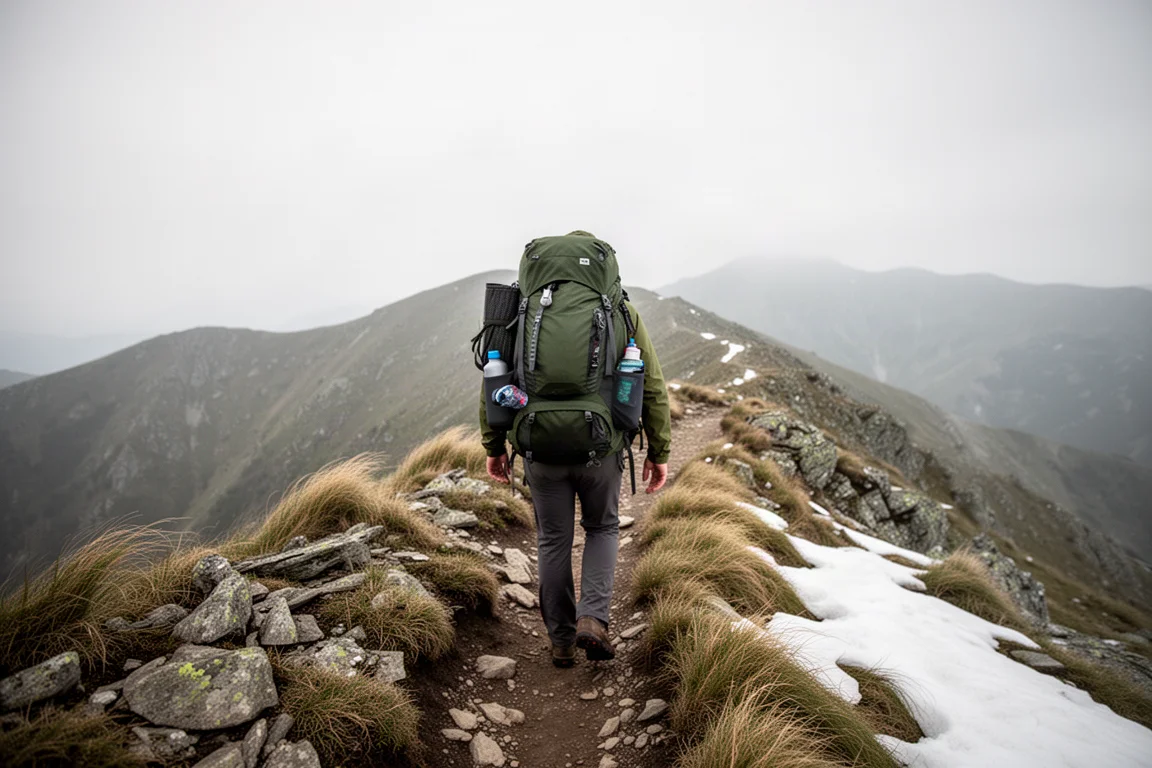
Testing followed the same pattern for each item. Everything was weighed on a scale rather than taken at its advertised figure, then used as intended. The pack carried 38 lb up to a ridge, the pad and the tent spent a night out at plus 3 degrees Celsius on cold, partly snowy ground, and the pump inflated a long and wide pad to a firm level.
Wind became the defining condition of the trip. Gusts built through the night and continued until morning, which put the tent under far more load than a calm-weather pitch would have, and made structural stability the most useful single piece of information to come out of the night.
FlexTail Tiny R-Value 5 Sleeping Pad: Warmth and Comfort for the Money
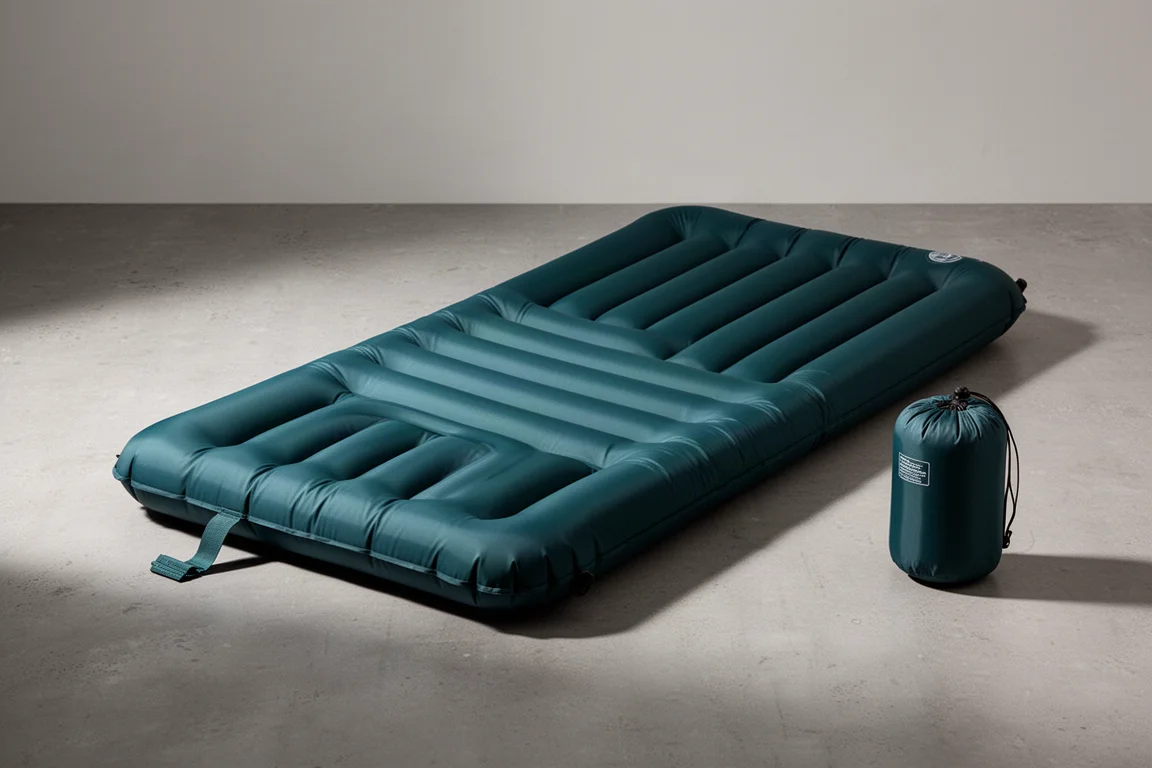
The FlexTail Tiny R-Value 5 is a redesign of an earlier pad sold under the same name, and on paper it reads like the value pick of the season: $130, an R-value of 5.6, and a measured 584 g in the long and wide size. That measured weight is slightly above the advertised figure, which is worth knowing, but it is still light for the warmth on offer.
The shape and materials will look familiar to anyone who has used the Nemo Eclipse: slightly dimpled vertical baffles, larger outer tubes, and a similar face fabric. The meaningful difference is insulation coverage. The Eclipse stops its insulation partway into the outer baffles, while the FlexTail runs it all the way to the edges. On cold ground, that is a genuine advantage rather than a cosmetic one.
Comfort held up even with the pad inflated firm, which is how it was slept on to maximize warmth. The vertical baffles felt supportive, the larger outer tubes kept a sleeper centered on a slight slope, and pressure relief was good enough to spend the entire night on one side without an arm going numb. The valve sits on top of the pad in the corner, which is easier to live with than a valve buried underneath.
Warmth was the open question going in. The overnight low reached plus 3 degrees Celsius rather than dropping below freezing, but the ground was cold and partly snow-covered, and the pad stayed warm throughout. That points to comfortable performance at freezing or slightly below. Genuinely sub-freezing conditions are the one scenario still untested.
Nemo Eclipse Sleeping Pad: The Comfort Benchmark
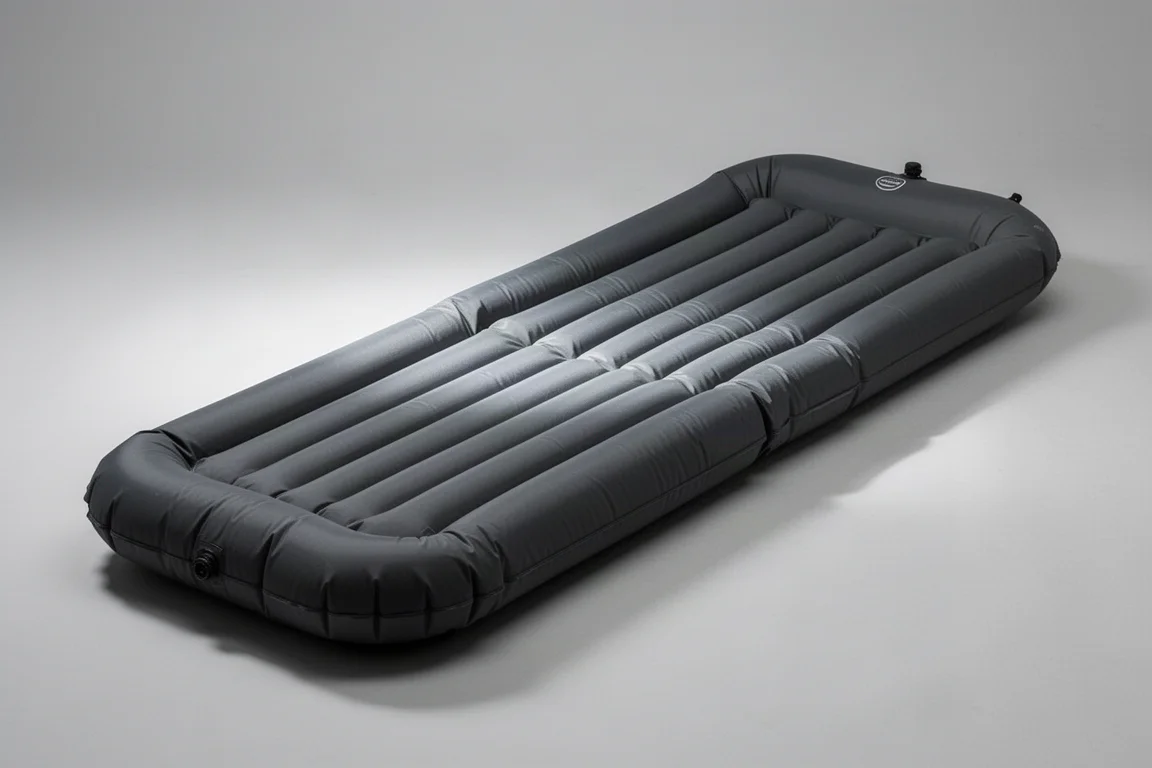
The FlexTail invites the comparison, and the Nemo Eclipse is the reason. In earlier testing it has been one of the most comfortable pads in this class, and it is lighter than the FlexTail, though it costs more. That combination is exactly why the FlexTail’s $130 price is the headline number.
The two pads differ in one structural detail that matters on cold ground. The Eclipse’s insulation stops partway into the outer baffles, while the FlexTail’s continues to the edges. Anyone who sleeps cold, or who camps on frozen ground regularly, should weigh that difference alongside the price gap.
XPed Lightning Pack: Serious Load Carrying in a Roomy Hauler
The XPed Lightning is built around an adjustable torso, and that single feature changes how the pack feels under load. Combined with a large, stiff foam hip belt, it can be dialed in closely enough to carry real weight comfortably. On the climb to the ridge it handled 38 lb, most of which was 6 L of water, without complaint.
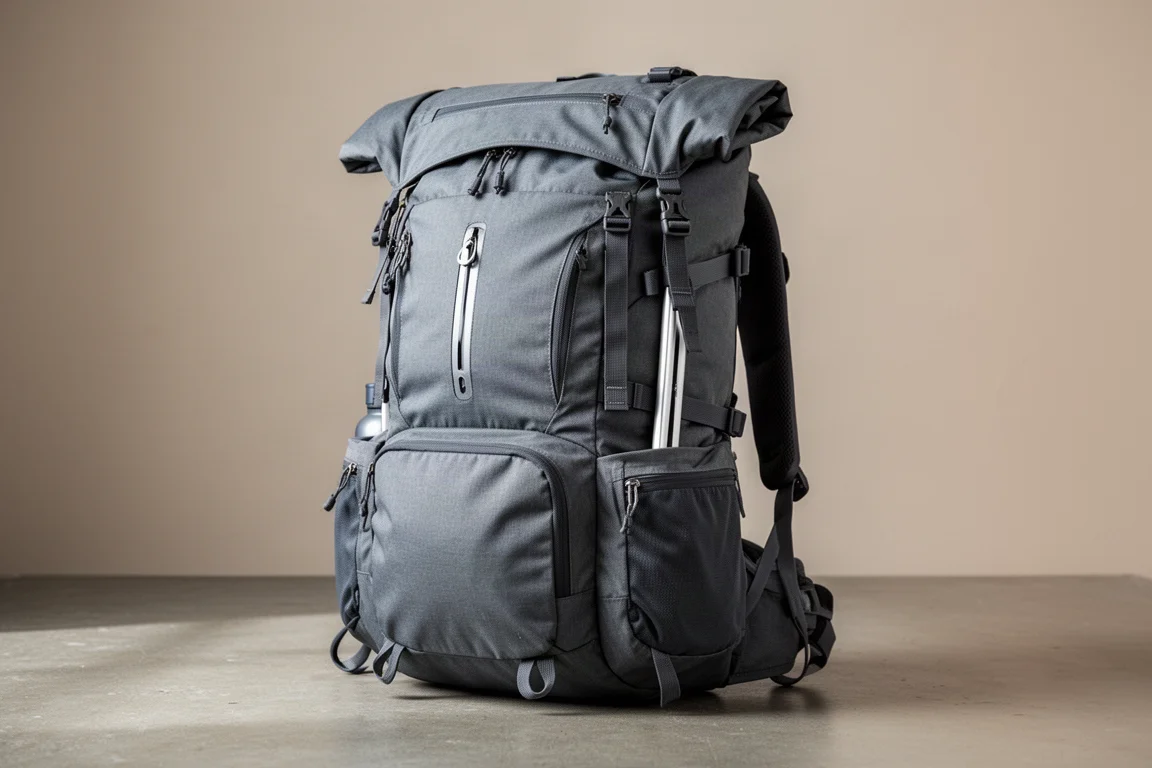
The frame is the unusual part. Instead of a pair of stays, a single aluminum stay runs up the center, with a crossbar at the top that transfers load from the lifters into the frame and down into the hip belt. It is a distinctive way to save a little weight, and because the crossbar comes out, the whole structure can be folded and tucked into a packraft.
Volume is generous for the class. The 50 L version feels closer to a 60 L pack in use, with two hip belt pockets, a large front pocket, a roll top, and two side pockets that can reach a water bottle, though not as easily as the best pockets out there. The details are what elevate it: a trekking pole carry that uses an elastic loop at the base and a shoulder strap loop up top for hands-free storage, a shoulder pocket sized for bear spray or small items, and a zippered external pocket built into the roll top for keys, a phone, a wallet, or a satellite communicator.
The trade-off is weight. At over 1200 g it sits above what most backpackers now expect, and the question is whether the volume justifies it. Carrying 38 lb comfortably suggests the frame and hip belt could handle closer to 50 lb, which makes the case for a larger version rather than a lighter one. A 60 L or 65 L body would put the suspension to better use.
Naturehike Star Trail EXT: A Sub-800 g Semi-Freestanding Tent
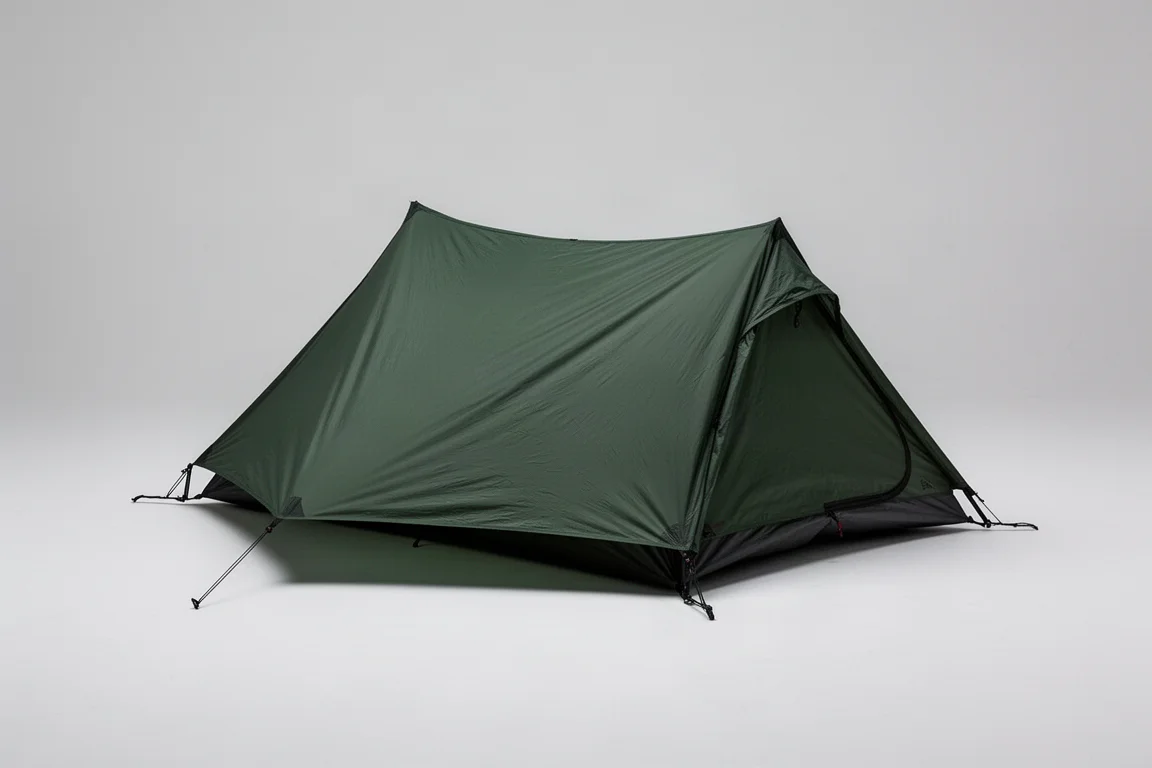
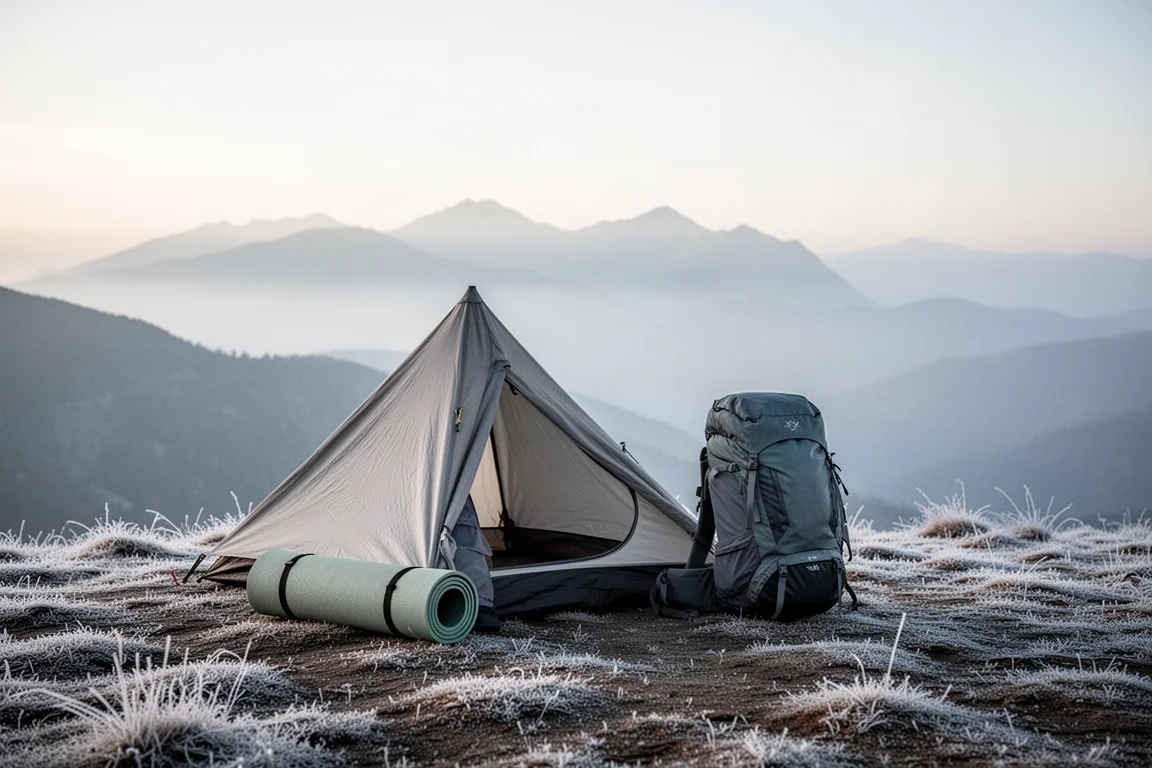
The Star Trail EXT is the price story of the group. The one-person version costs $140 and weighs under 800 g, and it is a double-wall design with a separate inner and fly. It is semi-freestanding: the pole structure has two connection points at the head end but drops to a single pole at the tail, so the back end needs to be staked for the tent to stand fully on its own.
Two things about the design deserve scrutiny. The fly is nylon, which stretches and sags when wet, and a semi-freestanding tent relies on the fly holding its shape. Pair a sagging fly with wind and the structure can lose much of its integrity. The vestibule is also very small, small enough that a pack ends up sticking out the sides and gear has to be stacked high to fit inside.
The interior is short. A long and wide pad touched the walls at both ends, so anyone over about 6 ft will likely find the Star Trail EXT too tight. Width is the redeeming dimension: the tent tapers toward the foot but still fits a long and wide pad with room left along the side for gear. The small footprint is the other strength. It fit onto a narrow ledge when the flatter ground lower in the saddle was snow-covered and likely colder.
Wind was the surprise. With only six stake-out points used and no guy lines deployed, the tent never collapsed, no stake pulled out, and it felt solid through a long, gusty night. Three additional guy-out points were available and never needed. Rain is the remaining question. If a wet fly sags enough to compromise the structure, that would change the verdict, which is why a wet-weather test is the next step. The two-person version is the more interesting prospect for that reason, and on weight it should be competitive with established ultralight two-person shelters.
Outsak Pico Pump: Small, Light, and Cable-Free
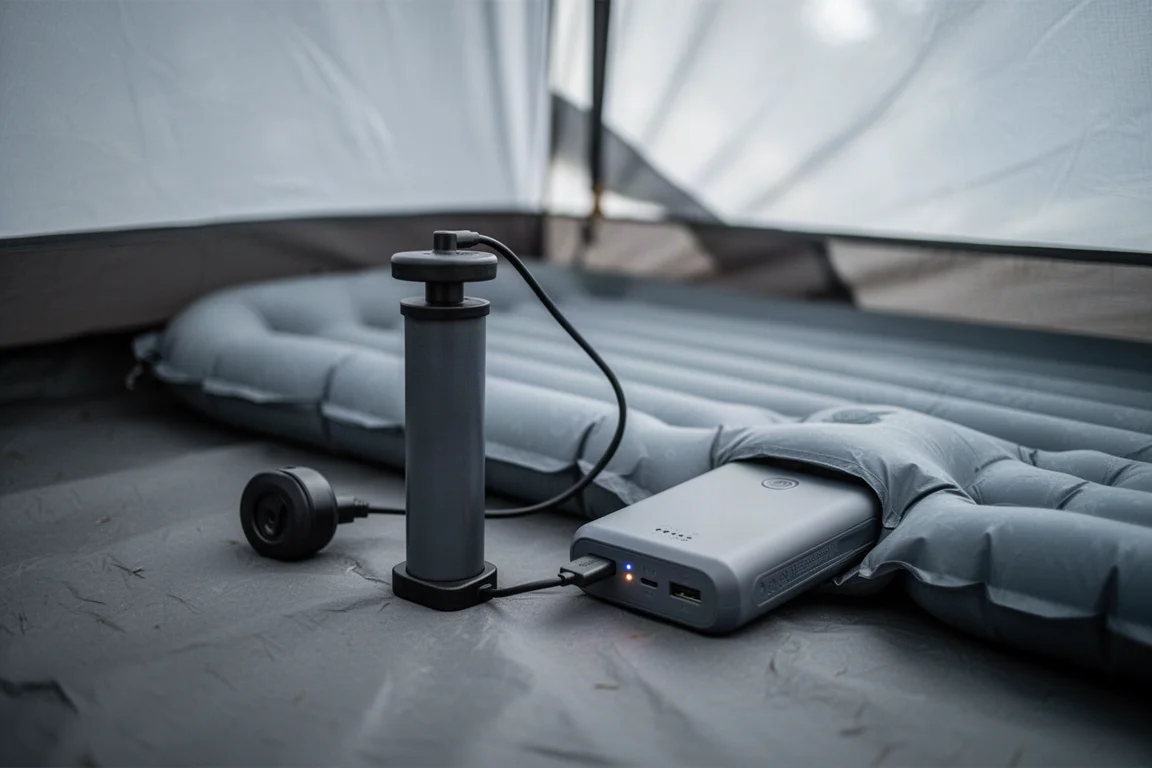
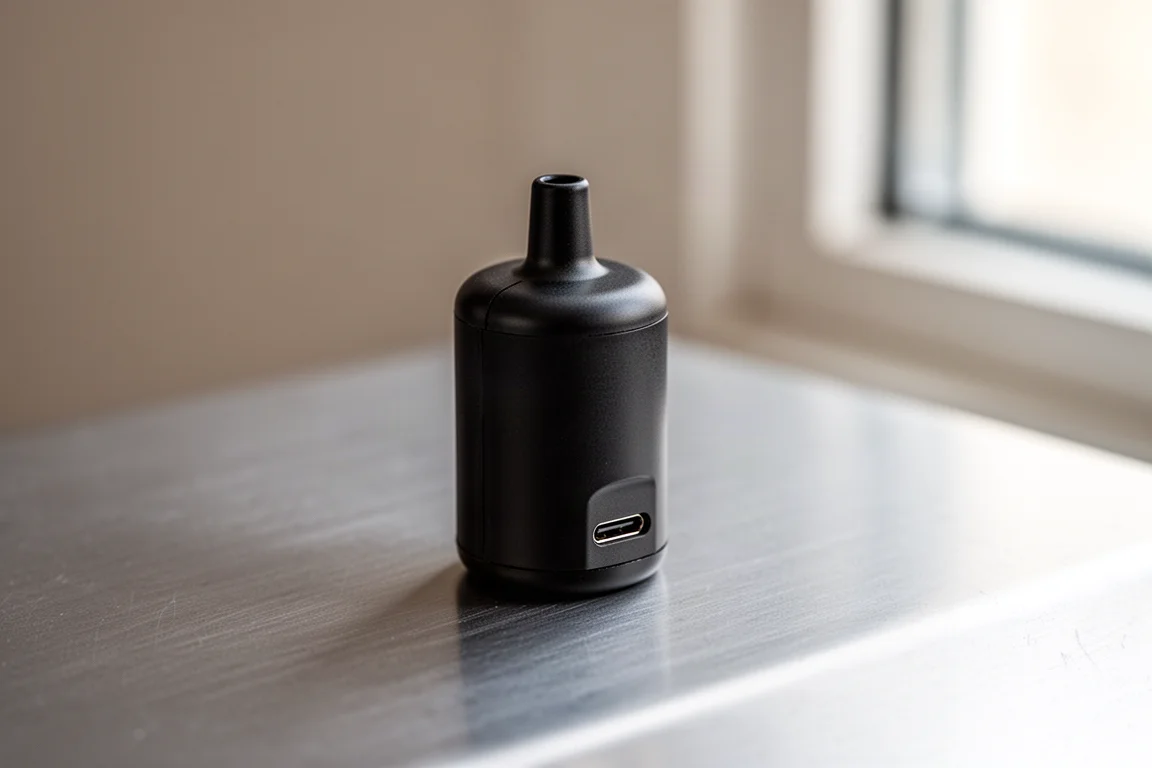
The Outsak Pico belongs to the growing family of tiny pumps that carry no internal battery and draw power from a power bank. What sets it apart is the cable. There is no permanently attached USB-C cord, so you bring your own and plug it into the port on the pump. That removes a bit of bulk and a known failure point, and it brings the weight down to 26.2 g on the scale.
In use, the pump inflated a long and wide sleeping pad quickly and easily, reaching a firm pressure without fuss. Speed was at least on par with similar pumps, and possibly a touch faster or stronger. Since a cable is coming along on any trip anyway, the trade-off of supplying your own is small.
The practical case for the Pico is narrow but clear. It is the pump to pack when weight is the priority and the pad is large enough that inflating it by breath is unpleasant. It will not replace a pump with an integrated battery for everyone, but at 26.2 g it is easy to justify.
Outdoor Research Helium Jacket: A Lighter Rain Shell Worth Watching
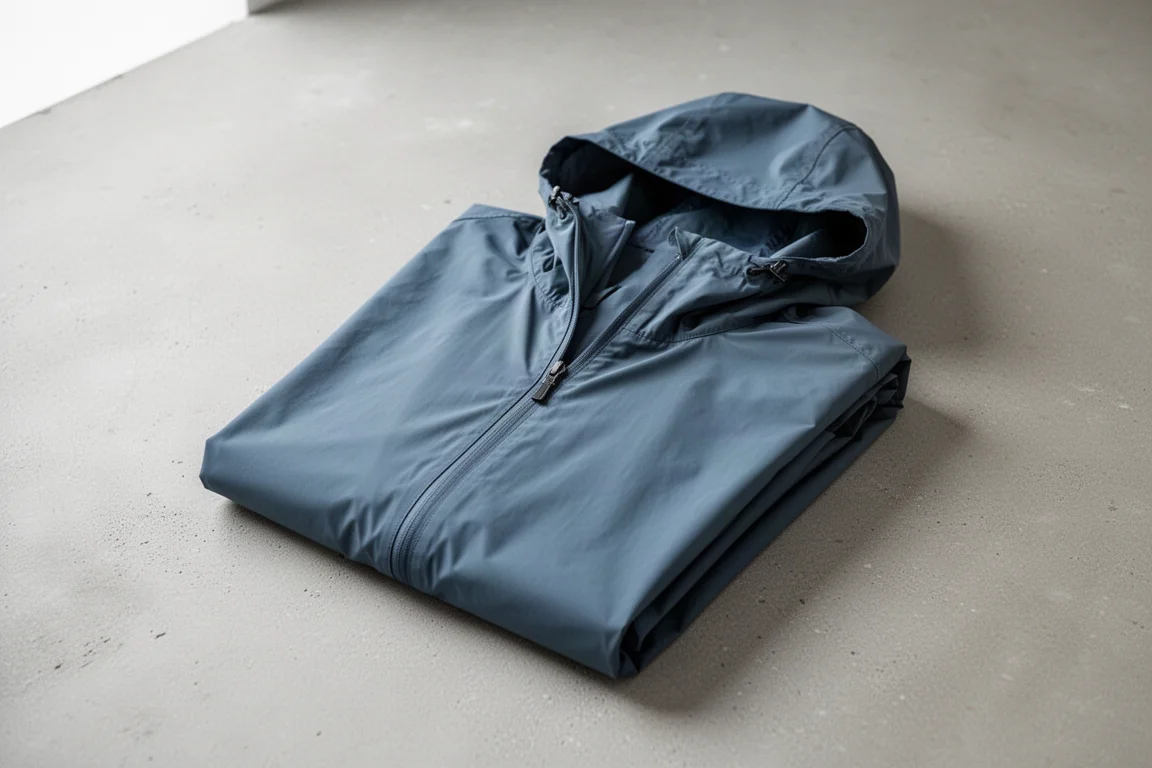
The Helium line has been around for years, and it earned a poor reputation along the way. The face fabric wetted out, seams tended to leak, and it lagged behind the better rain shells on the market. This refresh addresses the material directly: the jacket now uses a Toray Dermizax HD 2.75-layer fabric paired with a new face fabric, and the jacket weighs just 167.5 g.
The new fabric is the reason for optimism. It is reported to be extremely breathable and very waterproof, and it feels breathable on the body, with air moving through it on a breezy day. Short walks around town have not produced any wetting out. The open question is sustained rain, which is the only way to properly assess a shell like this, and that test is still to come.
One design decision is worth flagging before buying. There are no pit zips, and mechanical ventilation will always outperform a breathable fabric once effort levels rise. The other consideration is that durable water repellent finishes are now PFAS-free, which generally makes them a little less effective, so how quickly this jacket wets out and how it performs once wet are the details to watch.
Overall Buying Advice
Two items in this group earned a clear recommendation. The FlexTail Tiny R-Value 5 delivers an R-value of 5.6, a measured 584 g, comfortable baffles, insulation that reaches the edges of the outer tubes, and a $130 price. For three-season backpackers who want warmth and comfort without spending premium money, it is the easiest call here. The Outsak Pico Pump is the other straightforward pick: 26.2 g, no attached cable, and fast, firm inflation.
The Naturehike Star Trail EXT is a strong value at $140 for a sub-800 g double-wall shelter, with a small footprint that opens up campsites other tents cannot use. Buy it with eyes open about the short interior, the tiny vestibule, and the nylon fly, and only if you are comfortably under 6 ft tall or willing to sleep close to the walls.
The XPed Lightning and the Outdoor Research Helium Jacket are the two items that need more time. The pack carries heavy loads well and its features earn their place, but at over 1200 g its volume is the deciding factor, and a larger size would suit the suspension better. The jacket is very light at 167.5 g and the new fabric feels breathable, but without a proper soaking there is no way to say whether it resolves the old line’s weaknesses. If you are shopping today, the pad and the pump are the safe buys, the tent is the best value, and the pack and the shell are worth waiting on.
Conclusion
Five new items and one established benchmark made for a useful night out. The FlexTail Tiny R-Value 5 passed both warmth and comfort, the Outsak Pico Pump solved the cable annoyance that plagues tiny pumps, and the Naturehike Star Trail EXT stood up to far more wind than a semi-freestanding tent at that weight would suggest. The XPed Lightning Pack carries more than its weight implies, but its volume is the open question, and the Outdoor Research Helium Jacket still needs a proper rain test before it can be recommended outright.
The clearest takeaway is that price and capability are not opposites in this segment. A $130 pad can carry an R-value of 5.6, and a $140 tent can weigh under 800 g. What separates them from premium gear is not the core performance but the details: fly fabric, vestibule size, interior length, and how a frame handles volume.
Further reading
Related Reviews

Backpacking Gear
Building a 10 lb Base Weight: An Ultralight Backpacking Gear List
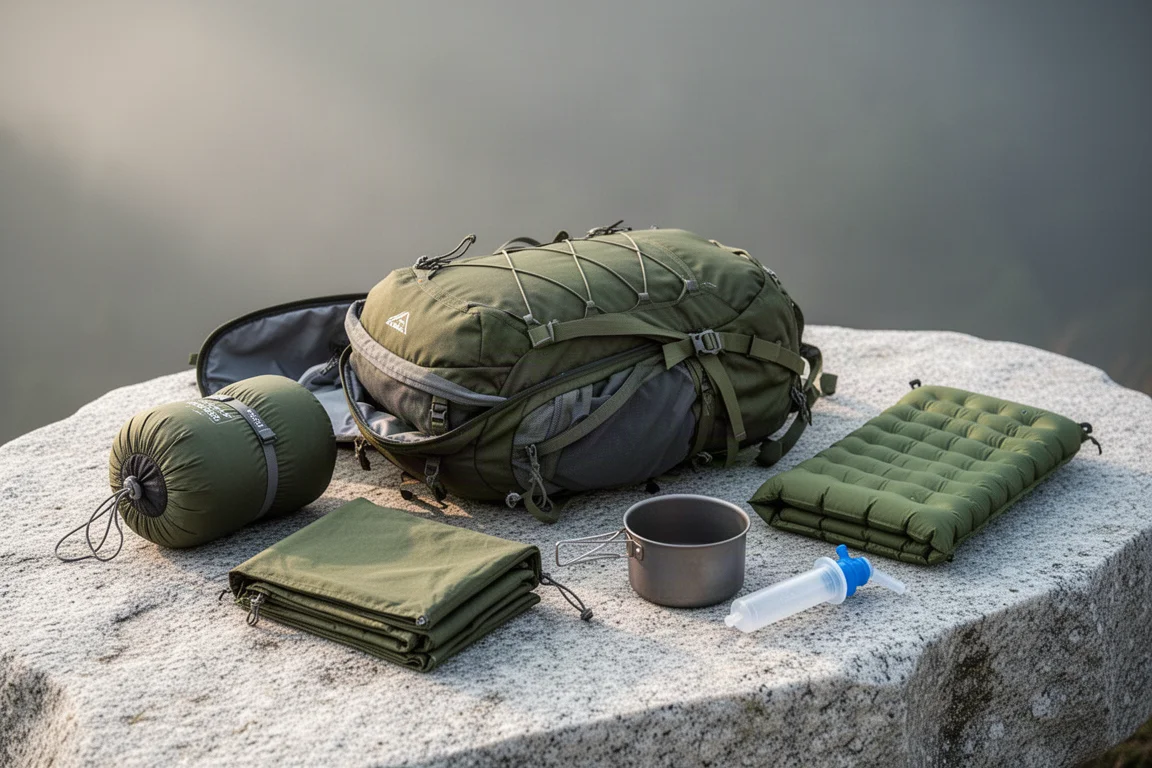
A practical walkthrough of the ultralight pieces behind a 10 lb base weight, from a 765 g pack and a roomy one-person tent to a full camp chair and a dependable water filter.
Backpacking Gear
A 15-Pound Lightweight Backpacking Gear List for Solo Trips
A beginner-friendly 15-pound backpacking setup built from easy-to-find gear, with notes on what each piece does, how it packs, and where to spend your attention.
Backpacking Gear
8 Ultralight Backpacking Gear Upgrades Worth Carrying
Eight small, affordable backpacking upgrades that solve real trail annoyances, from a pillow that stays put to a fuel valve that rescues leftover canister gas.