Ski Resorts
Nevados de Chillán Review: Chile's Volcano Ski Resort With Big Snow and a Local Soul
A full look at Nevados de Chillán's snowfall, terrain, lifts, crowds, access, and pricing to help you decide if this southern Chilean volcano resort belongs on your next South American ski trip.
Introduction
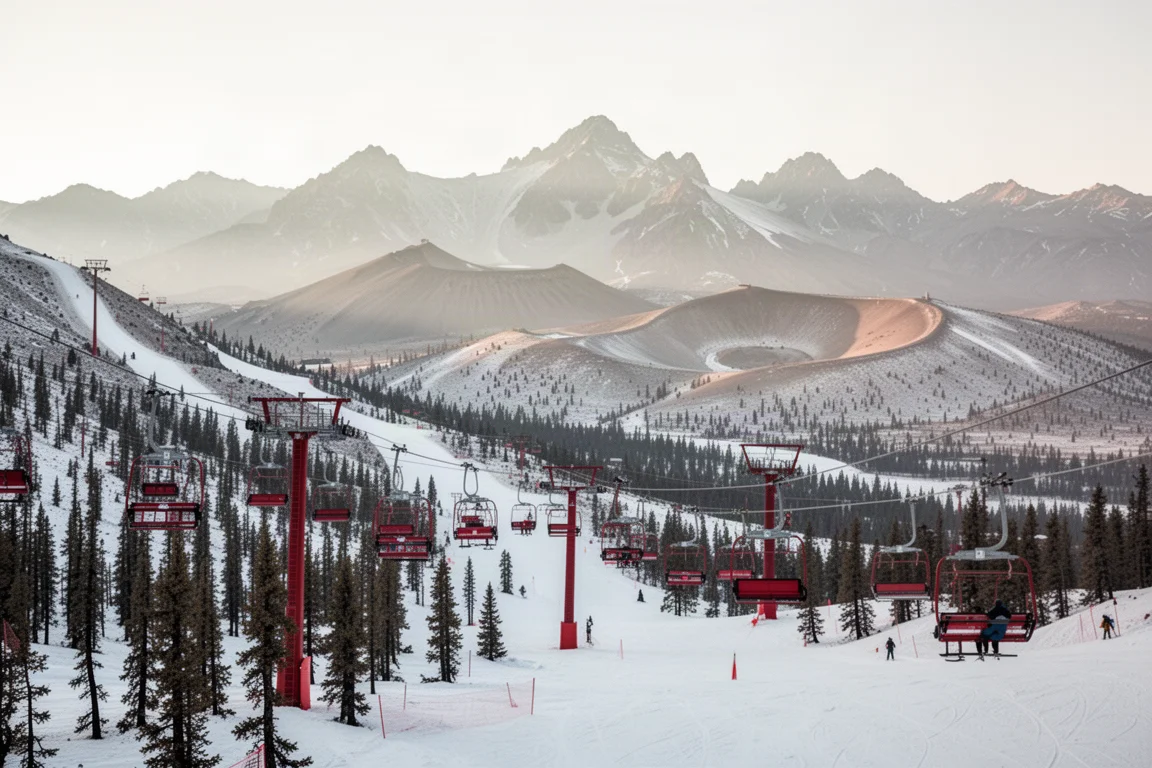
Skiing on an active volcano is not something you get to do every day. Nevados de Chillán, located in central Chile well south of the country’s main Santiago-area destinations, sits on a genuinely unique volcanic footprint, and that geography shapes almost everything about the resort: its enormous snowfall, its unusual terrain transitions, its aesthetic, and even its quirks. Eruptions of the scale sometimes seen on the mountain are rare, so visitors do not need to worry about them safety-wise, but they underline just how distinctive this setting really is.
This review walks through the mountain experience in detail, then looks at how the resort stacks up overall, so you can decide whether it deserves a spot on your next South American ski trip.
Snow: The Biggest Draw
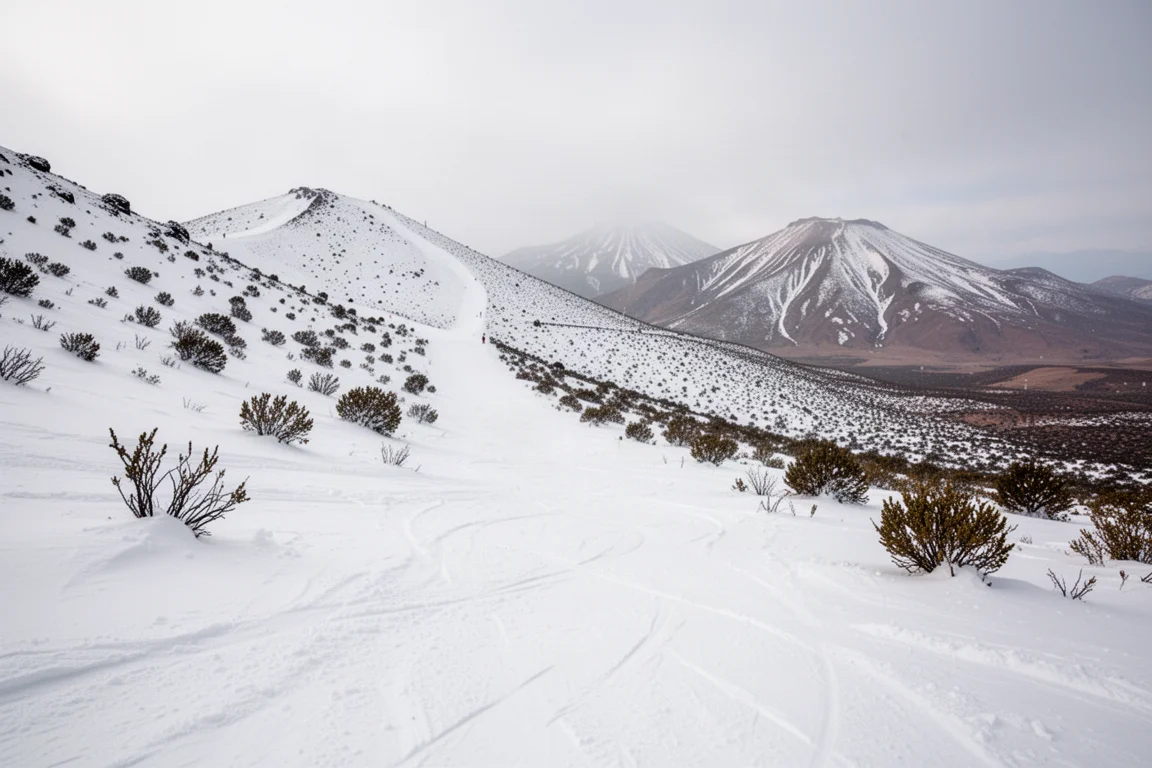
Snow is perhaps the biggest distinguishing factor at Nevados de Chillán. The resort consistently ranks among the snowiest lift-served areas in South America, and not by a small margin. Regular accumulation of around 300 inches over a four-month season is nearly 50% higher than what you might expect at the better-known resorts around Santiago and Bariloche.
There is one nuance worth knowing. Because of its lower elevation and wetter climate, the snow here can be a little heavier than what you would find further north. The upside is that the sheer volume makes conditions far more reliable overall, and the resort is one of the best bets in the country for powder days.
Terrain for Every Level
Nevados de Chillán spans about 1,375 skiable acres, on par with many other destination resorts in Chile, but it offers an impressively diverse layout for its size. A strong vertical drop of over 2,850 feet produces long, sustained runs that make full use of that variety.
The terrain transitions dramatically as you move up the mountain. Lower sections sit below tree line and resemble the rolling hills and hardwood forests of the northeastern United States, albeit with some decidedly unique tree species. Above, the upper mountain opens into wide bowls flanked by volcanic rock and striking peaks, and the lightly spaced alpine shrubs just before the vegetation disappears feel downright exotic compared to the pine forests most North American skiers know. The terrain diversity per acre may be the best of any South American ski resort.
Beginners
Beginners get friendlier options here than at most Santiago-area resorts. Both lower-mountain chairlifts serve mellow groomers that wind through the woods, and there are two dedicated beginner complexes: one with a chairlift and rope tow near the main base, and another with surface lifts at the lower base near Hotel Nevados. Note that there is no beginner terrain on the upper mountain, so guests need to progress before they can access the full footprint.
Intermediates
Intermediate skiers technically unlock access to all of the resort’s terrain areas, with consistently groomed blue runs providing enjoyable cruising. The standout is the very long top-to-bottom Tres Marías-type run that spans the entire vertical drop through especially remote areas, offering some of the most unique views at the resort, especially near the top in its above-treeline section. One caveat: this long, roundabout route is the only blue route down from the summit and does not return to the main base without a lift ride from the lower mountain, so a more direct descent means skiing something a bit more challenging.
Advanced and Experts
Advanced riders get the red runs that sit between blue and black in the South American rating system. Only a few of these exist, all above tree line, and they are consistently groomed, which allows for some nice speed runs. North American visitors will find them roughly on par with easier blacks or harder blues out west.
Where the resort truly sets itself apart is expert terrain. The marked double black runs are quite steep, though likely doable for most skiers who would call themselves advanced. The real prize is the exceptional freeride terrain: vast, steep, off-piste paths through volcano-formed chutes, cliffs, and rock formations that offer some of the coolest lift-served lines on the continent. The surrounding volcano peaks can be toured by those willing to hike, some lower-mountain woods are skiable with good snow cover, and the resort has historically offered cat skiing to the peak, though that option no longer seems to appear on its website.
Freeride Safety
Entering the freeride and off-piste areas should not be taken lightly. Warning signs are absent, so it is easy to stumble into serious hazards such as unnavigable cliffs, rocks, natural divots, thick woods, or streams. These areas are especially susceptible to avalanches, and as is common throughout South America, avalanche risk can change within a single day, with afternoons being particularly risky. Check the most up-to-date forecasts before heading out, bring an avalanche beacon, shovel, and probe, and go with a partner. Some especially appealing terrain is permanently closed for safety reasons, and those closures are in place for good reason.
Atmosphere and Aesthetic
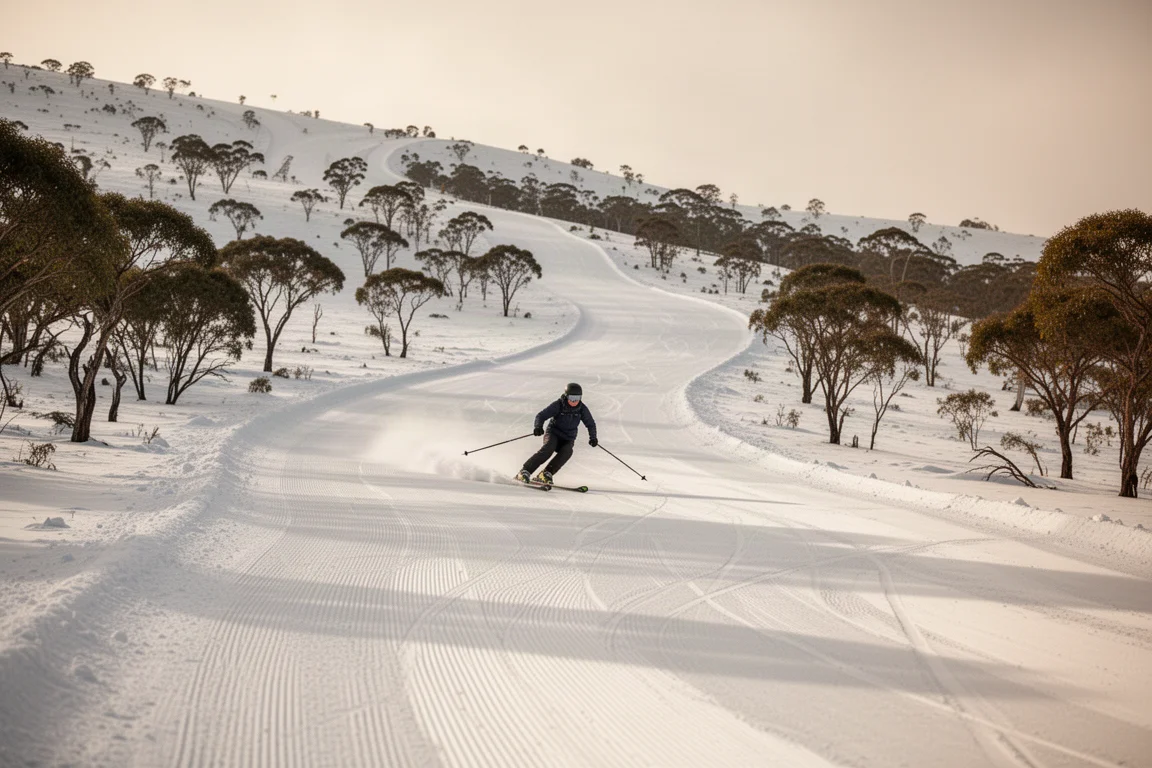
The dramatic terrain shift sets the tone for the resort’s overall aesthetic, which is among the most unique you will find at a South American ski resort. From the top, you can see lines of peaks in the vicinity, several of them active volcanoes that top out well above the ski area. The lifts are painted red, a minor detail that creates a visually iconic contrast against the volcanoes and boreal trees.
The resort also feels far more local than you might expect, with very little excess build-up or commercialization. You may find yourself riding past a random hotel tucked away in the woods off a trail, or even passing abandoned huts if you venture further off the beaten path. It is a much different character than the more commercial resorts further north.
The Lift Network: Functional but Dated
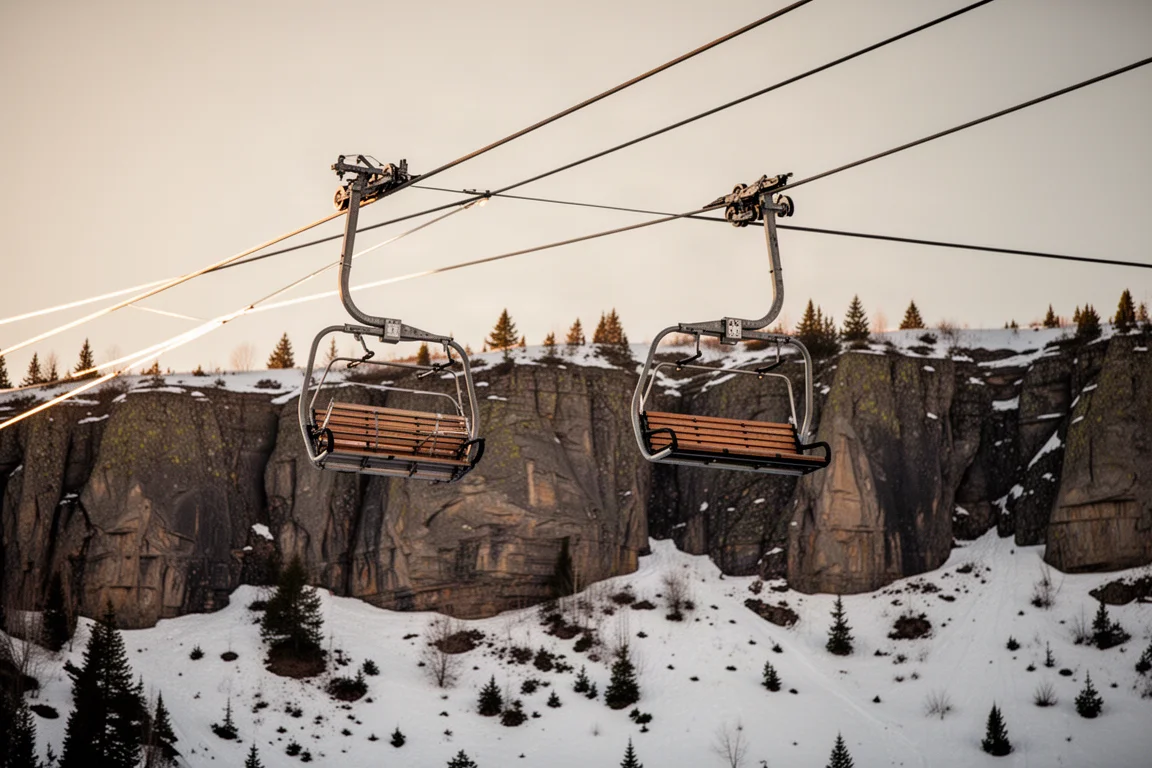
The lift network is the resort’s most notable drawback. It is functional but dated. On the plus side, everything can be accessed via chairlifts, which is not a given in South America, where surface lifts are sometimes the only option. However, every lift is slow and not particularly comfortable, using wood or metal slats for seating, and some chairs involve long spans above cliffs or streams that would never get a green light at most US or Canadian resorts.
Because the vertical rise is substantial, ride times can be lengthy. The main chair providing the best access to the upper mountain takes a whopping 17 minutes from base to top, and its motor at the base is extremely loud, so loud that lift operators wear industrial hearing protection. To the resort’s credit, some upper-mountain lifts have mid-load stations so you do not always have to ride all the way to the top, and modern RFID gates handle loading, though there are not enough gates at each lift to process a full chairload at once.
Resiliency, Crowds, and Navigation
Thanks to its snow totals, the resort is on the reliable side for South America, but conditions vary significantly with weather and elevation. Much of the upper mountain is heavily exposed to wind due to the above-treeline volcanic footprint, which can lead to frequent lift closures or terrain interruptions during storms. The mountain faces west and never gets especially cold, so freeze-thaw cycles are common: a sheet of ice in the morning can turn corny or even slushy by the end of the day. The sheltered below-treeline lower mountain is the place to be in the morning if fresh snow has not fallen recently.
Crowds are manageable by regional standards. The mountain does not see the demand of the Santiago resorts or the largest Argentine resorts, though several critical low-capacity double and triple chairs still produce waits, and the base-to-summit chair is the most congested on a busy day.
Navigation is more straightforward than at some South American resorts with dilapidated signage. On normal trails, signage is mostly clear and well maintained, though there are a few areas with comically small trail map postings. Lift signs do not distinguish between chairs and surface lifts, which can be confusing at first, though the surface lifts are largely avoidable. Freeride and off-piste areas are completely devoid of signage and markings, even for hazards. There are a few flat sections on the mountain, especially on the way down to the lower base, but they are manageable with speed kept up. One practical note: English-speaking staff are much fewer and farther between than at the more touristy resorts near Santiago and Bariloche, so knowing at least a little Spanish really helps.
On-Mountain Facilities and Night Skiing
The lodges are not the fanciest in the world, but they get the job done and are well placed. The main base offers both a casual cafeteria and a fancier bar and restaurant, and the lower base has a small hut with food and drinks. All options have indoor and outdoor seating, and you will often hear music playing too.
Night skiing was added recently, making the resort one of the only ones in South America to offer it. The setup is a single trail, the below-treeline Bosque Nevado green run, so it is more of a novelty way to extend the day than a full-fledged night skiing experience.
Getting There
Nevados de Chillán is located in central Chile, significantly south of the main Santiago-area destinations. Driving from Santiago takes about six hours. Alternatively, a short domestic flight to Concepción leaves about a 2.5-hour drive to the mountain, and train and bus services run from Santiago to Chillán in roughly five and a half to six hours, followed by a local shuttle or taxi.
A relative advantage is the access road, which is significantly less sketchy than those of its Chilean competitors. There are still hairpin turns and storms can warrant chains or snow tires, but it is far less stressful than the notoriously sketchy mountain roads leading to the Santiago-area resorts. The resort closes the access road when it reaches capacity, so arrive early during peak times. Paid parking is standard in the main lots, up to 20,000 Chilean pesos, about $20 US, even on empty weekdays, and there is limited free parking below the base, though it is not clearly marked and many visitors pay unnecessarily for spots only slightly closer to the lifts.
Lodging, Off-Mountain Towns, and Costs
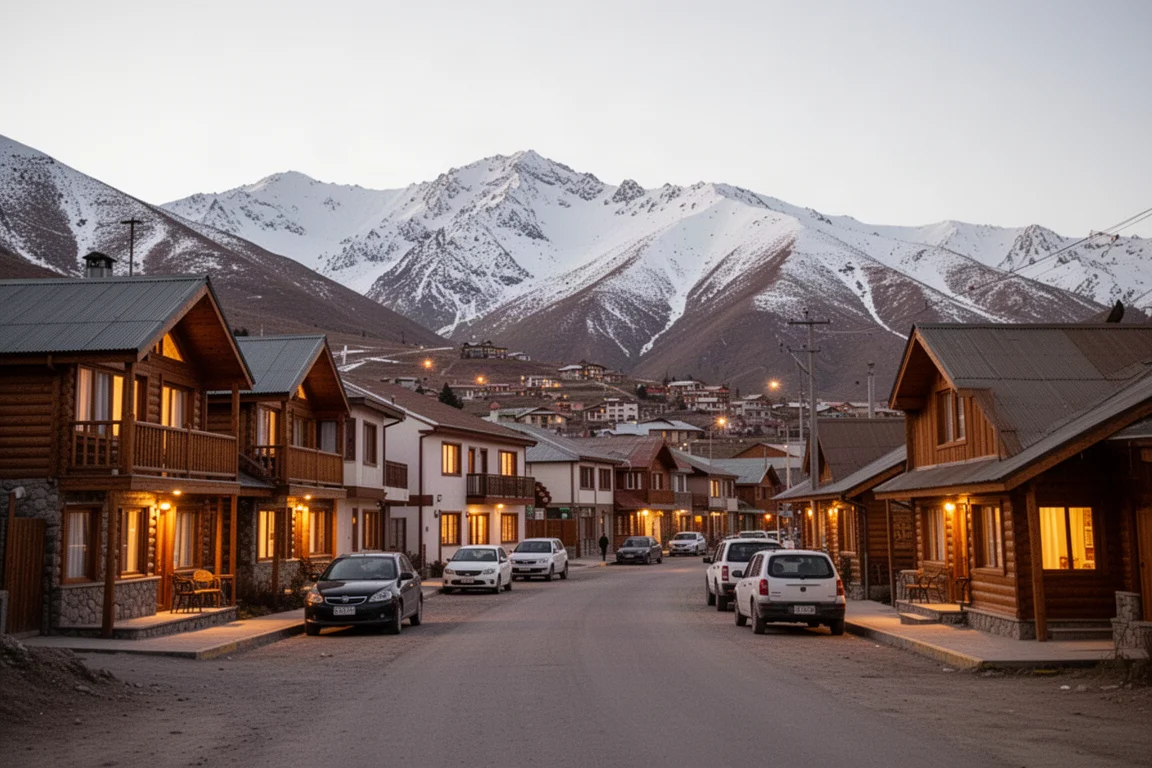
One of the biggest advantages of a trip here is the wide array of reasonable lodging options in and around the resort. Unlike most competing Chilean resorts, which have lodging near the mountain in the middle of nowhere and nothing for hours, plenty of hotels sit a short drive away. For the widest range, check the town of Las Trancas, which offers accommodations from budget-friendly hotels to fancy cabanas. The Domo Hostel offers shared and private rooms and is one of the few places in town that attracts other English speakers. Prices for food, groceries, and even ski services such as tunes are far cheaper than at other Chilean ski resorts, though you will want to double-check the quality of those tunes when you get your skis or board back.
Ski-in and ski-out accommodations exist too, with two primary hotels in the lower base village, the fairly reasonable Hotel Nevados and the very high-end Hotel Termas de Chillán, plus the mid-tier Hotel Alto Nevados situated higher up next to the main base. Many lodging options, including on-mountain hotels, charge Chile’s statutory 19% IVA tax, but depending on the property’s currency policy, foreign visitors paying in USD may qualify for an exemption, so read the fine print before booking.
The après-ski scene is not the liveliest, but the atmosphere is authentically local Chilean. Las Trancas acts as a true local ski village with plenty of affordable restaurants and bars, a rarity in South American skiing, and the slopes themselves have a laid-back bar scene with spots for live music and drinks after a day on the mountain.
Lift Tickets and Rankings
Nevados de Chillán is not on any mega passes. On select peak dates in August, online lift tickets run around 75,000 Chilean pesos, about $78, and at other times around 58,000 Chilean pesos, roughly $60. Online purchase requires an existing ski pass, and window prices are about 10,000 Chilean pesos, around $10, more expensive. Given the experience for the region, it is not a bad deal for what you get.
Across the ten standard ranking categories, the resort scores 8 for snow, 5 for resiliency, 6 for size, 8 for terrain diversity, 8 for challenge, 3 for lifts, 7 for crowd flow, 6 for facilities, 6 for navigation, and 9 for mountain aesthetic. These add up to an overall score of 66, making it the top peak in South America. The downsides are clear: slow lifts, and wind and sun exposure at times. But for raw snow quantity, a footprint that feels as exotic as it gets in the region, and crowds that stay reasonable compared to some other Andean ski areas, the package is hard to beat.
Conclusion
Nevados de Chillán is not without quirks, and no South American ski resort is. But its combination of terrain diversity, snowfall reliability, affordable pricing, and a true local feel makes it one of the most compelling ski destinations in South America. It is not ideal for every skier or rider, especially those who prioritize modern lift infrastructure, but it is a must-hit for adventurous Chile travelers who want an experience off the beaten path with a decidedly exotic feel. If powder and a unique volcano setting are what you are after on your next southern hemisphere trip, this resort deserves a place at the top of the list.
Product link
View more details for Nevados de Chillán
This product is mentioned in the review. Check the specifications, options, and compatibility before buying.
View more details for Nevados de ChillánFurther reading
Related Reviews

Ski Resorts
Alyeska Resort Review: Alaska's Largest Ski Resort, Worth the Journey?
A deep look at Alyeska Resort: heavy snowfall, expert terrain, an Icon Pass connection, and the trade-offs of a near-sea-level mountain in the Last Frontier.

Ski Resorts
Bear Valley Ski Resort Review: Northern California's Quiet Sierra Alternative to Tahoe
A lesser-known Sierra resort with over 1,300 skiable acres, surprisingly strong expert terrain, and crowd levels Tahoe can only dream of. Here is what to know before you go.

Ski Resorts
Colorado Ski Resorts Ranked: The Best Destination Mountains for Overall Experience
A ranked guide to Colorado's destination ski resorts, covering terrain, snow, logistics, crowds, and cost so you can pick the right mountain for your trip.