Sleeping Pads
Nemo Tensor Extreme Conditions vs Therm-a-Rest XTherm NXT MAX: A Cold-Weather Sleeping Pad Comparison
Two lightweight cold-weather sleeping pads compared on claimed R-value, weight, and the insulation gaps that a lab rating can miss.
Introduction
A sleeping pad does the work your sleeping bag cannot. Insulation only traps warmth while it can loft, and the moment your body weight presses a bag flat, that loft disappears underneath you. The pad becomes the only thing standing between your body and frozen ground, which is why pads built for snow are rated so carefully and why the numbers on the label matter so much.
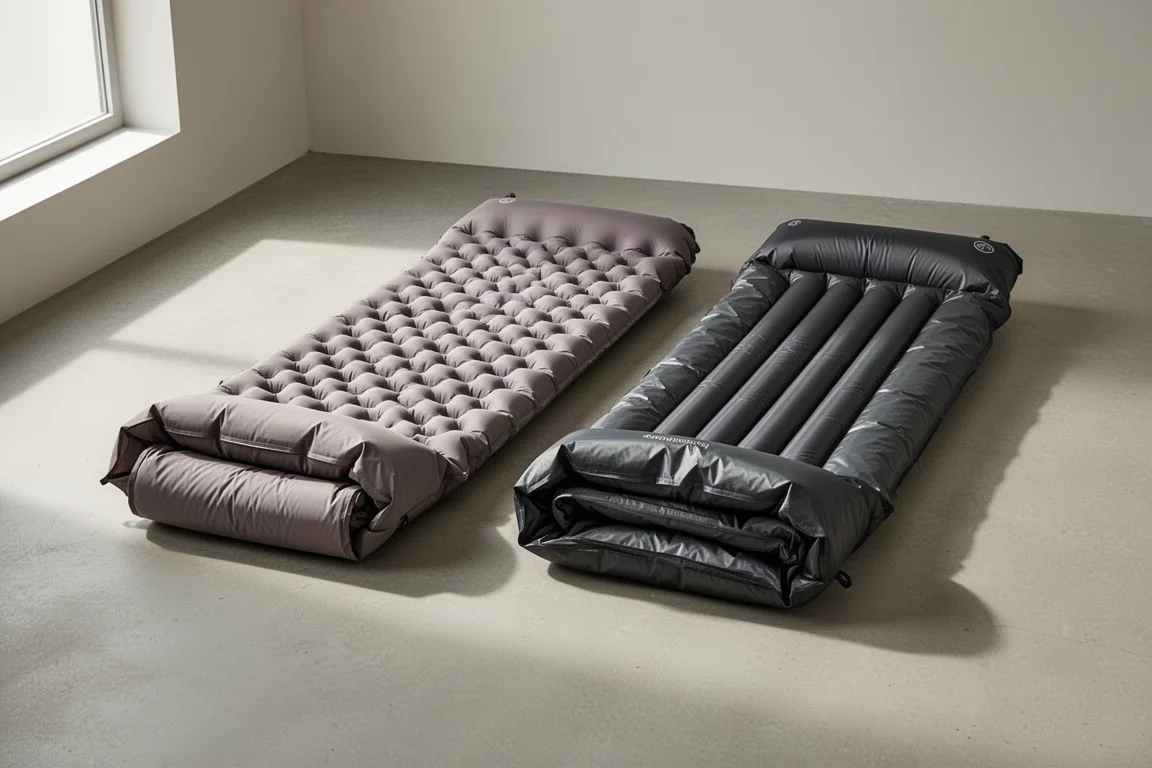
Two pads sit at the top of that conversation. The Nemo Tensor Extreme Conditions is a lightweight pad designed for the coldest temperatures, and the Therm-a-Rest XTherm NXT MAX is the long-standing reference point for warmth-to-weight performance. The Tensor claims an R-value of 8.5, a full point higher than the XTherm, and both pads come in at the same 23.5 oz in the configurations compared here. That is a genuinely tight contest, so the useful question is not which number is bigger but which pad suits the way you actually sleep outside.
What Matters Most in a Cold-Weather Sleeping Pad
Cold moves through a sleep system in two ways: up from the ground and in from the air around you. Pads like these are designed to be used directly on snow, where the ground is well below freezing and a sleeping bag alone would not cope. The R-value printed on a pad is meant to describe how well it resists that ground-up heat loss.
Those ratings come from a standardised test. A pad is loaded into a machine with a heated plate on one side and a chilled plate on the other, and the equipment measures how much energy is required to hold both plates at set temperatures. More energy needed means a lower R-value; less energy needed means a higher one. It is a consistent, repeatable method, and it is also a narrow one. The machine only pushes cold through the pad from bottom to top, in a room that is otherwise at normal indoor temperature.
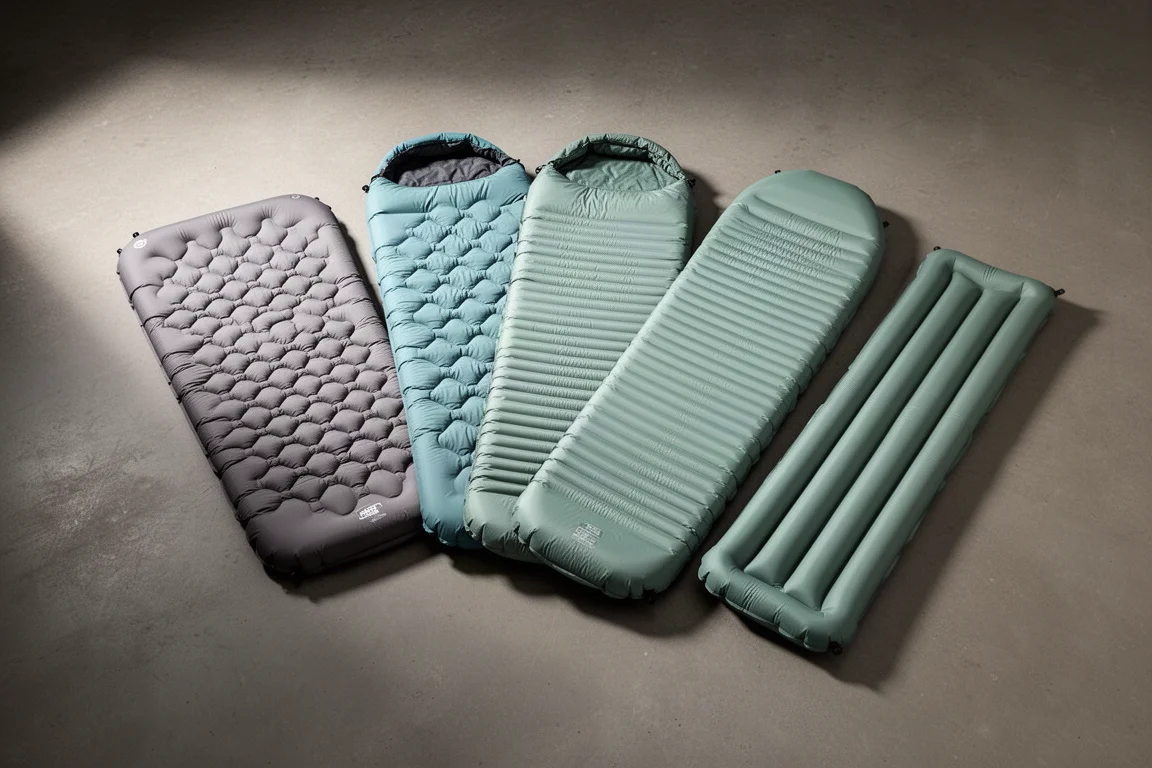
That gap shows up in dimpled pad designs, where the surface is broken into a grid of small recesses. Thermal imaging of dimpled pads has shown cold spots forming at those recesses, where chilled air reaches the body more easily than the surrounding surface. The test machine may register lower energy use, but a sleeper can still feel the difference.
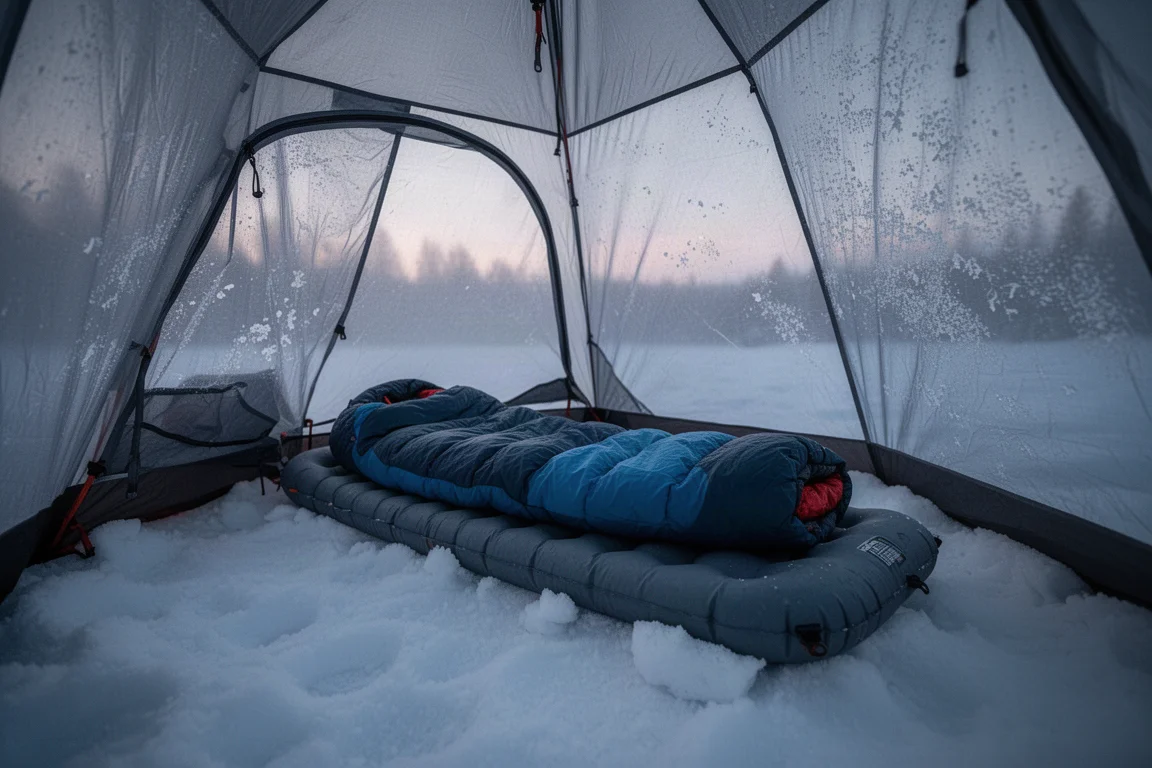
There is a second gap worth knowing about before you spend money: the standard does not measure side insulation at all. In real winter conditions, freezing air presses against the edges of your pad as well as the underside, and that is not something the top-to-bottom test captures.
Nemo Tensor Extreme Conditions: Highest Claimed Warmth-to-Weight
The Tensor Extreme Conditions is the pad that most directly challenges the established order. It carries a claimed R-value of 8.5, a full point above the XTherm, and it does so at a pre-production weight of 23.5 oz, which is the same figure as its rival. Nemo’s stated aim is the best warmth-to-weight ratio available, and on paper the numbers support that ambition.
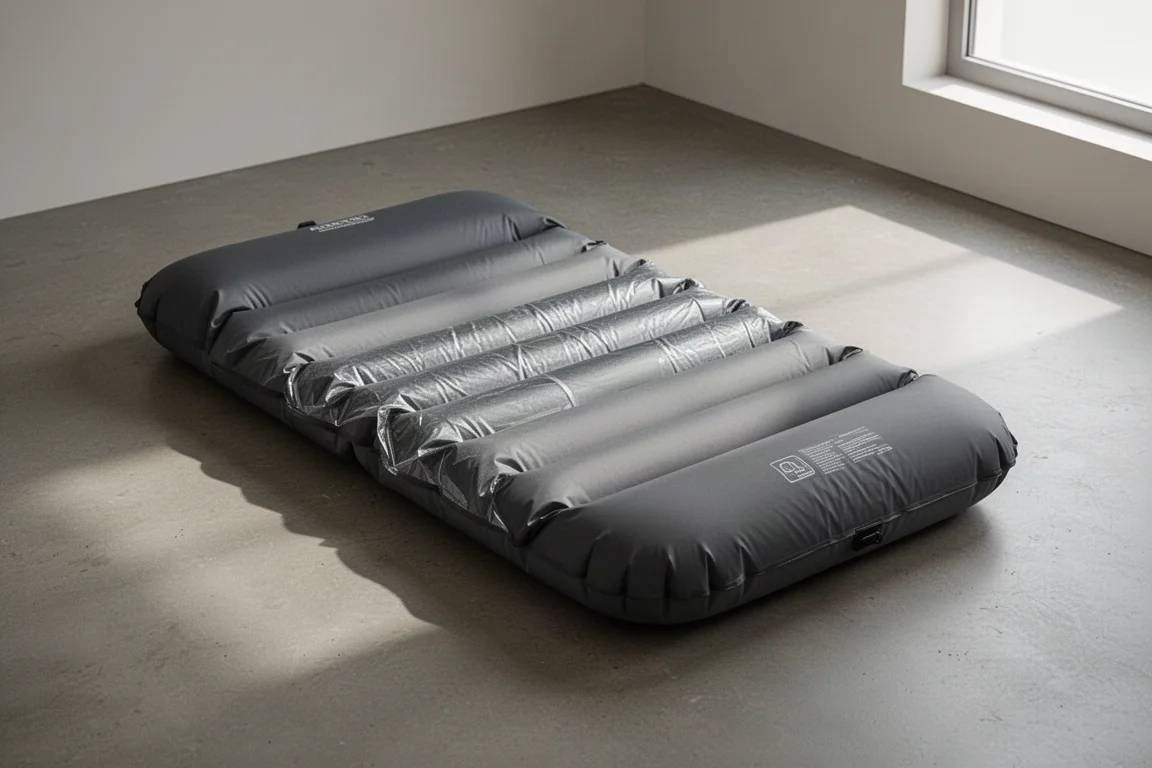
The construction is where the claim lives. The Tensor uses four layers of reflective insulation, which is what allows it to stack warmth without stacking much weight. The surface is dimpled rather than smooth, a design that helps with stability and packability but also creates the recessed areas where cold spots can develop in the wrong conditions.
One practical note for anyone shopping right now: the unit tested was a pre-production sample. Weight and specification can shift slightly between a sample and the version that reaches shelves, so it is worth confirming the final figures on the production pad before committing. The design intent is clear and the claimed numbers are strong, but the last word belongs to real winter conditions.
Therm-a-Rest XTherm NXT MAX: The Established Benchmark
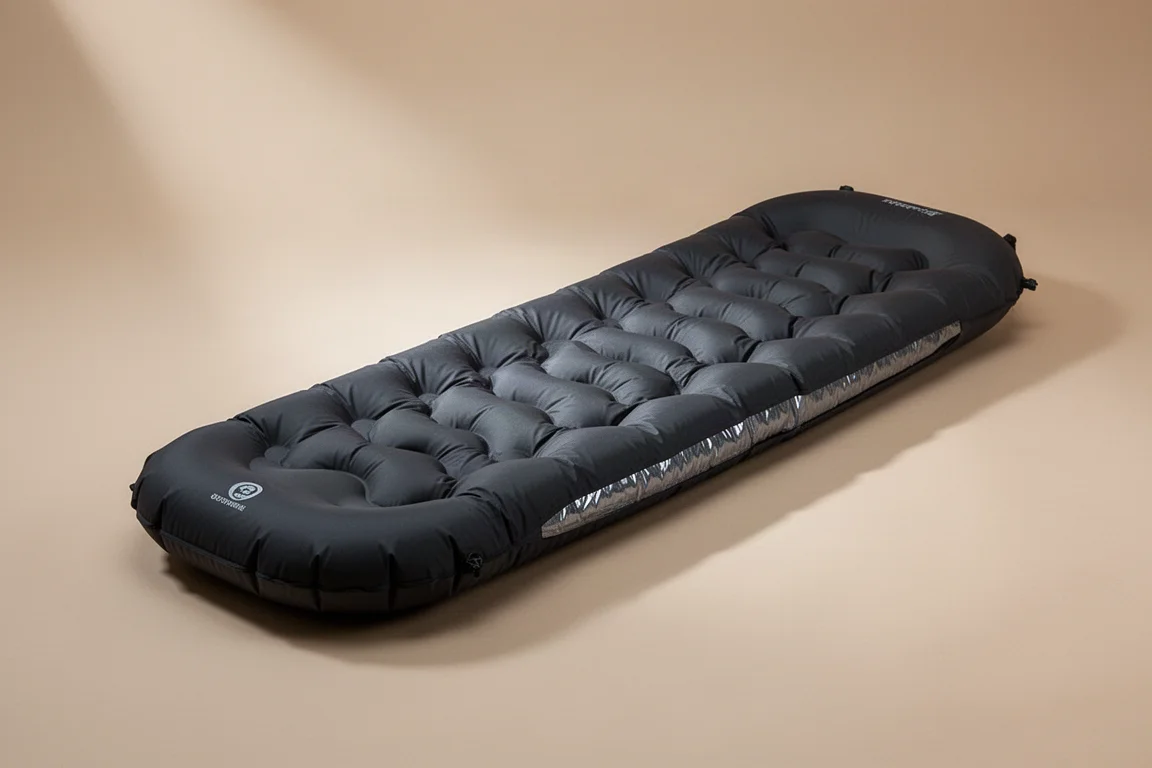
The XTherm NXT MAX is the pad the Tensor is measured against, and that status is earned. It has been the reference for warmth-to-weight in lightweight cold-weather sleeping pads, the design that other manufacturers quietly benchmark their own numbers against. Its claimed R-value sits one point below the Tensor’s 8.5, and it matches the Tensor on weight at 23.5 oz.
That combination is the reason the XTherm has held its position. A one-point R-value gap is meaningful on paper, but it is also a gap between two pads that are both squarely in the extreme-cold category, which means the practical difference may be smaller than the label suggests for many trips. What the XTherm offers instead is familiarity: a construction and a performance profile that a lot of cold-weather backpackers already know and trust.
Like the Tensor, the XTherm’s rating is produced by the same top-to-bottom test method, so it is subject to exactly the same blind spot around side insulation. The difference between the two pads is the reflective layer count and the surface design, not the testing standard they are judged by.
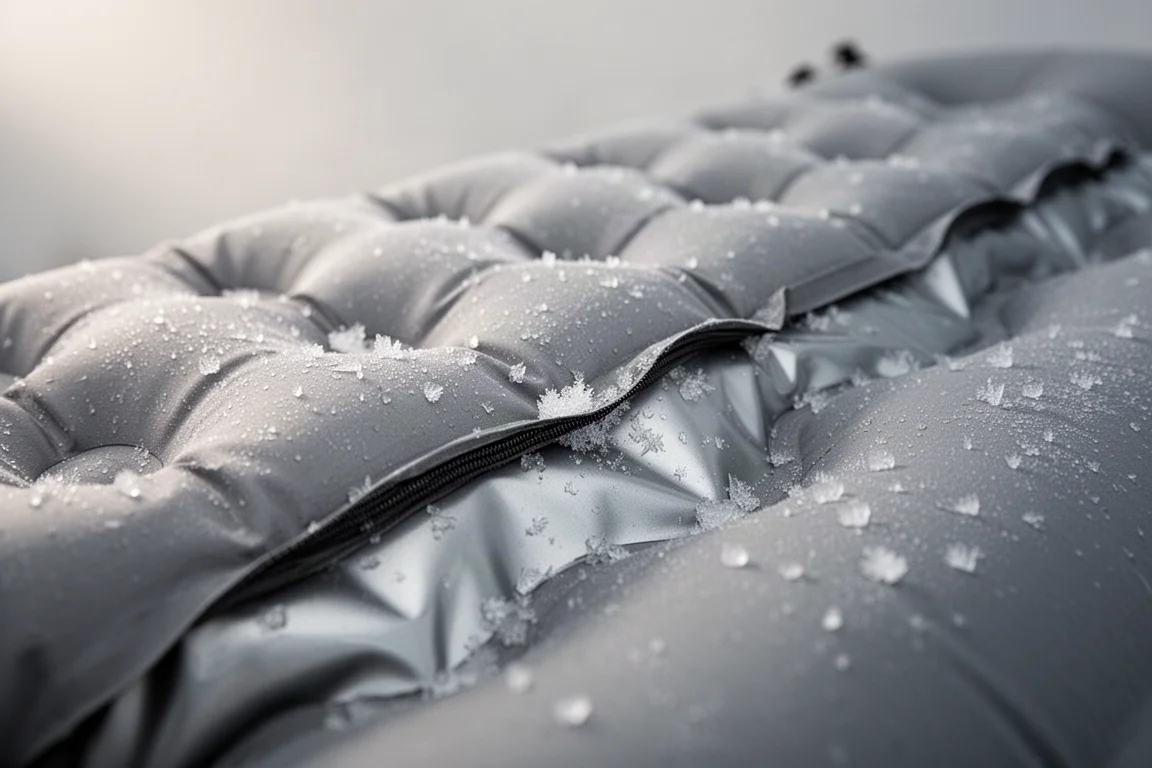
For anyone upgrading from an older three-season pad, the XTherm represents the safe, well-understood route into genuine winter capability. You are buying a known quantity rather than a new claim, and for a lot of people that is exactly the right trade.
Where R-Value Ratings Fall Short
The most useful thing to understand about both of these pads is that their ratings come from a test that a manufacturer can buy, run, and tune against. The result is a bit like teaching to the exam: pads get optimised for the specific conditions the machine creates, and the machine creates conditions that are simpler than the outdoors.
In a room-temperature room, cold arrives from one direction only. In a snow cave, a tent on a glacier, or a bivy on a frozen lake, cold arrives from every direction at once, including sideways. As pads get thicker to chase higher warmth-to-weight figures, the side surface area grows, and the untreated edges become a larger share of the total picture. A rating that only describes vertical heat flow simply does not speak to that.
The reasonable conclusion is not that R-values are meaningless. They are the best comparable figure available, and they are far better than nothing. But they describe one axis of performance, and winter sleepers experience three. Until the industry adopts a standard that also tests side to side, treating R-value as the whole story will lead to occasional surprises in the field.
Warmth, Weight, and Side Insulation in Practice
A controlled cold comparison between these two pads produced a result that is worth reporting honestly, because it says more about testing than about either product. With both pads placed in an environment where the cold surrounded the pad from the sides as well as from below, both transmitted noticeable cold to the sleeper, and the sensation was similar on each pad.
That outcome pointed at the setup rather than at either design. The Tensor’s four reflective layers are arranged to intercept heat loss travelling vertically, which is the direction the rating describes. When cold is able to move horizontally along those same layers, the insulation is being used in a way it was never specified for, and the result is a cold sleeper regardless of which pad is underneath them.
A second comparison, with the pad resting on a bed of ice and cold arriving only from below, was much closer to normal use. Some cold was still perceptible through pad and sleeping bag, particularly under the hips where body weight compresses everything, but nothing like the sensation in the surround-cold setup. The honest summary is that neither result settles the question. The Tensor’s warmth claim still needs real snow and real overnight temperatures to be properly judged, and the same is true of any pad rating that has only ever been validated bottom-up.
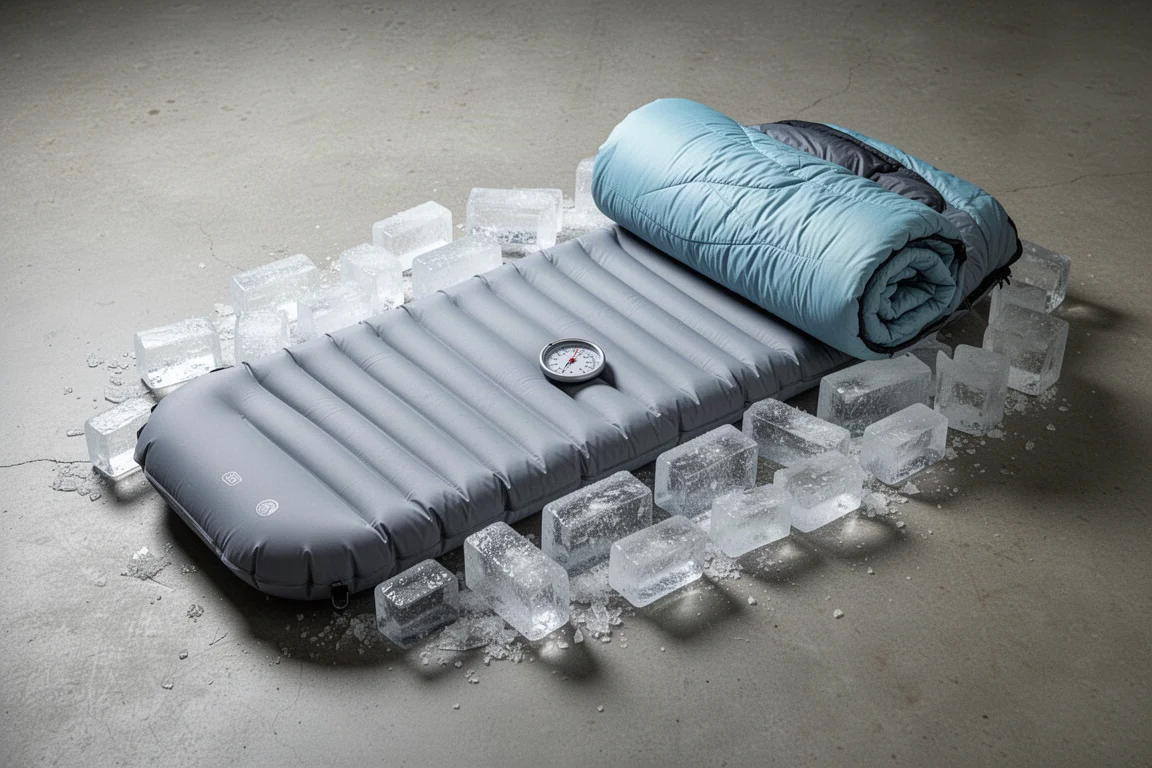
What the exercise does establish is a practical caution. Thicker, higher-R-value pads are not automatically warmer in every orientation, and a sleeper who rolls to the edge of a pad in a cold tent is exposing a part of the design that no rating currently covers.
Who Each Pad Suits
The Tensor Extreme Conditions is the pad for someone who wants the highest claimed R-value available at a minimal weight and is willing to be an early adopter to get it. If your trips involve snow camping, winter backpacking, or cold-weather mountaineering and you count grams carefully, the 8.5 R-value claim at 23.5 oz is the most aggressive combination on the table.
The XTherm NXT MAX is the pad for someone who wants proven cold-weather performance without uncertainty. It matches the Tensor on weight, gives up one point of claimed R-value, and comes with a long record as the benchmark in this category. For anyone who would rather buy the known quantity than the newer claim, that is a straightforward decision.
Buying Advice: Matching a Pad to Your Trip
Start with the conditions you actually sleep in. If your coldest nights are late-season three-season trips with occasional frost, either pad is more warmth than you strictly need, and the money would be better spent on a pad you find comfortable. If you genuinely sleep on snow, the R-value discussion becomes relevant, and both of these pads are built for it.
Weight and packed size matter next, and here the two pads are effectively level at 23.5 oz. That means the decision comes down to how much you value the extra claimed point of R-value against the reassurance of an established design. Neither answer is wrong; they simply reflect different priorities.
Consider your sleeping bag alongside the pad. A pad only solves conduction from below, and the bag still has to handle the air above you. A warm pad paired with a bag that is not rated for the temperatures you are camping in will still leave you cold, and no R-value fixes that.
Finally, treat the rating as a floor rather than a guarantee. Since no current standard measures side insulation, a pad that performs beautifully in the middle of a tent may feel different when your shoulder is pressed against a cold wall. Give yourself margin, and if you can, test a new pad on a shorter cold trip before relying on it for a serious objective.

Conclusion
The Nemo Tensor Extreme Conditions and the Therm-a-Rest XTherm NXT MAX are two premium answers to the same question, and they arrive at similar weights with different claims. The Tensor offers the higher R-value figure at 8.5 with four reflective layers and a dimpled surface, while the XTherm offers one point less and the confidence of being the pad everyone else is compared to.
Whichever you choose, go in with clear expectations. R-value is the best available measure of a pad’s warmth, and it is a measure of vertical heat flow only. Buy for the conditions you really camp in, pair the pad with a bag that matches those conditions, and leave room for the fact that the coldest part of a winter night often comes from a direction the label never mentions.
Further reading
Related Reviews
Sleeping Pads
Best Backpacking Sleeping Pads 2026: Nine Pads Rated on Price, Comfort, Warmth, and Weight
Nine backpacking sleeping pads compared on price, comfort, warmth, and weight, from a $65 summer pad to a year-round option rated at R-7.3.
Sleeping Pads
Best Backpacking Sleeping Pads: Comfort, Warmth, and Weight Compared
A practical comparison of the Nemo Quasar 3D, Therm-a-Rest NeoAir XTherm Max, and Big Agnes Rapide SL for backpackers choosing between comfort, warmth, and packed weight.
Sleeping Pads
Best Backpacking Sleeping Pads: Ultralight, Winter, Comfort and Budget Picks
A practical roundup of the sleeping pads that stand out for ultralight weight, winter warmth, pressure relief and value, plus three popular pads that fell short.