Camping Tents
Nemo Aurora Highrise 6-Person Camping Tent Review: A Family Basecamp You Can Stand Up In
A roomy six-person family tent with near-vertical walls, a 77-inch peak height, and two doors with two vestibules, tested through a year of rain, wind, and desert sand.
Introduction
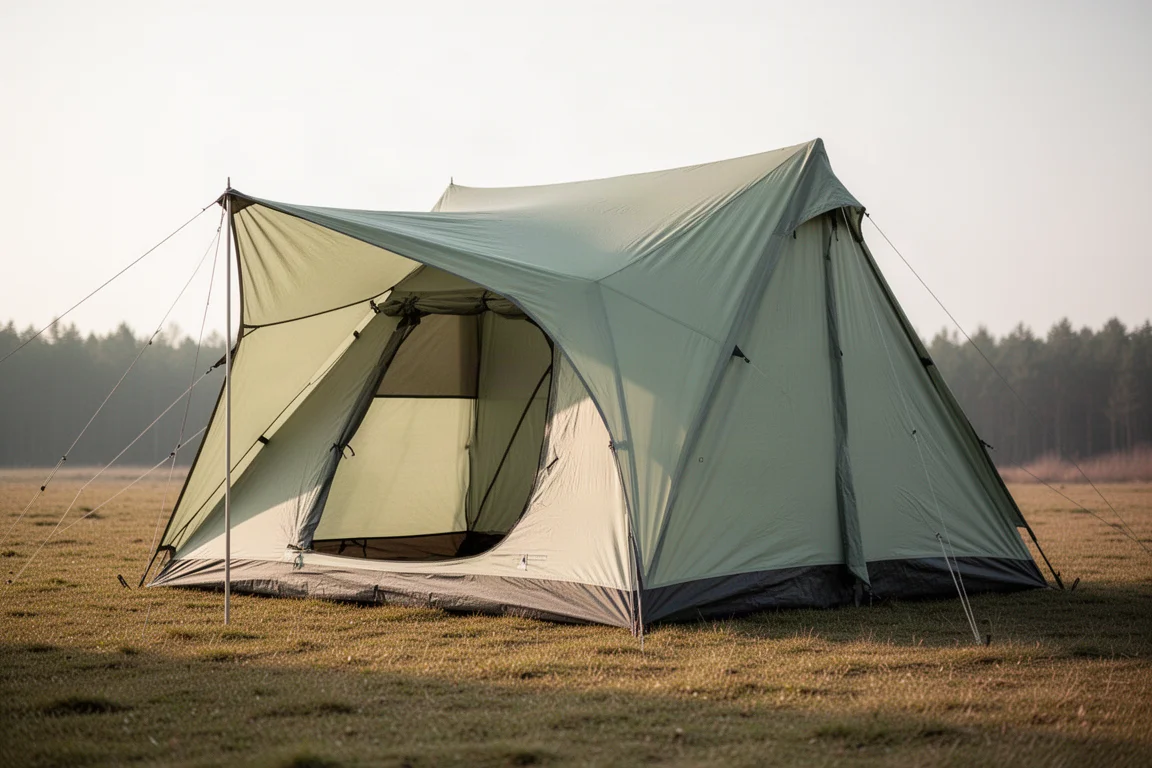
A large family tent has one job that matters more than any specification sheet: it has to stay comfortable on the third night, not just look impressive on the first. The Nemo Aurora Highrise 6-Person Camping Tent is built around that idea. It offers a 100 by 120 inch floor and a 77 inch peak height, which is tall enough to stand up, get changed, and move around without stooping.
That combination of floor area and standing height is what separates a livable family shelter from a tent that is simply a place to sleep. The Aurora Highrise has been used on family camping trips for a year across campgrounds, remote desert sites, and mountain pitches, including heavy rain and gusty wind, and it has held up as a genuinely enjoyable space for a family of five plus a dog.
Who This Tent Is For
This tent is aimed at families and larger groups who want a basecamp rather than a minimalist shelter. A family of five plus a dog fits, though the space fills up quickly once duffel bags, sleeping bags, pads, and a dog bed are added. It is not cramped to the point of being uncomfortable, but it is a full house.
It also suits anyone who values standing height and easy movement inside a tent, whether that means changing clothes, sorting gear, or simply not crawling over each other in the morning. Campers who usually travel as a couple or a trio with a lot of equipment will also find the volume useful, particularly on longer trips where the tent doubles as a gear store.
A four-person version of the same design is available with a smaller floor area and a slightly shorter peak height, which is a better match for smaller groups who want the same layout in a more compact package.
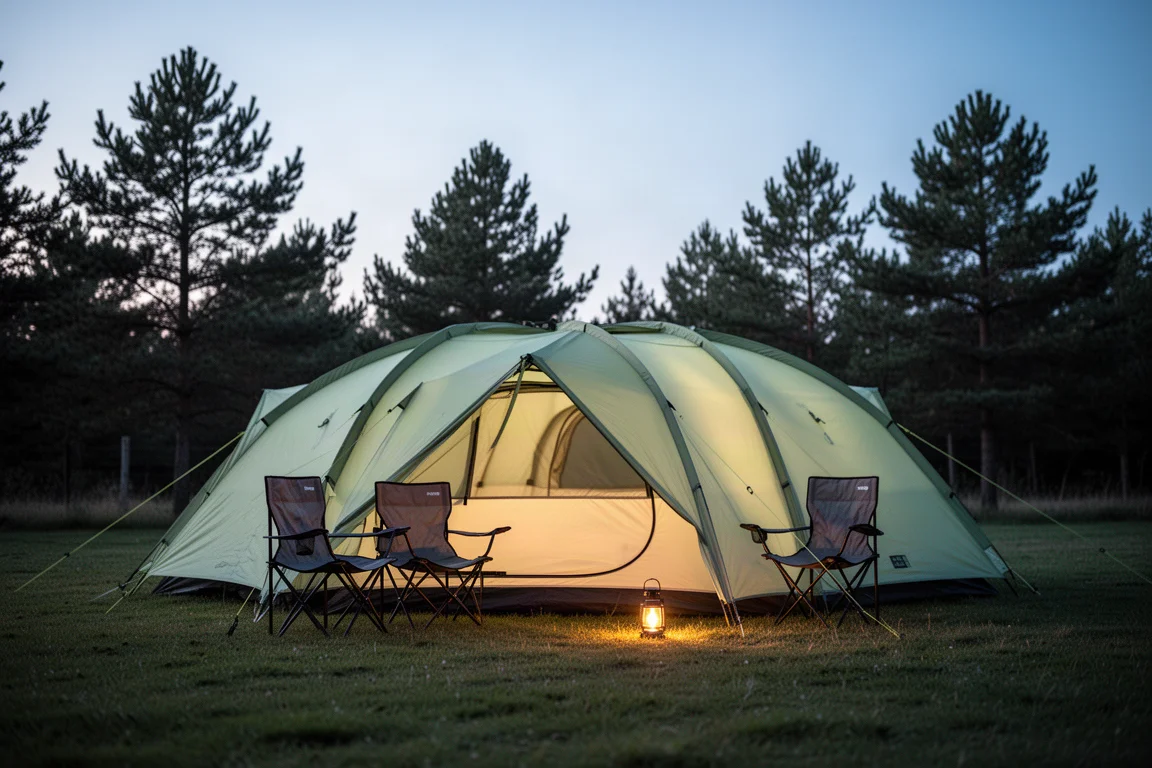
The trade-off is straightforward: a tent this size takes more effort to pitch and pack than a compact backpacking shelter, so it makes the most sense for car camping, extended stays, and trips where comfort matters more than pack size.
Interior Space and Vertical Walls
The standout feature is the wall geometry. The two long ends of the tent rise almost vertically, supported by cross poles that push the walls outward rather than letting them slope inward. Many large tents rely on a deep dome shape, which pulls the side walls in and reduces both headroom and usable floor space near the edges.
With the Aurora Highrise, the near-vertical walls mean the interior feels closer to a small room than a dome. At 77 inches at the peak, standing up is easy, and the vertical sections along the long sides keep the perimeter usable for sleeping pads, bags, and gear instead of forcing everything toward the centre. For a family trying to spread out, that difference is felt every evening.
Weather Protection and Build Quality
The outer fly uses a 68-denier polyester fabric with a PU coating and a 12,200 mm hydrostatic head, and the floor is a burlier 120-denier fabric. All seams are taped, which removes the usual worry about water tracking through stitching. That combination has proven itself in practice: the tent has been through intense rainstorms, been soaked through, and never leaked.
Wind performance is similarly reassuring. The tent has handled strong, gusty conditions without drama, and the structure stays stable when the fly is properly tensioned. After a year of hard use, including desert sand blowing into the zipper tracks, the zippers still run without problems, and the floor remains in very good condition. Using a footprint underneath has helped protect it from dog nails and from kids moving around inside.
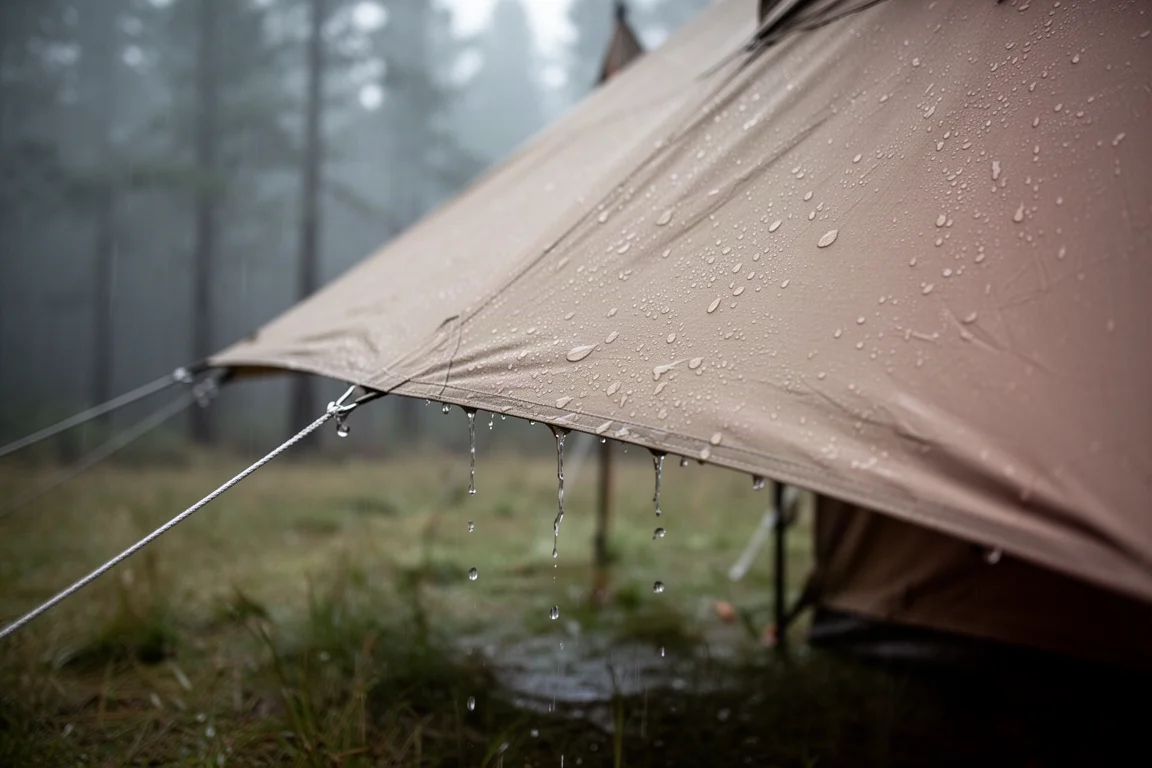
Fabric durability and taped seams matter most in exactly the conditions where a family tent is hardest to dry out, so this is a case where the materials match the intended use rather than just the marketing.
Ventilation and Windows
Two large windows sit on either side of the tent and provide cross ventilation on warm summer nights. They roll up and are held in place with a toggle, and a shock cord helps keep the rolled fabric tidy. Because the window wall is an exterior wall of the tent, the rainfly extends over it to form a small awning, so it is possible to drop one side of a window for airflow even when rain is falling without exposing the interior.
There is also a vent at the top of the rear zipper, supported by an additional pole that can be zipped down to open extra airflow through the back vestibule. In a tent this large, condensation is rarely a serious concern, but the extra vent gives you a way to manage it when conditions are humid or still.
Doors, Vestibules, and Gear Storage
The tent has two doors and two vestibules, which is a meaningful convenience for a family. The rear vestibule is the smaller of the two and uses a single zipper entry, but it still provides a second way in and out plus useful covered storage. The front is the main event: a very large opening with a big door that can be closed fully for weather protection or opened from either side.
The front doors can be rolled back and held with a toggle and loop, which keeps the entry clear on sunny days without fully opening the tent. The front vestibule rolls back entirely as well, and with additional guy lines, cordage, and tar poles it can be pitched as an awning to add shade and weather protection over the entrance. A gatekeeper clip makes it easy to open the space up further when you want more ventilation.
Inside, mesh pockets sit at each corner at roughly mid height, which gives everyone a place for headlamps, phones, and small items. The floor pattern is a small detail that punches above its weight: it reads more like a rug at home than a plain tent floor, and it adds a settled, homey feel to the space.
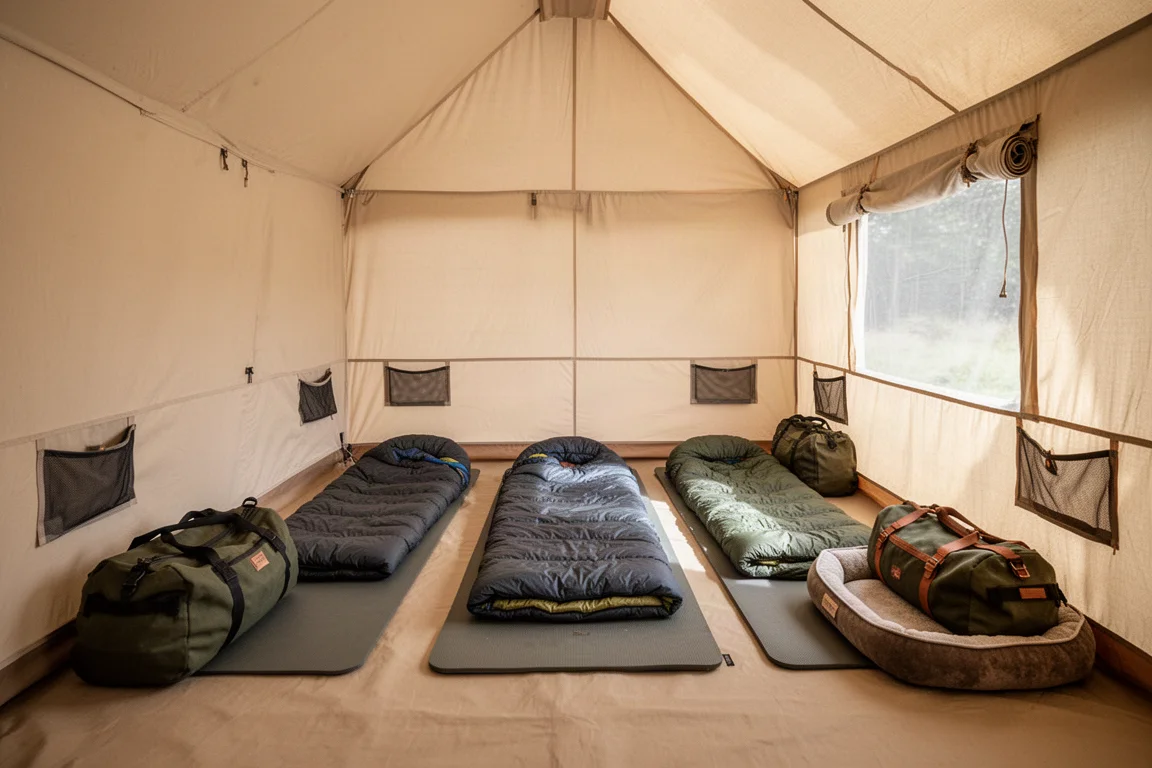
Between the two vestibules, the corner pockets, and the sheer floor area, gear management is one of the tent’s strongest practical arguments for a family that brings a lot with them.
Things to Consider Before Buying
The main consideration is honest capacity. Five people plus a dog fit, but with clothing bags, sleeping bags, pads, and a dog bed, the interior gets busy. It works, and nobody ends up on top of each other, but this is a full tent rather than a spacious one at that occupancy.
A footprint is worth budgeting for. It has protected the floor from dog nails and from kids moving around, and it is a cheap way to extend the life of a tent that is meant to be used hard. The awning configuration for the front vestibule also requires extra guy lines, cordage, and tar poles, which are not part of the base setup.
Finally, this is a large tent, so it takes up more space in the vehicle and takes longer to pitch and strike than a smaller shelter. Buyers who mostly camp as a couple should look at the four-person version instead, which uses a smaller floor and a slightly shorter peak height.
Buying Advice
The decision comes down to how often the tent will be used and how many people will sleep in it. For a family that camps regularly, the combination of standing height, near-vertical walls, two doors, two vestibules, and a taped, coated fly that has already proven itself in real rain and wind is worth paying for. The tent has been used hard for a year and has held up, including the floor and the zippers, which is the part of a family tent that usually fails first.
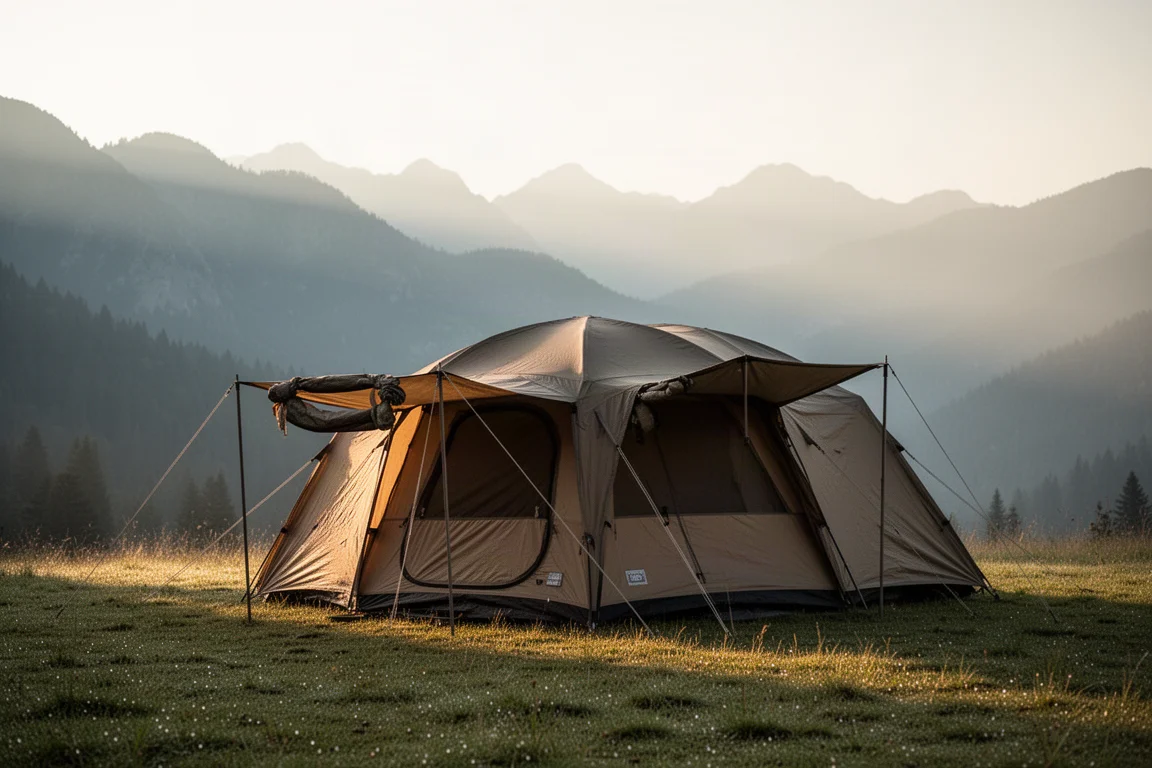
If your group is smaller, or if you camp only occasionally, the four-person version offers the same design language in a more manageable size. If you are regularly fitting four to six people and a dog into a tent, the six-person Aurora Highrise is the version that gives everyone room to move.
Conclusion
The Nemo Aurora Highrise 6-Person Camping Tent earns its place through usable space rather than headline numbers. A 100 by 120 inch floor, a 77 inch peak height, near-vertical end walls, two windows for cross ventilation, and two doors with two vestibules add up to a shelter that a family can actually live in across a long trip. Add taped seams, a coated 68-denier fly with a 12,200 mm hydrostatic head, a 120-denier floor, and a year of proven performance in rain, wind, and desert sand, and it makes a strong case for families who camp often and want a basecamp that stays comfortable night after night.
Product link
View more details for Nemo Aurora Highrise 6-Person Camping Tent
This product is mentioned in the review. Check the specifications, options, and compatibility before buying.
View more details for Nemo Aurora Highrise 6-Person Camping TentFurther reading
Related Reviews
Camping Tents
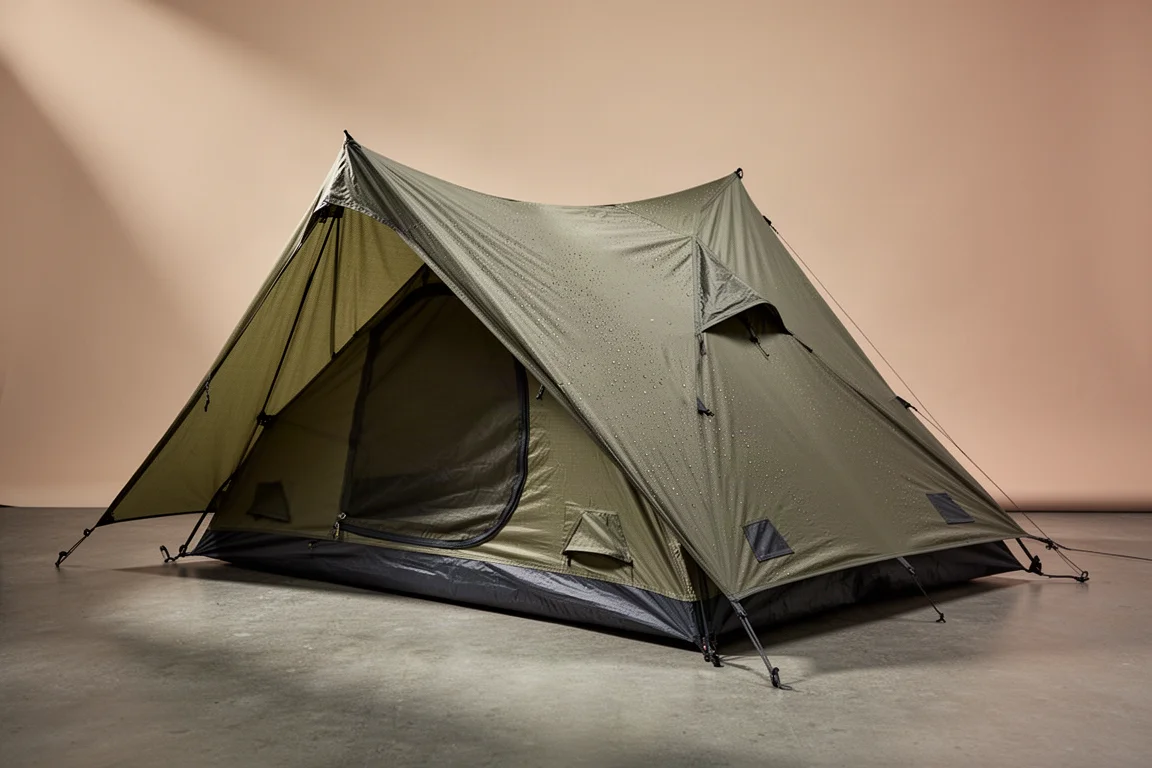
3F UL Gear Taiji Two-Person Tent Review: Field Waterproofing Results and Buying Advice
The Taiji pairs an attached fly with a removable inner, but sustained rain exposed untaped vent seams that need sealing before this shelter can be trusted.
Camping Tents
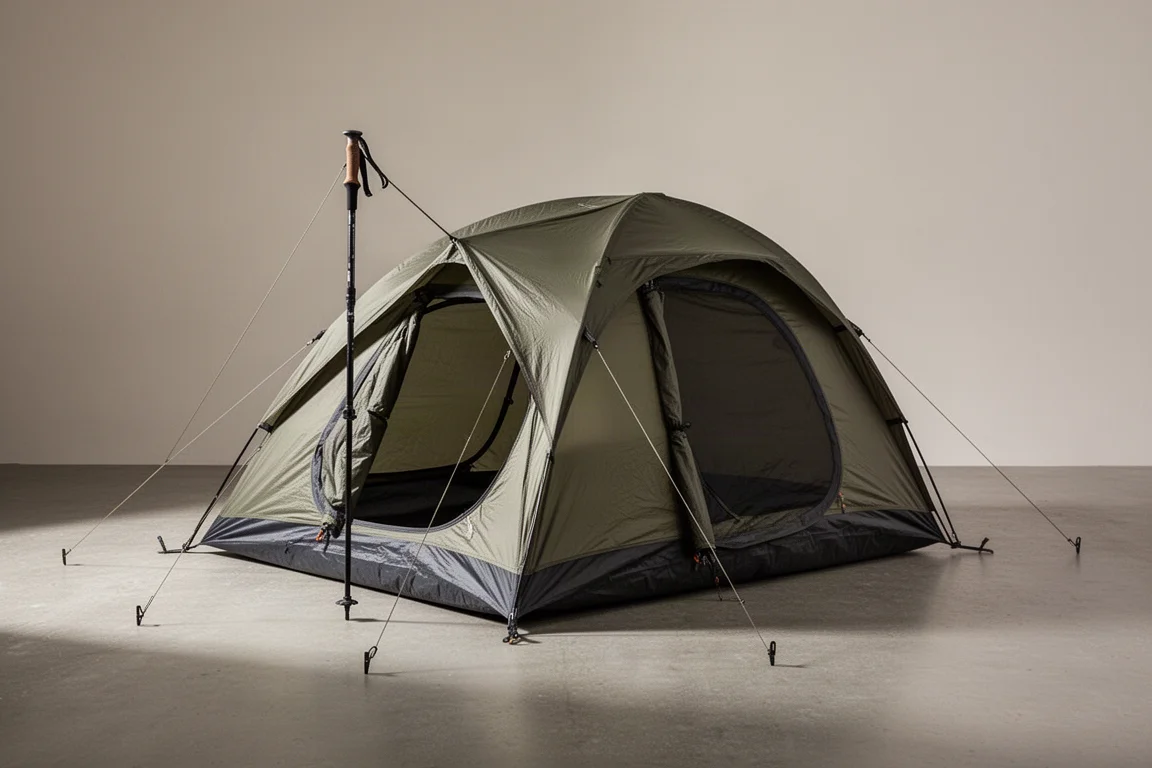
3FUL Gear Lanshan 2 Pro 4-Season Review: A Sub-$200 Single-Wall Trekking Pole Tent
An early look at the 3FUL Gear Lanshan 2 Pro 4-Season, covering its straightforward pitch, generous interior space, and the condensation and seam-sealing questions that come with any single-wall shelter.
Camping Tents
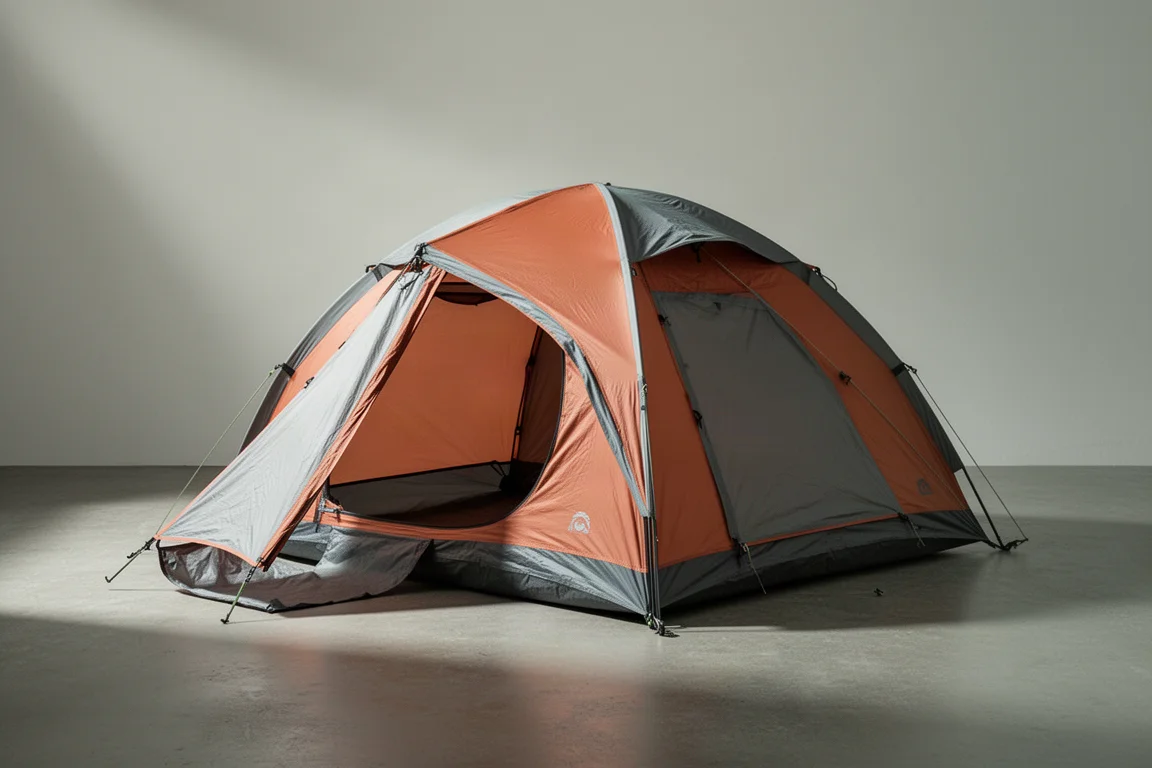
Alps Mountaineering Lynx 1-Person Tent Review: Big Value in a Small Budget Tent
A close look at the Alps Mountaineering Lynx 1-Person Tent, covering real interior dimensions, materials, setup time, ventilation limits, and who should buy it.