Hi-Fi Speakers
Neat Elite Classics Review: A Compact Floorstander Built for Real Rooms
A compact floorstanding speaker pairing an air motion transformer tweeter with a flagship-derived midwoofer, tuned to work close to a wall in small and medium rooms.
Introduction
Loudspeaker design has been looking backwards lately, and listeners are better off for it. Manufacturers are revisiting archived design papers and reviving models that earned their reputations decades ago, giving familiar names a second life with modern crossover components and drivers. Neat’s Petite lineage is a good example: a 30th Anniversary run of 100 pairs worldwide was followed by the Petite Classics, a standmount strong enough to rank among the best in its market segment.
The Neat Elite Classics are the floorstanding counterpart, and they are not simply a Petite in a larger cabinet. They share the air motion transformer tweeter with the Petite Classics, but the crossover components differ, and the midwoofer is taken from Neat’s flagship Ultimatum range. The result is a compact floorstander that keeps the family’s resolving character while adding the weight and extension a larger cabinet makes possible.
Below we cover who these speakers suit, what they do exceptionally well, and the trade-offs worth understanding before you commit.
Who the Neat Elite Classics Are For
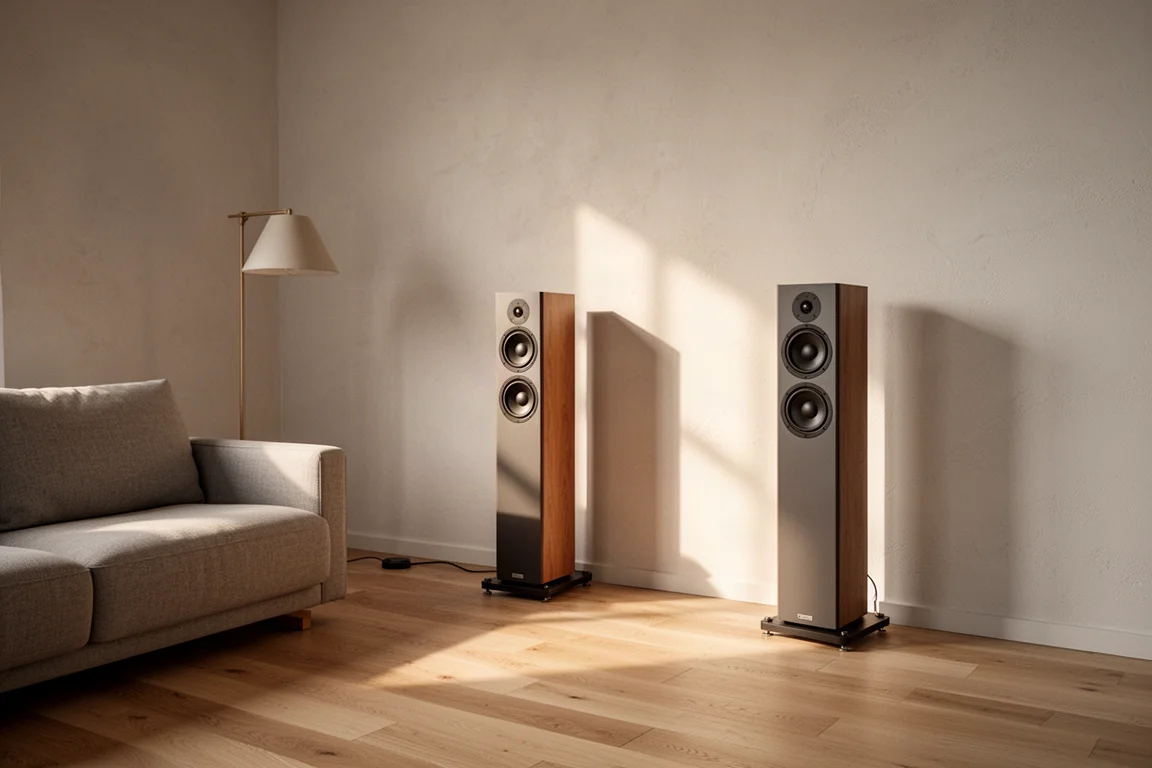
These are speakers for small to medium rooms. They are designed to sit fairly close to the wall behind them, which is what makes a listening distance of roughly two to three and a half metres (six to ten feet) practical in a room that would not comfortably take a large floorstander.
They suit listeners who value resolution and natural tonality, and who do much of their listening at low to moderate volume. Acoustic music, vocal-led recordings and anything that rewards insight into the mid-range play to their strengths.
If your habit is loud rock at levels above 90 decibels, look elsewhere. This is not a speaker built for that.
Design and Build Quality
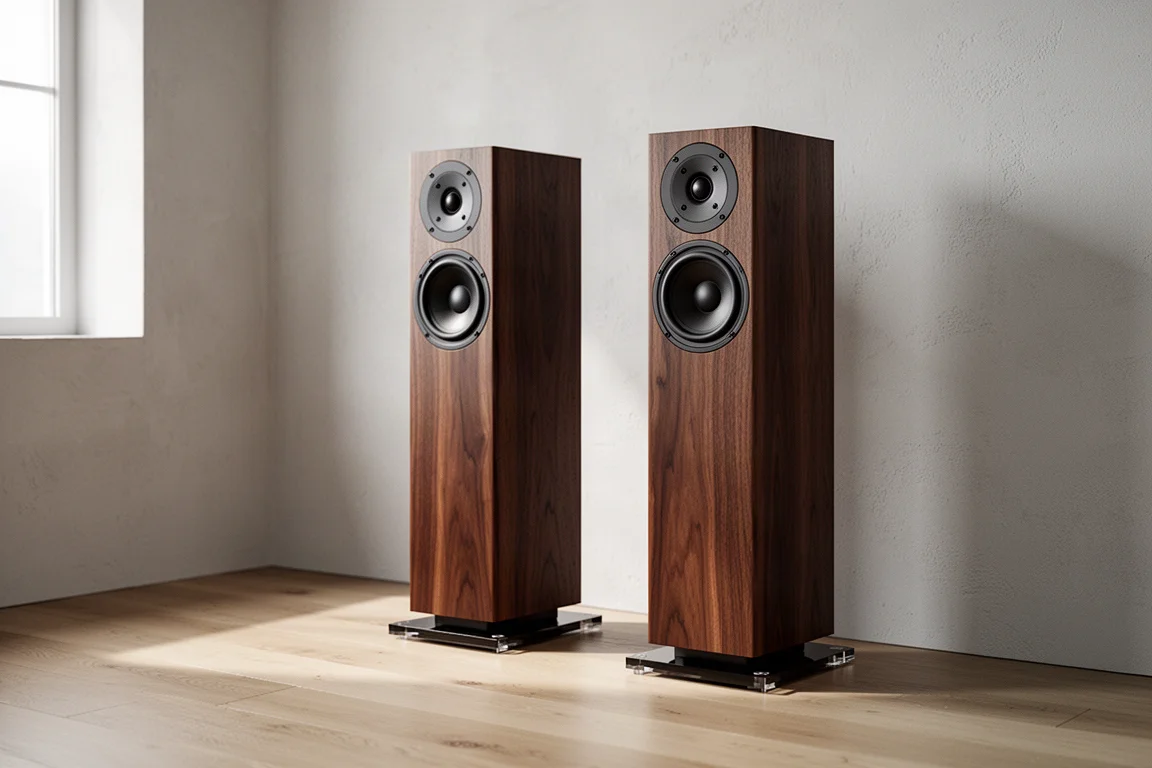
Each cabinet measures 900 x 200 x 180 mm (35.4 x 7.9 x 7.1 inches) and weighs 13 kg (28.7 pounds), which puts them firmly in compact monitor territory for a floorstander. The narrow baffle and shallow depth help them settle into a room rather than dominate it.
The acrylic plinth is not optional. It widens the footprint to 260 x 200 mm (10.2 x 8.7 inches), and it does two jobs: it ensures correct dispersion of low frequencies from the downward-firing port, and it improves overall stability.
On the rear panel there is a single set of speaker binding posts of fairly standard quality, plus a second port tuned to a different frequency and Q factor than the downward-firing port. This staggered bass loading also appears on the Neat Petites.
Finishes cover both camps. Satin black and satin white are priced at £3,250 per pair, while Walnut and Oak real wood veneers are available at launch for £3,499.
Sound Quality: Strengths and Character
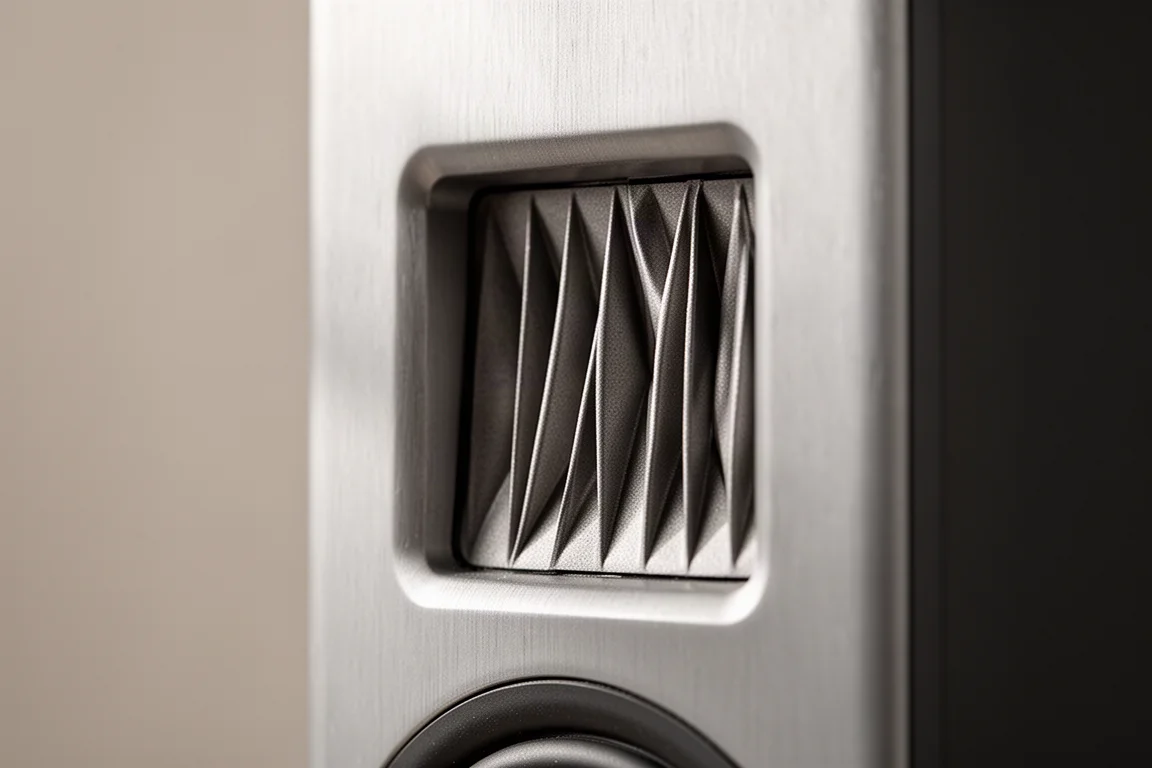
The tweeter is the same air motion transformer used in the Petite Classics, and it defines the character of the sound. It is exceptionally revealing and extended, and it takes no prisoners with bright or harsh recordings. Feed it a good recording and everything sounds wonderfully open and transparent.
Below the tweeter sits a 140 mm (5.5 inch) doped paper cone midwoofer taken directly from Neat’s flagship range. The Elite Classics carry more body and fullness in the bass and mid-range than the standmount Petites, and because the cabinets are larger they extend lower. Notes are not quite as crisp, however, because the transient response is softer.
Soundstaging and imaging are as good as any speaker of this cabinet size is likely to manage. The presentation extends laterally beyond the speakers, with excellent depth and a central image that stays locked and secure.
Placement, Room Size, and Setup
Most speakers benefit from being pulled well away from walls to reduce time smearing. The Elite Classics are the opposite case. They work well with a bit of bass reinforcement from the wall behind them, and they appear to have been tuned with that in mind. Close-to-wall placement adds weight and extension, and unlike most speakers they do not muddy up badly in that position. Bass definition remains more than acceptable, though it is not class leading.
Toe-in is worth experimenting with. Pointing the tweeters directly at the listening position can sound a little insistent, and listening more off-axis helps tone that down. A noticeably shallower toe-in angle than usual works well here.
They also sounded cleaner on the supplied spikes than on anti-vibration feet. That is likely less about coupling versus decoupling and more about height: the spikes put the cabinet at the right level for correct dispersion from the downward-firing port.
How They Compare With Other Compact Speakers
Against the ProAc Response 1SC, a long-established standmount reference, the Petite Classics were cleaner in the bass, slightly crisper through the mid-range and more open and airy in the treble, with a soundstage just as wide and deep but with more precise imaging. The Elite Classics take a different route. They match the 1SC for body and fullness in the bass and mid-range, and their larger cabinets extend lower, but notes are not quite as crisp because the transient response is softer.
The Graham Audio Chartwell LS6/f is the closest match in price, size and design. The most obvious difference is the tweeter, and it shows: the Elite Classics are far more revealing of upper harmonics and high-frequency information. In other respects the two are too similar to separate without hearing them side by side, although the bass is almost certainly punchier on the Chartwell.
The Pearl Acoustics Sibelius costs almost twice as much in its premium painted finish, and it brings real pop and vitality, with stellar clarity in the bass and mid-range. Its voigt pipe bass loading is deep and defined in a way normally associated with transmission line designs, and its crossover-less Mark Audio full-range driver delivers breathtaking mid-range resolution. What it cannot do is compete with the AMT tweeter in the Elite Classics for top-end expression.
There is value to weigh as well. The Fidion Mambo 2 at £2,400 is a high-value compact floorstander that is very revealing across the frequency range, but it is a little dynamically challenged. At the other end, larger floorstanders such as the £4,200 ATC SCM40 deliver far more scale and dynamics, play significantly louder and fill bigger rooms, and their three-inch mid-range driver offers a richness very few speakers can match. That is a different proposition for a different room and listening level rather than a direct alternative.
Amplification Pairing and Dynamics
Officially the Elite Classics are rated at 86 dB sensitivity into 8 ohm loads, with a minimum impedance of 5 ohms. That makes them fairly easy to drive, and they proved unfussy about what was connected to them.
A compact preamp and power amplifier combination of roughly £1,700 with 35 watts per channel showed off a wonderfully open top end and a beautifully natural mid-range. It was not the last word in dynamics or bass control, but what it does elsewhere is remarkable for the money.
An Exposure 2510 at a similar price trades a little timing and resolving ability for bass that is kept better in check and delivered with greater impact. On balance it is the better partner for these speakers and will suit a wider range of music and rooms. Listeners who mostly play simple acoustic material at lower volumes may still prefer the smaller, lower-powered option.
A 150 watts per channel integrated with a solid power supply delivered improved dynamics and an opened-up soundstage, and its high damping factor kept the bass tightly controlled, especially with the speakers placed close to walls. It imposed no sonic fingerprint of its own, which made it a strong tonal match.
Dynamics, though, are the honest limitation. The Elite Classics are just adequate here, and nothing exceptional. They are compact floorstanders, and even the best standmounts at this price will outdo them for bass impact and transient snap.
Things to Consider Before Buying
The dynamic ceiling is the main thing to weigh. If your listening leans on large-scale orchestral works or electronic music at high levels, the lack of punch and snap will be noticeable, and a bigger speaker will serve you better.
They are also not a speaker for high volumes. They play really well at low and moderate levels, but they are not for listeners rocking out above 90 decibels.
Setup matters more than usual. They want to be close to a wall, they want less toe-in than most speakers, and they responded better to their own spikes than to aftermarket feet. Expect to spend an evening experimenting before you settle on a position.
Finally, treat the published low-frequency figure with some scepticism. The specification claims extension down to 25 Hz, which is optimistic for a cabinet this size, though real-world bass extension is genuinely very good for a compact floorstander.
Buying Advice
If your room is small to medium and you need to place speakers close to the wall to achieve a sensible listening distance, these are an excellent choice. Pair them with an amplifier that has decent damping and a neutral character, and give them a clean, resolving source.
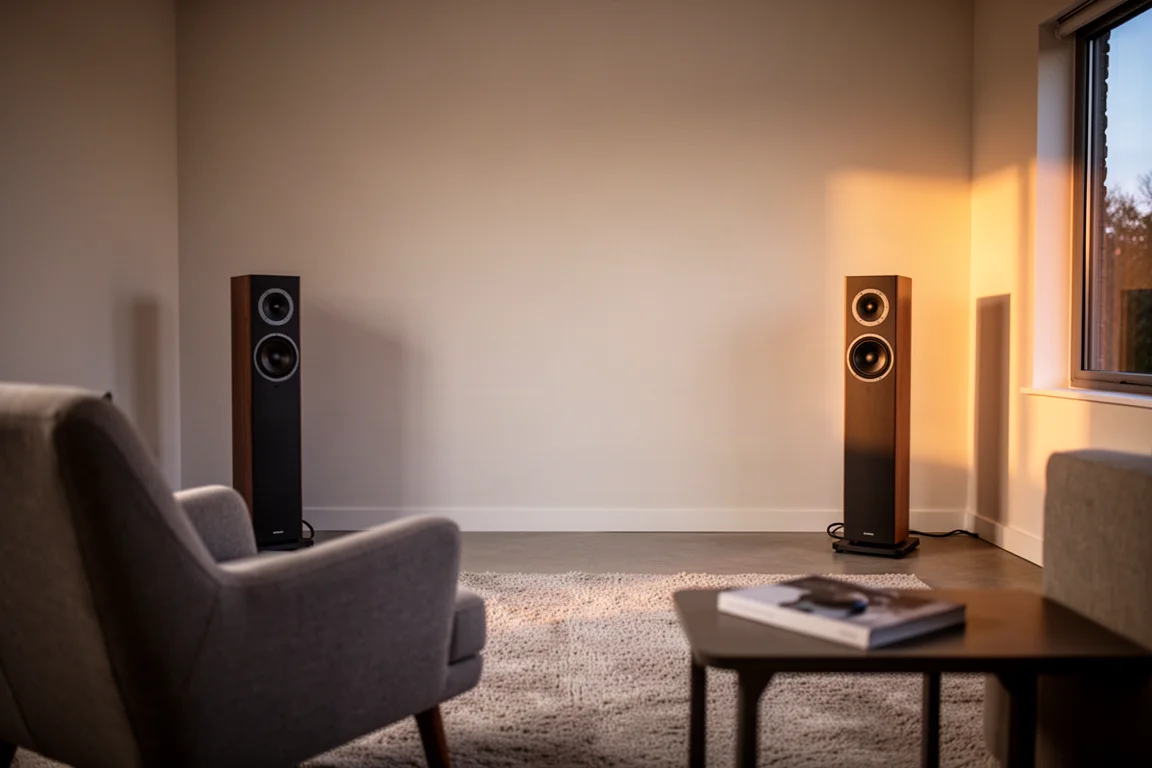
On finishes, the satin black and satin white options will suit modern minimalist interiors, while the Walnut and Oak real wood veneers are the more traditional choice and, at £3,499 a pair against £3,250, a modest premium for furniture-grade cabinetry.
Budget for a little patience as well. The reward for getting placement and toe-in right is a speaker that is elegant, resolving and natural in tone, with the rich tonality of a classic British monitor and more bass extension and top-end expression than that description usually implies.
Conclusion
The Neat Elite Classics come close to being a complete compact floorstanding solution. They are elegant, they look splendid in the real wood finish, they are very resolving, natural in tone, and they work superbly close to walls, which is their natural habitat.
They are not perfect. More transient attack and a punchier bass would make them more exciting. What they offer instead is the classic British mid-range prized for its rich tonality and insight, with more bass extension and expression on top than you traditionally get from a British monitor. In a small to medium room, at a listening distance of two to three and a half metres, they are highly recommended.
Product link
View more details for Neat Elite Classics
This product is mentioned in the review. Check the specifications, options, and compatibility before buying.
View more details for Neat Elite ClassicsFurther reading
Related Reviews
Hi-Fi Speakers
1723 THX Tower vs 1528 Bookshelf: Which Speaker Fits Your Room?
Two speakers at roughly the same price, built very differently. How the 1723 THX tower and the 1528 bookshelf compare on construction, bass, power needs, and sound.
Hi-Fi Speakers
Acoustic Energy AE 300 Review: Deep Bass From a Compact Standmount
A two-way standmount with real wood veneer, surprising low-end weight, and a warm, easygoing character. Here is what to know before buying.
Hi-Fi Speakers
Acoustic Energy AE1 40th Anniversary Review: A Modern Take on a British Classic
A compact standmount that revives a 1980s favorite with all-new parts, a warm mid-centric balance, and a price of £1,499 per pair.