Backpacking Tents
Naturehike Star River Ultralight 2-Person Tent Review: A Three-Part Shelter at $200
A detailed look at the Naturehike Star River Ultralight 2-Person Tent, covering its three-part storage system, vertical-walled interior, dual awnings, materials, measured weight, and price.
Introduction
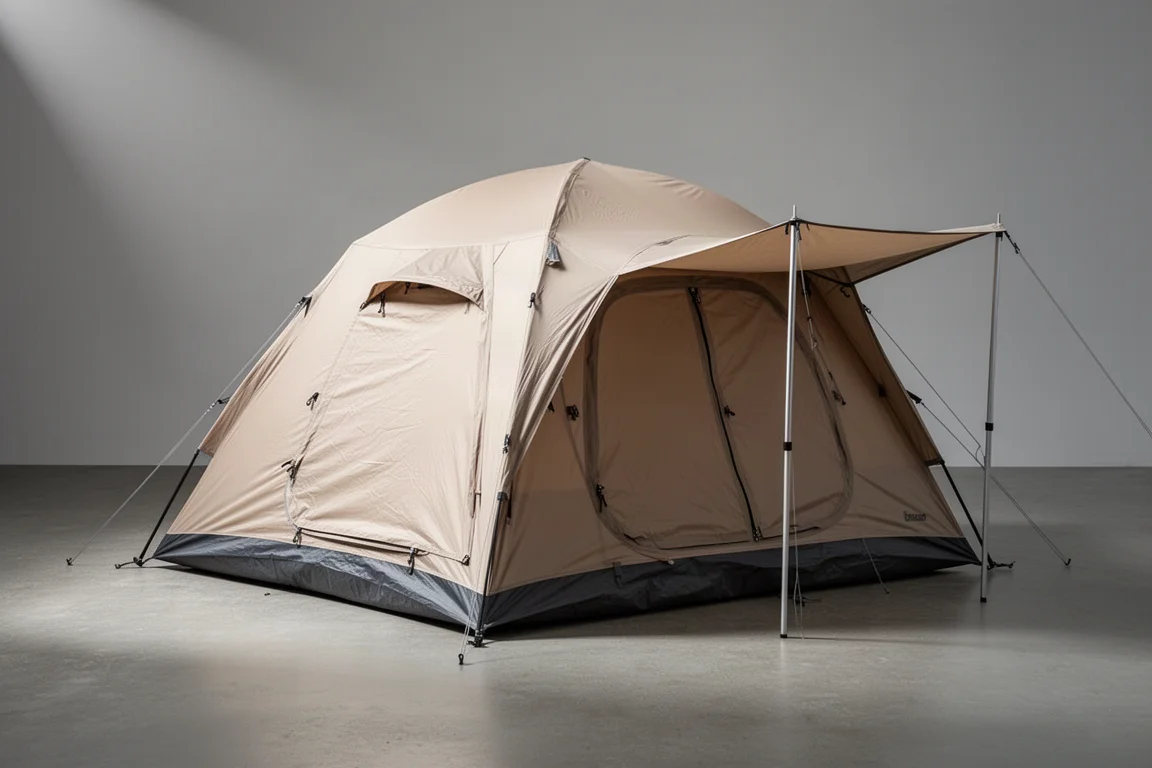
The Naturehike Star River Ultralight 2-Person Tent takes an unusual approach to packing. Rather than a single stuff sack, it ships with a three-part storage system that separates the fly, the inner tent, and the pole set into individual bundles, held together with buckles and fitted with grab handles on both sides. Each component can be carried on its own, which makes the tent practical for bikepacking trips where space on the frame is tight, and for backpacking pairs who want to divide the load between two packs.
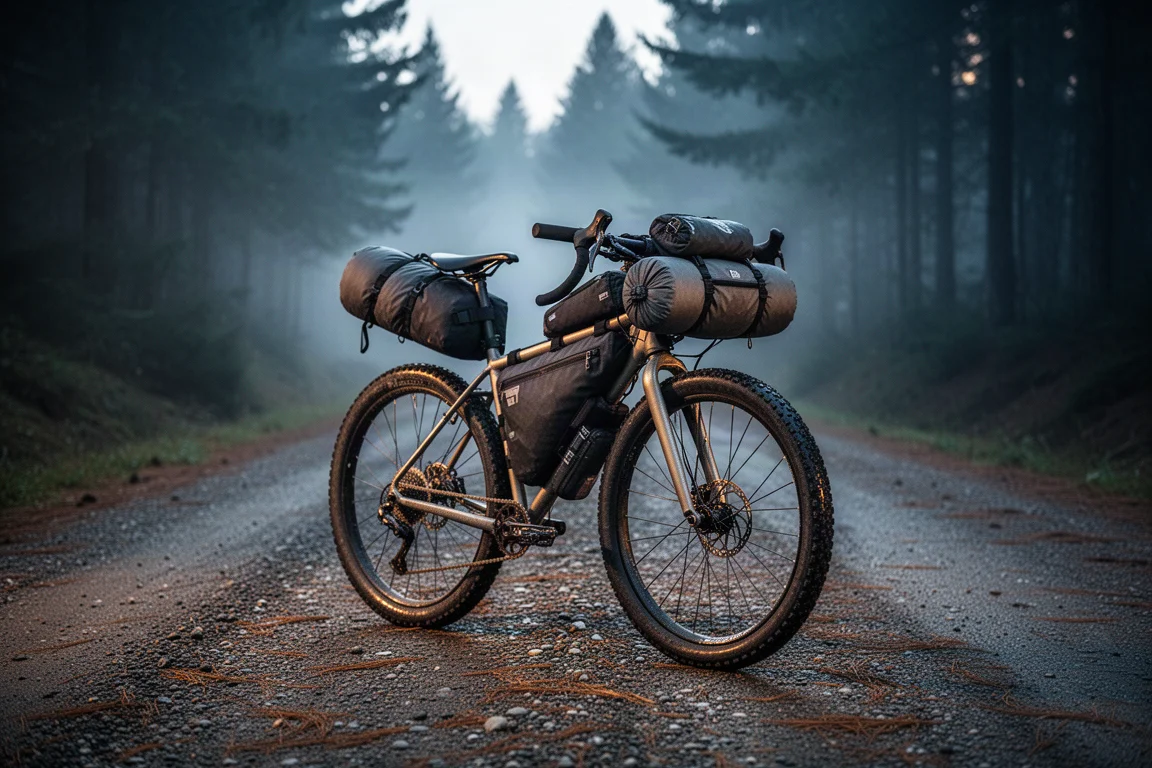
At $200 and a measured weight of about 3.6 lb, the Star River Ultralight lands in a competitive spot for a shelter of this size. It is a three-season, two-door, two-person design, and it is also offered in a standard version that weighs roughly a pound and a half more and does not include the multi-part stuff sacks.
Who This Tent Is For
Two adults fit comfortably, while a single occupant gets a genuinely generous amount of room. The floor runs 81 in (6 ft 9 in) long, so taller campers get usable space at both ends instead of a cramped foot box. The layout also suits riders and hikers who want to split the shelter across two packs, since the fly, the inner, and the poles can be distributed however the group prefers.
Anyone who has struggled to fit a tent onto a bike will find the three-part system the most compelling part of the package. It is a simple idea, but it changes how the tent can be transported.
Space and Interior Layout
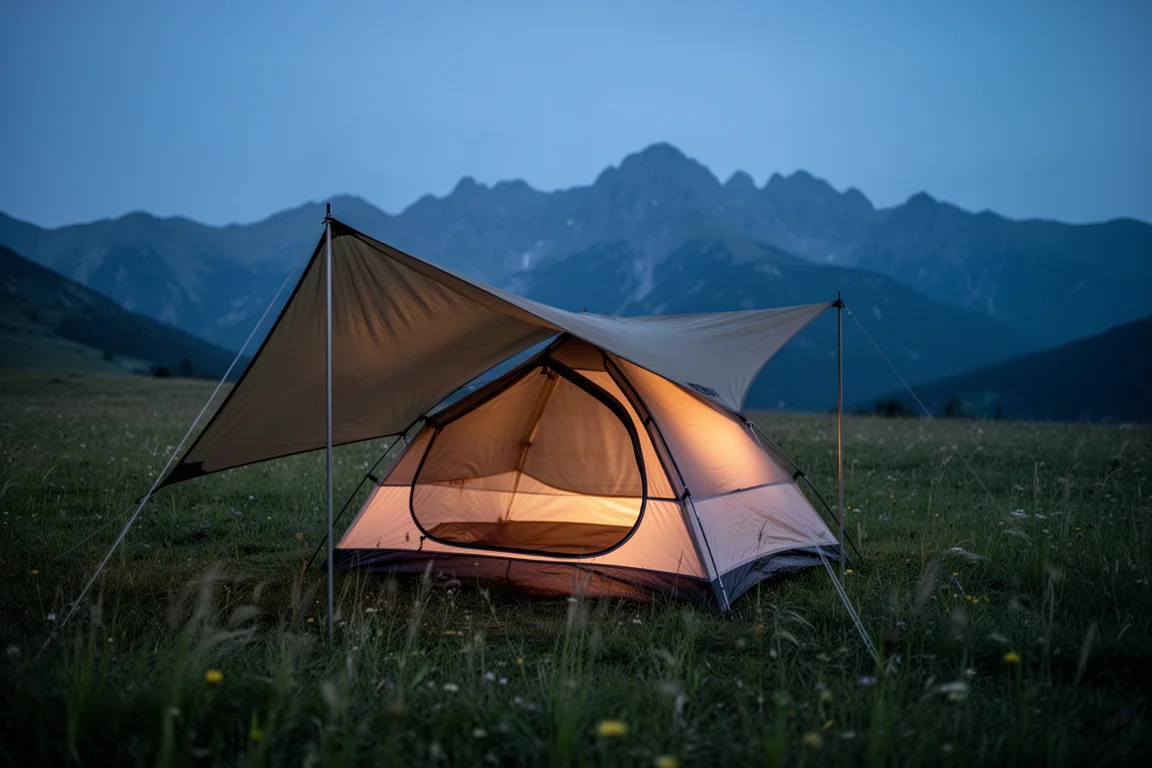
The Star River Ultralight measures 81 in long, just under 4 ft across the floor, and 23 in across at the top, with a 40 in (3 ft 4 in) peak height. What sets the interior apart is the vertical head and foot wall. Because those panels stand straight rather than sloping inward, the quoted length translates into real usable space at both ends instead of tapering away.
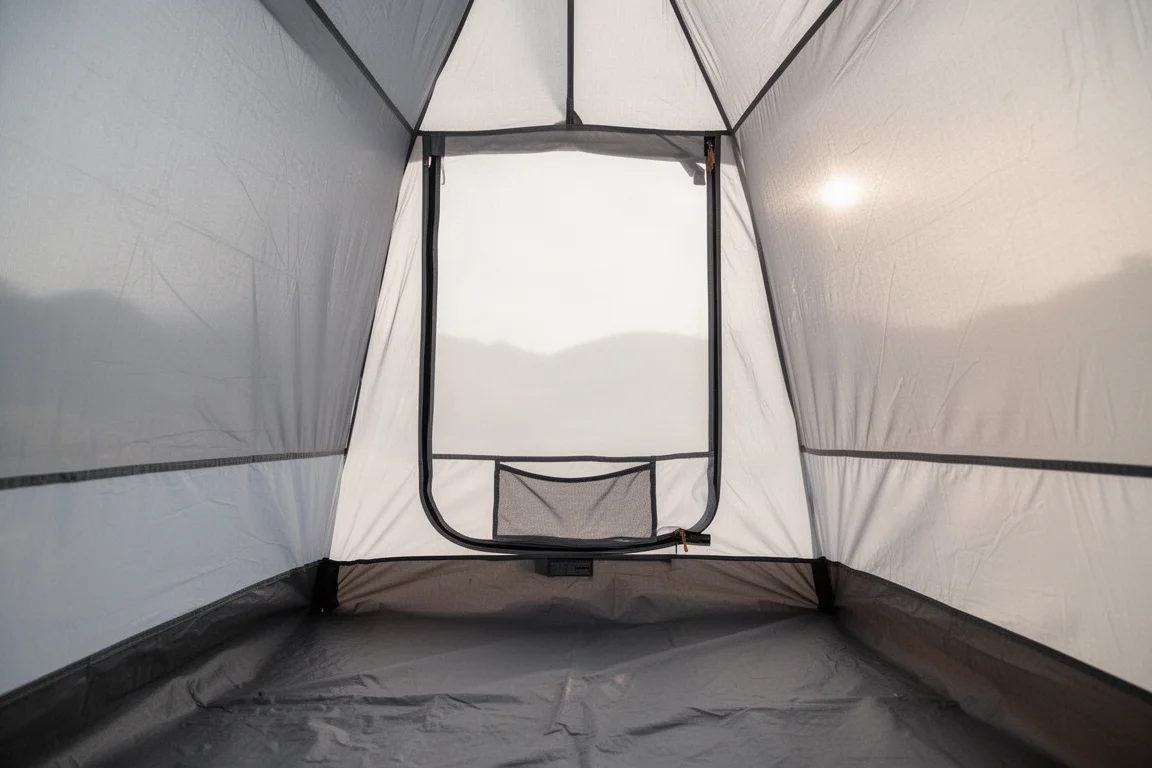
Two large doors make entry and exit easy, and each door uses two-way zippers so the opening can be adjusted from either side. A mesh pocket sits at the head and another at the foot, with a single hook in the middle of the ceiling. The floor is a bathtub design, and all of the seams are taped.
Ventilation, Doors, and Awnings
The inner tent leans heavily on mesh, with large panels along the sides where airflow matters most and fabric concentrated at the head and foot for protection. Both doors roll back completely, and the fly adds its own ventilation points at the front and back, so air can move through the shelter rather than collecting inside.
Each side of the fly converts into a full awning for dry weather. One zipper on each door gives a smaller opening that is quick to use, while the second zipper opens the panel much wider or lets the door be thrown back entirely. The fly attaches to the body with small clips that buckle into place, and the front and rear panels are different sizes, with the larger panel going at the head and the smaller one at the foot. The fly also has four tie-off points for guylines and storm flaps covering the zippers.
Setup is straightforward. The hardware is color coded, with red at the head and at the pole tips that meet it, and gray at the foot, so the orientation is easy to confirm before the first pitch.
Materials, Weather Protection, and Weight
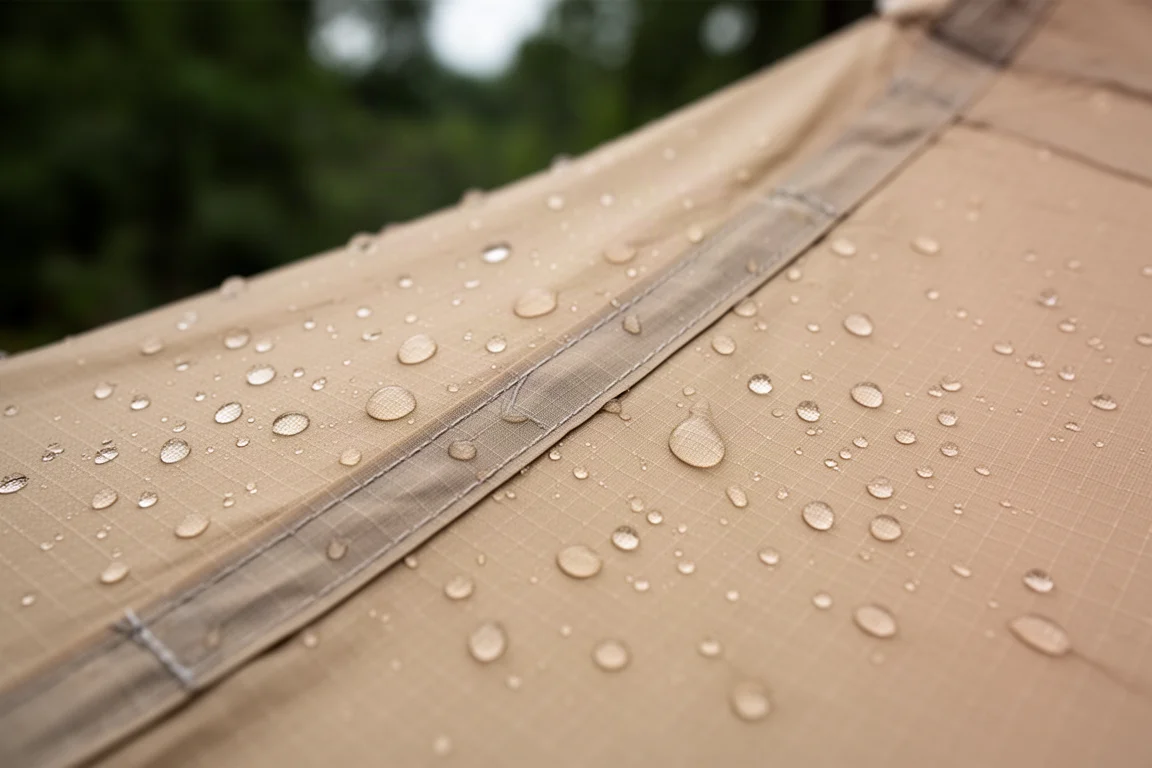
The fly is a 150D silicone-treated ripstop nylon rated to 1,500 mm, while the floor uses a 20D ripstop nylon rated to 3,000 mm. The mesh is 15D nylon, and the poles and stakes are aluminum. Packed down, the tent measures 15.7 in by 5.1 in. The version described here is the beige colorway, and a silver option is also available.
On the scale the tent came in at about 3.6 lb, which is notable for a two-person shelter with two doors and full awnings. The included kit covers the rainfly, the inner tent, the aluminum pole set, a triangular storage bag, six guylines, 14 tent stakes, a footprint, and separate stuff sacks for the fly, the inner, and the poles.
Things to Consider Before Buying
The awnings are intended for dry weather. If rain begins, they need to be closed down, so the wide-open configuration is a fair-weather feature rather than something to depend on in wet conditions.
Rain performance has not been verified in the field yet. The waterproof ratings of 1,500 mm for the fly and 3,000 mm for the floor are specification figures, so anyone buying primarily for storm protection should treat them as a starting point rather than a proven result.
The multi-part stuff sack belongs to the ultralight version only. The standard Star River weighs about a pound and a half more and ships without those sacks, so the packing flexibility is tied to this specific model.
Finally, the color coding is worth understanding before the first setup. Red marks the head end and the matching pole tips, gray marks the foot. It is simple once the convention is clear, but it is the kind of detail that slows down a first pitch if you skip it.
Buying Advice
At $200, the Star River Ultralight delivers a two-person, three-season shelter at a measured 3.6 lb, and comparable tents at this weight often cost considerably more. The three-part storage system is the standout feature for anyone who needs to break a tent down to fit a bike or split the load with a partner, while the vertical walls, two oversized doors, and dual awnings add real day-to-day usability.
If light weight and packability are the priorities, the ultralight version is the one to choose. If you would rather have a simpler single-bag setup and do not mind the extra weight, the standard version is the alternative. Either way, use the included footprint to protect the 20D floor, and plan to keep the awnings deployed only when the forecast is clear.
Conclusion
The Star River Ultralight 2-Person Tent is a well-considered shelter. The three-part storage system, the generous vertical-walled interior, the two large doors, and the dual awnings all point to careful design, and the stitching and seam tape look clean throughout. At about 3.6 lb and $200, it makes a strong case for two-person trips where weight and packability both matter. Wet-weather testing will be the final word, but on first inspection there is very little to fault here.
Product link
View more details for Naturehike Star River Ultralight 2-Person Tent
This product is mentioned in the review. Check the specifications, options, and compatibility before buying.
View more details for Naturehike Star River Ultralight 2-Person TentFurther reading
Related Reviews
Backpacking Tents
3F UL Lanchan Pro 1 Review: A 1 lb 8 oz Single-Wall Trekking Pole Tent
A practical look at the 3F UL Lanchan Pro 1, a single-wall trekking pole shelter with a 1 lb 8 oz weight, 20D silnylon fabrics, and a roomy 90 x 31 x 49 inch interior.
Backpacking Tents
3F UL Taiji 2-Person Tent: A Convertible Backpacking Shelter Worth a Closer Look
A practical look at the 3F UL Taiji two-person tent, covering its materials, true two-person interior, fly-first pitching, and the seasonal inner swap that lets one shelter cover more of the year.
Backpacking Tents
3FUL Lanshan Twoerson Pro Review: A Light Trekking Pole Shelter That Struggled in Rain
A two-person trekking pole shelter with a 2026 redesign, pitched with sticks and put through a night of steady rain. Here is what worked, what did not, and what to check before buying.