Camping Tents
Naturehike Ranch Fire Tent Review: New Octagon Version vs the Original Square Tent
A detailed look at the new octagon Ranch Fire hot tent, how it differs from the original square version, and which setup makes more sense for overlanding and car camping.
Introduction
Naturehike’s Ranch Fire hot tent has been reworked, and the changes go beyond a new colourway. The original square teepee footprint is now an octagon, which alters how the shelter sheds wind, how much floor space it offers, and how long it takes to pitch. The packaging changed too. Where the original bundled its fly, pole, stakes, and bug inner in a single purchase, the new version sells the fly on its own and lists the inner tent and the floor mat as separate optional components.
That makes the two tents worth comparing directly. This article covers what the new octagon version does well, where it asks more of the buyer, and which of the two makes more sense depending on how you camp.
What Changed From the Original Square Tent
The original Ranch Fire was a square-shaped teepee hot tent rated for four people, and it arrived as a complete package: fly, pole, stakes, and an attachable bug inner that let campers sleep inside without insect pressure. A ground sheet was not part of that bundle.
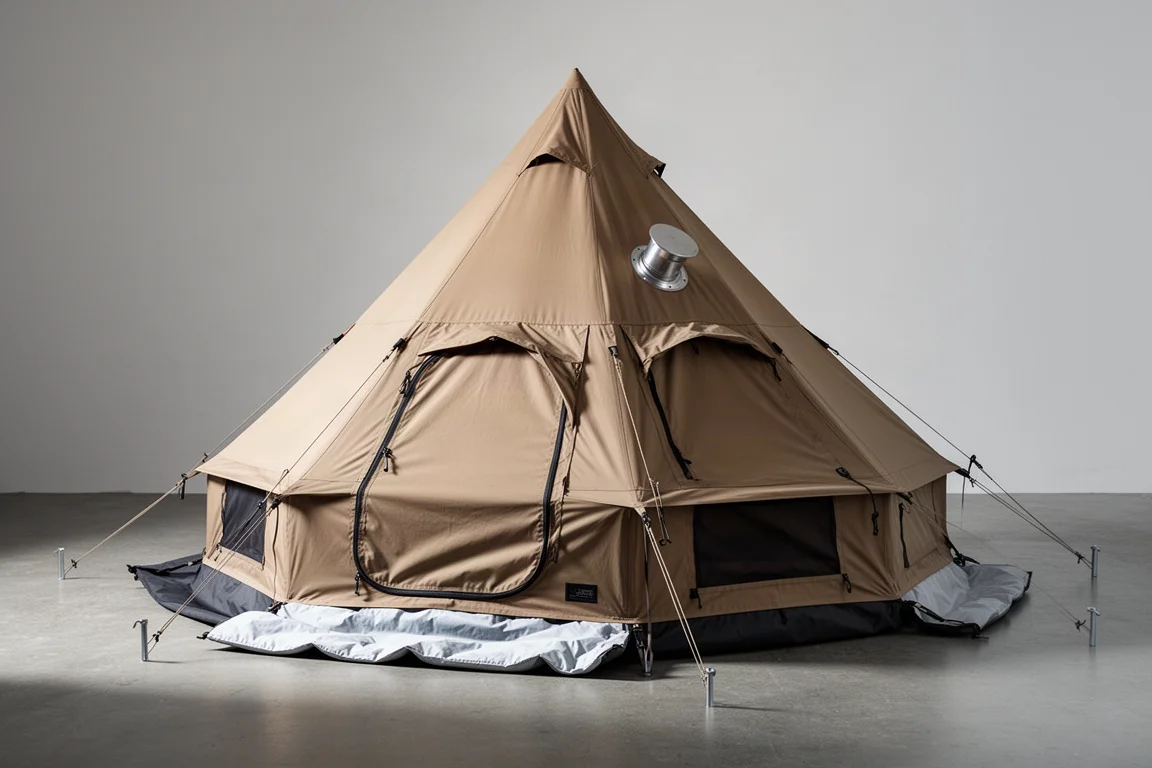
The new octagon version keeps the hot tent concept, with a stove jack built into the wall for a wood stove, but rearranges the kit. The inner tent is now sold separately, and so is the floor mat. Naturehike rates the new model for four to six people, up from four.
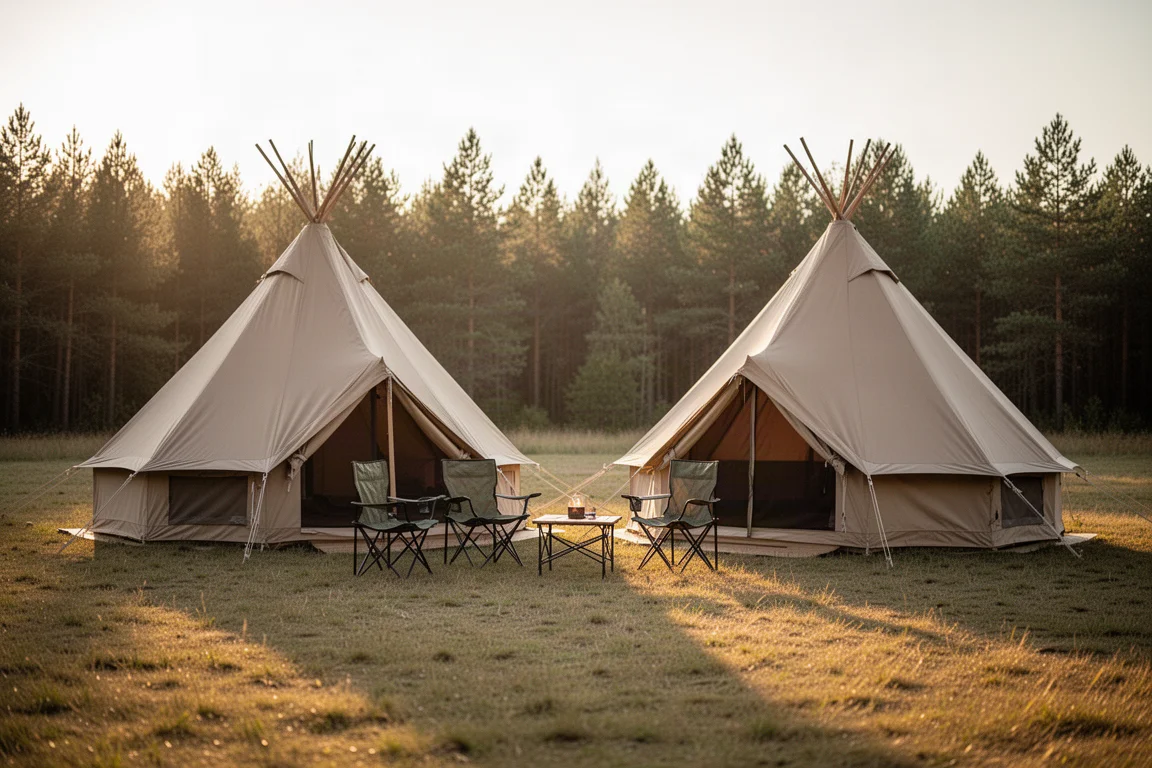
The practical difference shows up before you leave the driveway. A square teepee is forgiving to pitch: pull one side out, stake it, walk to the opposite side, pull it straight, and stake that too. An octagon has eight sides that all have to land in the right position relative to the stove jack and the door openings, so there is far more room for small mistakes that stretch the setup into a long session.
The shape also changes the usable interior. The walls are steep, the peak is high, and the floor is broad, but the sleepable area once a stove and gear are inside is smaller than the headline dimensions suggest.
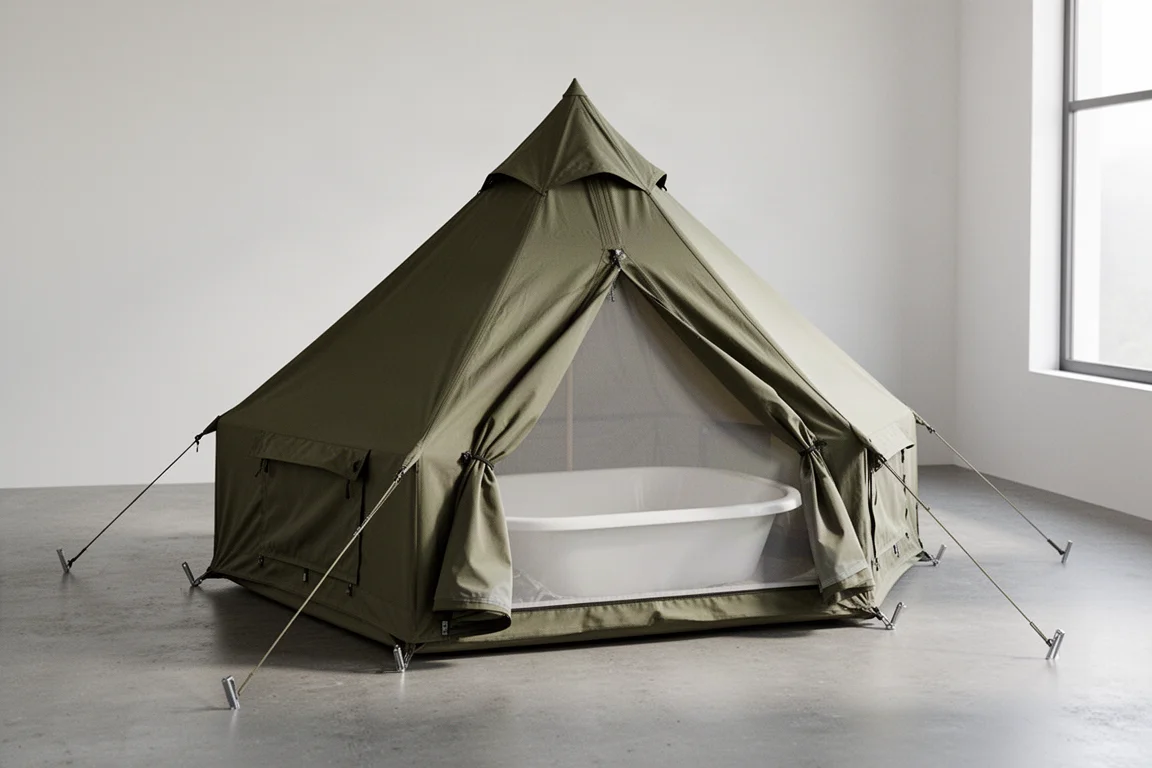
Naturehike Ranch Fire 4-6 Person Tent: The New Octagon Version
The octagon Ranch Fire is a three-to-four-season hot tent. Ventilation is generous enough for summer use, and the structure is built to handle winter camping with a stove running inside.
The feature set is substantial:
- Two doors, each with a storm flap covering the zipper and a vent at the top
- A snow skirt around the base that can be rolled up section by section for extra airflow
- Eight reinforced guyline points and reinforced, adjustable stake-out points
- A shock-corded pole with a metal ring at the top for hanging a lantern or attaching the inner tent
- Nineteen long tent stakes, with the guy lines already attached to the tent rather than packed loose
- Two stove jacks, both uncut so the opening can be sized to the stove you actually use
Fully pitched, the tent measures 98.4 in (8.2 ft) tall and 157.5 in (13.1 ft) wide. Those are maximum dimensions rather than usable interior space, and the difference matters once you start loading it.
The fly is polyester with a 3,000 mm hydrostatic head rating. Polyester holds tension well and resists stretching, which keeps the walls taut in changing weather, but it is thicker and heavier than the lightweight nylons used in backpacking shelters. Treat the hydrostatic head figure as a manufacturer rating rather than a field-verified result.
Setup, Stakes, and Component Choices
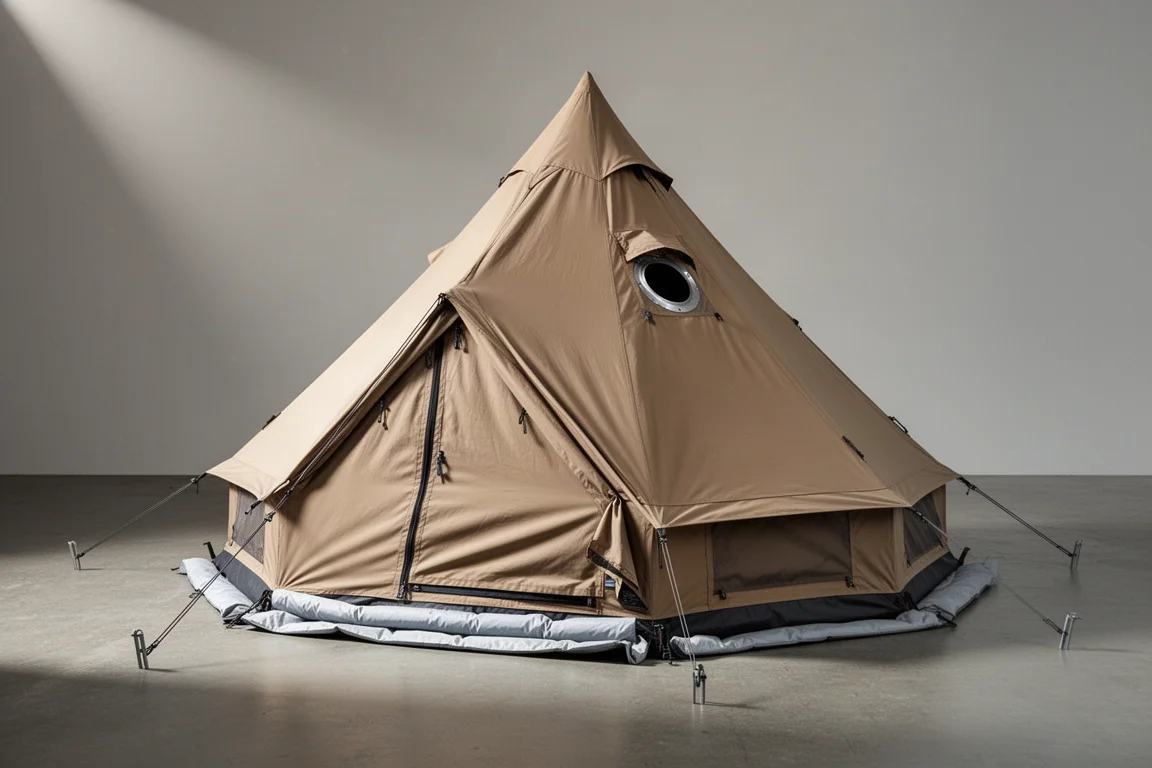
Setup on this tent is a serious project. On a difficulty scale where zero is effortless and ten is a puzzle, the octagon Ranch Fire sits around nine. That is not a knock on build quality, which looks excellent: the seam tape is clean, the stitching is consistent, and there are no loose threads. It is a comment on geometry. Eight sides, a separate floor mat, and a separate inner tent all sharing the same stake-out points mean everything has to line up at once.
Two details make that harder. First, none of the components are colour-coded, so nothing on the mat or the fly tells you which corner goes where, and the stove jack opening becomes the main alignment reference. Second, the inner tent and the floor mat do not include their own stakes. With only the 19 stakes supplied with the fly, you end up re-using the same anchor points for every layer instead of staking each component independently, which is a far easier way to work.
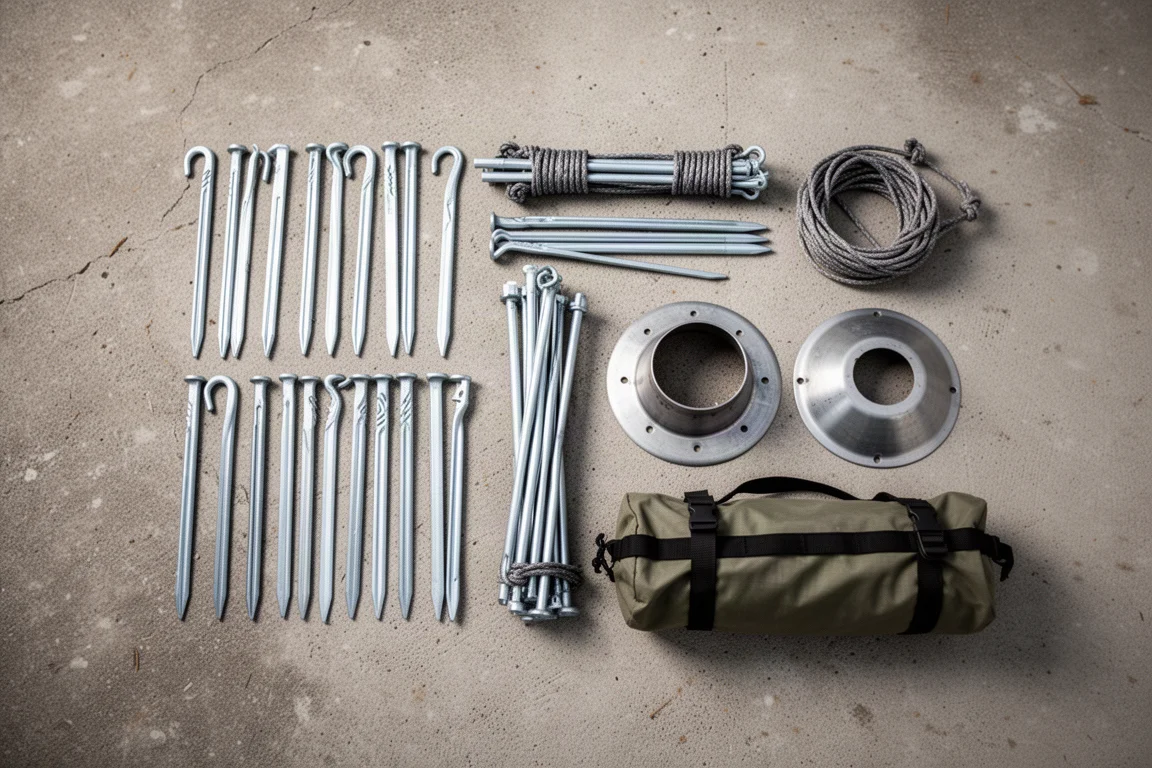
The stove jack is another decision best made before the tent goes up. Both jacks ship uncut, and because the shelter is tall, most people cannot reach over the wall to adjust one once it is standing. Getting to it from inside means peeling back hook-and-loop sections. The sensible sequence is to cut and fit the jack first, then raise the tent, and to accept that late changes to jack placement are awkward.
A few smaller observations are worth noting. The pole is not telescoping, so there is no way to raise the peak if the fabric stretches over time. The vents have to be adjusted from the outside. The floor mat is large, uses elastic stake-out corners, and includes a white fire-resistant panel where a stove can sit without scorching the groundsheet. It also fits back into its storage bag with very little room to spare, so packing it away takes patience.
Living Space, Height, and Sleeping Capacity
The interior feels bigger than the outside suggests, partly because the walls are steep and the peak is high. The trade-off is that a wood stove and camp gear consume a surprising amount of that volume.
Without a stove, four adults on sleeping pads fit comfortably. Add a wood stove and the practical number drops to two, with three as a squeeze. Once a pile of firewood, two chairs, a table, and sleep systems are inside, two people is the honest figure.
The optional inner tent changes the maths again. It attaches at the top of the pole and at the stake-out points, closes with a three-way zipper arranged in an inverted T, and takes a half-octagon shape rather than a full footprint. Peak height inside the inner is 75 in, with roughly 62 in of genuinely usable height, sloping down toward the walls. Maximum usable width is about 49 in. For one person it is genuinely roomy. For two, the second sleeper ends up close to a wall and needs to be small. The inner has a bathtub floor with taped seams and no mesh pockets.
Naturehike Ranch Fire Original Square Tent: The All-in-One Option
The original square Ranch Fire remains the simpler proposition. It is a four-person teepee hot tent with a square footprint, and it ships as one purchase: fly, pole, stakes, and the bug inner included. There is no ground sheet in that package.
Pitching is quicker and less fussy because there are four sides to manage instead of eight, and the inner is part of the deal rather than an add-on. For anyone who wants a hot tent that arrives complete and goes up without a long alignment ritual, the square version answers that question directly.
Materials, Weight, and Weather Readiness
The system is built around polyester, and that choice explains most of the weight. Polyester stays taut and does not stretch much compared with silnylon, but it is a thick, heavy fabric. The fly alone weighs 12 lb, the inner tent 3.5 lb, and the floor mat 4.9 lb. Packed down, the components take up a lot of space in a vehicle.
The inner uses mesh and polyester fabric. The optional floor mat is 150D oxford cloth with a 4,000 mm waterproof rating, higher than the fly’s 3,000 mm figure.
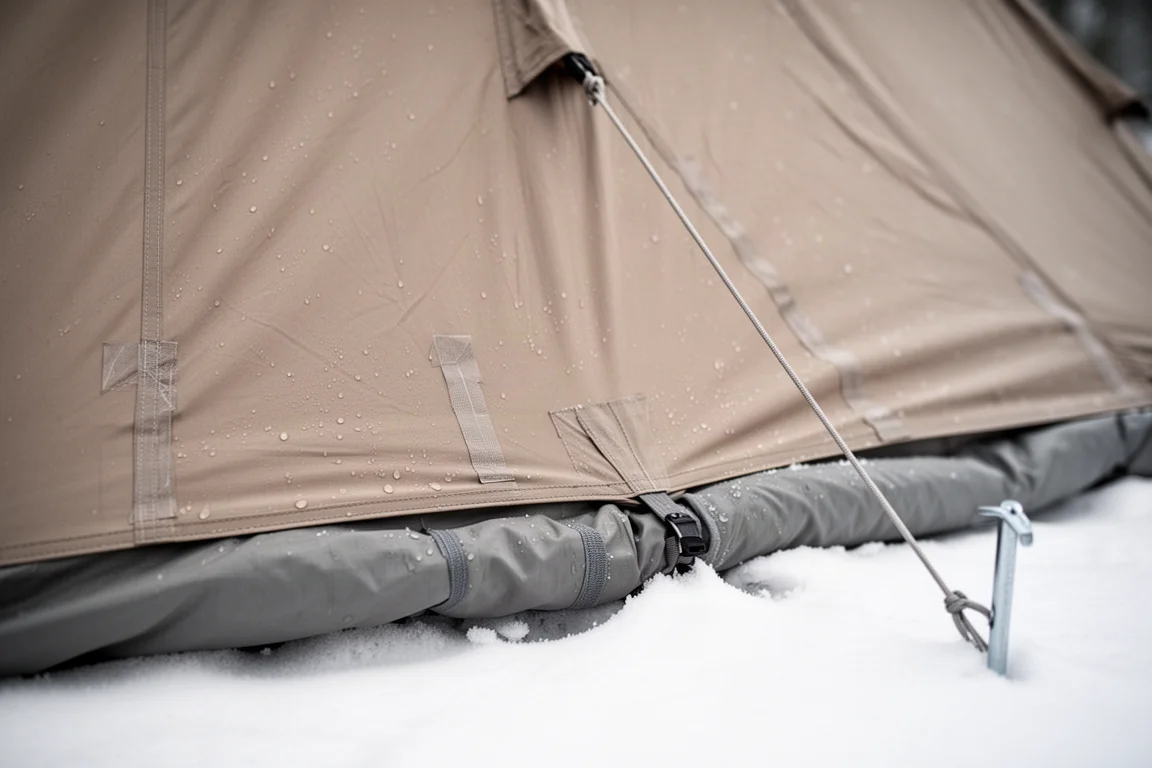
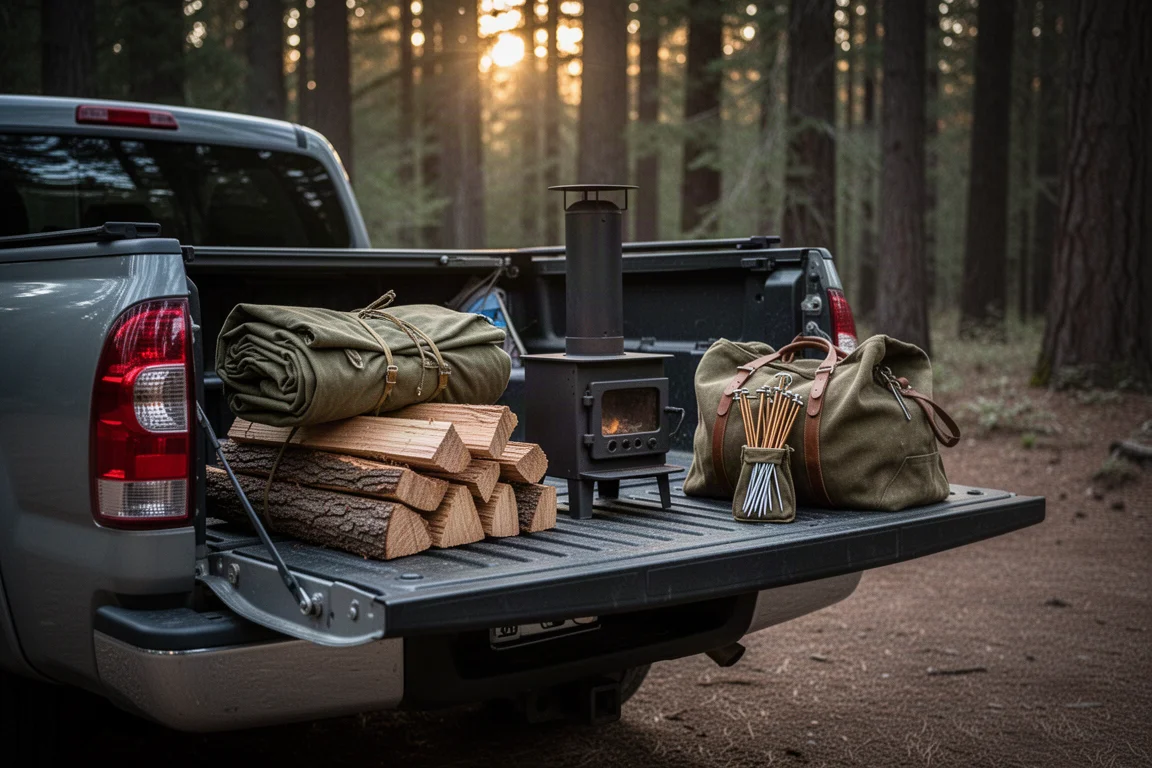
The consequence is that this is not a hiking or backpacking tent, even though it is sometimes described that way. It belongs on an ATV, in the bed of a truck, or in the trunk of a car. Set it up at a basecamp, leave it standing, and enjoy the space it provides. Sustained rain, airflow, and condensation behaviour are the open questions, and the waterproof ratings above remain manufacturer figures rather than verified results.
Who Each Tent Is For
The new octagon Ranch Fire suits campers who want maximum interior volume for one or two people, plan to run a wood stove, and set up from a vehicle at a basecamp. It rewards buyers who are willing to spend time on the pitch and who want the flexibility of buying the fly, inner, and mat separately.
The original square Ranch Fire suits campers who want a hot tent that arrives complete, goes up faster, and does not need the extra footprint. It is the more forgiving shelter of the two for anyone new to teepee-style tents.
Buying Advice
Pricing for the octagon version breaks down as follows: the fly retails for $280, the inner tent for $60, and the floor mat for $60, which comes to $400 for the complete system. Buying the fly and inner together lands at $340. Nothing forces you to buy all three components, and skipping the mat is a reasonable way to lower the entry price if your stove already has its own spark protection.
The value question deserves careful thought. The tent is large and the construction quality looks strong, but polyester is an inexpensive fabric, and $400 is a notable figure for a polyester shelter. Compared with the original square version, which packages the inner tent with the tent itself, the new version asks buyers to assemble a system piece by piece and pay for each part. That is a legitimate design choice, and it gives buyers control over what they own, but it does make the octagon version a harder sell on price alone.
Before ordering, settle three questions: whether you need the inner tent at all, whether you will use a stove often enough to justify the hot tent format, and whether you have enough stakes on hand to anchor each component separately. Extra stakes are a small investment that removes most of the setup frustration.
Conclusion
The new octagon Ranch Fire is a big, well-built hot tent with a generous peak height, reinforced guylines and stake-out points, two uncut stove jacks, and a roll-up snow skirt that makes seasonal use practical. It is also heavy, costly once the components are added up, and genuinely demanding to pitch.
For one or two campers who want a spacious basecamp shelter with a wood stove, it delivers exactly what it promises. For buyers who want a complete hot tent in a single purchase and an easier setup, the original square version remains the more straightforward choice.
Further reading
Related Reviews
Camping Tents
3F UL Gear Taiji Two-Person Tent Review: Field Waterproofing Results and Buying Advice
The Taiji pairs an attached fly with a removable inner, but sustained rain exposed untaped vent seams that need sealing before this shelter can be trusted.
Camping Tents
3FUL Gear Lanshan 2 Pro 4-Season Review: A Sub-$200 Single-Wall Trekking Pole Tent
An early look at the 3FUL Gear Lanshan 2 Pro 4-Season, covering its straightforward pitch, generous interior space, and the condensation and seam-sealing questions that come with any single-wall shelter.
Camping Tents
Alps Mountaineering Lynx 1-Person Tent Review: Big Value in a Small Budget Tent
A close look at the Alps Mountaineering Lynx 1-Person Tent, covering real interior dimensions, materials, setup time, ventilation limits, and who should buy it.