Camping Tents
Naturehike Ranch Fire Octagon vs Square Tent: Two Hot Tent Kits Compared
A practical comparison of the octagonal Ranch Fire hot tent and the original square version, covering usable space, weight, setup effort, and what each kit includes.
Introduction
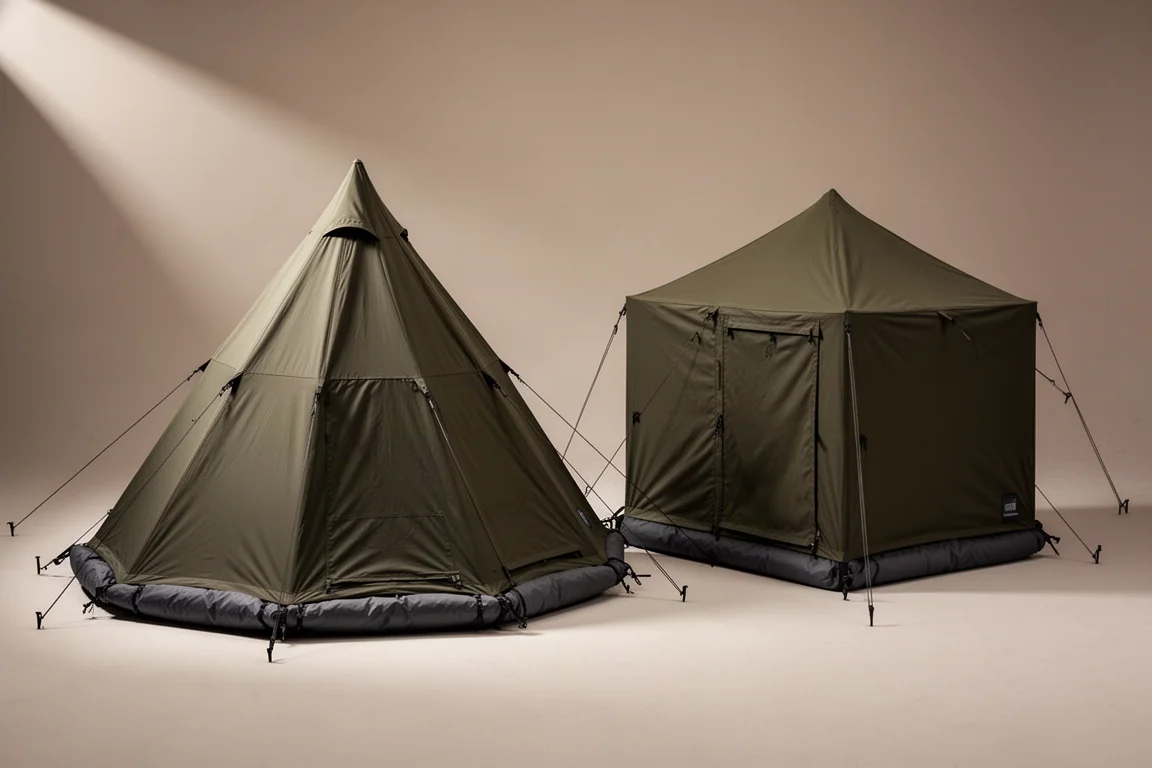
Naturehike’s Ranch Fire hot tent now comes in two shapes, and the differences between them go well beyond geometry. The newer octagon version is a taller, more modular system built for overlanding, car camping, and truck camping. The original square version is the simpler package that started the line. Both are wood stove ready, both target the same kind of camper, and both ask you to think carefully about how you actually use a tent before you buy.
This comparison covers what each kit includes, how much usable space you really get, how heavy the whole system becomes, and where the value sits.
What Changed in the New Ranch Fire Octagon Tent
The headline change is the footprint. The original Ranch Fire was a square teepee-style tent; the new version is octagonal. Naturehike now rates it for four to six people, where the original was a four-person design.
The second change is how the tent is sold. The original square version included the inner bug tent in the box. On the octagon version, the fly, the inner, and the ground mat are each sold separately, so you build the system around the pieces you actually need. That modular approach gives you flexibility, but it also means a complete setup costs more than the fly alone.
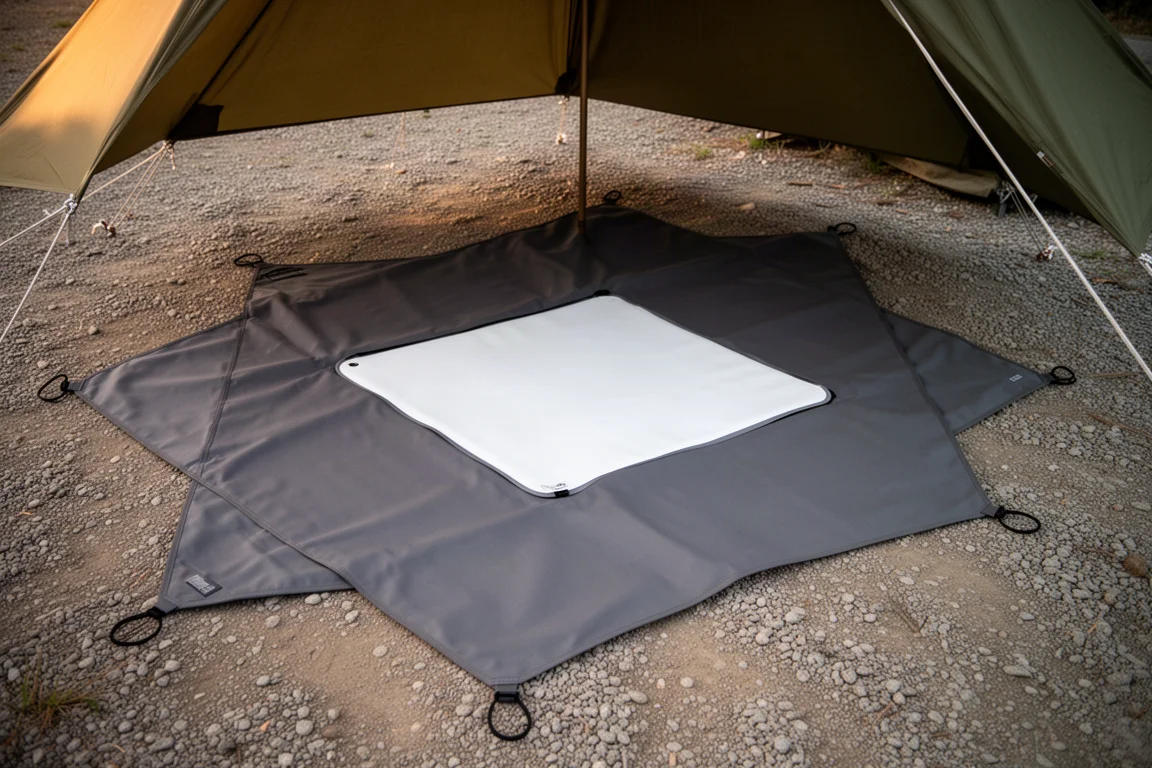
A third addition is the ground mat. It uses a large sheet of fabric with a white heat-resistant panel in the middle, positioned so a wood stove can sit on top of it without burning through the floor. The mat is generously sized, and its storage bag is a tight fit once the mat is folded. The fly, the inner, and the mat are not color-coded to one another, which makes lining them up a slower job than it needs to be.
Naturehike Ranch Fire Octagon Tent: Structure and Hot Tent Features
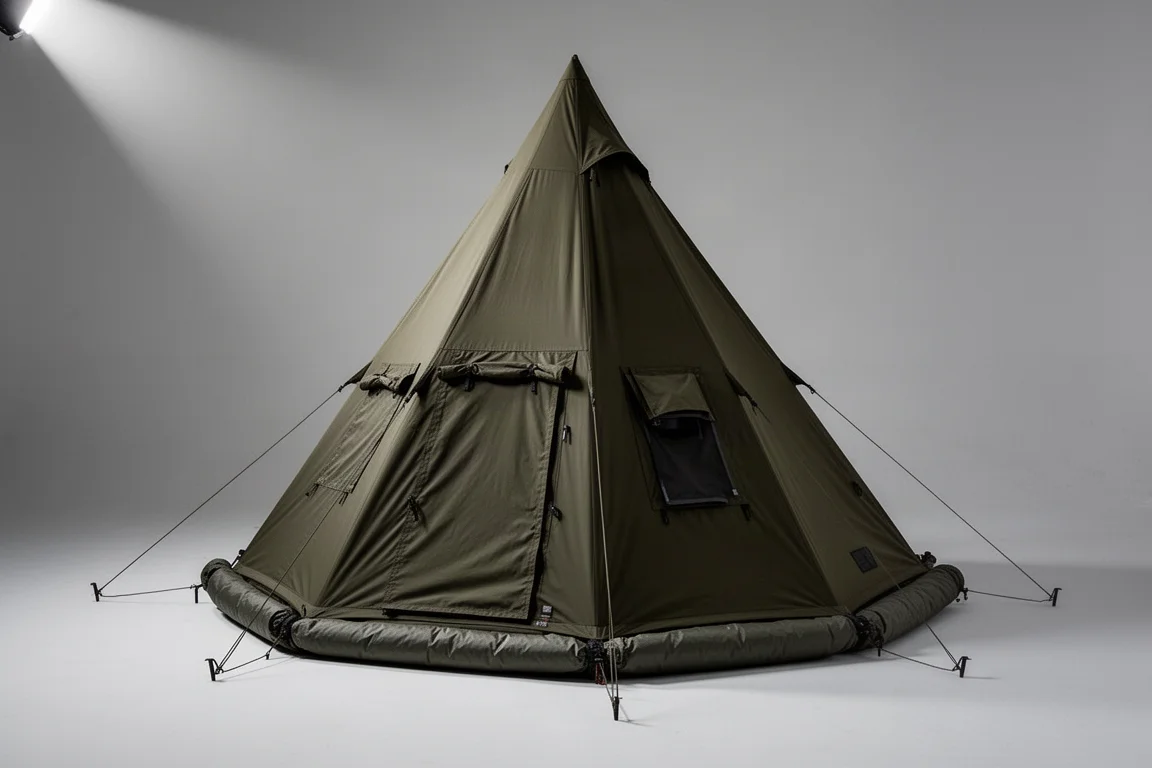
Naturehike positions the octagon as a three to four season tent, with enough ventilation for summer use and enough structure for winter conditions. The fly has two doors, each with a storm flap covering the zippers and a vent at the top. Those vents adjust from the outside only. A snow skirt runs around the base, and each section can be rolled up and stowed out of the way when you want more airflow. Eight guyline points and the stakeout points are reinforced, and the stakeout points are adjustable.
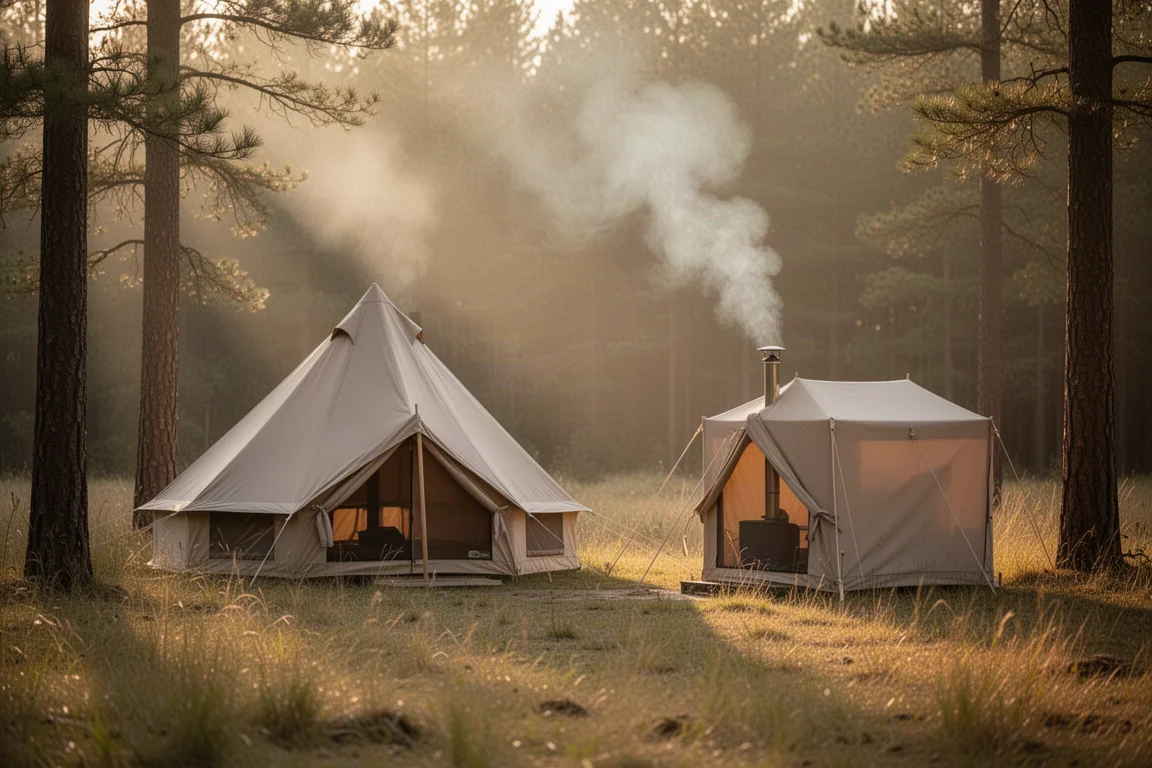
The center pole is shock corded, so it breaks down and goes back up easily, and a metal ring at the top doubles as an attachment point for the inner or a lantern. For stove use, the tent arrives with two stove jacks installed but uncut, so you trim them to match your own stove and pipe. Because the tent is very tall, reaching the upper vents and the stove jack from outside is not realistic for most people. The practical approach is to make those adjustments before tensioning the tent, or to step inside, open the hook-and-loop closure, and work from there. The center pole does not telescope, so if the fabric stretches you adjust from the outside rather than raising the pole.
Setup is the demanding part. With an octagon there is a lot of room for misalignment, and the fly, the inner, and the mat share the same stakeout points. The package includes 19 long tent stakes, and the guy lines come already attached to the tent.
Living Space and Realistic Capacity
Fully pitched, the octagon measures 98.4 inches at the peak, about 8.2 feet, and 157.5 inches by 157.5 inches at the base, roughly 13.1 feet across. Those are maximum figures rather than usable ones.
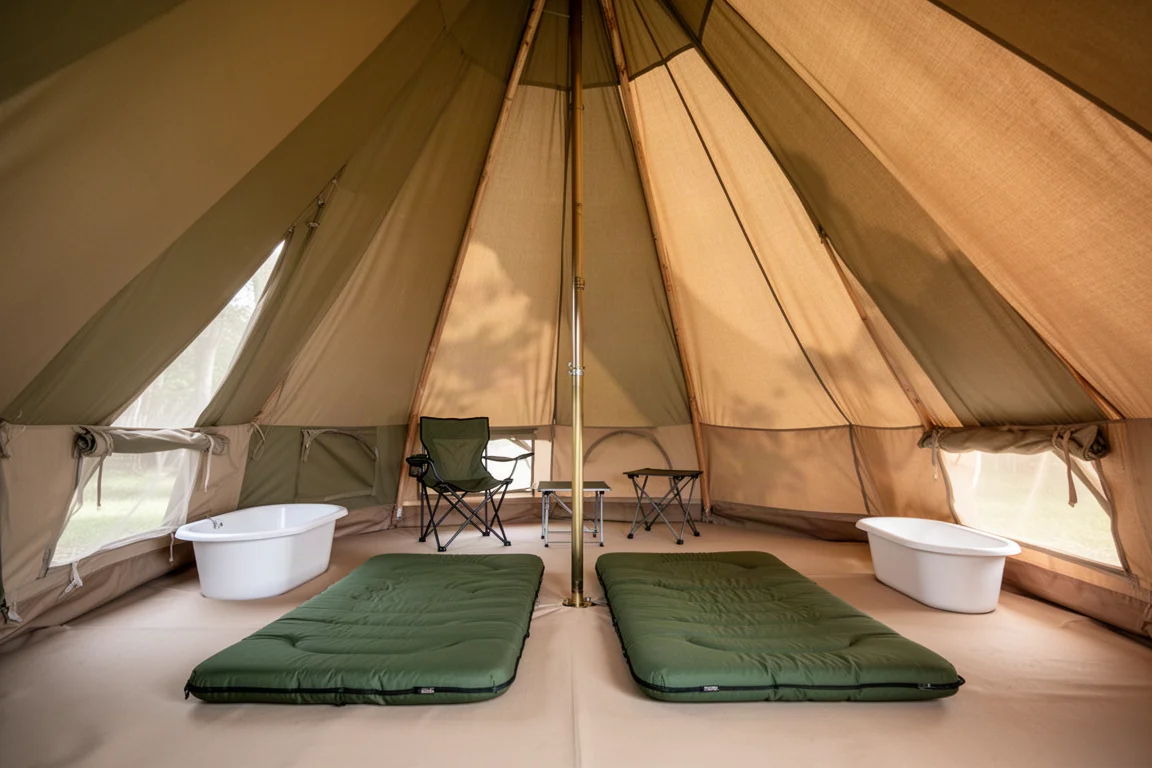
With the inner installed, the picture changes. Maximum height inside the inner is 75 inches, with about 62 inches realistically usable before the walls slope down toward 43 inches. Usable width at its widest is 49 inches. The inner is essentially half of an octagon, with a bathtub floor, taped seams, and no mesh pockets. Access is through a three-way zipper arranged in an inverted T, one vertical zip and two horizontal ones.
Sleeping capacity depends on whether you bring a stove. Four people on pads fit in the shell without one. Add a wood stove and the realistic number drops to two, three at a stretch, and the tent is at its best for one or two campers. With the inner in place, one person has a palace and two people can make it work, though the second sleeper ends up close to the sloping wall. There is room for a wood stove, a stack of firewood, two chairs, and a table alongside the sleeping area.
The Original Naturehike Ranch Fire Square Tent: A Simpler, Lower-Cost Option
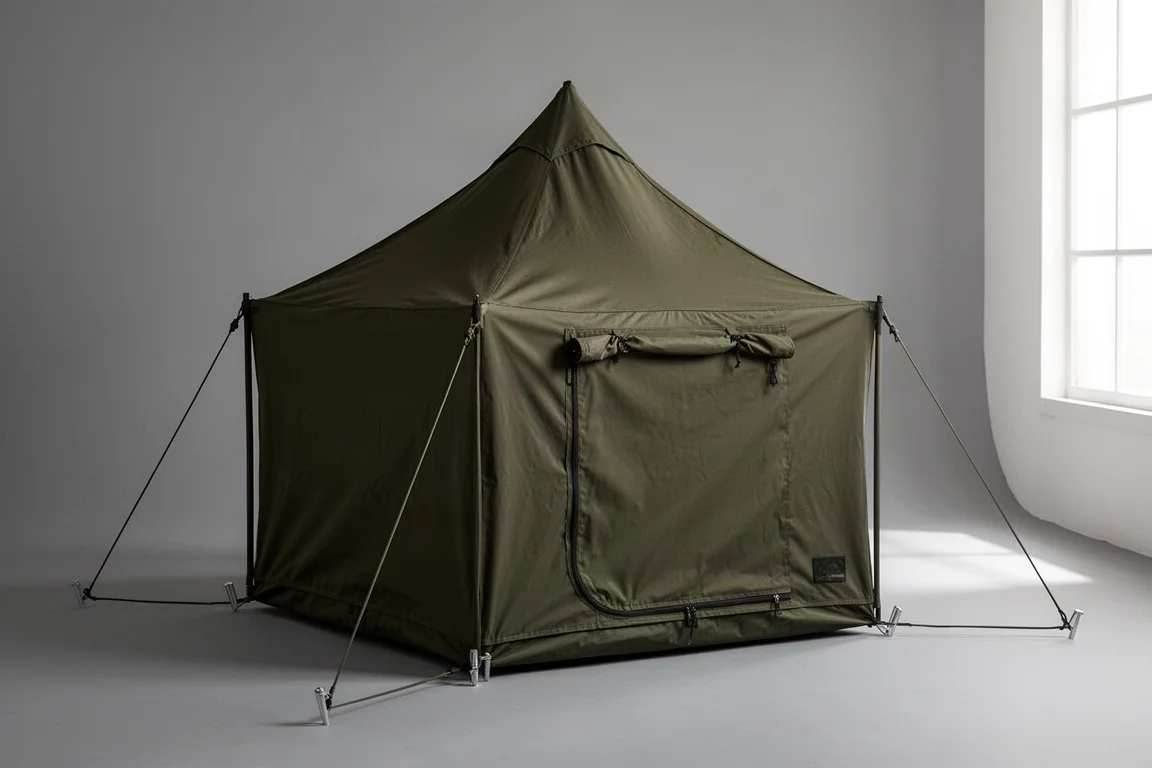
The original square Ranch Fire takes the opposite approach. It is a square teepee with a four-person rating, and the inner is included rather than sold separately. Pitching is straightforward: pull one side out, stake it, walk to the opposite side, pull it straight, and stake that too.
If your priority is a complete hot tent package without assembling it piece by piece, the square version is the more direct route, and it costs less than the octagon setup. The trade-offs are the smaller, simpler footprint and less of the modular flexibility that the newer design offers. A ground sheet does not appear to be part of the package.
Materials, Weight, and Packed Size
The octagon fly uses polyester in the 68D to 210D range with a 3,000 mm hydrostatic head rating. The inner combines B3 mesh with polyester, and the optional mat is 150D Oxford cloth rated to 4,000 mm. Polyester holds tension well and resists stretching, which keeps the walls taut, but it is thick and heavy compared with lighter fabrics.
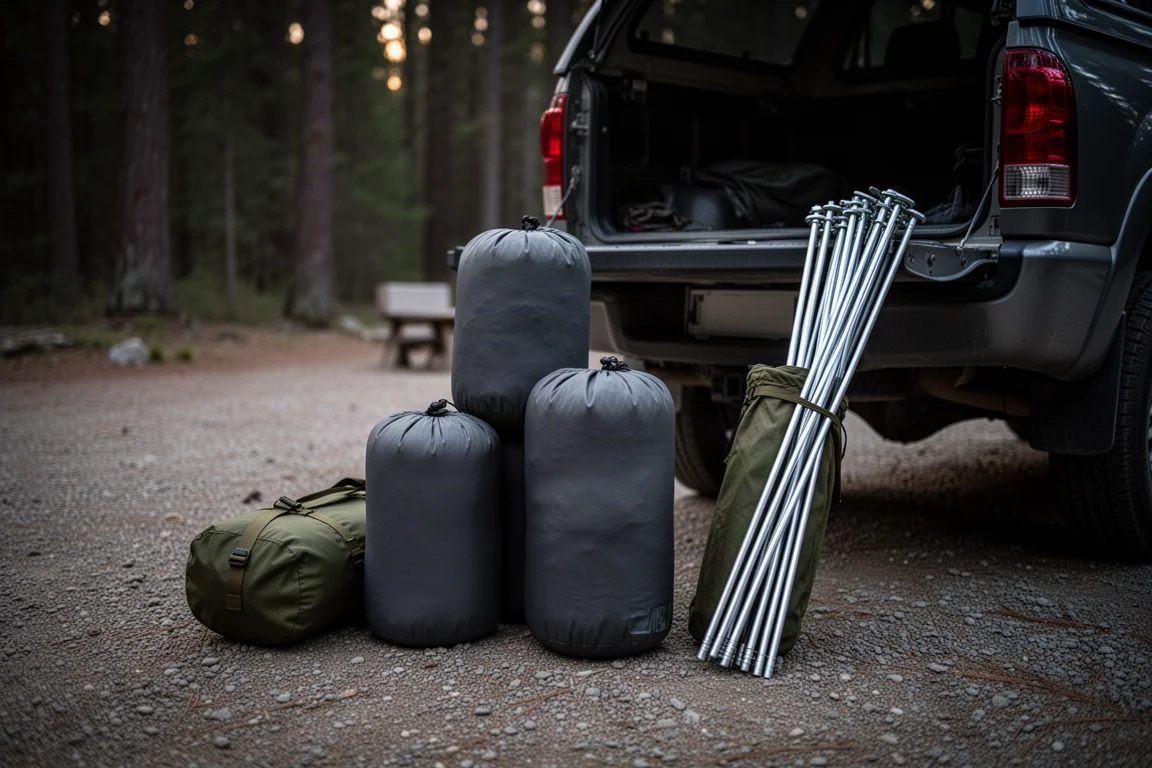
That weight shows up in the numbers. The fly alone is 12 pounds, the inner adds 3.5 pounds, and the mat adds 4.9 pounds. Packed, the system is bulky and takes up a lot of room, and no part of it is light. This is gear that travels in a truck bed, on an ATV, or in a car trunk. Naturehike lists the tent for overlanding and car camping, and that is exactly the right use case; hiking or backpacking with it is not realistic.
Setup Effort and Stove Jack Practicality
Setup is where the octagon asks the most from you. On a difficulty scale it sits near the top, well above a simple square teepee. Because every component shares stakeout points, and the inner and the mat include no stakes of their own, you keep reusing the same anchors. Staking each piece out independently is not an option with the hardware provided.
Two habits make the process easier. First, cut the stove jack to fit your stove before the tent goes up, while you still have clear access to the panel. Second, set the vents and check the stove jack alignment before you tension the guy lines, because once the tent is standing, adjustments become awkward. It also pays to check the knots on the guy lines, since a knot that is not tied correctly can let a line slip during pitching.
Price and Value: Choosing Between the Two Kits
The octagon system is priced by component: $280 for the fly, $60 for the inner, and $60 for the ground mat, which comes to about $400 for everything. If you skip the mat and buy only the fly and inner, the total lands around $340. The original square version is listed at a lower price with the inner included, which makes the value comparison a real decision rather than a formality.
Polyester is an inexpensive fabric, so $400 is worth thinking through against the complete square package. The counterweight is build quality: the octagon’s seam tape, stitching, and general finish all look very good, with no loose threads and clean reinforcement at the stress points. If you want the taller octagonal shell, the separate stove jacks, and the modular component list, the price is defensible. If you want a complete hot tent at the lowest cost, the square version makes more sense.
Conclusion
Both tents do the same job in different ways. The octagon version is the taller, roomier, more modular option, with two uncut stove jacks, a fireproof ground mat, and a footprint that shines for one or two campers running a wood stove. The square version is the simpler, lower-cost package that includes the inner and pitches with far less fuss.
Choose based on how you camp. If you want to build the system piece by piece and value the extra headroom and stove flexibility, the octagon kit earns its place. If you want a complete, straightforward hot tent without the extra components and the higher total, the original square Ranch Fire is the easier recommendation.
Further reading
Related Reviews
Camping Tents
3F UL Gear Taiji Two-Person Tent Review: Field Waterproofing Results and Buying Advice
The Taiji pairs an attached fly with a removable inner, but sustained rain exposed untaped vent seams that need sealing before this shelter can be trusted.
Camping Tents
3FUL Gear Lanshan 2 Pro 4-Season Review: A Sub-$200 Single-Wall Trekking Pole Tent
An early look at the 3FUL Gear Lanshan 2 Pro 4-Season, covering its straightforward pitch, generous interior space, and the condensation and seam-sealing questions that come with any single-wall shelter.
Camping Tents
Alps Mountaineering Lynx 1-Person Tent Review: Big Value in a Small Budget Tent
A close look at the Alps Mountaineering Lynx 1-Person Tent, covering real interior dimensions, materials, setup time, ventilation limits, and who should buy it.