Hot Tents & Wood Stoves
Naturehike Massive Hot Tent and Winnerwell Nomad 1G: A Freezing-Weather Field Test
A low-cost four-season hot tent and a long-serving wood stove, tested together on a sub-freezing overnight trip in the mountains of North Carolina.
Introduction
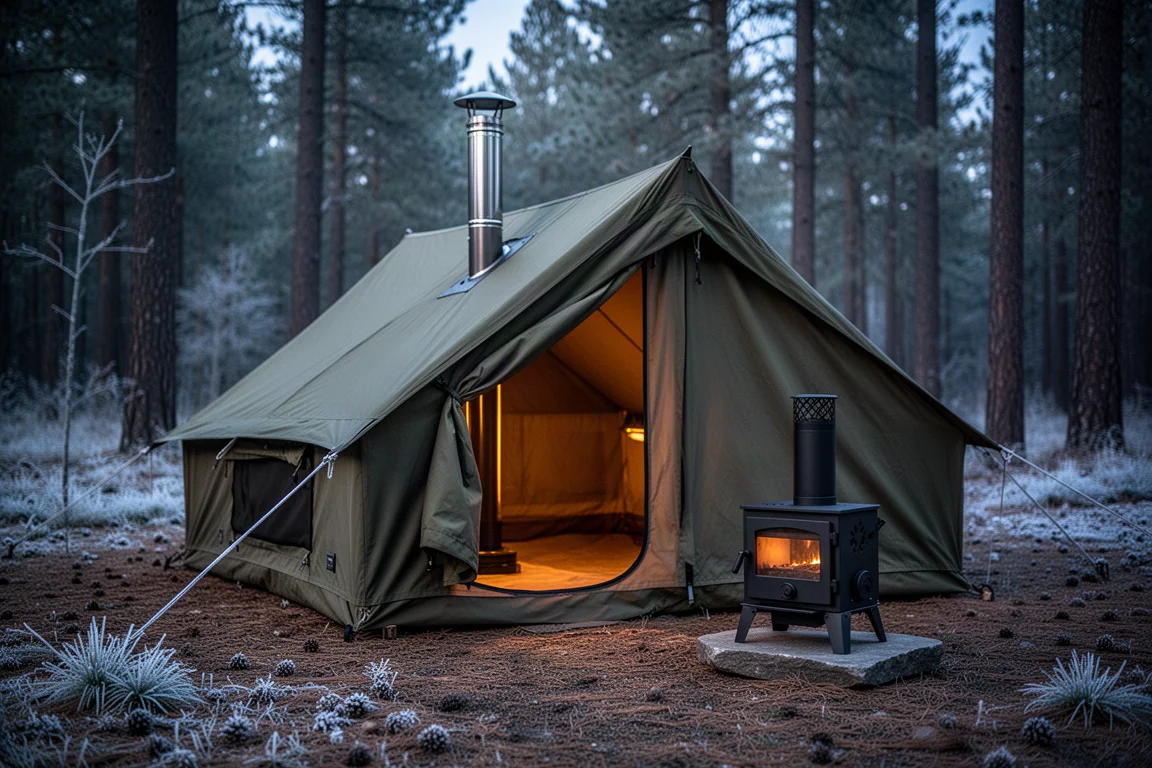
Cold weather is the honest test of a hot tent. Mild evenings and light frost flatter almost any shelter, but a night that drops well below freezing tells you whether a stove, a fabric wall, and a little airflow management can actually hold a comfortable temperature. An overnight trip on a remote ridge in the mountains of North Carolina put two pieces of gear through that test: a low-cost four-season hot tent sold as the Massive outside the United States and as the Mountain Peak in the US, and a wood stove that has been part of the kit for years, the Winnerwell Nomad 1G.
Conditions were properly cold. The afternoon sat at 38°F with a light breeze, the overnight forecast called for 24°F, and the thermometer eventually read 25°F in the evening and 17°F to 18°F at sunrise. Inside the tent, with the stove running, warmth was never the problem. Having too much of it was.
How This Setup Was Tested
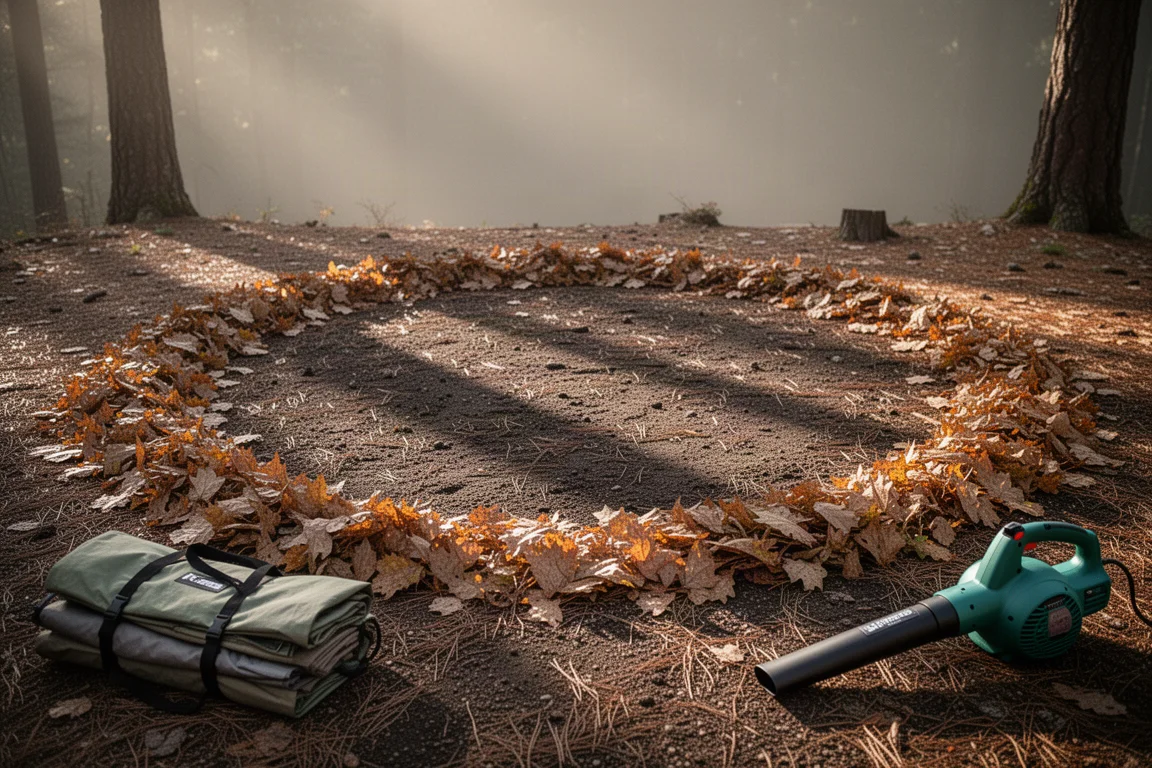
The first job was the ground itself. Fallen leaves were cleared from the pitch area with a leaf blower running off a portable power station. Two reasons: to protect the underside of the tent floor, and to strip away the natural insulation that insects use as cover. That second point matters more with a hot tent than with a standard shelter, because raising the temperature inside a closed space encourages anything hiding beneath that layer of leaves to move.
The forecast stayed dry for the entire trip, so no tarp was pitched over the shelter. That made it a clean test of the tent and stove on their own, without an extra layer of weather protection changing the result. The same tent had been used a few weeks earlier with a gas stove, so this trip was the wood stove version of the same setup.
It is worth being precise about what this trip did and did not prove. Cold performance was tested thoroughly, in real sub-freezing conditions. A heavy rain test is still outstanding, and until the tent has been through a proper storm without a tarp, that part of the picture stays open.
Naturehike Massive (Mountain Peak) Hot Tent
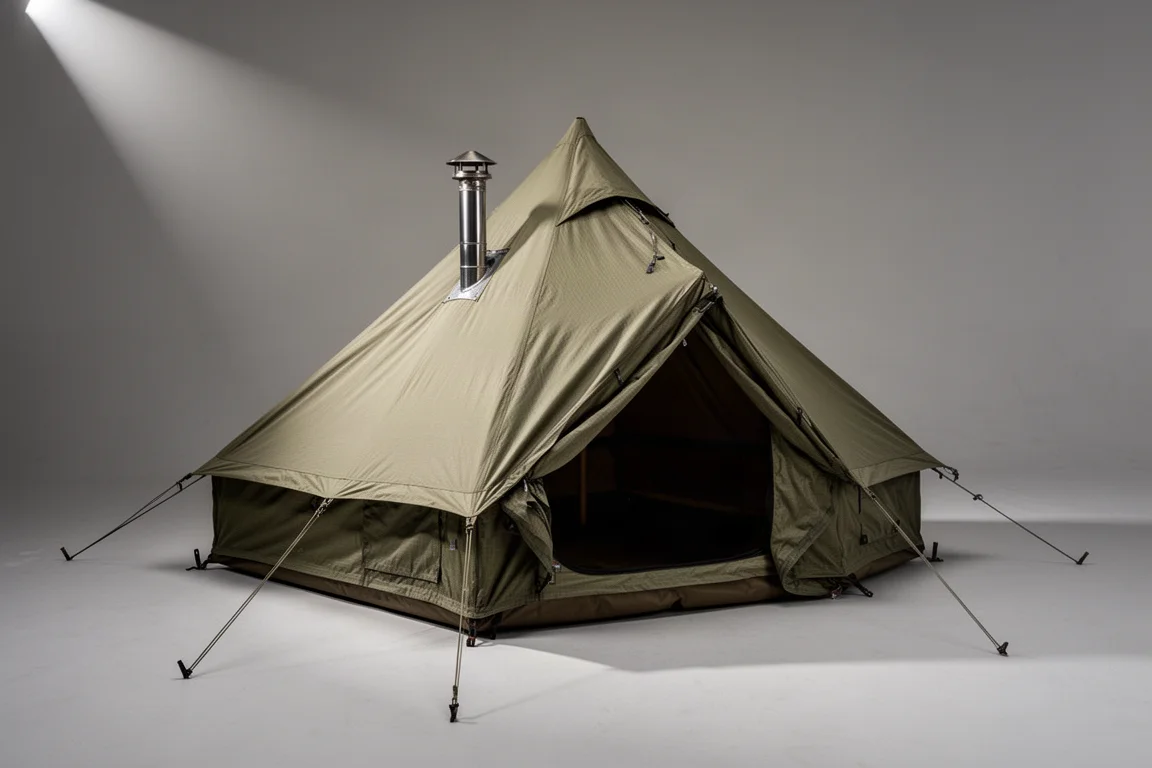
The naming is the first thing to untangle. Outside the United States this shelter is sold as the Massive. In the US, the same tent appears under the Mountain Peak name. Either way, it is a four-season hot tent with a stove jack, and it sits at the inexpensive end of a category where prices climb quickly.
That price position is the tent’s central appeal. Four-season hot tents with stove compatibility are often a serious investment, and this one offers the same basic format for far less. Pitching was straightforward, and the shelter went up without drama on a cold afternoon.
Warmth, Cold-Weather Performance, and Interior Space
With the stove lit, the interior temperature climbed faster than expected. At one point the inside felt close to 100°F, warm enough that stepping outside became the more comfortable option. Airflow was damped down to bring the temperature back into a reasonable range, which is a useful reminder that a hot tent of this size can be managed rather than simply endured.
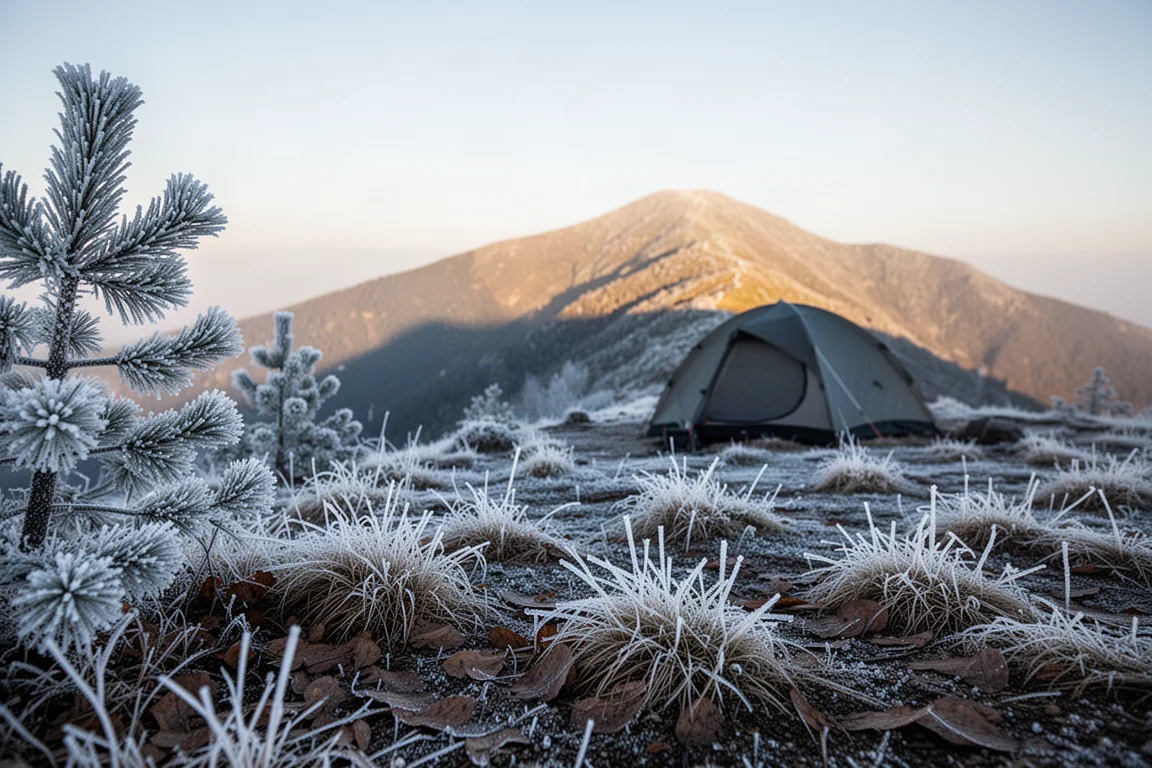
Overnight, the shelter did exactly what it was bought to do. Outside, the temperature fell to 25°F and then into the high teens by morning. Inside, sleeping on top of a bag rather than buried inside it, the night was comfortable from start to finish.
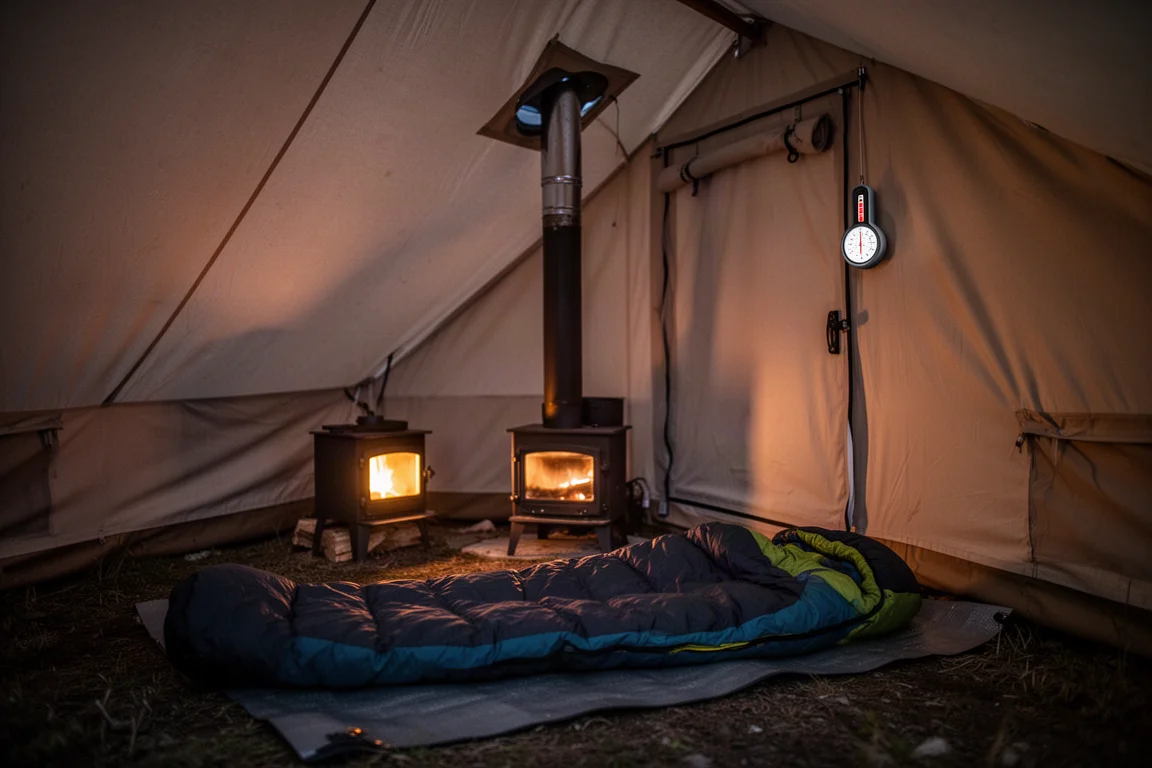
Stove placement inside the tent deserves some thought. Angling the stove to preserve floor space kept the entry clear and left enough distance from the inner wall to avoid any risk of melting fabric. From that position, getting up in the middle of the night to feed the stove was not a hassle. It is the kind of small decision that shapes how livable a hot tent feels over a long, cold night.
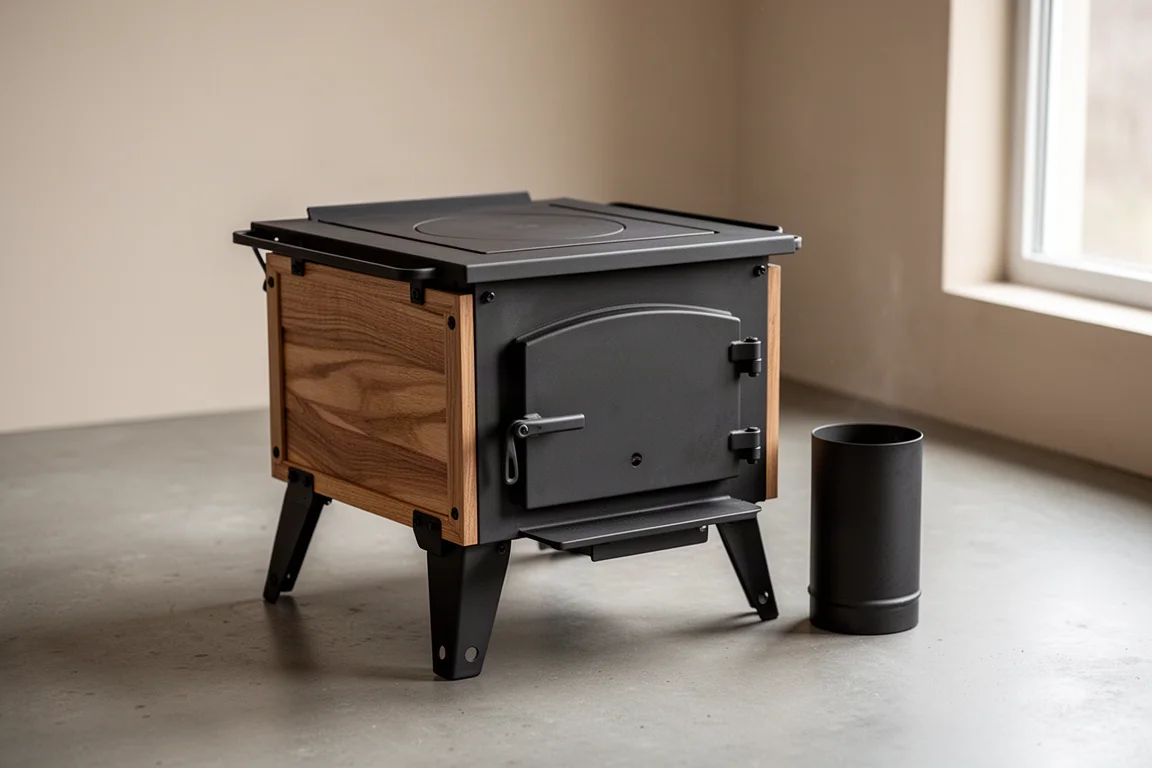
Winnerwell Nomad 1G Wood Stove
This stove has been in use for at least five years, and that track record is the strongest argument for it. It is not the cheapest option in its class, but the build has held up season after season, which makes the price easier to justify for anyone planning to run a hot tent regularly.
On this trip the stove was loaded fully and adjusted so it would burn for several hours before needing another refill. That is the practical difference between a stove that works and a stove that works overnight: burn time, controllability, and a door that is easy to feed without wrestling with the firebox.
Its footprint also shapes the tent. In a compact hot tent, the stove is not just a heat source, it is a piece of furniture, and how you orient it determines how much usable floor space remains.
Cold-Weather Camp Routine and Field Notes
Once the sun dropped behind the ridge, the temperature fell quickly and the breeze picked up. Dinner was cooked outside the shelter: a bacon cheddar ranch burger with skillet-fried potatoes, charred for flavor and served with a ranch sauce. Coffee followed later in the evening, which is a personal choice rather than a recommendation.
The forest stayed busy after dark. Coyotes howled from lower down the mountain through much of the night, and something large could be heard moving through the trees. This is black bear country, and a notably large bear had been recorded in the area previously.
Food handling in bear country is worth thinking through before a trip rather than on the night itself. In remote areas where bears still carry a natural fear of people, eating near camp and keeping food in a vehicle has been a workable approach for decades. In heavily visited areas, where bears have lost that fear and become far more dangerous, the safer pattern is the triangle: eat in one place, store food in another, and sleep in a third, with a change of clothes after eating. Either way, the goal is the same. Keep bears wild and wary, because a bear that stops fearing people rarely survives the encounter.
Morning came frosty. The overnight low settled around 17°F to 18°F, and the sun cleared the ridge shortly before 8:00 to start warming things up. Breakfast was toasted coconut cinnamon oatmeal, eaten inside a tent that was still warm from the overnight burn.
What to Consider Before You Buy
A few things are worth weighing before committing to this kind of setup.
The tent has not yet been through a full rain test without a tarp. Cold-weather performance is proven. Wet-weather performance is not, at least not in this configuration.
Expect to manage heat actively. A hot tent of this size with a wood stove can push interior temperatures toward 100°F, and you will be adjusting vents and airflow to keep it livable rather than sitting back and forgetting about it.
Firewood is the quiet workload. Collecting and processing enough wood for an overnight burn takes real time, and running short means a cold stretch in the early hours.
The stove costs more than the tent does. That is worth knowing going in, because the two purchases are not equivalent in price even though they are equivalent in importance to the setup working as intended.
Buying Advice
If you want to try four-season hot tenting without spending a fortune on the shelter, the tent is the sensible entry point. It is inexpensive for the category, it pitches easily, and it held comfortable temperatures through a night that fell into the high teens.
The stove is the opposite kind of purchase: higher cost, longer horizon. Five years of reliable service is the sort of record that justifies spending more up front, especially if you plan to run a hot tent through multiple winters. Pair the two and you have a low-cost shelter supported by a heat source built to last.
For anyone testing the waters for a single season, the tent paired with a gas stove is a cheaper way to start. For anyone who already knows they will be out in the cold repeatedly, the wood stove is the piece that will still be in the kit years from now.
Conclusion
One overnight trip rarely settles every question, and this setup still has a rain test ahead of it. What the trip did establish is narrower and more useful: an inexpensive four-season hot tent can hold genuinely comfortable temperatures on a night in the teens, and a well-built wood stove with years of service behind it makes that warmth manageable rather than constant work. For cold-weather campers weighing their first hot tent, that combination is a reasonable place to start.
Further reading
Related Reviews

Backpacking Gear
Building a 10 lb Base Weight: An Ultralight Backpacking Gear List
A practical walkthrough of the ultralight pieces behind a 10 lb base weight, from a 765 g pack and a roomy one-person tent to a full camp chair and a dependable water filter.
Road Bikes
10 New Road Bikes Worth Watching: Aero, Titanium, Steel and Endurance Standouts
A practical roundup of 10 new road bikes, from aero flagships chasing single-watt gains to titanium, steel and endurance platforms built for real roads.
Bikepacking Gear
11 Bikepacking Essentials for Long-Distance Cycling
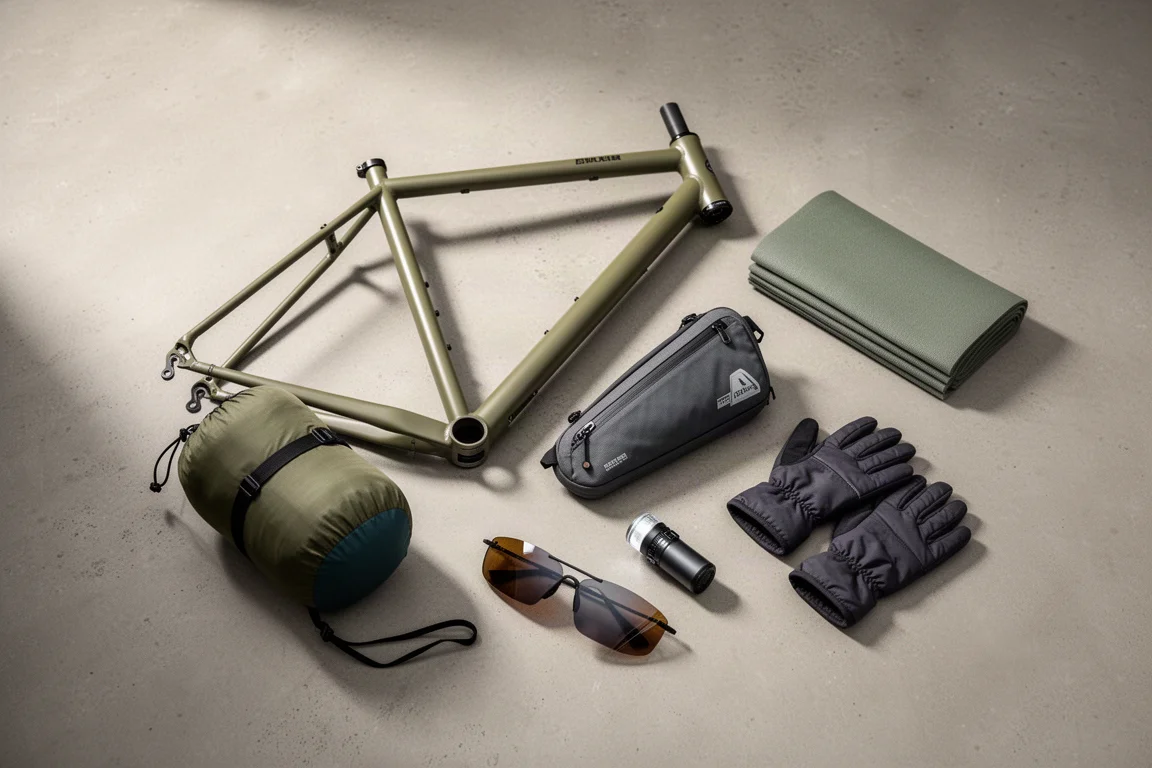
Eleven bikepacking essentials for long-distance cycling, from a steel gravel frame and a two-person tent to helmet lights, packable gloves, and a frame bag that puts weight in the right place.