Camping Tents
NatureHike Kota 6-Person Tent Review: A Hybrid Shelter With Serious Space
A six-person hybrid tent with a mesh inner for warm weather, a stove jack for cold weather, a full living area, and standing headroom inside a genuinely large inner cabin.
Introduction
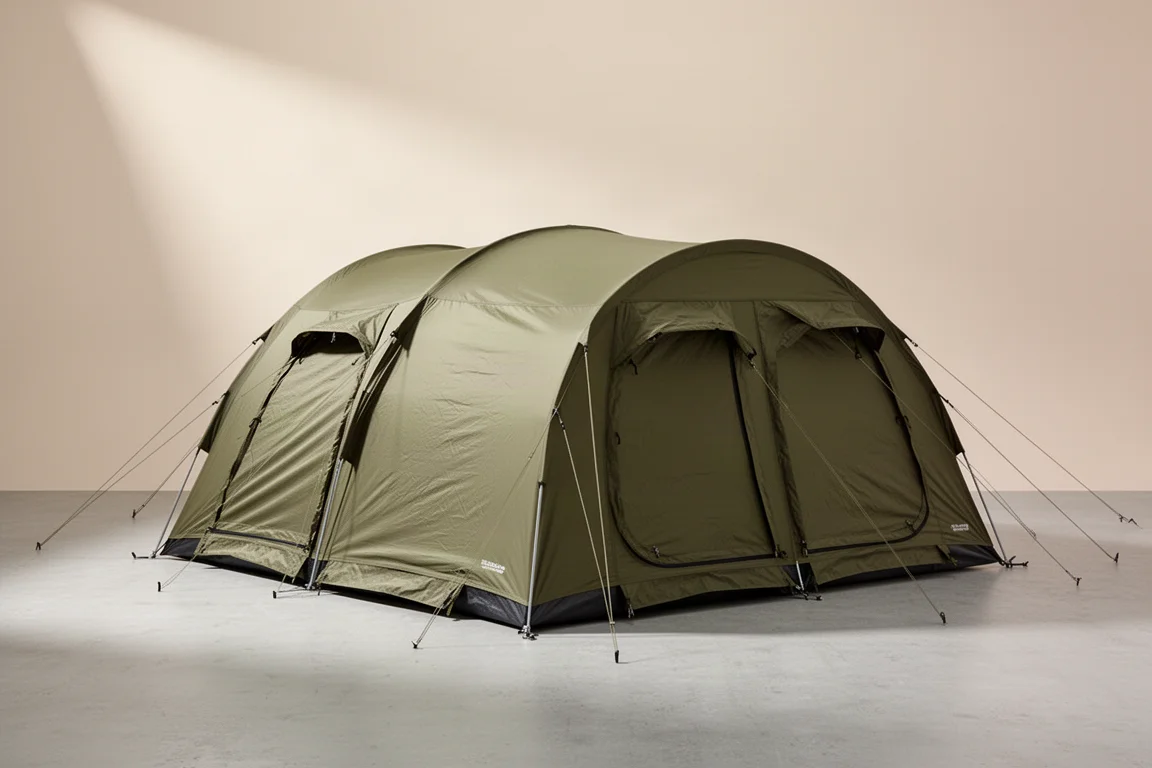
The NatureHike Kota 6-Person Tent is one of the more interesting large shelters in the hybrid camping category, because it refuses to commit to a single season. The inner cabin is built mostly from mesh, which suits hot summer nights, while the fly includes a stove jack so a wood stove can be run inside once temperatures drop. What sets the design apart beyond that dual purpose is sheer scale. The inner is genuinely large enough for six people to sleep in, and it sits behind a full living area rather than a cramped vestibule. Many six-person tents promise space for six and deliver an inner that realistically fits two or four. This one does not.
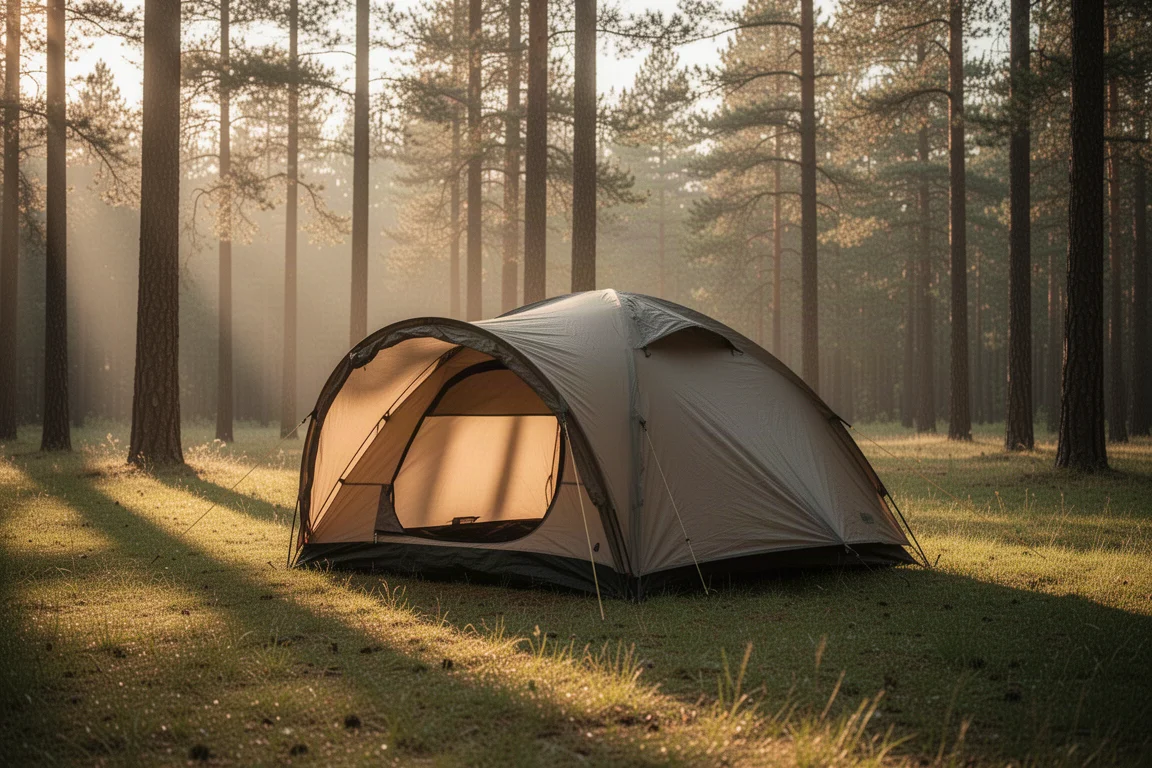
Two versions of the Kota exist. The six-person model is the larger of the pair and the only one with the full living area. A four-person version is also available, and it is considerably smaller with a simpler layout, so it is worth confirming which model you are looking at before buying.
Who This Tent Is For
This is a shelter for campers who arrive by vehicle and want room to move once they are set up. Families, group base camps, and long-stay sites all fit the brief, and the standing headroom inside the inner makes it far more comfortable to live in than a low dome.
It is also aimed at campers who want one tent to cover both ends of the calendar. The mesh inner handles summer ventilation, and the stove jack opens up winter use with a wood stove, so the same shelter can serve a hot-weather trip and a cold-weather one.
What it is not is a backpacking tent. The packed weight and pack size place it firmly in the car-camping and base-camp world, where being carried more than a short distance is not part of the plan.
Main Strengths: Space, Headroom, and Build Quality
The headline figure is the inner. It measures 91 in wide and 77 in tall, which is 6 ft 5 in, so most adults can stand upright inside it. The floor is a bathtub design, the top opening is very large, and the walls carry three hooks and nine mesh pockets for organising gear. The living area in front of the inner is substantial too, at 86 in wide and 73 in tall.
The doors are worth calling out separately. Both fly doors and the single inner door are large, which makes getting in and out with sleeping bags, pads, and duffels noticeably easier than it is on a tighter tent.
Build quality looks solid throughout. Stitching, seam tape, and general finishing appear consistent, with no loose threads, and the design is clearly intended to be lived in rather than merely tolerated.
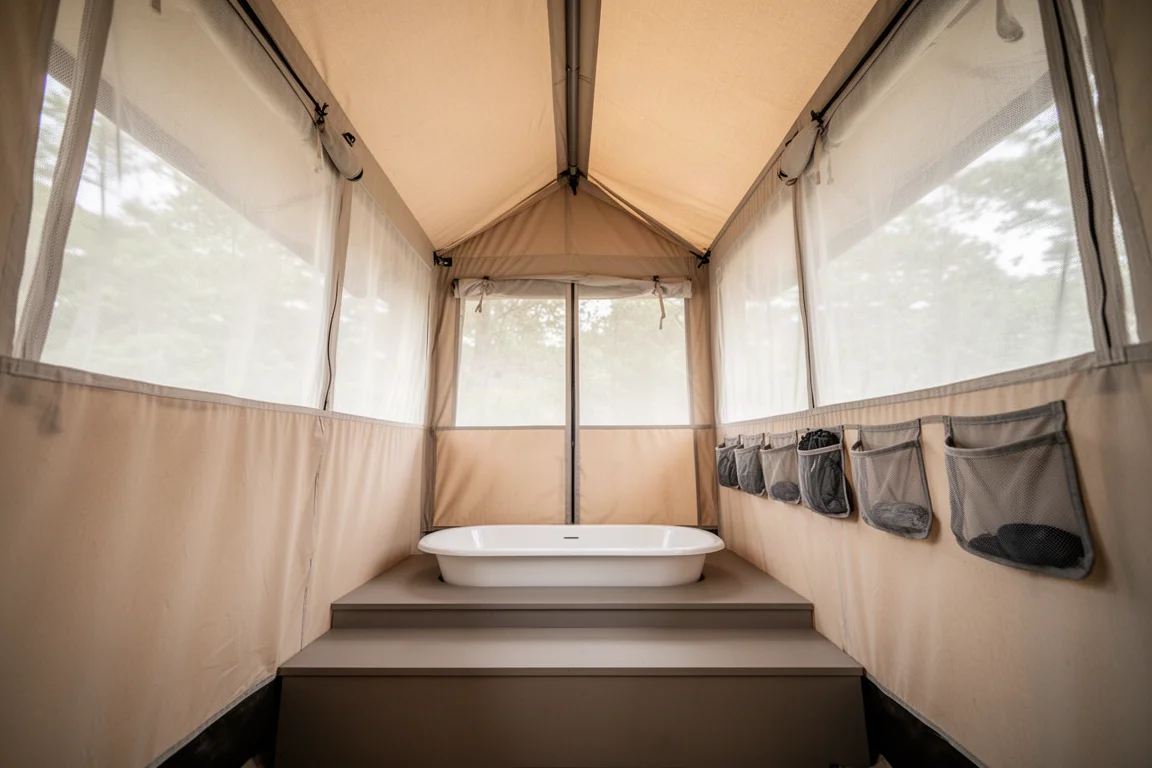
The combination of a tall inner and a wide living area means the tent behaves more like a small cabin than a sleeping pod, which is the main reason it stands out in its size class.
Setup, Materials, and Packed Size
Setup is straightforward for a tent of this size. The pole sleeves are colour coded, with two orange poles that crisscross and a brown pole that runs across the top to form the large opening. One pole is pre-bent and goes at the front with the fly. Complexity sits around the middle of a ten-point scale, and the colour coding removes most of the guesswork.
Materials include 75D 210T polyester, aluminium poles, and aluminium tent stakes, with a 3,000 mm waterproof rating. Packed, the tent measures 32 in by 9 in by 9 in and weighs 22 lb.
Hybrid Design for Warm and Cold Weather
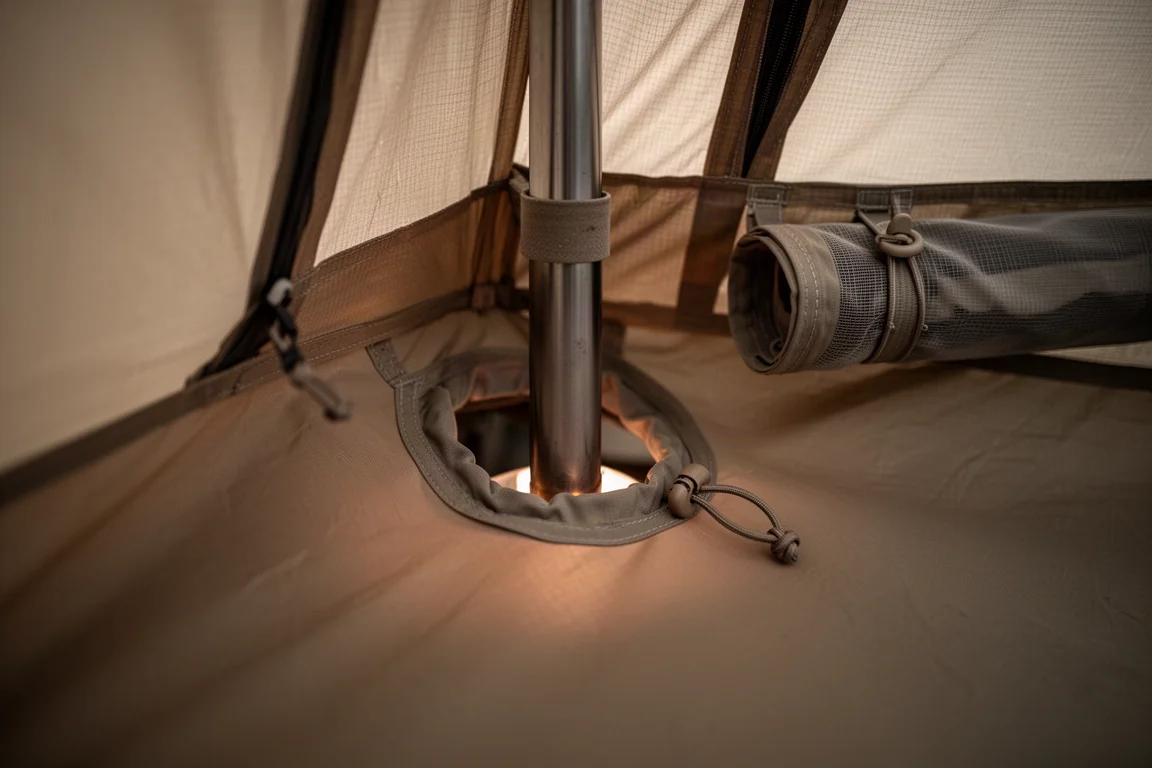
The fly carries two doors with mesh panels, two vents that open and close, and two ventilation panels that can be rolled up to push air directly into the inner. The fly reaches all the way to the ground but pulls out at certain sections, which helps airflow without fully exposing the interior. There are six guyline points, and the tent does not use a snow skirt. At the top of the fly sits the stove jack, which is what makes cold-weather use with a wood stove possible.
The inner is where the hybrid idea really shows. Roughly 2 ft of the wall is solid fabric and the remainder is mesh, which delivers strong ventilation and condensation control in heat. In colder conditions, sleeping below that mesh line keeps the breeze off the sleepers while still allowing air movement higher up.
As a four-season shelter, the tent has the right foundations: thick, sturdy poles, plenty of guyline placements, and a fly that reaches the ground. It should hold up well in strong winds. Snow loading is a different story, and it is only adequate, because nothing in the middle of the shelter supports the weight of accumulated snow. This is a capable cold-weather tent rather than an expedition-grade winter storm shelter.
That distinction matters when you are weighing the tent against heavier, more storm-focused designs. The Kota trades extreme weather capability for usable space and genuine warm-weather comfort.
Things to Consider Before Buying
The first consideration is logistics. At 22 lb and 32 in by 9 in by 9 in packed, this is a shelter that travels by car. The measured footprint is roughly 217 in long and about 110 in at its widest, so it also needs a generous pitch site.
The second is performance that has not yet been proven in the field. The 3,000 mm waterproof rating is a specification rather than a tested result, so sustained heavy rain is still an open question. Airflow and condensation in a tent of this volume are the other areas worth watching closely, since a large mesh inner helps but does not guarantee a dry interior in humid, still conditions.
Third, check the version. The four-person Kota is considerably smaller and does not include the living area that makes the six-person model so roomy.
Finally, accept the snow limitation. Without central support, the roof will not shed heavy snow the way a dedicated winter tent will.
Buying Advice
At $400 retail, the price is sensible for a tent of this size and feature set, and the six-person Kota was listed at $320 at the time of writing, though it is unclear how long that pricing will hold. Either way, the value case rests on how much use you get from the hybrid design.
If you want a single large shelter that handles summer heat with a mostly mesh inner and winter trips with a wood stove, this covers both convincingly. If your camping is mostly backpacking, or if you regularly camp in deep snow, the weight and the snow-shedding limits will push you toward something else.
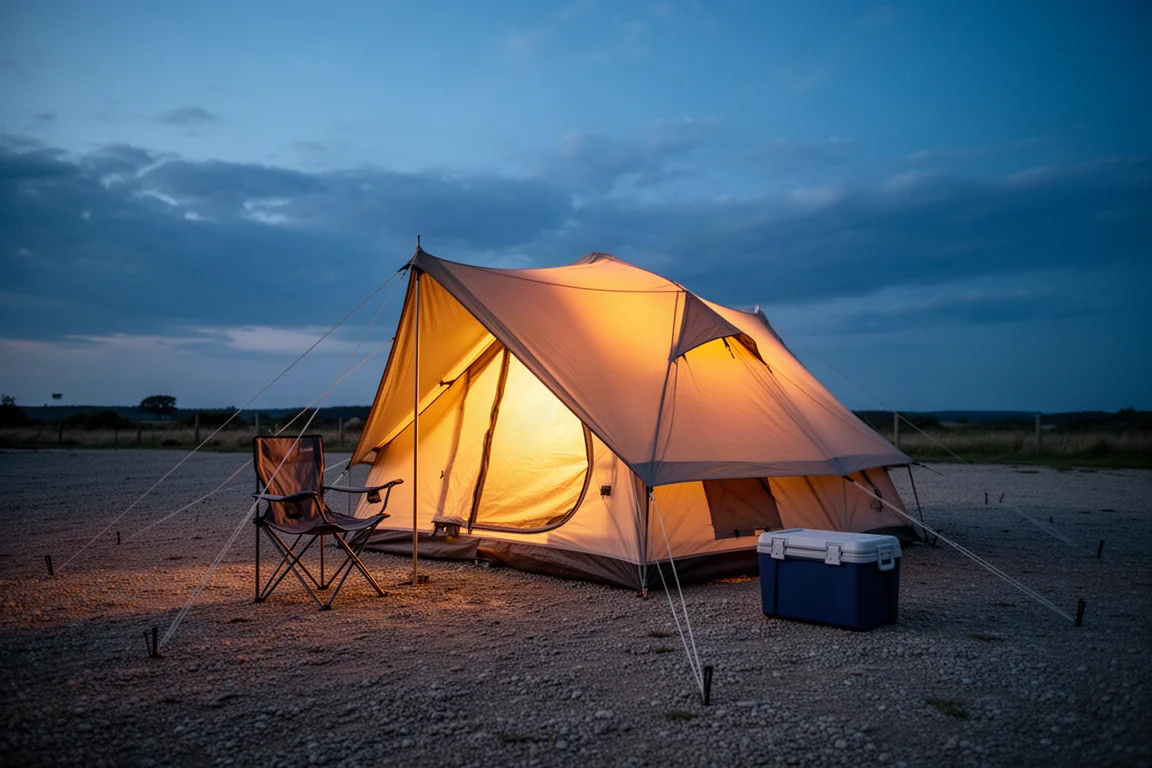
For buyers who camp from a vehicle with family or a group and want space, headroom, and a four-season layout in one purchase, the Kota is an easy tent to feel confident about.
Conclusion
The NatureHike Kota 6-Person Tent earns its attention through space and flexibility rather than novelty. A six-person inner that adults can stand up in, a full living area, two large fly doors, and a stove jack make it a genuinely versatile large shelter, and the build quality looks up to the price. The trade-offs are honest ones: weight and pack size that suit car camping, snow loading that is only adequate, and waterproofing and airflow that still need real-world confirmation. Buy it for roomy, four-season base camping, and it makes a great deal of sense.
Product link
View more details for NatureHike Kota 6-Person Tent
This product is mentioned in the review. Check the specifications, options, and compatibility before buying.
View more details for NatureHike Kota 6-Person TentFurther reading
Related Reviews
Camping Tents
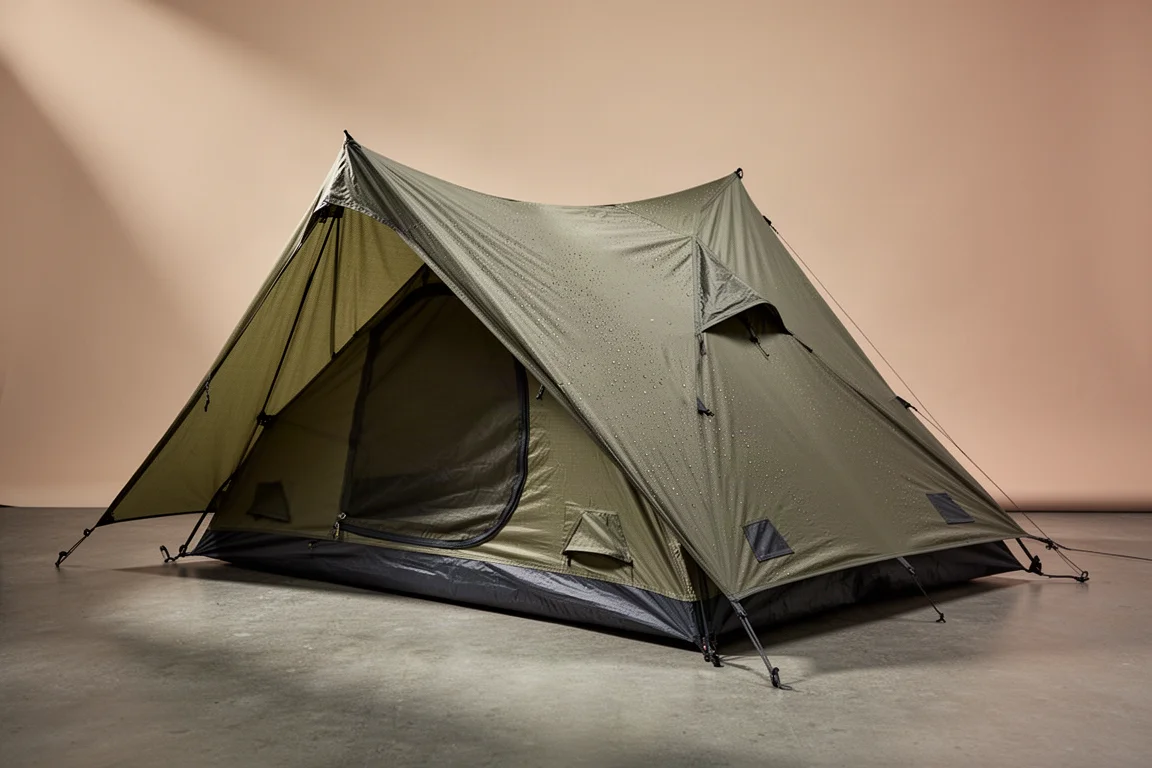
3F UL Gear Taiji Two-Person Tent Review: Field Waterproofing Results and Buying Advice
The Taiji pairs an attached fly with a removable inner, but sustained rain exposed untaped vent seams that need sealing before this shelter can be trusted.
Camping Tents
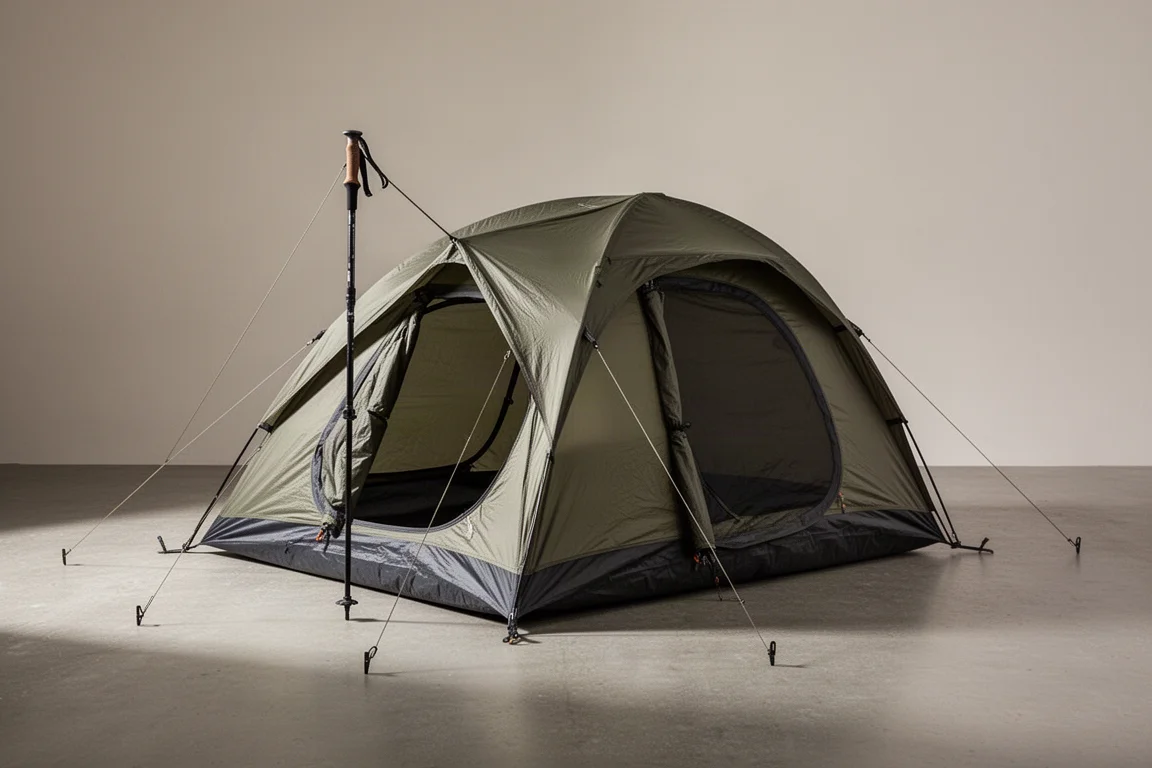
3FUL Gear Lanshan 2 Pro 4-Season Review: A Sub-$200 Single-Wall Trekking Pole Tent
An early look at the 3FUL Gear Lanshan 2 Pro 4-Season, covering its straightforward pitch, generous interior space, and the condensation and seam-sealing questions that come with any single-wall shelter.
Camping Tents
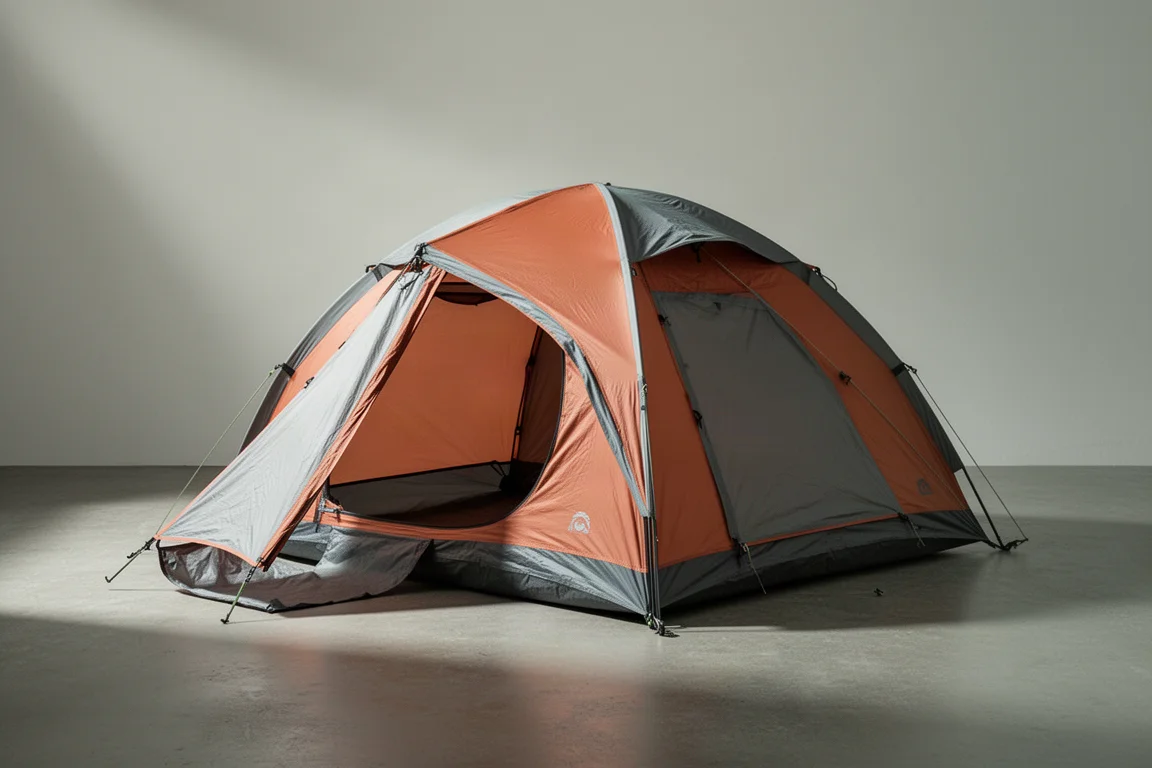
Alps Mountaineering Lynx 1-Person Tent Review: Big Value in a Small Budget Tent
A close look at the Alps Mountaineering Lynx 1-Person Tent, covering real interior dimensions, materials, setup time, ventilation limits, and who should buy it.