Camping Tents
Naturehike Cloud Up 2 Pro Review: A Weatherproof Tent Built for Cool Conditions
A detailed look at the Naturehike Cloud Up 2 Pro, a well-built $170 backpacking tent with outstanding rain protection, a one-person interior and a design that only makes sense in cool weather.
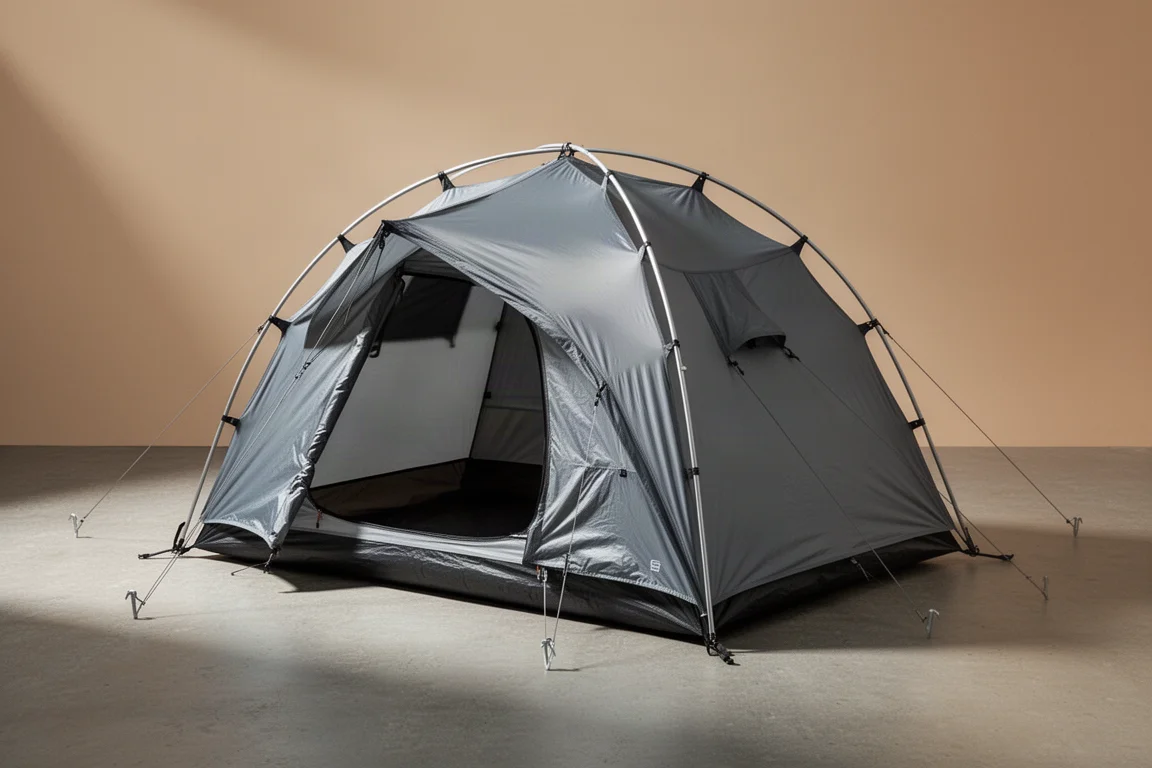
Introduction
The Naturehike Cloud Up 2 Pro is a semi-freestanding backpacking tent sold as a two-person, all-season shelter. This is the 2024 version, and the listed updates over the previous model are a vent built into the door, a larger and higher door opening, and more vestibule space behind it.
The headline numbers are appealing. A 4,000 mm waterproof rating, a 20D silicone nylon fly, 7001 aluminium poles, aluminium stakes, a high-density B3 mesh inner and a packed weight of 3.9 lb, all for $170 with a ground sheet, 14 stakes, five guy lines and a compression strap in the bag.
Where the design actually lands is narrower than that specification sheet suggests. In practice this is a one-person tent for cool conditions, with excellent materials and genuinely impressive rain protection. The limits show up in warm weather, in interior space, and in the way the door behaves when it is wet.
Who this product is for
The company lists the Cloud Up 2 Pro as a two-person, all-season tent. The interior tells a different story. One person plus gear fits well. Two adults fit only by pressing their shoulders against the tapered sidewalls, which are sharp rather than pulled out and wide. Length is generous at 75 in (6 ft 3 in) and peak height reaches 38.5 in, but usable width is where the design gives ground.
Seasonally, the same pattern repeats. The fly drops very close to the ground, large fabric panels wrap around the body, and mesh coverage is limited. That combination blocks wind and traps warmth, which is exactly what you want on a cold, breezy evening and exactly what you do not want on a humid summer night. This shelter suits fall trips, early winter, late winter and spring, roughly below 60°F. It is not built for the hottest weeks of summer, and it is not built for the coldest, stormiest depths of winter either, where the mesh inner becomes the weak point.
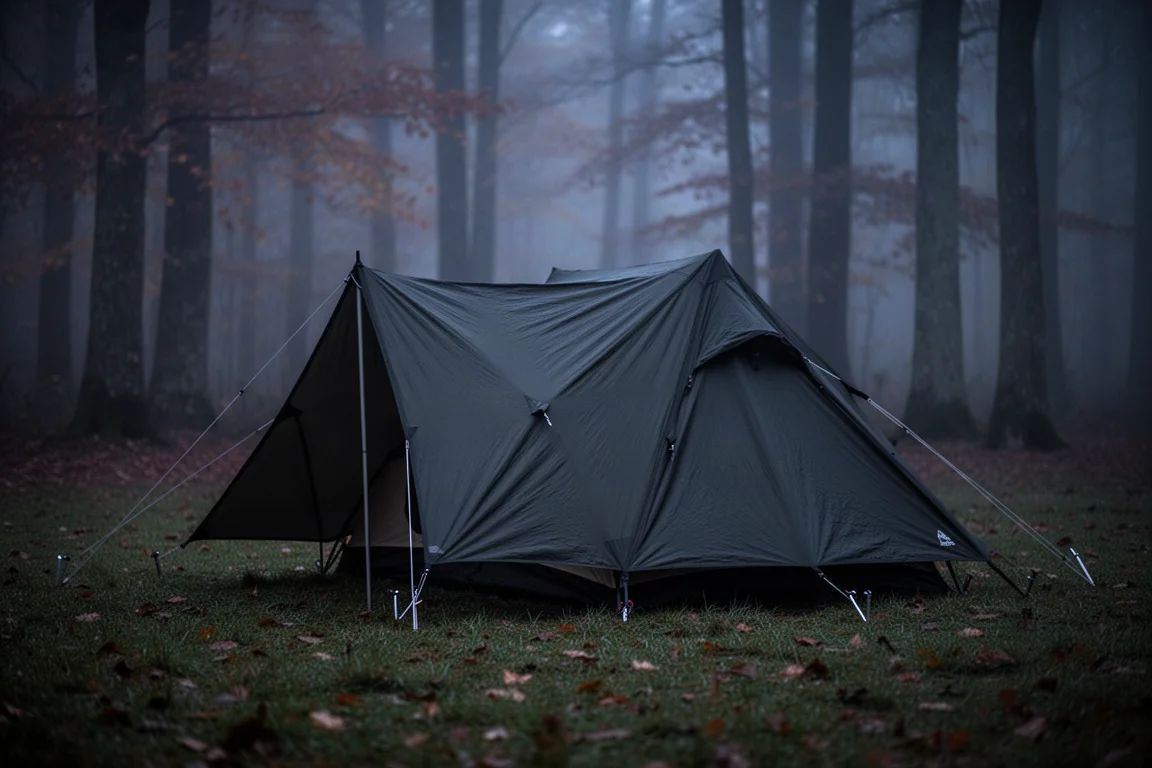
If your trips tend to be warm, still and humid, the same fabric that protects you in a storm will hold heat and moisture inside. A dedicated summer tent with more mesh and a fly that sits higher will be far more comfortable in those conditions.
Main strengths
Build quality and materials
For $170 the construction is the strongest argument for this tent. Seams are taped, stitching is clean, and there are no loose threads anywhere on the body, fly or storage bag. The fly uses 20D silicone nylon, a material that is lightweight, strong and highly water repellent, and it is unusual to see silicone nylon rather than polyester at this price. Poles are 7001 aluminium, stakes are aluminium, and the inner is high-density B3 mesh.
Weather protection and stability
Rain performance is the standout result. Through heavy downpours, torrential rainfall and thunderstorms the interior stayed dry, including wind-driven rain arriving almost horizontally. The 4,000 mm rating on the fly is high for this class of tent, and the storm flap over the door plus the front vent give the design somewhere to work in bad weather. Guy line points are generous for the size, with two at the top, two on the sides and one at the back. In wind the tent holds its shape and stays planted.
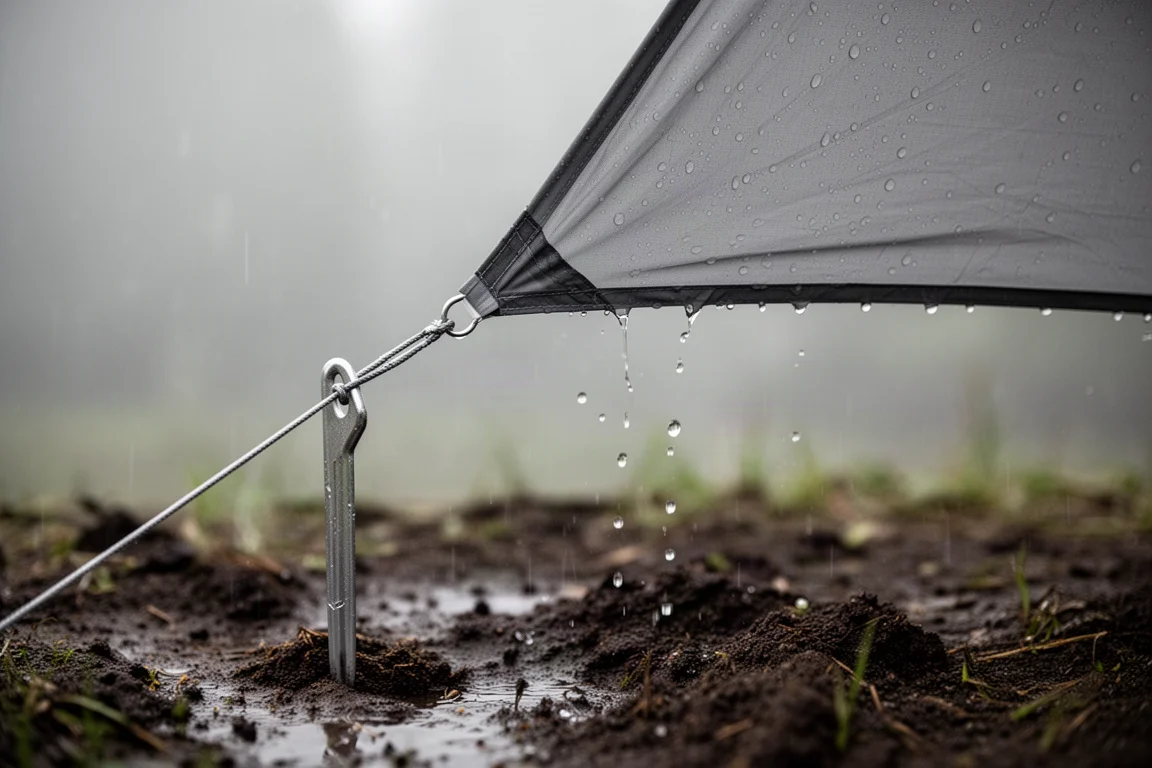
That deep, close-to-ground fly is the reason the shelter is stable and dry, and it is also the reason the tent runs hot in warm conditions. Both behaviours come from the same design decision.
Setup and included accessories
Pitching is straightforward. Pole ends and matching hardware are colour coded, red at the door and grey at the back, so there is no way to install the arch the wrong way round. The body clips onto the pole, and the fly then matches the door, buckles into each corner and stakes out. Because the tent is semi-freestanding, staking the fly is what unlocks full ventilation and full weather protection.
The kit is complete for the price: carry bag, tent body, fly, poles, storage bag with setup instructions printed inside, five guy lines, a compression strap, a ground sheet and 14 stakes. Packed size is listed at 15.7 x 5.1 in.
Things to consider before buying
Interior space and layout
Treat the two-person rating as optimistic. The pole architecture uses a single arch over the top with no side poles and no side connection points, so the walls cannot be pulled outward. The fly does not connect to the inner, which is the usual way of stretching the interior wider once the fly is staked out. The result is a narrow, sharply tapered space that works for one person sleeping centrally and becomes uncomfortable for two.
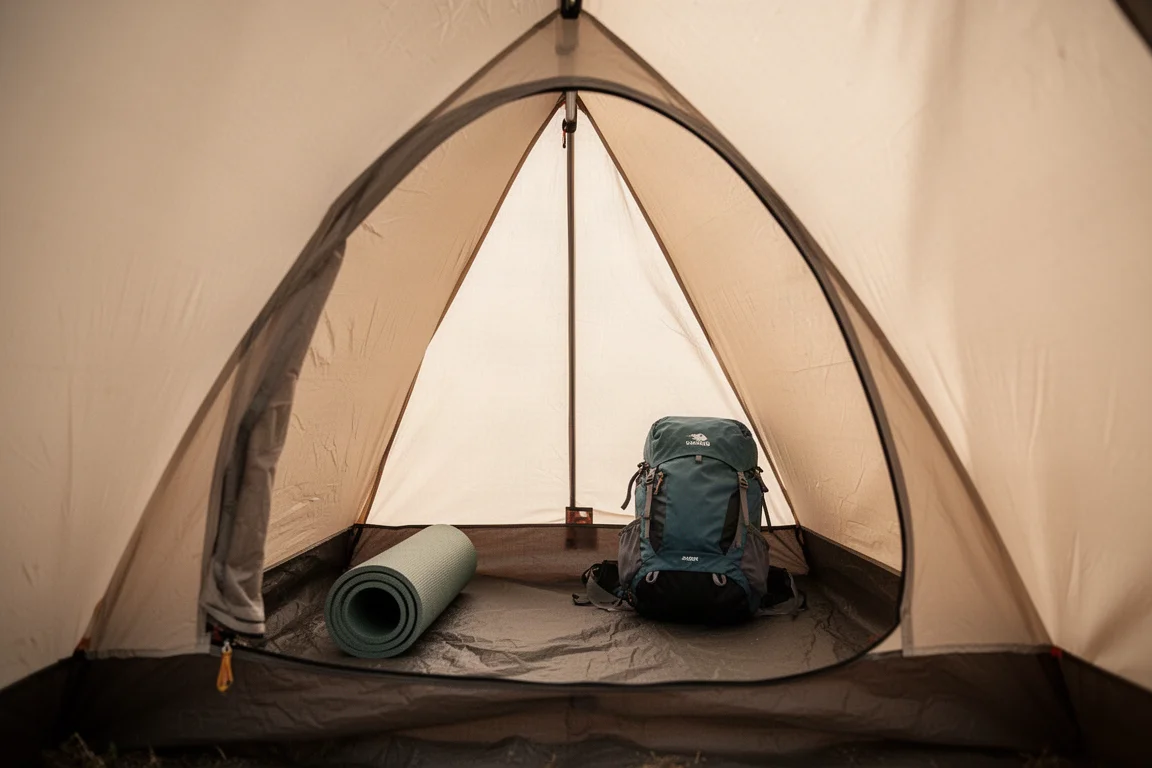
Entry has its own quirk. With one door and a slanted opening, getting in means either going head first and turning around inside, or backing in. It is manageable, but it is not the easy swing-in feel of a wider door with a more upright profile.
Ventilation and seasonal limits
Airflow is the main compromise. Mesh coverage is low, the fabric panels are large, and the fly sits close to the ground, so a breeze outside rarely becomes a breeze inside. On warm trips the interior becomes hot and stuffy, and the low fly limits how much air can pass underneath. Condensation forms on the inside of the fly overnight, and it was wet on the inside every morning. Water did not drip through onto the sleeper, but the moisture is there to manage.
The all-season label overstates things in both directions. There is too much mesh for the harshest winter conditions and too much fabric for summer. What is left is a genuinely good cool-weather tent.
Door design in wet weather
Opening the fly in rain is where the slanted door becomes a real annoyance. Water that has pooled and collected on the fly runs straight into the tent as soon as the door is opened, right over the sleeping area. In wet, stormy conditions that means planning your exit carefully, or accepting a wet patch inside.
Buying advice
Buy the Cloud Up 2 Pro if you want a solo shelter that is well made, genuinely waterproof, stable in wind and reasonably light, and if your camping happens in cool conditions. At $170 the materials, the taped seams and the included ground sheet, stakes and guy lines make it strong value, and the colour-coded setup keeps pitching simple even in bad weather.
Look elsewhere if you need a true two-person tent, if most of your trips happen in warm and humid weather, or if you camp in deep winter storms. The bones of this shelter are good, and simple changes such as connecting the inner to the fly, reducing fabric and raising the fly would transform it for summer, but as sold it is a specialised tool.
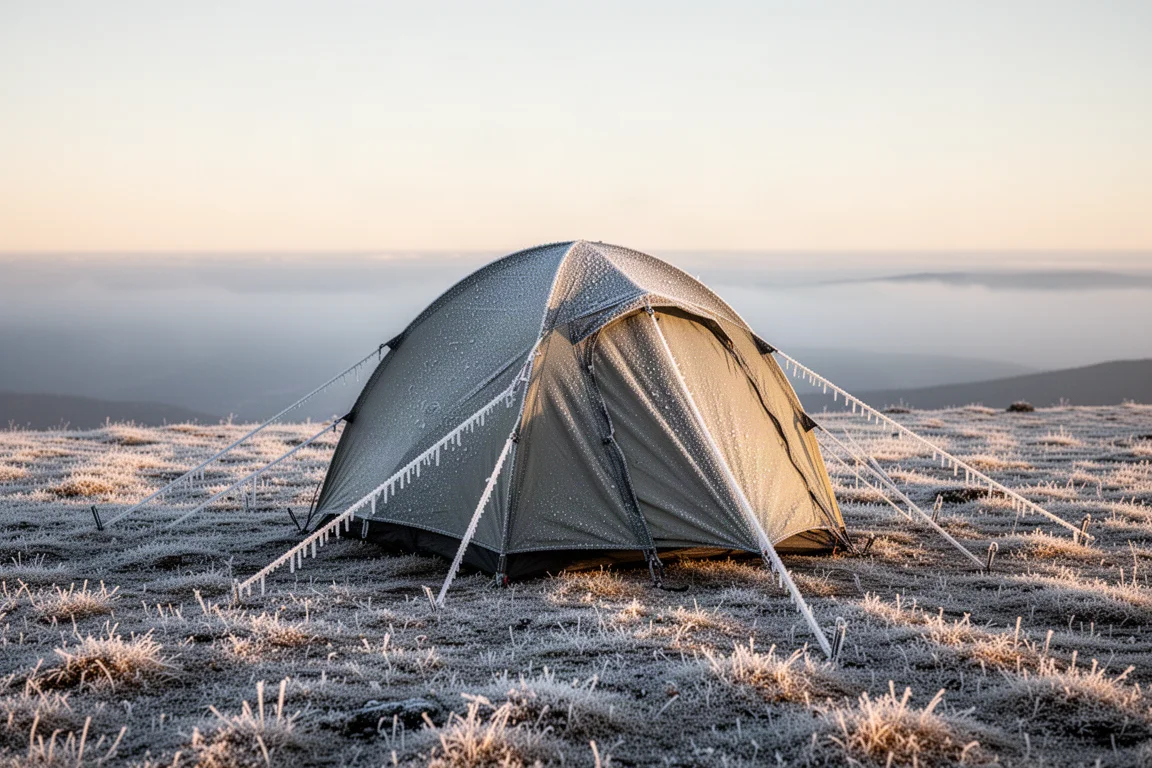
A practical way to decide is to match the tent to your coldest and wettest nights rather than your warmest ones. If those nights are cool and stormy, this shelter is in its element. If your calendar is full of hot, still summer weekends, the design will fight you every night.
Conclusion
The Naturehike Cloud Up 2 Pro gets the hard parts right. It is exceptionally well made for the money, it keeps water out in conditions that defeat far more expensive shelters, and it pitches quickly thanks to colour coding and a simple pole set. It also runs hot, fits one person rather than two, and drips into the interior when the fly is opened in rain. Read it as a cool-weather solo shelter with premium rain protection at a modest price, and it makes a lot of sense.
Product link
View more details for Naturehike Cloud Up 2 Pro
This product is mentioned in the review. Check the specifications, options, and compatibility before buying.
View more details for Naturehike Cloud Up 2 ProFurther reading
Related Reviews
Camping Tents
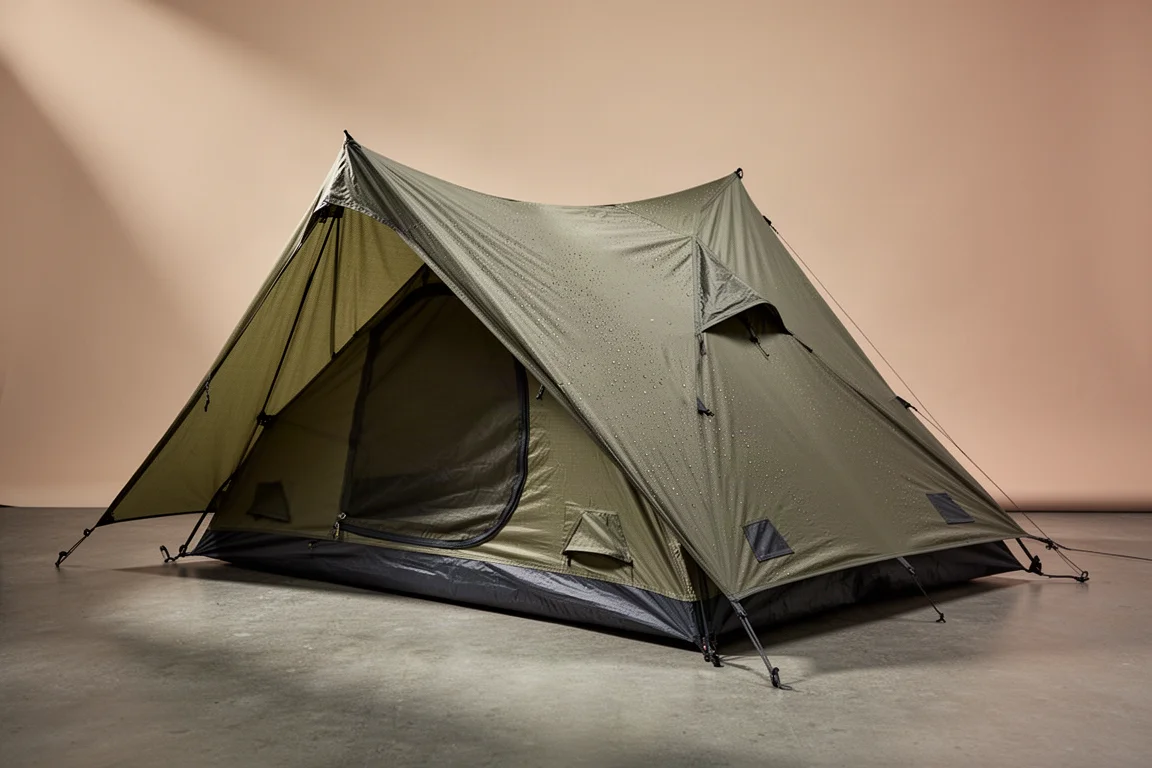
3F UL Gear Taiji Two-Person Tent Review: Field Waterproofing Results and Buying Advice
The Taiji pairs an attached fly with a removable inner, but sustained rain exposed untaped vent seams that need sealing before this shelter can be trusted.
Camping Tents
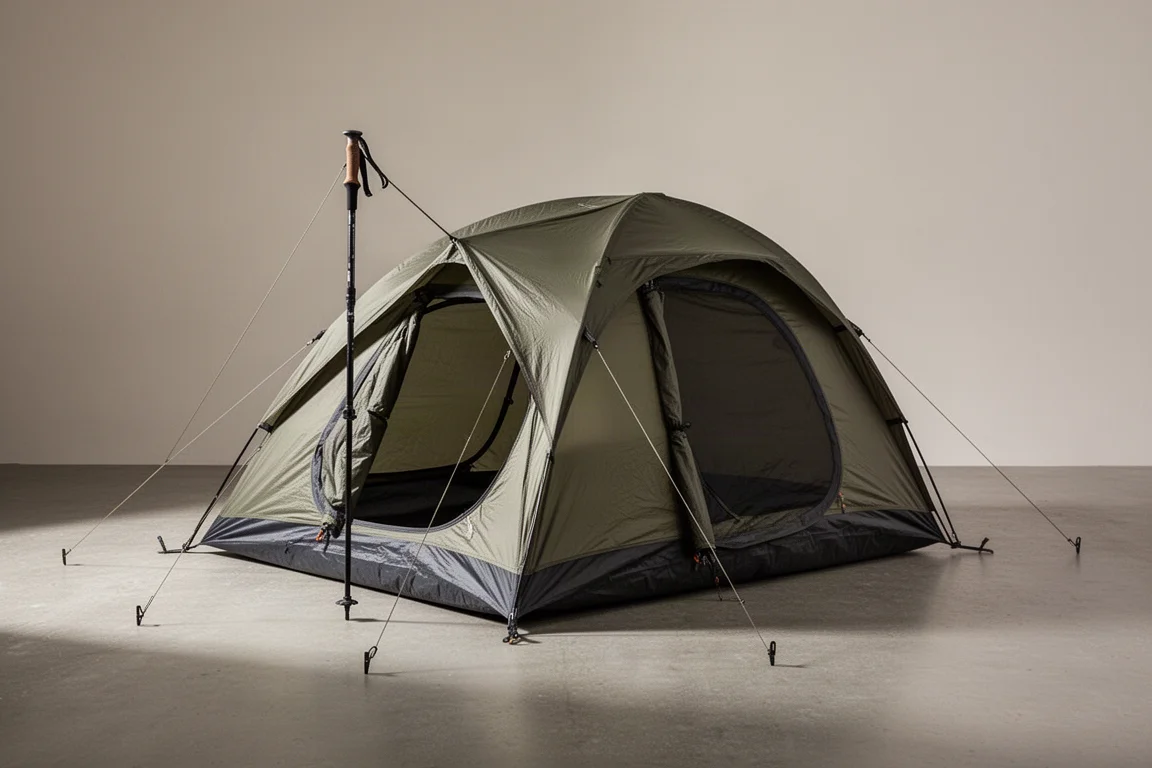
3FUL Gear Lanshan 2 Pro 4-Season Review: A Sub-$200 Single-Wall Trekking Pole Tent
An early look at the 3FUL Gear Lanshan 2 Pro 4-Season, covering its straightforward pitch, generous interior space, and the condensation and seam-sealing questions that come with any single-wall shelter.
Camping Tents
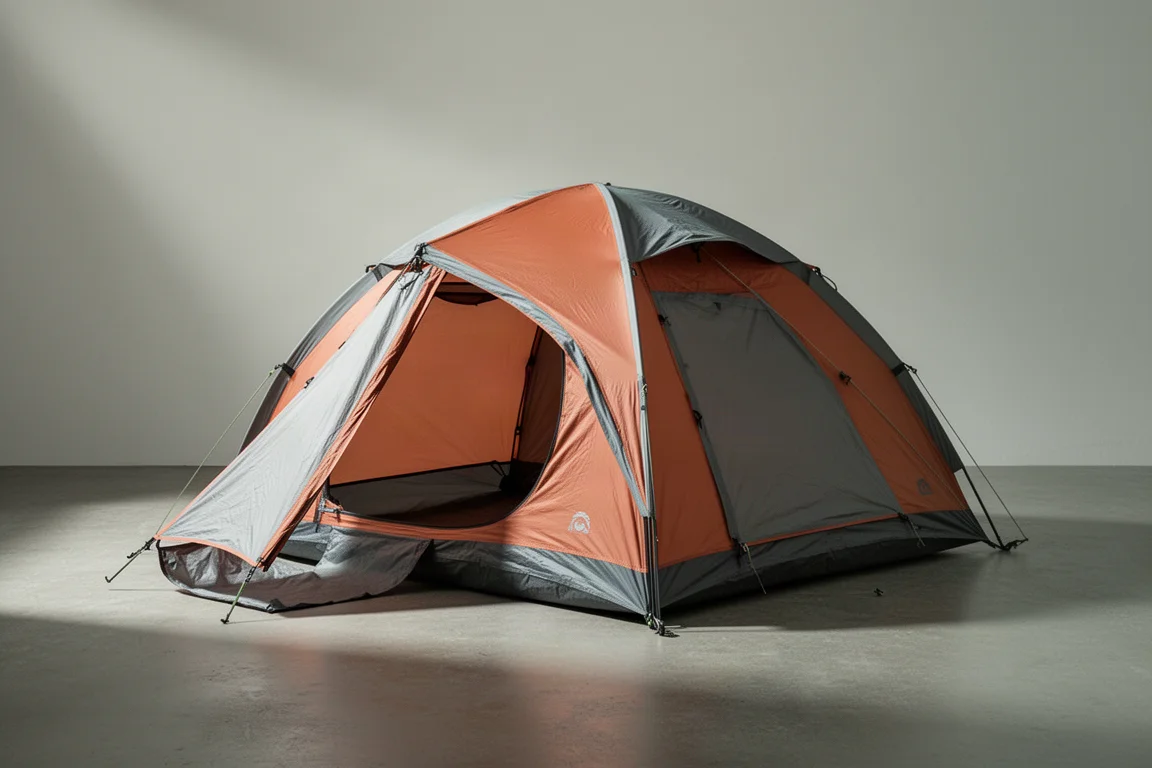
Alps Mountaineering Lynx 1-Person Tent Review: Big Value in a Small Budget Tent
A close look at the Alps Mountaineering Lynx 1-Person Tent, covering real interior dimensions, materials, setup time, ventilation limits, and who should buy it.