Camping Tents
Naturehike Canyon Tent Review: Instant Pop-Up Tents in One and Two Person Sizes
A practical look at the Naturehike Canyon instant pop-up tents, covering setup speed, interior space, ventilation, materials, pricing, and who each version suits.
Introduction
The Naturehike Canyon series takes the instant pop-up tent idea and makes it small. The 1-person version packs down to roughly 18 x 6 inches and weighs about 3.3 lb, which is unusual for a tent with a built-in frame. Most pop-up designs ask buyers to accept a bulky pack size in exchange for a fast pitch, and the Canyon is an attempt to avoid that trade.
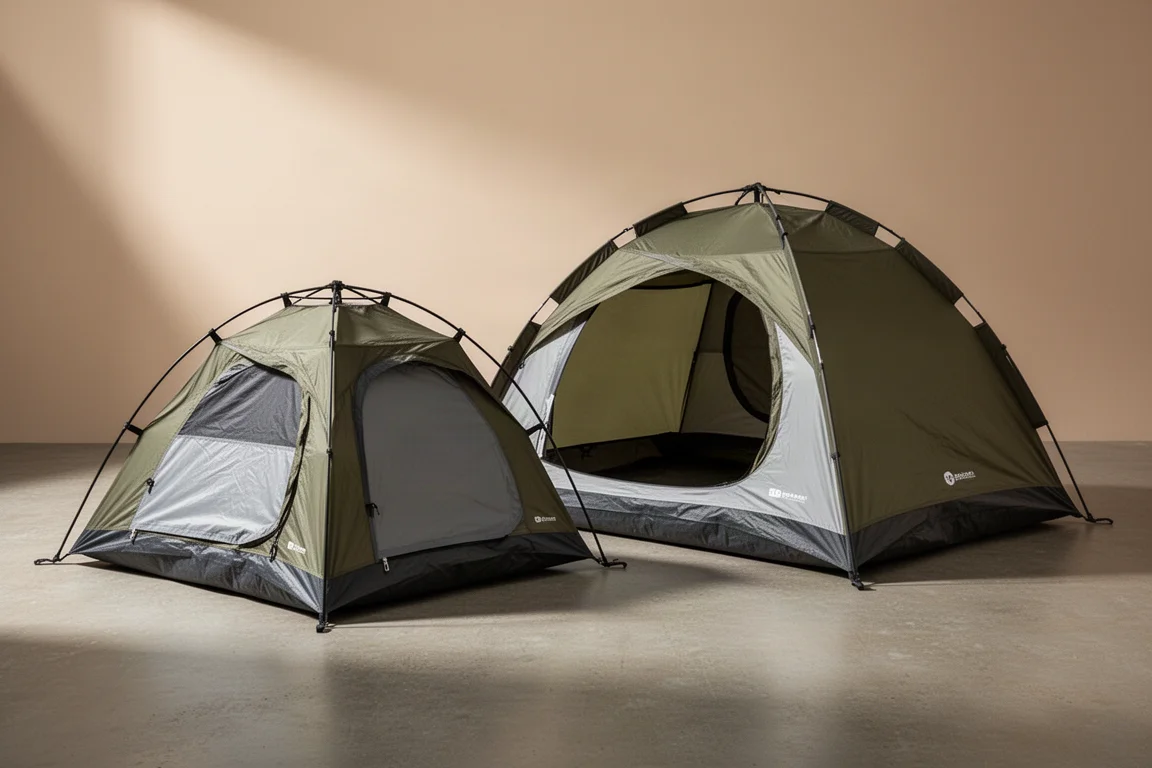
The series comes in two sizes. The 1-person Canyon has a single door, while the 2-person Canyon adds a second door and uses a different fabric set. Both rely on the same self-supporting frame and the same hub-based locking system.
This article covers how the Canyon tents set up, what they feel like from the inside, where the design works well, where it makes compromises, and how the two versions compare on price and availability.
What Comes in the Box
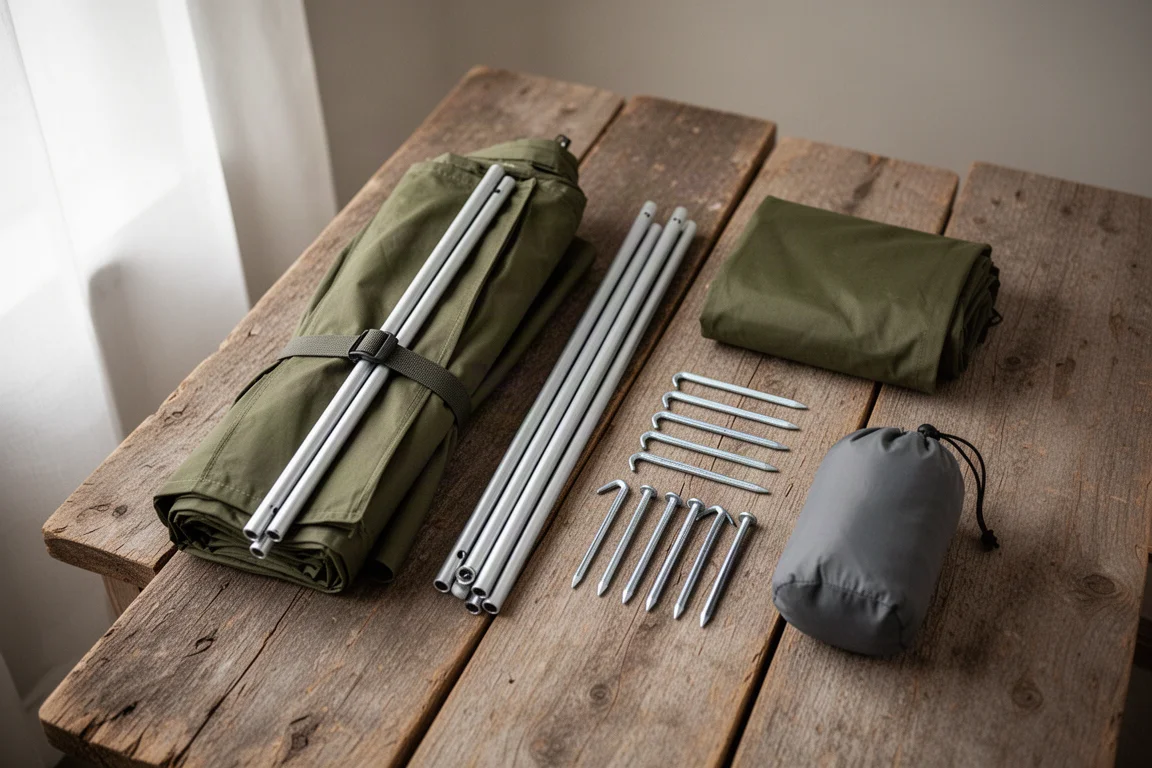
The Canyon ships in a burrito-style storage bag with a grab handle and a drawstring closure, plus an internal protective flap. Setup instructions are printed on the inside of the bag, so they stay with the tent rather than getting lost. A separate pouch holds seven tent stakes.
The package also includes seven extra-long stakeout cords. They are adjustable, which is a genuinely useful feature, but they are unusually long at roughly two feet each, which makes them awkward to handle during a quick pitch. The frame poles are interconnected with the tent body, so there is nothing to assemble before the tent goes up.
Naturehike Canyon 1-Person Tent: Setup, Space, and Interior
Setup follows a short sequence: unfold the tent, then pull the rope on both sides separately until the frame becomes self-supporting. The hubs lock the structure into place, and from there only staking out the doors remains. The whole process takes seconds rather than minutes.
Packed, the 1-person Canyon measures about 18 x 6 inches and weighs around 3.3 lb. Inside, it measures roughly 24 inches across and about 76 inches long, with a peak height near 37 inches. That length suits sleepers up to about 6 ft, and the peak height is enough to sit up and change clothes comfortably.
The inner mixes mesh and fabric over a bathtub floor. There is one pocket in the corner and one hook at the top for a lantern or light. The single door is large and easy to move through, with a storm flap over the zipper held by hook-and-loop strips, glow-in-the-dark zipper pulls, and fabric loops for rolling the door back. Two vents sit on either side of the tent, and the seams are taped.
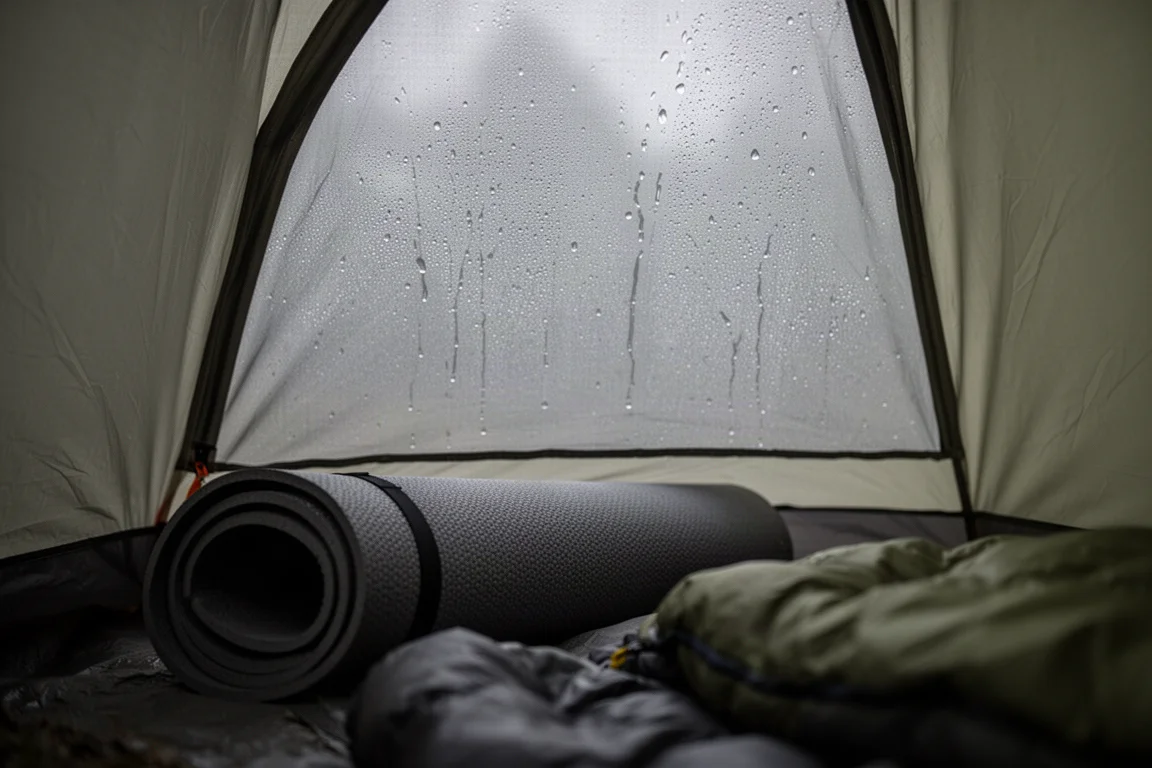
Width is the detail to check first. At about 24 inches across, the interior is narrow, and a broad-shouldered sleeper will feel both walls. Larger users may find the 1-person version too tight for a comfortable night.
Breaking the tent down is where the frame design stands out. Each hub has a rubberized bell-shaped pull and a small push button. Pull the cord through the hub until it locks to set up, then press the button to release it. It is one of the simplest pop-up mechanisms available, and it removes most of the fiddling that makes instant tents frustrating to pack away.
Canyon 1-Person Tent: Ventilation and Wind Performance
The 1-person Canyon uses fabric across most of the inner, with mesh only in places. That choice helps keep the cost down, but it also reduces airflow. With a breeze hitting one side of the tent, very little of it reaches the sleeping area, and the fabric holds body heat rather than releasing it.
In warm weather this becomes the tent’s main limitation. Pitched in shade at around 72 F with the door open, the interior still feels warm. For hot summer nights, a tent with substantially more mesh would be the better choice.
Wind performance is the second concern. There are no guyline attachment points on the upper body, so the top of the tent cannot be anchored. Staking out the front door adds some support, but the upper structure has nothing holding it down. The stakeout points that do exist sit low around the bottom of the tent, and their length makes them awkward to manage. Adjustable stakeout points are a good idea in principle, but two-foot cords are hard to justify on a tent this compact.
Naturehike Canyon 2-Person Tent: Bigger, Heavier, Different Materials
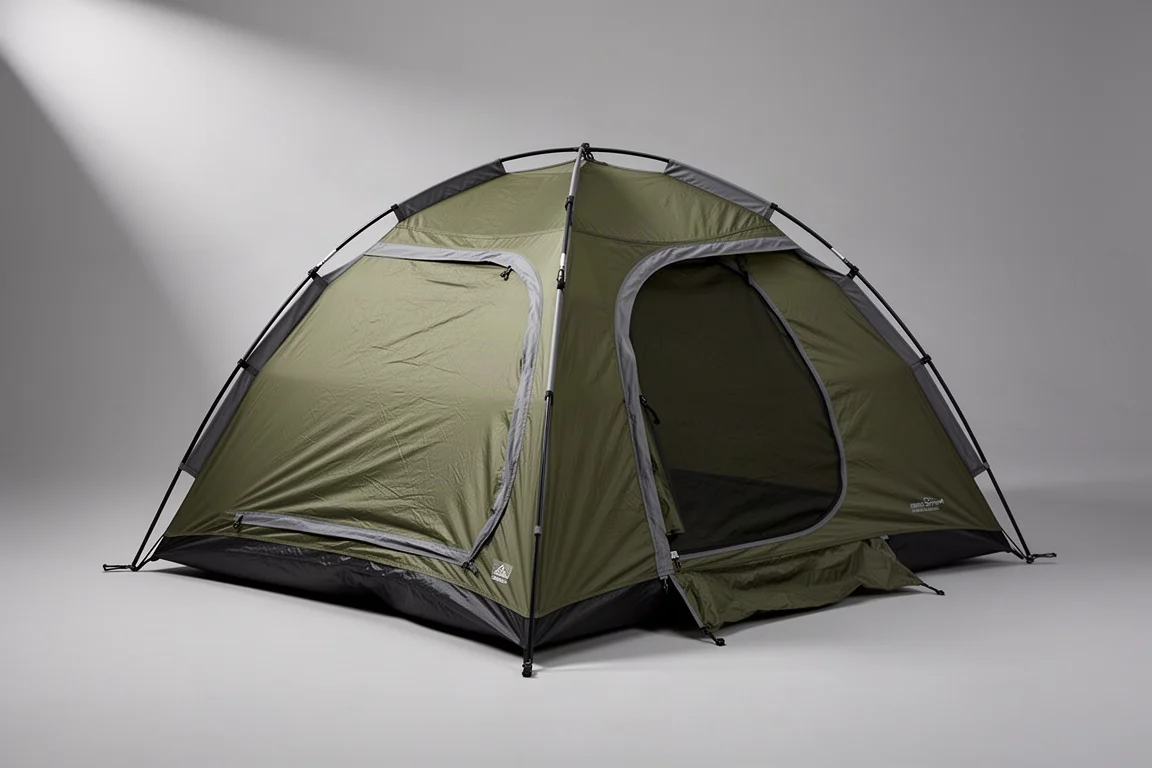
The 2-person Canyon shares the frame concept but not the fabric set. Its fly is a 210T ripstop polyester, and the floor is 190T polyester, both heavier materials than the silicone-treated nylon used on the 1-person version. Poles are fiberglass and stakes are aluminum, matching the smaller tent.
It adds a second door, which makes entry and exit easier for two occupants, and it packs to about 23.5 x 8 inches. The weight is the headline number: around 7.2 lb. For backpacking that is a lot to carry, and it places the tent closer to car camping and short walks than to long-distance trips.
Interior ventilation follows the same approach as the 1-person version, with fabric panels covering much of the inner. That keeps the price down but limits airflow in the same way, so warm-weather comfort remains a consideration for anyone sleeping two people inside.
Both Canyon tents are designed to be used on the ground or on a cot, which gives campers some flexibility in how they pitch them at a site.
Materials and Weather Protection
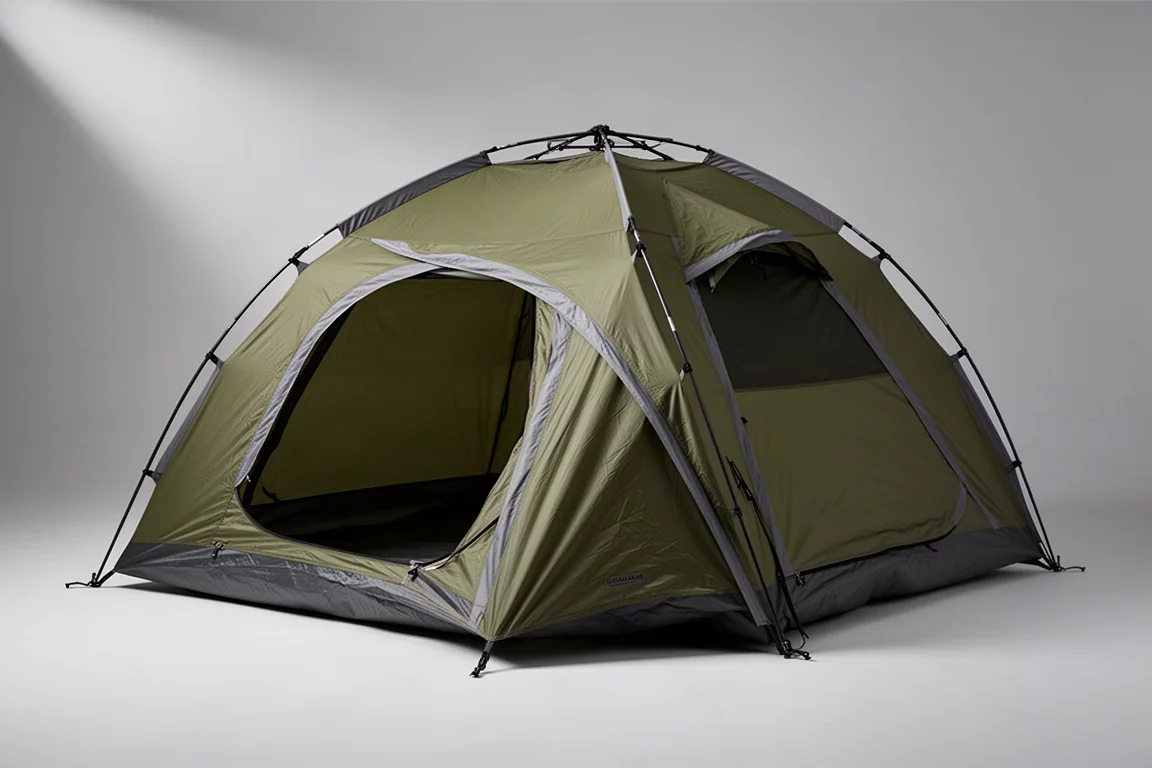
The 1-person Canyon uses a silicone-treated 20D ripstop nylon fly and a 70D nylon floor. The 2-person version switches to a 210T ripstop polyester fly and a 190T polyester floor. Both tents carry a 2,000 mm waterproof rating, and the 1-person version has taped seams throughout.
Frame hardware is shared across the series: fiberglass poles and aluminum stakes. The interconnected pole structure is what makes the instant pitch possible, and it also keeps the packed shape small enough to fit in the 18 x 6 inch and 23.5 x 8 inch stuff sacks.
Build quality on the 1-person version is a strong point. The stitching is clean, there are no loose threads, and the fabric panels and floor are neatly finished. On construction alone, the Canyon looks like a well-made tent.
Pricing, Availability, and Buying Advice
Pricing and availability differ between the two versions. The 1-person Canyon is not listed on Amazon or on the brand’s own site, and it appears on AliExpress at around $155. The 2-person Canyon is available on Amazon at around $160 and on the brand site at around $190.
Availability across the wider Naturehike range shifts between retailers, so stock for a specific model can move between marketplaces without much warning. Checking more than one source before committing is worthwhile, and the 1-person version in particular takes some tracking down.
On value, the two versions sit close together at roughly $155 and $160, which makes the smaller tent the harder of the two to justify on price alone. Buyers who want a compact, quick-pitching tent for solo trips in mild conditions will get the most from the 1-person Canyon, provided they are comfortable with a narrow interior and do not need strong summer airflow. Buyers who need two doors and mostly camp near a vehicle can look at the 2-person version, as long as they accept the 7.2 lb weight and the polyester materials that come with it.
Conclusion
The Canyon series gets the pitch right. The hub system sets up and breaks down faster and more cleanly than most instant tents, and the 1-person version packs small and light enough to carry without a second thought. The compromises live in the inner: too much fabric for hot weather, no upper guyline points for windy nights, and a narrow interior in the smaller model. Campers who pitch in mild conditions and want the fastest possible setup will get along well with these tents. Anyone chasing summer airflow, or backpacking-friendly weight for two people, should weigh those trade-offs carefully before buying.
Further reading
Related Reviews
Camping Tents
3F UL Gear Taiji Two-Person Tent Review: Field Waterproofing Results and Buying Advice
The Taiji pairs an attached fly with a removable inner, but sustained rain exposed untaped vent seams that need sealing before this shelter can be trusted.
Camping Tents
3FUL Gear Lanshan 2 Pro 4-Season Review: A Sub-$200 Single-Wall Trekking Pole Tent
An early look at the 3FUL Gear Lanshan 2 Pro 4-Season, covering its straightforward pitch, generous interior space, and the condensation and seam-sealing questions that come with any single-wall shelter.
Camping Tents
Alps Mountaineering Lynx 1-Person Tent Review: Big Value in a Small Budget Tent
A close look at the Alps Mountaineering Lynx 1-Person Tent, covering real interior dimensions, materials, setup time, ventilation limits, and who should buy it.