Camping Tents
Naturehike Canyon Tent Preview: 1-Person and 2-Person Versions Compared
A close look at the Naturehike Canyon instant pop-up tents, covering setup, packed size, materials, ventilation, and which version makes sense.
Introduction
Instant tents usually solve one problem and create another. They go up in seconds, but they often pack large and weigh more than a comparable pole tent. The Naturehike Canyon series is interesting because it goes the other way. The one-person version packs down to roughly 18 by 6 inches, weighs about 3.3 pounds, and still uses a framed instant hub system rather than a bundle of separate poles.
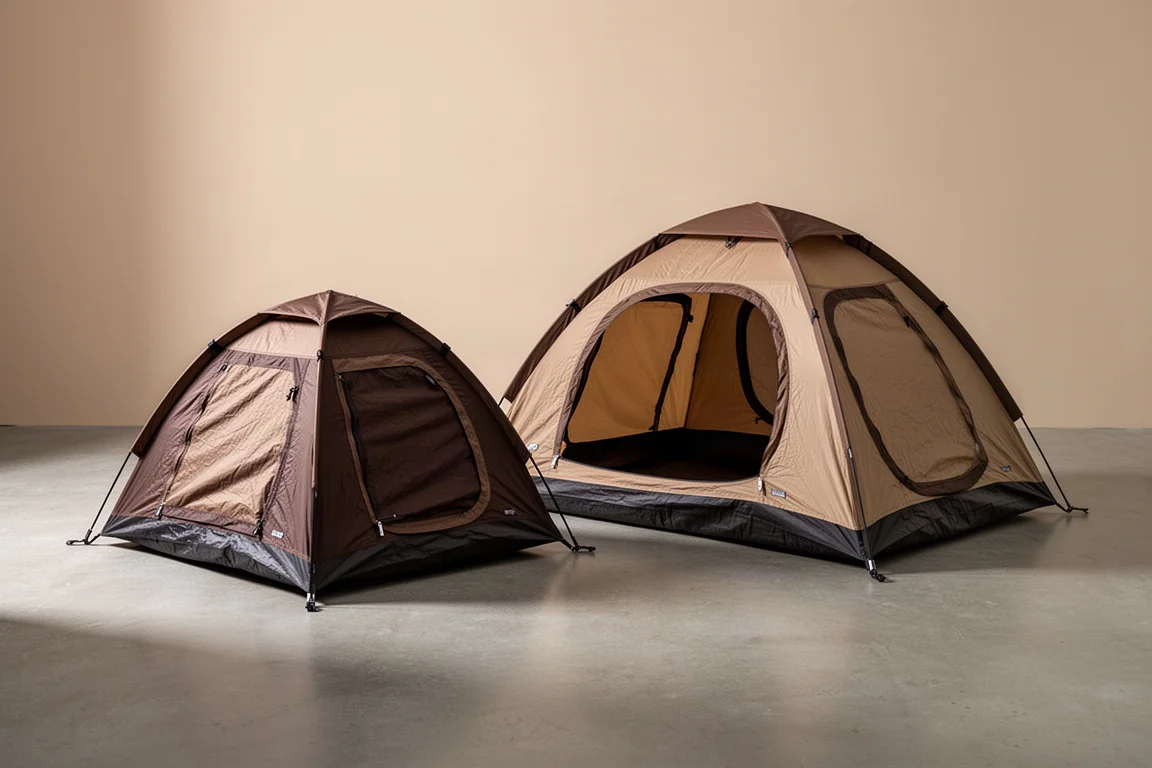
This preview looks at both versions of the Canyon: the one-person model and the heavier two-person model. They share a name, a waterproof rating, and the same pop-up architecture, but they differ in almost everything else, including doors, fabrics, packed size, and weight.
What the Canyon Series Brings to the Trail
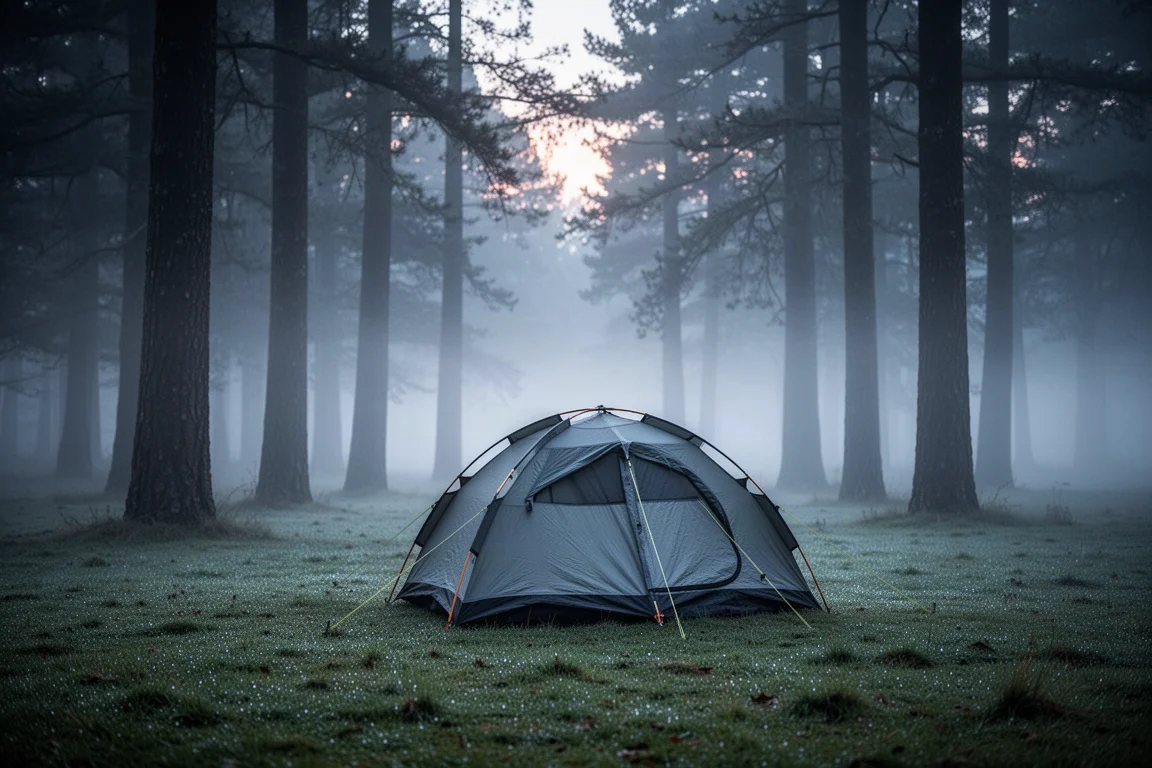
Both tents are built around a hub-based instant frame. Fiberglass poles stay connected to the tent body, so setup is a matter of unfolding the tent, pulling the cord on each side to make it self-supporting, and staking it out. The manufacturer lists a 2,000 mm waterproof rating for both versions, and the seams are taped. Aluminum stakes come in the box.
The Canyon tents are also designed to be used either on the ground or on a cot, which gives them a little more flexibility than a floor-only backpacking shelter.
The trade-off for that convenience is weight distribution. The one-person version stays reasonably light, while the two-person version is a much heavier proposition. That gap shapes almost every buying decision between the two.
Naturehike Canyon 1-Person Tent: Light, Compact, Instant Setup
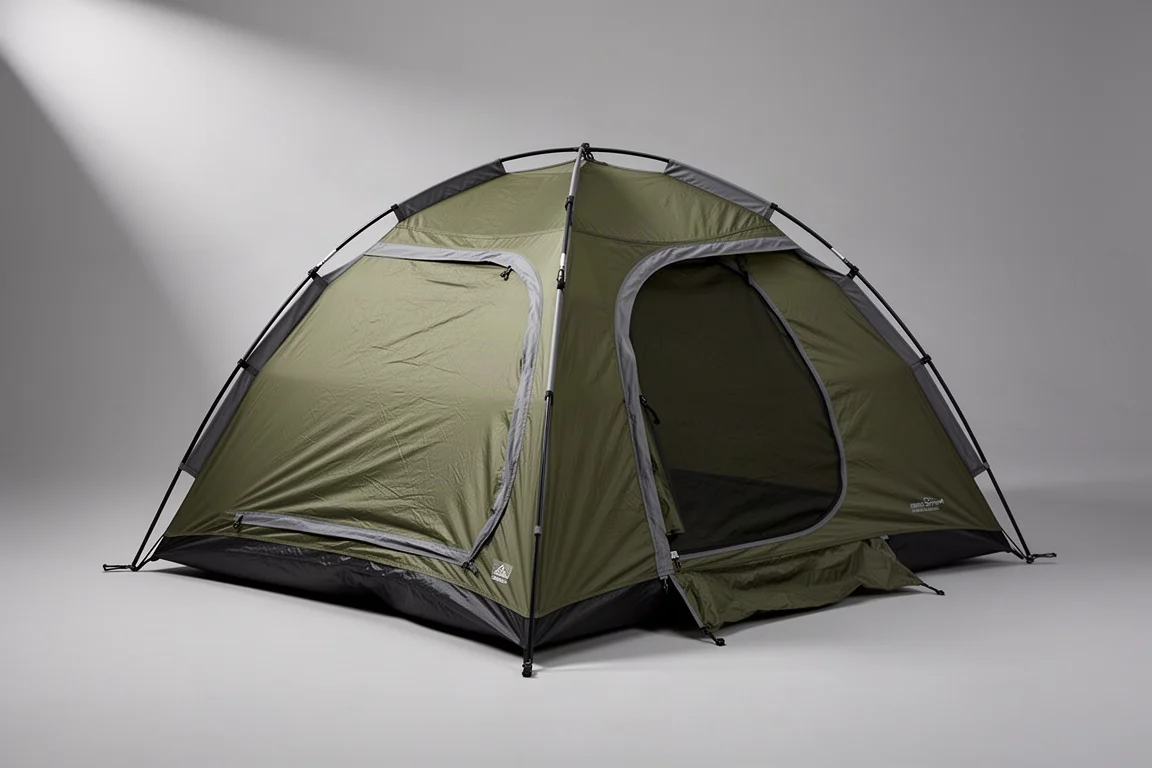
The one-person Canyon is the more convincing of the two on paper. It weighs about 3.3 pounds, packs to roughly 18 by 6 inches, and carries a single door with a storm flap over the zipper, held in place with hook-and-loop tape. The zipper pulls glow in the dark, and each panel of the door can be staked out or rolled back and tied off with the two fabric loops.
The fly is a silicone-treated 20D ripstop nylon, and the floor is a 70D nylon. Inside, the floor is a bathtub design with a mix of mesh and fabric above it. There is one corner pocket and one hanging hook at the top. Measured interior dimensions come in around 24 inches wide, 76 inches long, and 37 inches at the peak, which suggests comfort for users up to roughly six feet tall. Width is the real constraint. With about two feet of interior width, broader users will find both shoulders close to the walls.
Naturehike Canyon 2-Person Tent: More Room, More Weight
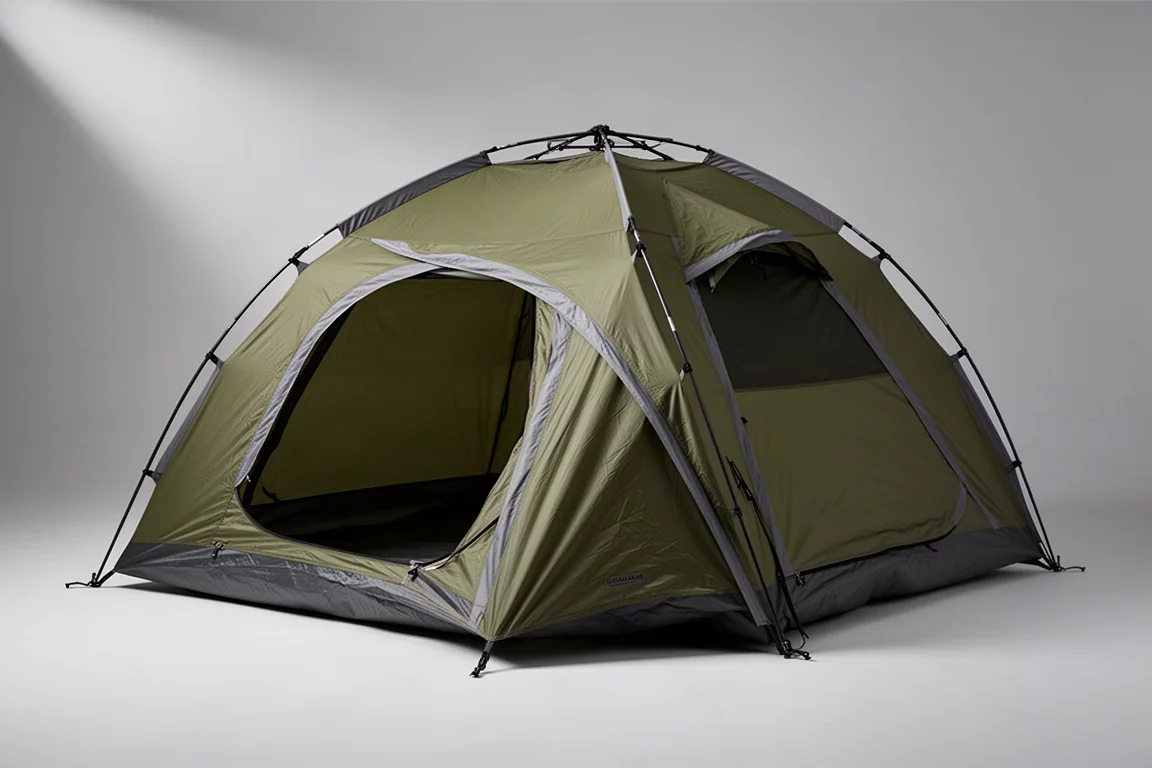
The two-person Canyon uses a different material set. The fly is a 210T ripstop polyester and the floor is a 190T polyester, both heavier fabrics than the one-person version. It adds a second door, which is a genuine benefit for two occupants, and packs to about 23.5 by 8 inches. The weight, however, comes in around 7.2 pounds.
That is a lot for a two-person shelter that would normally be carried on a backpacking trip. The fabric choices and the fiberglass frame appear to be cost-driven, and the extra weight is the most visible result.
Setup and Packed Size in Practice
The hub system is the standout feature. Each hub has a rubberized, bell-shaped pull with a cord running through it. Pull the cord until the mechanism comes through the opening and locks, and the tent is standing. Breaking it down is just as direct: a small push releases the lock and the frame collapses.
The storage bag is a burrito-style roll with a drawcord closure, a grab handle at the top, and a protective flap on the inside. Setup instructions are printed inside the bag, and a small pouch holds seven tent stakes. The one-person version also ships with seven stakeout cords, which is where the design gets unusual.
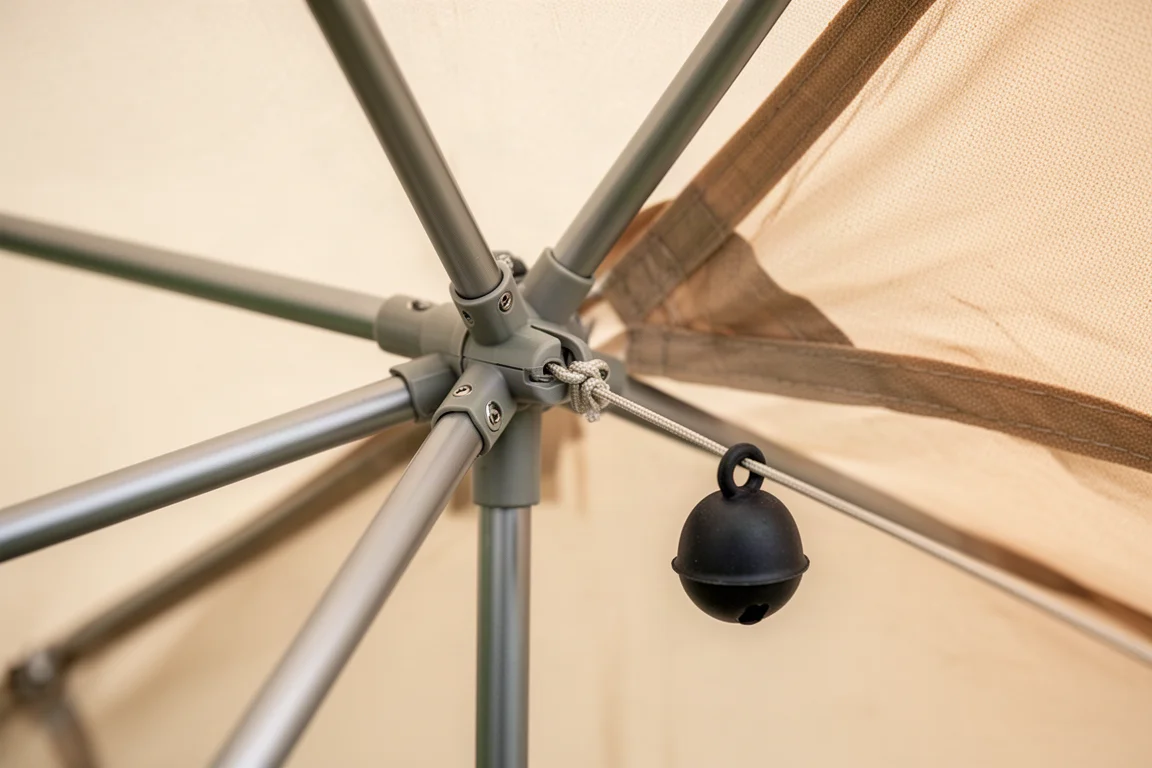
Those cords attach at the bottom of the tent rather than higher up on the body, and they are adjustable but extremely long, roughly two feet each. Adjustability is welcome, but the length and the placement are hard to justify in normal use.
Ventilation and Warm-Weather Comfort
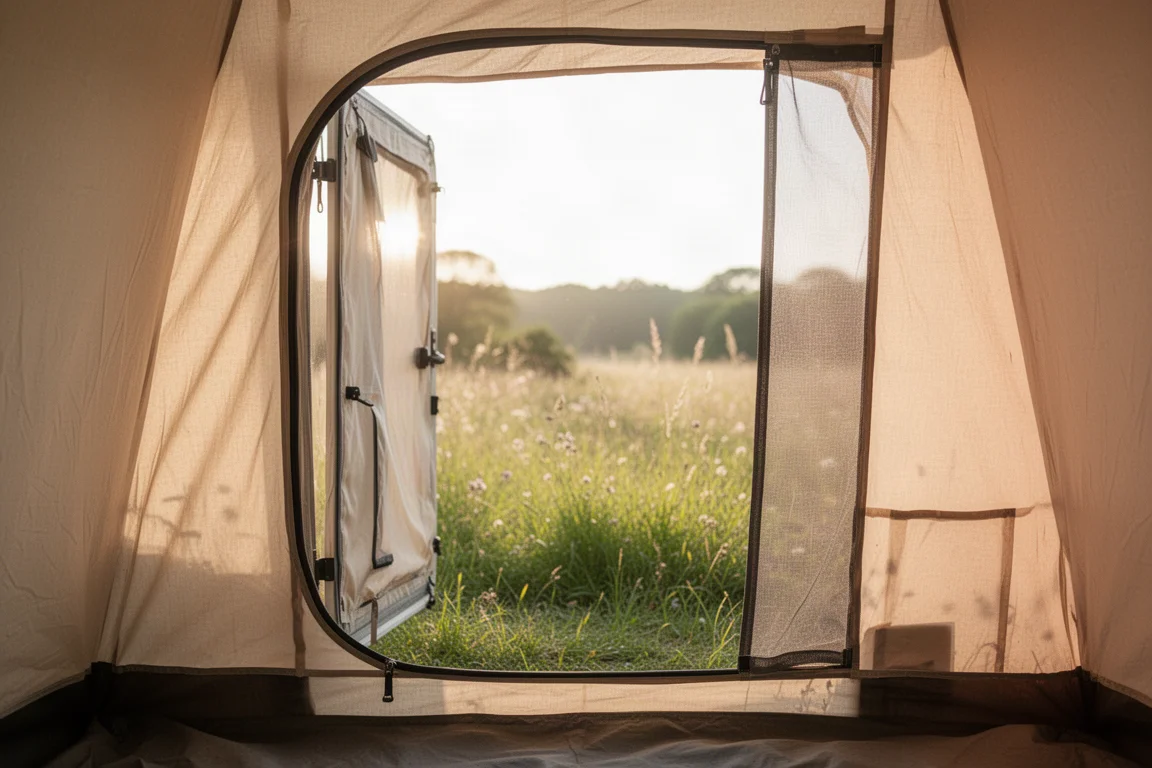
This is the biggest concern with both tents. The inner is mostly fabric with only partial mesh, and the two side vents are fixed open with no way to close them. Because so much of the body is solid fabric, airflow through the tent is limited, and heat from the occupant has nowhere to escape.
In warm conditions that combination works against comfort. The one-person version was pitched in shade at around 72 degrees with a breeze, and the interior still felt noticeably warm even with the door open. For hot summer nights, a shelter with more mesh and better cross-ventilation would be a better choice. The fabric also adds a cost saving compared with mesh, which helps explain the price but does limit where these tents are pleasant to use.
A related issue is wind stability. The stakeout points sit around the lower edge of the tent, and there are no attachment points higher up on the body. In exposed or windy conditions there is little to anchor the upper structure beyond staking out the door.
Weather Protection and Build Quality
The 2,000 mm waterproof rating and the taped seams are the reassuring parts of the specification sheet. The hubs are the area most worth watching in wet weather, since every pole joint is a potential entry point for water. Build quality itself looks solid. Stitching is clean, with no loose threads visible on the one-person sample, and the door hardware, including the storm flap and the glow-in-the-dark pulls, is neatly finished.
Who Each Tent Suits
The one-person Canyon suits solo campers who value a fast pitch and a small packed size, and who fit comfortably within its roughly two-foot interior width. Its ventilation limits make it a better match for shoulder-season and cooler nights than for the height of summer.
The two-person Canyon makes more sense for trips where the tent is not carried far, since 7.2 pounds is heavy for two people to haul. Two doors and a roomier interior are real advantages, but the weight and the fabric-heavy construction are the trade-offs.
Buying Advice: Which Canyon Tent Fits Your Trip
Availability is the other thing to plan around. The one-person Canyon is not listed on Amazon or on the brand’s own site, and the price found for it was $155 through AliExpress. The two-person version is listed on Amazon at around $160 and on the brand’s site at about $190. Pricing the one-person tent at only a few dollars less than the two-person version is a strange gap, and it makes the smaller tent harder to justify on value alone.
If you want the lightest, most packable option and you sleep solo, the one-person version is the one to look at. If you need two doors and more interior room, and you are not carrying the tent long distances, the two-person version covers that ground, provided you accept the weight.
Conclusion
The Canyon series gets the hard part right. The instant hub system is quick, intuitive, and easy to break down, and the one-person version packs small and light enough for real use. The compromises sit in the inner tent: fabric where mesh would breathe better, no upper attachment points for wind, and unusually long stakeout cords at the base. Buyers who understand those limits and match the tent to cool-weather, low-wind trips will get the most out of it.
Further reading
Related Reviews
Camping Tents
3F UL Gear Taiji Two-Person Tent Review: Field Waterproofing Results and Buying Advice
The Taiji pairs an attached fly with a removable inner, but sustained rain exposed untaped vent seams that need sealing before this shelter can be trusted.
Camping Tents
3FUL Gear Lanshan 2 Pro 4-Season Review: A Sub-$200 Single-Wall Trekking Pole Tent
An early look at the 3FUL Gear Lanshan 2 Pro 4-Season, covering its straightforward pitch, generous interior space, and the condensation and seam-sealing questions that come with any single-wall shelter.
Camping Tents
Alps Mountaineering Lynx 1-Person Tent Review: Big Value in a Small Budget Tent
A close look at the Alps Mountaineering Lynx 1-Person Tent, covering real interior dimensions, materials, setup time, ventilation limits, and who should buy it.