Camping Tents
Naturehike Canyon Instant Tent Review: 1-Person and 2-Person Compared
A close look at the Naturehike Canyon instant pop-up tents, covering the standout hub setup, packed sizes, ventilation trade-offs, and who each version suits.
Introduction
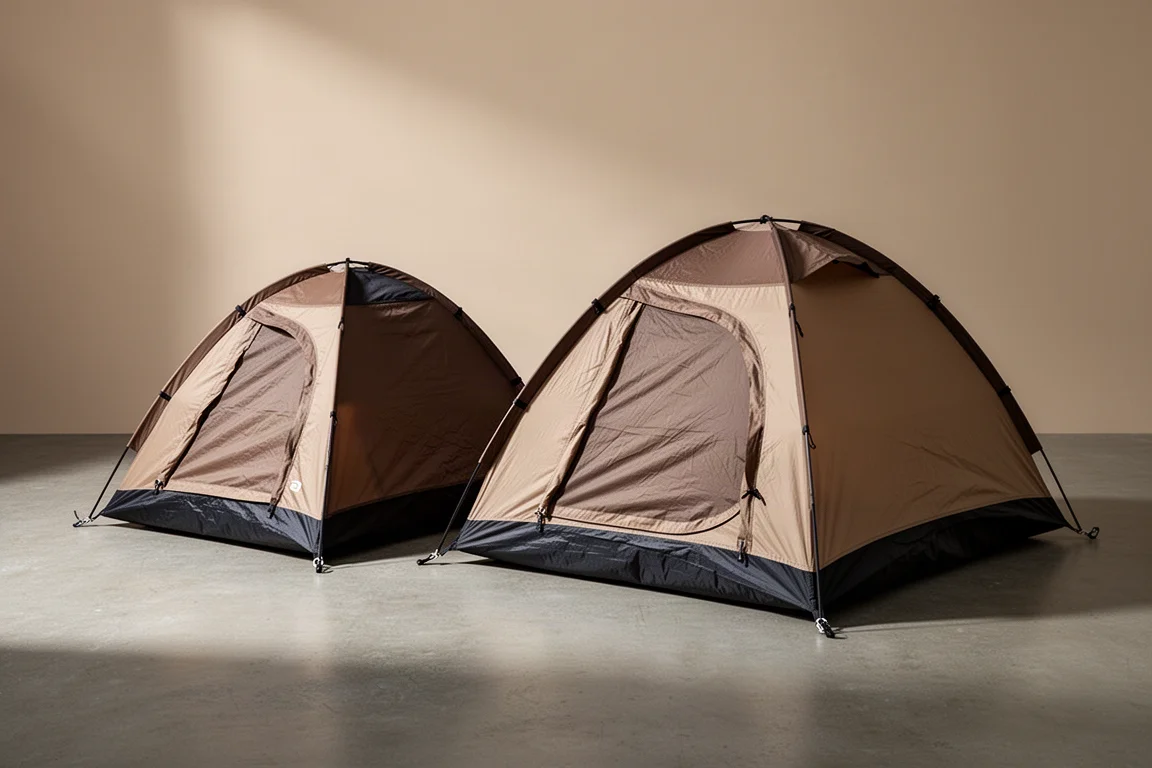
The Naturehike Canyon series takes one of the more appealing ideas in camping gear, the instant pop-up tent, and shrinks it down to a genuinely packable size. The one-person Canyon weighs about 3.3 lb and packs to roughly 18 by 6 inches, which is unusually small for a shelter that springs into shape in seconds. A two-person version is also available, and it takes a noticeably different approach to materials and weight.
Both tents share a hub-based frame that pitches and breaks down faster than almost anything else in the category. Both also share a design decision that matters more than the spec sheet suggests: the inner tent is mostly fabric rather than mesh, which keeps the cost down but limits airflow.
This guide covers what each version does well, where the trade-offs show up, and which campers are likely to be happy with either one.
What the Canyon Series Shares
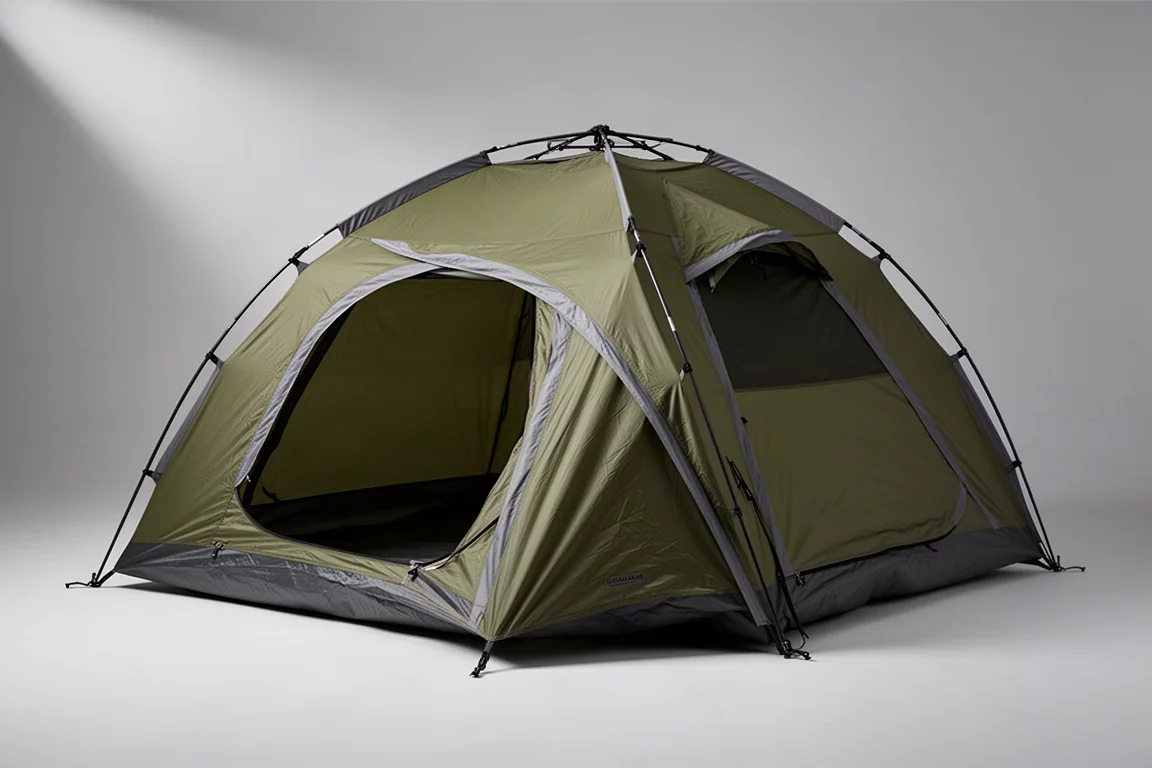
Both Canyon tents are built around the same instant-pitch idea. You take the tent out of its bag, unfold it, and pull the cord on each side separately. The frame becomes self-supporting, and from there all you have to do is stake out the base and the door panels.
The hub is the clever part. Each hub has a rubberized bell-shaped pull with a cord running through it. Pull until the mechanism comes through the opening and locks, and the tent is standing. To break it down, press the small release and the frame collapses. In practice the whole cycle takes somewhere around ten to fifteen seconds, which is quicker than most pop-up designs and far quicker than threading a conventional pole set.
Shared details across the series include fiberglass poles, aluminum stakes, taped seams, and a 2,000 mm waterproof rating on both versions. Zipper pulls are glow in the dark, and both tents are designed to be used on the ground or on a cot.
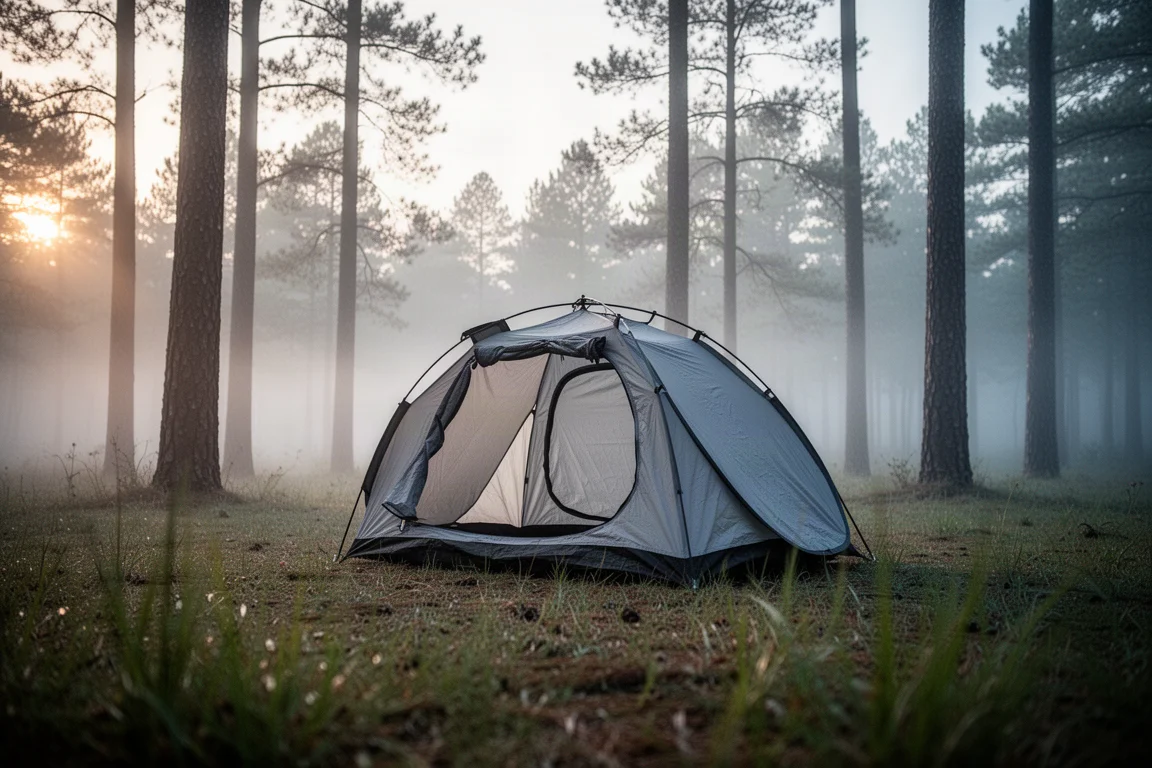
The side vents are fixed open, and there is no way to close them.
Canyon 1-Person: Setup and Packed Size
The one-person Canyon ships in a burrito-style storage bag with a grab handle and a drawstring closure, plus a protective flap on the inside. Setup instructions are printed inside the bag, and a separate pouch holds seven tent stakes. A compression strap keeps the packed tent tidy.
At roughly 3.3 lb and 18 by 6 inches packed, this is light and small rather than ultralight. For a tent with a pre-built frame, that combination is the main selling point. It slides into a pack or a small car boot without a fight, and it is ready to sleep in almost immediately after you arrive at camp.
Breaking it down is just as quick as putting it up. The release is a small push point on the hub, and once you find it the frame folds predictably every time.
Canyon 1-Person: Interior Space and Ventilation
Inside, the one-person Canyon measures roughly 24 inches wide and 76 inches long, with a peak height near 37 inches. The floor is a bathtub design, and the upper body mixes mesh with fabric. There is a single pocket in one corner and a hook at the top for a small lantern or light.
The measurements tell an honest story. A camper up to about six feet will fit, but the width is tight. Anyone with broad shoulders will find one shoulder against each wall, so larger campers should look elsewhere.
The door is the highlight of the interior. It is large, easy to get in and out of, and tall enough to sit up and change clothes. Two fabric loops let you roll the door back and tie it out of the way.
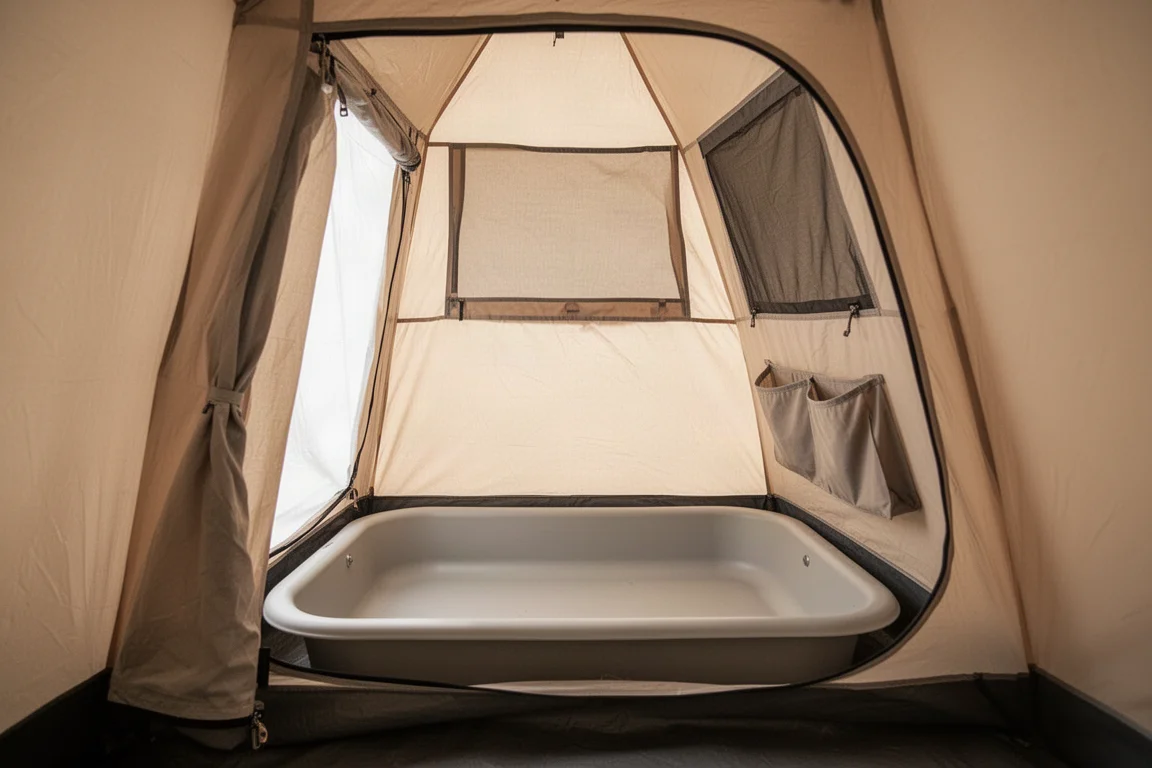
Ventilation is where the design gives ground. Most of the upper tent is fabric with only a small mesh section, and the two side vents cannot be closed. That combination traps body heat and blocks breezes. In warm weather the interior stays noticeably warmer than the outside air, even with the door open, so this is not a tent to rely on for hot summer nights.
Canyon 2-Person: Two Doors, More Weight
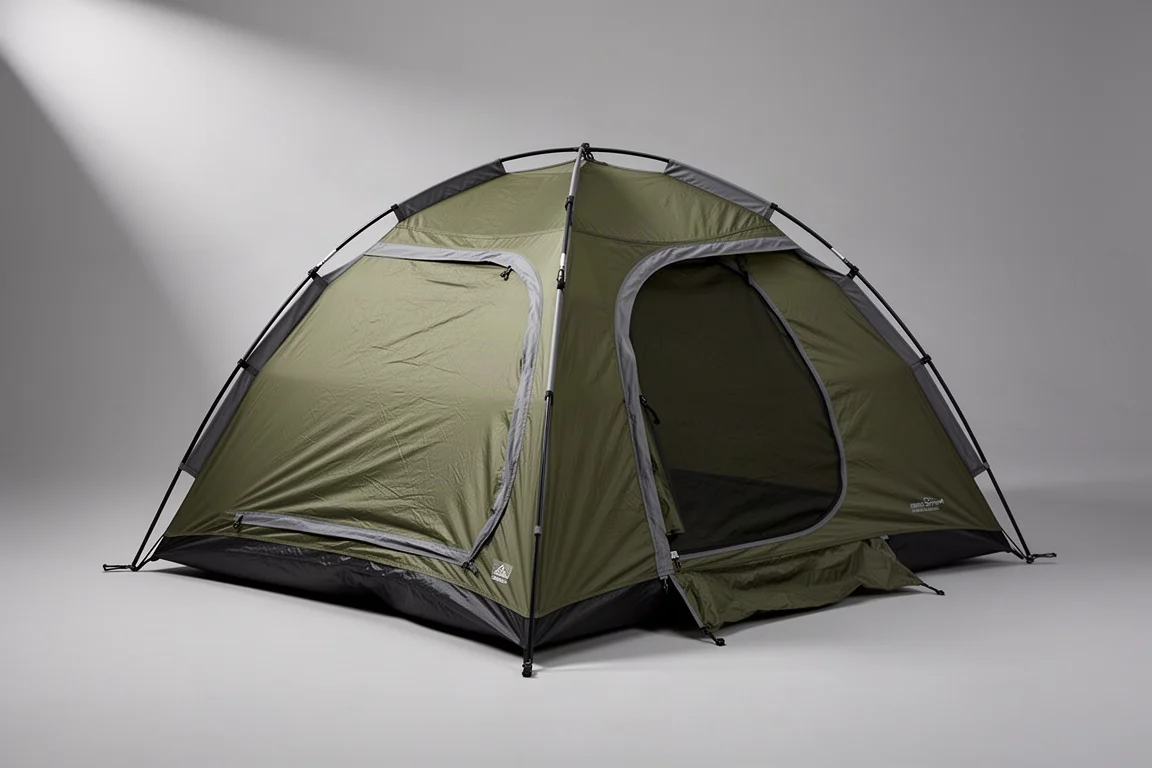
The two-person Canyon keeps the instant-pitch frame and adds a second door. It also changes materials: a 210T ripstop polyester fly and a 190T polyester floor, both heavier than the nylon used on the one-person version.
The trade-off is weight. At about 7.2 lb and 23.5 by 8 inches packed, this version is a car camping or cot tent far more than a backpacking one. Two doors and a wider footprint are genuinely useful, but the packed weight is heavy for a shelter that has to be carried any distance.
Materials, Seams, and Weather Protection
The one-person Canyon uses a silicone-treated 20D ripstop nylon fly and a 70D nylon floor. The two-person version steps up to the polyester fabrics noted above. Both carry a 2,000 mm waterproof rating, and every seam is taped.
Construction quality is a strong point on both tents. Stitching is clean and there are no loose threads to speak of.
The open question is water behaviour at the hubs. The frame entry points are the obvious place for water to work its way in, and the seams and coatings around those points are what matter most in sustained rain.
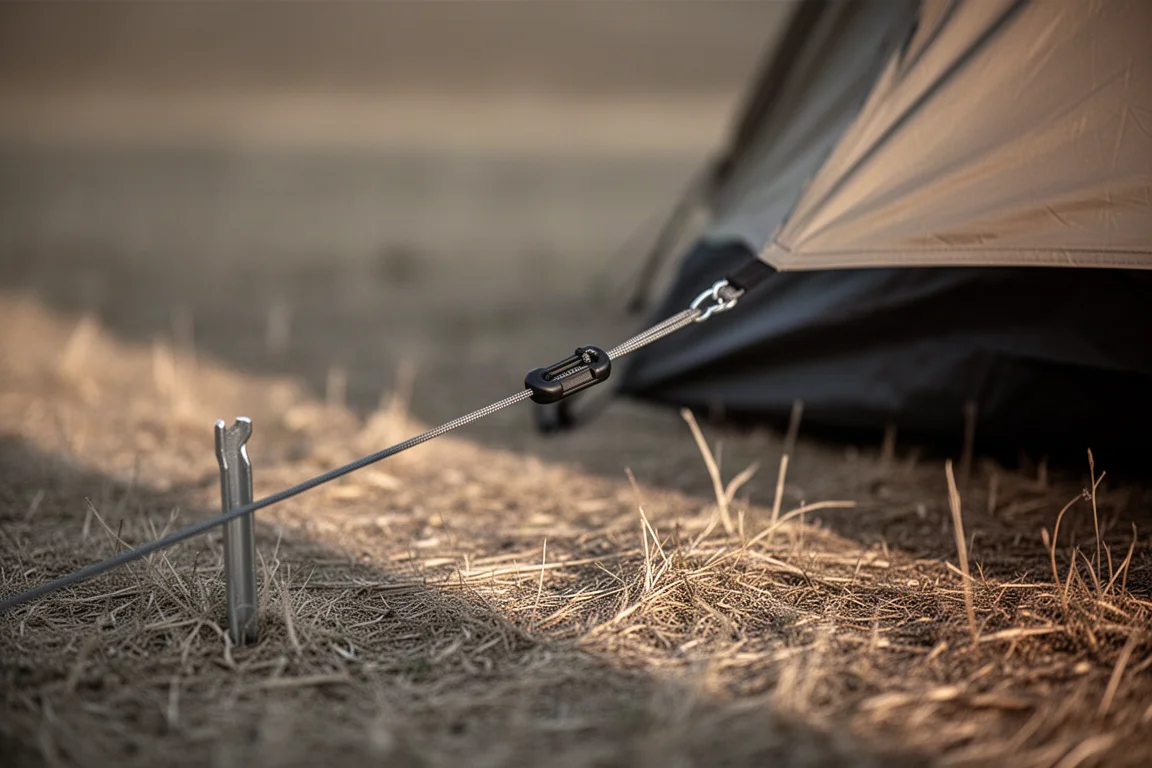
Pitching hardware is where the design gets strange. All of the guyline and stakeout points sit at the bottom of the tent rather than at the top, and the cords are unusually long at around two feet, with adjustable tensioners. Adjustable cords are welcome, but the length is awkward to manage. More importantly, there are no upper attachment points, so the walls rest against the inner tent and the top cannot be pulled out and anchored in wind. On an exposed pitch, that is a real limitation.
Pricing and Availability
The one-person Canyon is not listed on Amazon or on the brand’s own website. It has been seen on AliExpress at about $155. The two-person version is easier to find, at about $160 on Amazon and about $190 on the brand’s website.
Availability across the range is genuinely hard to follow. Products from this brand turn up in different places at different times, and stock shifts between retailers without much pattern. If you want one specific version, it is worth checking more than one source before committing.
Overall Buying Advice
Buy the one-person Canyon if fast pitching matters more than ventilation. It suits solo campers who want a compact, lightweight shelter for spring, autumn, and mild summer nights, and who fit comfortably within its 24-inch width. Campers over six feet or with broad shoulders should treat the width as a dealbreaker rather than an inconvenience.
Buy the two-person version if you mostly camp near a vehicle or sleep on a cot. Two doors and more interior room are real benefits, but 7.2 lb is a lot to carry on foot, and the polyester fabrics add bulk as well as weight.
For either tent, plan around the airflow limits. Pitch in shade when you can, leave the door open in mild conditions, and do not expect the fabric-heavy inner to shed heat the way a mesh tent does. If warm-weather comfort is your priority, this series is not the right match.
Conclusion
The Canyon series gets the hard part right. The hub-based instant setup is quick, intuitive, and just as easy to break down, and the packed sizes are small enough to make these tents genuinely convenient. Build quality holds up as well, with clean stitching and no obvious defects.
The compromises are clear and worth taking seriously. A fabric-heavy inner limits ventilation and warmth management, the guyline layout leaves the top of the tent unanchored in wind, and the one-person version is narrow across the shoulders. The two-person version is heavy enough that most buyers will treat it as a car camping tent rather than a backpacking one.
Choose based on where you camp and how you sleep, and the Canyon tents deliver exactly what the spec sheet promises.
Further reading
Related Reviews
Camping Tents
3F UL Gear Taiji Two-Person Tent Review: Field Waterproofing Results and Buying Advice
The Taiji pairs an attached fly with a removable inner, but sustained rain exposed untaped vent seams that need sealing before this shelter can be trusted.
Camping Tents
3FUL Gear Lanshan 2 Pro 4-Season Review: A Sub-$200 Single-Wall Trekking Pole Tent
An early look at the 3FUL Gear Lanshan 2 Pro 4-Season, covering its straightforward pitch, generous interior space, and the condensation and seam-sealing questions that come with any single-wall shelter.
Camping Tents
Alps Mountaineering Lynx 1-Person Tent Review: Big Value in a Small Budget Tent
A close look at the Alps Mountaineering Lynx 1-Person Tent, covering real interior dimensions, materials, setup time, ventilation limits, and who should buy it.