Sleeping Bags
Naturehike Big and Tall Flannel Sleeping Bag Review: A Rectangular Bag That Gets the Basics Right
A spacious flannel-lined rectangular sleeping bag with an ISO comfort rating of 32°F, a genuinely versatile two-zipper layout, and a price that makes it easy to recommend for three-season car camping.
Introduction
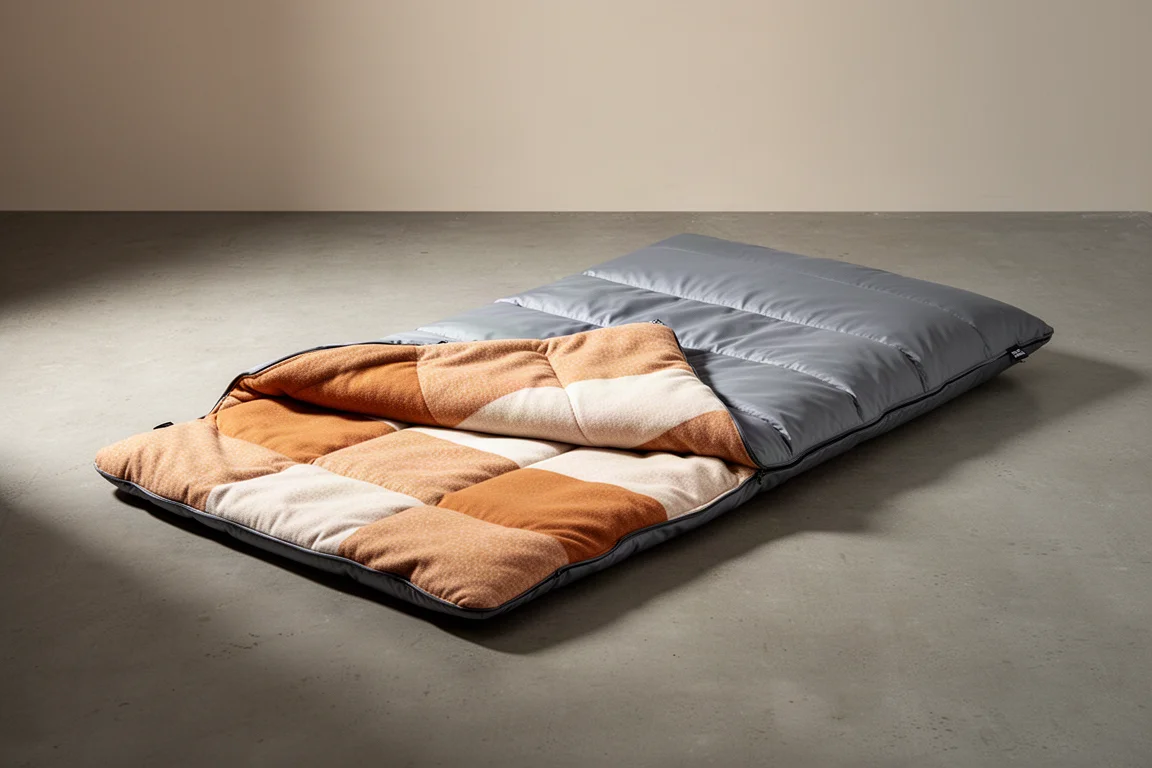
Rectangular sleeping bags do not usually get much attention, and that is understandable. They are bulky, they are rarely light, and the cheap ones often feel like a compromise. The Naturehike Big and Tall Flannel Sleeping Bag is a deliberate exception. It is an old-school rectangular design, it is not expensive, and it is put together far better than its price point suggests.
The formula here is simple and honest. A water-resistant 210T polyester shell on the outside, 100% cotton flannel against your skin on the inside, and polyester 3D fiber insulation in between. It comes in a one-person size as well as a two-person version, so couples and families can scale it to their setup. It is the kind of bag that suits people who drive to their campsite and want to sleep well once they get there.
Who This Sleeping Bag Is For
This is a car camping bag first and foremost. The one-person version measures 86.6 inches long and 39.4 inches wide when unrolled, which is genuinely roomy. If you like to toss and turn, sleep on your side, or simply dislike the feeling of being wrapped tight in a mummy bag, the extra interior space changes the experience. The Big and Tall name is not marketing decoration in that sense. Taller sleepers and broader frames get real room here.
It is also a sensible three-season bag for mild to cool conditions rather than a deep winter tool. If your camping calendar runs from late spring through early autumn, with occasional shoulder-season nights, this is squarely in its comfort zone. The same applies if you want a spare bag for guests, a cabin, or a vehicle kit that stays packed and ready.
Main Strengths
A Comfortable Flannel Lining and a Genuine 32°F Comfort Rating
The interior is 100% cotton flannel, and it is the standout feature. It feels soft and warm against the skin in a way that synthetic taffeta linings simply do not, and it is the main reason this bag feels more expensive than it is.
The temperature figures come from third-party ISO testing, which is worth noting because it means the numbers are measured rather than guessed. The comfort rating is 32°F, the transition rating is 25°F, and the extreme rating is -5.4°F. In practical terms, most people should be comfortable at 32°F without extra layers, some will manage 25°F with a jacket, and the extreme figure is a survival boundary rather than a comfort target.
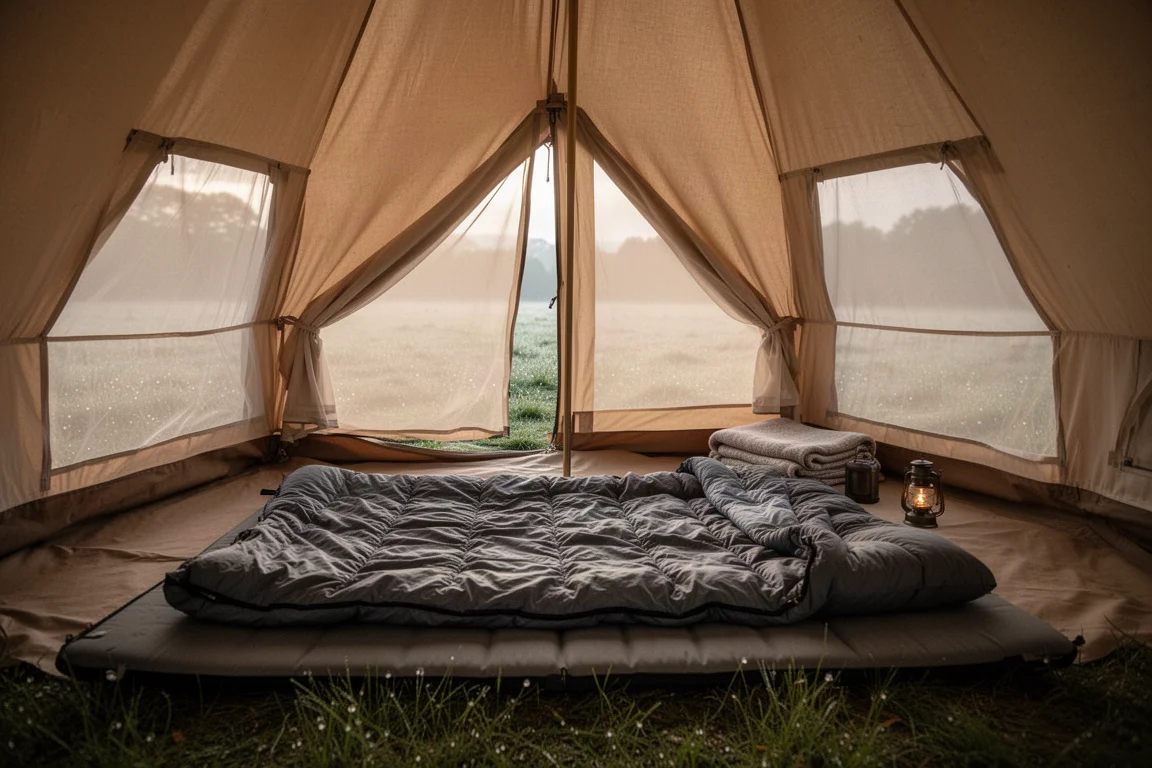
Real-world use supports the idea that the bag has warmth in reserve. On a night with a low around 65°F and heavy humidity, it still felt warm when pulled over the body, and the flannel liner stayed comfortable throughout. The bag also cinches at the top so it can be drawn snug around the shoulders, which helps hold warmth where it matters.
A Versatile Two-Zipper Layout
This is where the design gets more interesting than the typical rectangle. Instead of one long zipper running down and around the bag, there are two, and they meet at the bottom. The result is a bag that can be opened from the side to climb out, opened fully and used flat as a blanket, or vented only at the feet when you want to cool down without abandoning coverage.
Behind the zipper there is a draft collar that runs the full length of the bag, which stops cold air from seeping in along the closure. A separate fabric flap secures the zipper so it does not work itself open while you move around at night. Put together, the layout gives you sleeping bag mode, quilt mode, and blanket mode from a single piece of gear, which is a lot of adaptability for the money.
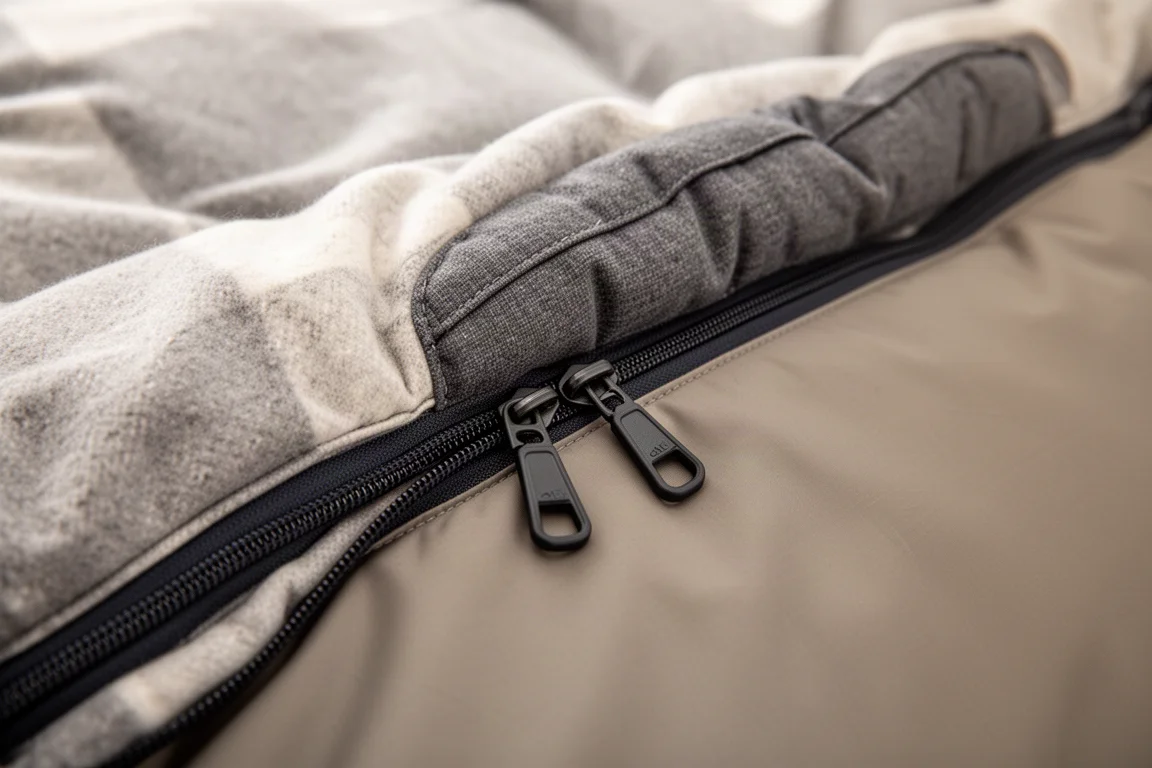
For anyone who camps across a range of conditions, that flexibility is the practical advantage. Warm nights, cool nights, and everything in between can be handled with the same bag instead of two.
Build Quality That Punches Above the Price
The most pleasant surprise is the construction. A close inspection turns up no loose threads and no obvious shortcuts, which is not something you can take for granted in this category. Inexpensive rectangular bags frequently show rough stitching, flimsy zippers, and thin shell fabric. This one does not.
The shell material does not feel cheap in the hand, though it does not feel premium either, which is a fair trade at this price. The zippers run smoothly enough, though they do occasionally catch. The included storage bag is a compression style, which is unusual for a rectangular bag since companies usually assume the packed size does not matter, and it is roomy enough that getting the bag in and out is easy.
The color combination is also genuinely good. It looks like a bag that was designed rather than assembled from whatever materials were cheapest that month, and that matters more than it sounds when the bag is sitting open in your tent.
Things to Consider Before Buying
Zipper Snags and the Missing Compression Strap
The zippers are smooth most of the time, but they do catch occasionally, which is the sort of small annoyance worth knowing about before you buy. The two-zipper layout is smart, but it does take a night or two to get used to if you are accustomed to a single zipper running the full perimeter.
One small omission: no separate compression strap is included. The compression storage bag itself works fine and fits the bag without a struggle, but a strap would make rolling and tightening the bag easier before it goes in. This is a suggestion rather than a flaw, and it does not change the overall value.
Weight and Packed Size
The bag weighs 5.5 lb and packs down to roughly 18 by 11 inches in its storage sack. Those numbers are fine for a car, a cabin, or a tent you drive to. They are not fine for backpacking. This is a bag you carry a short distance from the vehicle, not one you carry on your back for miles.
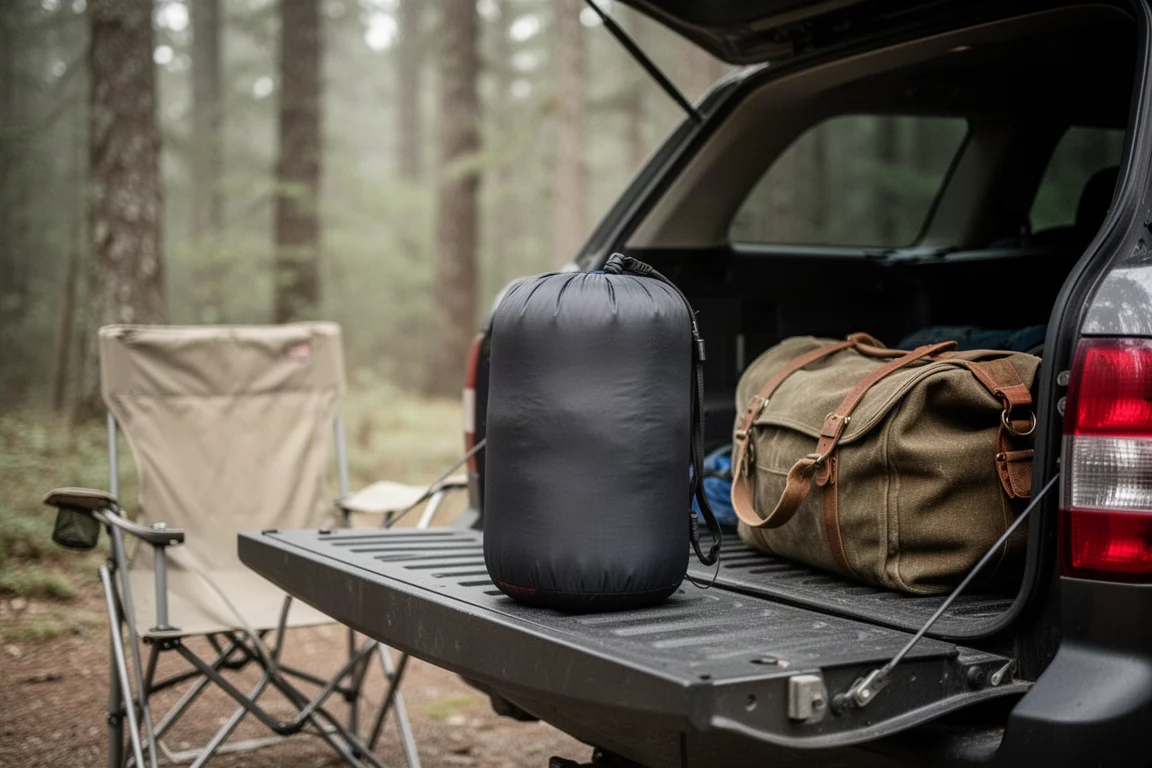
That is not a criticism so much as a category boundary. Everything that makes this bag comfortable, the generous dimensions, the cotton flannel, the 3D fiber insulation, adds weight. If you want a light bag, you are shopping in a different part of the market, and you will pay considerably more for it.
Buying Advice
The retail price appears to be around $80, and it has been seen selling for about $60. At either figure the value is strong, and at the lower one it is hard to argue with. The ISO comfort rating of 32°F gives you a concrete reference point to plan around rather than a vague marketing number, which makes it easier to decide whether it matches the conditions you actually camp in.
Cold-weather testing is still ongoing, so if you regularly camp below freezing, treat 32°F as your practical guide and plan on extra layers or a different bag for hard winter nights. For three-season car camping, the case is straightforward: good materials, a comfortable liner, a flexible zipper layout, and construction quality that is well above what this price usually buys.
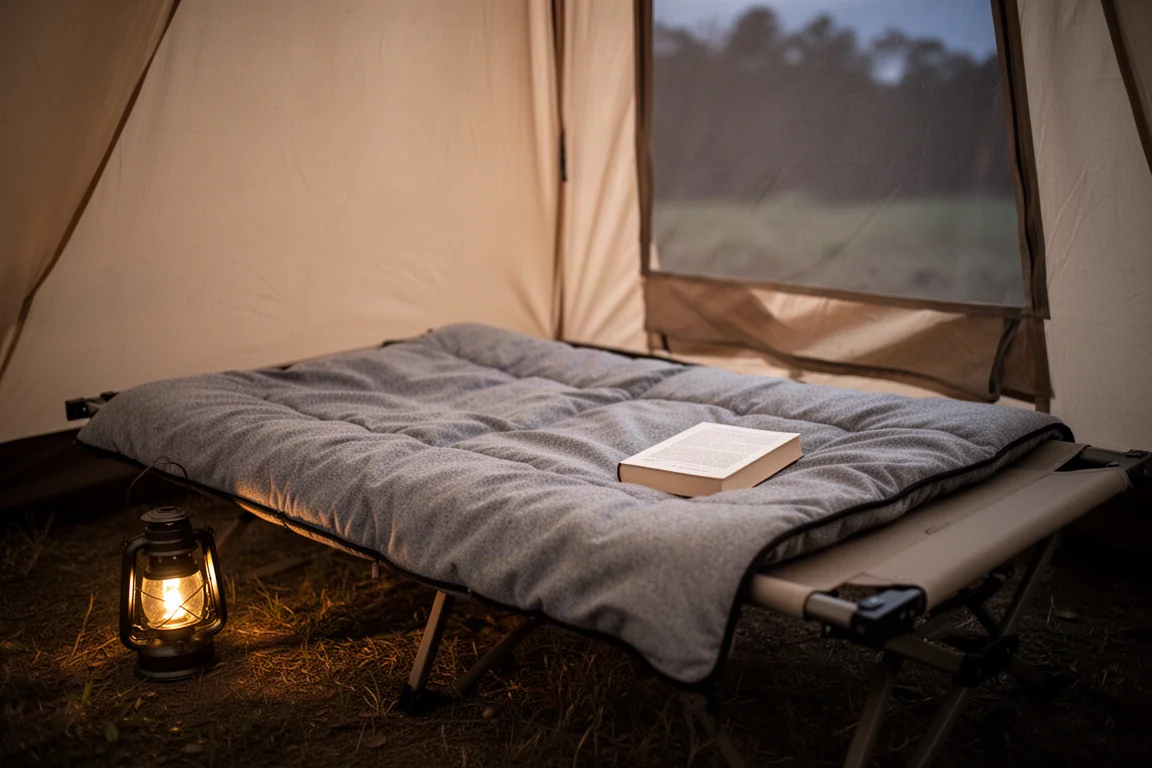
The easiest way to decide is to match the bag to how you camp. If you drive to your site, sleep in a tent or a cabin, and want room to move plus a liner that feels good against the skin, this is an easy recommendation. If you are counting grams or heading into real winter, look elsewhere.
Conclusion
The Naturehike Big and Tall Flannel Sleeping Bag does the unglamorous things well. It is spacious, it is warm for its rating, it converts easily between sleeping bag, quilt, and blanket, and it is built more carefully than its price suggests. The compromises are the ones you would expect: 5.5 lb of weight, a bulky packed size, and zippers that occasionally need a second pull.
None of those get in the way of what the bag is for. For three-season car camping at around $60, it is a confident buy, and it sets a useful benchmark for anyone wondering how much a sleeping bag really needs to cost.
Product link
View more details for Naturehike Big and Tall Flannel Sleeping Bag
This product is mentioned in the review. Check the specifications, options, and compatibility before buying.
View more details for Naturehike Big and Tall Flannel Sleeping BagFurther reading
Related Reviews
Sleeping Bags
Best Down Sleeping Bags Under $300: Four Backpacking Options Worth a Look
Four down sleeping bags that stay under $300, compared on fill power, baffle design, hood comfort, and packed size.
Sleeping Bags
Best Sleeping Bags and Sleep Systems: Five Premium Down Picks Compared
Five premium down sleeping bags and sleep systems compared on warmth, weight, construction, and value.
Sleeping Bags
Big Agnes Lost Ranger UL 3-in-1 Sleeping Bag System Review: One Bag, Three Setups
A practical look at the Big Agnes Lost Ranger UL 3-in-1 Sleeping Bag System, covering how the three configurations work, where it shines, and the details worth weighing before buying.