Camping Tents
Naturehike Bare Ultralight 2-Person Tent Review: Spacious and Storm-Ready, Awkward to Pitch
A close look at the Naturehike Bare Ultralight 2-Person Tent, covering its generous interior, dependable waterproofing, difficult setup, condensation behavior, and uneven availability.
Introduction
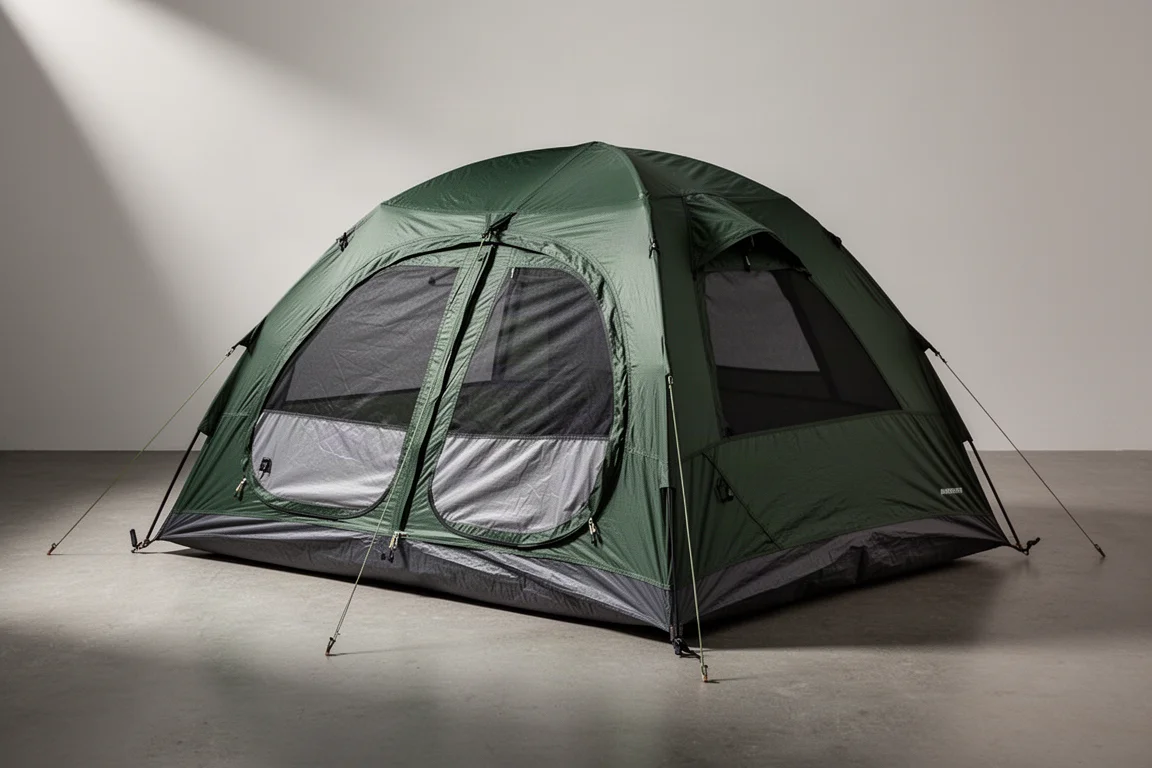
The Naturehike Bare Ultralight 2-Person Tent is a shelter that divides opinion the moment you try to pitch it. It is a two-person, three-season, single-wall design, which means the tent body and the fly are a single piece rather than two separate layers. In some regions the very same shelter is sold under the name Summer Camping Tent, and both names describe identical hardware.
At a glance, the numbers are appealing:
- Type: two-person, three-season, single-wall
- Fabric: 20D silicone-treated ripstop nylon
- Mesh: B3 polyester
- Poles: 70D aluminum
- Waterproof rating: 3,000 mm for the walls and the floor
- Packed size: 20 in x 6 in
- Pitched size: 88.5 in long, 56.5 in wide, 41.5 in tall
- Weight: about 4.2 lb
The interior is genuinely large for the weight. At more than seven feet long, it gives tall campers room to stretch out, and two people can sit upright inside without brushing the roof. Ventilation in dry weather is excellent: there are two large mesh doors, each with a waterproof panel behind the mesh, plus one vent on each side.
Across roughly a dozen nights of use, from spring evenings near 25°F to warm days around 70°F, the pattern was consistent. This tent handles weather far better than its price suggests, but it fights back every time you put it up. That split personality is the heart of the story.
Who This Tent Is For
This shelter makes the most sense for campers who pitch in warm, dry conditions and value interior space over fast setup.
Strong fit:
- Tall backpackers who need interior length and headroom
- Two people who want to sit up, spread out, and keep gear inside with them
- Summer campers who can leave both doors open for airflow
Weak fit:
- Anyone camping in sustained rain
- Campers who need a quick pitch when the weather turns
- Two people who expect to stay sealed up overnight, since condensation builds quickly in a single-wall design
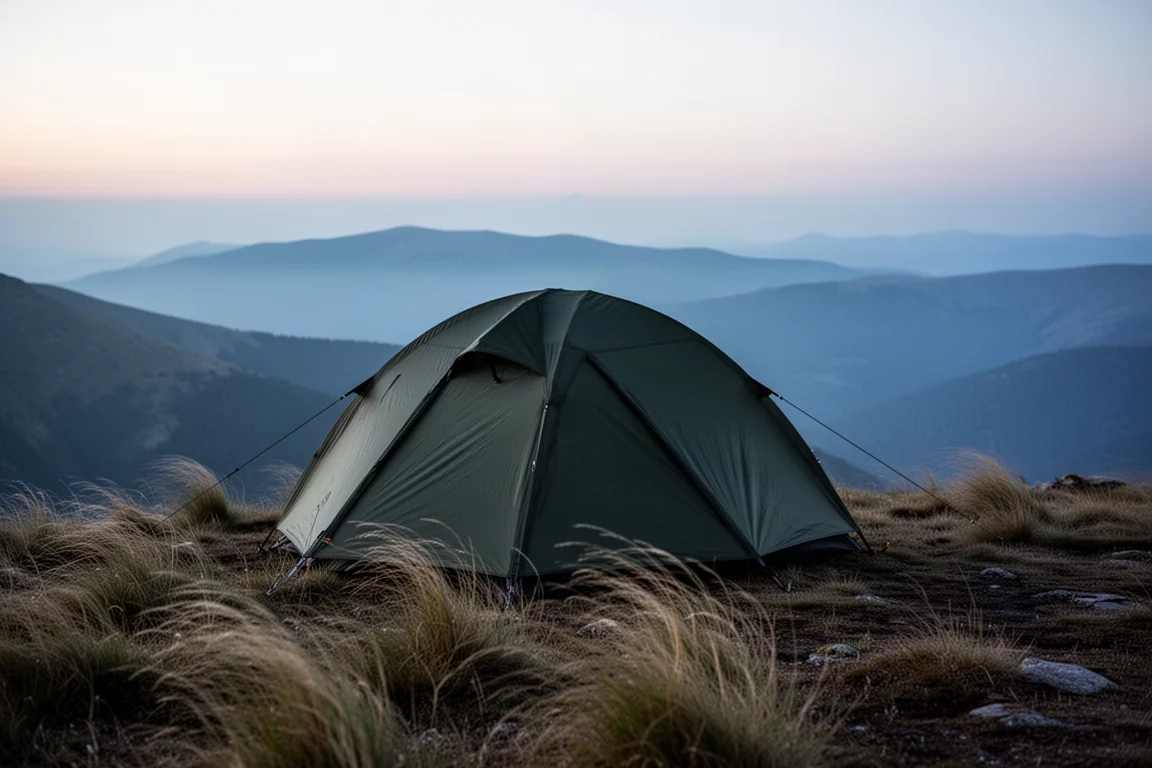
The practical summary is simple. If your trips are short, warm, and dry, and you care more about living space than about how fast the tent goes up, this design has something to offer. If your plans involve long wet days or exposed ridgelines where weather changes fast, the trade-offs stack up against you.
Main Strengths
Construction quality is the first thing that stands out. The seam work, seam tape, stitching, and mesh are all cleanly finished, with no weak points visible, which is impressive at this price. The shelter looks and feels better made than many tents that cost considerably more.
Waterproofing is excellent in practice. Strong thunderstorms produced no leaking at all, and no water came through either the doors or the side vents. For a single-wall tent in this bracket, that is a genuine strength.
Size is the headline feature. At over seven feet long, it fits two people with room left over for gear, and both occupants can sit upright inside. Even a solo camper gets a very generous amount of space.
Weight is reasonable given the interior volume. At roughly 4.2 lb, it is not the lightest two-person shelter available, but it is a fair figure for a tent this large.
The look is also appealing. The tent is available in green and in blue, and both colorways read well on a campsite.
Dry-weather ventilation is exceptional. Both doors open wide and both side vents can be adjusted, so airflow through the interior can be tuned by zipping the doors partway. Because each door sits beneath an eave, it can be left partially open even while it is raining.
Access and interior details round things out. The oversized doors make getting in and out easy, the center cross pole is a handy hang point for drying socks or suspending a lantern, and there are additional hooks inside the body.
Setup and Packed Size
Setup is where this tent loses most of its goodwill.
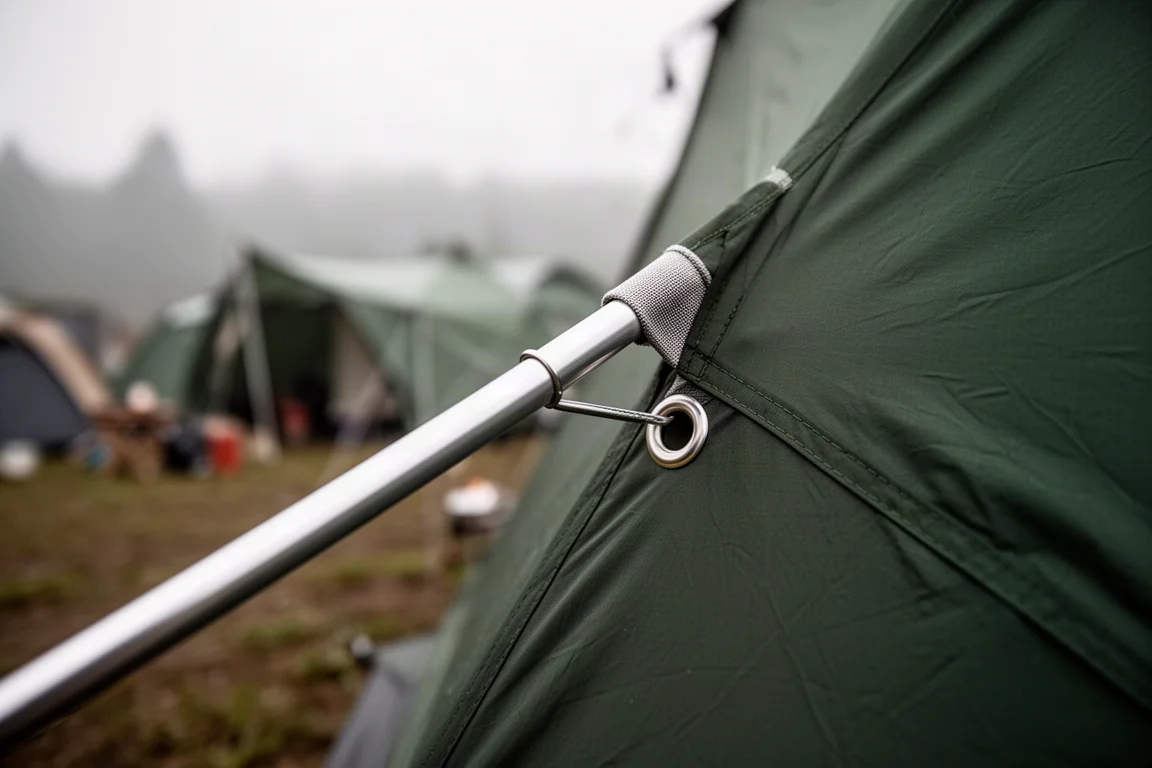
The two main poles are very long and must be threaded through sleeves before seating into grommets and clipping to the body. Then the third pole, the center cross pole, has to be pushed through the tent body all the way to the opposite side. Sliding it through is fairly easy, but seating the end into the far grommet is extremely difficult. The pull tab sits at the top of the pole, the pole cannot easily be rolled over the grommet, and the whole operation takes far more force and patience than it should. Breaking the tent down is just as awkward, and removing that center pole is especially stubborn.
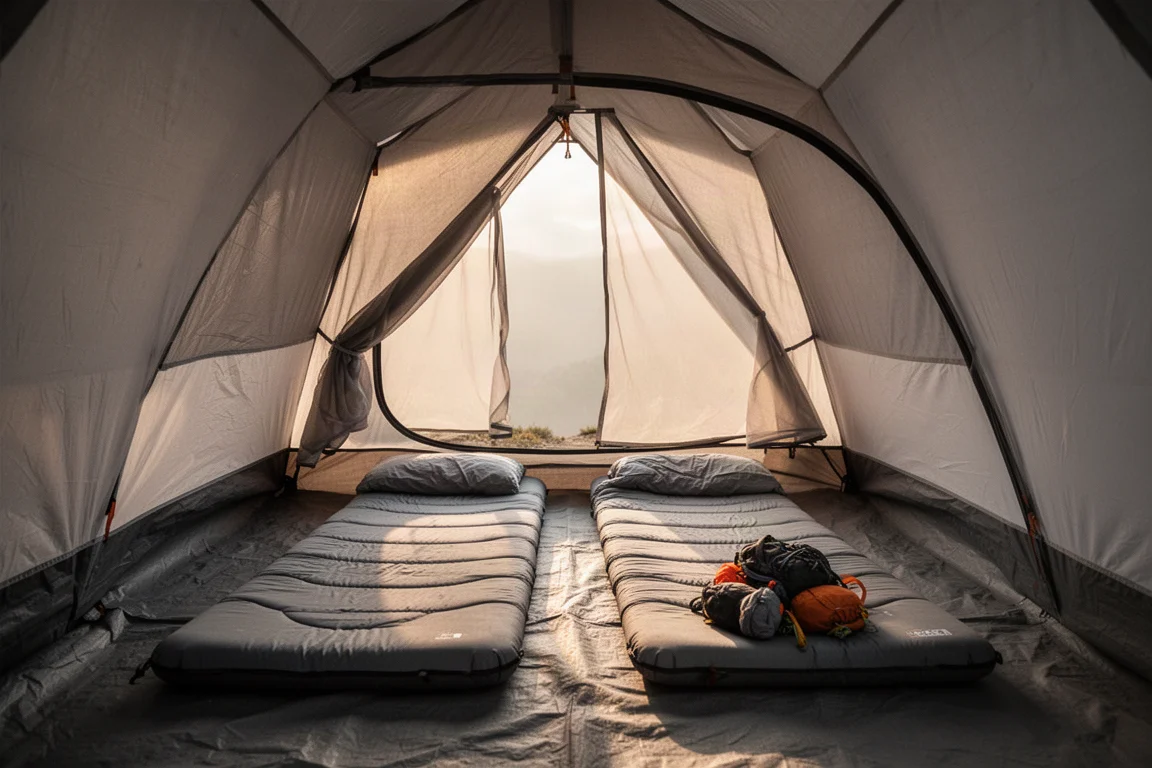
Packed, the shelter measures 20 in x 6 in. The contents include the storage bag, the tent body, three poles, eight stakes, four guy lines, and a ground sheet.
Materials and Weather Protection
The walls and floor use 20D silicone-treated ripstop nylon with a 3,000 mm waterproof rating. The mesh is B3 polyester, and the poles are built from 70D aluminum. In real conditions, the shelter shrugged off strong thunderstorms without any water finding its way in through the doors or the side vents.
The limitations come from the single-wall construction. With no separate fly, there are no vestibules, so every piece of gear has to live inside the tent. There is also only a partial eave over each door, which means water can run off the fabric or fall from the sky straight into the interior as you climb in or out during rain. There is no way to open a door partway in wet weather without letting some water inside.
One more detail is worth checking before you commit. The center pole passes through a grommet on each side of the tent, and those openings do not seal perfectly. Small gaps remain around the pole, and insects can crawl through them.
Things to Consider Before Buying
Condensation is the biggest overnight concern. In a single-wall tent that has to be sealed against rain, moisture builds up inside. A solo camper can sleep in the middle and stay clear of the walls, but with two people inside, both occupants end up close to the fabric and the condensation becomes much more noticeable.
Ventilation is limited when it rains. The doors can be left partly open, but not fully, so airflow drops exactly when you would want more of it. Less airflow means a warmer interior and more condensation on the walls.
Gear storage is entirely internal because there is no vestibule. Depending on how many people are inside and how much they are carrying, that can get tight quickly.
Setup speed matters in bad weather. A tent that demands strength and patience to pitch is a real problem when a storm is moving in and you need shelter immediately.
Because of the condensation, the restricted ventilation in rain, and the way water enters during wet entries and exits, this is not a shelter for long periods of wet-weather camping. It can withstand a passing shower or even a thunderstorm, but it is not a tent to sit out a rainy day in.
Where this design does excel is warm, dry weather. With both doors open and the mesh exposed, airflow is excellent, and the interior stays comfortable. The mesh keeps most insects out, though the two openings around the center pole remain a small gap in that protection.
Availability and Pricing
Availability is uneven. Listings have appeared at Walmart around $170, with other online retailers going as low as about $140. AliExpress listings sit near $140 but carry relatively high shipping costs. In Canada the tent has been listed at about $100.
It has not been consistently listed on the Naturehike US site, and it is not available on the US Amazon site. Whether that points to a redesign in progress, a discontinued run, or simply inventory fluctuation is unclear, so it is worth checking current listings before you commit.
Buying Advice
Given how much work the pitch requires, the sensible advice is to wait for a revised version rather than buy this one. The underlying design has real strengths, and a future iteration that replaces sleeves with more clips and simplifies the center pole would be a much easier tent to recommend.
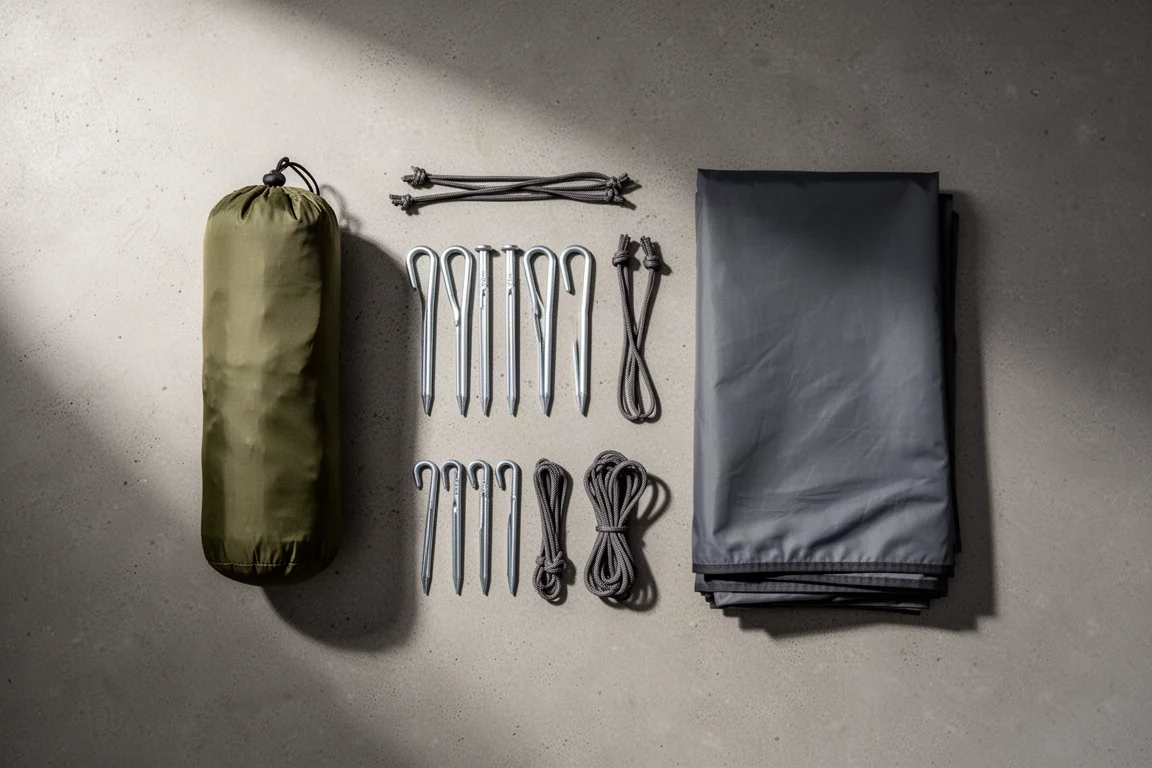
If you do decide to buy, go in with clear expectations. This is a warm-weather, dry-weather shelter. It rewards campers who pitch in calm conditions, sleep solo or accept some condensation, and want a long, tall interior at a modest price. It punishes anyone who needs a quick pitch or a dry place to wait out a storm.
Conclusion
The Naturehike Bare Ultralight 2-Person Tent gets a lot right. Construction is excellent, waterproofing is dependable, the interior is genuinely roomy for the weight, and ventilation is strong when the weather is dry. What holds it back is the setup, which is slow, physical, and frustrating, along with condensation in sealed conditions, limited airflow in rain, no vestibules, and small gaps around the center pole that let insects in.
It is not a bad tent. It is an interesting design that is not finished. For dry summer trips where space matters more than a fast pitch, it has real appeal, and it is easy to see what a future version could become. For now, most campers will be better served by waiting.
Product link
View more details for Naturehike Bare Ultralight 2-Person Tent
This product is mentioned in the review. Check the specifications, options, and compatibility before buying.
View more details for Naturehike Bare Ultralight 2-Person TentFurther reading
Related Reviews
Camping Tents
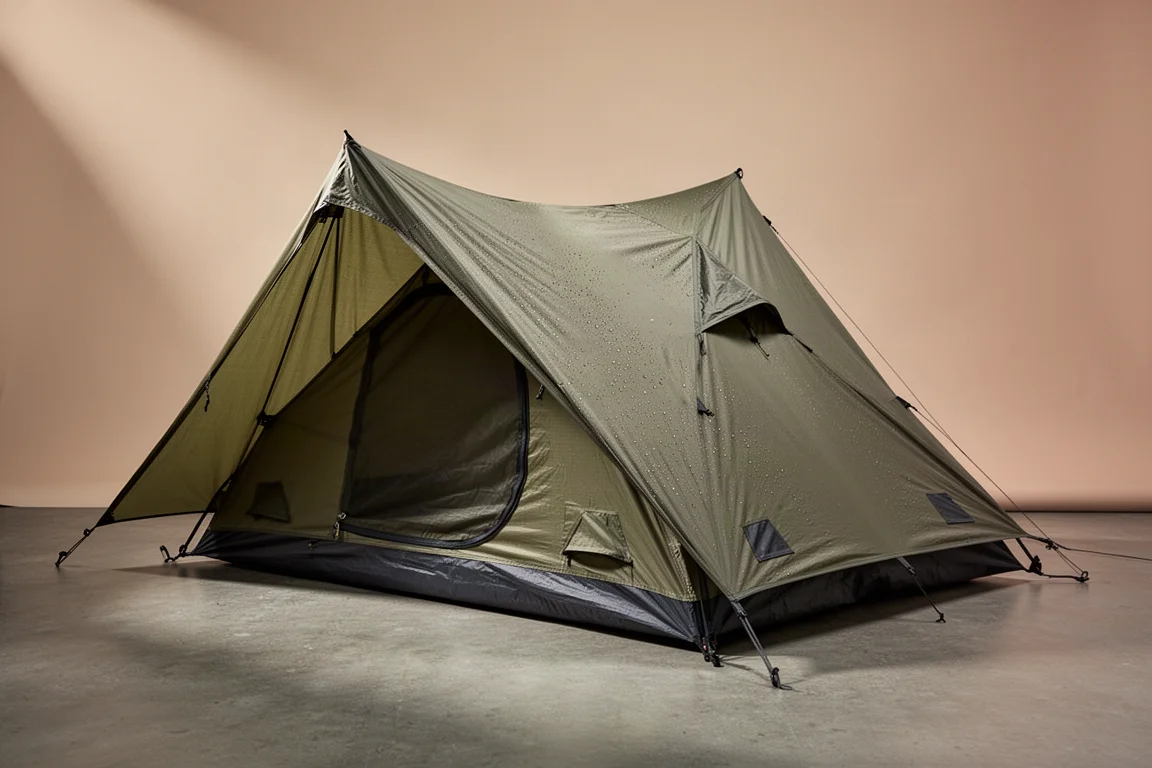
3F UL Gear Taiji Two-Person Tent Review: Field Waterproofing Results and Buying Advice
The Taiji pairs an attached fly with a removable inner, but sustained rain exposed untaped vent seams that need sealing before this shelter can be trusted.
Camping Tents
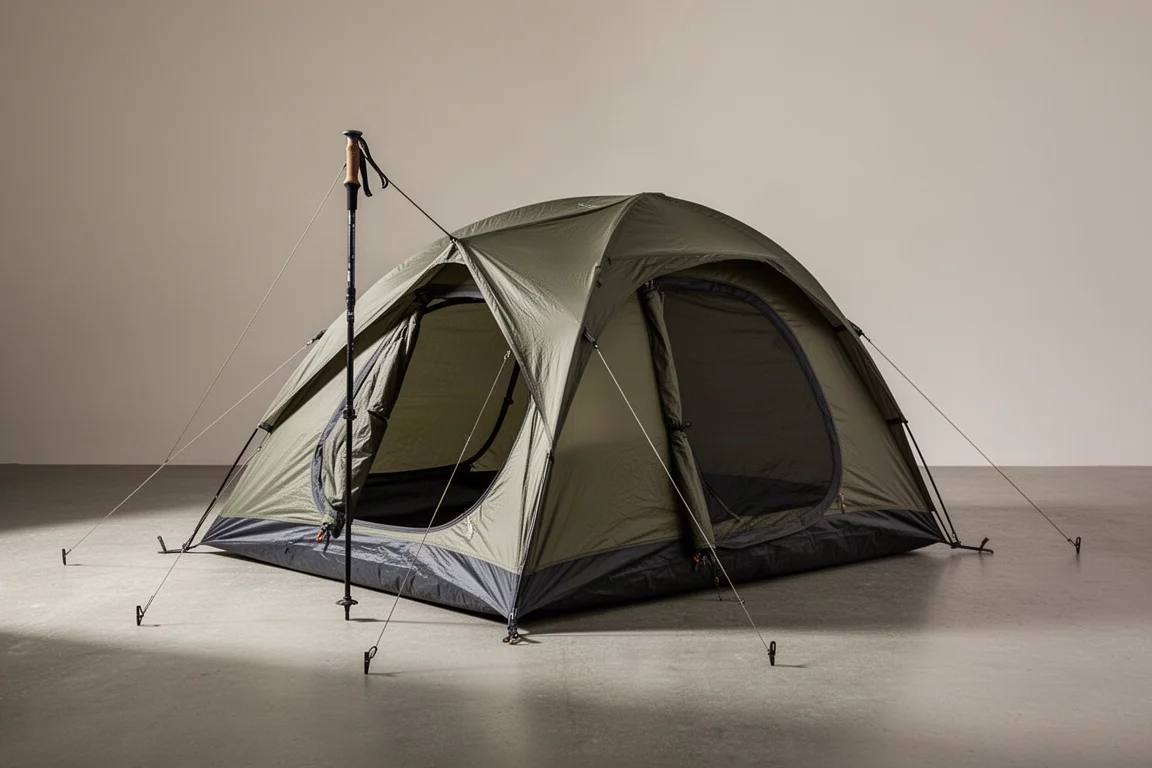
3FUL Gear Lanshan 2 Pro 4-Season Review: A Sub-$200 Single-Wall Trekking Pole Tent
An early look at the 3FUL Gear Lanshan 2 Pro 4-Season, covering its straightforward pitch, generous interior space, and the condensation and seam-sealing questions that come with any single-wall shelter.
Camping Tents
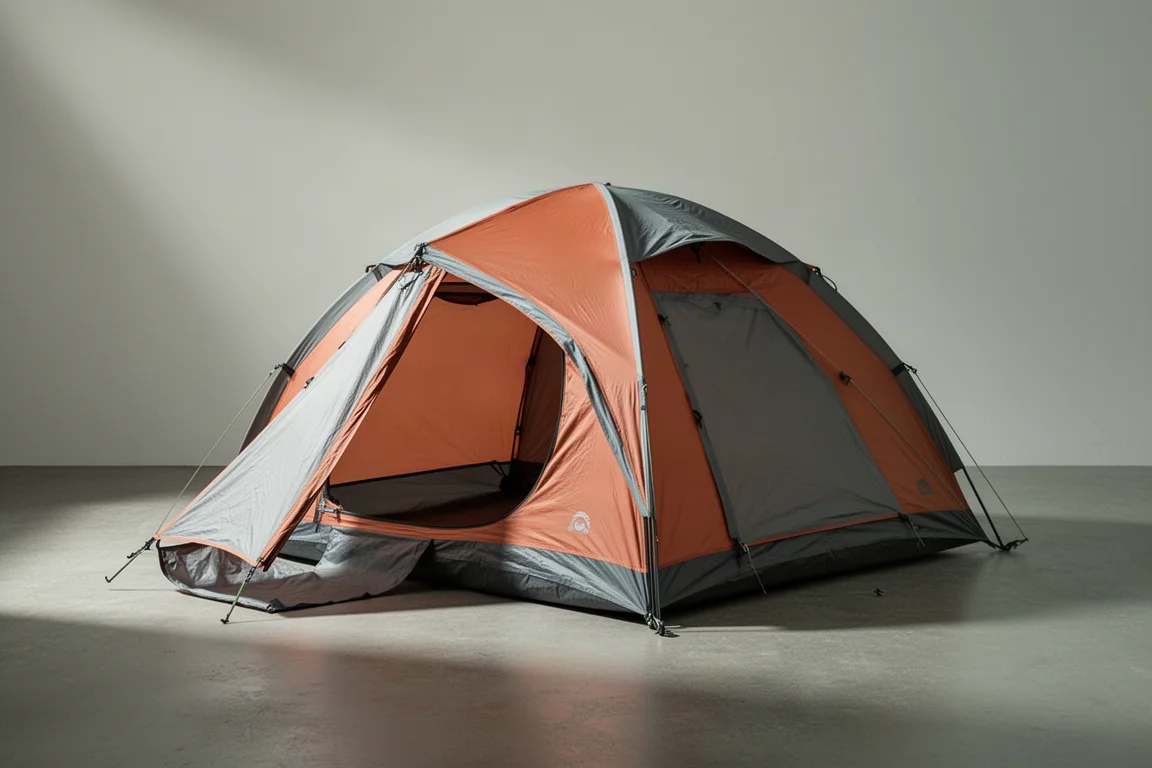
Alps Mountaineering Lynx 1-Person Tent Review: Big Value in a Small Budget Tent
A close look at the Alps Mountaineering Lynx 1-Person Tent, covering real interior dimensions, materials, setup time, ventilation limits, and who should buy it.