Hi-Fi Amplifiers
NAT Transmitter Monoblock Tube Amplifiers Review: 120W of Single-Ended Class A
A long-term look at the NAT Transmitter monoblock, a 120W single-ended Class A tube amplifier built around radio transmitter tubes, and what it asks of your system.
Introduction
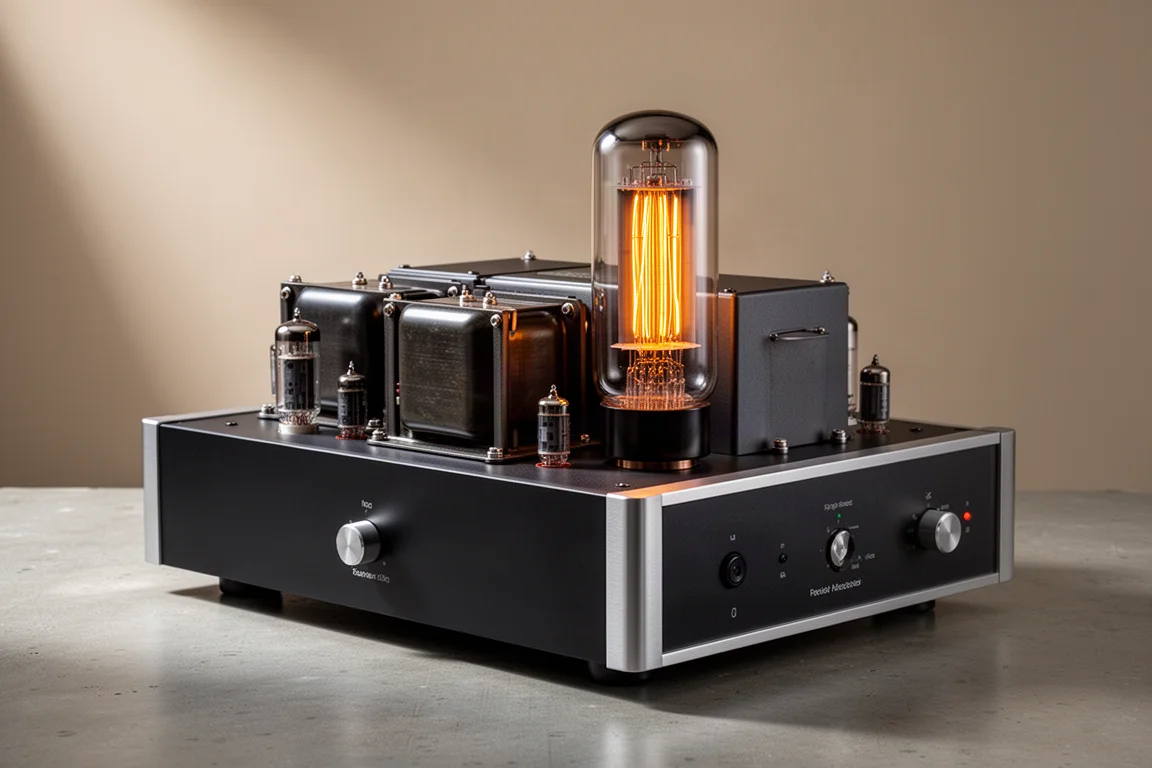
The NAT Transmitter monoblock is a single-ended, pure Class A tube amplifier rated at 120 watts, a number that sits well outside the norm for the topology. Most single-ended designs deliver somewhere between 8 and 30 watts, which is exactly why they tend to be paired with high-sensitivity speakers: horns, single-driver designs, and anything rated 90 dB and above. The Transmitter sidesteps that constraint.
What makes the amplifier genuinely unusual is its output tube. It uses a transmitter tube, the type normally built for radio transmission, adapted here for an ultra high-end audio amplifier. The result is a single-ended design with power reserves that behave far more like a large solid-state amplifier than a typical low-wattage tube amp.
This is a long-term assessment, based on two years of continuous use as a reference amplifier. That period matters, because some of the most important characteristics of this amplifier only become clear after months of listening across many different speakers.
Who This Product Is For
This amplifier suits listeners who want the character of single-ended Class A without giving up speaker choice. If you have avoided single-ended tube amplifiers because your speakers are not efficient enough, the Transmitter removes that limitation almost entirely.

It also suits owners who enjoy tuning a system rather than simply plugging it in. The Transmitter responds strongly to what sits in front of it, so the preamplifier becomes part of the sound rather than a neutral pass-through. Buyers who want a self-contained, set-and-forget component may find that aspect less appealing.
Main Strengths
The core appeal of this amplifier comes down to three things: power, staging, and the way it treats the frequency extremes.
Power and Speaker Compatibility
A single-ended amplifier that delivers 120 watts of pure Class A output changes what is possible. Across roughly 60 different pairs of speakers used during the two-year period, ranging from compact stand-mounts to large floorstanders, the Transmitter drove each of them with authority and never clipped.
There is also a low output mode that drops the amplifier to roughly 30 to 40 watts. That setting reduces stress on the tubes and makes more sense with sensitive speakers, where the extra headroom is not needed. Even at the lower setting, 40 watts of single-ended power remains a substantial figure.
Sound Character and Staging
The most immediately obvious change when the amplifier is connected is the soundstage, which drops back several feet and opens into a more spacious, holographic presentation. Layering from the closest instruments to the most distant ones is precise, and imaging stays intact even as the stage expands in width and depth.
Bass is a genuine surprise for a single-ended design: extended, controlled, and far deeper than the topology usually allows. The custom-made transformers handle a claimed range of about 8 Hz up to roughly 30 kHz, which accounts for the full-bandwidth behaviour. Running at the high output setting adds weight and speed to the low end.
The midrange sits in a deliberate middle ground between vintage warmth and modern clarity. Vocals come through clean and silky rather than thick, with strong definition. High frequencies are smooth, airy and free of fatigue, without the veiling that some tube amplifiers introduce. Bright speakers become more refined, and warm speakers gain openness, so the amplifier tends to balance a system rather than push it in one direction.
Heat, Tubes, and Longevity
This is a pure Class A amplifier with a large transmitter tube, so it runs extremely hot, to the point where the metal is uncomfortable to touch. A silent fan mounted underneath the tube is there to help, and in practice it rarely becomes noticeable. The protective cage is not included and is understood to be purchased separately, which is worth budgeting for.
Tube life is better than the type would suggest. The design uses only about 45 percent of the tube’s output capability, which should translate into longer service than usual, and the low output mode reduces that demand further for listeners who do not need full power.
Things to Consider Before Buying
Two practical details matter more than anything else with this amplifier, and both are easy to overlook in a short demonstration.
Preamplifier Matching
The Transmitter is unusually sensitive to preamplifier matching. With the wrong partner, the sound can collapse into a hard, piercing sibilance in the vocal range that is simply not enjoyable. With the right one, it becomes a completely different amplifier.
The pattern that emerged is a low-impedance output on the preamplifier side. A well-implemented preamplifier stage inside a DAC turned out to be an excellent match, and moving to a dedicated matching preamplifier brought more grip, texture and detail in the bass along with cleaner, more distinct layering in the stage. That step up is real, though the internal preamplifier route remains a strong option for a shorter signal chain.
Input Choice and System Practicality
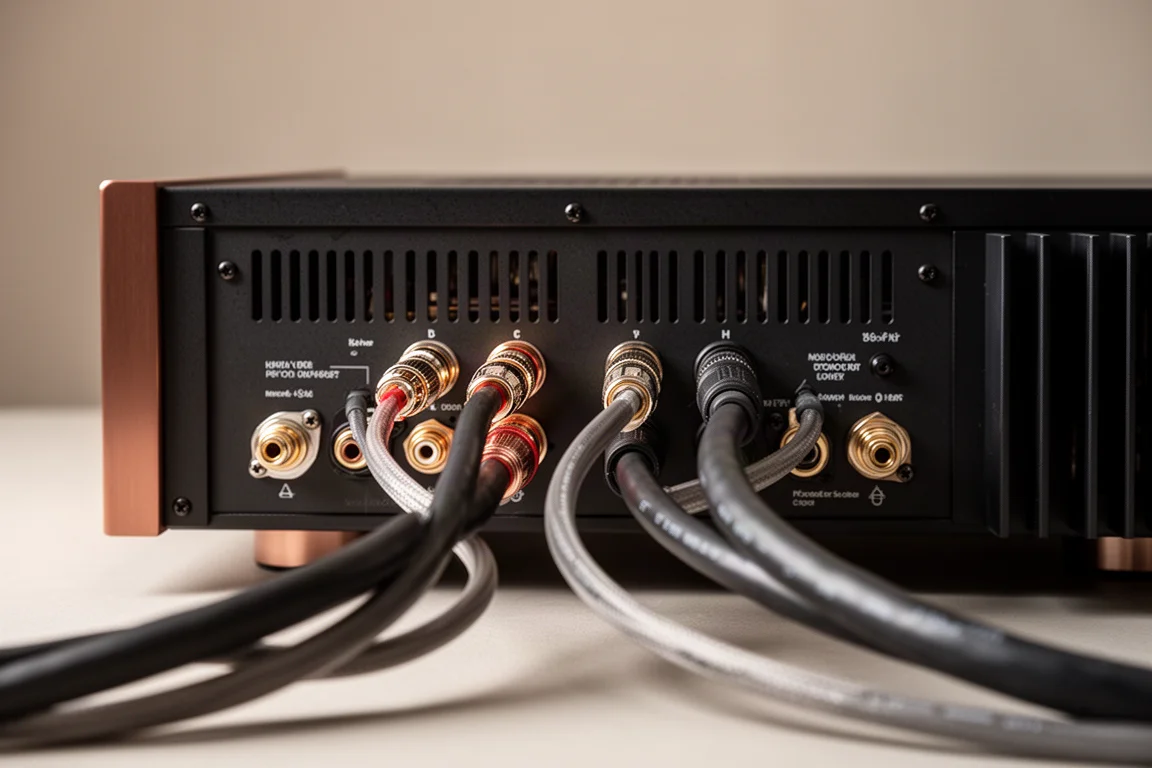
Because this is a single-ended design, the RCA input is the better choice even though XLR connections are provided. RCA consistently sounded better than XLR in use, which is worth knowing before wiring a balanced system around it.
Physical ownership is another consideration. The amplifier is heavy, runs hot, and needs ventilation space. Buyers who move equipment frequently or have limited rack depth should plan accordingly.
Buying Advice
The Transmitter makes the most sense for listeners who already know they want single-ended Class A sound and have been limited by speaker sensitivity. It removes that ceiling and, with the right preamplifier, delivers a spacious and refined presentation that holds up across a wide range of speakers.
Before buying, budget for two things beyond the amplifier itself: the separately sold tube cage and a preamplifier with a low-impedance output. Match those two details correctly and the amplifier performs at a level that justifies its position at the top of the category. Get the preamplifier wrong and the experience will not reflect what the amplifier can actually do.
For anyone who wants to go further, the same line includes a flagship model built around even larger transmitter tubes, which is the logical next step for owners who want more of the same character.
Conclusion
Two years of use is a long time to keep any piece of reference equipment, and this amplifier earned its place. The combination of 120 watts of single-ended Class A power, extended bass, a spacious and precise soundstage, and fatigue-free high frequencies is difficult to find elsewhere.
The trade-offs are clear and manageable: significant heat, substantial weight, a separately purchased cage, and a strong dependence on preamplifier matching and the RCA input. Buyers who plan around those details will find a tube amplifier that behaves unlike almost anything else in the category, and one that continues to surprise long after the first listening session.
Product link
View more details for NAT Transmitter Monoblock Tube Amplifiers
This product is mentioned in the review. Check the specifications, options, and compatibility before buying.
View more details for NAT Transmitter Monoblock Tube AmplifiersFurther reading
Related Reviews
Hi-Fi Amplifiers
Accuphase E-280 Review: Entry-Level Accuphase With Flagship Attention to Detail
A close look at the Accuphase E-280 integrated amplifier, covering its champagne build, AAVA volume control, sound quality, and the speakers and sources that suit it best.
Hi-Fi Amplifiers
Advance Paris A10 Classic vs Yamaha A-S301: Two Integrated Amplifiers Compared
A practical comparison of a $350 integrated amplifier and a $2,500 reference model, covering the differences that matter and the ones that do not.
Hi-Fi Amplifiers
Affordable Chinese Amplifiers Worth Buying: Five Budget Hi-Fi Amps Compared
A practical look at five affordable amplifiers, what each one does well, and the trade-offs to weigh before you buy.