Home Audio
Nakamichi Dragon Soundbar Review: Premium Claims vs. Real-World Performance
The Nakamichi Dragon promises 80% of a multi-thousand-dollar home theater setup at a quarter of the price. We tested it against dedicated systems to see if the claims hold up.
Introduction
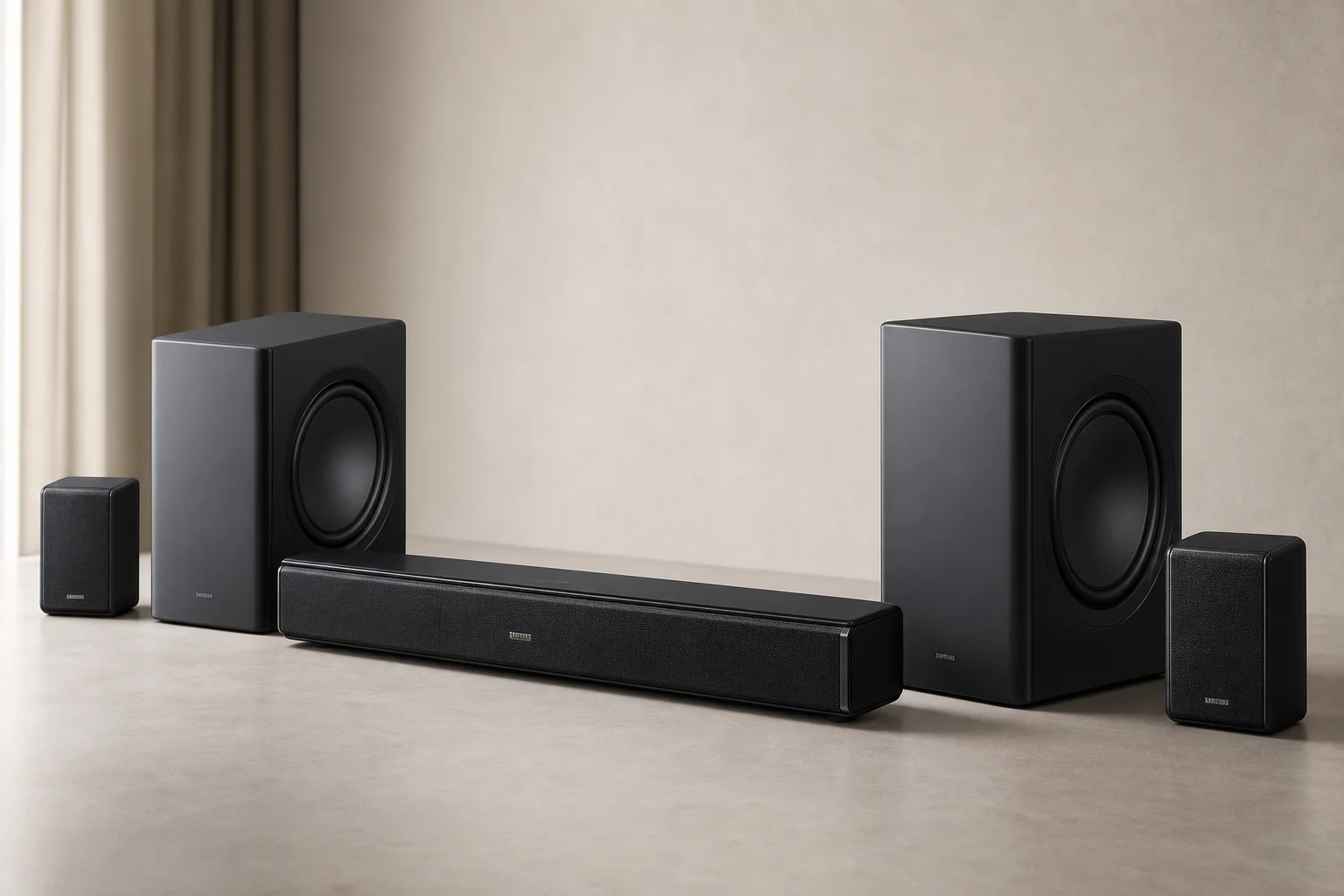
The Nakamichi Dragon makes an audacious claim: it can deliver approximately 80% of the performance of a multi-thousand-dollar dedicated home theater system at a quarter of the cost. This is a bold assertion in the world of premium audio, where diminishing returns typically mean that higher prices correlate with incrementally better performance. To test whether this claim has merit, we compared the Dragon against both dedicated multi-channel systems and competing soundbar solutions.
Design and Physical Presence
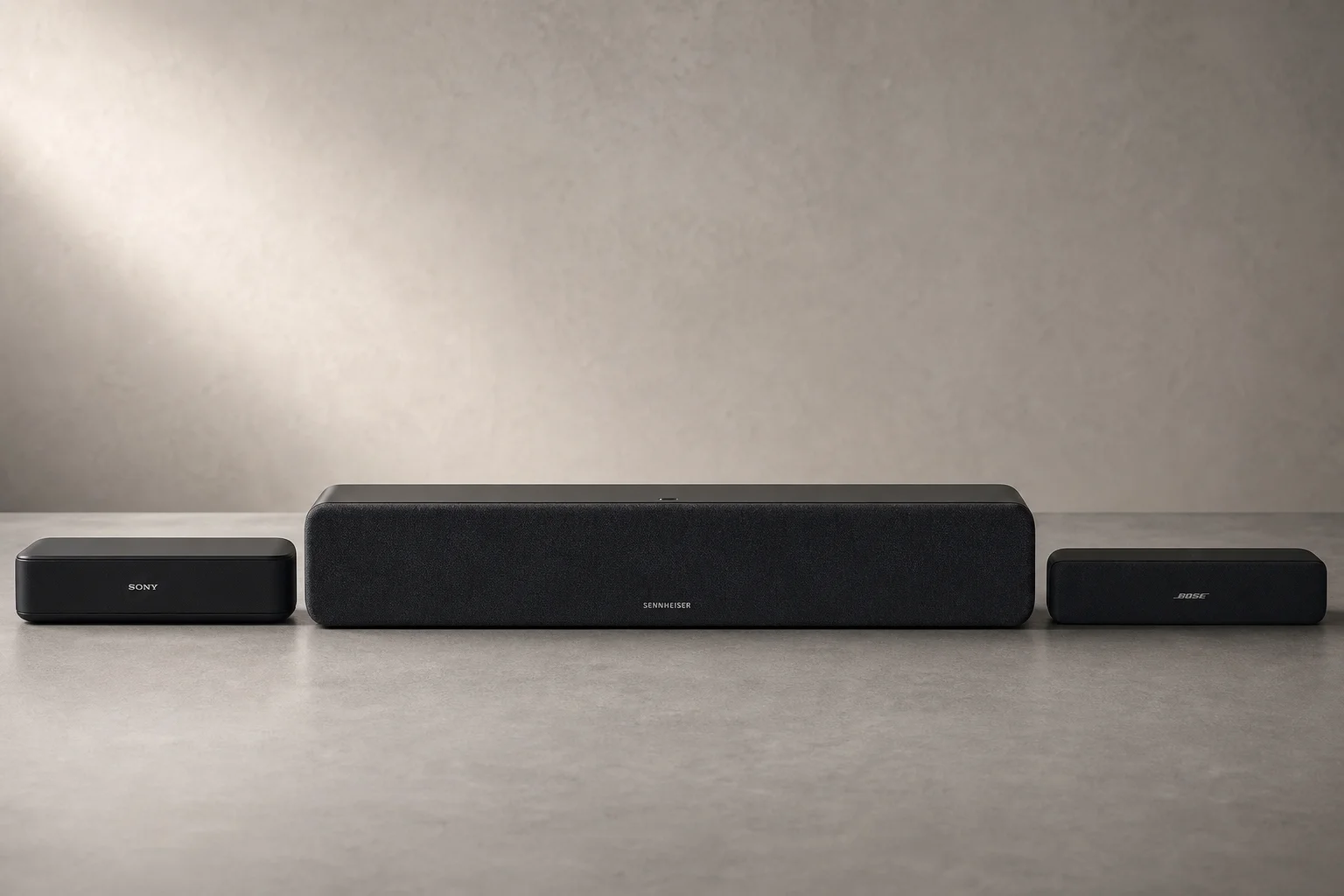
The first thing that strikes you about the Nakamichi Dragon is its sheer size and weight. Placed alongside popular competitors like the Sonos Arc and budget-friendly Bose models, the Dragon completely dwarfs them both. This massive footprint is not arbitrary; Nakamichi justifies it by packing 17 distinct drivers into the main soundbar unit alone.
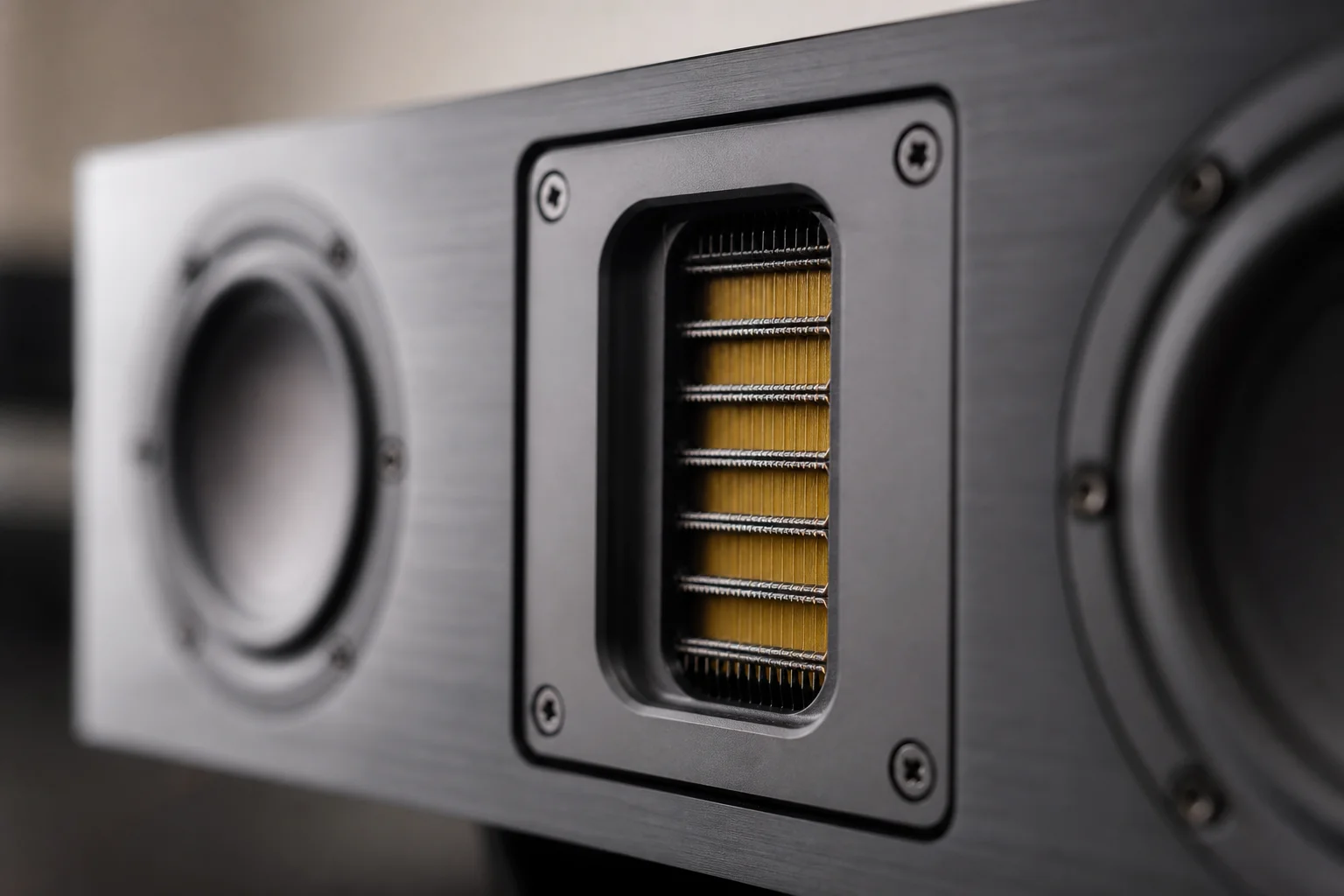
The soundbar includes four ceiling-firing drivers designed to create a sense of height and overhead audio effects. These are complemented by air motion transformer tweeters that operate like an accordion, squeezing in and out to produce mid to high-end frequencies with claimed extra clarity. The overall construction feels premium and substantial, though this heft does raise practical questions about placement and mounting.
Driver Configuration and Technical Specifications
The Dragon’s driver count is impressive on paper. Beyond the 17 drivers in the main unit, the system includes dual 8-inch subwoofer drivers in each of two subwoofers, plus surround speakers featuring four board drivers on the sides and an angled upward-firing driver that can be rotated toward your listening position. This brings the total driver count to 31 across the entire system.
The system is rated for a peak power output of 3,000 watts, though in practice you will never need to approach this figure. At 50% maximum volume, the system already reaches uncomfortably loud levels, suggesting that theater-like performance should be achievable without pushing the hardware to its limits.
Audio Performance in Practice
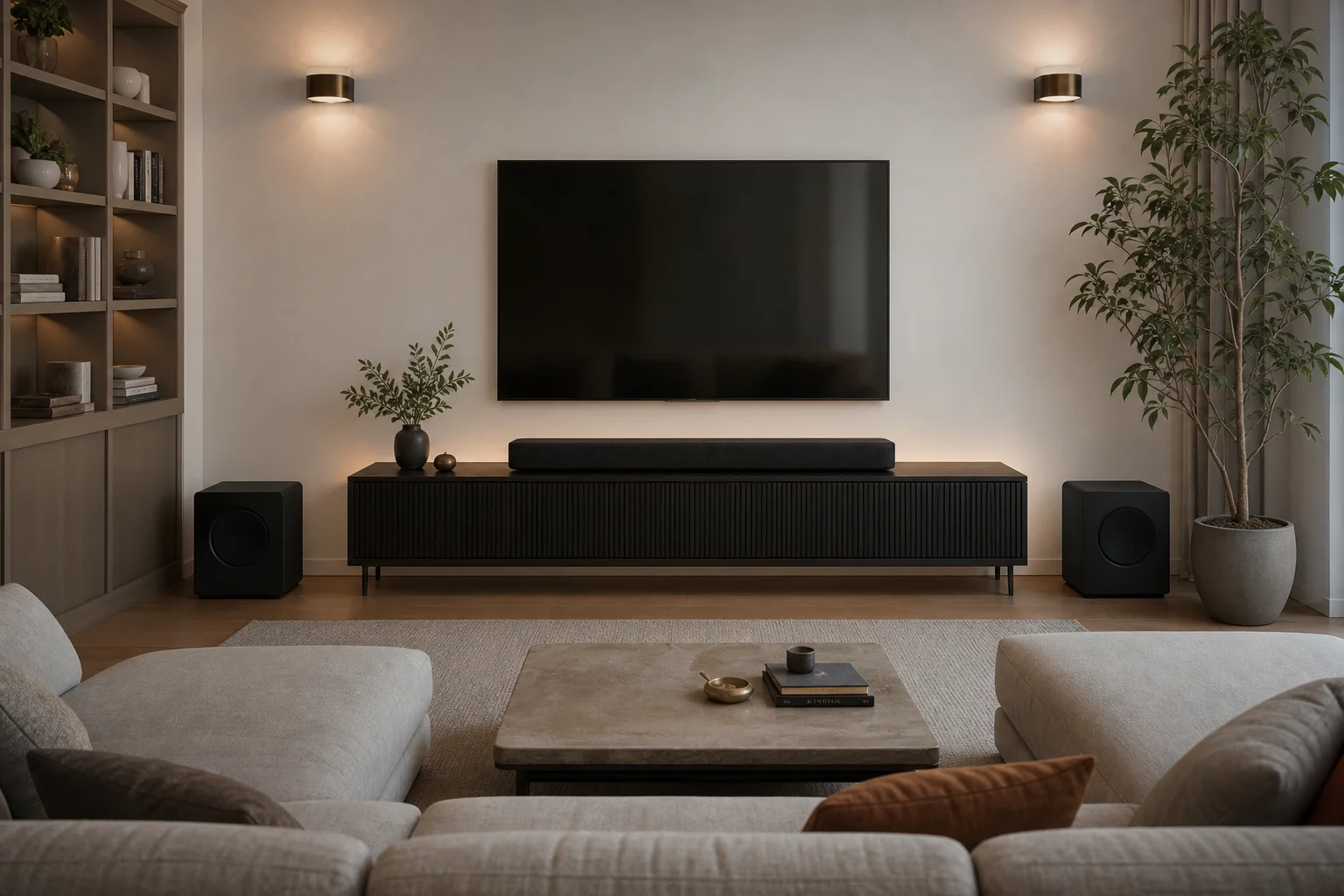
When tested against a dedicated home theater setup featuring SVS towers, Klipsch in-ceiling speakers, SVS subwoofers, and a Denon AV receiver (a system totaling approximately $13,600 before installation), the Dragon delivered respectable results with notable trade-offs.
The soundbar produces good clarity in the midrange, though some listeners noted the mids feel slightly empty compared to a full multi-channel setup. The surround speakers are substantial enough to deliver consistent sound throughout the listening area, avoiding the “piddly” quality that smaller surround speakers can introduce. However, the surround performance does not match dedicated surround systems or even well-tuned 5.1 setups.
The subwoofers deliver punchy, musical bass that sounds good in isolation. However, they do not achieve the depth of a dedicated home theater subwoofer system. While Nakamichi advertises performance down to 20 Hz, real-world testing revealed actual performance closer to 30-45 Hz before the response rolls off completely. This limitation becomes apparent when listening to bass-heavy content, where the subwoofers compensate by becoming boomy at the top end due to crossover placement. The lack of true low-end extension is the most significant performance compromise compared to the reference system.
Treble performance is notably strong, with clarity that rivals much more expensive setups. The spatial performance is respectable, though not exceptional compared to some competing systems.
Comparison with Sonos Arc
The Sonos Arc is a more direct competitor in terms of form factor. The Arc is a capable soundbar that delivers good performance for its size and price point. The Dragon produces noticeably better sound overall, with a larger, more immersive soundstage. However, the Sonos ecosystem offers greater flexibility for expansion, with the option to add dedicated surround speakers and a subwoofer that is surprisingly capable for its compact size.
The Arc’s I/O is minimal, offering only a single HDMI connection with eARC support. The Dragon, by contrast, features extensive inputs and outputs along with Bluetooth connectivity. The Dragon lacks Wi-Fi and does not support voice assistants, which some users may view as a limitation and others as a privacy advantage.
Comparison with Samsung Q990C
The Samsung Q990C presents an interesting alternative that shares many of the Dragon’s features but in a more modest package. It includes a single subwoofer rather than dual units and a smaller overall footprint. When compared directly, the Q990C delivers a significant portion of the Dragon’s performance at roughly half the price. For budget-conscious buyers, this represents a compelling value proposition.
Value Proposition and Practical Considerations
The Dragon’s strongest argument is its value relative to dedicated multi-channel systems. Delivering approximately 80% of the performance of a $13,600+ setup at roughly one-quarter the cost is genuinely impressive. However, this comparison requires context: the higher up the product stack you go, the worse value typically becomes, as each additional dollar spent yields diminishing returns.
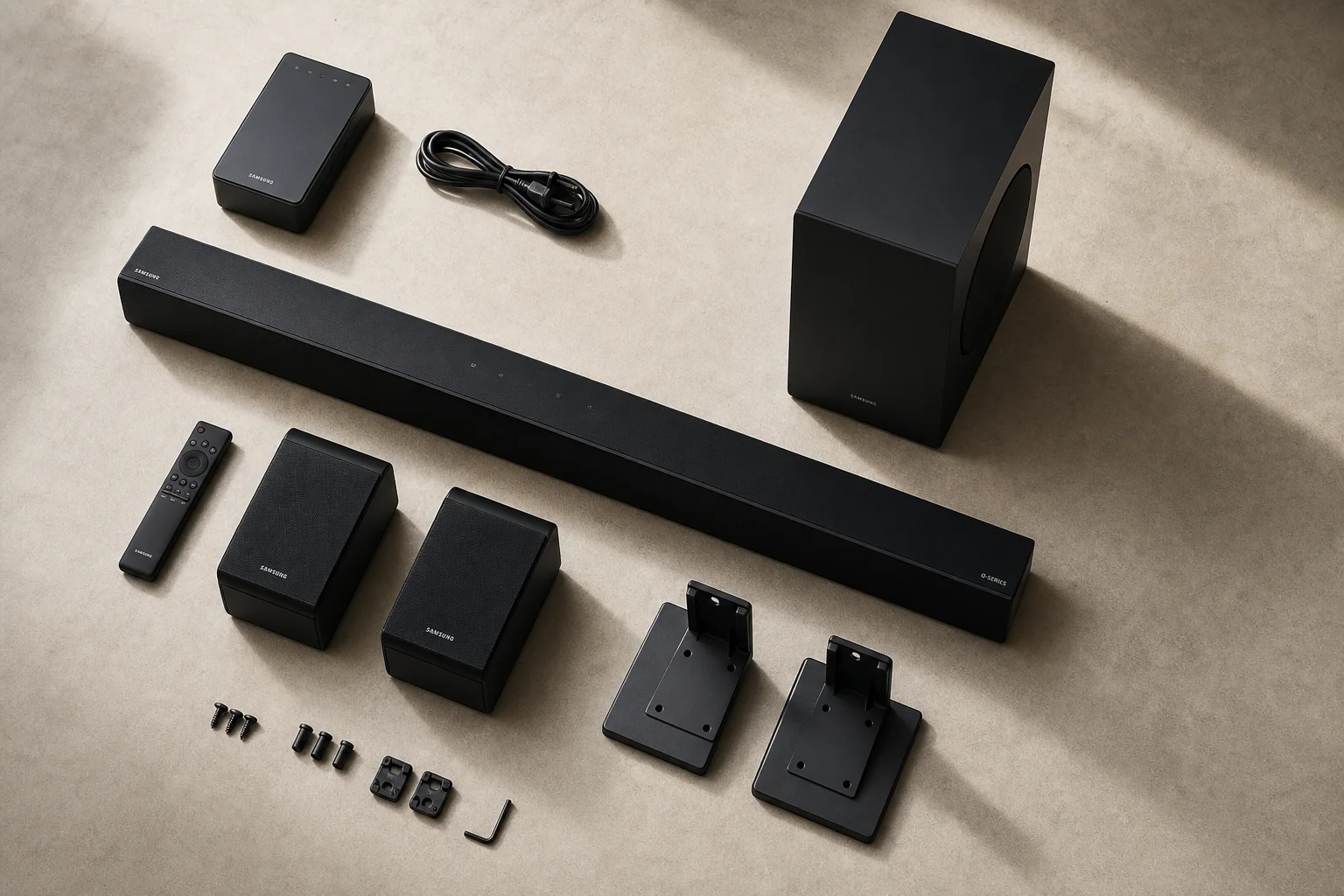
A practical consideration is that the Dragon does not include mounting hardware. The optional stands cost approximately $300, adding to the total system cost. For buyers with existing wall-mounting solutions or media console space, this is less of an issue.
The height channels, while technically present, do not add substantial value for all listening scenarios. Some users may find that a traditional 5.1 surround setup paired with a quality AV receiver offers better sound quality and greater long-term upgrade potential, even at a similar price point. Such a system allows for future expansion and component replacement, whereas a soundbar system is largely fixed.
Conclusion
The Nakamichi Dragon delivers on its promise of substantial performance relative to its price and size. It is a legitimate alternative to dedicated home theater systems for buyers who value convenience and space efficiency. However, potential buyers should understand that it makes real compromises in bass extension and spatial performance compared to proper multi-channel setups. The Dragon is best suited for those who want excellent sound without the complexity of running cables through walls and managing multiple components, and who can accept that the deepest bass frequencies will not be fully represented.
Product link
View more details for Nakamichi Dragon
This product is mentioned in the review. Check the specifications, options, and compatibility before buying.
View more details for Nakamichi DragonFurther reading
Related Reviews
Home Audio
Best Home Theater Systems Under 10,000: Six Models Tested and Ranked
A comprehensive ranking of six popular home theater systems in the budget segment, tested for sound quality, connectivity, and real-world performance with movies and music.
Home Audio
Best Soundbars 2026: 15 Options Across Every Budget and Use Case
A practical guide to 15 soundbars covering budget, space-conscious, standalone, and premium multi-speaker systems. Find the right fit for your room and listening habits.
Home Audio
Best Soundbars Under $300: Five Premium Options for Home Theater
Five soundbars under $300 with Dolby Atmos, wireless subwoofers, and immersive audio features to elevate your home entertainment experience.