Home Audio
Nakamichi Dragon Review: Serious Output, Serious Trade-Offs
The Nakamichi Dragon delivers enormous scale and dynamics, but manual setup, limited low-frequency extension, and a thin feature set shape who should buy it.
Introduction
The Nakamichi Dragon has been one of the most anticipated home audio products in recent years, and it is easy to see why. Nakamichi positions it against traditional home theater systems rather than against ordinary soundbars, and the headline numbers back that ambition up. The question worth answering is a simpler one: does the Dragon earn its price and its footprint, or does the size of the box oversell what the system can actually do?
This review covers what the Dragon is, who it suits, where it genuinely impresses, and the practical issues worth understanding before you commit.
What the Nakamichi Dragon Offers
On paper, the Dragon is a flagship Dolby Atmos and DTS:X Pro soundbar with an 11.4.6-channel configuration, 31 drivers, and up to 3,000 watts of peak power. Nakamichi reports a frequency response of 20 Hz to 40 kHz and a maximum sound pressure level of 125 dB.
Connectivity is unusually generous for a soundbar. There are three HDMI 2.1 inputs and one HDMI output with ARC and eARC, all supporting 8K60 and 4K120 signals, plus HD upscaling to 4K. Dolby Vision, HDR10+ and gaming features such as VRR, ALLM and FRL all pass through. There is also an optical audio input, an auxiliary input, an optical audio output and an AUX output, which is rare on a soundbar. A USB port is present but is reserved for firmware updates, which must be applied from a USB stick.
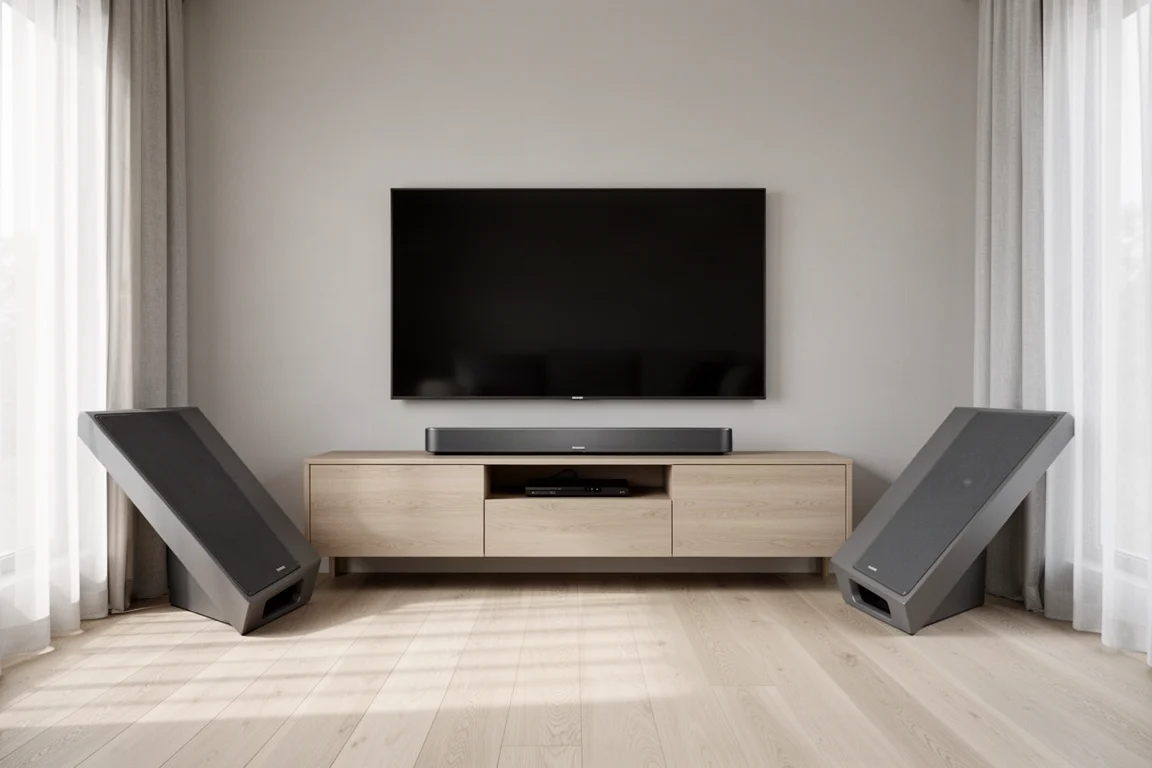
The reason firmware updates need a stick is that the Dragon has no Wi-Fi and no Ethernet, so over-the-air updates are not possible. Bluetooth 5.0 handles wireless duties and also links the bar to the free control app for iOS and Android.
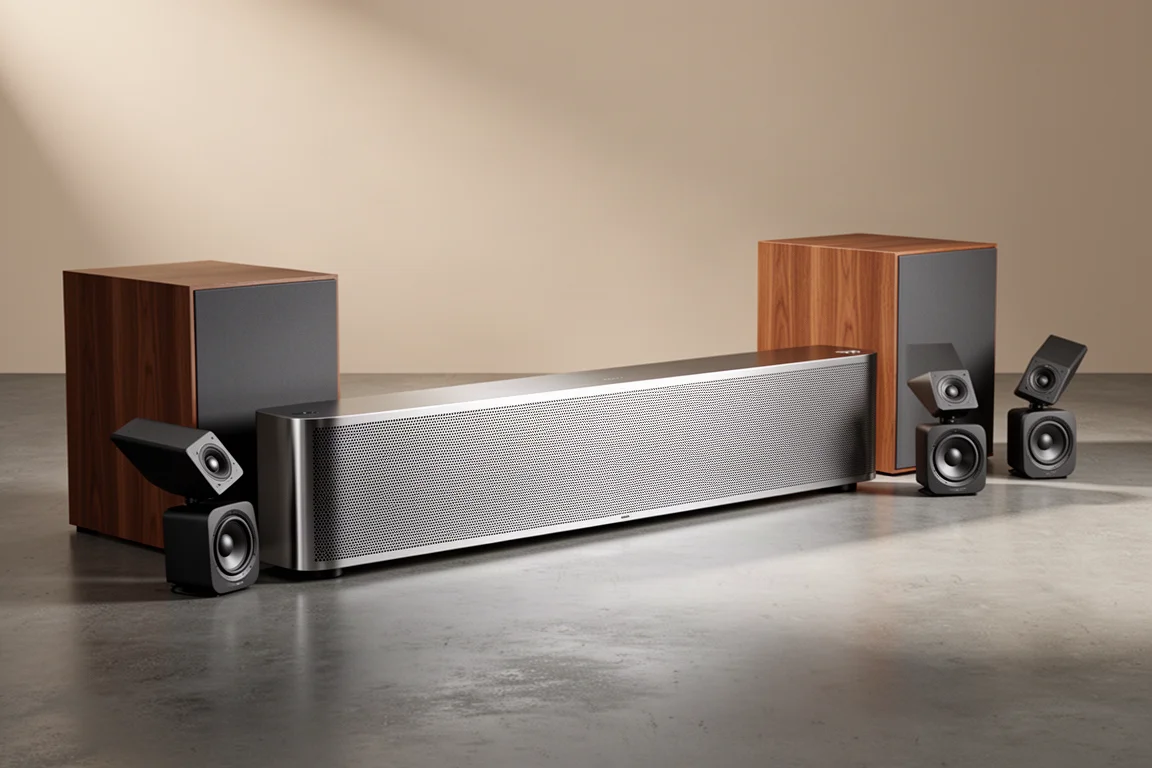
Physically, the system is enormous. It includes two subwoofers and two surround speakers, both noticeably larger than what typically ships with a soundbar, and the main bar is among the biggest on the market. Nakamichi describes the chassis as a one-piece stainless steel design, and the stainless steel grille does wrap the front, side and upward-firing drivers. Much of the rest of the bar, the subwoofers and the surrounds is built from plastic, MDF or composite materials. The steel itself is thin and easy to scratch, dent or mark, so careful unboxing matters.
Who This System Is For
The Dragon makes the most sense for listeners who want scale and impact above everything else. If your priority is raw output, physical presence and the kind of dynamic swing that makes action-heavy film mixes feel enormous, this system is built for exactly that job.
It is a harder recommendation for anyone who values a compact footprint, a quick and largely automatic setup, or a full set of modern streaming and smart home features. It is also a difficult fit for smaller rooms, shared walls, and anyone who listens to a lot of music alongside films, because the system’s strengths and weaknesses both show up most clearly outside a narrow band of demonstration material.
Main Strengths: Output, Dynamics, and Clarity
Dynamics and headroom are where the Dragon is most convincing. Impact arrives quickly and without strain, and the system’s ceiling is very high. A test tone at volume setting 30 measured between 98 and 100 dB in-room at a distance of roughly 12.5 feet, which gives a sense of how much output is available before the bar is anywhere near its limit.
From roughly 300 Hz upward, the main bar measures close to linear at 80 dB in-room, and the upper mid-range and treble are clear and detailed. Intelligibility through the center channel is a clear strength, with dialogue anchored firmly front and center.
The subwoofers also deserve credit for going beyond what most soundbar systems include. Two separate subwoofers distributing bass around a room is a meaningful step up from the single box many competing systems provide, and both the subwoofers and the surrounds are physically larger than the norm.
Setup, Placement, and Daily Use
Nakamichi quotes a setup time of about 15 minutes, and that is realistic if you accept the system’s default house sound and stop there. The quick start guide is straightforward and covers speaker placement and connecting the bar to a television.
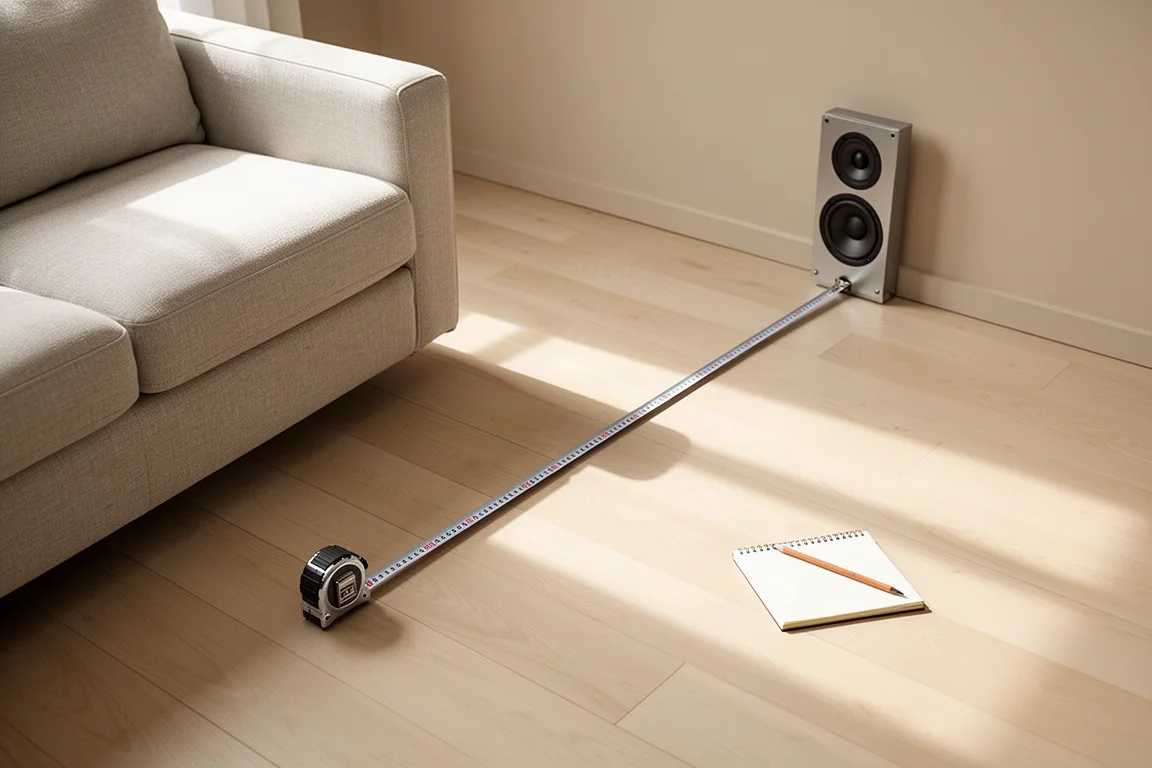
Getting the most from the Dragon takes considerably longer. There is no automated setup, no parametric EQ and no room correction of any kind. Speaker distances and driver levels have to be entered manually using a tape measure and an SPL meter, and the on-screen menu tree and its slow response time add to the effort. That work is worth doing, because it has a measurable effect on how coherent the system sounds.
Placement guidance is specific. Nakamichi recommends the subwoofers in the front corners of the room at a 45 degree angle, which does boost their response, though a corner position does not suit every room. An alternative is to place the subs at the midpoint between the bar and the main listening position. For the surrounds, Nakamichi suggests either slightly behind and to the side of the listening position, or directly to the side, with the drivers roughly in line with seated ear height.
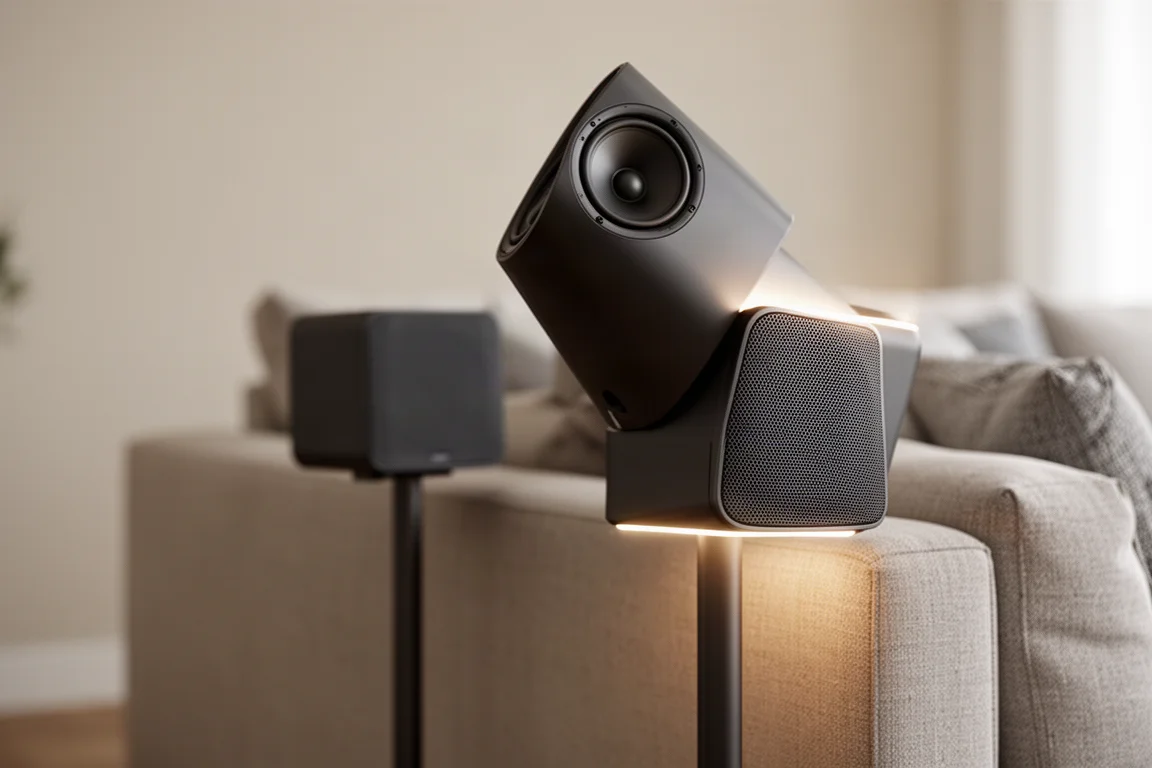
The surround speakers include an adjustable upward-firing driver that Nakamichi calls the Perfect Height mechanism, which can be rotated so the overhead effect lands over the listening position. The related adaptive height effects are presets rather than anything automatic, offering low, medium and high settings with little audible difference between them.
Day to day, the system has some quirks. It takes a moment to lock onto an incoming signal, sync with on-screen dialogue occasionally drifts, and audio dropouts can occur during films and live broadcasts, particularly when streaming. Switching between the ARC input and another HDMI input sometimes requires powering the system down and back up. The control app is genuinely useful and more approachable than the on-screen menus, but using it requires providing an email address and a list of connected equipment.
Things to Consider Before Buying
The most important thing to understand is how the Dragon divides its frequency range. On its own, the main bar does not play much below 300 Hz, regardless of where the crossover is set. That means low mid-range content as well as bass is handled by the subwoofers, so the handoff between bar and sub has to be seamless. For comparison, a compact Bose 600 reaches 100 Hz on its own and the Sonos Arc reaches 70 Hz.
At the bottom end, the subwoofers run out of steam around 40 Hz. Sweeps at 20 and 30 Hz did not register meaningful in-room output at the listening position, and those low sweeps sounded closer to distortion than bass. When the subs are pushed hard, they stop rather than rolling off gracefully, and the overall presentation can become two-dimensional.
Dispersion is another consideration. The front left, right and center channels are localized, and horizontal dispersion is limited: moving a foot or two off the center position can drop energy by as much as 3 dB. Dialogue can also feel forward, even shouty, at higher volumes.
The default out-of-box response favors bass weight and volume first, and the bar ships in its Movie 2 preset. Turning off the EQ presets, setting decoding to native and level matching the subs within 3 to 5 dB of the bar produces a far more even response, one that resembles the gentle bass rise and treble taper of the Harman curve. That is a much more natural sound, but it is not what you hear straight out of the box.
Finally, the feature set is deliberately minimal. There is no Wi-Fi, no AirPlay and no smart home integration. Against systems such as the Sony Bravia Theater Quad, the Samsung Q990D, the Sennheiser Ambeo and the Sonos Arc, the Dragon leads on physical size and sheer output, while those alternatives generally hold the advantage in manageable size, ease of use, setup simplicity, versatility, room fit, modern features and overall sound quality across the widest range of material. Even at a sale price of around $3,300, a modest traditional home theater can match or exceed its performance for less.
Buying Advice
The Dragon is at its best when you know exactly what you are buying. If you want the cinematic equivalent of brute force, have the room and the patience for manual calibration, and mostly watch large-scale film mixes at high volume, the system delivers something few soundbars can match.
If you want a system that is easy to live with, adapts automatically to your room, streams over Wi-Fi, handles music as convincingly as film, and stays controlled at everyday listening levels, the money is better spent elsewhere. A receiver-based traditional system or one of the more versatile flagship soundbar packages will likely satisfy more people more of the time, and often for less.
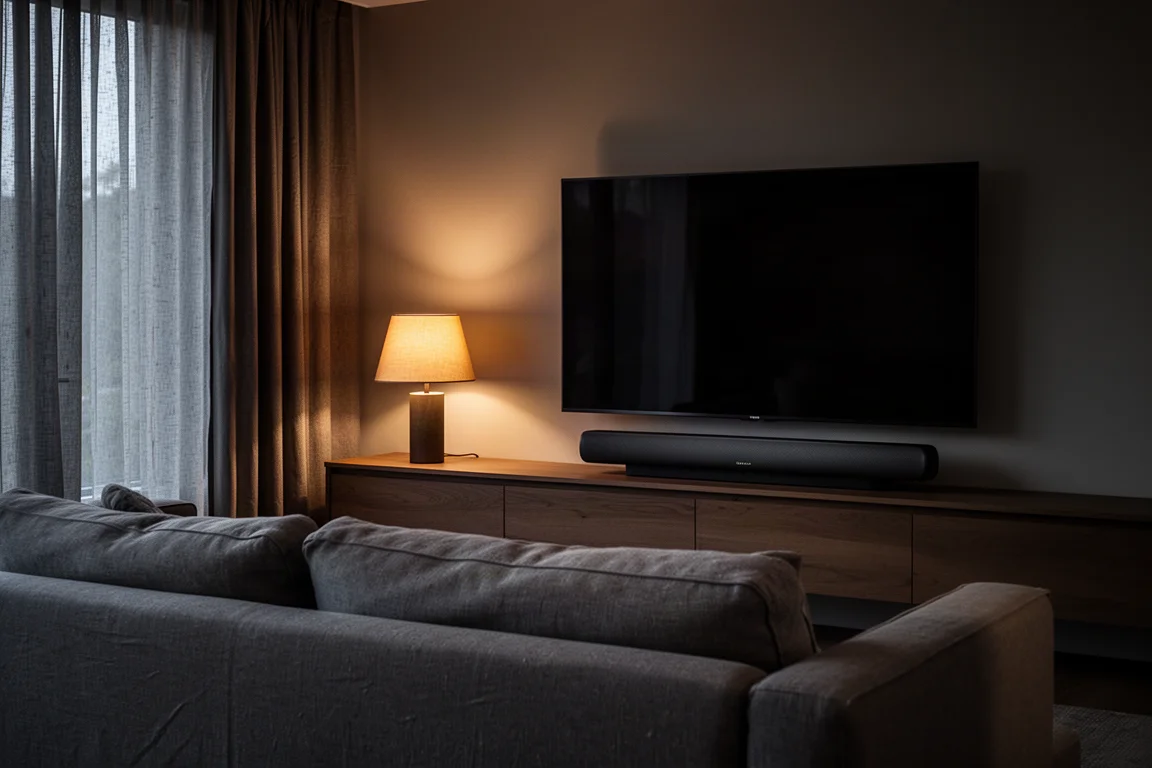
Whichever direction you choose, plan for the setup rather than the marketing. Budget closer to an hour than fifteen minutes, measure your room, and confirm that the subwoofer and surround placements the Dragon prefers will actually work in your space. If those placements are not possible, the system’s performance advantage narrows considerably.
Conclusion
The Nakamichi Dragon is a genuinely large, genuinely powerful system with real strengths in dynamics, clarity and output. It is also demanding to set up, limited at the very bottom of the frequency range, light on modern features, and inconsistent across the full range of material most people actually watch. Buy it for impact and presence, with clear expectations about everything else.
Product link
View more details for Nakamichi Dragon
This product is mentioned in the review. Check the specifications, options, and compatibility before buying.
View more details for Nakamichi DragonFurther reading
Related Reviews
Home Audio
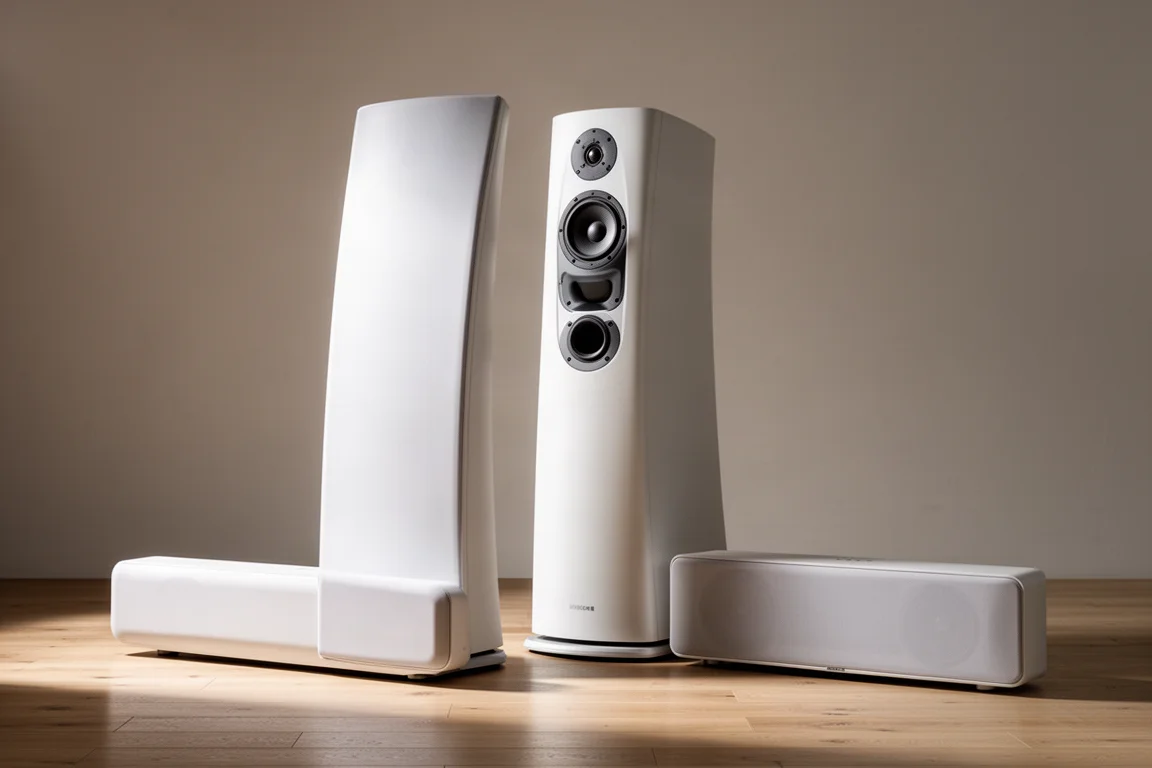
Aperion Novus Tower and Center Review: Punchy Home Theater Sound With Real Refinement
A close look at the Aperion Novus tower and center speakers, from their layered paint finish and punchy bass to the 4-ohm load and what the price actually buys.
Home Audio
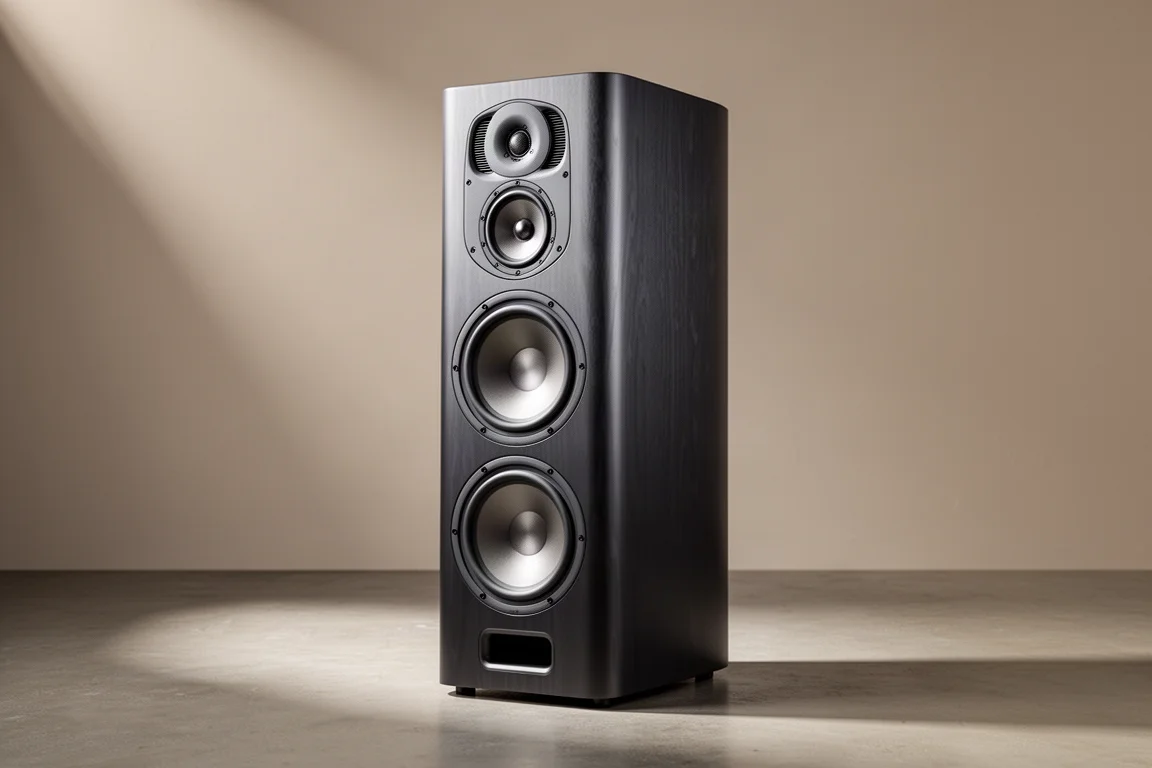
Arendal 1610 Tower Review: Flagship Dynamics in a Room-Friendly Tower
A compact floorstanding tower with three 8-inch aluminium woofers, a 5-inch carbon midrange, and the kind of bass heft usually reserved for much larger speakers.
Home Audio
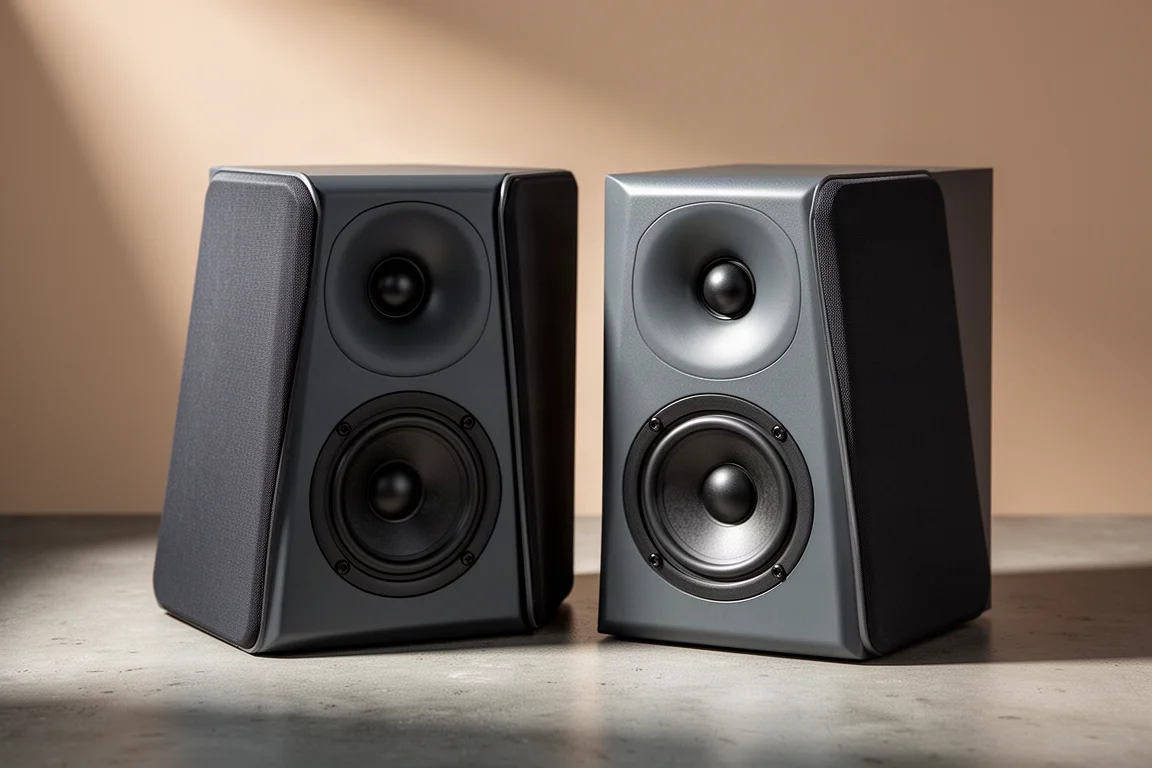
Arendal 1723 S THX Review: A Reference Speaker Built Like a Tank
A practical look at the Arendal 1723 S THX, a sealed, THX-certified speaker with exceptional build quality, a very flat top end, and a midrange that responds beautifully to EQ.