Hi-Fi Amplifiers
Naim Nait 50 Review: A 50th Anniversary Integrated Amplifier With Real Character
The Naim Nait 50 revives the original Nait formula with a machined aluminium volume control, a headphone jack and a phono stage that most analog listeners will not need to upgrade.
Introduction
Naim has been building hi-fi electronics in the UK since 1973, when Julian Vereker founded the company. The Nait arrived ten years later, in 1983, as the entry level model, and it caused a sensation. It was affordable, it sounded great, and it made a simple two-box system feel like all the hi-fi anyone needed.
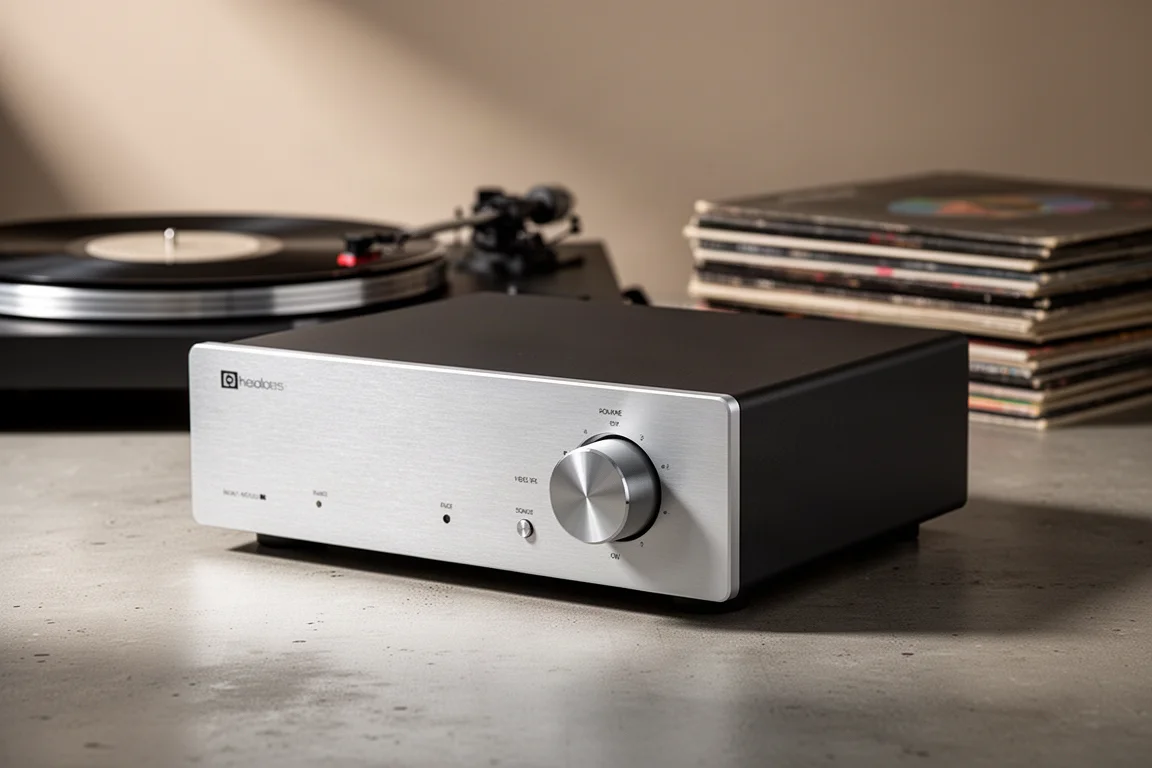
The Nait 50 is a 50th anniversary tribute to that amplifier. Place it next to an original Nait and the family resemblance is unmistakable: the proportions, the front panel layout and the small indicator light all carry over. Look closer and the differences appear. The Nait 50 adds a headphone jack, which the original never had, and replaces the original’s plastic volume control with a knob machined from a solid block of aluminium.
That is not a cosmetic detail. There is no remote control here, so the volume knob is the main interface, and its feel is exceptional. It also sets the tone for the rest of the amplifier: a fully analog design with three inputs, a moving magnet phono stage and no digital connectivity at all.
At $3,599 in the US, with a two-year warranty, this is an expensive piece of kit. It is also a limited edition. The question worth answering is who it makes sense for, and what it does well enough to justify the outlay.
Who This Amplifier Is For
Naim’s answer to that question is more interesting than most. The Nait 50 has been on sale in England for a while, and two groups have been buying it. The first is owners of original Nait amplifiers, people who already know the sound and want a modern version of it. The second is listeners at the start of their journey into better sound, who want a simple, easy-to-use system that does not require reading the owner’s manual to operate.
That second group is the key. This amplifier is very much straight ahead: choose an input, turn the knob, listen. Nothing about it asks for a setup ritual or a menu system.
It is not, however, a universal component. Most people want a remote control. Most people want more input flexibility than three sockets. Some people want a built-in DAC. Anyone in those camps should look elsewhere, because the Nait 50 does not pretend to be a hub for a whole household.
Design and Build
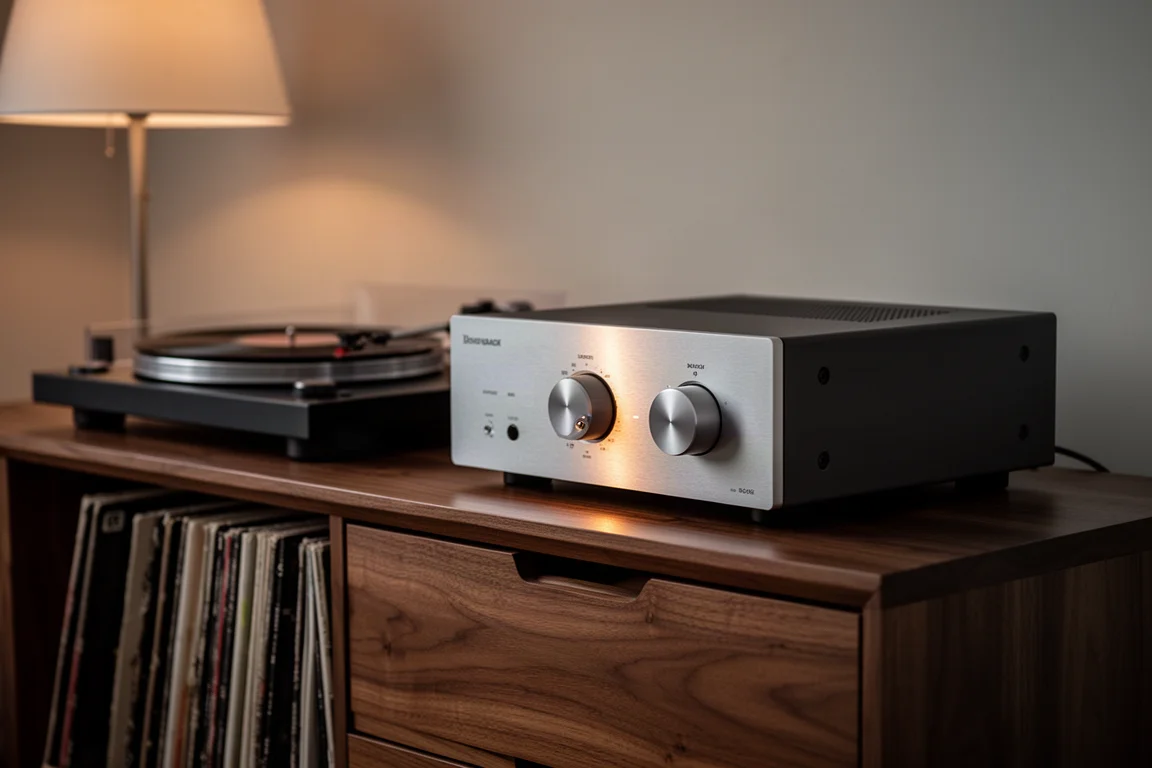
Side by side with the original, the Nait 50 looks nearly identical, and that is the point. The changes are small and deliberate. The headphone jack on the front panel is new. The volume control is machined from a solid chunk of aluminium rather than moulded plastic, and the difference in feel is immediate: precise, weighted and genuinely pleasant to use. Since there is no remote, that matters more here than on most amplifiers.
Naim has designed and built its electronics in the UK since day one, and this amplifier continues that tradition.
The power figures are the other headline. The Nait 50 is rated at 25 watts per channel into 8 ohms, 40 watts per channel into 4 ohms, and 60 watts per channel into 2 ohms. A 2 ohm rating is unusual, because very low impedance loads demand a lot of current, and plenty of amplifiers simply avoid the claim. The original Nait’s rating is harder to pin down, with different sources putting it at 13 or 15 watts per channel.
Around the back you will find three inputs and nothing more. One is a moving magnet phono input on RCA. The other two are DIN sockets, which take DIN-terminated cables. A DIN-to-RCA cable solves the problem for RCA sources such as an outboard DAC, and it works perfectly well, but it is an extra step for some owners. There is no internal DAC and no digital input, so every source you connect will need its own conversion handled elsewhere.
One small annoyance: the white LED indicator is extremely bright, bright enough to light up a room at night. It is the kind of detail an owner notices on the first evening. Covering it is an easy fix, and some listeners will simply treat it as a nightlight.
Sound Quality and Presentation
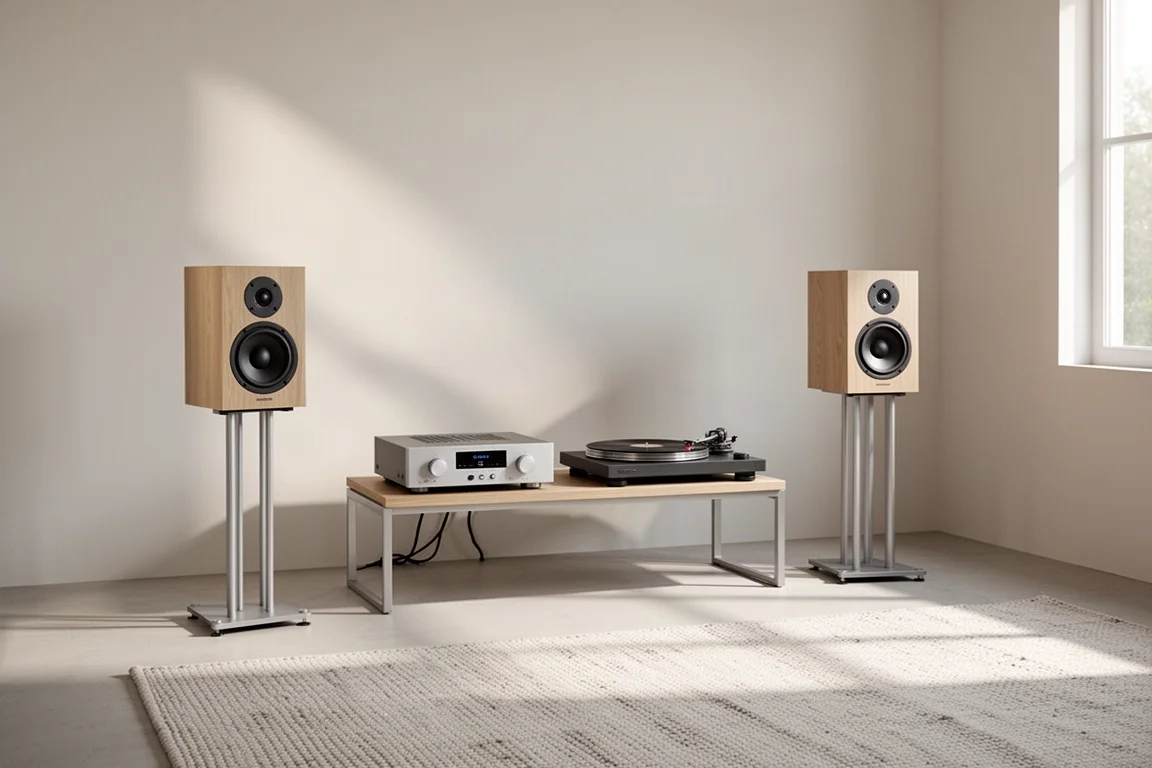
The first impressions, formed with a pair of KEF LS50 Meta standmount speakers, were of an amplifier that is refined, clean, precise and very well controlled, while still carrying plenty of soul. Nothing about the presentation felt clinical.
The more revealing test was a direct comparison with an original Nait. The material was David Chesky’s “The Body Acoustic,” a live-to-two-track recording with no overdubs, no dynamic range compression and no equalisation, captured in a church in Brooklyn. It is the kind of recording that exposes exactly how an amplifier handles transients and acoustic space.
The Nait 50 handled it beautifully. The leading edge of Randy Brecker’s trumpet, one of the hardest things to get right, arrived with the attack intact. The standup bass, which can easily turn muddy, kept clear pitch definition. Piano dynamics and flourishes were clearly delineated, and the sense of a real acoustic around the musicians came through.
Switching to the original Nait told a different story. The older amplifier toned things down: the trumpet’s leading edge softened, the bass sweetened, and the result was genuinely beautiful, but it gave up the clarity and presence the Nait 50 delivered. The anniversary model also sounded more powerful, with dynamics that opened up rather than feeling compressed. The rhythmic energy between players, that sense of musicians listening and responding to each other, was carried far more convincingly, while the original felt slower and more vague.
How It Compares With Other Amplifiers
The obvious modern counterpart is the Musical Fidelity A1, another retro-styled design and a Class A amplifier rated at 25 watts per channel. On a St Germain album, sampled acid jazz built from compressed and processed material, the A1 showed off an impressive bottom end for such a small amplifier: gusto, juice and power in abundance. Its top end, however, was a little aggressive and hard on that kind of recording.
The Nait 50 delivered greater clarity with less pain. The edge was still present in the music, but it did not irritate the way it did through the A1. Bass control and precision were better, where the A1’s low end was a touch sloppy and messy in a likeable way. The soundstage also opened up more, with a stronger three-dimensional quality.
The harder test was a pair of Magnepan LRS Plus planar magnetic speakers, which are low sensitivity and low impedance and qualify as a genuine torture test for a small amplifier. The 60 watt 2 ohm rating made the Nait 50 a plausible partner, and on a live Van Morrison recording from 1973 the connection to the performance held: brass, strings and guitars all came through, and the sense of a singer locked into a band was intact. What the LRS Plus will not do, with any amplifier, is deliver punchy, visceral bass, and that limitation belongs to the speaker rather than to the Nait 50.
Phono Stage and Headphone Listening
The phono stage deserves its own note. With a Technics SL-1200G turntable and a Grado Platinum 3 high output moving iron cartridge, the sound was rich, perhaps a little too fat and juicy for some tastes. Swapping to an inexpensive Audio-Technica moving magnet cartridge brought a more neutral balance with real clarity, and the system remained enjoyable at both ends of that spectrum. For most buyers of an amplifier like this, the built-in phono stage should be all that is needed; a separate phono preamp only makes sense for listeners who are deeply committed to analog replay.

Headphone listening is equally well served, which is a bonus the original Nait could not offer at all. A pair of Grado RS-1 headphones with flat ear pads sounded juicy, lived-in, natural and fun. Switching to a planar magnetic Audeze LCD-3 was a genuine surprise: fast, clear and precise, with a transparency that made the headphones seem to disappear, closer to what you would expect from an electrostatic design.
Things to Consider Before Buying
The Nait 50 is a focused product, and its limitations are as clear as its strengths.
There is no remote control, so every volume change is a walk to the rack. There are only three inputs, two of which are DIN. There is no internal DAC and no digital connectivity. The indicator LED is unusually bright in a dark room. And while the amplifier drives difficult low impedance speakers with confidence, it will not manufacture bass slam from a speaker that cannot produce it.
The price is also a real consideration at $3,599, and the warranty runs to two years. This is not an impulse purchase, and it is not a component that tries to please everyone.
Buying Advice
For a listener who wants a simple, all-analog system and is willing to accept the trade-offs, the Nait 50 has very little direct competition in its price class. Its phono stage is good enough that most owners will not need a separate one, its headphone output is genuinely capable, and its control over difficult loads gives it flexibility with a wider range of speakers than the modest power rating suggests.
It is also worth knowing what the used market looks like. Original Nait amplifiers in good condition have been changing hands in the US for roughly $1,500 to $2,000, which is several times their original price, and values have risen over the years rather than fallen. A limited edition anniversary model is a reasonable bet to hold value in a similar way, though nobody should buy an amplifier as an investment. Buy it because the sound suits the way you listen.
Conclusion
The Nait 50 is a rare thing: a retro tribute that stands on its own merits. It looks like the amplifier that inspired it, but it adds a headphone jack, a beautifully machined volume control, and a level of clarity, control and rhythmic drive the original could not match. It is simple to use, it is built in the UK, and it makes analog sources sound like they matter.
It is not for everyone. If you need a remote, more inputs or digital connectivity, look elsewhere. If you want a compact analog integrated amplifier that gets out of the way of the music, and you are comfortable with the price, this one earns its place.
Product link
View more details for Naim Nait 50
This product is mentioned in the review. Check the specifications, options, and compatibility before buying.
View more details for Naim Nait 50Further reading
Related Reviews
Hi-Fi Amplifiers
Accuphase E-280 Review: Entry-Level Accuphase With Flagship Attention to Detail
A close look at the Accuphase E-280 integrated amplifier, covering its champagne build, AAVA volume control, sound quality, and the speakers and sources that suit it best.
Hi-Fi Amplifiers
Advance Paris A10 Classic vs Yamaha A-S301: Two Integrated Amplifiers Compared
A practical comparison of a $350 integrated amplifier and a $2,500 reference model, covering the differences that matter and the ones that do not.
Hi-Fi Amplifiers
Affordable Chinese Amplifiers Worth Buying: Five Budget Hi-Fi Amps Compared
A practical look at five affordable amplifiers, what each one does well, and the trade-offs to weigh before you buy.