Hi-Fi Audio
NAD M66 Review: A Streaming Preamplifier Built for Serious Two-Channel Systems
The NAD M66 combines BluOS streaming, a flagship ESS DAC, Dirac Live room correction and four independent subwoofer outputs in one Master Series chassis.
Introduction
The NAD M66 is a streaming preamplifier from NAD’s Master Series, the line the company positions above its main range as a no-compromise approach to two-channel sound. It combines a network streamer and a full preamplifier in a single chassis, so a complete system needs only a power amplifier and a pair of speakers.
NAD’s reputation for value stretches back to the late 1970s and the 3020 integrated amplifier, and more recently to its BluOS streaming products. The Master Series applies that same engineering thinking at a higher price point, and it still tends to sell for considerably less than much of the high-end competition.
The M66 takes the streaming preamplifier category further than most rivals on both performance and feature count, and it does so without asking the listener to juggle several apps or remotes to play an album.
Who this product is for
This is a component for listeners who want one place to choose music, change volume and switch inputs. On a conventional system, adding a streamer often means selecting tracks in one app and then reaching for a separate preamplifier remote to adjust the level. The M66 folds both jobs into the BluOS app, which makes the everyday listening routine noticeably smoother.
It also suits anyone building a two-channel system around a separate power amplifier. NAD’s own M23 is a natural partner, and the M66 is styled to match it. Vinyl listeners are covered too, thanks to a built-in phono stage, and listeners who want better television sound can run audio from a TV through the HDMI ARC input.
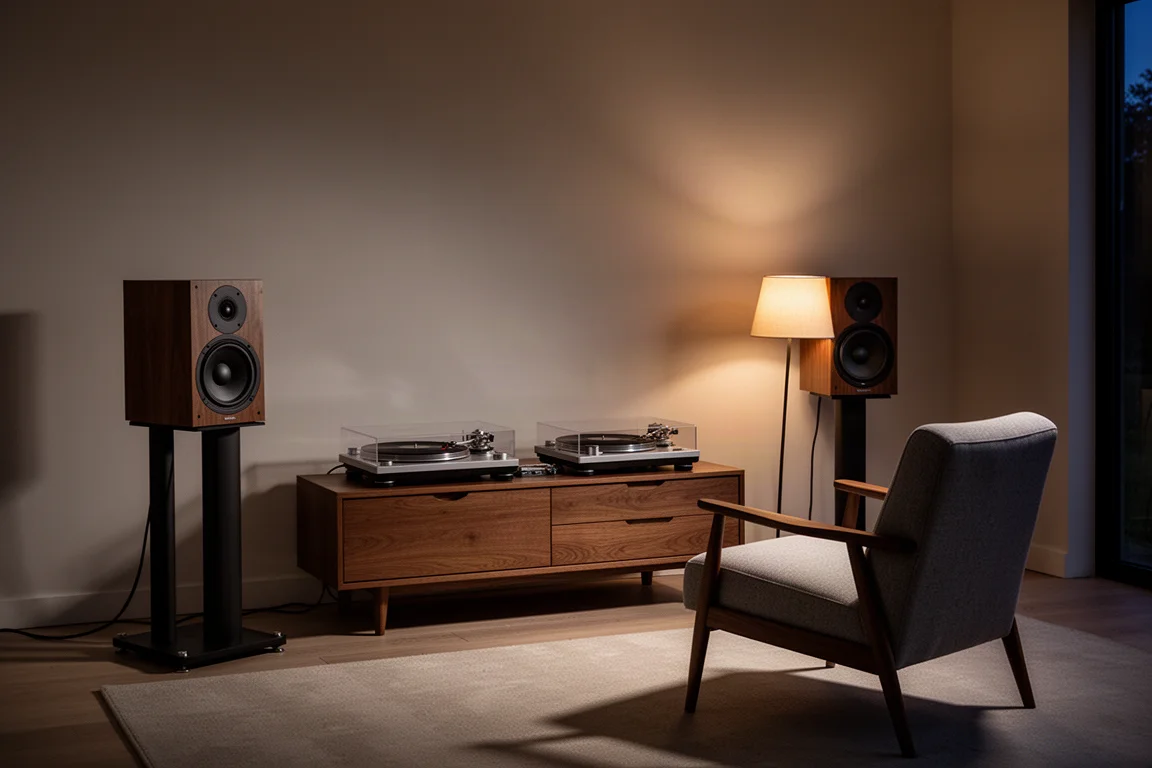
It is worth thinking of the M66 as the control centre of a system rather than an add-on. If you already own a good power amplifier and speakers and want a single hub for streaming, analog sources, headphones and room correction, this is the slot it fills.
Main strengths
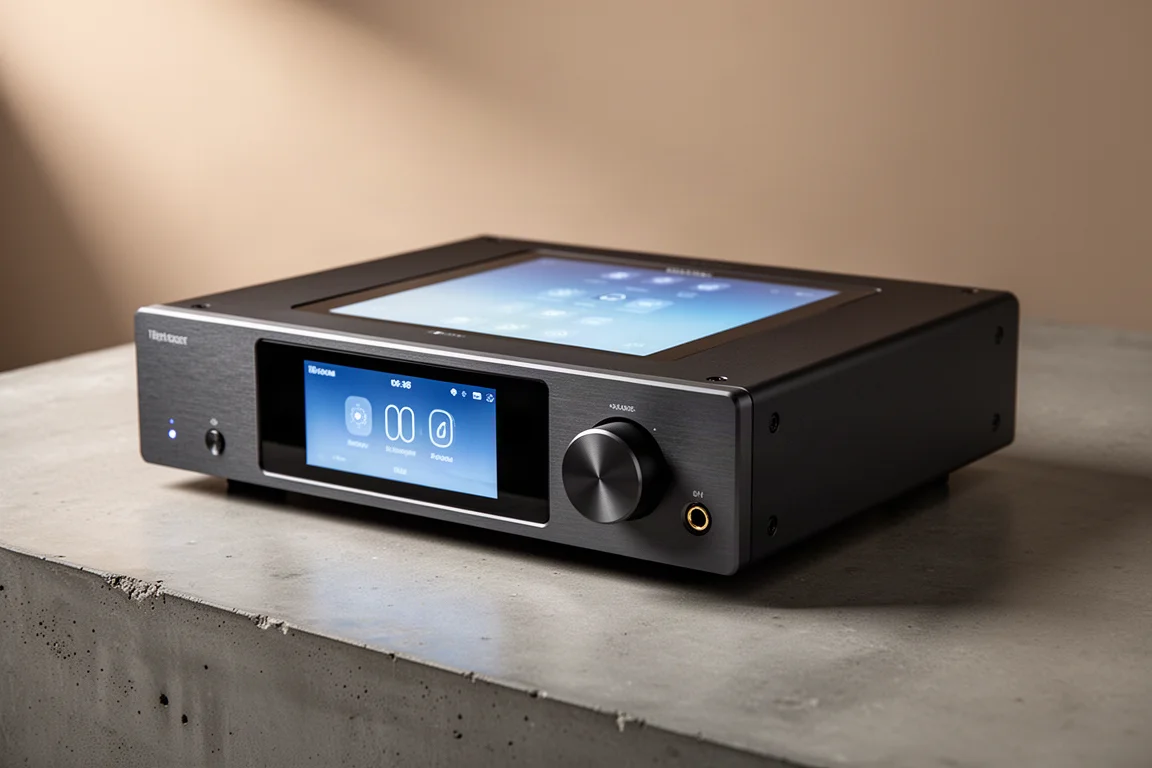
Build quality is the first thing that registers. The front panel is brushed aluminium with rounded edges and a 7-inch touchscreen, and the finish matches the rest of the Master Series. The unit is notably heavier than most of its competitors, largely because it carries two power supplies, one dedicated to the analog section and one to the digital section.
At the heart of the digital path sits a flagship ESS Sabre ES9038 Pro digital-to-analog converter paired with an ES9822 Pro analog-to-digital converter. These are among the most expensive converter chips available, and NAD has wrapped them in high-performance support circuitry intended to pull fine musical detail out of digital sources.
NAD also developed a circuit called Dynamic Digital Headroom. It addresses the clipping that can occur with sudden high-frequency attacks, such as a sharp cymbal crash, and the result is unusually effortless cymbals along with a small gain in dynamics on percussive material. On most music the difference is subtle, and it is most audible on certain 16-bit CD-quality recordings.
Volume control is handled by precision ladder resistors, a design normally reserved for high-end equipment. It improves dynamic range and keeps channel matching accurate even at very low listening levels. There is also a headphone output that automatically switches off the feed to the external power amplifier, which makes late-night headphone listening straightforward.
Streaming and control through BluOS
The M66 runs NAD’s BluOS streaming platform, which has matured considerably over the years. It supports the major streaming services, most of which offer better-than-CD quality, and the app is used for browsing, playback and volume. A simple remote is supplied for input selection, volume and mute, though most owners will rarely need it.
BluOS also allows a whole-home setup: additional BluOS speakers or streamers can play the same high-resolution music together or independently. Guests can stream over Bluetooth, including aptX HD, or use Apple AirPlay 2. Roon support was in its final certification stage at the time of testing, so buyers should confirm current status if that matters to them.
Connections and upgrade paths
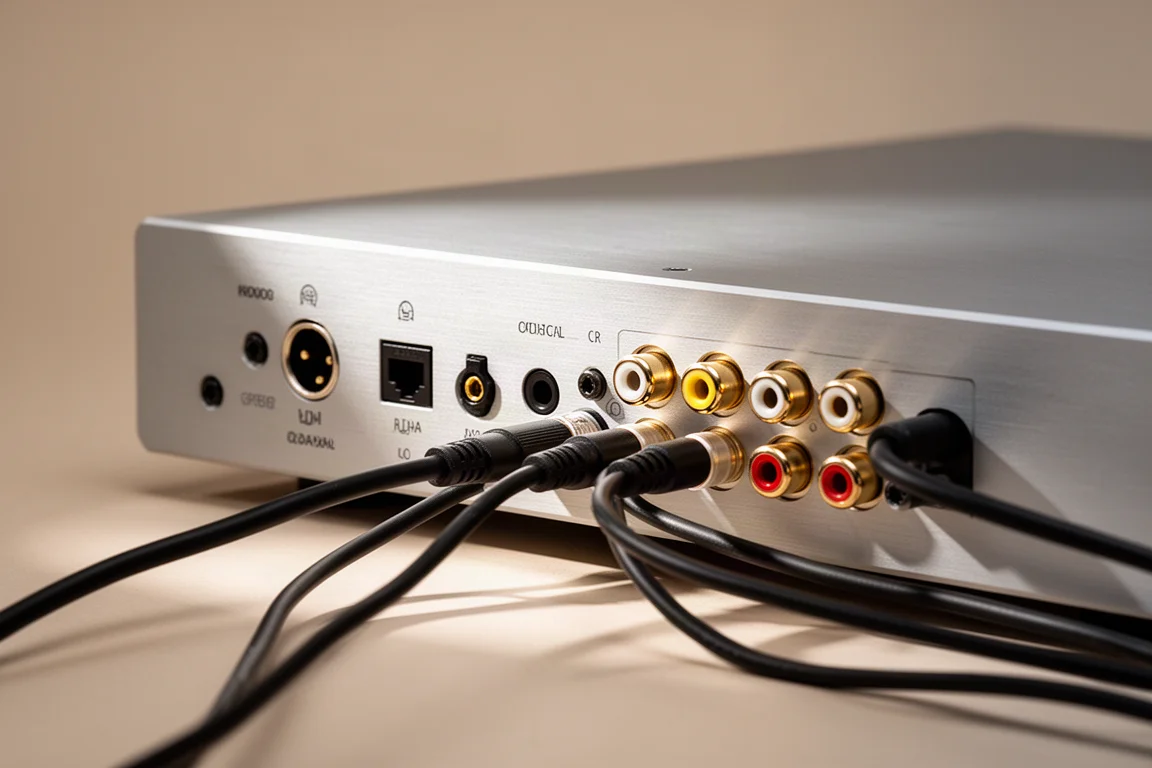
The rear panel is unusually generous for a streaming preamplifier. There are two coaxial and two optical digital inputs, an AES/EBU balanced digital input, two analog inputs, and a phono stage with both moving magnet and moving coil inputs. A USB input accepts external drives, and HDMI ARC brings television audio into the system. Outputs include chassis-mounted RCA connectors and a pair of XLR outputs.
Two MDC2 expansion slots are fitted as well. These allow the owner to add a new card later if a new technology emerges, an approach NAD has used for years to extend the useful life of its equipment.
Room correction and bass management
Dirac Live room correction is built in, and it can store up to five separate filter profiles. That is genuinely useful in a real room: a desk seat, a main listening chair and a position with blinds open or closed all produce different frequency peaks and dips. Switching between stored profiles takes a single press in the app.
The M66 is described as the first stereo preamplifier to include Dirac Live Bass Control, which adds advanced bass management, including phase alignment between subwoofers and main speakers, with the goal of a smooth combined response. It also provides four RCA and four XLR subwoofer outputs, and all eight are independent. For a two-channel system with multiple subwoofers, that combination is difficult to match.

One detail to understand is that Dirac Live Bass Control currently sets a crossover floor at 70 Hz. For owners of full-range tower speakers, a lower floor or the removal of the crossover would let the software blend the best bass from both subs and towers, and NAD has indicated this may arrive in a future software release.
Things to consider before buying
The phono stage covers both cartridge types, but the moving coil section has fixed loading and gain, with the load set at 100 ohms. Some moving coil owners may prefer to keep a separate phono stage and connect it to one of the analog inputs instead.
Analog sources can be run direct, bypassing all digital processing, or converted to digital so Dirac Live can be applied. The analog-to-digital conversion uses premium ESS converter chips, so both paths are well served.
Two-channel bypass for home theater integration is part of the feature set, but it had not yet been enabled at the time of testing. Anyone planning to share the room with a surround system should confirm the current status before ordering.
On the physical side, the wireless antennas on the rear panel are large and can look untidy; they can be rotated to the side, which works in most installations. The touchscreen also rewards deliberate swipes when scrolling across inputs, since a careless gesture can change the input by mistake.
Finally, expect an adjustment period with Dirac Live. First-time users often feel the result has less bass. In most cases a room peak, for example around 70 Hz, was booming and masking everything else. Once the peaks are flattened, the sound is tighter and more even, but the same volume setting can feel quieter because those peaks are gone.
Buying advice
The M66 sits in premium territory, and the value argument rests on what is included. Dirac Live Bass Control is a software title that normally sells for around $848, and here it is bundled with the hardware. Add the four independent subwoofer outputs, the phono stage, HDMI ARC and the MDC2 upgrade slots, and the feature set is unusually complete for a single box.
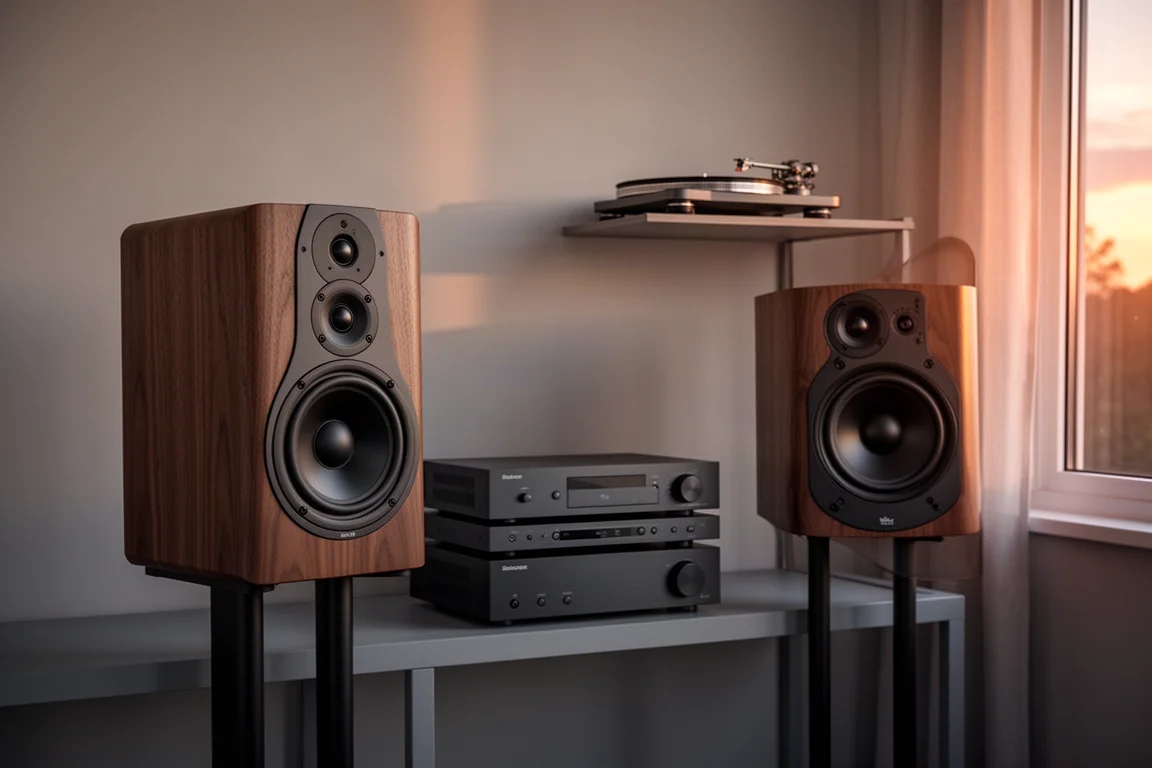
Pairing matters more than anything else. Budget for a power amplifier that matches the M66’s transparency, and for speakers that can reveal what the converter and room correction are doing. Buyers who already own a capable amplifier and speakers will get the most from the upgrade, because the M66 slots in without demanding a wholesale system change. It is also worth confirming that home theater bypass and Roon certification have reached their final state if either is essential to your setup.
Conclusion
The NAD M66 brings together full streaming, a flagship ESS converter stage, a well-specified preamplifier, a moving magnet and moving coil phono stage, and Dirac Live room correction with Bass Control in one Master Series chassis. The four independent subwoofer outputs and the ability to store multiple correction profiles give it genuine flexibility in rooms that are less than acoustically ideal.
The reservations are modest: fixed moving coil loading, a currently limited bass management crossover floor, and a couple of small ergonomic quirks. For listeners who want a single, well-built hub for a serious two-channel system and are comfortable at this price level, the M66 makes a strong case for itself.
Product link
View more details for NAD M66
This product is mentioned in the review. Check the specifications, options, and compatibility before buying.
View more details for NAD M66Further reading
Related Reviews
Hi-Fi Audio
Accuphase C-57 vs Allnic H-7000V: Two High-End Phono Stages Compared
A fully balanced solid-state phono stage with a pitch-black noise floor meets a tube design built for well-loved records. Here is how to choose between them.
Hi-Fi Audio
Active vs Passive Hi-Fi: Five Components for a Modern System
Five components that define modern active and passive hi-fi systems, with the strengths, trade-offs and setup details worth weighing before you buy.
Hi-Fi Audio
Advance Paris A10 Apex Review: A Hybrid Integrated Amplifier That Covers a Lot of Ground
A French hybrid integrated amplifier with a class A tube preamp stage, analogue power meters, and an internal DAC and phono stage good enough to make extra boxes unnecessary.