Streaming Amplifiers
NAD M10 V2 vs Naim Uniti Atom vs Lyngdorf TDAI-1120: Three Compact Streaming Amplifiers Compared
A practical comparison of three compact streaming amplifiers, covering room correction, bass management, connectivity and the listening traits that separate them.
Introduction
The compact streaming amplifier has quietly become the most useful box in a modern hi-fi system. It replaces a streamer, a DAC, a preamplifier and a power amplifier with a single chassis that fits on a shelf, and it can often be the only component you need for vinyl, streaming and television sound.
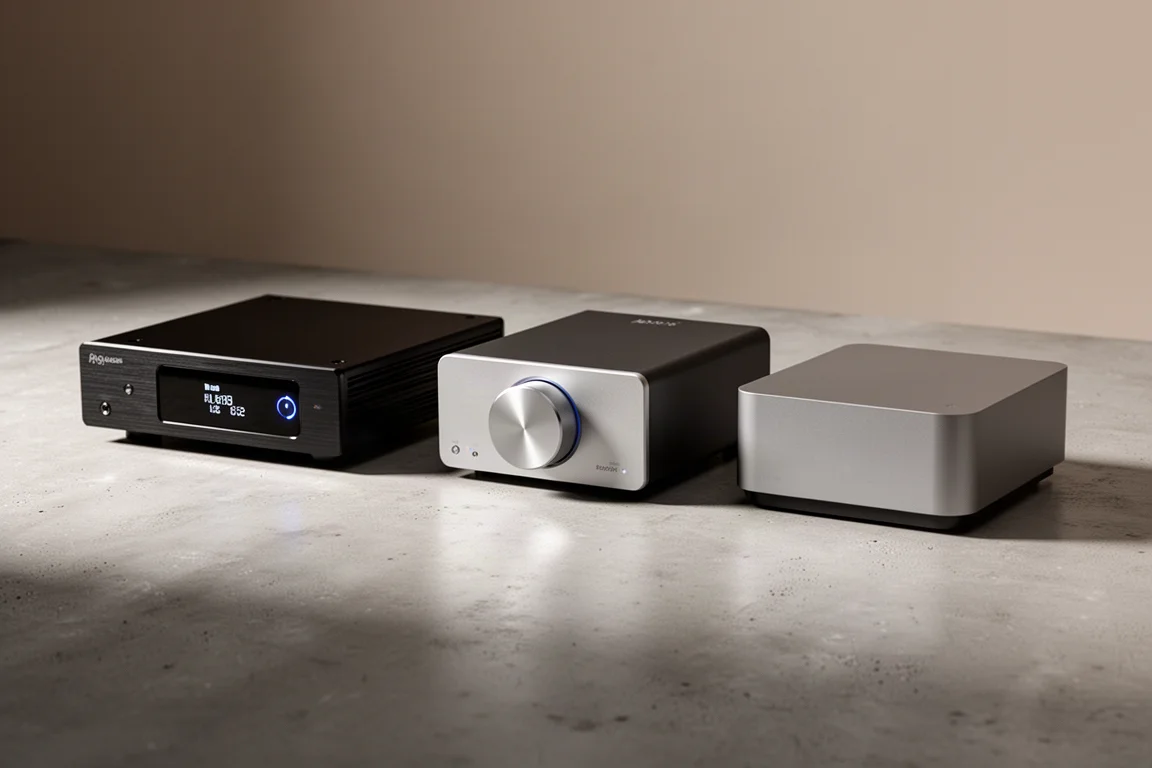
Three models sit at the centre of that category right now. The NAD M10 V2 packs in Dirac room correction, a full BluOS streaming platform and an HDMI e-ARC input. The Naim Uniti Atom answers with a warmer, more organic presentation, a headphone socket and a volume control that is genuinely a pleasure to use. The Lyngdorf TDAI-1120 stays lean and lets RoomPerfect do the heavy lifting.
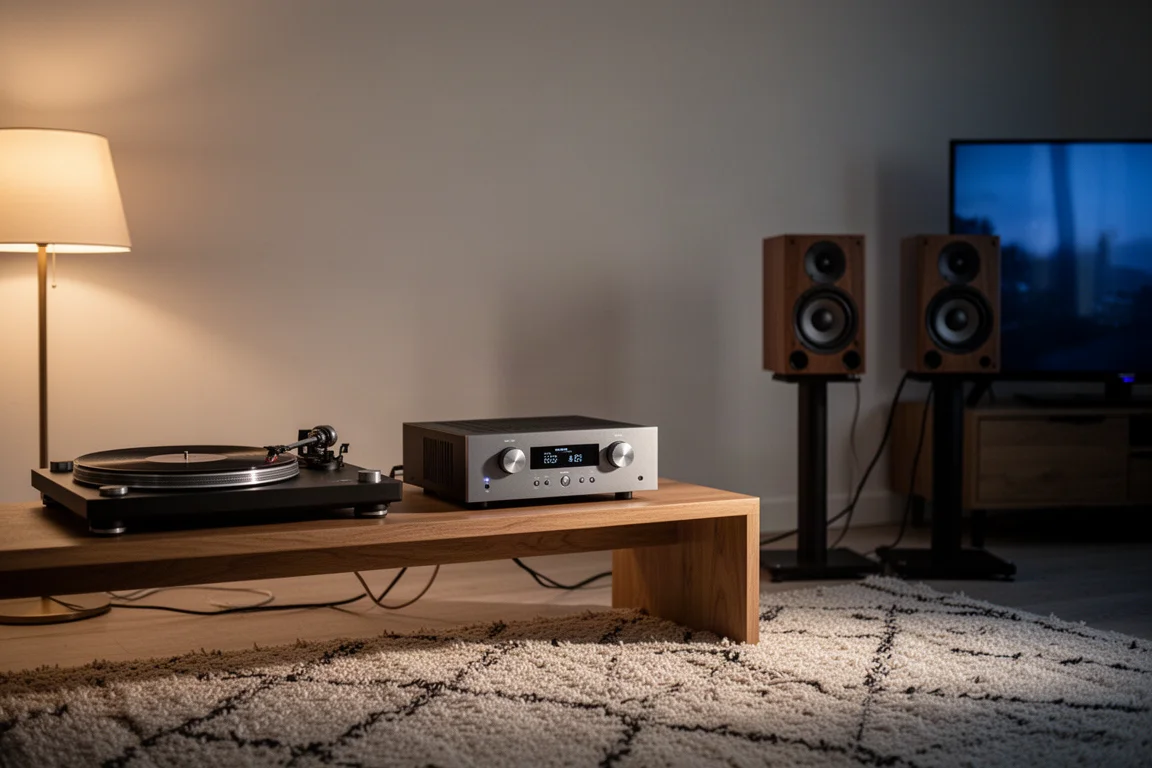
Each of them can anchor a serious system, and each makes a different set of compromises. This comparison looks at what separates them in practice: streaming platforms, room correction, bass management, connectivity, control and sound.
What These Three Streaming Amplifiers Have in Common
All three are compact, shelf-friendly integrated designs that combine network streaming, digital-to-analog conversion and amplification in one box. All three are controlled primarily from a phone or tablet app. All three can be connected to a television, and all three can be used with a subwoofer, although the way each handles bass is one of the clearest dividing lines between them.
The differences that matter most in daily use come down to four things: how good the streaming app is, whether the amplifier includes room correction, how well it integrates a subwoofer, and the tonal character it brings to music.
NAD M10 V2: The Most Complete All-Rounder
The M10 V2 is the second generation of NAD’s M10 and sits within the company’s Masters series. It is a class D design rated at 100 watts per channel into both 8 ohms and 4 ohms, and it uses the same 32-bit, 384kHz capable DAC as the original. NAD describes improved gain algorithms for this version, which should make it more capable of driving harder-to-drive loudspeakers than the first M10.
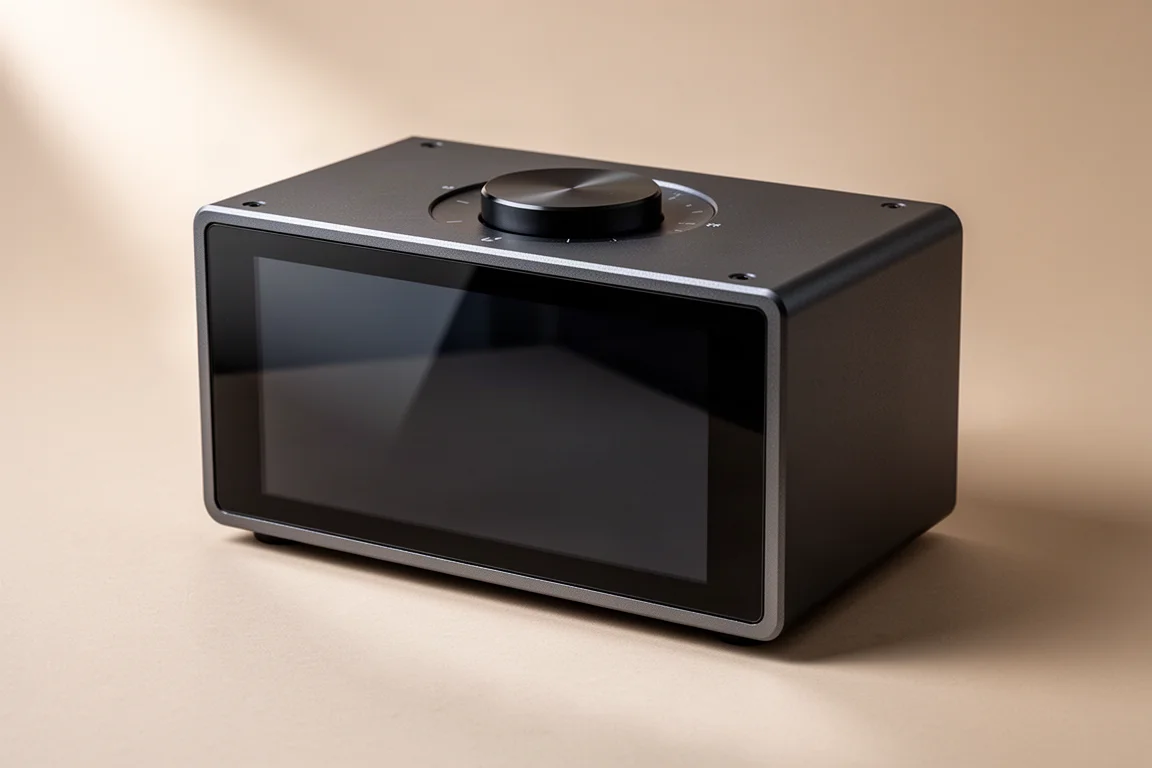
The front panel keeps its 7 inch IPS LCD touchscreen, now with what NAD describes as improved viewing angles. Hardwired inputs display animated VU meters, while streaming inputs show cover art with album and artist information. A traditional infrared remote control is included this time, and it is a genuinely useful addition: basic playback and volume control no longer require touching the amplifier or unlocking a phone.
Streaming runs through NAD’s BluOS module, which supports Roon, Tidal Connect, Spotify Connect, AirPlay 2 and Bluetooth. Inside the BluOS app there is also Amazon HD Music, Deezer and Qobuz, and the app can even be used from an Apple Watch for basic control. Around the back, the M10 V2 offers an HDMI e-ARC input, coaxial and optical digital inputs, analog inputs and a subwoofer output. A CD transport, a set-top box, a television and an external phono stage can all be connected at once.
NAD M10 V2: Dirac Room Correction and Bass Management
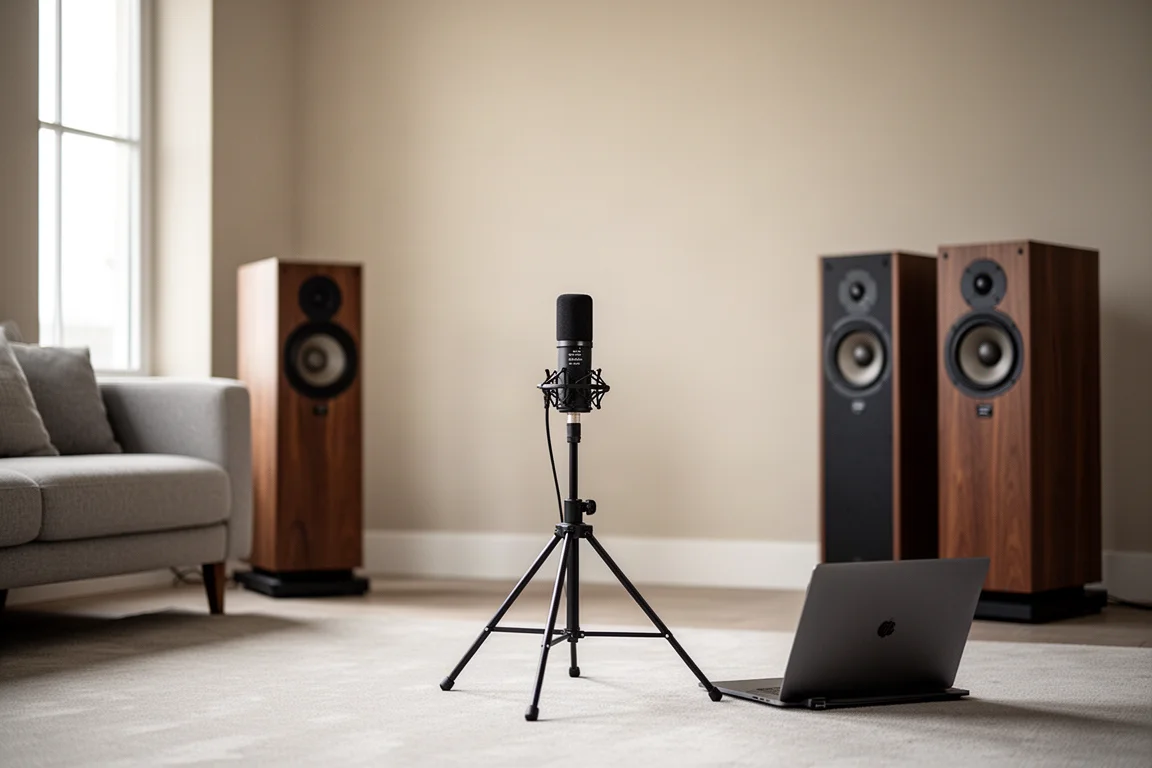
Dirac room correction is the M10 V2’s strongest argument. A calibrated microphone is supplied in the box, and the software measures the speakers at a series of points around the main listening position before building a target curve designed to flatten the frequency response and reduce the negative effects of the room. In a room with treated walls but limited low frequency absorption, that is exactly where the biggest gains appear.
The standard Dirac curve can sound a little dry and light in the bass. Custom target curves solve that, adding weight at the low end and, in one case, a touch more energy at the top. The payoff is most obvious in imaging: with Dirac engaged, the midrange stops sitting as a dense mass between the speakers and instead spreads out with clearer placement of individual sounds and a more organised soundstage. Switching it off afterwards makes the uncorrected sound feel noticeably wrong.
Dirac ships in a limited form by default, and the full frequency range version costs an extra $100, which is worth budgeting for. Taking the measurements is straightforward; designing custom target curves is not, and there is a real risk of undoing the benefit through trial and error. Anyone wanting to go beyond the stock curve is better served by professional help.
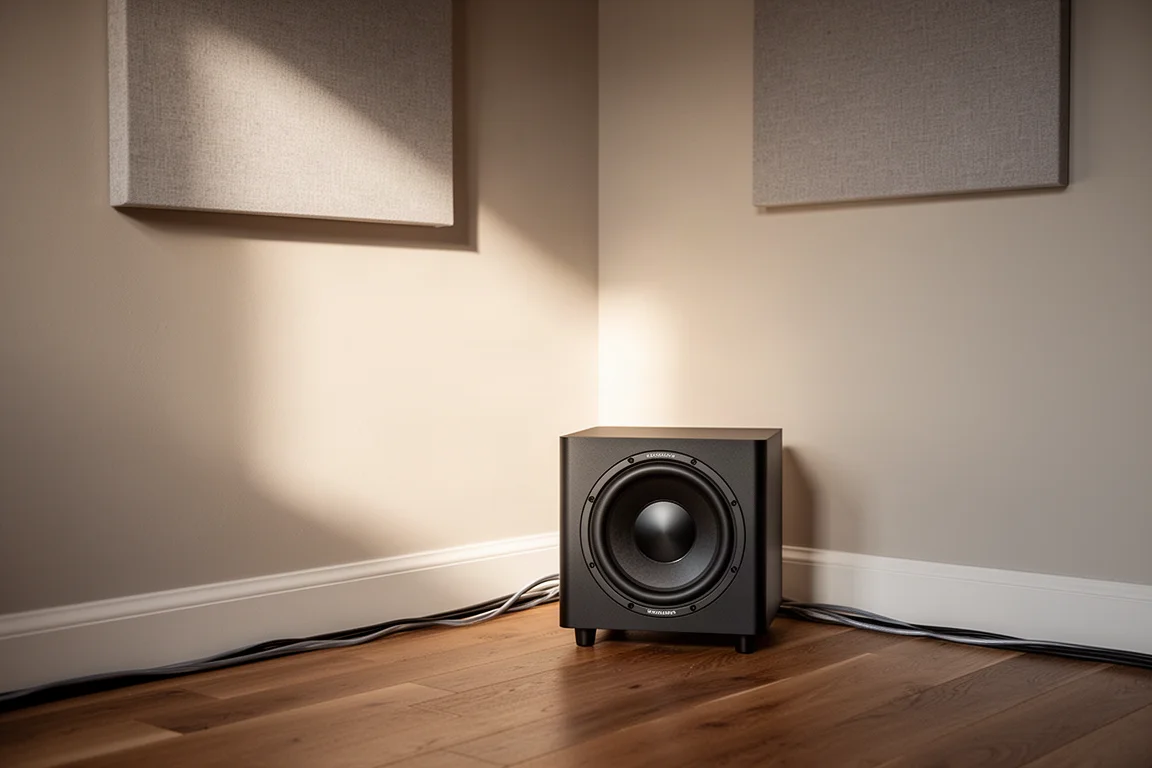
Bass management is the other NAD advantage. Inside BluOS you can tell the amplifier how many subwoofers are connected, choose the crossover frequency and let it design the crossover for you. The M10 V2 also applies high pass filtering to the main speakers, which makes subwoofer integration far tidier than simply feeding a sub from a preamplifier output.
Naim Uniti Atom: Organic Sound and Excellent Haptics
The Uniti Atom is a similar shoebox-sized amplifier, and it adds two things the NAD does not offer: Chromecast support and a headphone socket. It also has what may be the finest volume control fitted to any amplifier in this class, and its remote control has a tactility that makes it pleasant to use even when an app is open.
Tonally, the Atom is softer and rounder in the lower treble than the M10 V2. That makes it a natural partner for warmer or thicker-sounding speakers, and it gives music a more organic, flowing presentation. On vocal-led records it can be the more emotionally engaging of the two.
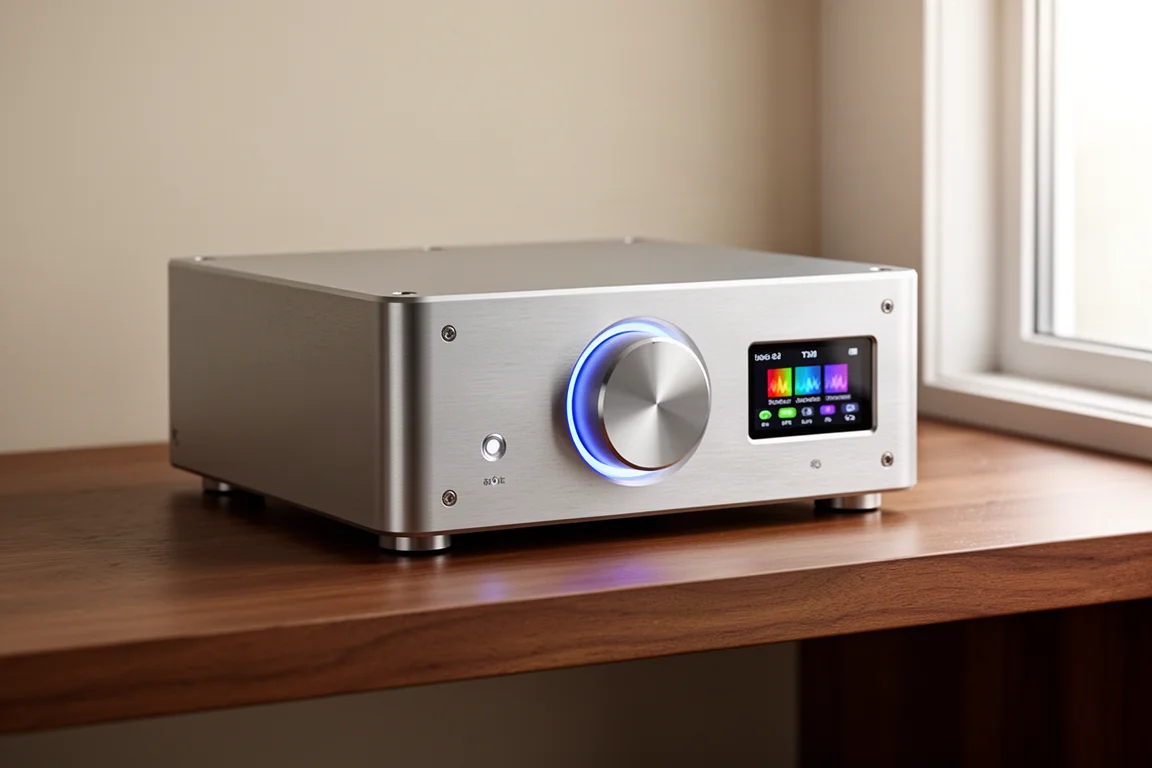
The trade-offs are room correction and bass management. The Atom has neither. A subwoofer has to be fed from the preamplifier outputs in what is effectively augmentation mode, with no high pass filtering applied to the main speakers. Its companion app is also less polished and less accomplished than BluOS, on both phone and tablet.
Lyngdorf TDAI-1120: RoomPerfect Made Straightforward
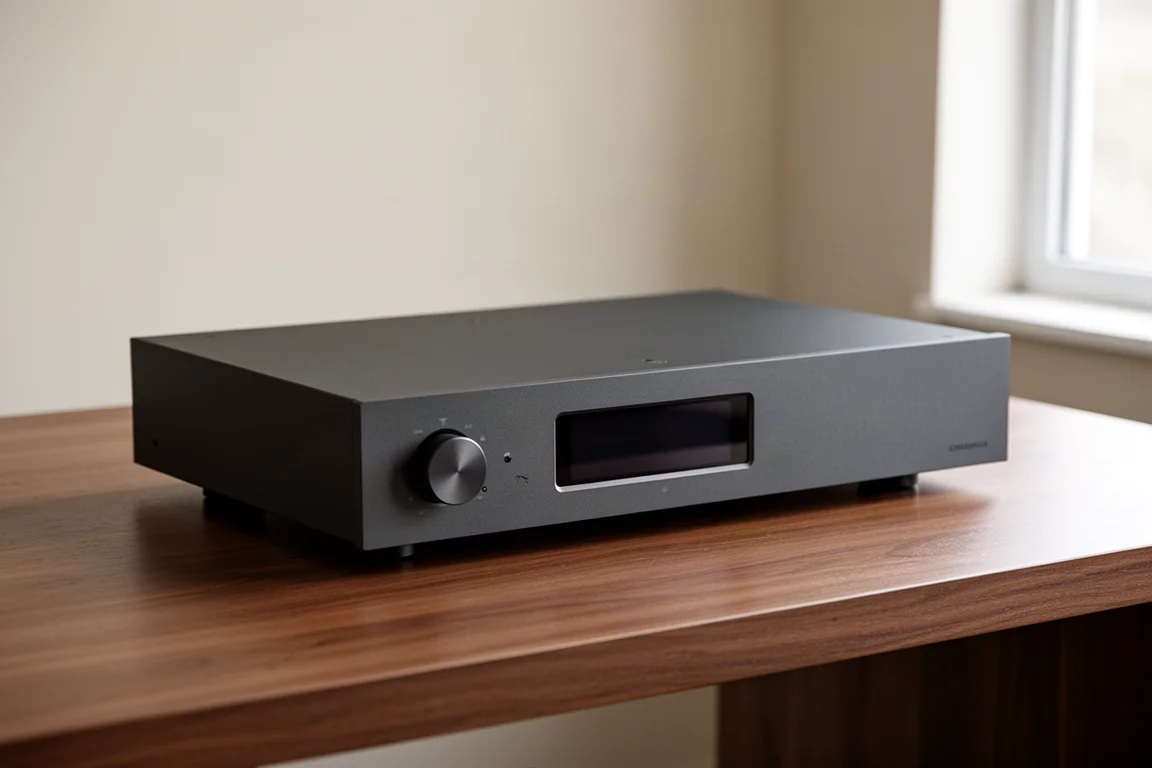
The TDAI-1120 is the leanest of the three. Without room correction and without a subwoofer, it sounds more finessed and skeletal than the NAD, which is the brawnier and ballsier of the two. Add a subwoofer and engage room correction, and the gap narrows considerably.
RoomPerfect is the Lyngdorf’s defining feature. The setup procedure is more user-friendly than Dirac’s, and the target curve it produces out of the box is more satisfying, with a little more low end push from the start. It also includes power user tools that allow the phase alignment of a subwoofer to be adjusted more precisely, and RoomPerfect itself costs nothing extra.
If Dirac on the NAD ultimately delivered the better result, it did so with professional help in creating the curves. For anyone planning to set up room correction alone, RoomPerfect is the more forgiving system and the one more likely to produce a good result on the first attempt.
Dirac vs RoomPerfect: Which Room Correction Suits You
Both systems do the same fundamental job: measure the room, then correct the worst of what the room does to the sound. They differ in how much work they demand from the owner.
Dirac offers more scope for refinement. With well-made custom curves it produced the most convincing result of the two in this comparison, particularly on soundstage organisation and the separation of individual instruments. The cost is complexity: a limited version as standard, $100 for the full frequency range version, and a steep learning curve if you want to move beyond the stock curve.
RoomPerfect is the easier system to live with. Setup is simpler, the standard curve needs less correction out of the box, and the extra subwoofer alignment tools are available without an additional purchase. It asks less of the owner and rewards that with a more predictable result.
Buying Advice: Matching the Amplifier to Your Room and Habits
The right choice depends less on outright quality than on how you listen and what else is in the system.
If you enjoy ultra-resolution and want to hear the smallest details in a recording, the M10 V2 is the natural pick. Its transparency and specificity are its signature, and the combination of Dirac, subwoofer management and HDMI e-ARC makes it the most complete single box of the three. It is also the one that turns a stereo system into something that handles television, and with a pair of small wireless rear speakers it can create a virtual surround effect for stereo music and convert 5.1 film sound into a 4.0 or 4.1 presentation.
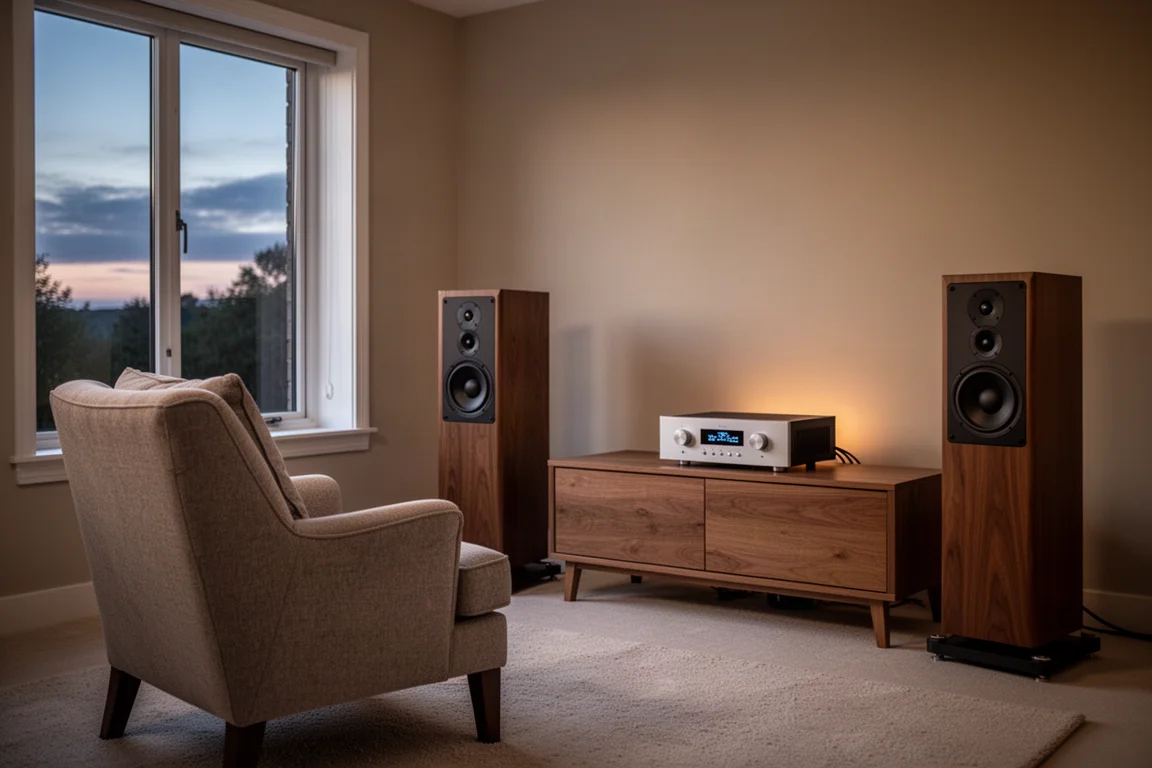
If you listen for the overall shape and emotional weight of a performance rather than the fine detail, the Uniti Atom’s more organic presentation may suit you better, and its headphone socket and volume control are real everyday advantages. If you want room correction without becoming an expert in it, the TDAI-1120 is the most straightforward route to a well-behaved system in a difficult room.
In every case, the room matters as much as the amplifier. Room correction works best as a finishing step on top of sensible speaker placement and at least some acoustic treatment, not as a substitute for either.
Conclusion
These three amplifiers share a form factor and a purpose, but they are not interchangeable. The NAD M10 V2 wins on features, room correction potential and flexibility, and it is the only one here that comfortably doubles as the hub of a television and streaming setup. The Naim Uniti Atom trades some of that detail for a warmer, more organic sound and a better experience in the hand. The Lyngdorf TDAI-1120 offers the least demanding path to properly corrected sound.
None of them is a compromise on build or intent. Pick the one whose priorities match your listening habits, and any of the three will serve as the centre of a system for years.
Further reading
Related Reviews
Streaming Amplifiers
Best High-Performance Streaming Amplifiers: Seven Full-Size One-Box Picks
Seven full-size streaming integrated amplifiers for serious two-channel systems, each chosen for a different priority: room correction, power, minimalism, musicality, or reference build.
Streaming Amplifiers
Best Mid-Tier Streaming Amplifiers: NAD M10 V2 vs Naim Uniti Atom
Two compact all-in-one streaming amplifiers compared on interface, app experience, sound character, and connectivity.
Streaming Amplifiers
Bluesound Power Node N331 Review: A Streaming Amplifier Built for More Than Stereo
The Bluesound Power Node N331 keeps the compact chassis of its predecessor and adds a more powerful amplifier, a dedicated center channel output, and a THX AAA headphone stage.