Integrated Amplifiers
NAD C399 Review: Neutral Power and Modular Upgrades
The NAD C399 pairs 180 watts per channel with HDMI eARC and optional BluOS and Dirac modules, delivering the same neutral, quiet character as far costlier NAD amplifiers.
Introduction
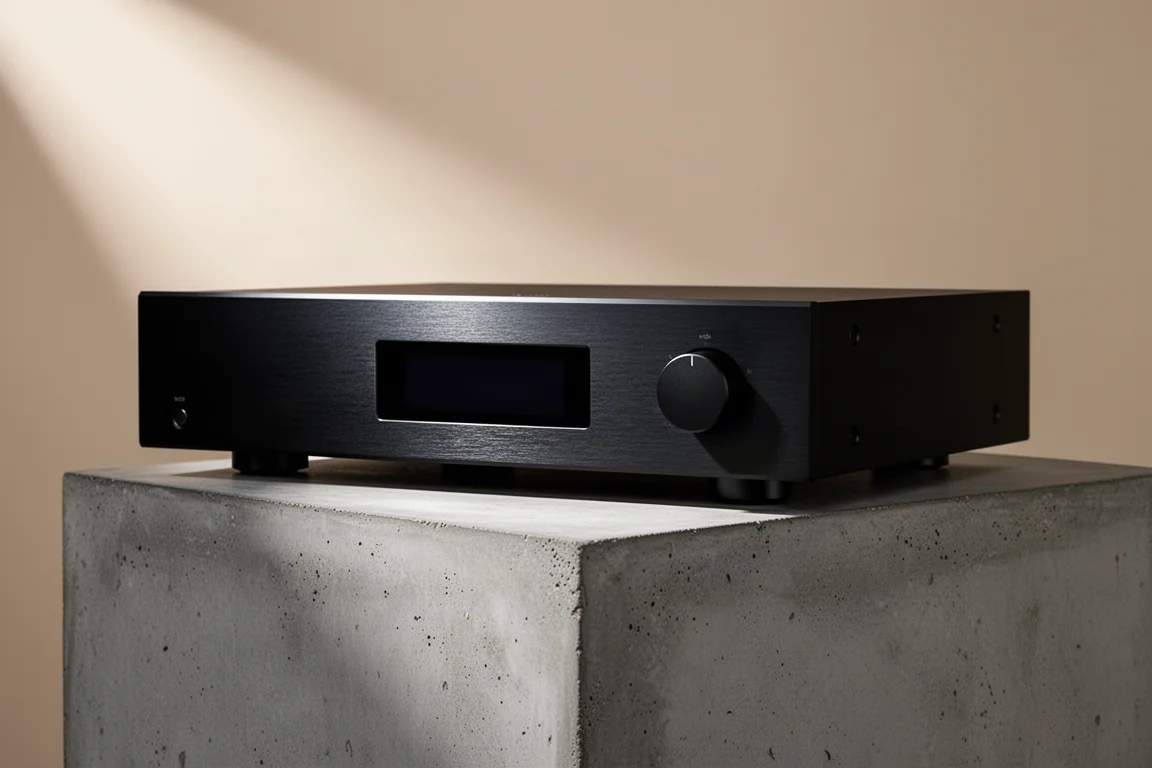
The NAD C399 is the brand’s latest do-it-all integrated amplifier, and it arrives with a familiar pitch: flagship-adjacent engineering at a price that sits well below the top of the range. At its core is a hybrid digital Hypex amplifier module rated at 180 watts per channel into 8 or 4 ohms, with dynamic power reaching as high as 250 watts. Analog and digital connections are both covered, and the input list includes an HDMI port with eARC support.
NAD also says the C399 borrows much of its digital circuitry, including its DAC stage, from costlier models such as the M10 V2 and the M33 Master series. The stock amplifier sells for just under $2,000. Order it with the BluOS Direct module pre-installed and the price rises by about $600.
Who the NAD C399 Is For
This is an amplifier for listeners who want one box to handle serious two-channel music and the occasional movie night. The HDMI eARC input makes it a natural centerpiece for a stereo system that doubles as a two-channel home theater setup, and the modular design means buyers can start with the base unit and add streaming or room correction later rather than paying for everything up front.
It also suits anyone who has admired the M10 V2 or the M33 from a distance. If those two products have been out of reach financially, the C399 is positioned as the way in. What it does not offer is the M33’s substantial chassis or the M10 V2’s vivid touchscreen, so buyers who value those things should plan accordingly.
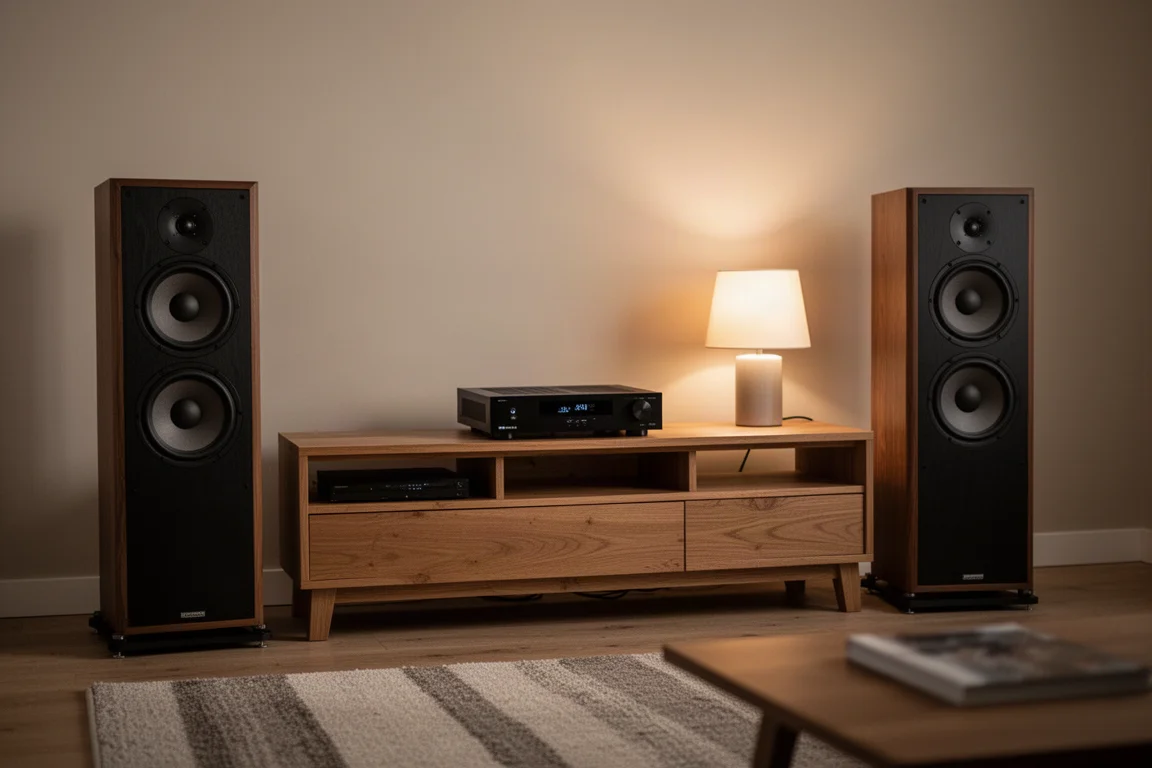
The upgrade path is genuinely simple. Installing the BluOS module takes nothing more than a screwdriver, so the decision to add streaming later is not a difficult one to reverse.
Main Strengths
The case for the C399 rests on three things: a neutral and very quiet amplifier section, a genuinely useful HDMI input, and an upgrade path that covers both streaming and room correction.
Neutral, Noise-Free Performance
This is not an amplifier with a great deal of character. There is no added warmth and no top-end energy, and measurements taken at the listening position were unchanged across four different pairs of speakers when the C399 was swapped in for other amplifiers. Pair it with speakers that expose noise easily, such as a large horn-loaded design, and there is no audible hiss from the tweeters during quiet passages. Bass is tight and well damped, deep and detailed, though not the most explosive. The midrange stays out of the way, presenting what is in the recording without added coloration. Treble is detailed but a touch dry rather than airy. The soundstage neither adds nor subtracts anything, and separation between instruments is impressive.
One practical detail worth calling out: the C399 has dual subwoofer outputs that are separate from its preamp outputs, so integrating a subwoofer does not force a choice between the two.
If you like a little top-end shimmer, this may not be your amplifier. If you prefer just the facts, it will be.
HDMI eARC and Two-Channel Home Theater
As the centerpiece of a two-channel home theater, the C399 is excellent. Its HDMI port connected cleanly to both a Sony X95K and an LG C2 OLED with zero issues, which is more than can be said for some more expensive HDMI-equipped products. Listeners who are primarily two-channel enthusiasts but occasionally dabble in movies should have it on their short list.
Modular Upgrades: BluOS and Dirac
Fitted with the BluOS Direct module, the C399 becomes a full streaming hub. AirPlay, Spotify, Tidal Connect and compatibility with Bluesound wireless speakers are all on board, and building a whole-home audio system is straightforward. The BluOS user experience is second nature for anyone already invested in that ecosystem, and the added features work brilliantly.
Dirac Live is included too, but in a limited form. Correction is restricted to bass frequencies below 500 Hz out of the box. A full-range upgrade is available through Dirac for around $100. Since bass frequencies are often the ones that need adjusting to keep clarity intact further up the range, the limited version is a reasonable starting point, but buyers expecting the full version should budget for the upgrade.
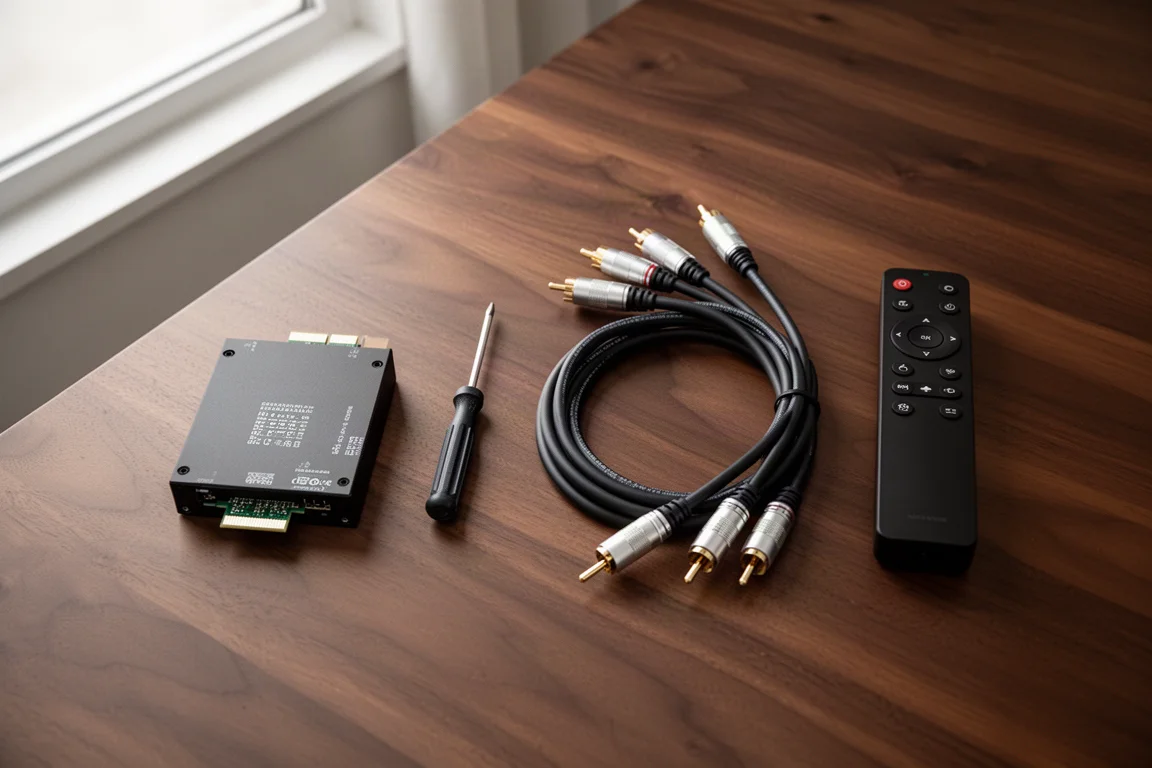
For listeners already living inside the BluOS ecosystem, that combination covers streaming, whole-home audio and room correction from a single chassis. For everyone else, it is a clear menu of options rather than a mandatory bundle.
Things to Consider Before Buying
The C399 is visually understated, and that is a real consideration in a category where the M33 is a genuine design piece and the M10 V2 offers a large, vivid touchscreen. Here you get a plain chassis and no display of that kind.
BluOS being optional is the other point of friction. It is a platform the brand is known for, yet the module adds roughly $600, and only the fully kitted configuration delivers the complete feature set.
Dirac is capped at bass frequencies unless you pay for the full version, and dynamics are slightly reserved compared with some similarly priced alternatives. Finally, the wider range overlaps heavily. Several models share the same parts, the same app and a very similar listening experience, so it pays to decide which inputs and how much power you actually need before comparing model numbers.
Buying Advice
At around $2,600 fully kitted, the C399 sits between the more affordable C700 and the cost-no-object M33. Feature for feature, it is hard to beat against the Marantz Model 40n, though some listeners prefer the Marantz’s sound and will miss Dirac there. The Cambridge Audio Evo 150 is a far more striking object, but it costs nearly $650 more and is not a dramatic sonic leap. The Naim Uniti Atom remains a fine amplifier, yet at roughly $1,200 more, that premium is a harder pill to swallow.
Within the family, the choice is mostly about power and inputs. The C700 costs roughly $1,000 to $1,200 less, adds a screen and makes BluOS standard, but it gives up Dirac and some power. The Bluesound Power Node saves more again, and its performance is indistinguishable from the C700. If you might want home theater flexibility later, the T778 receiver offers the most versatility.

The practical conclusion is simple: identify the connection options and features you need, buy the NAD that delivers them, and stop there. Spending more will not transform the experience.
Conclusion
The C399 is a good amplifier. It sounds great, it works without fuss, and with the BluOS and Dirac modules installed it is close to an M33 in everything but chassis, screen and power. Buyers who want maximum features per dollar will find it compelling. Buyers who want a clear, simple ladder to climb may find the range more confusing than helpful. Either way, the C399 itself is not the wrong choice.
Product link
View more details for NAD C399
This product is mentioned in the review. Check the specifications, options, and compatibility before buying.
View more details for NAD C399Further reading
Related Reviews
Integrated Amplifiers
Advance Paris A10 Classic Review: Vintage Looks and a Lively, Punchy Sound
The Advance Paris A10 Classic pairs glowing blue VU meters and a tube stage with one of the widest input sets on any integrated amplifier. Here is what it does well and what to weigh before spending $2,500.
Integrated Amplifiers
Advance Paris A12 Apex Review: A Modern Integrated Amplifier With Vintage Character
A dual mono integrated amplifier with 180 watts per channel, a tube front end, VU meters, and a connectivity list that covers turntables, televisions, computers, and headphones.
Integrated Amplifiers
Advance Paris Nova Range Review: AI130, AI190 and Modular Upgrades
A practical look at the Advance Paris Nova range, including the AI130 and AI190 integrated amplifiers and the modular streaming, Bluetooth and remote accessories that expand them.