Hi-Fi Amplifiers
NAD C 3050 LE Review: A 50th Anniversary Amplifier With Modern Streaming Smarts
A close look at the NAD C 3050 LE, a limited-run integrated amplifier that pairs 1970s-inspired design with Class D power, BluOS streaming and Dirac Live room correction.
Introduction
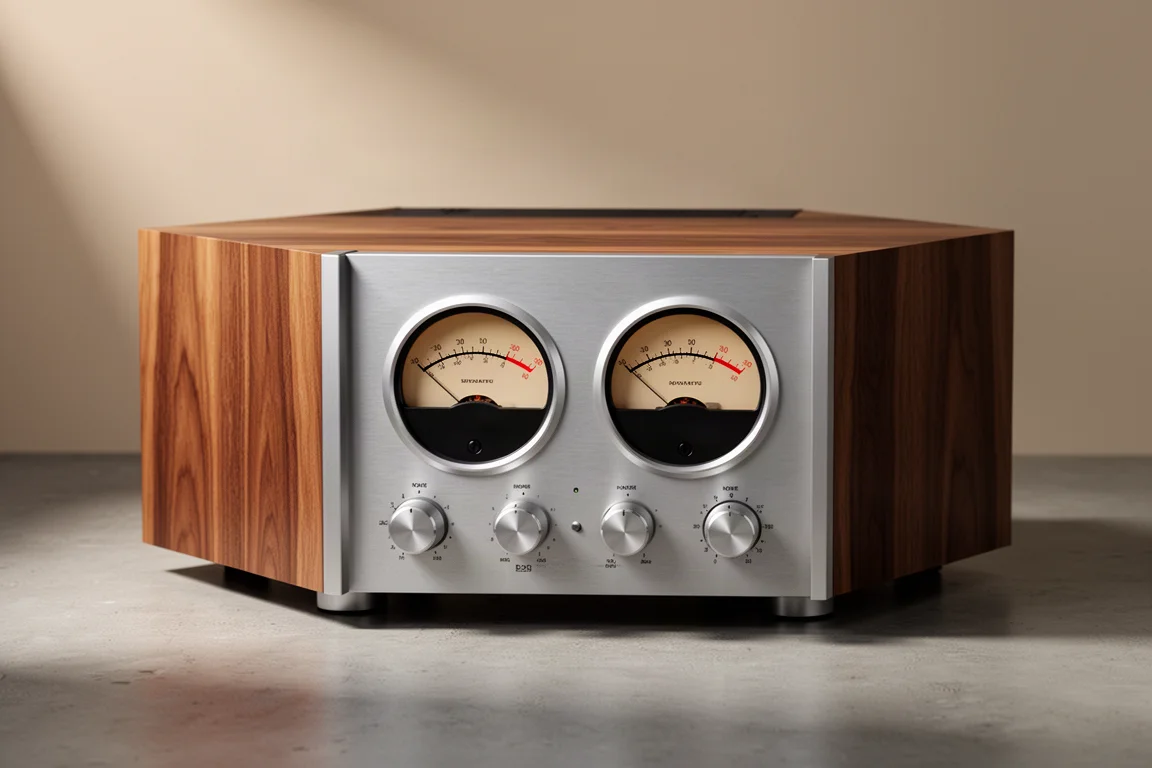
The NAD C 3050 LE is a 50th anniversary integrated amplifier, and it is a deliberately nostalgic piece of hardware. Its proportions, wood veneer wrap and twin VU meters echo the NAD 3030, the 30 watt per channel Class A/B amplifier that NAD introduced in 1978 and that inspired this design. What sits behind that retro face is entirely modern: a Class D output stage, a built-in DAC, streaming, HDMI eARC and Dirac Live room correction.
NAD built 1,972 units of the C 3050 LE, a number that references the year the company was founded. Pricing sits at around $1,972 in the United States and €2,499 in Europe. That is a significant sum, and it is worth understanding exactly what the amplifier does well and where a buyer might reasonably look at alternatives.
Who the NAD C 3050 LE Is For
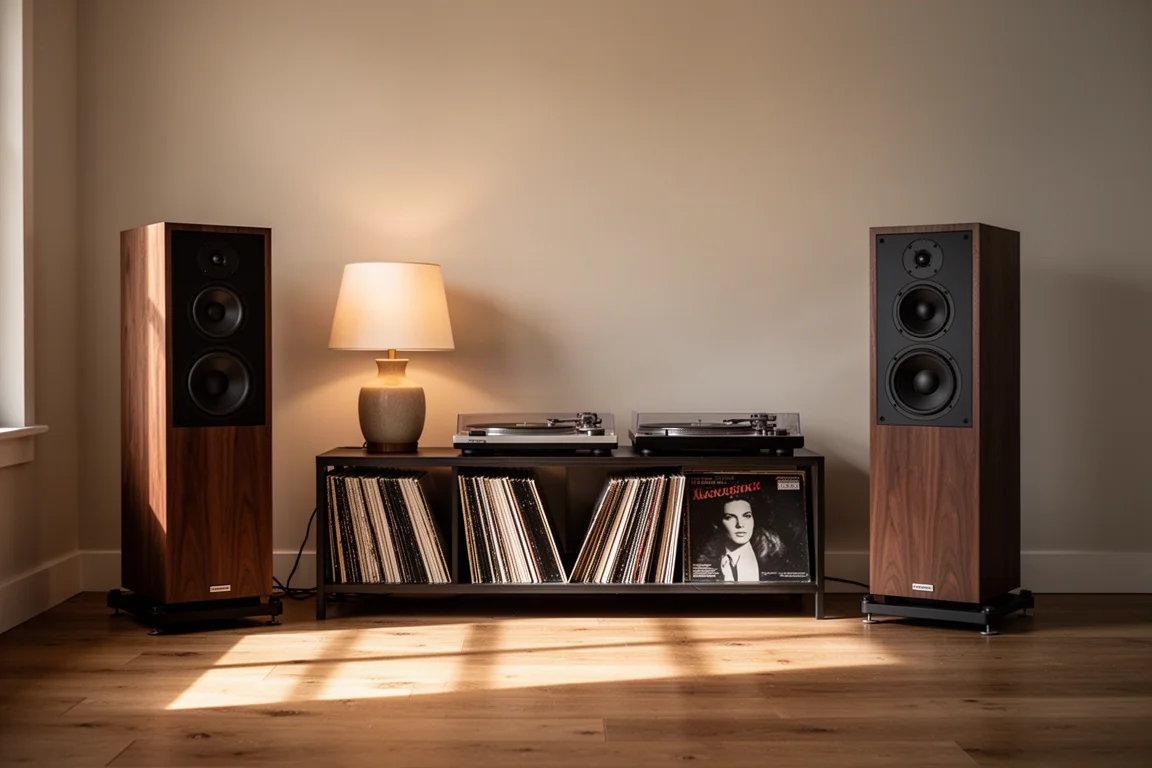
This amplifier is aimed at listeners who admire the look of a late 1970s NAD but have no interest in living with one. A vintage 3030 brings 30 watts per channel, a tuner input, an aux input and a moving magnet phono stage. It has no CD input, no digital inputs of any kind, no remote control, spring loaded speaker terminals that accept bare wire only, and a captive mains cable. Good examples are also genuinely hard to find, and an amplifier of that age will usually need recapping before it can be trusted.
The C 3050 LE keeps the visual language and removes nearly every practical limitation. If you want the vintage silhouette with streaming, digital inputs, a remote and room correction built in, this is the product those two ideas produced.
That said, the C 3050 LE is not simply a modernised 3030. It is a different amplifier with a different character, and listeners who specifically love the presence and muscularity of the original’s midrange will notice the difference immediately.
Design and Build: A Modern Take on a 1978 Classic
The wood veneer wrap is the headline detail. It sits over plywood and has been matched to the veneer used on the PSB Passif 50 loudspeakers. The finish is attractive, though the veneer on a well kept vintage 3030 is arguably nicer still.
The newer amplifier is also a different shape. The 3030’s narrower, taller proportions give it a distinctive stance that the C 3050 LE does not reproduce exactly. Around the front panel you get the expected rotary controls, including bass and treble, plus the VU meters that dominate the visual presentation. A switch on the rear panel puts those meters into line level mode, so they move with the signal rather than with the volume setting.
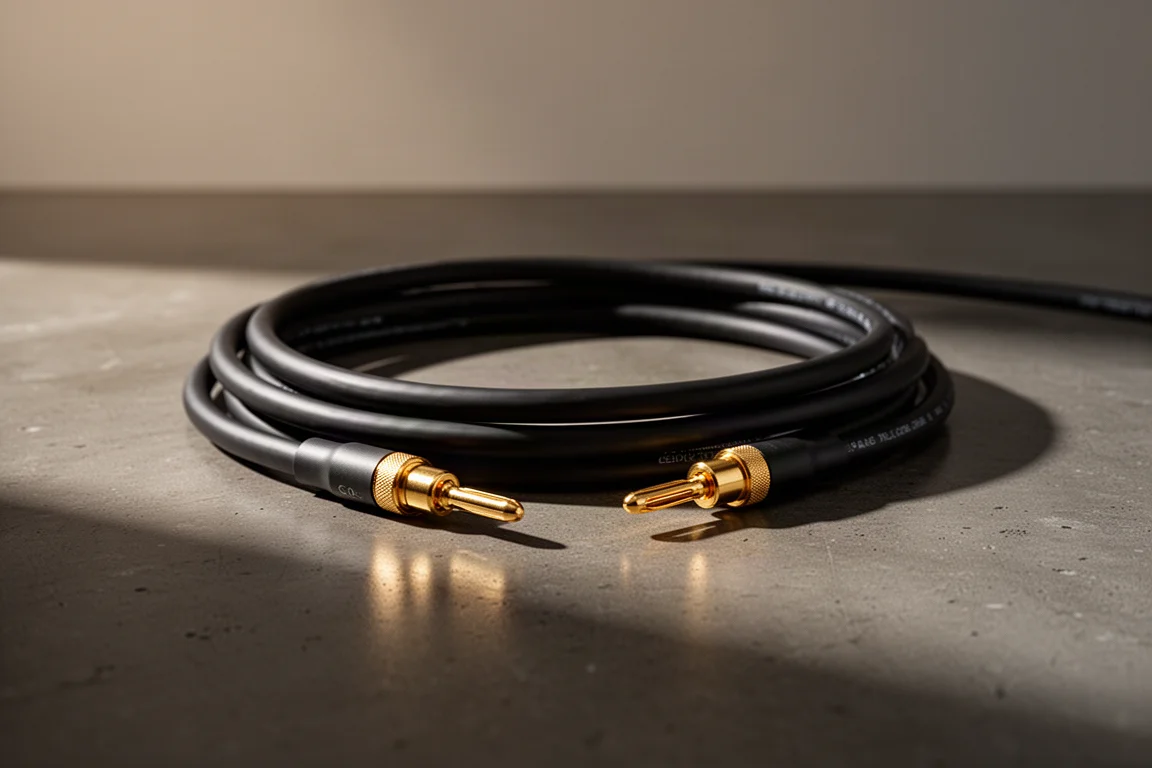
Practically, the C 3050 LE is the easier amplifier to own. It uses a standard IEC mains socket, so the power cable can be swapped, and it has proper speaker binding posts rather than the sprung terminals of the original. A remote control is supplied, which the 3030 never had.
Connectivity and Streaming Features
Digital connectivity is where the C 3050 LE separates itself from its inspiration. An internal Texas Instruments DAC is reachable from USB, coaxial and optical inputs, and HDMI eARC makes the amplifier a straightforward partner for a television.
The rear MDC slot is occupied by a factory fitted BluOS module. That brings BluOS streaming with Roon Ready, Tidal Connect, Spotify Connect, Apple AirPlay 2 and two way Bluetooth support, along with the wider range of services available through the BluOS app. There is also a subwoofer output with crossover management, which is a genuinely useful addition for anyone running a two channel system with a sub.
On the analogue side, the amplifier offers a moving magnet phono input and a single line level input. There is no moving coil phono stage, which is a reasonable omission at this price.
The result is a compact system hub rather than a traditional integrated amplifier. Vinyl, a CD transport, a television and a streaming subscription can all feed the same box without an external DAC or streamer.
Sound Quality: Transparent, Detailed and Load Invariant
Power output is 100 watts per channel into 8 ohms and also into 4 ohms, which makes the amplifier load invariant. The output stage uses Hypex UCD modules, and NAD’s own HybridDigital amplification technology sits on top of that Class D foundation.
In use, the C 3050 LE is a highly transparent and highly resolving amplifier. It digs out ambient information and low level detail with unusual clarity, so a dense, layered recording opens up into separate, cleanly placed elements. Bass extension is deep, and kick drums land tighter and drier than they do on the vintage design. Soundstaging is deeper, with more specific placement of individual players.
The trade off is character. Against the 3030, the C 3050 LE sounds comparatively relaxed in the midrange. The older amplifier has a thicker, meatier presentation with a more burnished top end and a more forceful midrange presence, which some listeners will prefer even though it resolves less detail and congeals busy recordings. The C 3050 LE is the more refined amplifier. The 3030 is the more assertive one.
Dirac Live Room Correction
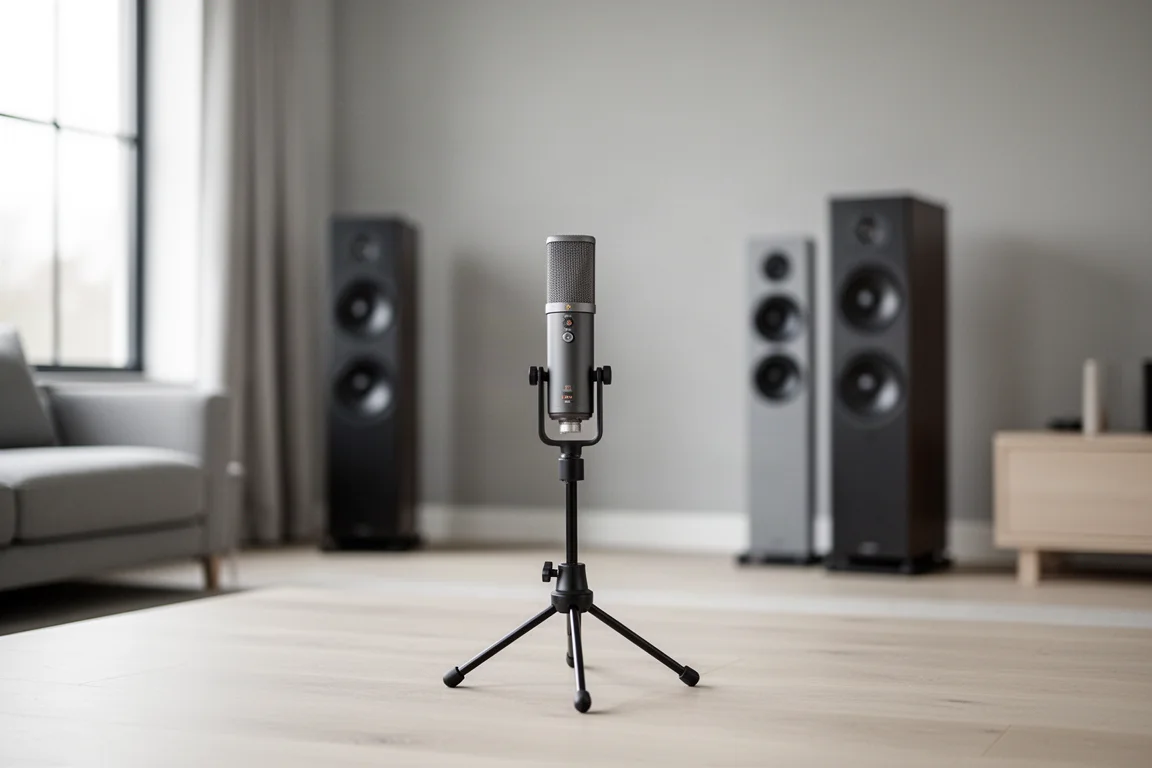
The BluOS card also brings Dirac Live, the room correction software that measures what your speakers are actually doing in your room. A microphone is included in the box, and the software analyses the measurement and adjusts the amplifier’s output to compensate for the room.
Dirac Live is particularly effective at dealing with bass problems, pulling down the deep bass modes that most rooms impose on a pair of speakers. The knock on effect is often a tidier midrange. In practice, the improvement is easy to hear. Voices lock more firmly into the centre of the image between the speakers, and music becomes less obviously attached to the loudspeakers themselves. Soundstage width, depth and height are not compromised in the process.
It is worth being honest about the learning curve. Dirac Live is not especially beginner friendly, and getting the most from it can take some patience and experimentation with different correction curves. The payoff, though, is substantial, and for many listeners the correction will do more for the sound of a system than any cable or component swap.
Once you have heard the difference between correction engaged and disengaged, it becomes difficult to go back. For a streaming amplifier at this level, the feature feels close to essential.
Things to Consider Before Buying
Availability is the first consideration. The C 3050 LE is a 50th anniversary limited edition of 1,972 units, and the wood veneer version is unlikely to remain on sale for long. Anyone set on this specific finish should not assume it will still be available.
The moving magnet phono input is perfectly usable, but it sounds somewhat plain. Adding a modest external phono stage brought greater clarity and better dynamics from the same turntable, so vinyl focused buyers should budget for that possibility.
Listeners who prize midrange presence above all else may find the C 3050 LE slightly laid back next to the vintage amplifier it references. On the early unit, the source and volume indicator LEDs are also very bright, though NAD has said that production amplifiers will have them dimmed.
NAD’s own C399 is the other obvious comparison. It sits at the same price in Europe and offers higher end Hypex amplifier modules, an ESS based DAC circuit and an MDC slot for BluOS. However, the BluOS module is not fitted as standard on the C399, and adding it costs roughly €600. The C 3050 LE includes the module as standard, along with the VU meters and the wood veneer case. Buyers who care only about the last word in sound quality may lean toward the C399, while buyers who value how a component looks and feels in a room will find the C 3050 LE far more rewarding to live with.
NAD has also signalled a version without the wood veneer wrap, finished in vinyl and without the factory fitted BluOS module. That model would be cheaper, but the streaming card would have to be bought separately.
Buying Advice
The C 3050 LE makes the most sense for a listener who wants one box that handles vinyl, television, streaming and a subwoofer, and who wants that box to look like something rather than disappear into a rack. The combination of a 100 watt load invariant Class D output stage, a factory fitted BluOS module, HDMI eARC and Dirac Live is a lot of capability, and it is rare to find all of it in a chassis with this much personality.
If the vintage aesthetic is the main attraction, the alternative is a used 3030, which will be cheaper in principle but harder to find, likely to need recapping, and far more limited in what it can accept. The C 3050 LE exists precisely for people who have considered that route and decided they would rather not take it.
On value, the amplifier is priced at the top of what most people would call mid market hi-fi, and the limited edition status means the wood veneer version carries a premium over what a standard production model would cost. Anyone comparing it with the C399 should weigh the higher specification of that model against the extra cost of adding BluOS and the plain black chassis that comes with it.
Conclusion
The NAD C 3050 LE is a nostalgia piece that happens to be a genuinely capable modern amplifier. It takes the 1978 3030’s visual identity and pairs it with Class D power, a Texas Instruments DAC, BluOS streaming, HDMI eARC, subwoofer management and Dirac Live room correction. Its transparency and detail retrieval are its strongest technical qualities, while its midrange is more reserved than the amplifier that inspired it.
For buyers who want a vintage styled amplifier with modern connectivity, and who can find one of the 1,972 units, it is an easy recommendation. For everyone else, the broader lesson is worth taking away: room correction such as Dirac Live makes a real and audible difference to how a system performs in a room, and it deserves a place on the shortlist alongside the amplifier itself.
Product link
View more details for NAD C 3050 LE
This product is mentioned in the review. Check the specifications, options, and compatibility before buying.
View more details for NAD C 3050 LEFurther reading
Related Reviews
Hi-Fi Amplifiers
Accuphase E-280 Review: Entry-Level Accuphase With Flagship Attention to Detail
A close look at the Accuphase E-280 integrated amplifier, covering its champagne build, AAVA volume control, sound quality, and the speakers and sources that suit it best.
Hi-Fi Amplifiers
Advance Paris A10 Classic vs Yamaha A-S301: Two Integrated Amplifiers Compared
A practical comparison of a $350 integrated amplifier and a $2,500 reference model, covering the differences that matter and the ones that do not.
Hi-Fi Amplifiers
Affordable Chinese Amplifiers Worth Buying: Five Budget Hi-Fi Amps Compared
A practical look at five affordable amplifiers, what each one does well, and the trade-offs to weigh before you buy.