Integrated Amplifiers
NAD C 3030 Review: Classic Hi-Fi Character With Modern Digital Inputs
A compact integrated amplifier that pairs 1970s-inspired design and tactile controls with hybrid digital UCD amplification, a moving magnet phono stage, and HDMI eARC.
Introduction
NAD has built amplifiers around the same idea for decades: get the fundamentals right, keep the design honest, and let the sound do the talking. That thinking goes back to the late 1970s and the original 3020 integrated amplifier, a component that won listeners over not with headline specifications but by outperforming gear that cost several times as much.
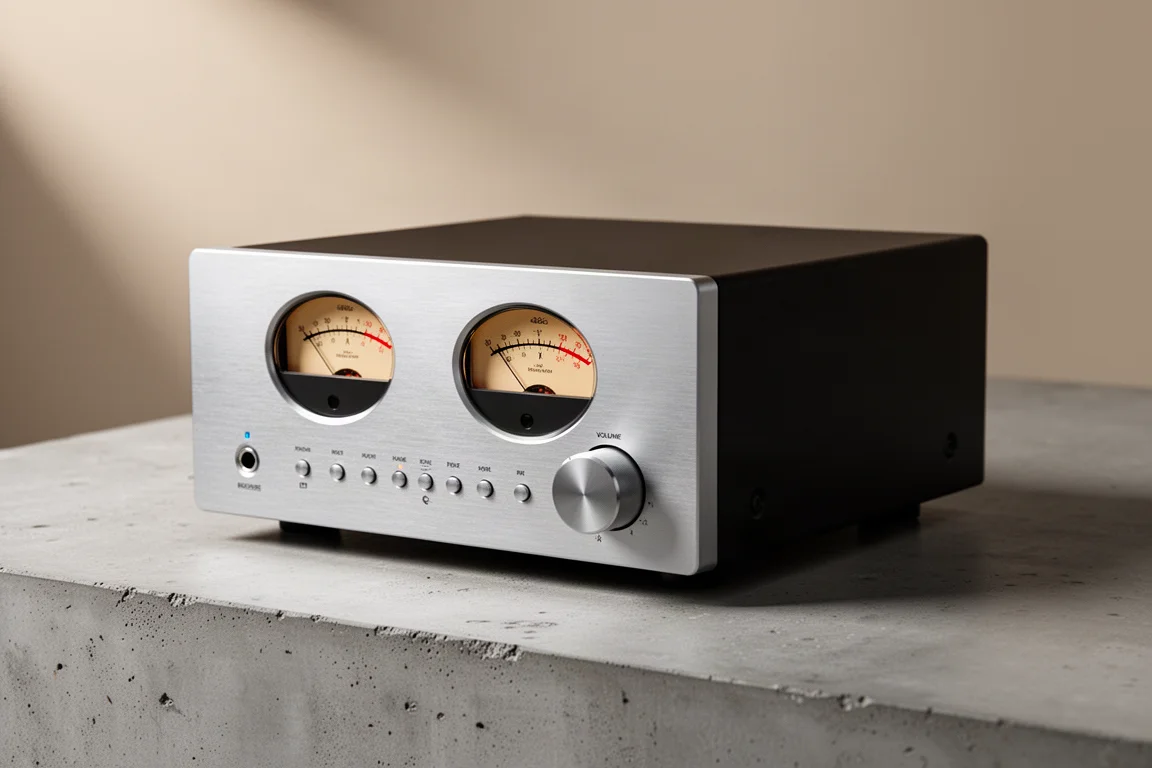
The NAD C 3030 carries that approach into a modern system. Its looks are a deliberate nod to the original 1976 NAD 3030, including the dual illuminated VU meters and the cursive NAD lettering on the front panel, while the engineering underneath is entirely current. It is a compact integrated amplifier built for the way people listen today, balancing an analog feel with the digital inputs a modern setup needs.
Who the NAD C 3030 Is For
The C 3030 is aimed at listeners who want a traditional two-channel amplifier rather than an all-in-one streaming box. If you already own a streamer you like, or you prefer to run your audio through the TV, the standard C 3030 covers the essentials: an internal DAC, a moving magnet phono stage, HDMI eARC, and Bluetooth.
It also suits anyone building a compact system. At roughly 14 inches wide, 5 inches tall, and 13 inches deep, and weighing just under 12 pounds, it fits comfortably on a standard bookshelf or inside a shallow media cabinet where a full-size 17-inch component would feel too large for the room.
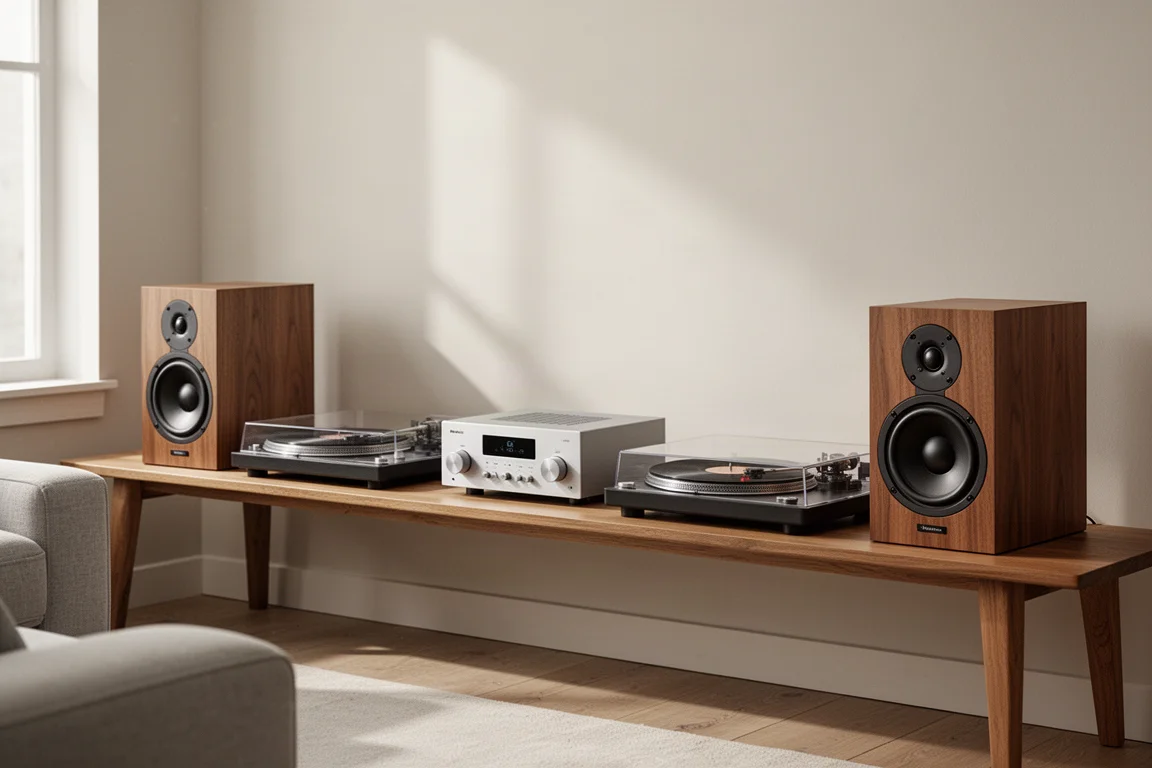
The trade-off is that the C 3030 is a fixed platform. BluOS streaming is available in the C 3030S variant rather than as something you can add later, so the standard model makes the most sense for the listener who already has a streaming source sorted out.
Design, Ergonomics, and Build Quality
The C 3030 is the kind of component that reminds you what was enjoyable about classic hi-fi. It is not simply a box; it is a physical interface built around the act of listening. In an era of touchscreens and app-only control, there is something satisfying about the click of a physical switch.
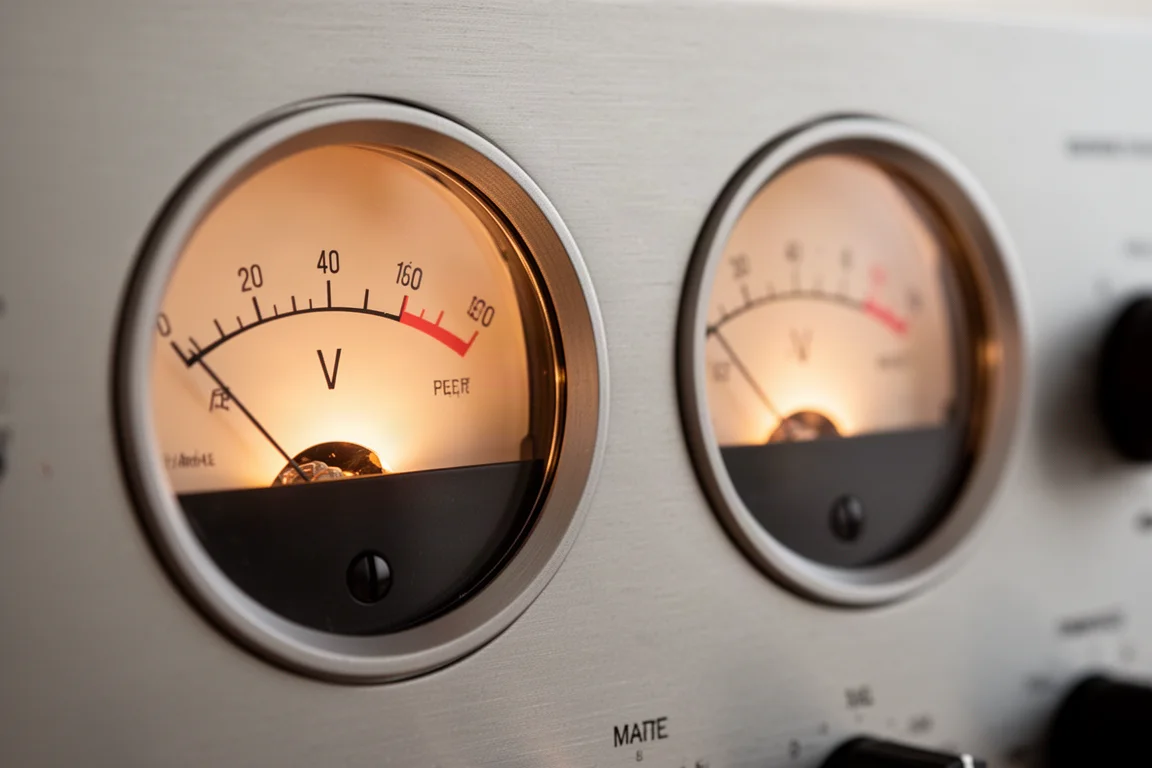
The dual illuminated VU meters are the most visible example. In the original 1976 3030, meters like these were a working tool, used to monitor the output of the early transistor stages so the amplifier would not clip. Today they serve as a real-time window into the amplifier’s dynamic behavior, and even at low volumes you can watch the needle move with the energy in the music.
The front panel layout is classic in the best sense. Physical push-button selectors show your chosen input at a glance and remove the need for on-screen menus, and treble, bass, and other adjustments can be made without reaching for a remote or opening an app. The volume control is particularly well executed, with a smooth, weighted resistance that allows for small, precise changes during a listening session.
Despite the smaller footprint, build quality remains high, and the original 1970s cursive NAD branding sits on the front panel. It feels like a piece of equipment designed to be touched, used, and enjoyed out in the open rather than hidden away in a rack.
Hybrid Digital UCD Amplification and Honest Power Ratings
Under the hood, the C 3030 is built around NAD’s advanced hybrid digital UCD, or Universal Class D, amplifier design. The history here matters. Early switching amplifiers could sound thin or overly clinical because they were sensitive to the load connected to them. With a complex speaker impedance curve, the frequency response would shift, often producing a harsh or bright result.
The UCD architecture addresses that with a self-oscillating design that applies a large amount of feedback after the output filter. The amplifier stays equally at home with any speaker load, so whether you connect a 4-ohm or an 8-ohm speaker, it remains flat and distortion-free across the audio band.
The design is also highly efficient, which means it runs cool even after hours of use. That efficiency allowed NAD to direct more of the budget toward the quality of the power supply and the output stages instead of large heat sinks.
The power rating deserves a closer look. NAD rates the C 3030 at 50 W per channel into 8 ohms using its full disclosure power method, which measures both channels driven across the full 20 Hz to 20 kHz range at rated distortion. Many manufacturers quote a single frequency, typically 1 kHz, with only one channel driven, which can be misleading. Just as importantly, the C 3030 can deliver over 100 W of dynamic power into 8 ohms. That headroom is what gives the amplifier its sense of ease: when a recording hits a major transient, whether a snare crack or a sudden orchestral swell, there is enough instantaneous current to handle the peak without the sound compressing or turning brittle.
Connectivity: Phono, HDMI eARC, and Bluetooth
The signal path mixes digital precision with an analog foundation. On the digital side, the C 3030 uses a high-performance Texas Instruments PCM5242 differential DAC. Many brands chase the newest converter chips for headline specifications, but the TI platform was chosen for its musicality. The PCM5242 is known for strong dynamic range and immunity to clock jitter, and implementing it in a differential configuration cancels common-mode noise, producing a clear, holographic digital presentation that stays free of the digital glare many listeners dislike.
For vinyl fans, the inclusion of a dedicated moving magnet phono stage is a significant addition. It is not a cheap add-on chip but a high-gain, low-noise circuit designed to handle the delicate signal from a turntable with care. The infrasonic suppression circuit is a thoughtful touch as well. A slightly warped record generates a large amount of low-frequency rumble that you cannot hear but your woofer can, and that wasted energy makes the woofer pump, stresses the amplifier, and can distort the midrange. The filter is tuned to remove the rumble without sacrificing the musical bass you do want.
HDMI eARC is another key feature, and it is what turns a high-end stereo into an everyday system. A single cable from the TV to the amplifier brings better dialogue clarity and more dynamic headroom than a soundbar or the speakers built into the TV can offer. Because it supports CEC, the C 3030 wakes when the TV is switched on and can be controlled with the original TV remote. There are flexible digital and analog outputs as well.
Bluetooth aptX HD is bidirectional, so you can stream high-resolution audio from a phone to the amplifier, or send sound from the amplifier to a pair of wireless headphones. Having Bluetooth built in also makes it easy for guests to connect and play their own music.
Subwoofer management rounds things out. The C 3030 includes a dedicated subwoofer output with an optional fixed 80 Hz high-pass filter. Engaging it stops the amplifier from sending deep bass to the main speakers, which cleans up the midrange because the main speakers no longer have to move as much air. The whole system tends to sound larger and more effortless as a result.
Listening Impressions
The C 3030 renders vocals with a sense of body and presence that feels human rather than processed. On a track like Norah Jones’ “Don’t Know Why”, the midrange comes through fluid and textured, avoiding the clinical quality that affects so many affordable Class D designs.
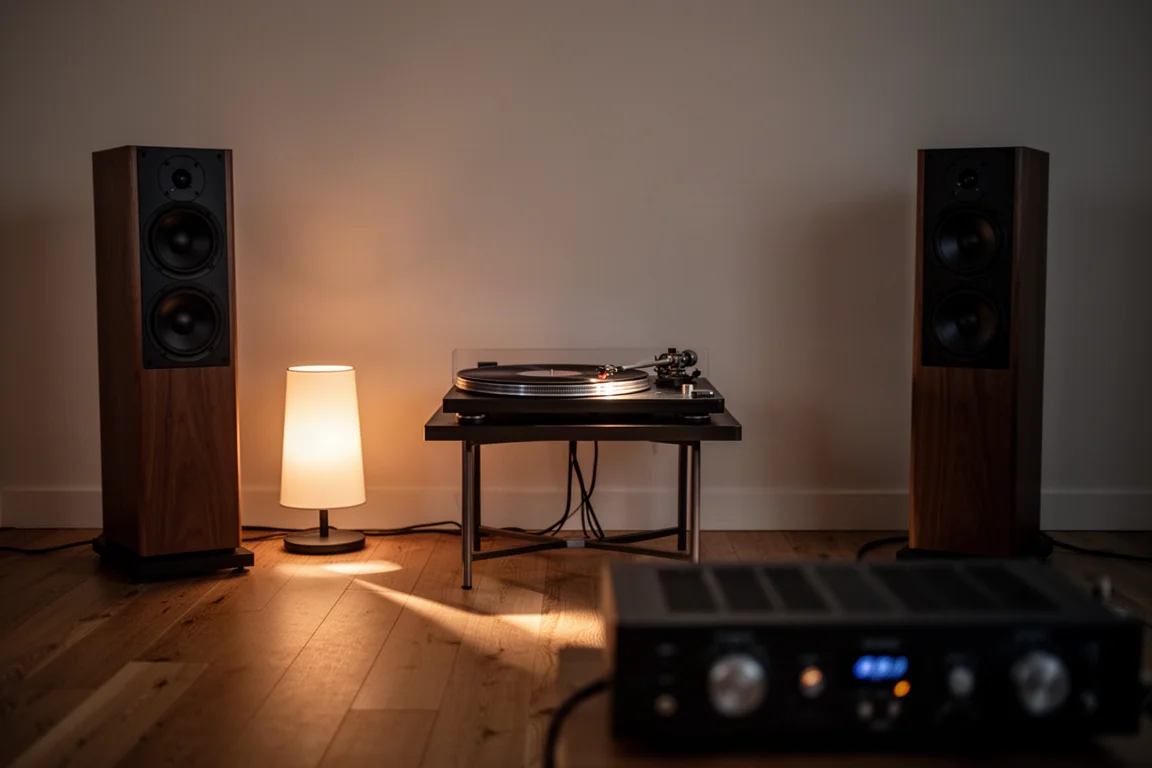
Move to something more aggressive, such as David Bowie’s “Stay”, and the amplifier’s control becomes clear. The rhythmic drive stays tight and propulsive, and the guitars keep their bite without turning brittle. It is a balanced, consistent presentation that makes long listening sessions easy, which is ultimately the point of a component like this.
Things to Consider Before Buying
The most important consideration is the fixed platform. The standard C 3030 cannot add BluOS streaming later, so if streaming is central to how you listen, the C 3030S is the better starting point. It comes with BluOS built in, giving access to services such as Tidal, Qobuz, and Spotify, and it integrates with other Bluesound products in the home.
Power is the second consideration. The C 3030 offers an honest 50 W per channel with over 100 W of dynamic power, which is ample for most speakers in most rooms. If you drive demanding, low-efficiency speakers or need to fill a large, open-plan living space, the larger C 3050 steps up to 100 W per channel of continuous power with a significantly larger power supply, delivering up to 180 W of dynamic power into 8 ohms and 300 W into 2 ohms. That extra headroom can be a necessity rather than a luxury in those situations.
Flexibility differs as well. The C 3050 includes an MDC2, or modular design construction, expansion slot, a second-generation bidirectional architecture that allows the amplifier to be updated over time. An MDC2 module can add Dirac Live room correction and BluOS streaming at any point. The C 3030, by contrast, focuses on getting the core connections right at a lower price point without that modular upgrade path.
Size is the final factor. The C 3050 is a full-size component at 17.25 inches wide, while the C 3030 is far more furniture-friendly at 14 inches. In a dedicated listening room, the width of the 3050 rarely matters. In a shared living space, the compact C 3030 disappears into the room much more easily.
Buying Advice
Choose the C 3030 if you already have a streamer you like, or if you mostly stream from the TV. It delivers the tactile controls, the phono stage, the internal DAC, and HDMI eARC without paying for a streaming platform you will not use.
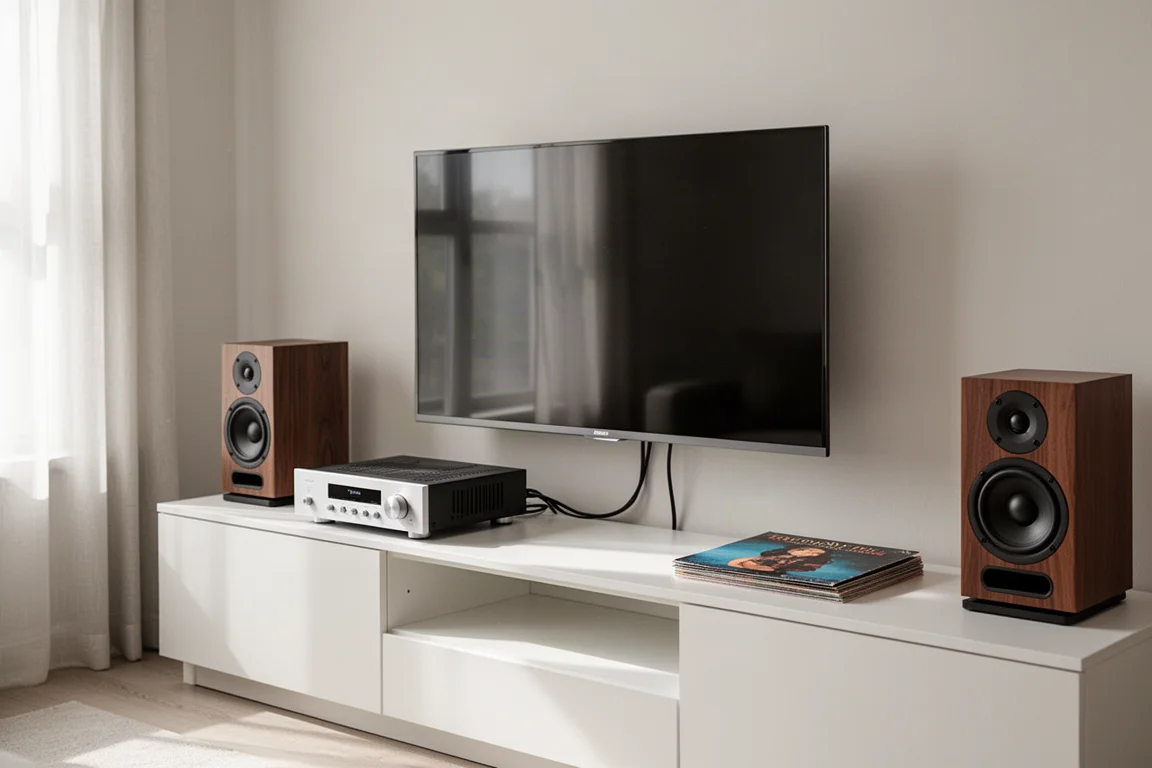
Choose the C 3030S if your system revolves around streaming. BluOS opens up nearly every major service and fits neatly alongside other Bluesound gear. Choose the C 3050 if you need more power, plan to use room correction later, or simply want the modular path.
Whichever model you pick, the rest of the system matters just as much as the amplifier. Speaker choice, subwoofer integration, and HDMI eARC setup all shape the final result, and the 80 Hz high-pass filter on the C 3030 is one of the simplest ways to make a two-channel setup with a subwoofer sound cleaner and more relaxed.
Conclusion
The C 3030 does not rely on flashy gimmicks or inflated specifications. It leans on proven engineering to deliver a listening experience that is genuinely musical and enjoyable to live with. Whether you build a system around a turntable, a television, or a high-resolution streamer, the C 3030 and C 3030S offer a foundation that is honest, powerful, and easy to use every day.
Product link
View more details for NAD C 3030
This product is mentioned in the review. Check the specifications, options, and compatibility before buying.
View more details for NAD C 3030Further reading
Related Reviews
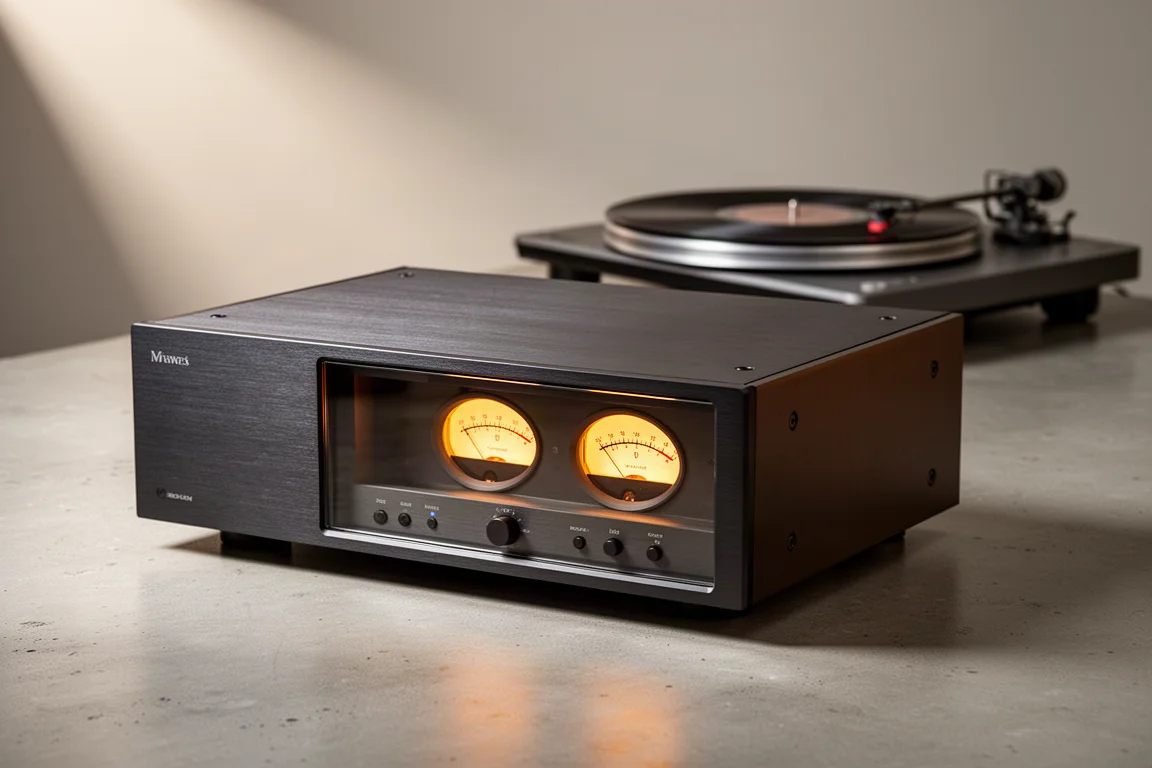
Integrated Amplifiers
Advance Paris A10 Classic Review: Vintage Looks and a Lively, Punchy Sound
The Advance Paris A10 Classic pairs glowing blue VU meters and a tube stage with one of the widest input sets on any integrated amplifier. Here is what it does well and what to weigh before spending $2,500.
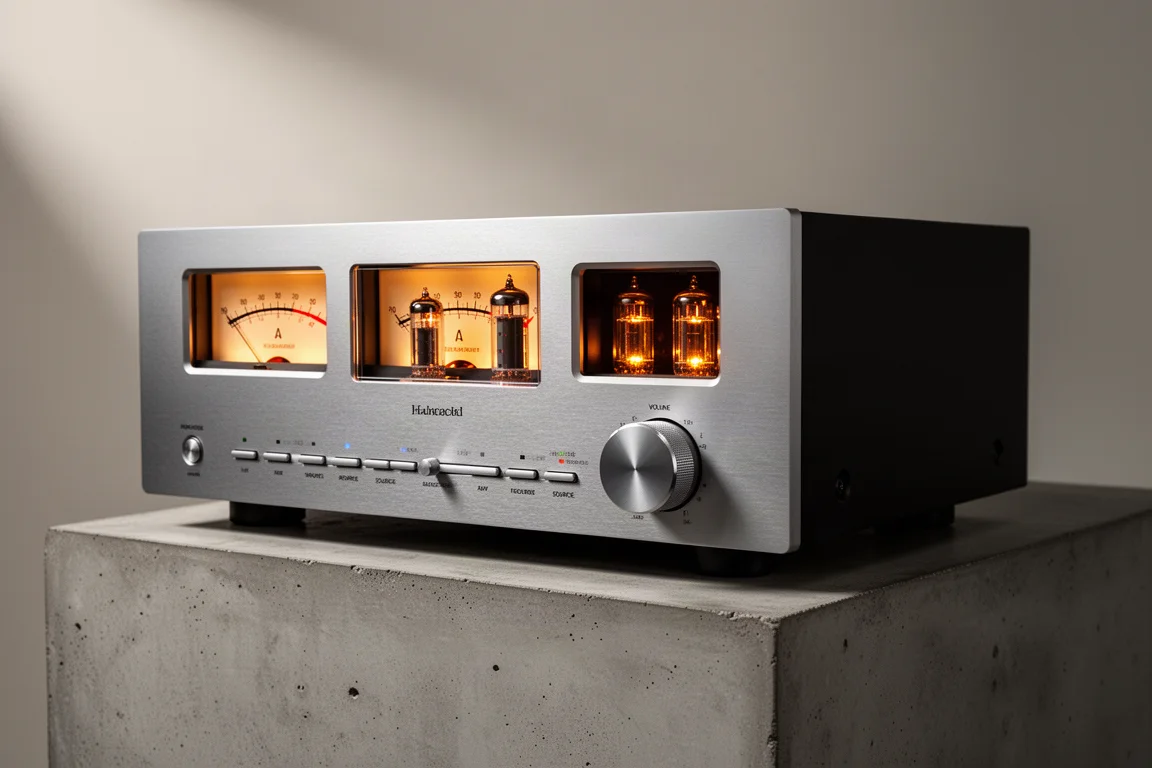
Integrated Amplifiers
Advance Paris A12 Apex Review: A Modern Integrated Amplifier With Vintage Character
A dual mono integrated amplifier with 180 watts per channel, a tube front end, VU meters, and a connectivity list that covers turntables, televisions, computers, and headphones.
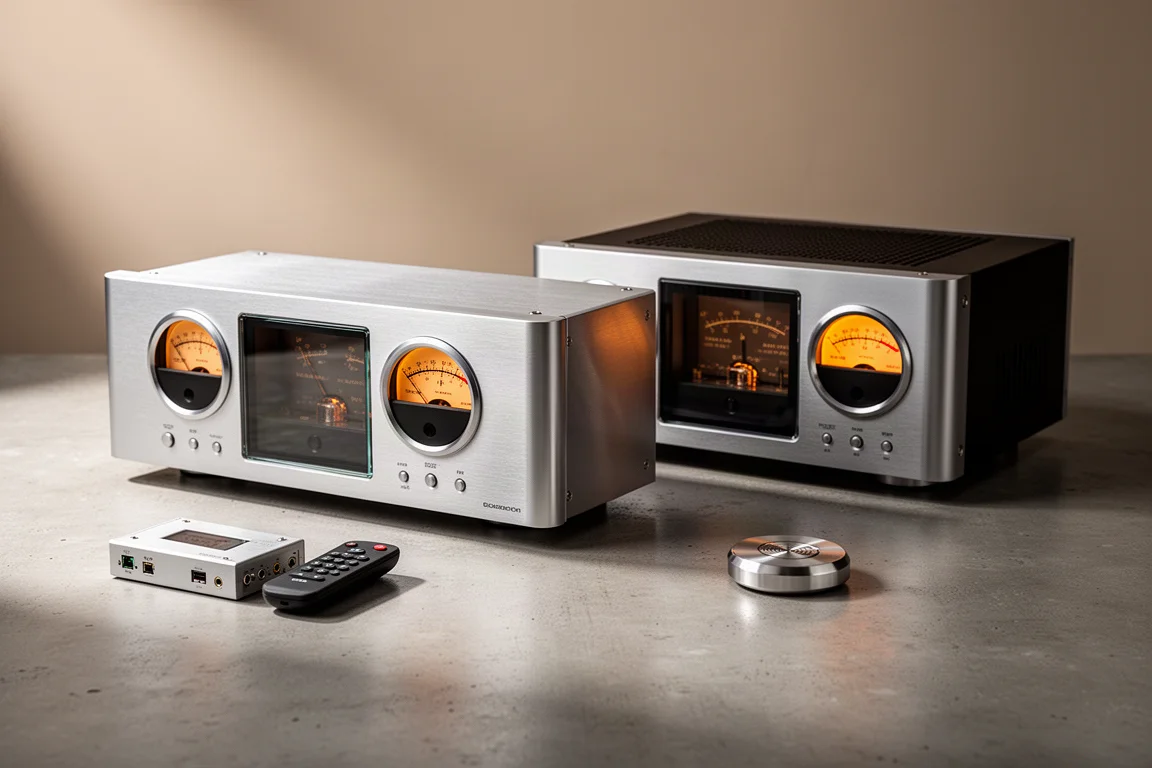
Integrated Amplifiers
Advance Paris Nova Range Review: AI130, AI190 and Modular Upgrades
A practical look at the Advance Paris Nova range, including the AI130 and AI190 integrated amplifiers and the modular streaming, Bluetooth and remote accessories that expand them.