Hi-Fi Amplifiers
Musical Fidelity M8s Pre and M8s-500s Review: A Balanced Pre/Power Combination
A close look at Musical Fidelity's fully balanced pre/power pairing, from the M8s Pre's dual mono build and onboard phono stages to the M8s-500s's 500 watts per channel.
Introduction
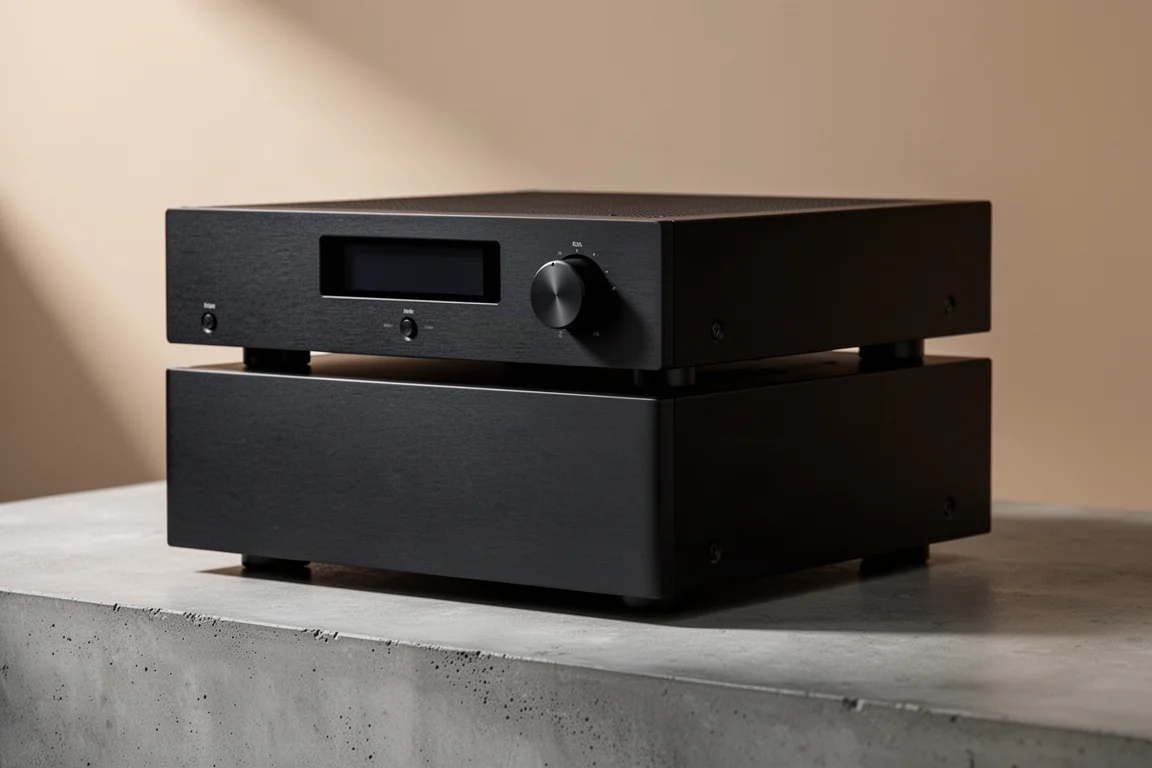
Musical Fidelity has a long history with high-power amplification, and the M8s Pre and M8s-500s sit right at the heart of that tradition. Until the recent relaunch of the Nu-Vista range, these two components represented the company’s top tier of amplifiers, and both are built around a fully balanced signal path from input to output.
The numbers grab your attention first. The M8s-500s power amplifier delivers 500 watts per channel into 8 ohms, which adds up to more than a thousand watts in total. The matching M8s Pre is a fully balanced preamplifier with both moving magnet and moving coil phono stages fitted inside.
Together they make a clear statement about what a modern pre and power combination can do. This review looks at what each unit offers on its own, how the pairing behaves with a range of loudspeakers, and where it makes the most sense to buy.
What the M8s Pre and M8s-500s Bring to a System
Both units share a fully balanced architecture, and that decision shapes almost everything else about them. Inside each chassis there is a dual mono layout, with a separate transformer for the left and right channels, which keeps the two channels electrically isolated from one another.
In the preamplifier, the balanced board carries twice the component count of a single-ended design because it handles a positive and a negative signal rather than just one. That allows the circuit to compare the two halves of the signal, identify what is noise, and cancel it out.
The power amplifier follows the same logic. Its output stage is a push-pull Class AB design built around Darlington-paired devices, with twelve output devices on each channel board and no visible surface-mount parts on the amplifier board. The build is deliberately functional rather than decorative, and the money has gone into the circuit rather than extruded front plates or elaborate heatsinks.
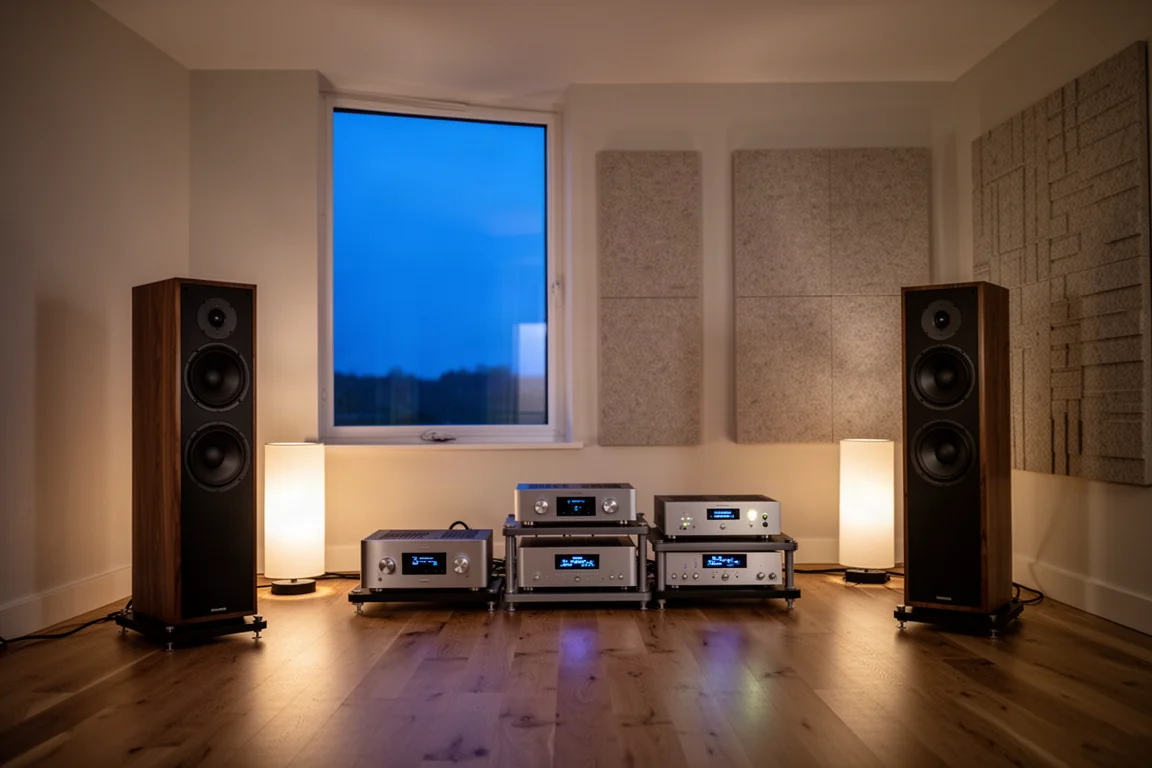
That balance of priorities is worth understanding before you look at either unit on its own. The M8s pair is designed to deliver control and headroom rather than visual theatre.
Musical Fidelity M8s Pre Preamplifier
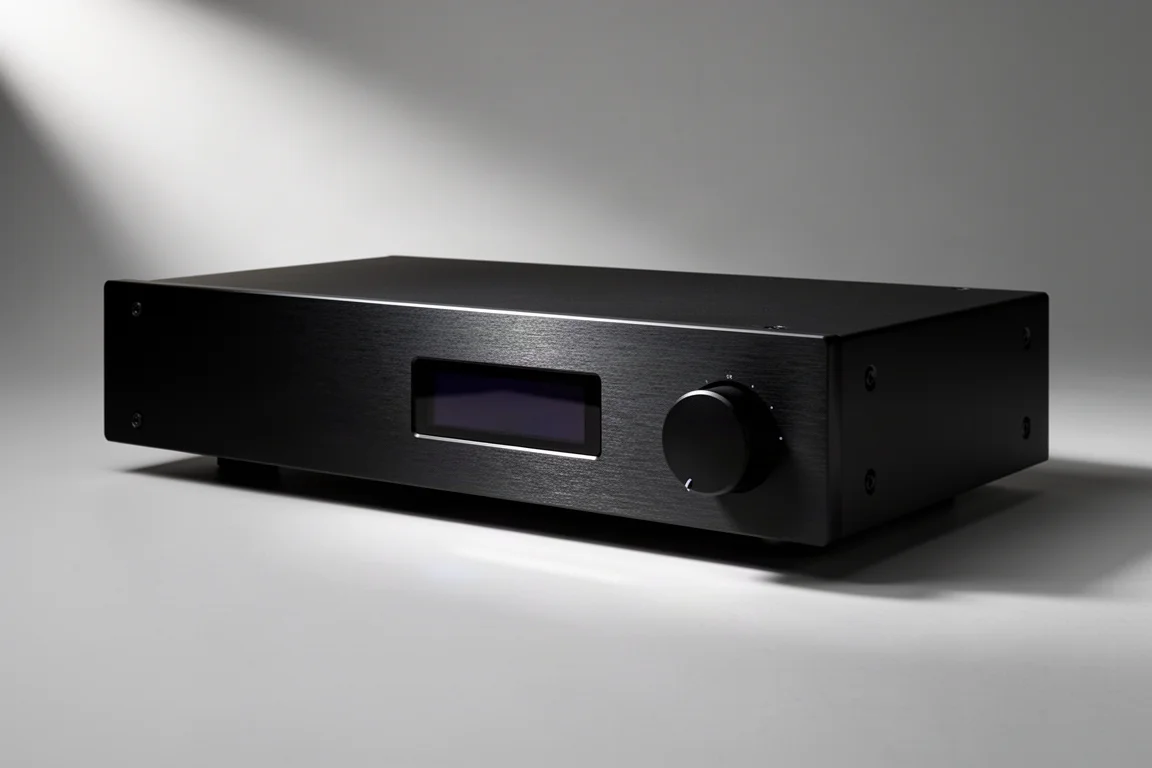
The M8s Pre measures 440 by 162 by 400 millimetres, or 17.3 by 6.4 by 15.7 inches, and weighs 17 kilograms, around 35 and a half pounds. It is available in a silver finish as well as black, and sells in the United Kingdom for £3,499. Build quality is solid but deliberately unelaborate, which is one of the ways the cost has been kept under control.
The front panel is dominated by a compact LED display and a rotary volume control with a firm click as you turn it. Volume moves in half-decibel steps, so substantial turns of the knob are normal when you want a meaningful change in level. Next to the standby button is one for the tape monitor loop, and the supplied remote is a decently sized plastic handset rather than a premium metal one.
Connectivity is generous. There are seven inputs in total, two of them balanced XLR, along with a bank of RCA inputs and a tape monitoring output for recording devices. The phono stage is fitted inside and covers both moving magnet and moving coil cartridges, with a toggle switch on the rear to select between them.
The rear panel also carries a switch that converts the auxiliary 2 input into a fixed home theatre bypass, letting an AV receiver take control of volume, and one of the balanced XLR inputs can be switched for home theatre use as well. Analogue outputs are available on both single-ended RCA and balanced XLR.
Inside, the dual mono construction is a genuinely welcome thing to find at this price. Each channel gets its own transformer, and both are encased in metal pots so they radiate less noise toward the sensitive low-level preamplifier circuitry. The main power supply board uses metallized film capacitors rather than electrolytics, which should hold their values far better over time and offer lower equivalent series resistance. There is a fair amount of empty space in the chassis, which suggests the casework was kept close in size to the power amplifier rather than shrunk to the minimum.
Musical Fidelity M8s-500s Power Amplifier
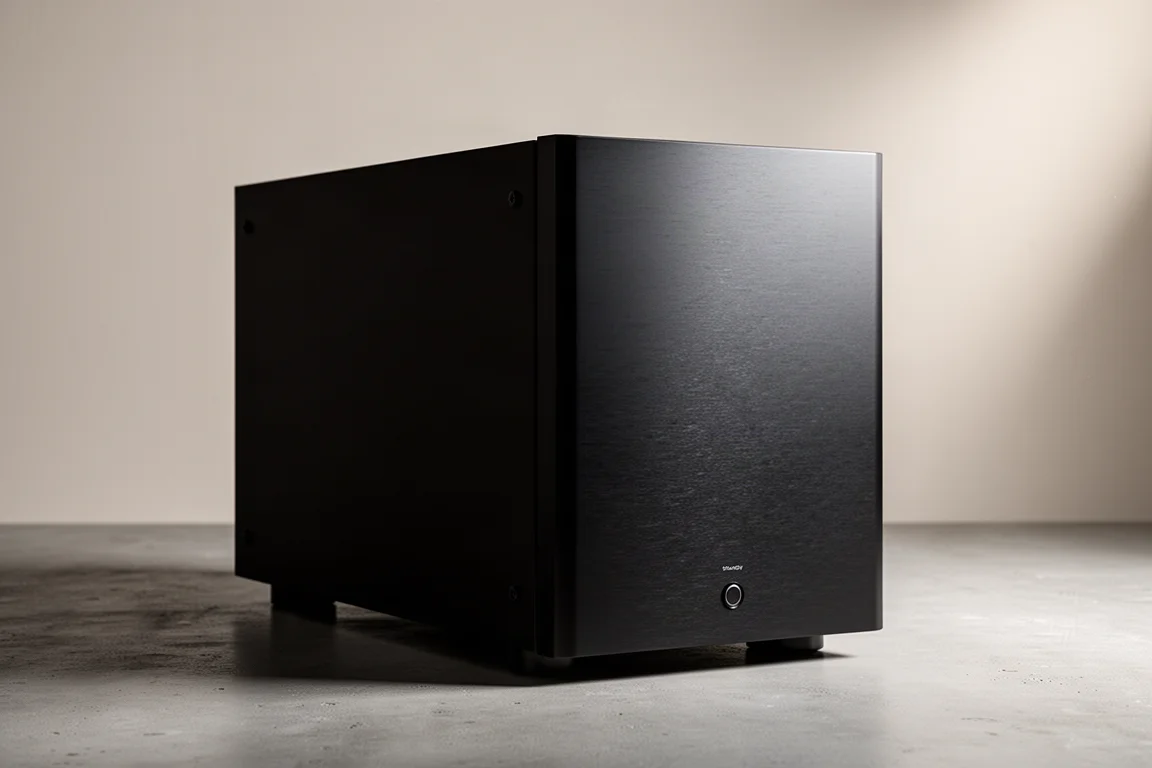
The M8s-500s shares the width and height of the preamplifier but goes deeper, at 460 millimetres or 18.1 inches from front to back, and it weighs 29 kilograms, about 63.9 pounds. Its rated output is 500 watts per channel into 8 ohms. The front panel is about as plain as it gets: a single standby button and nothing else, with no fancy heatsinks or front plate extrusions to inflate the price.
At the back you get two sets of speaker binding posts, which makes bi-wiring straightforward, plus RCA and XLR inputs and a set of loop outputs so a second amplifier can be connected for bi-amping.
Inside, the power amplifier repeats the dual mono approach with two transformers that are considerably heavier than the preamplifier’s, as you would expect for this amount of output. A green board between them handles switching the mains input between 230 and 115 volts for different regions. The main power supply uses eight capacitors rated at 6,800 microfarads each, giving 27,200 microfarads per channel. These are mid-tier parts from a Taiwanese manufacturer rather than the top Japanese brands, which looks like a deliberate compromise given how much else is packed into the chassis.
The amplifier board itself is fully balanced and discrete, with Darlington-paired output devices arranged in a push-pull Class AB configuration. The result is an amplifier that runs cool in normal use.
Sound Quality in Practice
The first thing to accept about this pairing is that it does not sound like the big, rich Class A Musical Fidelity amplifiers of the past. This is a Class AB design, and anyone hoping for that cosy, nostalgic warmth should recalibrate their expectations. Judged on its own terms, though, the combination is deeply impressive.
Bass control is phenomenal. Nitpicking is part of the job here, and there is a touch of dryness to the presentation: a little more bass weight and a slightly thicker lower midrange would be welcome. A 500 watt amplifier is expected to deliver the kind of dynamic thrills that a 100 watt design simply cannot, and this one feels tuned with a degree of restraint rather than free-spirited abandon.
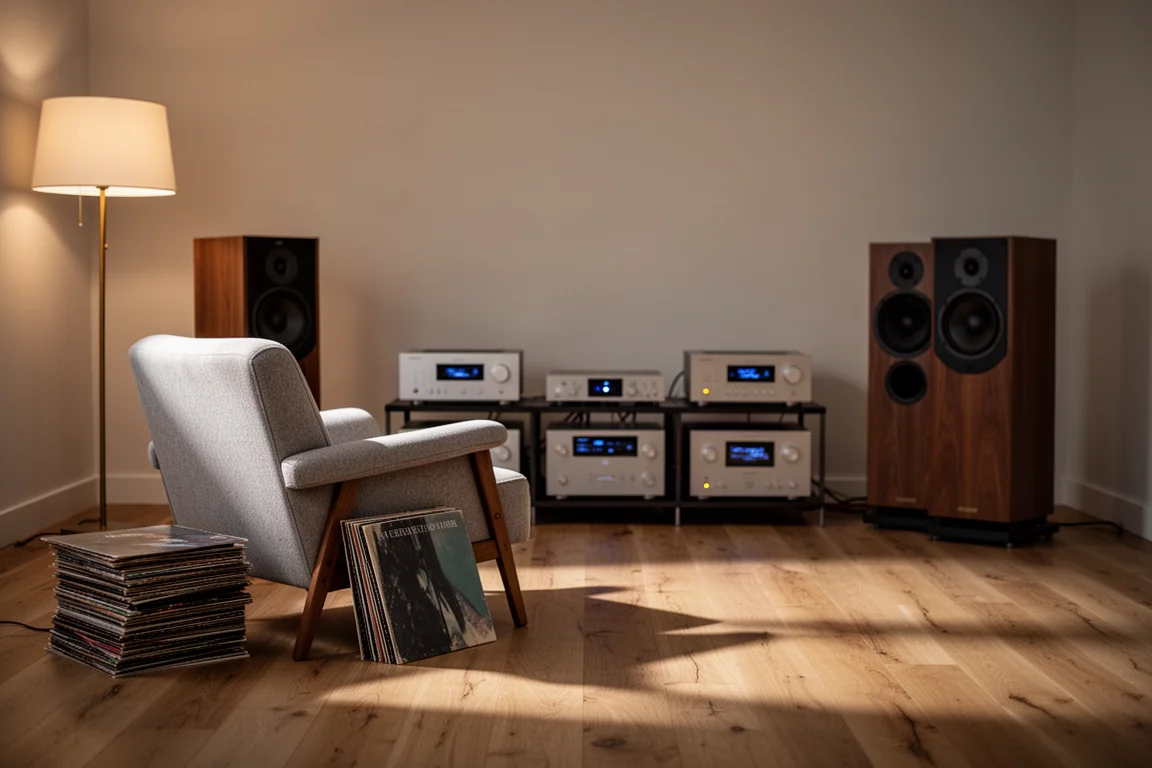
Everything else is remarkably free from coloration. Vocal clarity is top notch, and the pairing is very good at tracking individual performers inside a busy mix. High frequencies come through beautifully. Compared with a Hegel H190, the M8s combination is a clear step up in clarity, grip, control and imaging precision, and it can play considerably louder, even if the Hegel remains a strong performer for soundstage width and depth at its price.
Against the Angel pre and Angel 4, the M8s pair gives up a little transparency and micro detail, but it is more dynamic, reaches higher sound pressure levels and can drive more demanding speakers. Against an Exposure 21 preamplifier and 18 Super Monoblocks, the Musical Fidelity units have the edge on transient snap and bass control, while the Exposure pair remains more coloured, with a richness and a natural note decay that the M8s does not quite match, along with greater soundstage width and depth.
Matching Speakers and Rooms
The M8s Pre and M8s-500s were used alongside ATC SCM40 speakers, which by ATC’s own admission need a bit of driving. The pairing controlled those demanding woofers extremely well, had the clarity to let the three-inch midrange shine, and stayed refined at the top end.
With compact stand-mount speakers, the results are good rather than ideal. A pair of ProAc stand mounts sounded lovely through the midrange with a sweet top end, but the bass weight and soundstage depth of a vintage pre and monoblock combination were missed. That is a reasonable trade-off: the M8s pairing is tuned sensibly for floorstanding speakers that naturally have more low-frequency extension and energy.
A compact floorstander such as the Graham Audio LS6F is a better fit. It shares a superbly natural midrange and adds more bass extension, with a slightly darker top end. In power terms the M8s-500s is overkill for a speaker like that, but the lack of coloration and the sheer drive on tap mean the pairing works well across a wide variety of loudspeakers.
Placement, Cabling, and Everyday Use
These are large components. Even if your rack can take the 162 millimetre height of the preamplifier, you need to check the depth available for the power amplifier in particular. At 460 millimetres front to back, it needs a generous shelf before you allow for cables behind it.
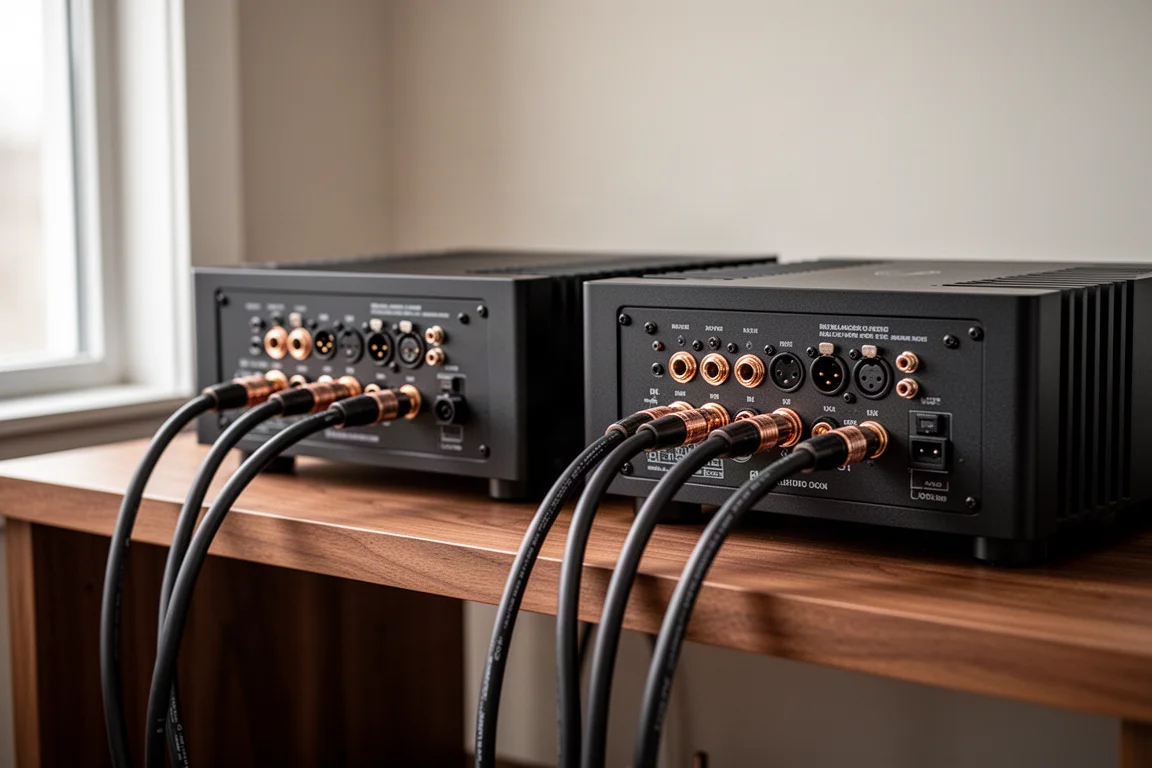
Placement is otherwise undemanding. Both units run cool, so ventilation is not a concern, and there is no need for special isolation measures beyond a stable surface.
One practical recommendation stands out: connect the preamplifier to the power amplifier with balanced XLR cables. Both units have fully balanced internal architecture, and running single-ended RCA between them means you are not taking advantage of it.
Where the M8s Combination Sits in the Market
Until the recent relaunch of the Nu-Vista range, the M8s components were Musical Fidelity’s top tier, and the pricing reflects a deliberate attempt to keep the cost of entry reasonable for a high-power balanced pre and power system. The preamplifier sells in the United Kingdom for £3,499, and the finish options include black and silver.
Listeners moving up from a roughly £3,000 integrated amplifier are the natural audience. The extra performance on offer here is substantial, and the plain exterior hides a very capable amplifier underneath.
Buying Advice
The strongest case for this pairing is lower-sensitivity speakers in large rooms. That is where the combination of grace and power keeps delivering when other amplifiers are running out of headroom. If your speakers are easy to drive and your room is modest, you are paying for capability you may never call upon.
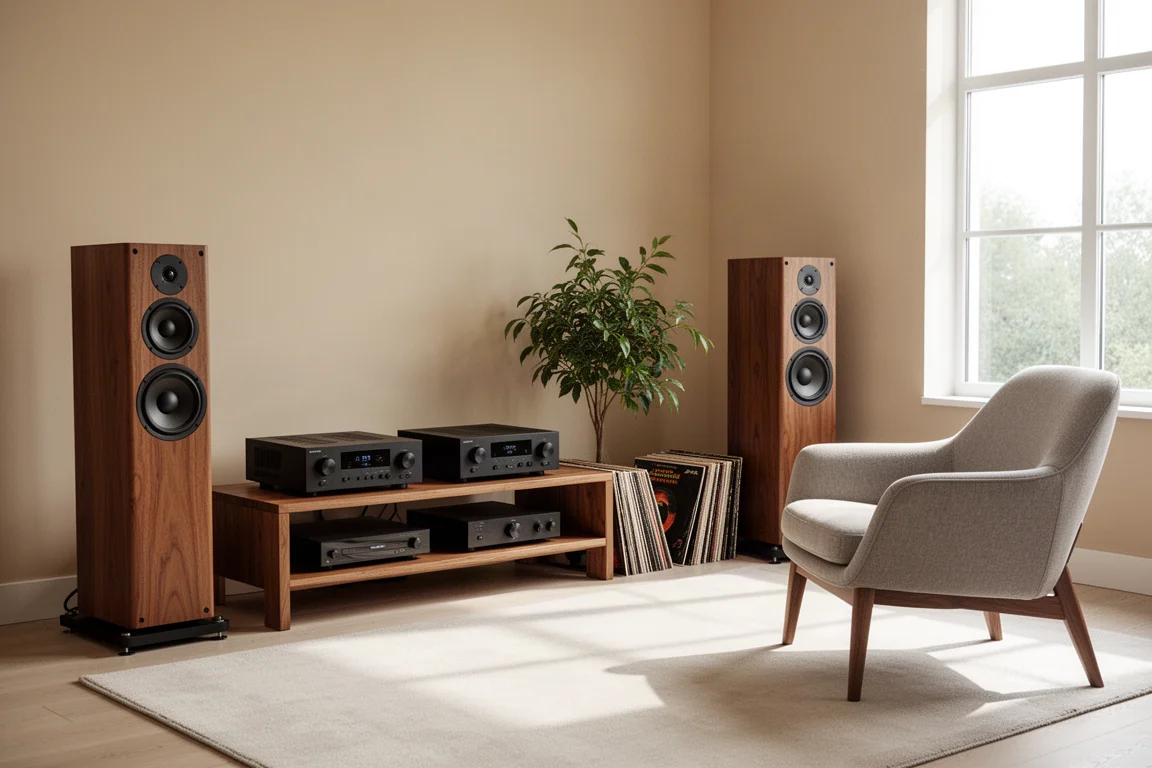
If you do buy, budget for balanced interconnects, check your rack depth before the delivery arrives, and consider the silver finish if it suits your system. Buyers who want a little more muscle and warmth in the presentation should listen carefully first, because this is a precise and controlled amplifier rather than a romantic one.
Conclusion
The Musical Fidelity M8s Pre and M8s-500s are accomplished amplifiers. Their no-nonsense exterior belies a very capable design beneath the skin, with the clarity, grip and control to challenge more expensive amplifiers in fancier clothing. Bass control is phenomenal, coloration is low, and the pair drives demanding loudspeakers with composure.
The main criticism is one of character rather than competence: a touch more muscularity and low-frequency weight would make the presentation more thrilling. Even so, the M8s Pre and M8s-500s earn a strong recommendation for anyone building a serious system around speakers that need real power.
Further reading
Related Reviews
Hi-Fi Amplifiers
Accuphase E-280 Review: Entry-Level Accuphase With Flagship Attention to Detail
A close look at the Accuphase E-280 integrated amplifier, covering its champagne build, AAVA volume control, sound quality, and the speakers and sources that suit it best.
Hi-Fi Amplifiers
Advance Paris A10 Classic vs Yamaha A-S301: Two Integrated Amplifiers Compared
A practical comparison of a $350 integrated amplifier and a $2,500 reference model, covering the differences that matter and the ones that do not.
Hi-Fi Amplifiers
Affordable Chinese Amplifiers Worth Buying: Five Budget Hi-Fi Amps Compared
A practical look at five affordable amplifiers, what each one does well, and the trade-offs to weigh before you buy.