Hi-Fi Amplifiers
Musical Fidelity B1XI Review: A £699 Integrated Amplifier That Sets the Bar Below £1,000
The Musical Fidelity B1XI brings HDMI ARC, a built-in ESS DAC, a moving magnet phono stage, and 60W of stable power for £699. Here is what it does well and where it needs care.
Introduction
The last couple of years have been unusually productive for affordable hi-fi amplifiers. New streaming models have raised expectations at the budget end, and several long-established designs have been reworked rather than simply carried over. Musical Fidelity has joined that group by replacing the M2SI with the B1XI.
The change is easy to summarise. The B1XI gives up a little power compared with the amplifier it replaces, adds a built-in DAC for the first time, keeps the same standard of build quality, and costs less. In the UK it sells for £699. The B1 name reaches back to a 1990s classic that earned a reputation for a warm, dynamic sound, but this is not a reissue. The B1XI borrows its design language from the company’s M series, and it is aimed squarely at listeners who want one box to handle a television, a turntable, a streamer, and a pair of speakers.
Who This Amplifier Is For
The B1XI suits listeners assembling a first serious separates system, or replacing a compact all-in-one with something that has proper inputs and a proper power supply. Four analogue inputs, four digital inputs, an HDMI ARC connection, a moving magnet phono stage, a headphone socket, and a front-panel line input cover the usual sources without an external switch box. If a household has a television, a turntable, and a streamer in the same room, that combination is exactly what this amplifier was designed to serve.
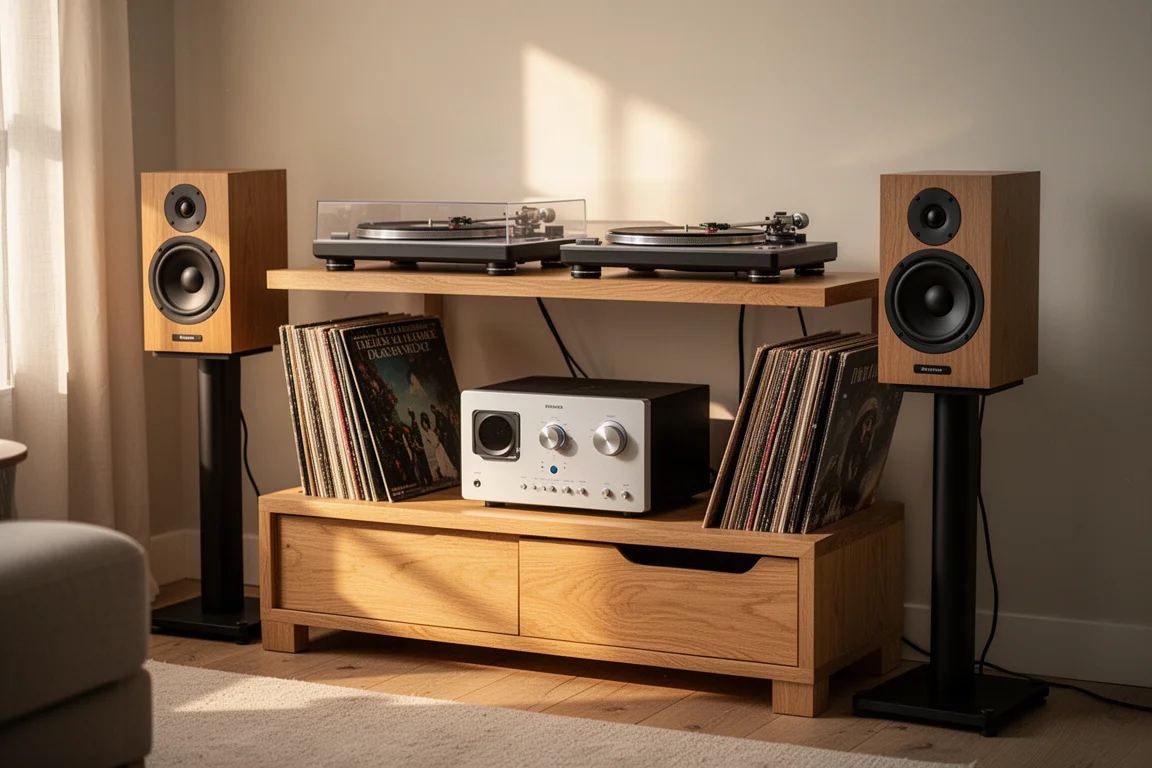
It is also a sensible option for anyone who would rather spend the majority of the budget on sound quality than on features. There is no asynchronous USB input, and the internal DAC is a starting point rather than a destination, but the analogue amplification is clearly where the money has gone. Listeners who mostly play vinyl through the built-in phono stage, or who plan to add an external DAC later, will get the most from it. Anyone who needs a single-box streaming amplifier with a high-end converter built in should look at alternatives.
Build, Connections, and Everyday Usability
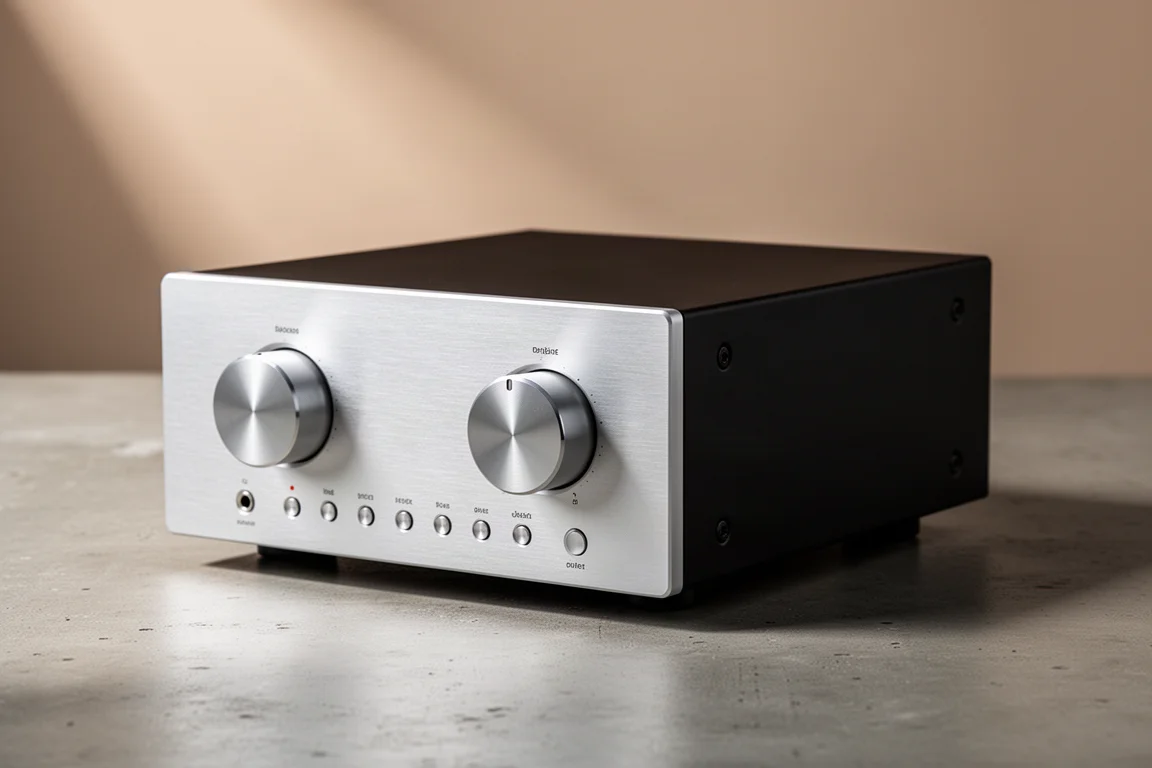
The case is all metal, built around a folded steel chassis with a 7 mm (0.3 in) anodised aluminium front panel. Even the buttons and the volume dial are aluminium, which is rare at this price and does more for the sense of quality than the specification sheet suggests. The unit measures 430 x 90 x 324 mm (16.9 x 3.5 x 12.8 in) and weighs 7.2 kg (15.9 lb).
The front panel is straightforward. Next to the standby button there are direct access buttons for each input, a welcome touch compared with cycling through a menu. Four analogue inputs sit to the left of the central volume dial, one of which is reserved for the moving magnet phono stage. Four digital inputs sit to the right. A fifth button selects an additional line-level input fed by a front-mounted 3.5 mm jack, and a 6.3 mm quarter-inch headphone socket sits at the far right. The volume control is motorised.
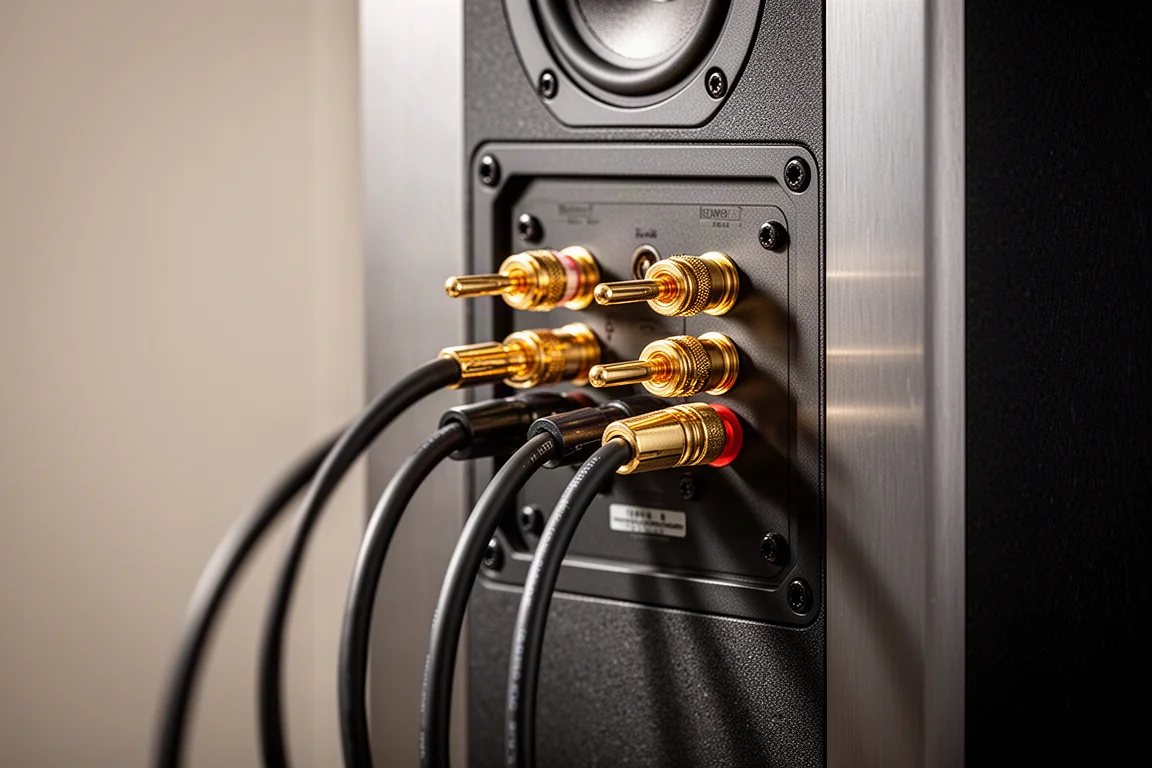
Around the back, digital inputs run along the top with analogue single-ended RCA connections below. There is one set of preouts and a set of standard speaker terminals. HDMI ARC is included, which says a great deal about how important television integration has become in this part of the market. A 5V 1A USB-C power output is provided specifically for entry-level streamers that usually ship with inexpensive wall supplies, giving them access to the amplifier’s internal linear power supply. The one omission is an asynchronous USB digital input, left out to hit the target price.
Sound Quality: Clarity, Timing, and Bass Control
Clarity, timing, and drive are the headline qualities. Rhythms stay in control, and the bass has enough definition that a listener could be forgiven for mistaking the design for a class D amplifier. The £499 Cambridge Audio MXW70, a power amplifier built around a discrete Hypex module, matches the B1XI for note-to-note low-frequency articulation thanks to its high damping factor, but it is light in the bass and has the lean mid-range that class D designs often show. Neither issue applies here. Bass, mid-range, and treble sit in balance, with nothing either polite or exaggerated.

The mid-range is the strongest part of the presentation and is genuinely impressive for the segment. Resolution is high enough to separate instruments convincingly, and the soundstage is wider, deeper, and more layered than the Rega Brio Mk7, the only amplifier at a similar price that rivals the B1XI for outright resolution. There is a light coloration that adds a little richness to the sound. It is not enough to dictate which speakers work well, and it helps offset leaner-sounding partnering equipment.
Inside the Chassis: Power, Stability, and Speaker Demands
The transformer is generously sized for an amplifier in this class. There is no rating printed on the sticker, but it looks like roughly 300 VA, and it accounts for a good share of the 7.2 kg weight. Behind it sit the AC inlet filter and a small standby power supply, followed by the power supply regulation and the main filter capacitors. Those capacitors are rated at 6,800 microfarads each and carry a high 105 V rating, where modest power amplifiers more often use 85 V or even 65 V parts. That suggests the supply rails run at a relatively high voltage. The capacitance per channel is lower than the 10,000 microfarads that would be ideal, which is worth keeping in mind for bass transients when the amplifier is pushed hard.
The power amplifier section uses Toshiba bipolar junction transistors in a push-pull layout with a substantial heat sink, and the design is fully discrete, with no integrated circuits in the signal path, although the power amplifier board relies on surface-mount parts. Rated output is 60 W into 8 ohms, 100 W into 4 ohms, and 140 W into 2 ohms. A 2 ohm rating is unusual at this price and points to a stable design that can drive awkward speaker loads.
How the B1XI Compares With Rival Amplifiers
Against the Audiolab 6000A MkII at £649, the B1XI sounds better through its analogue inputs, with tighter bass, a cleaner mid-range, and more open highs. The Audiolab remains a superb all-rounder with balanced tonality and enough drive for a wide range of speakers, and the difference between the two is a refinement rather than a rout. Nothing here disgraces the Audiolab.
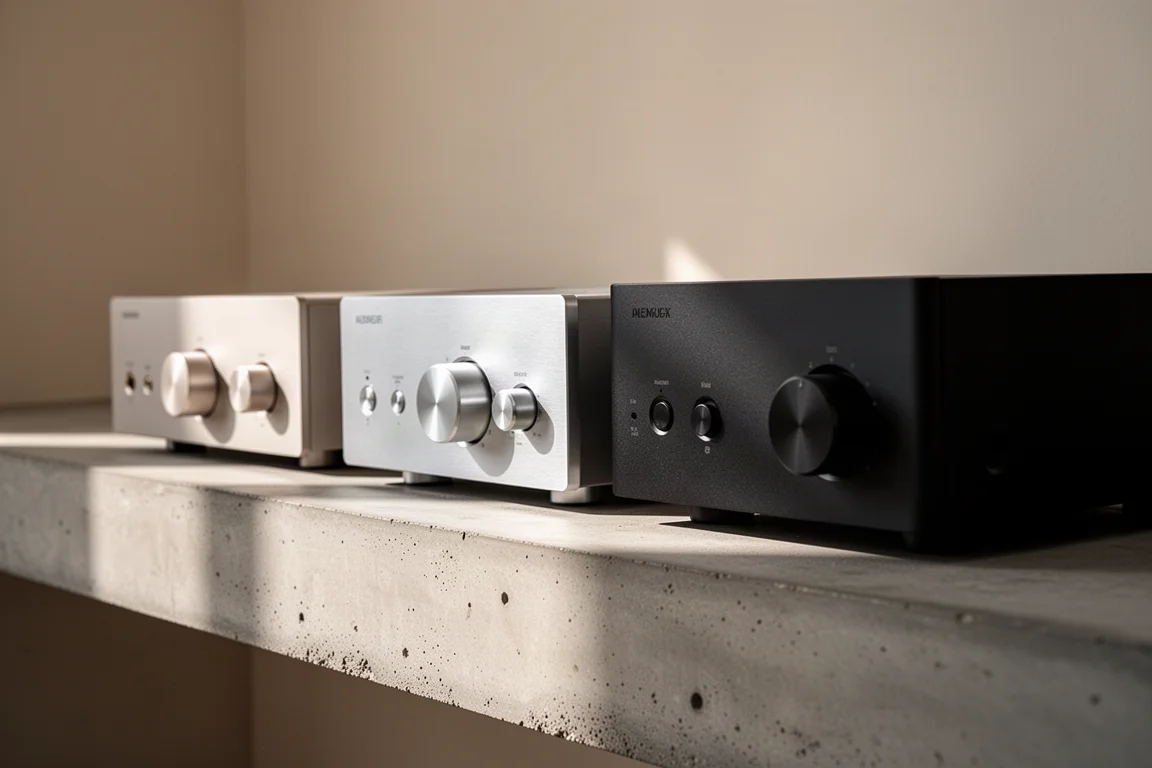
Against the Rega Brio Mk7 at £799, the B1XI gives up nothing in resolution. Both amplifiers are unusually revealing for the money and both separate instruments with an ease that is rare at this level. The Rega has a relatively narrow, flat soundstage with a slightly elevated upper mid-range, while the B1XI produces a wider, deeper, more layered sound field.
Moving up to the Exposure 2510 at £1,950, the B1XI gives away only about half a step, even though the Exposure is a clear step above the Audiolab. Perhaps the bigger surprise is how similar the Exposure and Musical Fidelity amplifiers sound in tone: both add a light glimmer of warmth. Whether the difference is worth three times the price depends heavily on the partnering equipment.
The Built-In DAC and Phono Stage: Where to Plan Upgrades
The digital board uses an ESS9018 K2M chip, a part that has been around for more than a decade. It is a perfectly usable converter and a useful addition at this price, but it falls into the good enough to get you started category rather than the no need to upgrade category. A later ESS part such as the 9038 Q2M, as used in the Audiolab 6000A MkII, is more resolving, which means the Audiolab sounds cleaner through its digital inputs.
Adding an external DAC is therefore the most obvious upgrade for a B1XI owner. Something as capable as the Cambridge Audio DAC Magic 200M, which had a revised UK retail price of £349 in 2025 and is sometimes discounted below £300, is a sensible minimum. It runs two 9028 Q2M chips in dual mono, offers enough detail to do the amplifier justice, and has a natural tone that does not fight the amplifier’s character. Spending more is not wasted either. A Denafrips Ares 12th Anniversary, essentially the same converter as the current Enyo 15th Anniversary at £865 in the UK, is not overkill for an amplifier of this quality. It lets the detail, natural timbre, and spatial ability of the B1XI come through.
The moving magnet phono stage is included as part of the package, and listeners with a serious vinyl setup are likely to want an external phono stage before long. It is there to get a turntable playing, not to be the final word.
Things to Consider Before Buying
A few points are worth weighing before committing. There is no asynchronous USB input, so computer audio will need an external converter or a streamer. The internal DAC is entry level, and the phono stage is likely to be upgraded by anyone with a quality cartridge. Power output is slightly lower than the M2SI it replaces, and the filter capacitance is lower than ideal, so very demanding speakers should be approached with caution.
Speaker matching deserves the most attention. A £1,800 pair of demanding standmounts needs an amplifier with more current to avoid sounding soft and cloudy. The B1XI makes a good attempt at driving that kind of load, but it should be treated as a stop gap rather than a long-term partner. As a general rule, standmount speakers below £1,000 and floorstanders below £2,000 rarely demand high-current amplification. Once standmounts reach around £2,000 and floorstanders reach around £3,000, that assumption no longer holds and the amplifier becomes the limiting factor.
Buying Advice: Sources and Speakers That Make Sense
At just under £700, the B1XI is exceptional value even if it is used purely as an analogue amplifier, with the DAC and phono stage treated as bonuses. Building a system around it is straightforward.
For speakers, Monitor Audio’s Silver 7G standmounts at around £800 are among the most detailed and dynamic options anywhere near that price, and they disappear into the room in a way that lets the amplifier show what it can do. There is a touch of leanness to their sound, and the richness of the B1XI offsets it to a degree, though not completely. Revealing mini monitors around the £1,500 mark also work well, and the fact that the B1XI does not sound artificial with them shows how well it scales. Wharfedale’s Evo 5.3 floorstanders, available in a new satin grey finish, sit in a more appropriate price bracket and place more reasonable demands on an amplifier at this level.
For digital sources, a Bluesound Node Nano at £299 is one of the best bargains in hi-fi. Used through its analogue outputs it delivers sound quality similar to the DAC Magic 200M, and it works well as a streaming transport when fed into a better converter over coaxial or optical connections. Pairing it with the Denafrips DAC is the upgrade path that makes the most sense.
Conclusion
The Musical Fidelity B1XI is a traditional-looking, well-built integrated amplifier with aluminium controls that feel a class above the price. Despite carrying the B1 name, it looks forward rather than back: HDMI ARC makes television integration simple, and the built-in DAC and moving magnet phono stage cover the basics for most households. Plan on adding an external DAC, and possibly an external phono stage, but judge the amplifier on its analogue performance and it is very hard to fault.
There is a little coloration, which adds richness without narrowing the choice of speakers. What the B1XI does is combine the bass control of the Cambridge Audio MXW70, the resolution of the Rega Brio Mk7, and the ability to drive a wide range of price-appropriate speakers in the way the Audiolab 6000A MkII does. At £699, it sets a high bar for the sub-£1,000 class, and it is the amplifier to beat in that bracket.
Product link
View more details for Musical Fidelity B1XI
This product is mentioned in the review. Check the specifications, options, and compatibility before buying.
View more details for Musical Fidelity B1XIFurther reading
Related Reviews
Hi-Fi Amplifiers
Accuphase E-280 Review: Entry-Level Accuphase With Flagship Attention to Detail
A close look at the Accuphase E-280 integrated amplifier, covering its champagne build, AAVA volume control, sound quality, and the speakers and sources that suit it best.
Hi-Fi Amplifiers
Advance Paris A10 Classic vs Yamaha A-S301: Two Integrated Amplifiers Compared
A practical comparison of a $350 integrated amplifier and a $2,500 reference model, covering the differences that matter and the ones that do not.
Hi-Fi Amplifiers
Affordable Chinese Amplifiers Worth Buying: Five Budget Hi-Fi Amps Compared
A practical look at five affordable amplifiers, what each one does well, and the trade-offs to weigh before you buy.