Sleeping Pads
MTAC Sleeping Pads Review: Two Lightweight Options for Weight-Focused Camping
A close look at the MTAC single and double sleeping pads, covering materials, packed size, comfort limits, warmth, and which size suits which kind of trip.
Introduction
MTAC is a Ukrainian gear manufacturer that began with Airsoft products around 2005 and shifted toward military equipment after 2014. The company now builds tactical clothing, footwear, backpacks, sleeping bags, and sleeping pads, and it has grown into one of the better known tactical and military gear makers in its region. Its sleeping pads are the interesting part of that range: military-issued designs that stay surprisingly light and surprisingly civilian in the way they are used.
There are two versions, a single and a double, both offered in OD Green. The single sells for around $27 and the double for around $54. Both are three-season pads, both pack down small, and both are aimed at campers who count weight and pack volume before they count plushness. This guide covers what each pad does well, where the compromises sit, and which size makes sense for which kind of trip.
Shared Design and Materials Across Both Pads
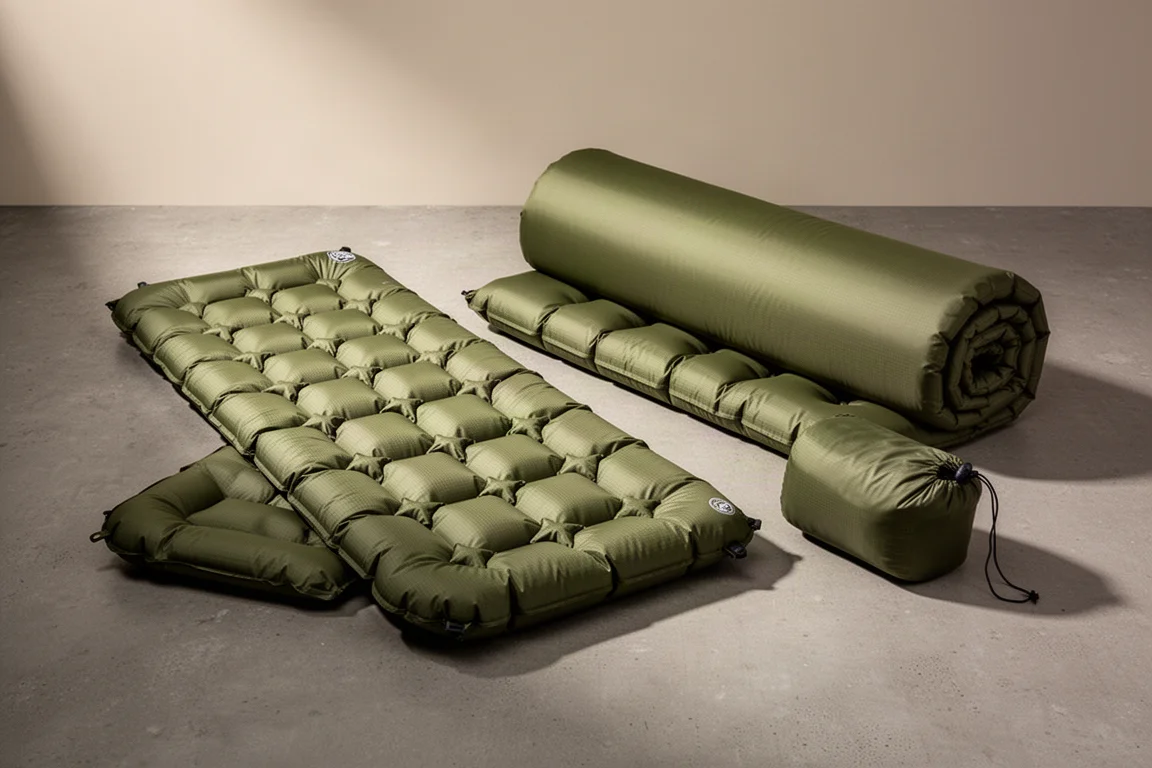
Both pads are built on the same core construction. The shell is a 40 denier ripstop nylon with a TPU coating, and that material choice is the main reason these pads weigh as little as they do. The single comes in at 17.1 ounces, a little over a pound, and the double at 2.2 pounds.
Each pad ships with a storage bag that has a grab handle on the side, a drawstring closure at the top, and an elastic compression strap inside. The bag is generously sized, so getting the pad back in after a trip is not a fight. That sounds like a small thing until you have spent ten minutes wrestling a pad into an undersized sack.
The valve uses a rubber stopper inside the opening. The stopper keeps air from escaping while you inflate, which is genuinely useful, though it also creates noticeable resistance, so filling the pad takes some lung effort.
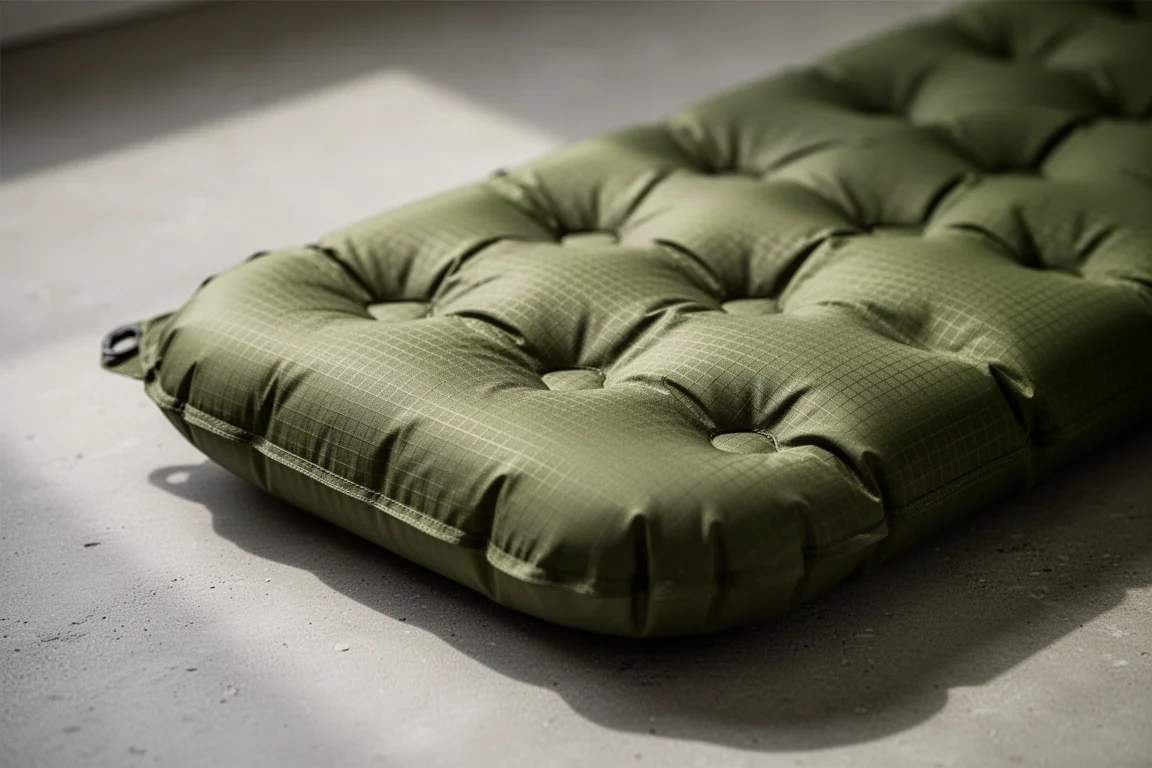
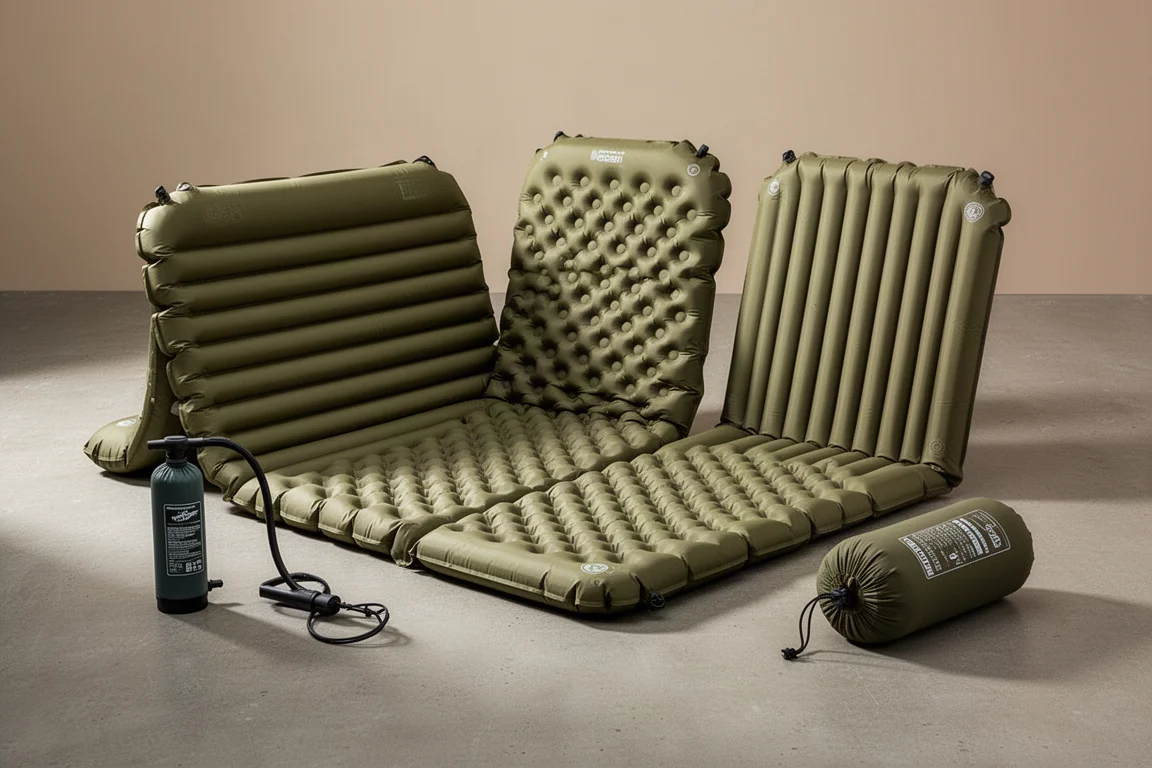
The sleeping surface is built around a welded baffle pattern of squares and star-shaped pockets. Air sits inside those pockets while the spaces between them stay flat. That pattern is what keeps the overall weight down, and it is also why the pad feels firmer in some areas than others.
Both pads measure roughly 2 inches thick when fully inflated, and both are long enough for sleepers up to about 6 feet 4 inches.
MTAC Single Sleeping Pad
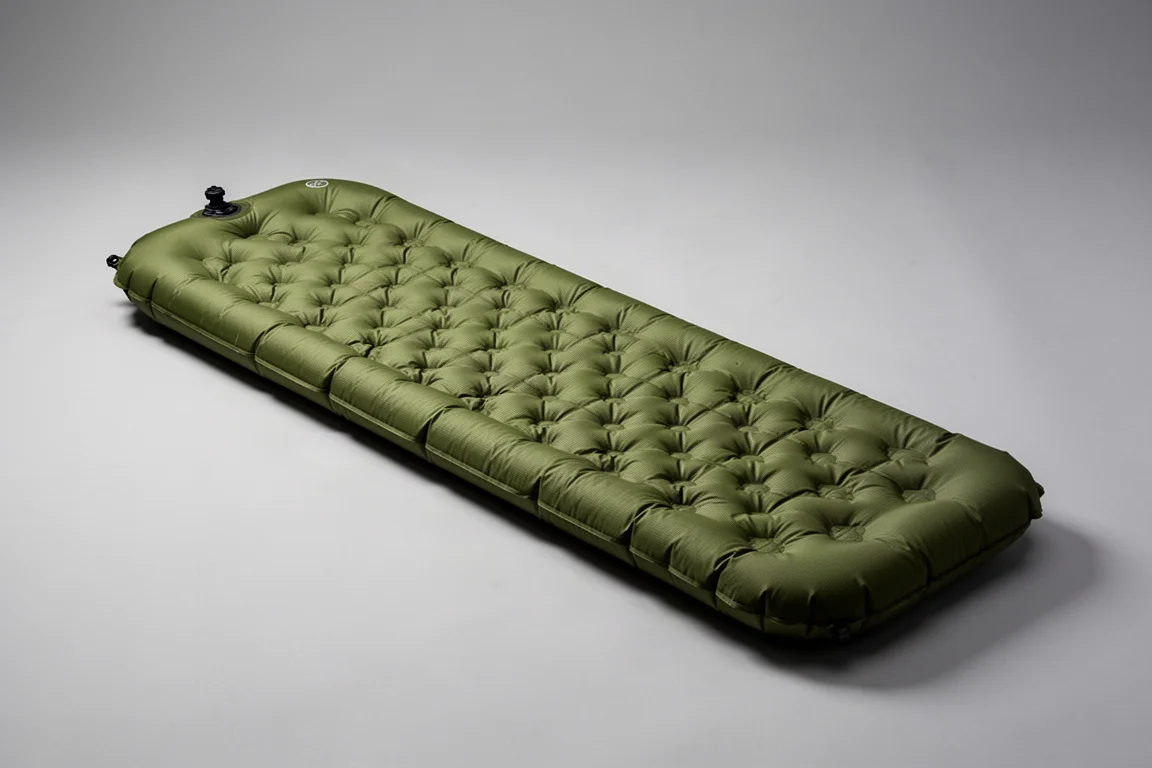
The single measures 78 inches long by 22 inches wide and about 2 inches thick when inflated, and it packs down to roughly 8.5 by 4.5 inches. Inflating it takes around 15 breaths.
At 17.1 ounces, this is the version that makes the strongest case for backpacking and for any trip where every ounce gets negotiated. It was designed around a military use case: enough cushioning for a soldier to sleep on without adding meaningful weight or bulk to a pack.
The compromise is width. At 22 inches it runs narrow for most sleepers, and side sleepers will feel their hips pressing toward the ground as they roll over.
MTAC Double Sleeping Pad
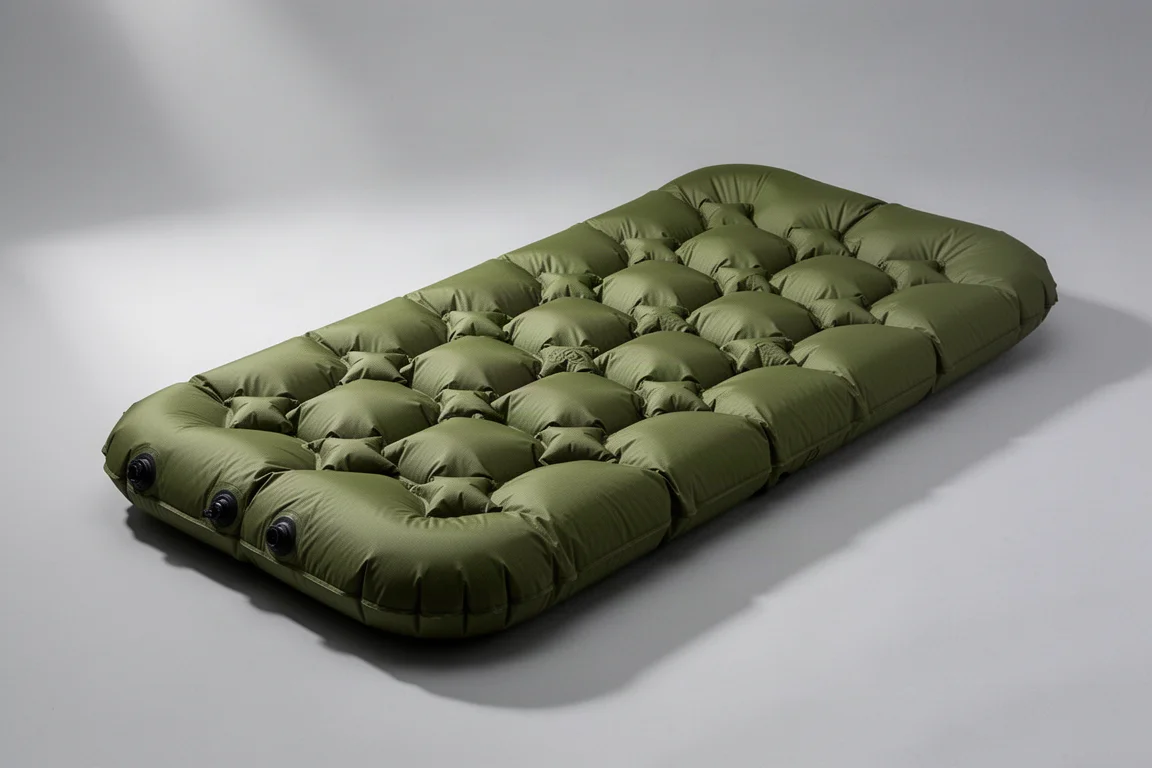
The double measures 77 inches long by 47 inches wide and about 2 inches thick, packs to roughly 11.5 by 5 inches, and weighs 2.2 pounds. Inflation takes about 30 breaths. This version also has an extra air valve, which means both valves must be closed before you start. Leave one open and the pad simply will not fill, no matter how long you blow into it.
The added width is the whole point of this size, but it pays to be realistic about it. Two smaller sleepers can share this pad comfortably enough. Two larger sleepers will find it tight. Used solo by someone who wants room to sprawl, it becomes a much more generous proposition.
Comfort and Warmth: Setting Realistic Expectations
Comfort is where both pads are most honest about what they are. Sitting up on either one puts your weight straight onto the ground, because the baffles are not tall enough to lift you clear of it. Lying down is a different experience: you are supported, and rolling onto your side keeps you supported, though the rotation itself pushes your hips down into whatever is underneath.
On a simple ten-point scale, both pads land around a five. That is less a criticism than a description. They are adequate, and adequate is exactly what a pad this light and this affordable is trying to be.
Warmth follows the same logic. These are three-season pads suited to late spring, summer, and early fall. MTAC mentions some form of insulation, but the pads do not carry a published R-value, and the insulating feel is minimal in practice. With a solid sleep system underneath, they can be pushed to roughly 40 degrees Fahrenheit. Below that, expect to be cold. For four-season use, look at a different class of pad entirely.
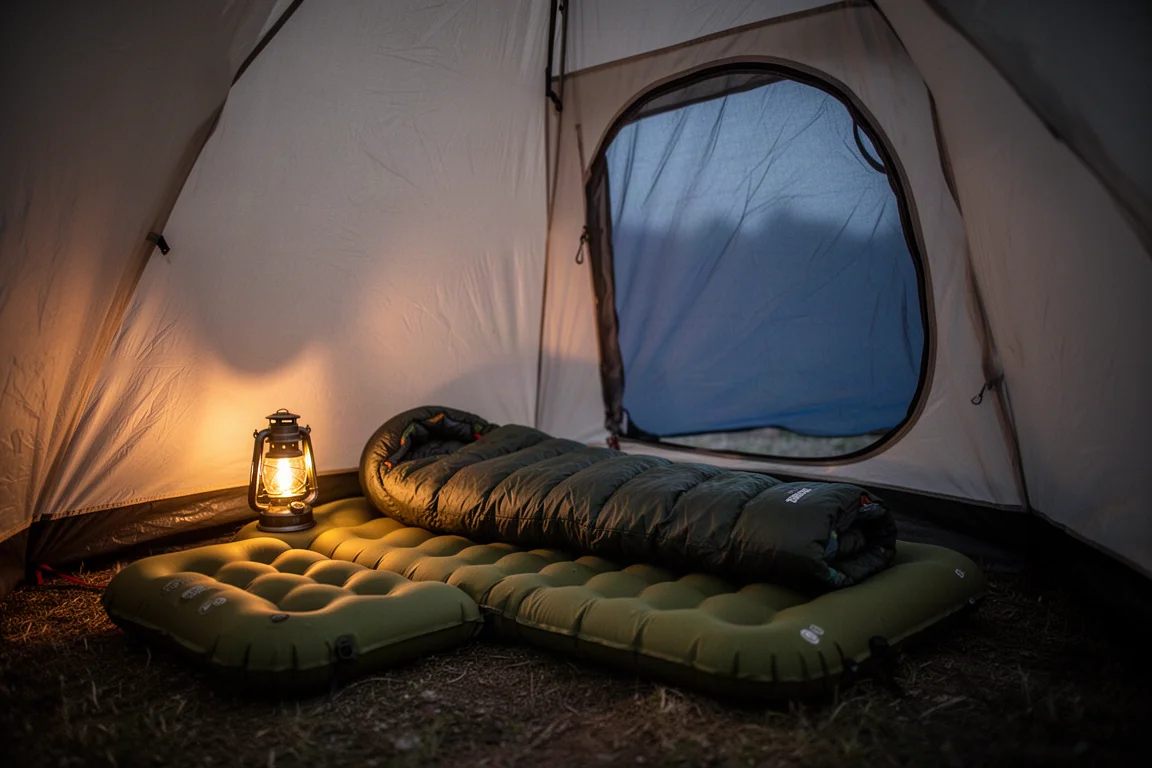
That warmth ceiling is worth planning around. If your trips run from early summer into shoulder season, these pads sit comfortably inside their design window. If you camp into hard frost, they are the wrong tool, no matter how appealing the price looks.
Packability, Inflation, and Storage
Packed size is one of the clearest strengths here. The single rolls down to roughly 8.5 by 4.5 inches, and the double to about 11.5 by 5 inches. For the weight and volume, both compare well against far more expensive pads.
Inflation is a manual job. The single takes about 15 breaths, the double about 30, and the rubber stopper inside the valve adds resistance throughout, so it is real effort rather than a casual puff. It is not a fault, but it is worth knowing before your first night out.
Deflation is the easy half of the equation. Open the valve and the pad flattens almost immediately, with no need to fold or press air out in stages. Combined with the roomy storage bags, packing up at the end of a trip stays quick.
Durability and Build Quality After Extended Use
Build quality is where these pads justify their reputation. The welds are clean and well formed, the valves seat properly, and neither pad has developed leaks through repeated use. They have held up to car camping, truck camping, and nights pitched underneath a tent without showing the kind of wear that usually appears on budget inflatables.
The materials deserve credit too. It would be reasonable to expect a pad at this price to use polyester and weigh considerably more. Instead, the ripstop nylon construction keeps both pads light and highly compressible, and it has stayed intact through warm and cold conditions alike.
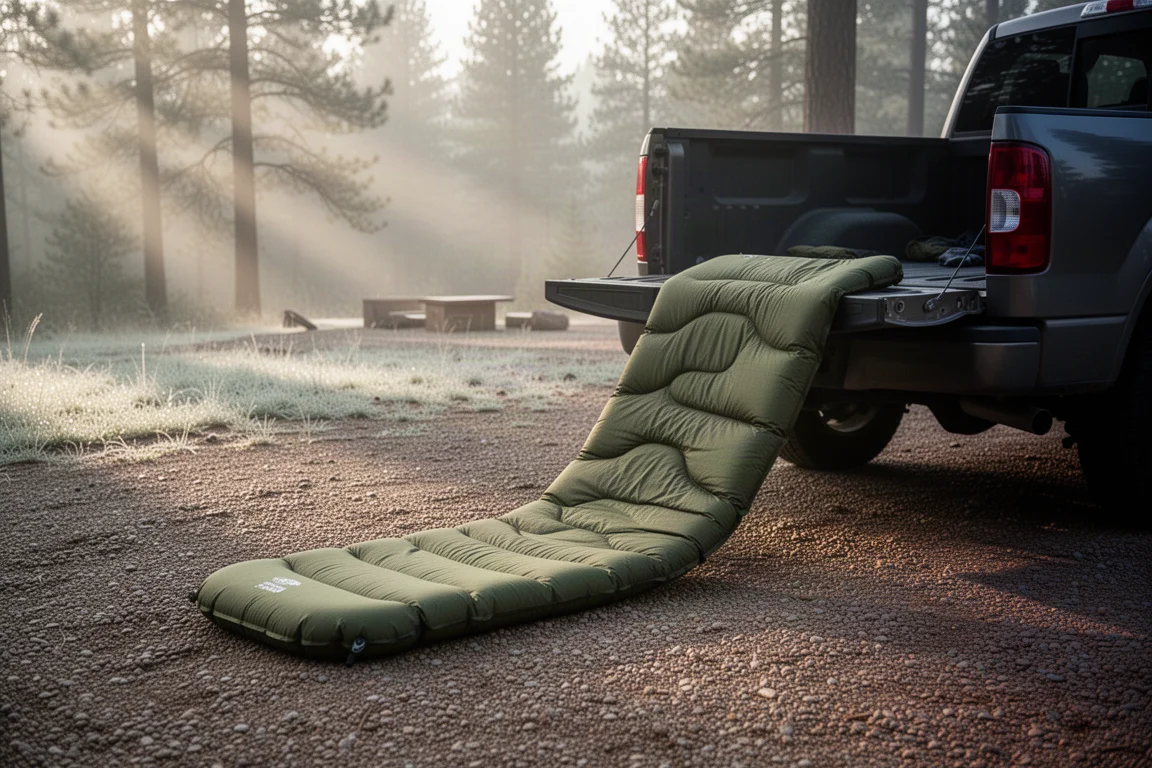
The cut is tidy, the seams are straight, and nothing about the finish suggests a rushed build. For a pad in this price bracket, that level of consistency is the headline.
Who Each Pad Suits
The single is the version for solo trips where weight is the deciding factor. Backpackers, bikepackers, and anyone packing for distance will get the most from it, provided they can live with a 22 inch width and a comfort level best described as adequate.
The double makes more sense for two smaller sleepers who want to share one pad, or for a solo camper who wants extra room and does not mind carrying 2.2 pounds. For car camping and basecamp style trips where weight is not a constraint, a thicker and wider pad will usually be the more comfortable choice.
Buying Advice: Pricing, Value, and Availability
Pricing is the strongest argument for both pads. The single sits around $27 and the double around $54. Considering how light and how compressible the single is, it stands out as one of the better value options for anyone who prioritizes pack weight. The double is fair value at $54, though whether it is comfortable enough for two people depends entirely on their size.
The comparison that matters is against the broader market. It is easy to spend $80 or $100 on a polyester pad that performs no better than either of these. That gap is the clearest reason to consider MTAC.
Availability takes a little planning. MTAC has a presence in the United States and some of its clothing and gear can be found on Amazon, but the sleeping pads are frequently sold out on the company site. In practice, European military surplus retailers that ship to the United States are the most reliable route, and shipping tends to be quick.
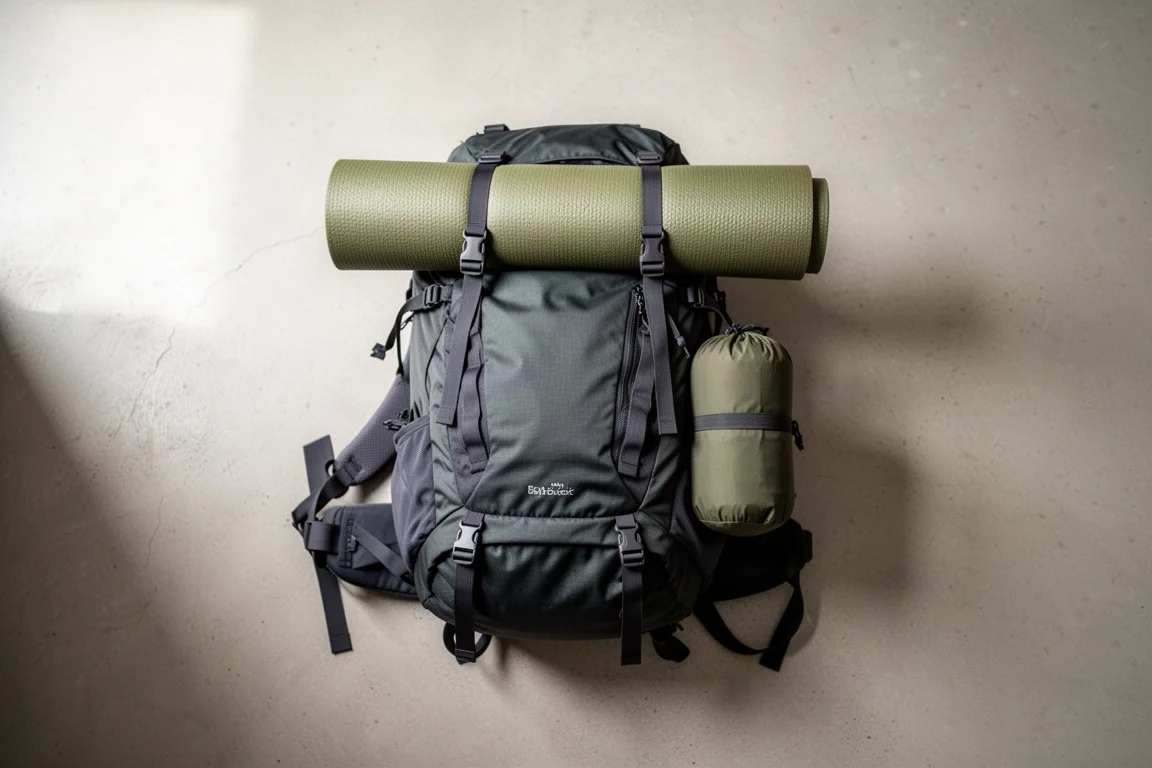
The practical summary is straightforward: buy these for the weight and the price, and accept the comfort ceiling that comes with both. If a thick, wide, four-season pad is what you actually need, spend the extra money elsewhere.
Conclusion
The MTAC single and double sleeping pads are built around three priorities in a clear order: low weight, small packed size, and low cost. Comfort follows behind them, and warmth is limited to three-season use.
For weight-focused trips, the single is an easy recommendation at its price, with ripstop nylon construction and a 17.1 ounce weight that few budget pads can match. The double delivers the same materials and build quality in a wider format for two smaller sleepers, though it will feel tight for larger couples and is less compelling for car camping, where comfort matters more than grams.
Choose them for what they are designed to do, and both pads make a lot of sense.
Further reading
Related Reviews
Sleeping Pads
Best Backpacking Sleeping Pads 2026: Nine Pads Rated on Price, Comfort, Warmth, and Weight
Nine backpacking sleeping pads compared on price, comfort, warmth, and weight, from a $65 summer pad to a year-round option rated at R-7.3.
Sleeping Pads
Best Backpacking Sleeping Pads: Comfort, Warmth, and Weight Compared
A practical comparison of the Nemo Quasar 3D, Therm-a-Rest NeoAir XTherm Max, and Big Agnes Rapide SL for backpackers choosing between comfort, warmth, and packed weight.
Sleeping Pads
Best Backpacking Sleeping Pads: Ultralight, Winter, Comfort and Budget Picks
A practical roundup of the sleeping pads that stand out for ultralight weight, winter warmth, pressure relief and value, plus three popular pads that fell short.