Camping Tents
MSR Hubba Hubba LT vs HD: Which Ultralight Backpacking Tent Fits Your Trip?
A practical comparison of the two updated MSR Hubba Hubba models, covering shared features, weight, interior space, and how to choose between the LT and the HD.
Introduction
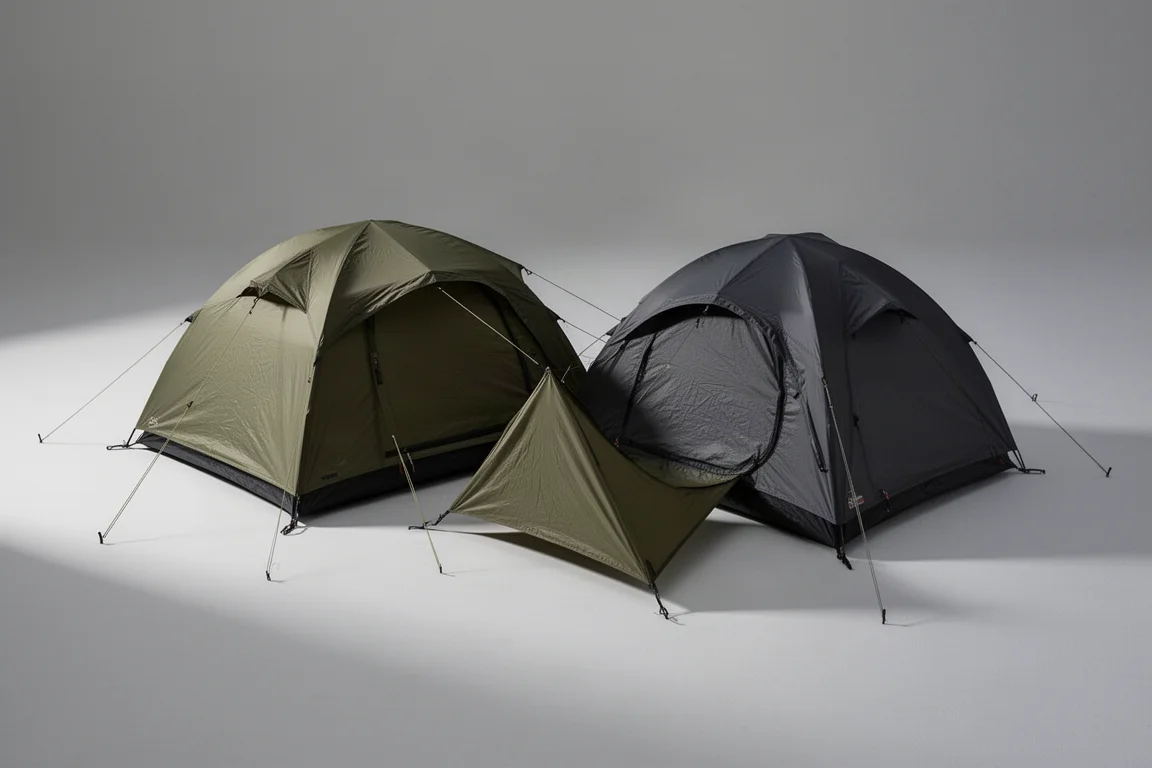
The Hubba Hubba range has been a bestselling tent line for years, and it has become the reference point that many other lightweight tent designs follow. Two things explain the appeal: very low weight and very generous interior space, with dependable weather protection as the third pillar. MSR has now split the two-person model into two versions. The Hubba Hubba LT is slightly lighter than the previous generation, and the Hubba Hubba HD is more heavily built for weather while still weighing less than the model it replaces. Both are offered in one, two, and three person sizes. This guide walks through what the two tents share, then explains exactly where they diverge so you can choose with confidence.
Why the Hubba Hubba Line Still Sets the Standard
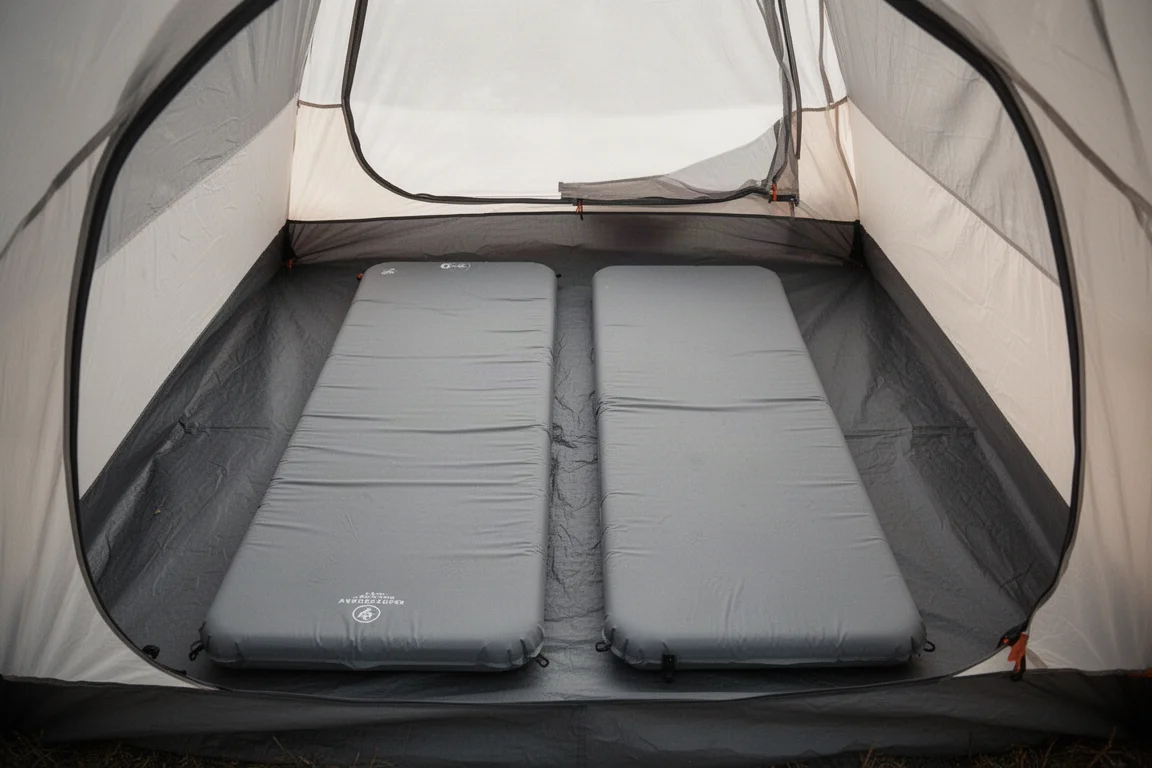
Both tents use a true rectangular footprint. That sounds like a small detail, but plenty of tents that look rectangular from the outside taper at one end, which is fine for shoulders and sleeping but awkward for modern rectangular sleeping pads. Because the Hubba Hubba floor is genuinely rectangular, two wide long pads fit inside the two-person version with room to spare, and a single sleeper gets a lot of usable space around them. A tall sleeper on a long wide pad can stretch out with clearance at the head and foot ends.
Pitching is straightforward because the shape is symmetrical. There is no colour coding to work out and no correct way round for the poles or the fly, since both ends are identical. The frame is built from two long pole sections joined by a crossbar at the top, and once the corners are plugged in, the body simply clips on. The poles are DAC, the clips feel durable, and the metal hardware at the pole attachment points works well when pegging out and pulling the tent taut. Eight groundhog stakes are included, and they drive in securely and clean up easily when they are muddy.
MSR Hubba Hubba LT: Ultralight Mesh Inner
The LT is the weight-focused model, and its most distinctive feature is a fully mesh inner. Above the bathtub floor, the body is solution dyed mesh, which keeps weight down and maximises airflow. That makes it a strong choice for warm conditions, long summer trips, and anyone who values ventilation over extra fabric. The bathtub floor is 20 denier ripstop nylon with an 1,800 mm hydrostatic head, and the rainfly is 20 denier with a 1,200 mm hydrostatic head. Minimum weight is 1.34 kg, and the full packed weight with everything supplied is 1.54 kg. For reference, the previous two-person Hubba Hubba came in at around 1.78 kg.
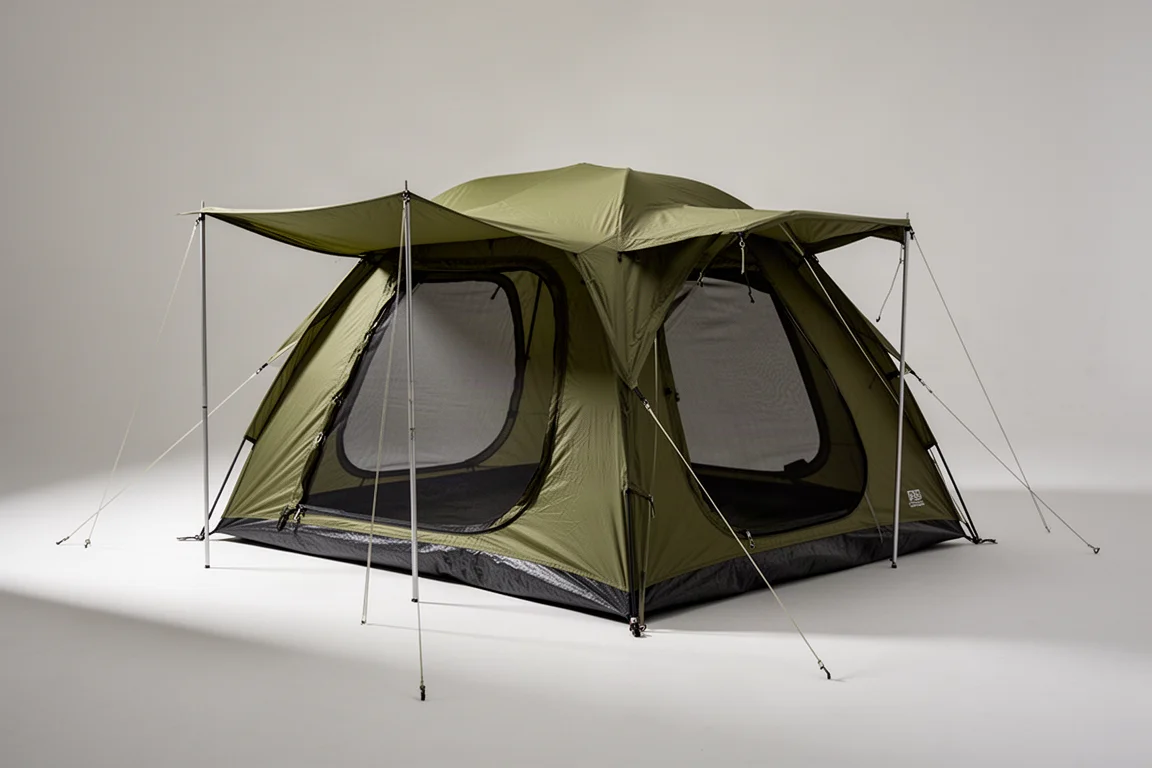
The LT keeps the same interior dimensions as the HD, so the weight saving does not cost you living space. Two wide long pads still fit inside the two-person version, and interior height of about 1.02 m keeps the tent from feeling cramped when you are confined to it during a storm.
MSR Hubba Hubba HD: Nylon Upper and More Weather Protection
The HD trades a small amount of weight for more protection. Its upper body is nylon rather than mesh, so if you are pitching in drizzle or light rain, water runs off the inner while you fit the fly instead of soaking the sleeping area. The nylon also holds a little more warmth, which helps on cooler evenings. It is not a sealed box: MSR keeps mesh at the vent, so air still moves through the tent and gear stays dry while you set up. The rainfly is 20 denier with a 3,000 mm hydrostatic head, and the floor steps up to 30 denier ripstop nylon with a 6,000 mm hydrostatic head. Minimum weight is 1.61 kg, and the all-in packed weight is 1.8 kg.
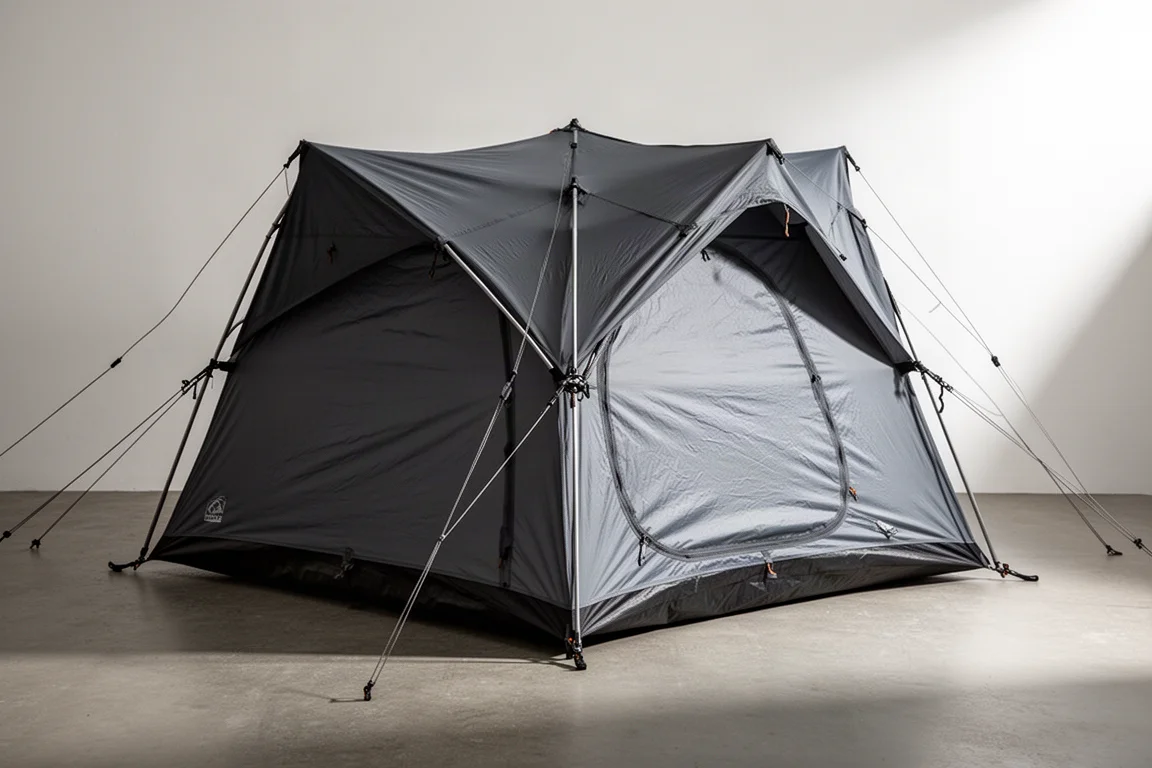
That makes the HD roughly 270 g heavier than the LT at minimum weight, and still lighter than the previous generation two-person Hubba Hubba despite offering more interior space.
Shared Features: Pitching, Ventilation, and Interior Liveability
The two tents are more alike than different. Both have a door and a vestibule for each occupant, both use the same bathtub floor construction, and both rely on the same pole architecture and hardware. Ventilation is handled by a closable vent that can be propped open with a small pole and secured with velcro, and the rainfly attaches to the grommets on the crossbar.
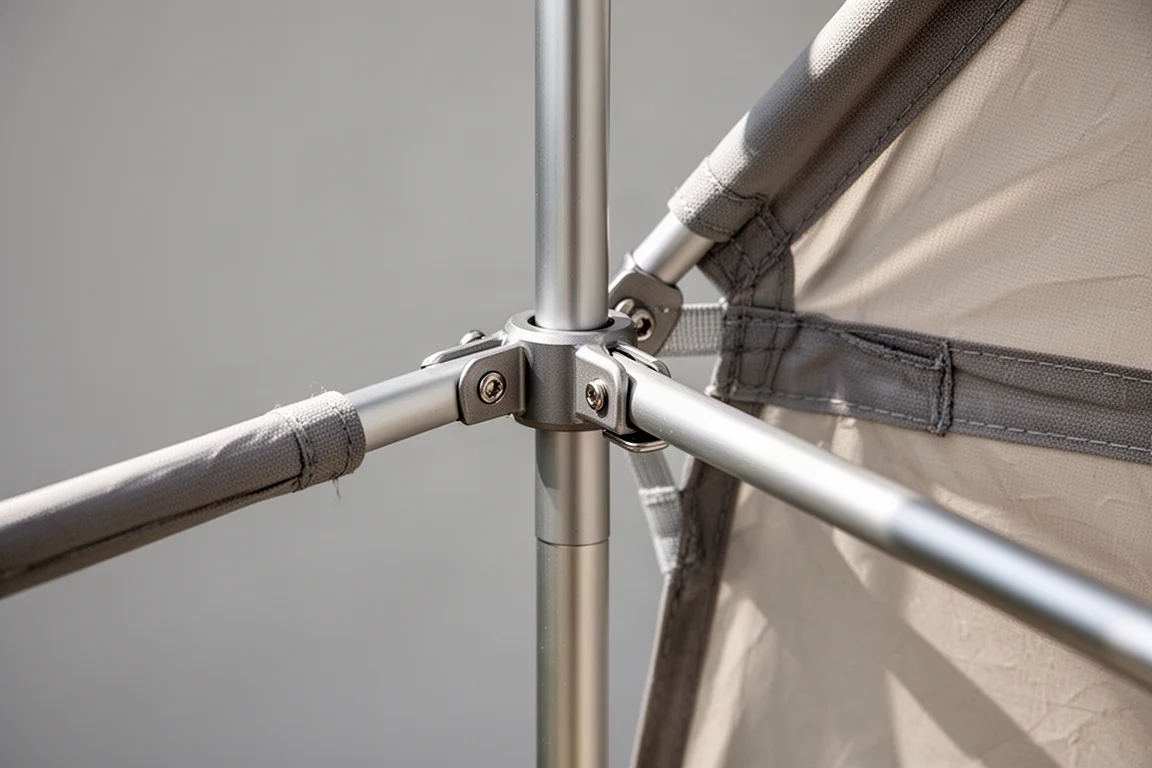
That fly attachment point enables one of the nicest details on both tents: the canopy can be folded back from inside. On a hot night you can open the roof for airflow and stargazing while the mesh keeps insects out, then pull the fly back over and close everything up quickly if rain arrives. Gutters above the doors route water down and out at the bottom rather than letting it drip into the porch. The door shape has changed to a long triangle, which is easier to close, including in the dark, and the opening is bigger for getting in and out. Inside, there is a clothes line for drying kit overnight, storage pockets including a bungee pocket for a head torch, and small cord ports so a charging cable can reach a phone. Head room is about 1.02 m.
Weight, Interior Space, and Waterproofing Compared
| Specification | Hubba Hubba LT | Hubba Hubba HD |
|---|---|---|
| Minimum weight | 1.34 kg | 1.61 kg |
| Packed weight with everything | 1.54 kg | 1.8 kg |
| Rainfly | 20 denier, 1,200 mm hydrostatic head | 20 denier, 3,000 mm hydrostatic head |
| Floor | 20 denier ripstop nylon, 1,800 mm hydrostatic head | 30 denier ripstop nylon, 6,000 mm hydrostatic head |
| Inner body | Full mesh | Nylon upper with mesh vent |
For scale, the previous two-person Hubba Hubba weighed about 1.78 kg at minimum weight, so both new models are lighter while offering more interior room.
In the two-person version, two wide long pads fit side by side with space left over. The three-person version takes three of those large pads, and because regular pads can be turned the other way, it can also be used as a four-person tent for a tighter group.
Porch Space, Storage, and Interior Comfort
Porch space is generous for a tent this light. A 60 litre pack fits in the vestibule with room left to get in and out, and there is enough covered space to cook under when the weather turns. The layout gives each sleeper their own door and their own storage area, so nobody has to climb over anyone else.
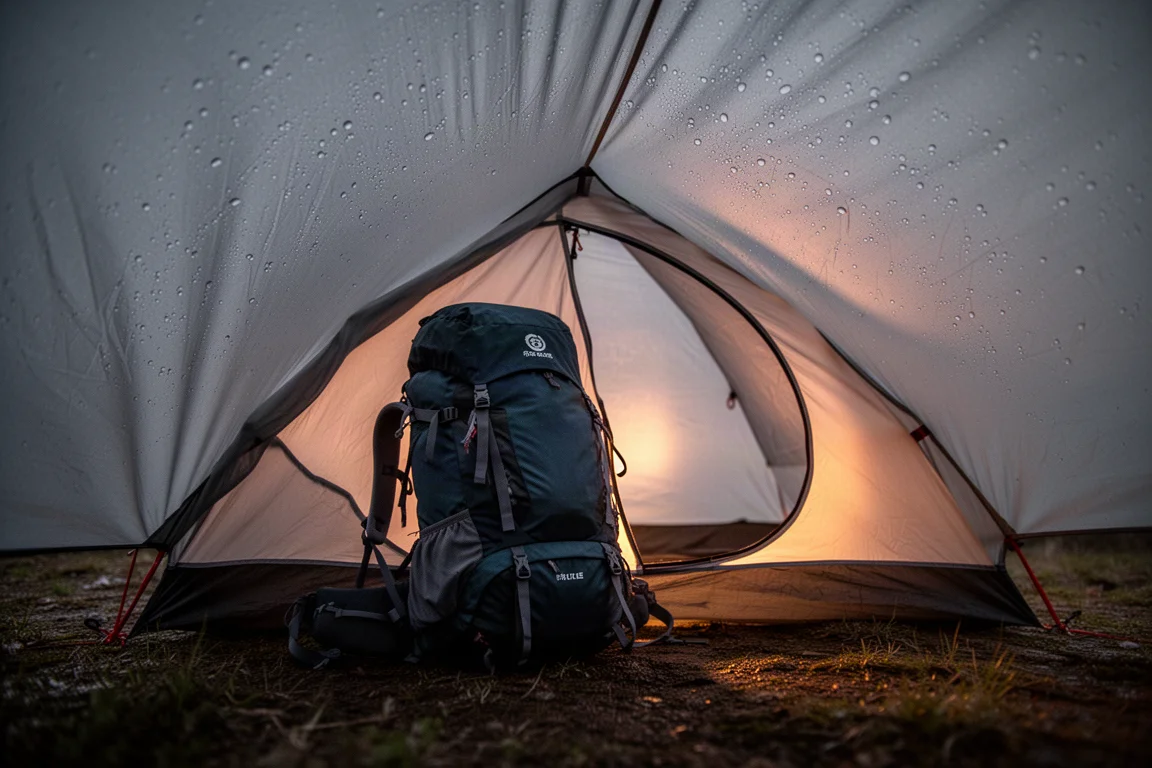
Inside, the storage pockets keep small items off the floor, the clothes line helps damp kit dry overnight, and the head room of about 1.02 m means shorter sleepers on thinner pads may be able to sit up. The overall impression is of a tent that stays comfortable when you are confined to it for a while.
Packed Size, Setup, and Real-World Practicality
Both tents pack down small, and the roll-top stuff sacks make packing forgiving: the tent drops in and rolls closed no matter how neatly it was folded. Setup feels very similar to the previous generation, and the symmetrical design means there is nothing to puzzle out after a long day on the trail. The rainfly, inner, and mesh across both models are now solution dyed and PFAS free, which reduces carbon emissions from manufacturing by up to 80 percent compared with the previous process.
Buying Advice: Which Hubba Hubba Fits Your Trip
Choose the LT if weight and airflow are your priorities. It is the lighter of the two, its full mesh inner moves the most air, and it is the better match for warm climates and summer trips where heat and condensation are the main concerns. The 1,200 mm fly and 1,800 mm floor ratings suit normal three-season use.
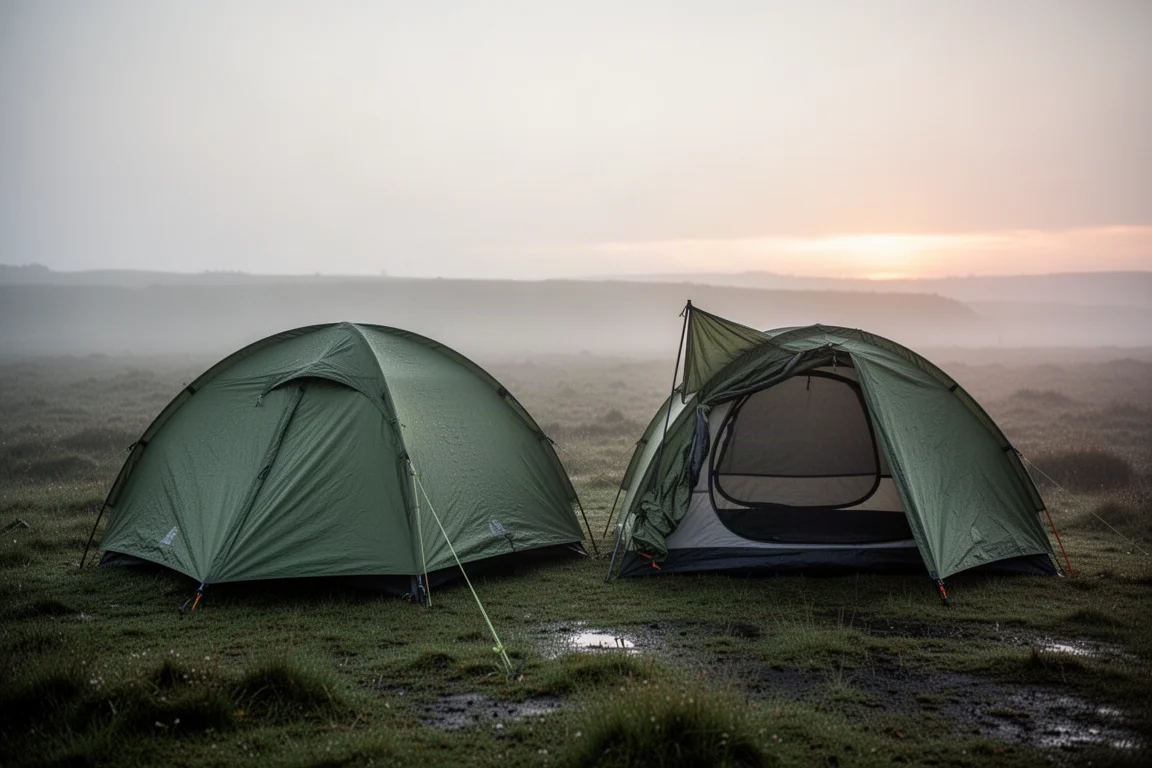
Choose the HD if you often pitch in wet or changeable weather and want a slightly warmer inner. The nylon upper keeps rain off the sleeping area while you fit the fly, and the higher waterproofing ratings, 3,000 mm on the fly and 6,000 mm on the floor, give more margin in sustained rain. It remains lighter than the previous two-person Hubba Hubba, so the extra protection does not undo the weight savings of the update.
Because the two tents share the same footprint, poles, hardware, ventilation design, and interior layout, the decision really comes down to inner fabric, waterproofing, and about 270 g of minimum weight. If maximum space matters most, the three-person version takes three wide long pads, or four regular pads turned the other way for a tighter group.
Conclusion
The Hubba Hubba LT and HD keep what made this range a long-standing bestseller, namely low weight and a genuinely rectangular, spacious interior, and both undercut the previous two-person model on weight. The LT is the one to pick for hot weather and minimum pack weight. The HD is the one to pick if you want more weather protection while pitching and a warmer inner, without giving up the low weight that defines the line.
Further reading
Related Reviews
Camping Tents
3F UL Gear Taiji Two-Person Tent Review: Field Waterproofing Results and Buying Advice
The Taiji pairs an attached fly with a removable inner, but sustained rain exposed untaped vent seams that need sealing before this shelter can be trusted.
Camping Tents
3FUL Gear Lanshan 2 Pro 4-Season Review: A Sub-$200 Single-Wall Trekking Pole Tent
An early look at the 3FUL Gear Lanshan 2 Pro 4-Season, covering its straightforward pitch, generous interior space, and the condensation and seam-sealing questions that come with any single-wall shelter.
Camping Tents
Alps Mountaineering Lynx 1-Person Tent Review: Big Value in a Small Budget Tent
A close look at the Alps Mountaineering Lynx 1-Person Tent, covering real interior dimensions, materials, setup time, ventilation limits, and who should buy it.