Camping Tents
Mountainsmith Morrison 2-Person Tent Review: A Bestseller That Struggled in the Rain
The Mountainsmith Morrison 2-Person Tent is a best-selling budget backpacking tent at $140, but a sustained rain test revealed leaks through the vents and seams.
Introduction
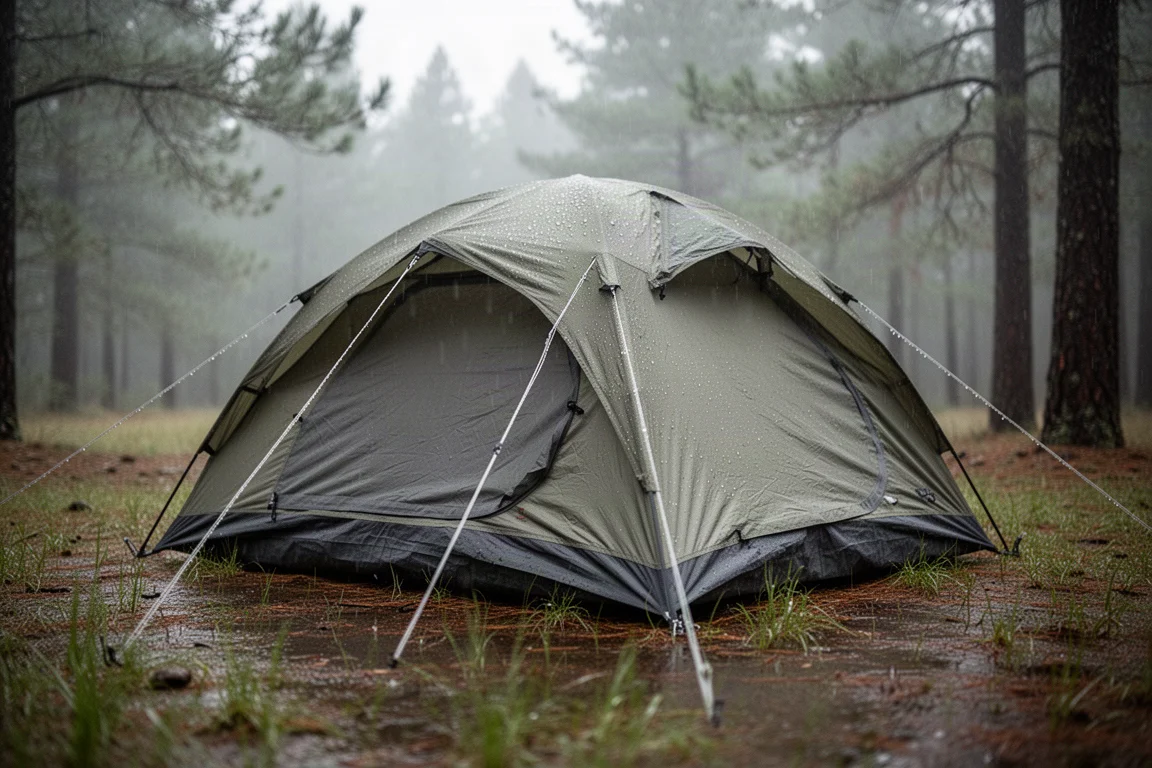
The Mountainsmith Morrison 2-Person Tent has held a place among the best-selling backpacking tents on Amazon for roughly four or five months, and that sales record alone makes it worth a closer look. At $140 on Amazon against a $180 retail price, it sits at the accessible end of the two-person tent market. The question that matters most with any shelter is not how popular it is but how it behaves when the weather turns, so the Morrison was pitched for a long-duration rain event that delivered roughly an inch and a half of rain over a day and a night. The outcome was disappointing.
Who This Tent Is For
The Morrison is an entry-level two-person backpacking tent aimed at campers who want a low-cost shelter for occasional trips. On price and availability it is easy to see why it sells so well: two-person capacity for well under $200 is an appealing combination for a first tent, a spare tent, or a car camping setup that only sees fair weather. It is a reasonable match for dry-season camping and short overnight trips where rain is unlikely to be part of the plan.
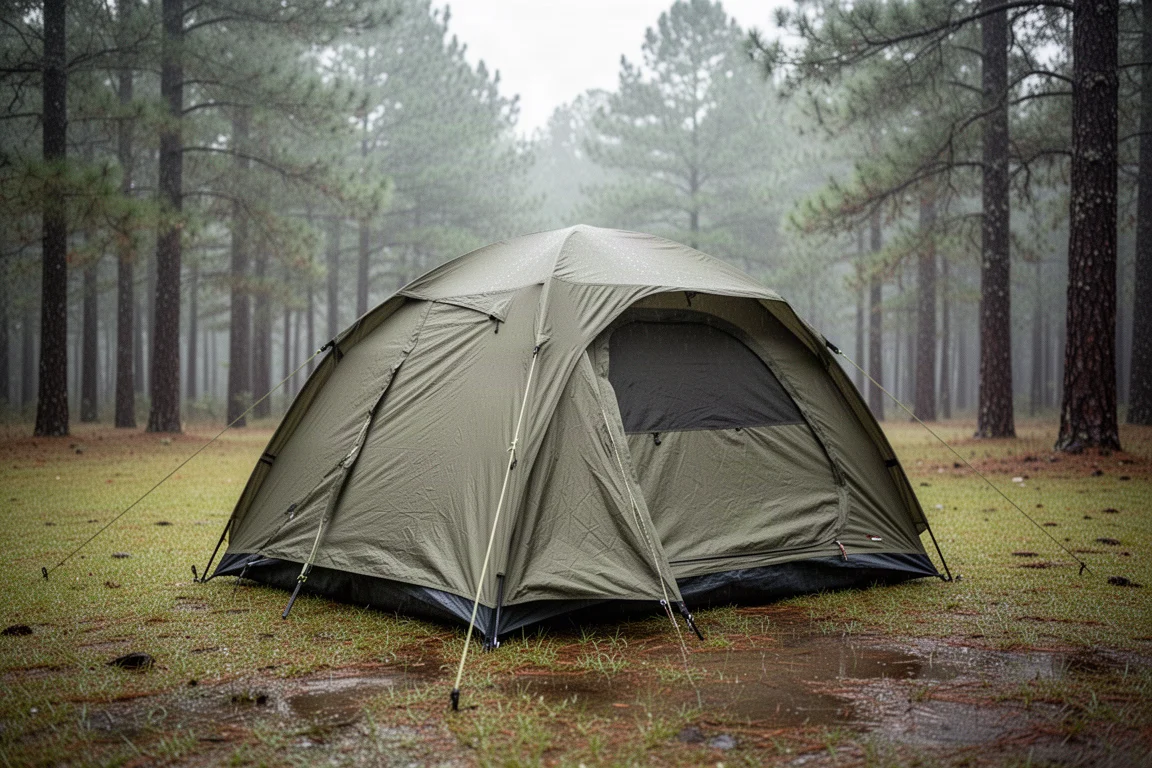
For anyone who camps in wet climates, or who plans trips around forecasts that include sustained rain, the waterproofing results below should carry more weight than the price tag. Capacity and cost only matter if the tent keeps the weather out.
Main Strengths
The clearest strengths here are commercial rather than technical. The Morrison is widely available, consistently priced below its $180 retail figure, and it has spent months as a top-selling backpacking tent on Amazon, which means replacement parts, accessories and community familiarity are easy to come by.
In person, the tent presents reasonably well. The fabric and structure look tidy enough that a leak was not the expected result going into the weather test, which is part of what makes the outcome worth reporting.
Waterproofing Performance in Sustained Rain
Rain began on the afternoon before the overnight test and stayed light for several hours, then intensified overnight. Total accumulation was roughly an inch and a half, which is a modest figure for a multi-day weather system and far from a storm.
Water still found its way inside. Leakage appeared at the roof, with water dripping down onto the floor, and the floor was left quite wet. A second leak showed up in the same general area, while one section of the interior stayed dry. The pattern pointed to the side vents on both sides of the tent: the water path lined up with those openings, running through, falling, and landing on the floor. Droplets were visible around the vent area, and water had clearly collected under the closed vent panel.
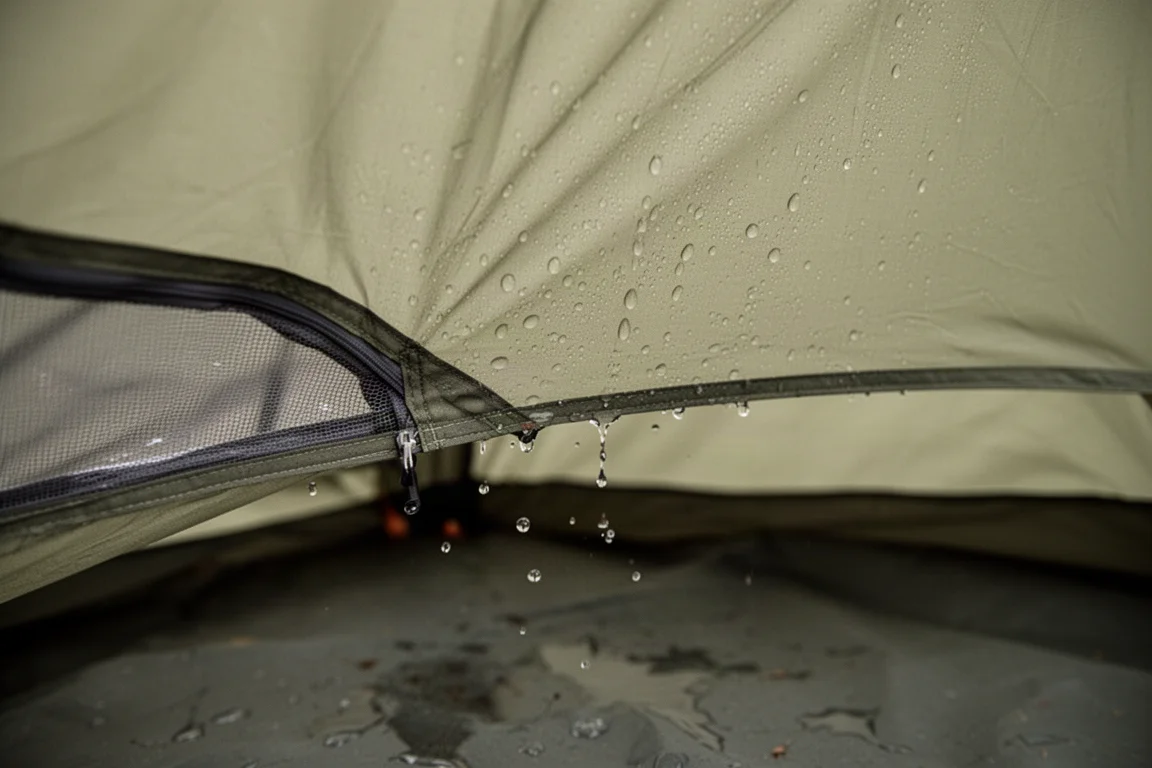
It is worth being precise about the conditions, because they flatter the tent rather than the reverse. There were no heavy downpours, no driving wind, and no prolonged deluge. A few hours of ordinary rain was enough to compromise the interior, which suggests the sealing around the vents and seams, rather than the severity of the weather, is the limiting factor.
Venting, Condensation, and Interior Moisture
Because the tent failed at the waterproofing stage, the planned overnight stay and the condensation and airflow assessment that would have followed it did not go ahead. That leaves the ventilation story incomplete, and it also leaves an awkward question: the same side vents that are meant to manage airflow and moisture buildup are the openings through which water entered. Until the sealing around those vents is resolved, the airflow design cannot really be evaluated on its own terms.
What can be said is that the interior ended the test damp rather than merely humid. Water on the floor is a practical problem regardless of how well a tent breathes, since a wet sleeping surface undermines insulation, adds weight to gear and makes for a poor night outdoors.
Price, Value, and Market Position
At $140 on Amazon, with a $180 retail price, the Morrison sits in budget territory for a two-person backpacking tent. The value question is not whether that price is low, because it is, but whether it buys dependable protection. In this case it did not: the tent leaked in conditions that a weatherproof shelter should handle without drama.
The comparison that stings most is a much cheaper $80 pop-up tent tested alongside it in the same rain, which also leaked. Paying roughly $60 more did not translate into better weather resistance here, and the two shelters ended the event in a similar state.
That is the core of the value argument. A budget tent that keeps you dry is good value. A budget tent that leaves the floor wet after an inch and a half of ordinary rain is not, however competitive the sticker price looks.
Things to Consider Before Buying
If most of your camping happens in dry conditions, in a region with reliable forecasts, or on trips where a wet night is an acceptable risk, the Morrison remains a cheap and widely available option and the leak issue may never affect you. If your trips involve multi-day rain, shoulder-season weather or humid climates, this tent is difficult to recommend.
Buyers should also weigh the failure mode rather than just the leak itself. The water entered around the vents and seams, which are structural parts of the design rather than something a user can simply avoid. There is no obvious workaround short of staying out of the rain.
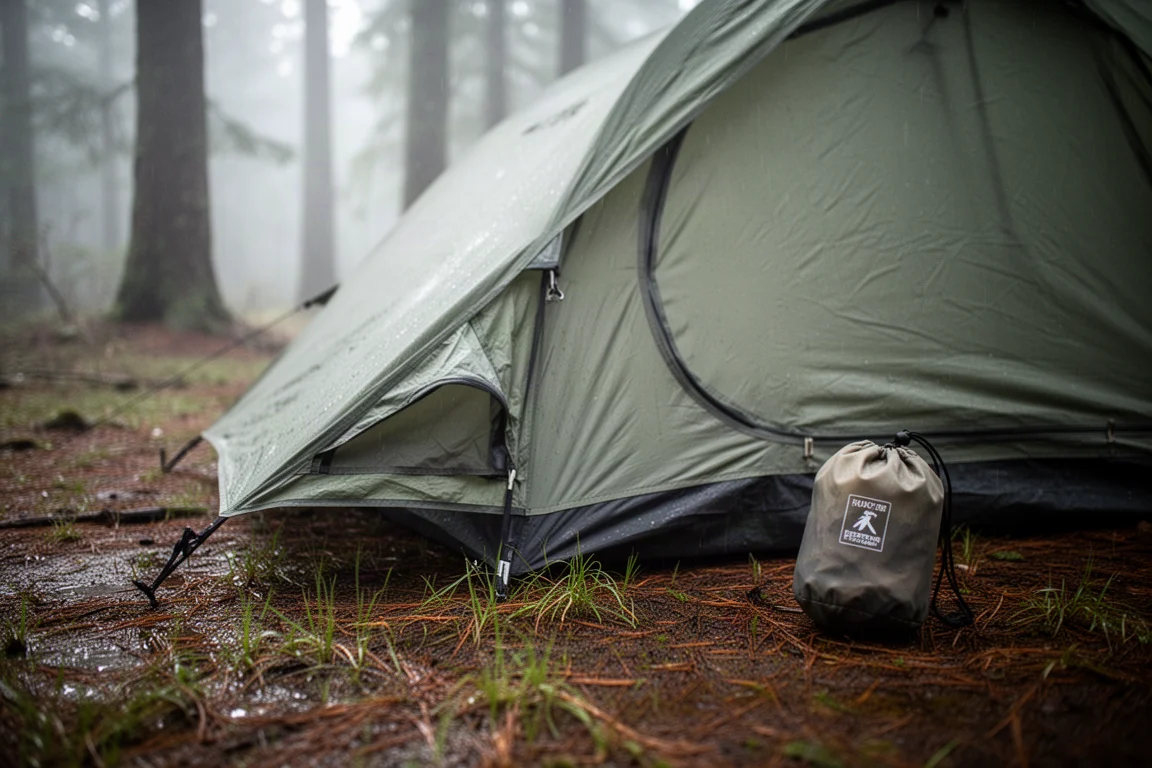
For anyone who already owns the tent, the sensible approach is to inspect the vent and seam areas before relying on it in wet weather, and to treat it as a fair-weather shelter until proven otherwise. For anyone still deciding, the honest summary is that the tent did not prove worth keeping after this test.
Conclusion
The Mountainsmith Morrison 2-Person Tent is inexpensive, easy to find, and genuinely popular. It is also, on the evidence of a modest multi-day rain event, not a waterproof shelter. Roughly an inch and a half of rain was enough to put water through the side vents and onto the floor, and it performed no better than a far cheaper pop-up tent in the same conditions.
For fair-weather camping at a low price, it may still serve. For anyone who needs a tent to stand between them and real rain, the Morrison is not the one to buy.
Product link
View more details for Mountainsmith Morrison 2-Person Tent
This product is mentioned in the review. Check the specifications, options, and compatibility before buying.
View more details for Mountainsmith Morrison 2-Person TentFurther reading
Related Reviews
Camping Tents
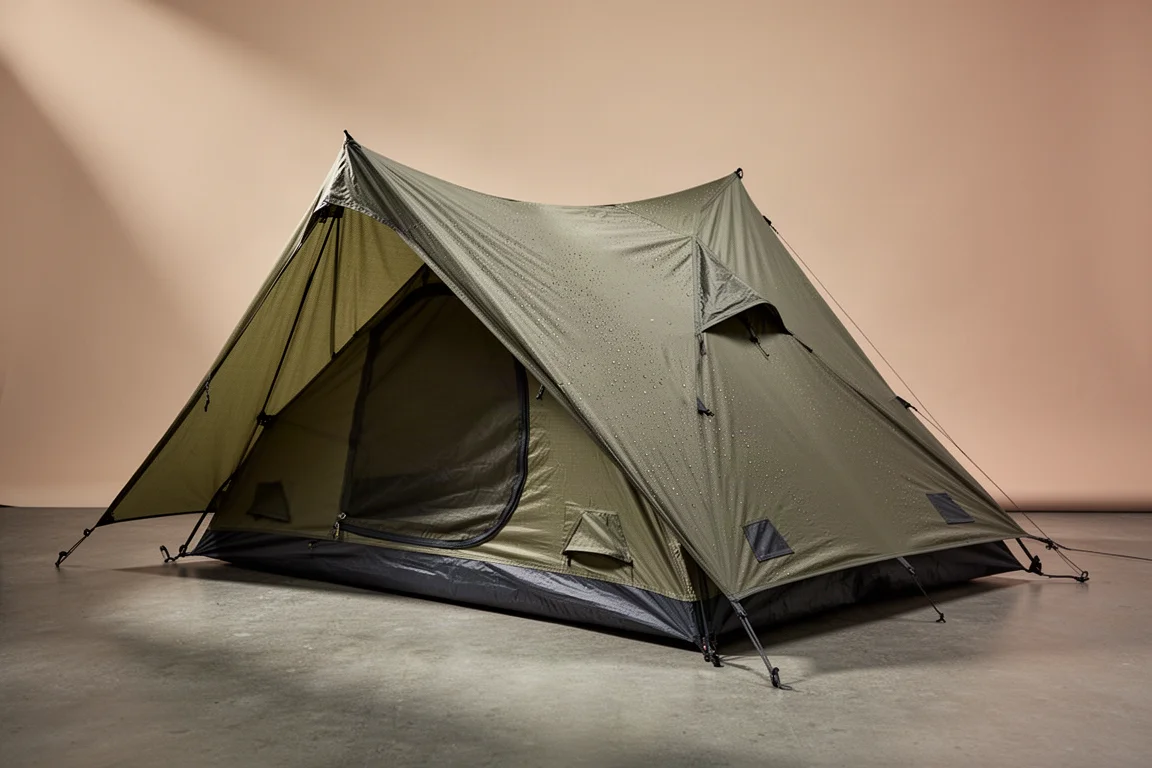
3F UL Gear Taiji Two-Person Tent Review: Field Waterproofing Results and Buying Advice
The Taiji pairs an attached fly with a removable inner, but sustained rain exposed untaped vent seams that need sealing before this shelter can be trusted.
Camping Tents
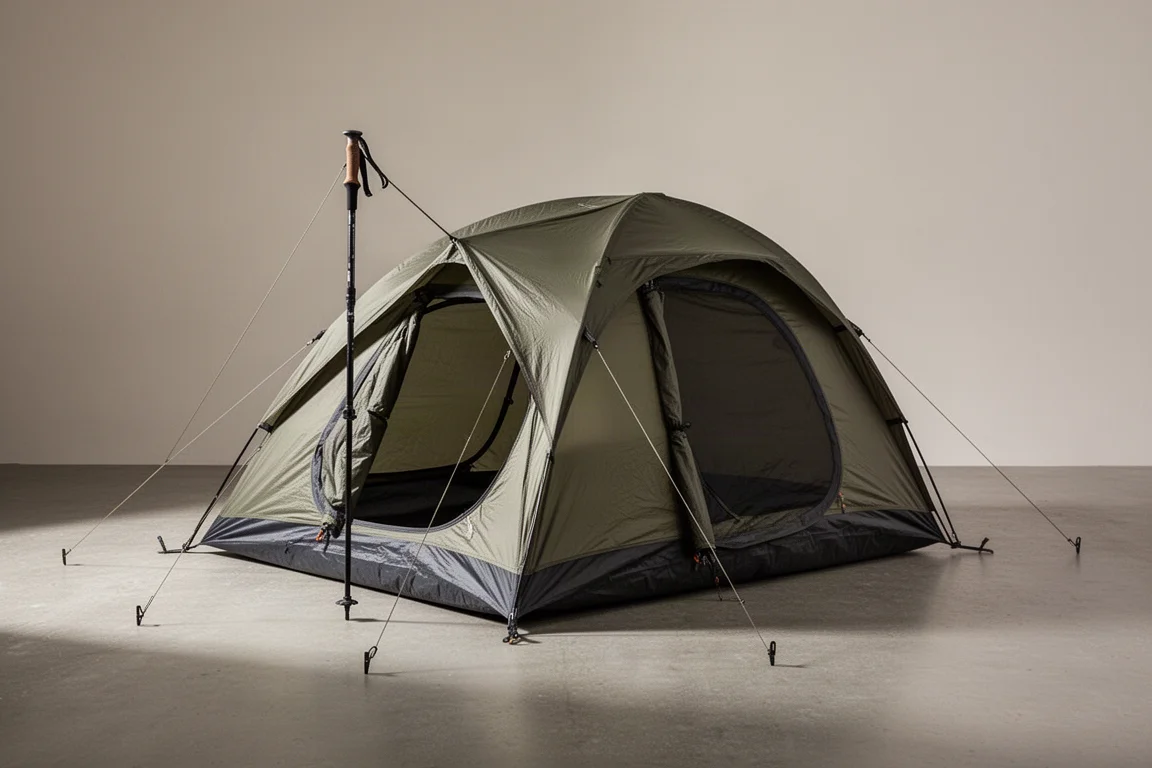
3FUL Gear Lanshan 2 Pro 4-Season Review: A Sub-$200 Single-Wall Trekking Pole Tent
An early look at the 3FUL Gear Lanshan 2 Pro 4-Season, covering its straightforward pitch, generous interior space, and the condensation and seam-sealing questions that come with any single-wall shelter.
Camping Tents
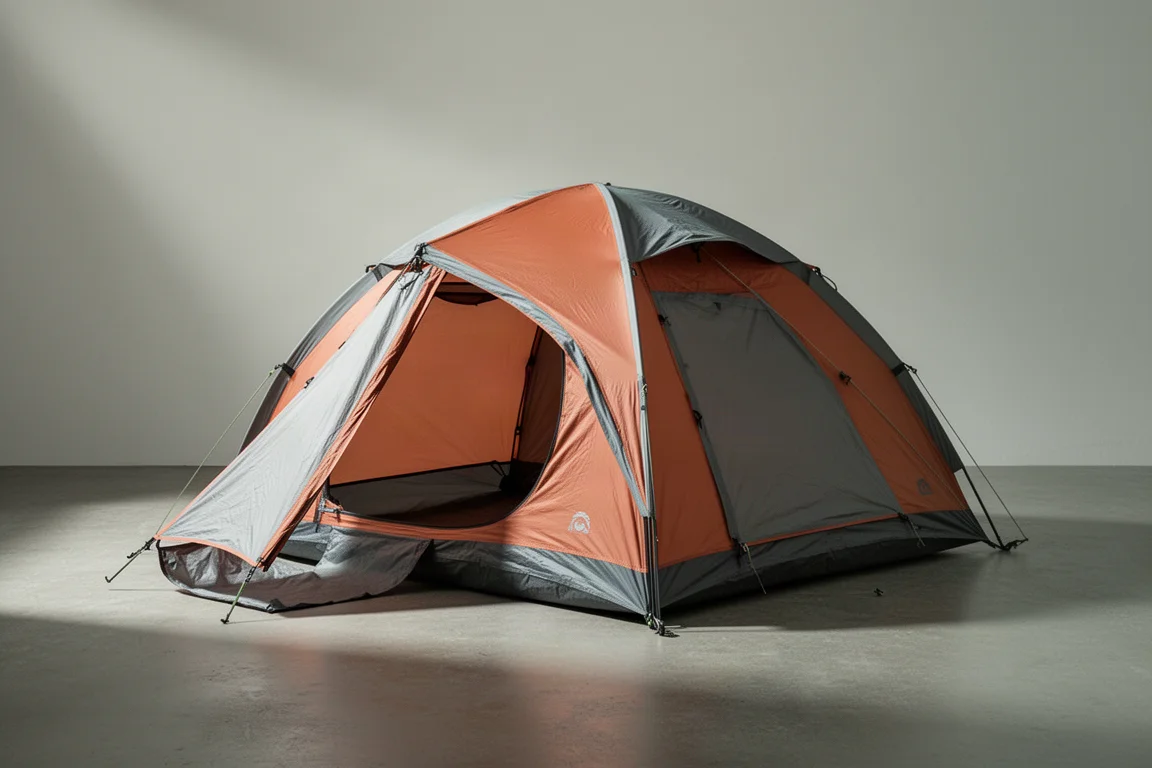
Alps Mountaineering Lynx 1-Person Tent Review: Big Value in a Small Budget Tent
A close look at the Alps Mountaineering Lynx 1-Person Tent, covering real interior dimensions, materials, setup time, ventilation limits, and who should buy it.