Camping Gas Canisters
Mountain Hiker Refillable Gas Canister Review: The Smallest Pocket Gas Setup
A tiny CNC-machined refillable canister that turns a 350 ml pot into a pocket-size gas cooking kit, with honest limits on fuel capacity and boil efficiency.
Introduction
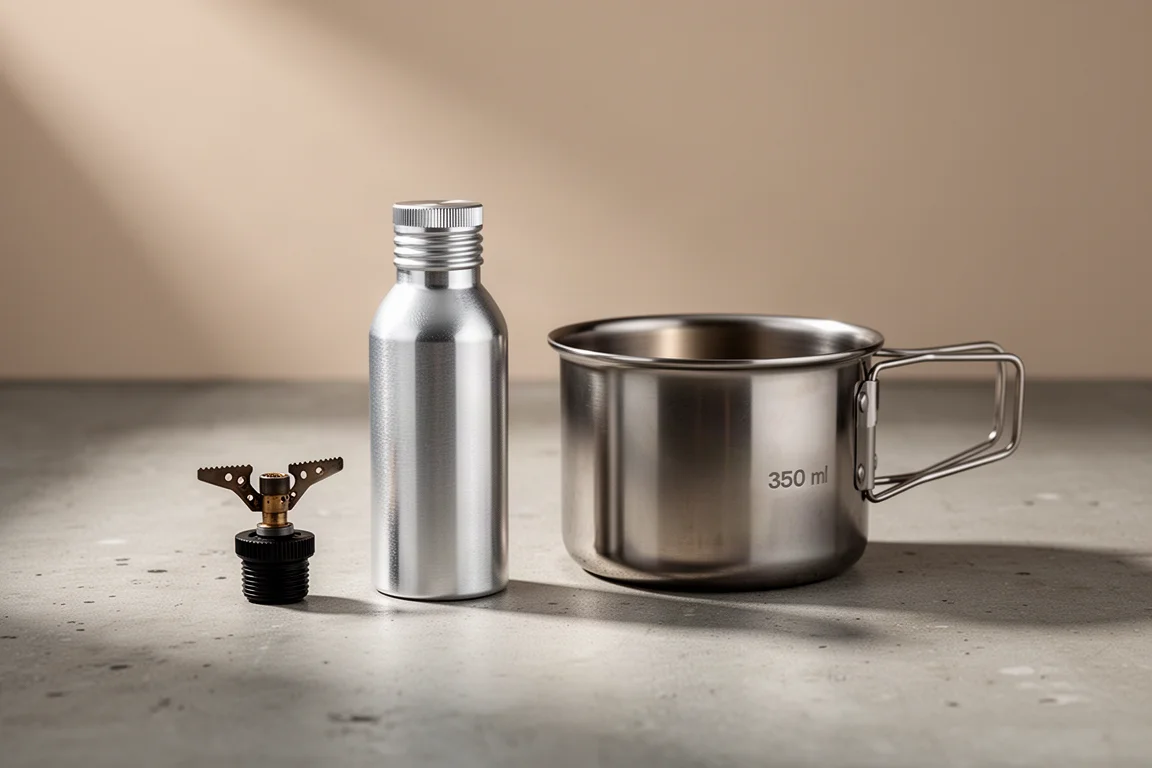
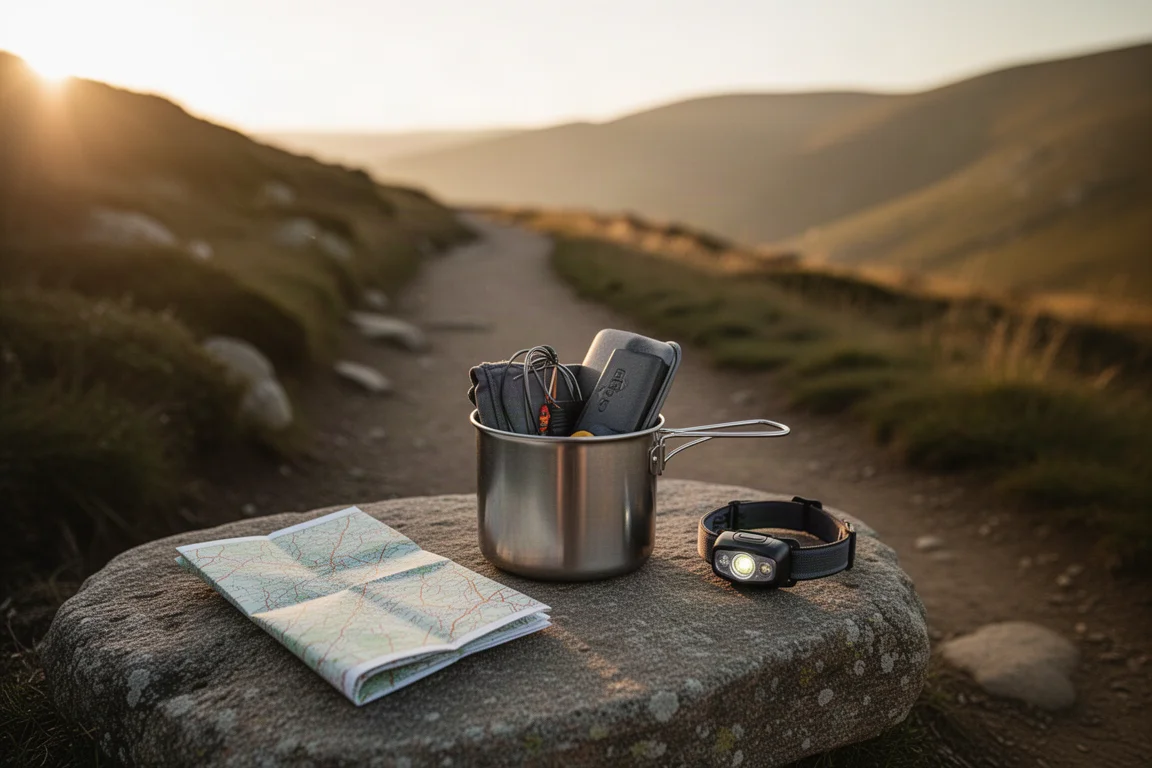
The Mountain Hiker refillable gas canister is the smallest gas canister most people will ever hold. It is a CNC-machined metal vessel designed to be refilled from inexpensive butane canisters rather than replaced, and it is small enough that a complete gas cooking kit fits inside a 350 ml pot: canister, screw-on burner, folding spoon, coffee, sugar, and a biscuit for dunking.
Scale is the entire point. The smallest canister normally sold in UK shops is the 100 g size, and this one is dramatically smaller. It is not an off-the-shelf system, it is a small purpose-built component that turns an ordinary pot into a pocket-size cook set.
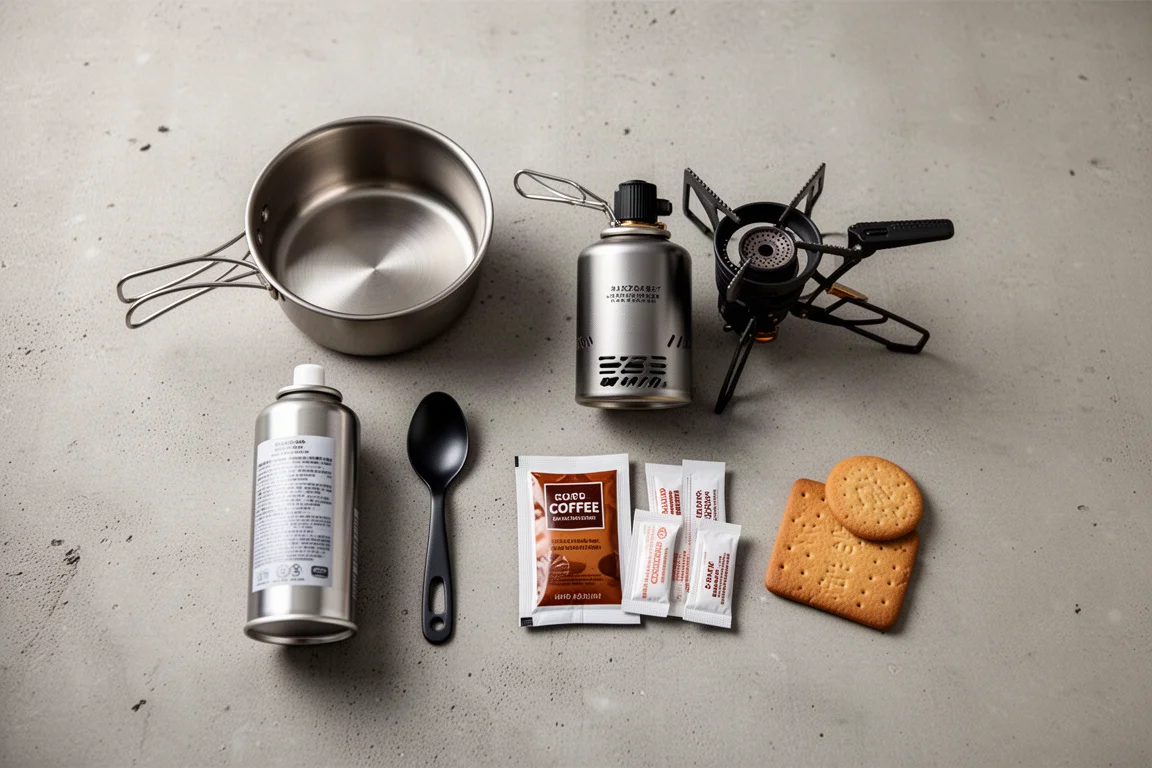
An empty canister weighs 100 g and the stated maximum fuel capacity is 35 g. Those are the headline numbers. What the canister actually delivers in practice is slightly different, and the details are what matter when you decide whether one belongs in your pack.
Who This Is For
This canister suits a particular kind of buyer: someone who wants the smallest possible gas setup for a hot drink, a light snack, or an emergency brew, and who is comfortable refilling from butane canisters and weighing fuel at home. It disappears into a jacket pocket and takes up almost no space in a day pack.
It is not for anyone who needs reliable boil times for real cooking. A setup this small is far less efficient than a Jetboil-class system such as the Stash, which is a much larger package but delivers consistent performance when you need a proper meal.
Main Strengths
Size and build quality are the headline strengths. The canister is CNC machined, feels solid and weighty in the hand for something so small, and the whole kit nests inside a 350 ml pot with room left for coffee, sugar, a folding spoon, and a biscuit.
Refilling is straightforward once you have a routine. Set the canister on kitchen scales, tare the reading, press in fuel for around 10 seconds, then weigh it again to see how much went in. Butane canisters are cheap and widely available, so running costs stay low compared with buying replacement cartridges.
A small tripod mount in the base is a genuinely useful detail. Screwing the setup onto a mini tripod spreads the footprint and makes a pan far easier to balance than the bare canister on its own.
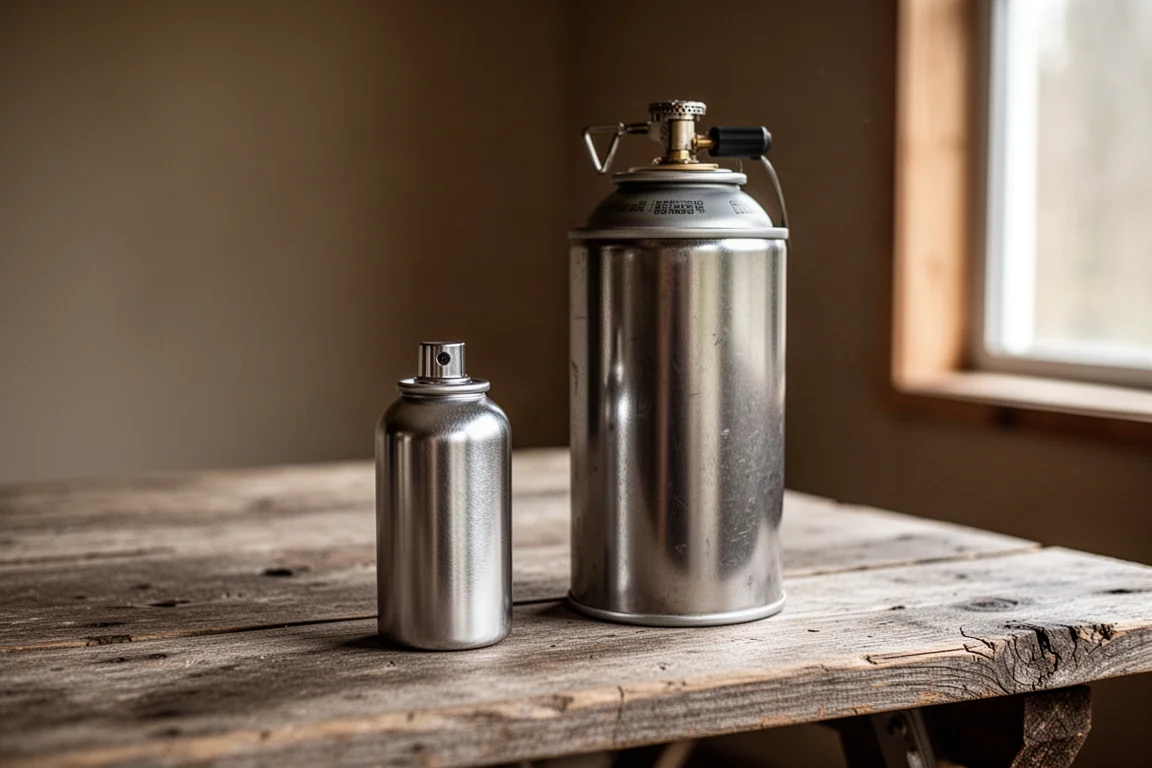
Packing away is quick as well. The burner body cools to the touch soon after the gas is turned off, while the canister itself stays cold rather than hot, so there is no long wait before everything goes back in the pot.
Things to Consider Before Buying
Fuel capacity is the biggest caveat. The stated maximum is 35 g, but in practice only about 20 g of butane could be pushed in, and pressing for longer made no difference.
That 20 g does not stretch far. It boiled enough water for one coffee and half cooked a small pan of scrambled eggs before the gas ran out. Efficiency is not the purpose of this kit, and it is nowhere near a Jetboil for boil times or fuel economy.
Connections are the other annoyance. A small amount of gas escapes whenever the burner is screwed on or removed, whether the canister is upright, upside down, or on its side. Over many refills that means wasted fuel and cold fingers.
Balance is limited by the tiny footprint. On grass the setup will not sit steadily under a full pan, so you end up taking the weight of the handle by hand. The tripod mount helps, but it is still a small platform.
Two more points are worth knowing. The canister was originally designed for a lantern, so using it as a cooking fuel source is a secondary application, and isobutane refilling through a standard adapter is said to be possible, though that was not confirmed in practice.
Fuel Capacity and Real-World Runtime
The numbers are simple. A stated 35 g maximum, around 20 g achieved with butane, and roughly 10 to 20 seconds of pressing fuel in per refill. Weighing the canister before and after is the only reliable way to know how much fuel you are carrying.
In real use, 20 g covered one nearly boiling mug of coffee and a partially cooked pan of eggs before the burner sputtered out. Treat the canister as a one-brew or one-light-meal supply rather than weekend fuel.
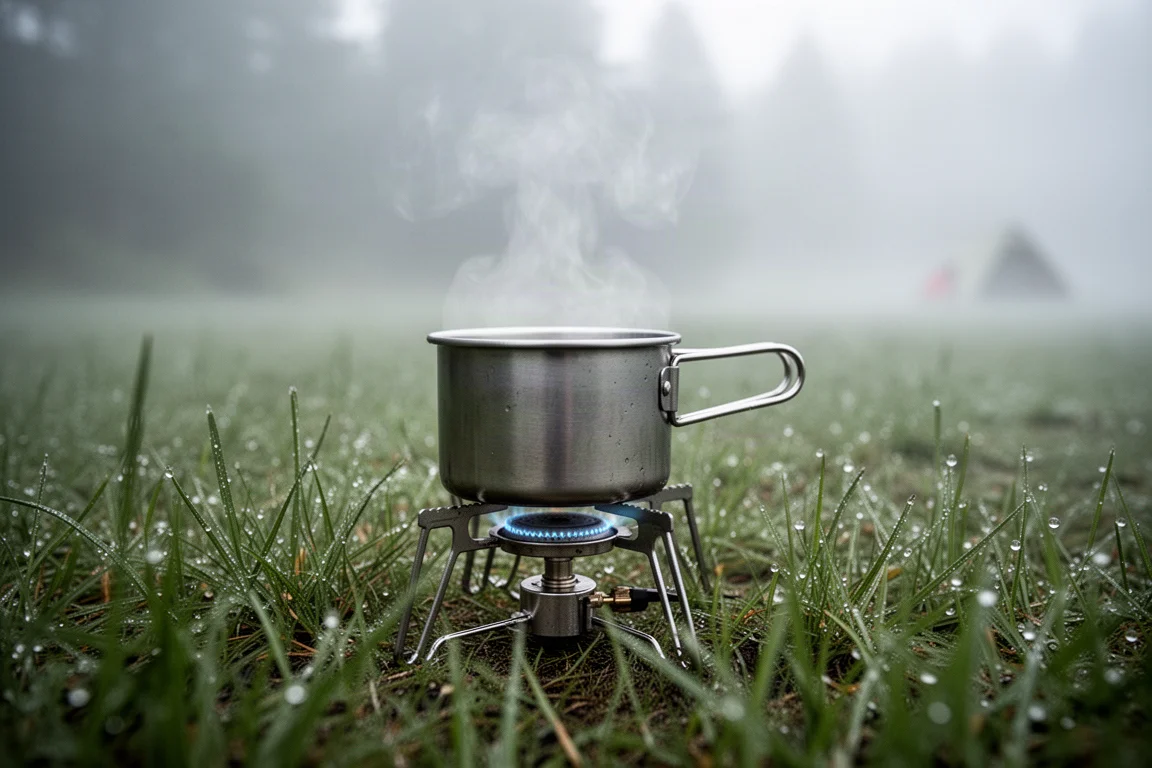
Refilling between brews is quick enough to be practical: tare the scales, press, weigh, and the canister is ready to go again.
What the Setup Costs
The canister itself cost around £30 in the UK. The tiny screw-on burners that pair with it are usually cheaper, typically about £15 for a basic BRS-style stove and closer to £30 for a more powerful option such as the Alkit Coro Kaku, which holds up better in wind.
There is no off-the-shelf version of this kit. It is assembled from separate parts, so budget for a burner and a small pot if you do not already own them, plus a supply of cheap butane canisters for refilling.
Buying Advice
Buy the Mountain Hiker refillable canister if you want the smallest gas-powered brew kit available and you accept its limits: around 20 g of butane per fill, enough for a drink and a light snack, and a small gas loss each time you connect a burner. It makes sense as a backup in a day pack or as a compact extra for short trips, particularly if you already own a small screw-on stove.
Skip it if boil times, wind resistance, or cooking full meals matter to you. A Jetboil Stash or a conventional stove with a 100 g canister will be heavier but far more capable.
If you do buy one, pick up a few cheap butane canisters at the same time and keep a small set of kitchen scales with your kit. Weighing the canister before and after filling takes seconds and is the only way to know how much fuel is on board.
Conclusion
The Mountain Hiker refillable canister is a well-made, genuinely tiny piece of kit with a clear purpose: a pocket-size gas supply for one hot drink or a light snack. It is solid, simple to refill, and the complete setup nests inside a 350 ml pot.
It is not a replacement for a full camping stove. Practical fuel capacity is around 20 g rather than the stated 35 g, efficiency is modest, and a little gas escapes on every connection. Buy it for what it is, a compact backup, and it earns its place in a minimal kit.
Product link
View more details for Mountain Hiker Refillable Gas Canister
This product is mentioned in the review. Check the specifications, options, and compatibility before buying.
View more details for Mountain Hiker Refillable Gas CanisterFurther reading
Related Reviews

Backpacking Gear
Building a 10 lb Base Weight: An Ultralight Backpacking Gear List
A practical walkthrough of the ultralight pieces behind a 10 lb base weight, from a 765 g pack and a roomy one-person tent to a full camp chair and a dependable water filter.
Road Bikes
10 New Road Bikes Worth Watching: Aero, Titanium, Steel and Endurance Standouts
A practical roundup of 10 new road bikes, from aero flagships chasing single-watt gains to titanium, steel and endurance platforms built for real roads.
Bikepacking Gear
11 Bikepacking Essentials for Long-Distance Cycling
Eleven bikepacking essentials for long-distance cycling, from a steel gravel frame and a two-person tent to helmet lights, packable gloves, and a frame bag that puts weight in the right place.