Ski Resorts
Mount Shasta Ski Park Review: California's Volcano-Backed Local Ski Area
A sunny, locally focused northern California ski area with strong intermediate terrain, impressive volcano views, and cheap tickets, but slow lifts and limited challenge.
Introduction
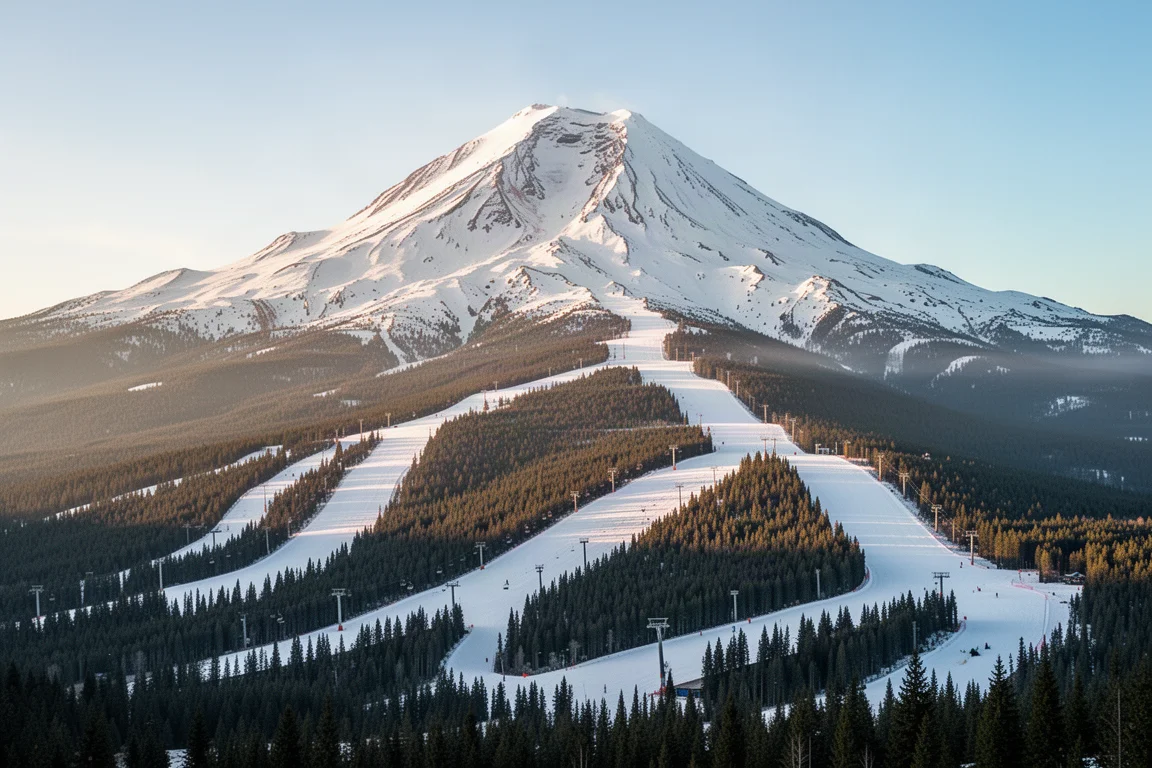
Mount Shasta Ski Park sits on the south side of the massive Mount Shasta strat volcano in far northern California. It is the only decently sized ski area north of the Tahoe region, and it is not to be confused with the old Mount Shasta Ski Bowl, which closed in the late 1970s after financial troubles and an avalanche destroyed its main lift.
This is a locally focused resort with great views, solid intermediate terrain, a significant recent expansion, and some of the cheapest lift tickets in California. But is it worth planning a trip from further away? Here is how the mountain experience stacks up.
Snow, Grooming, and Conditions
Shasta gets typical California snow: accumulation tends to be heavier and wetter than snow in Utah or Colorado, but it holds up well through warmer temperatures. The resort gets less snow than Tahoe-area resorts, yet it is usually enough to fully cover the slopes through the core season, which matters given the area’s entirely south-facing exposure.
The result is spring-like conditions for much of the year, and powder that gets heavy very quickly. If you are chasing soft, untracked snow, you may be disappointed.
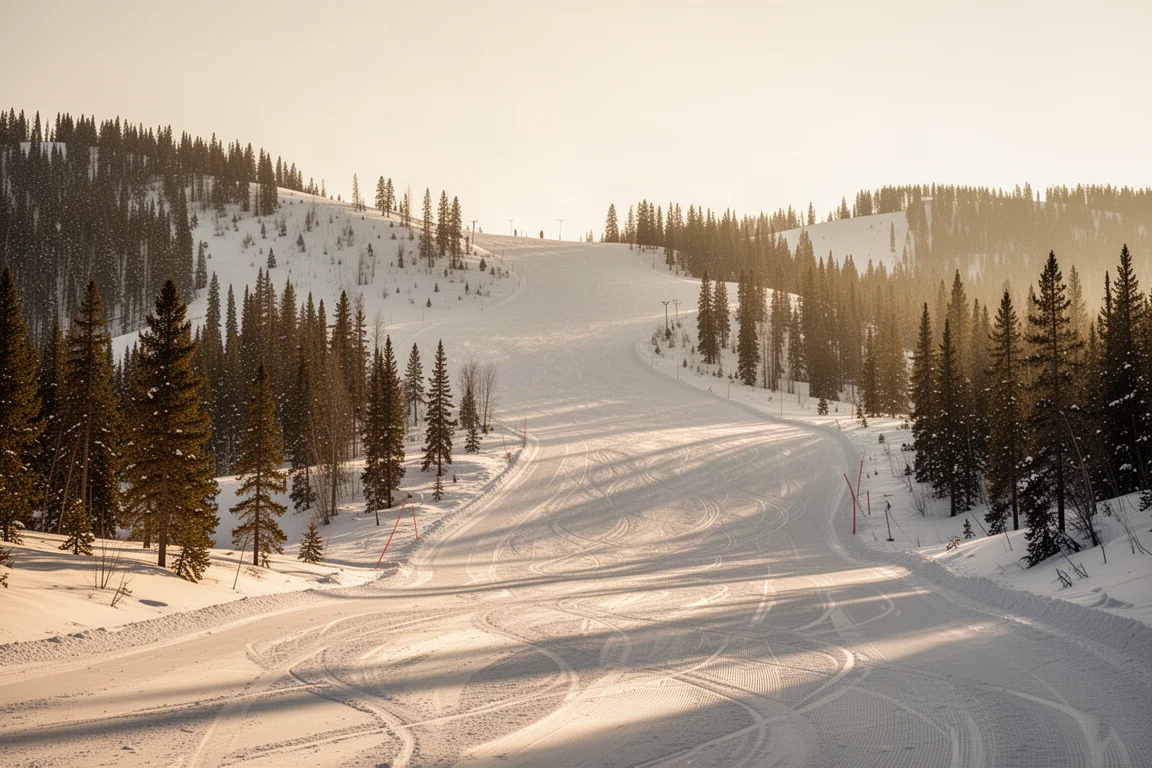
On the operational side, Shasta has a fairly extensive snowmaking system for a small western local resort, covering 44% of the area, which supports a reasonably consistent opening schedule and base coverage. Grooming has historically been a weak point: the south-facing, spring-like slopes are hard to smooth out, and turnover on the grooming team after a change in ownership a few years ago meant only a few trails per terrain pod were regularly groomed. Operations improved this past season with new grooming strategies, but if you expect silky corduroy at every destination resort, temper your expectations.
Views and Mountain Setting
Thanks to its location on the slopes of a strat volcano topping out around 14,000 feet, the views at Shasta are impressive both on the way up and on the way down. From the slopes you can see into the Klamath and Trinity mountains, with striking peaks in the Castle Crags area, and some slopes even offer views toward the Lassen area, 70 miles away.
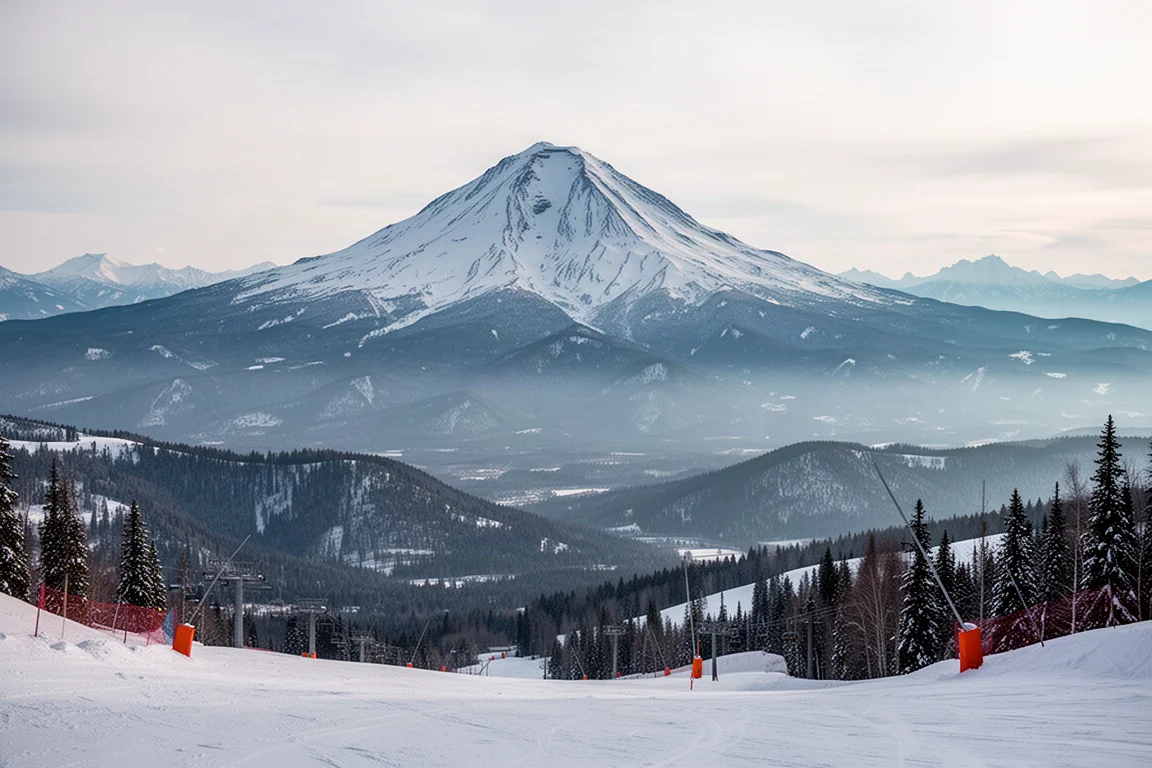
While riding the lifts and a handful of trails, you look up at the iconic peak itself, and the view from the base may be the best anywhere at the resort. History buffs may also enjoy researching the old Ski Bowl, whose ruins sit above the current ski area.
Terrain Breakdown by Zone
The resort is split into four zones, each served by a dedicated lift, plus a beginner learning zone at the base served by a magic carpet:
- Marmot Ridge, to the looker’s left of the base, accesses the resort’s longer beginner terrain and a smaller terrain park.
- Douglas Butte, to the looker’s right, accesses a large portion of the advanced trails and glades, plus a few intermediate runs.
- Coyote Butte, starting at mid-mountain, adds more advanced runs and glades, plus the resort’s large terrain park.
- Gray Butte, the newest and highest pod, serves low-intermediate to advanced runs and many gladed areas, including Richard’s Way, the only marked double black diamond on the mountain.
Beginner terrain is concentrated exclusively on the lower mountain. The wide, mellow green runs make for a solid experience for less proficient skiers when grooming allows, and the first-timer carpet area is well shielded from advanced traffic.
At the intermediate level, Shasta starts to feel much larger, with moderately sloped runs in every major area. Gray Butte hosts some of the resort’s best lower-intermediate runs, including intermediate glades, while the north sides of Douglas and Coyote Buttes offer standout groomed cruising.
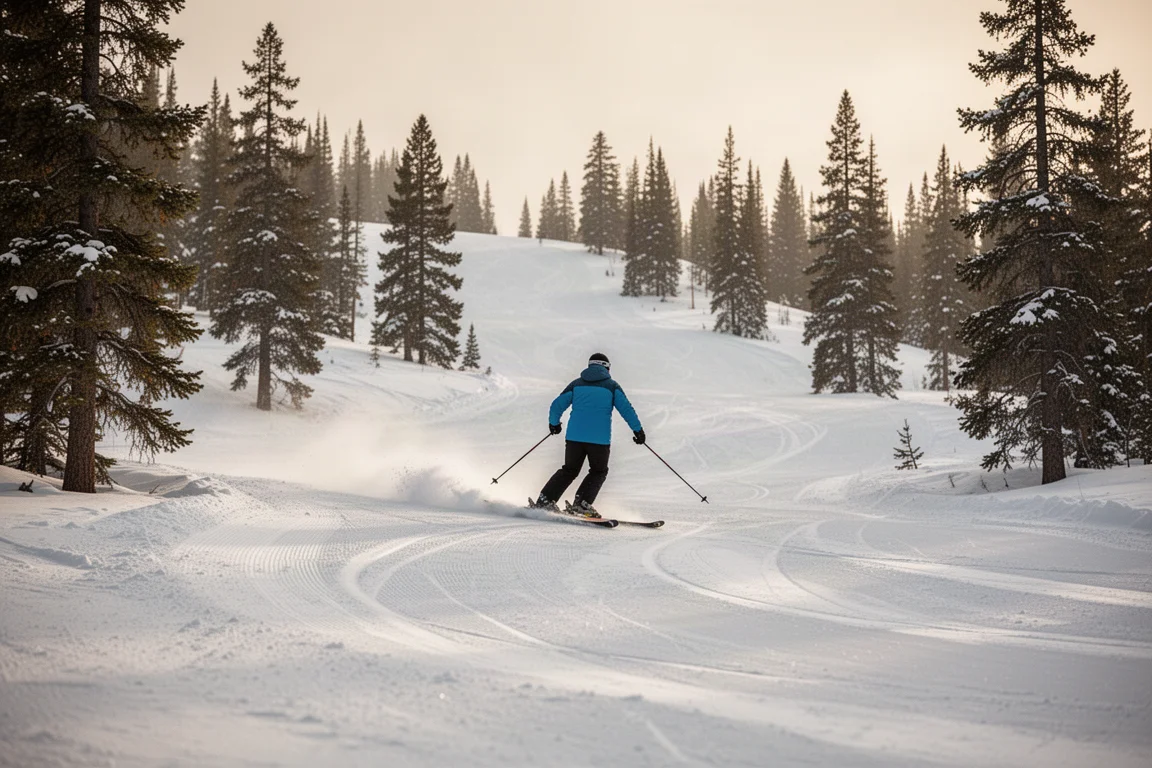
Terrain park riders will find a generally strong selection: small-feature parks on Marmot Ridge and in the beginner area, and the larger Revolution Park on the lower half of Coyote Butte, lappable from both the Coyote and Douglas lifts. There is no halfpipe, but rails, boxes, and jumps should keep park rats satisfied.
Advanced skiers can cover the whole mountain without issue. Steeper groomed trails on Douglas and Coyote Buttes allow for speed runs, Coyote has widely spaced advanced glades and an open, bowl-like summit for a few hundred feet, and the south-facing backside of the Butte offers wide-open glades with excellent views. Longer bump runs exist too, with Rocky Ridge standing out for its moguls.
Be warned, though: the black runs tend to fall on the easier side of their ratings, and skiers used to blues at Tahoe destination resorts should handle most of them. There is only one double black, and while it has some rocky obstacles, the truly steep section is very short and it is frustrating to lap due to a long, flat exit. If you want a serious challenge, Shasta is plainly not for you.
Backcountry Access
One of the best parts of Mount Shasta Ski Park is its easy access to outstanding backcountry terrain. From the top of Gray Butte, guests can hike or skin up the volcano itself, extending more than 6,000 feet above the resort’s highest point. Skinning up and riding back into the ski area makes for genuinely fun long laps.
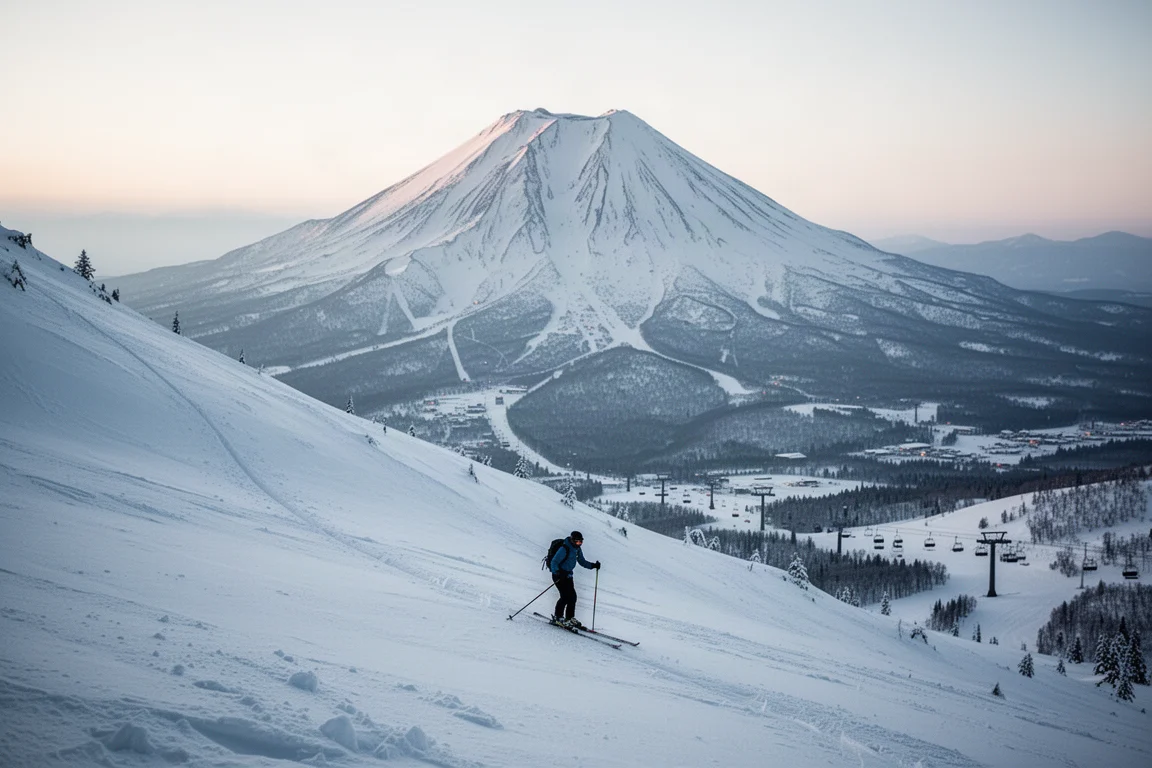
A caveat: the backcountry terrain off the backside of Coyote Butte is out of bounds and steep enough for avalanches to occur. This odd setup stems from checkerboarded land ownership, and while the resort says it is working toward a solution, none has been implemented yet.
Lift Setup and Getting Around
On paper, Shasta offers over 2,000 feet of vertical, decent for California. In practice the metric is misleading: you cannot do a true top-to-bottom run without hiking or entering backcountry terrain. The flat “get back” run out of the Gray Butte pod is nearly half a mile and uphill in places, and getting back requires the same traverse, some uphill walking, or exiting into backcountry terrain.
Otherwise, getting around is easy. Both base lifts are simple to reach, traverses are minimal, and only a few trails have flat sections, most notably the beginner Panther Creek run and the catch line out of the Douglas Butte glades.
All chairs are slow and fixed grip, though they generally offer sufficient capacity. Marmot, Coyote, and Douglas are comfortable triple chairs, with modest lines building at Douglas due to the zone’s popularity. The newer Gray Butte quad is very comfortable and essentially never has a line, given how hard it is to get to.
Food, Lodging, and Logistics
The main base lodge offers typical ski area food with a few extras such as poutine, at about average prices. There is a nice bar with patio access overlooking the mountain, though you will mostly sit in the building’s shade since the slopes face south. On the mountain, a very small shack sits at the top of Douglas Butte without indoor seating, and a rest area at the base of Gray Butte has a vending machine and an outhouse.
Shasta is not a destination resort and offers no on-site lodging, but the town of Mount Shasta is only about 20 minutes away, with options ranging from basic inns to three-star hotels in an arguably eclectic vibe. The base bar, while large and nice, does not stay open much past chair closing, so this is not the place for a lively apr\u00e8s-ski scene.
The resort is about 4 hours north of Sacramento and 4 hours south of Eugene, Oregon. The nearest international airports are in San Francisco and Portland, implying drives of nearly 5 or 6 hours. Once you arrive, though, parking is very close to the base and free.
Lift operations run typical daytime hours, with Twilight skiing on Fridays and Saturdays extending until 7:00 and 6:00 p.m. respectively on a few marked runs off Marmot and Douglas.
Pricing and Value
Tickets top out around $100 for holidays and just under that for weekends, much cheaper than most California resorts, though some might argue it is only an okay value for the quality of slopes you get. Shasta is also on the Indy Pass and in the Power Alliance program, both of which offer a limited number of days at member ski areas.
Final Verdict
If you want gnarly terrain, high-speed lifts, or a true destination resort experience, you will not find it here. What you will find are sunny beginner-to-advanced-intermediate slopes, limited lift lines, a striking volcano backdrop, and convenient access to really good backcountry.
In our category scoring, Shasta earns marks including a 6 for snow (just under 200 inches of annual snowfall, though wet and heavy), a 5 for resiliency, a 4 for size (635 acres), a 5 for terrain diversity, a 4 for challenge, a 3 for lifts, an 8 for crowd flow, a 4 for facilities, a 6 for navigation, and a 7 for mountain aesthetic, for an overall score of 52, placing it 12th in California as of early 2025.
Its small size, perplexing Gray Butte access, and limited resiliency measures hurt it against the competitive resorts further south. But if you want an excuse to visit one of the most beautiful volcanoes in the United States and get some skiing or riding in while doing so, Mount Shasta Ski Park will not let you down.
Product link
View more details for Mount Shasta Ski Park
This product is mentioned in the review. Check the specifications, options, and compatibility before buying.
View more details for Mount Shasta Ski ParkFurther reading
Related Reviews

Ski Resorts
Alyeska Resort Review: Alaska's Largest Ski Resort, Worth the Journey?
A deep look at Alyeska Resort: heavy snowfall, expert terrain, an Icon Pass connection, and the trade-offs of a near-sea-level mountain in the Last Frontier.

Ski Resorts
Bear Valley Ski Resort Review: Northern California's Quiet Sierra Alternative to Tahoe
A lesser-known Sierra resort with over 1,300 skiable acres, surprisingly strong expert terrain, and crowd levels Tahoe can only dream of. Here is what to know before you go.

Ski Resorts
Colorado Ski Resorts Ranked: The Best Destination Mountains for Overall Experience
A ranked guide to Colorado's destination ski resorts, covering terrain, snow, logistics, crowds, and cost so you can pick the right mountain for your trip.