Backpacking Shelters
Mount Laurel Designs Poncho Tarp and Solo Bivvy Review: A Field-Tested Ultralight Shelter System
A field-tested look at the Mount Laurel Designs Pro Rain Poncho Tarp paired with the Super Light Solo Bivvy, covering weight, weather protection, condensation, and who this ultralight setup suits.
Introduction
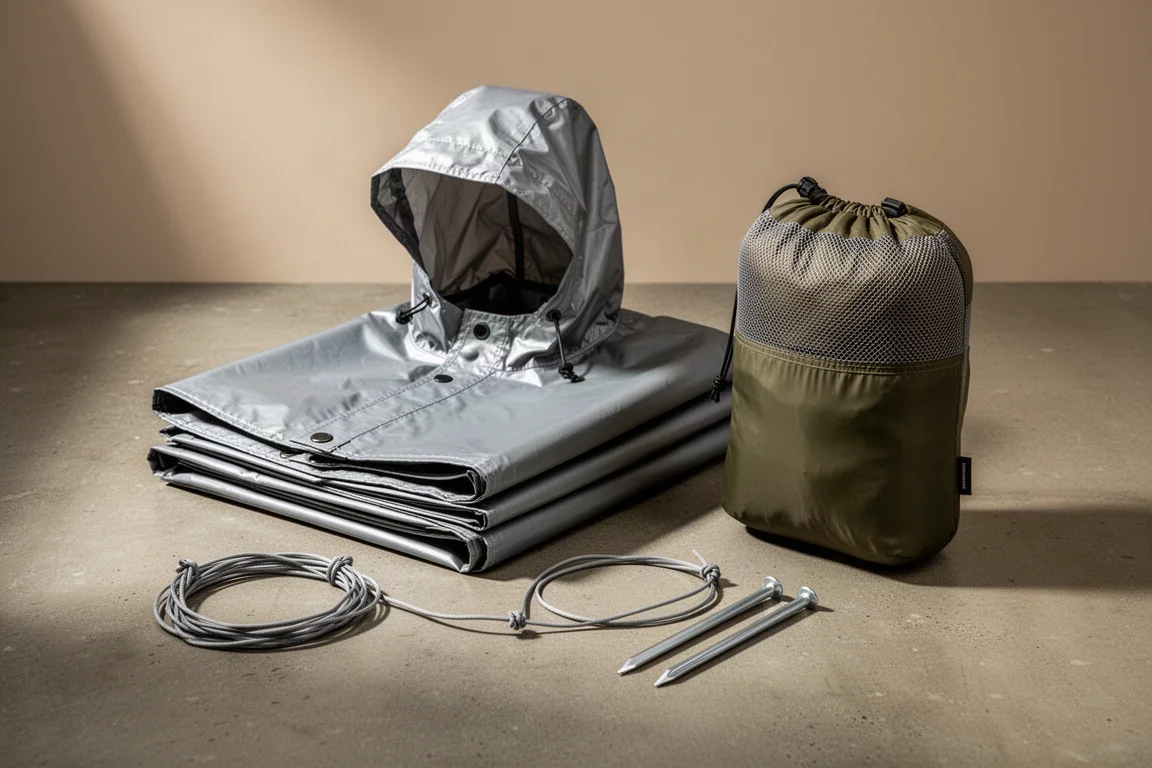
A poncho tarp is one of the few pieces of backpacking gear that does two jobs at once. It is the rain shell you wear while you walk, and it is the shelter you sleep under at camp. The Mount Laurel Designs Pro Rain Poncho Tarp takes that idea and pairs it with a companion bivy, the Super Light Solo Bivvy, to close the gaps a small tarp leaves open on its own.
This article covers how the two pieces work together, based on a multi-day backpacking trip in the Tetons that included wind, steady rain, and a nighttime hail storm. It also covers the trade-offs that matter most before committing to a poncho tarp system.
What the Poncho Tarp and Solo Bivvy Deliver Together
The complete setup used in testing, the poncho tarp, the cord that comes with it, and the bivy, weighed 22.2 ounces in total. The combined cost was $434.
That figure looks steep next to a tent of similar weight, and it is worth sitting with before buying. The important difference is that the poncho replaces a rain jacket and rain pants as well as a shelter, so the comparison is not simply shelter against shelter.
The pairing also answers the two questions a small tarp raises on its own. Where does ground splash go, and what keeps wind and insects away from your face while you sleep? The bivy handles both, and the tarp keeps the worst of the weather off the bivy itself.
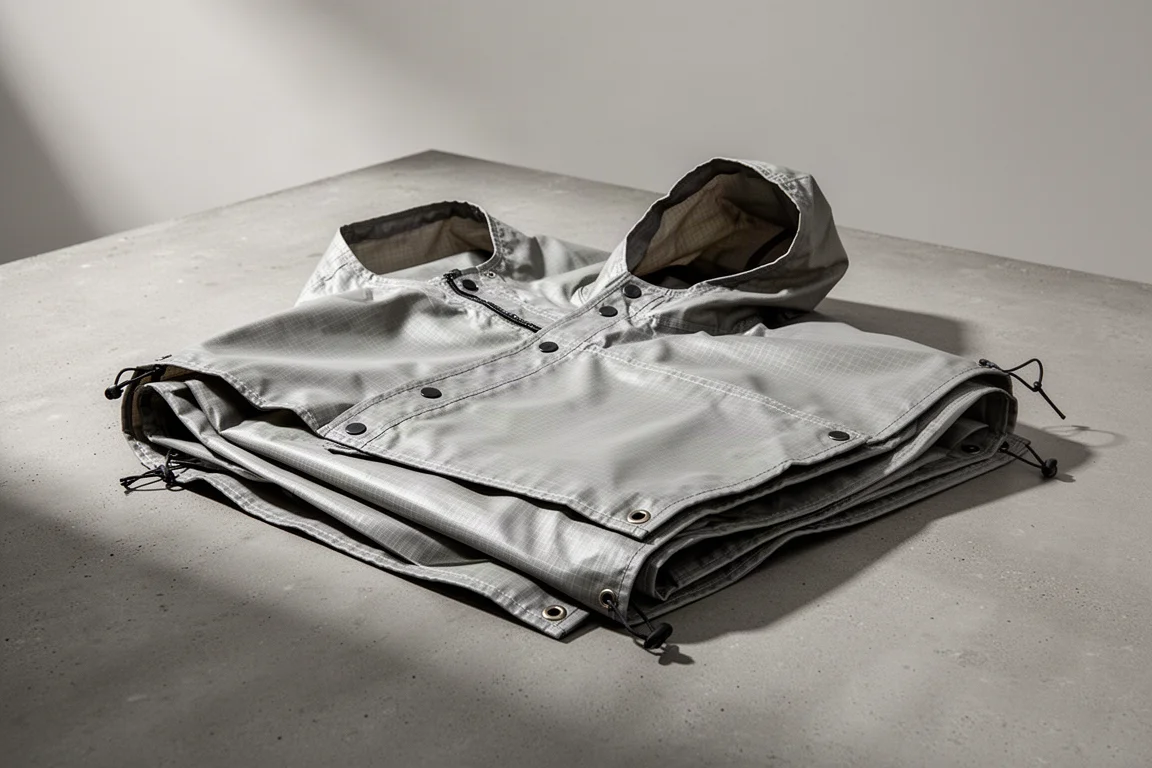
The Pro Rain Poncho Tarp was previously offered in DCF, and that version is no longer listed on the brand’s website. Even so, the poncho tarp concept and its companion bivy remain worth understanding for anyone weighing a similar ultralight system.
Mount Laurel Designs Pro Rain Poncho Tarp
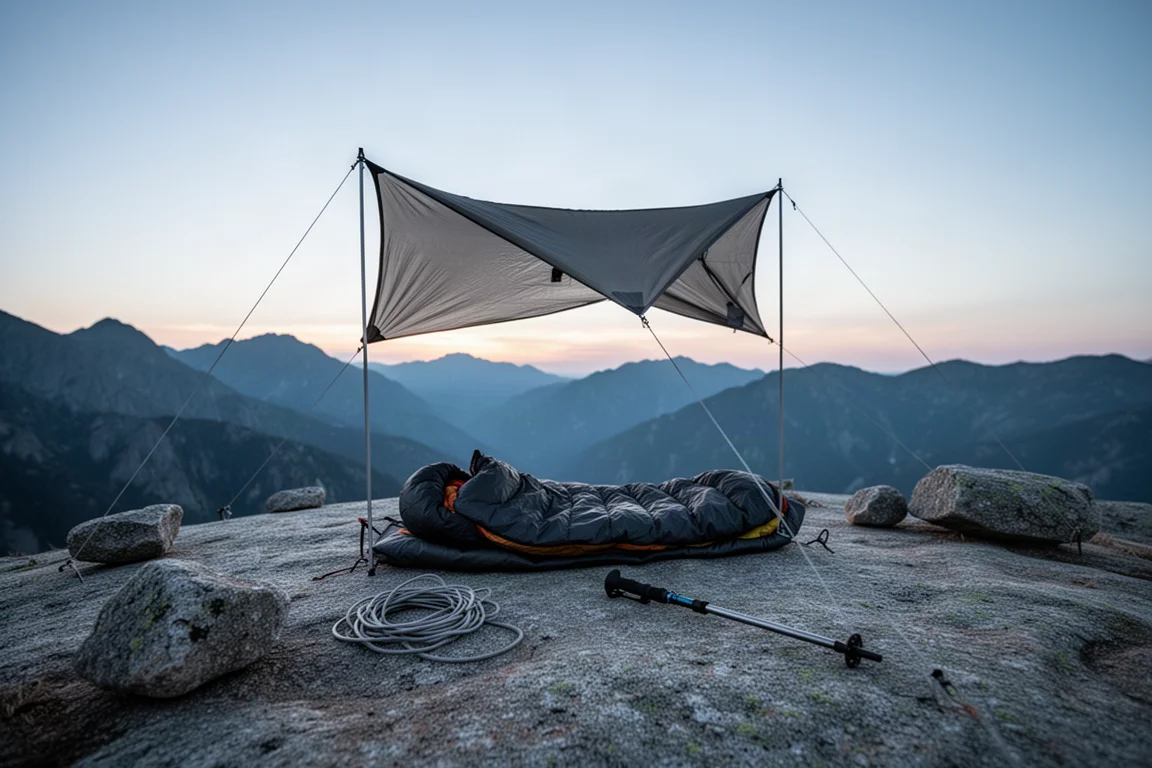
Versatility defines this tarp, and it is also the source of its learning curve. It can be pitched with trees, with trekking poles, low to the ground for maximum weather protection, or high overhead for a more open, almost cowboy camping feel. There is no single correct setup, which is genuinely useful once you know what you are doing and genuinely confusing before that.
In practice, higher pitches were the more enjoyable option in fair weather. A low pitch felt cramped, and the interior space is smaller than a dedicated flat tarp, so this is not a shelter built for lounging. Converting between the two modes is simple: unsnap the snaps on either side of the poncho, roll up the hood area, snap it closed, and pitch it like a normal tarp.
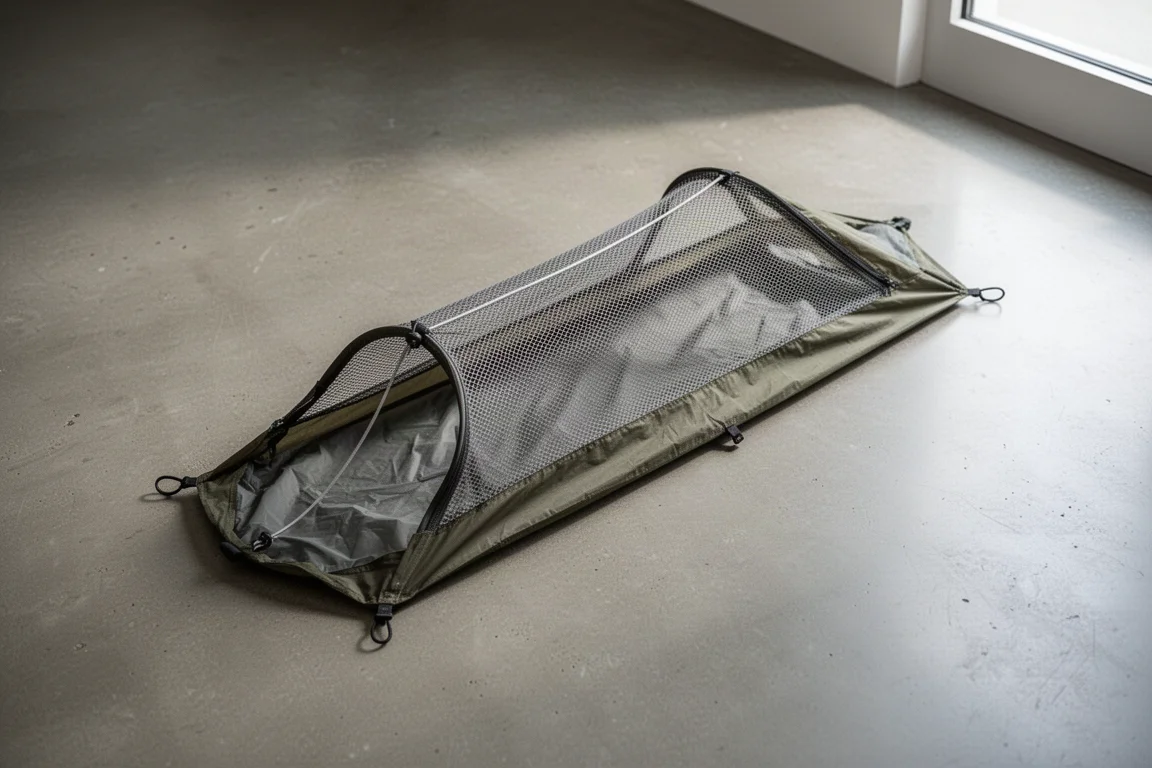
Mount Laurel Designs Super Light Solo Bivvy
The bivy is offered with a choice of uppers. The full mesh version maximizes ventilation, while the half moon design blocks more wind and holds a little more warmth while still allowing airflow. The full mesh was the choice in testing, mainly to keep condensation under control, though a cold sleeper may prefer the half moon for extra wind protection across the face.
Two details make the bivy easier to live with. Small loops at each corner let you stake it out, which also creates more usable space inside. A cord at the face opening attaches to a hook under the poncho tarp, holding the mesh up and away from your face. That single detail removes any sense of claustrophobia and makes the small interior feel secure rather than confining.
There is enough room inside for a water bottle, a phone, and small items you want to keep dry or protect from wildlife overnight.
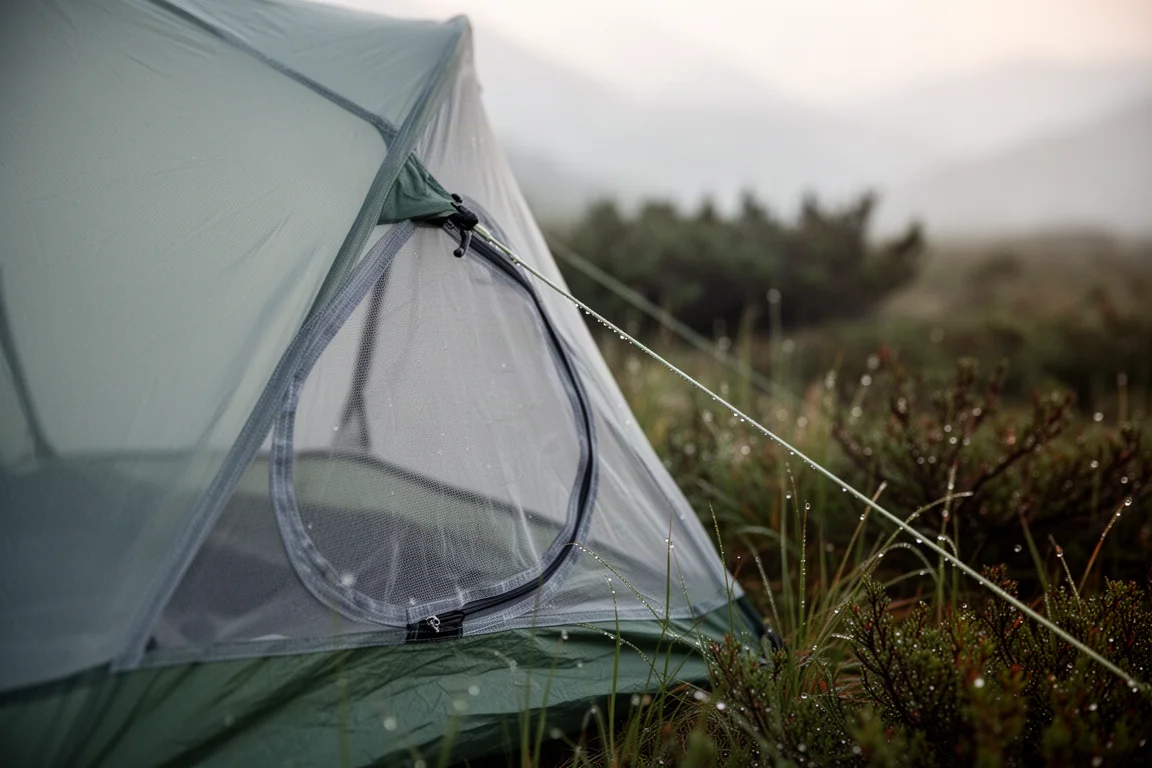
Condensation was the biggest question going in, and the answer was better than expected. Across several nights of rain, the inside of the bivy and the sleeping bag stayed dry, and the interior surface felt dry even while rain was falling outside. The bivy also dealt with a puddle that formed on top of it during the hail storm, keeping the sleeping bag dry underneath.
The tarp arrives with a tube of seam sealer, and the seams need to be sealed before the first trip. It is a straightforward job: brush sealer onto the stitched areas, work one short section at a time with the fabric pulled taut, and let each section dry before moving to the next.
Using the Poncho Tarp as Rain Gear
As rain gear, the poncho is more ventilated than a rain jacket and rain pants, with large openings along the sides even after it is snapped up. Leggings will pick up some dampness in sustained rain, though the trade-off is far less sweat buildup, which is what usually soaks hiking clothing anyway.
The poncho also holds warmth when temperatures drop during a shower, and it can be worn over a pack as a backup layer of protection for the contents inside. It is discreet for bathroom breaks on exposed trails as well.
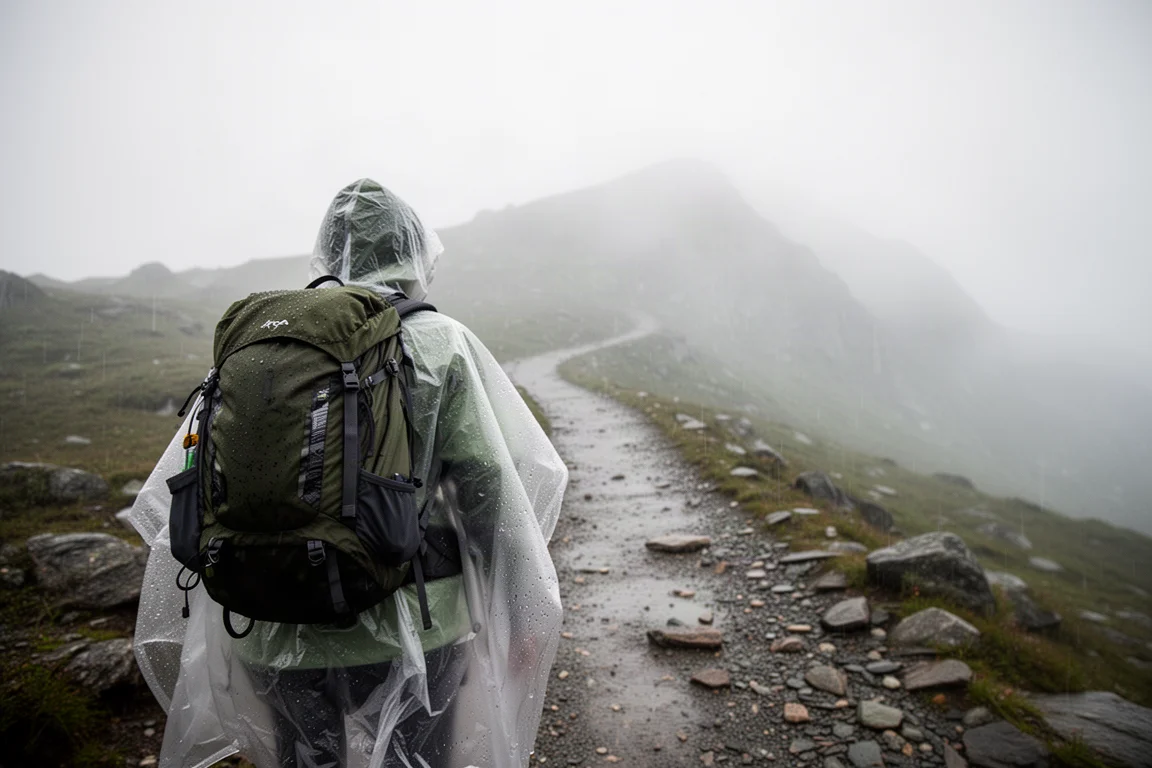
Switching between modes in the rain is less awkward than it sounds. Most of the time you are already damp if it has been raining all day, and packing up under the tarp before pulling the stakes and putting the poncho back on keeps the important gear dry. Pitching near trees helps in both directions, since foliage catches part of the rainfall while you set up or break camp.
One improvement worth making before a trip: attach the guy lines to small line tensioners so the cord can be removed quickly while wearing the poncho and reconnected just as quickly at camp, instead of dangling or requiring knots in the rain.
Weather Protection, Condensation, and Camp Comfort
The system was tested through real weather rather than ideal conditions. Rain fell for extended stretches, and one night brought hail. During that storm, legs slid out from under the tarp and took the hail directly, and a puddle collected on top of the bivy. The sleeping bag still stayed dry, which is the outcome that matters most.
Splash does reach the sleeping area under a small tarp in heavy rain. Pitching the tarp tighter to the ground reduces it, and the bivy is the reason a beginner-friendly setup like this stays workable in bad weather.
Camp life under a tarp differs from camp life in a tent in ways worth knowing. Wet ground means grit sticks to anything laid out, so a large zip bag, a stuff sack, an emergency blanket, or a piece of Tyvek gives gear somewhere clean to sit. There is less room to spread out and reassess at the end of a wet day. On the other hand, waking up already outdoors, with the mountains in view instead of a tent wall, is the part that makes the format appealing in good weather.
Temperature matters too. In mid-40s conditions the setup stayed warm enough. Colder than that, a tent’s trapped micro climate becomes a real comfort advantage, and cold sleepers will notice the difference quickly.
What to Consider Before Buying
The honest starting point is skill. This is not a tent. Pitch options are an advantage only once you can read the weather and the terrain and adjust accordingly, and the first few attempts will be clumsy. If you want a shelter that sets up one way every time, a poncho tarp will feel like friction rather than freedom.
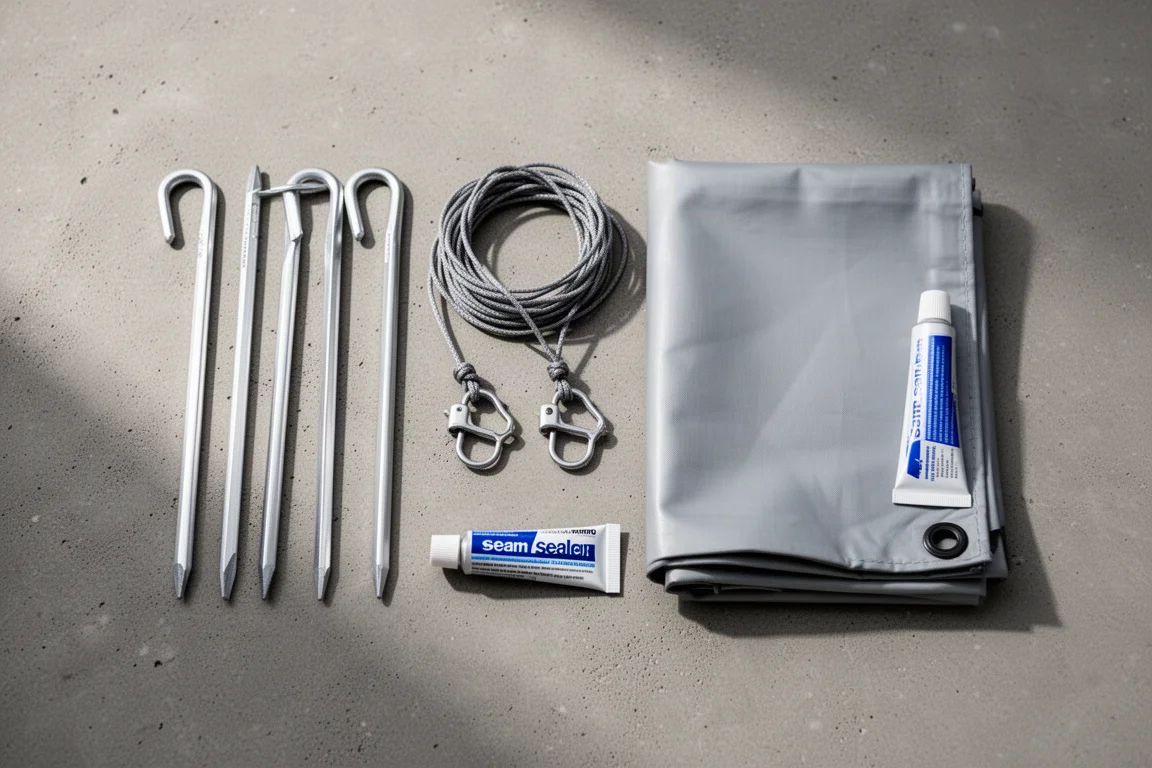
Stake count is the next thing to plan for. Bring enough stakes for every edge of the tarp and every corner of the bivy. Running short mid-storm forces compromises exactly when you least want them, and the extra stakes weigh very little.
Campsite selection also changes the experience. Camping under trees reduces the rain you deal with during setup and pack-up. Cold weather is another factor: below the mid-40s range, a tent is likely the more comfortable choice. Nighttime logistics deserve a thought too, because if it rains overnight, getting up means either putting damp hiking clothes back on or risking warm, dry sleep clothes.
Conclusion
The Pro Rain Poncho Tarp and Super Light Solo Bivvy make sense for a specific kind of backpacker: someone covering long miles, spending little time in camp, and willing to trade living space and convenience for the weight of carrying rain gear and a shelter as one item. The bivy is the piece that makes the system practical in poor weather, and its ventilation and dryness in testing were the most reassuring findings.
For campers who value a private, spacious shelter, a warm bubble on cold mornings, or the ability to spread gear out at the end of the day, a tent remains the more comfortable answer. The poncho tarp is a skill as much as a product, and that is worth knowing before you buy.
Further reading
Related Reviews
Backpacking Shelters
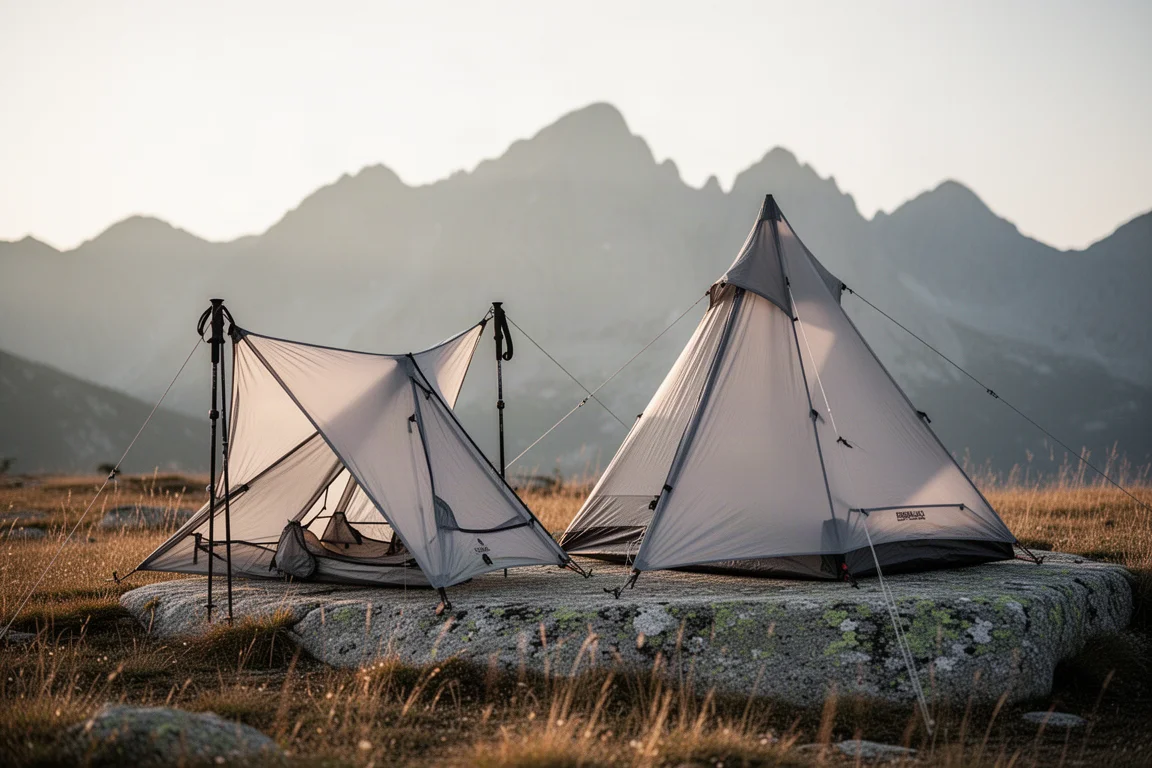
Hyperlite Mountain Gear Flat Tarp Review: A 9 oz Shelter at a Premium Price
A 9 oz Dyneema Composite Fabric tarp with welded seams, 25 tie-out points, and a $369 price tag. Here is what it does well and who should think twice.
Backpacking Shelters
Durston X-Mid Pro vs Zpacks Offset Duo: Two Ultralight Shelters Compared
A practical comparison of two trekking-pole shelters: setup simplicity, interior room, headroom, condensation, and footprint, with clear guidance on which suits your camping style.
Backpacking Shelters
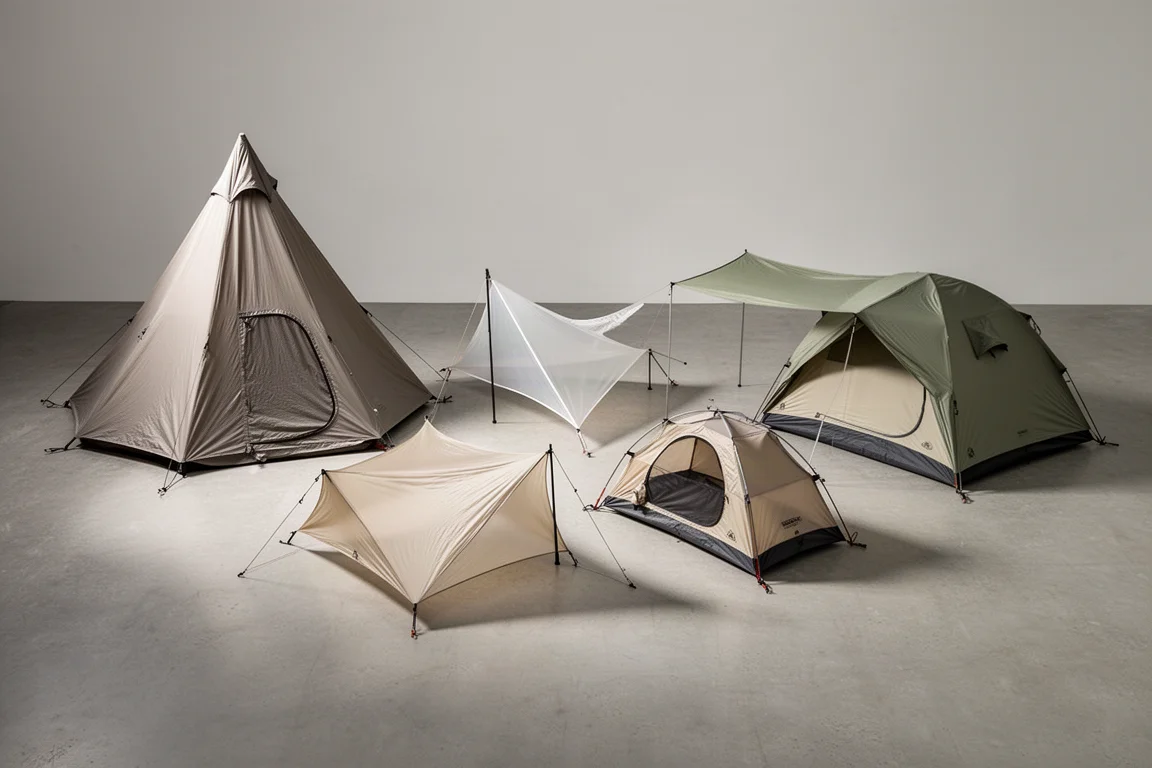
Four Backpacking Shelters for Different Trip Scenarios
A practical look at four backpacking shelters, from a modular four-season tipi style tent to a freestanding two-person option, and how to match each one to a real trip.