Ski Resorts
Mount Hutt Review: New Zealand's Wind-Prone Ski Resort with Big Rewards
Mount Hutt pairs stunning views and well-rounded terrain with one of the most volatile operating schedules in New Zealand skiing. Here is what to know before booking.
Introduction
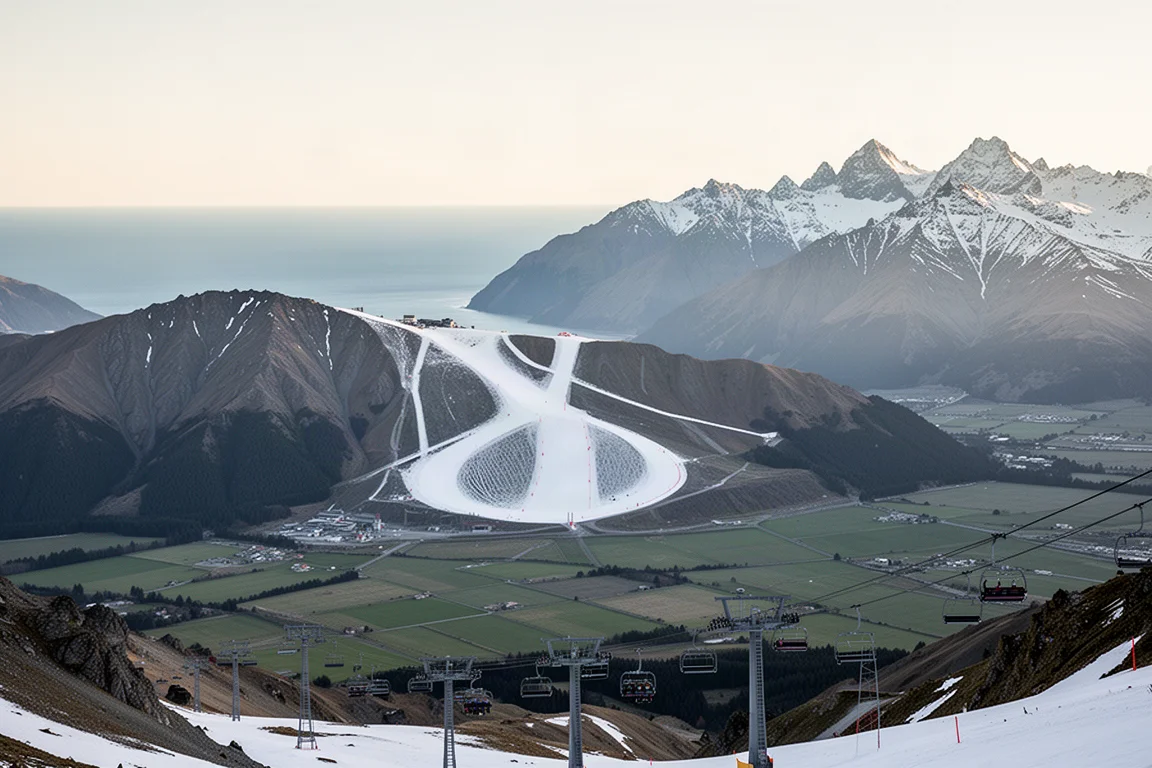
Mount Hutt is for many travellers the default choice for a New Zealand ski vacation, and on first look the reasons are obvious. The resort sits about 90 minutes from Christchurch, towers dramatically above the surrounding farmland, and offers strong terrain for a range of abilities. But the same geographic traits that give Mount Hutt its distinctive character also create some real downsides, and there are important things to understand before booking a trip here. This review walks through the overall mountain experience and how the resort stacks up against New Zealand’s other ski areas.
Who Mount Hutt Is For
Like all New Zealand ski resorts, Mount Hutt sits entirely above the treeline, and its layout is unusually simple. With the exception of a handful of lower-mountain trails, the resort essentially spans one large bowl of just over 500 acres, similar in size to or slightly smaller than other major New Zealand commercial ski fields. From the slopes, however, it feels bigger than the acreage suggests, because the base area starts more than halfway up the mountain’s vertical rise.
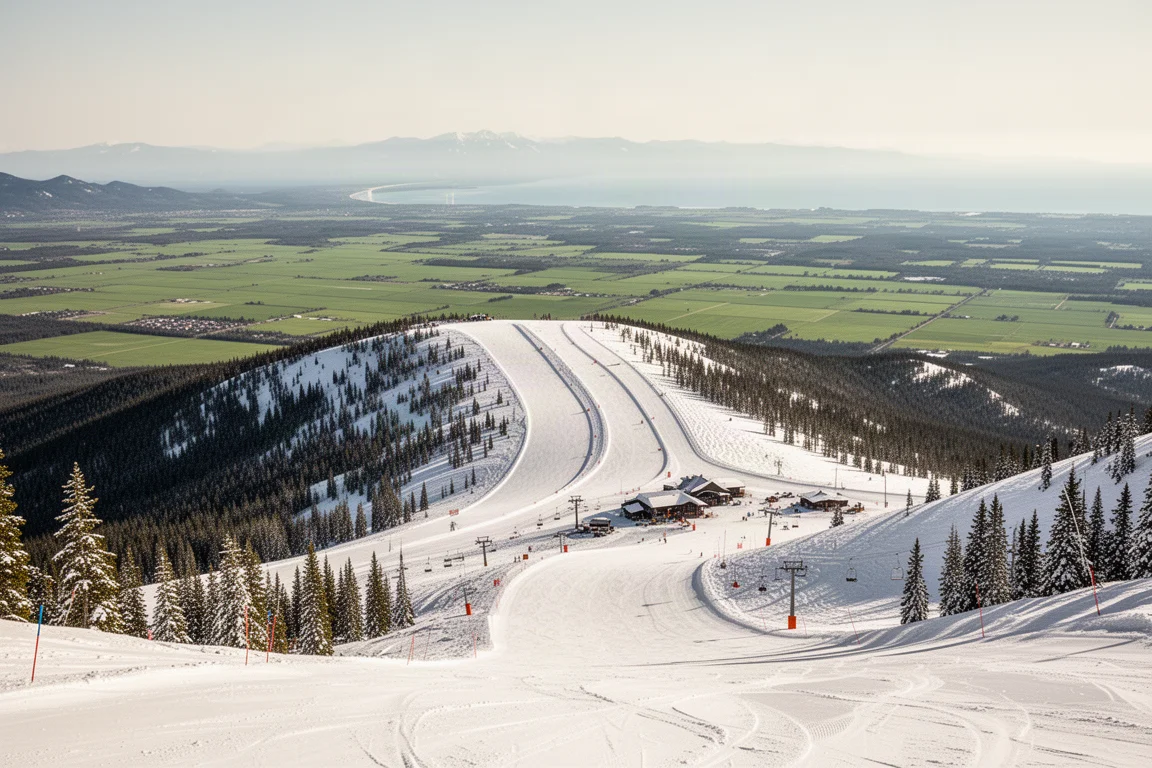
The views are a genuine highlight. On clear days you can see across the South Island plains toward Christchurch and out to the Pacific Ocean, and from the summit a full 360-degree panorama takes in farmland, ocean, and the jagged Southern Alps behind the resort. The mountain also holds the highest overall elevation footprint of any major New Zealand ski resort, with a top elevation above 2,000 meters and most slopes above 1,600 meters, which often produces some of the best snow quality in the country.
Terrain Across the Bowl
Mount Hutt offers a solid range of terrain, though how much you get out of it depends on how technical you are willing to get. True beginner terrain is limited to a modest section near the base, served by the dedicated Nor’west Express eight-pack. A bunny hill runs on one of the more uniquely enclosed magic carpets around, built directly into the side of a hill. This dedicated setup is great for less experienced guests, but the beginner terrain can get old quickly.
For intermediates, the experience steps up significantly. Winding cruisers spread across the mid and upper mountain, many of them wide with plenty of room to carve. The signature blue run, the Virgin Mile, traces the spine of the resort boundary with extraordinary views into the farmland below and arguably the best line of sight to the ocean on the horizon. It is worth taking at least once even if you usually seek out harder runs.
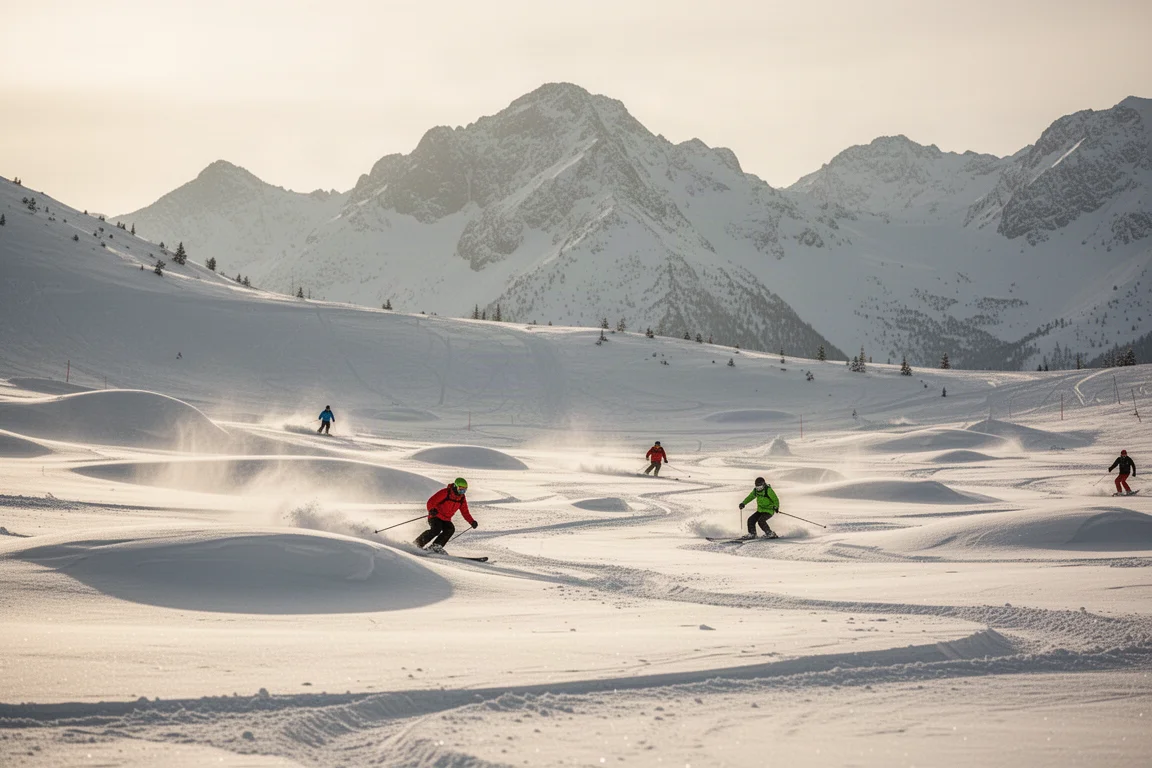
Freestyle riders get a couple of terrain park zones off the eight-pack lift, with features ranging from extra-small to large boxes, rails, jumps, and rollers. It is not as extensive as some Olympic-level parks at other New Zealand commercial fields, but there is enough variety to keep things interesting.
The red runs, four in total, unlock slightly steeper direct descents down the summit bowl and the first access to the lower-mountain Towers zone. They are commonly groomed, with moguls sometimes off to the sides, and their steepness is roughly equivalent to blues at many destination resorts in the American West or easier blacks in the American East. Single blacks host the steepest groomers, where you can build serious speed, but they can also get icy. Note that the resort sometimes changes real-time trail ratings depending on conditions; trails subject to this have gates with yellow octagon markings at their entrances, so check those for the current rating.
For experts, the marked trails are only a fraction of the picture. Ungroomed terrain lines the sides of the trails, and the most demanding challenges sit in the Towers and Southface areas at skier’s right: steep, tight, rock-riddled chutes with a short boot pack at the top that hold snow much better than the lift-served slopes. Less extreme chutes at skier’s left dump out below the lifts at a shuttle bus stop. Two backcountry gates also access the wilderness beyond the resort, though they do not filter back in and should not be used without proper touring gear and knowledge of the area.
Weather, Wind and Openings
This is where Mount Hutt’s character cuts both ways. The favourable elevation often delivers good snow quality, but the resort juts prominently above the Canterbury Plains and is one of the least weather-protected ski areas around. Storms often bring so much wind that fresh snow cannot be fully enjoyed, and even after a storm day conditions can be icy and windswept. On the plus side, the wind builds genuinely good powder stashes, so even on a hard-surface day there can be soft snow to find on loaded aspects.
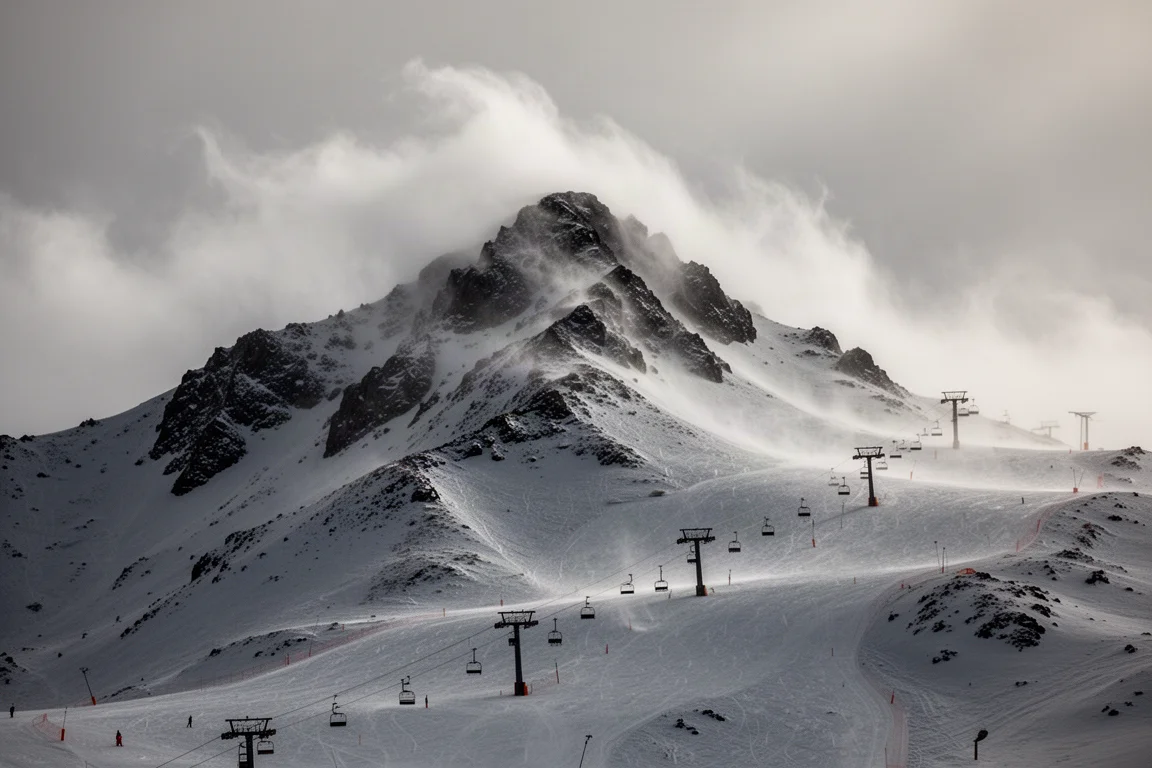
The bigger planning factor is how much weather dictates terrain openings. Once winds exceed roughly 100 kilometers per hour, lifts close outright. Wind holds can happen on close to a daily basis during peak season, full mountain closures occur more often than one might hope, and multi-day shutdowns are not unheard of. Variable snowfall adds to this: while snowfall is strong for New Zealand, annual accumulation often falls under 100 inches, well below most North American destinations, and snow droughts can occur in poor and even average seasons. The lower Towers zone is not dependable for consistent openings, and the bus-served chutes on the far side really only open in exceptional years. Significant on-mountain signage tracks conditions and openings, sometimes changing after every run.
One clear upside: navigation is easy. The simple bowl shape makes everything intuitive, trail markings are generally clear, and from essentially everywhere above the Towers lift you have direct line of sight to the base, so it is hard to get truly lost.
Lifts, Facilities and Crowds
The lift setup is strong for New Zealand. The Summit six-pack spans directly from the main base to the summit for quick laps, while the Nor’west Express provides redundancy on the lower half and serves the beginner and terrain park areas, helping spread crowds. The dated piece is the slow Towers triple, the only way out of the lower-mountain slopes, which is perhaps understandable given its variable opening schedule.
Lift lines can be modest but real during peak dates, especially late morning through early afternoon. Arriving early typically buys a few quick laps before crowds roll in, and a mid-load station offers redundancy even when the lower mountain is closed. Facilities are concentrated at the main base complex, with several food options, shops, and indoor and outdoor seating. The Apres Spritz Bar at the top of the Nor’west lift is worth a stop on nice days, though it only opens on weekends and holidays. One distinctive amenity: a summit hot tub, first come first serve, so bring your bathing suit. Also note there is no complimentary sunscreen at the lifts, which is common elsewhere in New Zealand, so bring your own.
Getting There and Where to Stay
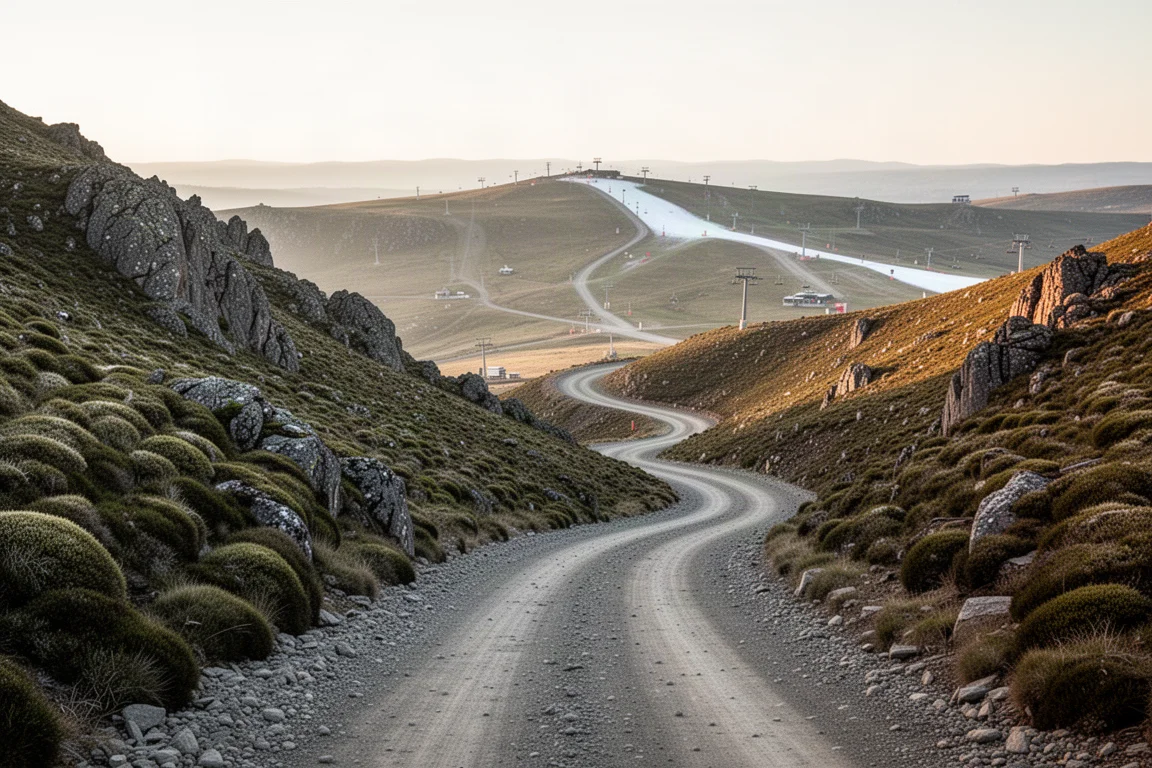
Mount Hutt’s location looks convenient on paper at about 90 minutes from Christchurch, but the final approach is anything but easy. The access road is unpaved, steep, winding, and narrow in sections, and chains may be required in bad weather. Unlike the commercial fields further south, there is no parking lot at the base of the access road to skip the climb. Scheduled ski buses run from nearby Methven during winter, and shuttle options exist from Christchurch and Rolleston, which are the less stressful choices if you are not comfortable on an alpine gravel road.
Closest parking lots are convenient to the lifts and base lodge, but they fill on busy days, with overflow lots requiring a shuttle. Arrive early on weekends and holidays. There is no on-site lodging at the resort or anywhere on the access road, so most destination visitors stay in Methven, about 35 minutes away with good conditions, which offers economically priced hotels, inns, and home rentals. Christchurch is roughly an hour and a half away for a larger city base, at the cost of a much longer commute, and both towns offer hostel options. Après-ski is quiet: nothing happens on the mountain after closing, and Methven’s bars and restaurants are fun but not overly lively.
Buying Advice and Pricing
As of 2026, Mount Hutt does not sell advance lift tickets for specific dates. Flexible one-day adult passes cost 180 New Zealand dollars, which is not cheap, but multi-day purchases bring better rates and tickets can be exchanged for a range of other activities if the resort closes for weather or you simply decide not to go up. Mount Hutt is also an Ikon Pass partner, with 7 days on the full pass and 5 days on the base pass shared with Coronet Peak and The Remarkables, plus a 2-to-4-day membership on the Ikon Session Pass.
In category rankings, the resort scores 4 for snow, 2 for resiliency, 4 for size, 5 for terrain diversity, 6 for challenge, 7 for lifts, 7 for crowd flow, 4 for facilities, 8 for navigation, and 9 for mountain aesthetic, for an overall score of 56 and third place in New Zealand as of July 2026. Compared with its South Island competitors, Mount Hutt fights hard on terrain fundamentals and even leads on snow quality, but it is held back by weak resiliency and limited indoor shelter away from the base area.
Conclusion
Mount Hutt has one of the most volatile operating schedules of any ski resort, but if you can catch it on a good day, it offers one of the most well-rounded terrain experiences in New Zealand. If you value views, honest terrain, and strong snow quality, and you can build weather buffer into your plans, it is a genuinely rewarding choice. If you need reliability above all else, temper your expectations or look further south.
Product link
View more details for Mount Hutt Ski Resort
This product is mentioned in the review. Check the specifications, options, and compatibility before buying.
View more details for Mount Hutt Ski ResortFurther reading
Related Reviews

Ski Resorts
Alyeska Resort Review: Alaska's Largest Ski Resort, Worth the Journey?
A deep look at Alyeska Resort: heavy snowfall, expert terrain, an Icon Pass connection, and the trade-offs of a near-sea-level mountain in the Last Frontier.

Ski Resorts
Bear Valley Ski Resort Review: Northern California's Quiet Sierra Alternative to Tahoe
A lesser-known Sierra resort with over 1,300 skiable acres, surprisingly strong expert terrain, and crowd levels Tahoe can only dream of. Here is what to know before you go.

Ski Resorts
Colorado Ski Resorts Ranked: The Best Destination Mountains for Overall Experience
A ranked guide to Colorado's destination ski resorts, covering terrain, snow, logistics, crowds, and cost so you can pick the right mountain for your trip.