Bookshelf Speakers
Moukey Passive Bookshelf Speaker Review: Serious Detail at a Budget Price
A compact passive bookshelf speaker selling for around $65 to $70 that delivers surprising imaging and neutral bass, alongside a treble that needs managing.
Introduction
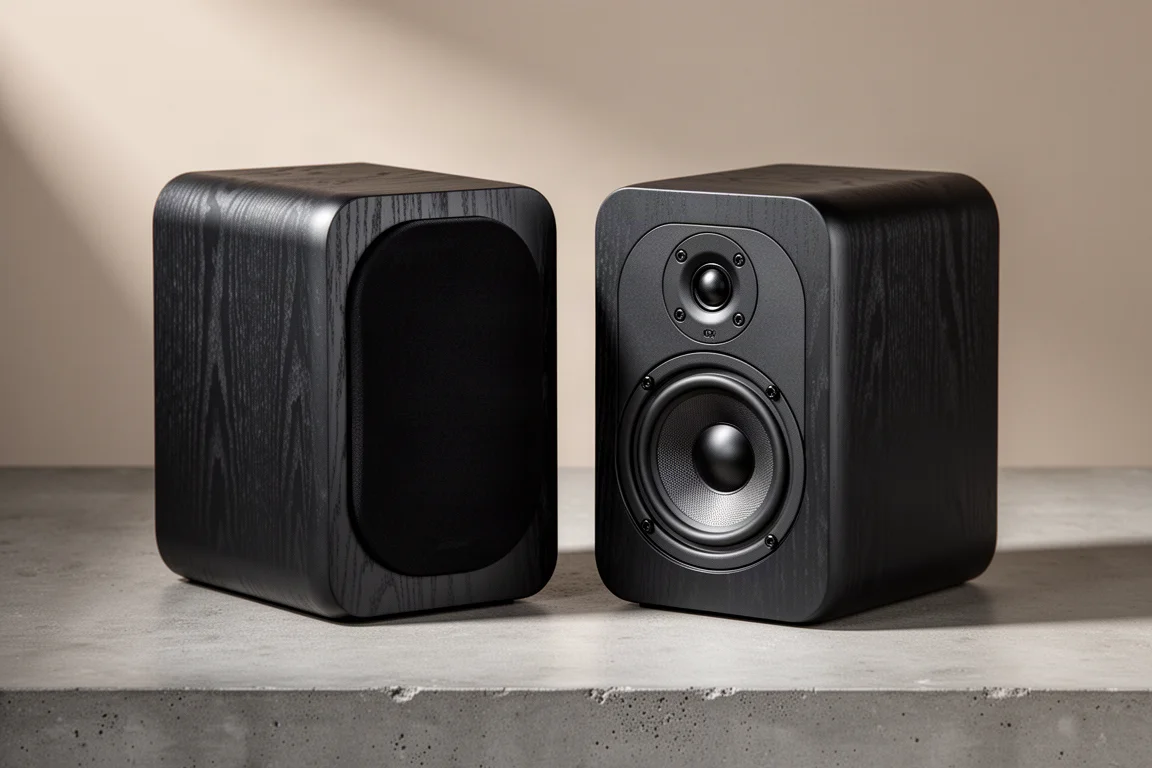
The Moukey passive bookshelf speaker arrives with almost no ceremony. There is no obvious model number to search for, just a compact two-way cabinet and a price that hovers around $70, with a $5 coupon that regularly brings it closer to $65. That is deep budget territory, where most speakers ask buyers to accept obvious compromises.
This one is more interesting than its price suggests. It is a front-ported two-way design built around a one-inch soft dome tweeter and a five-and-a-quarter-inch woofer, and its imaging and mid-range clarity are far better than the price implies. It also has real limits, particularly in the treble and at higher volumes. Understanding both sides of that equation makes the purchase decision straightforward.
Who the Moukey Passive Bookshelf Speaker Is For
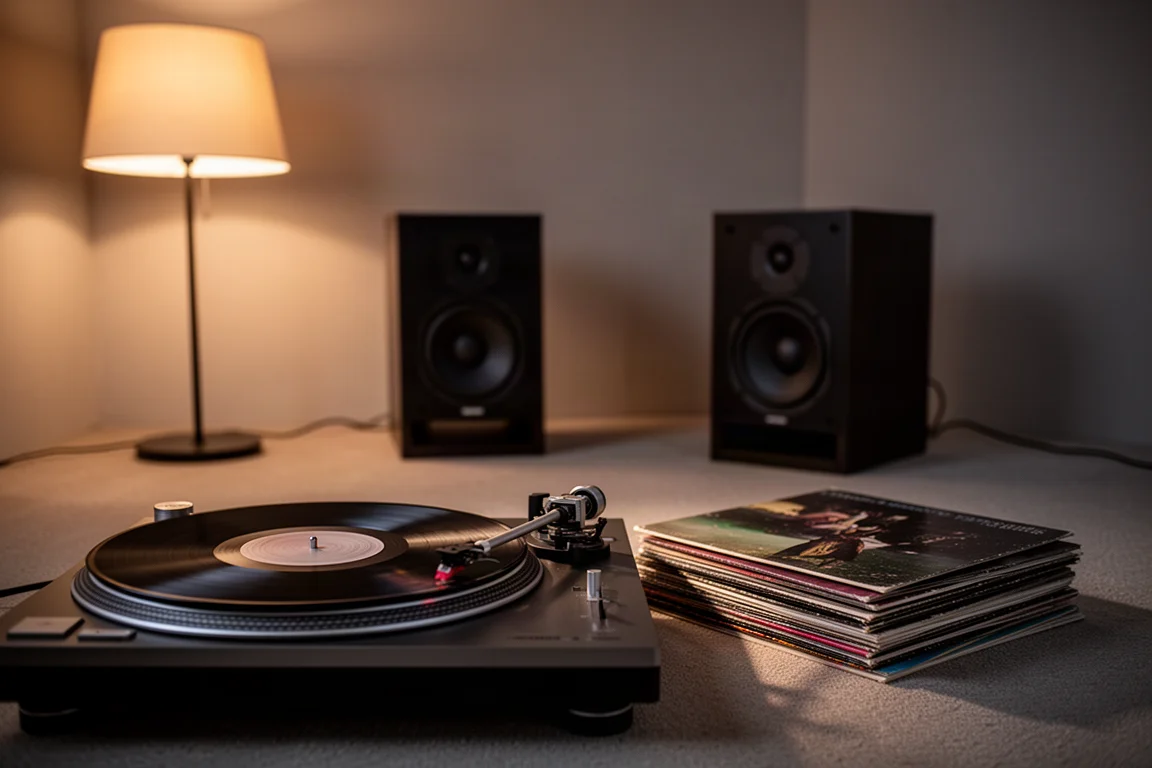
This is a small speaker, and its natural homes are small jobs: a desktop system, a pair of surround channels in a home theater, a compact two-channel setup in a smaller room, or a set of speakers for a child’s room where durability matters more than perfection.
Size works in its favour in near-field use. Because the cabinet is tiny, it tends to disappear acoustically even when it sits fairly close to a wall, and it stays composed at modest listening levels. If typical listening happens at or below roughly 75 dB, this speaker is in its element.
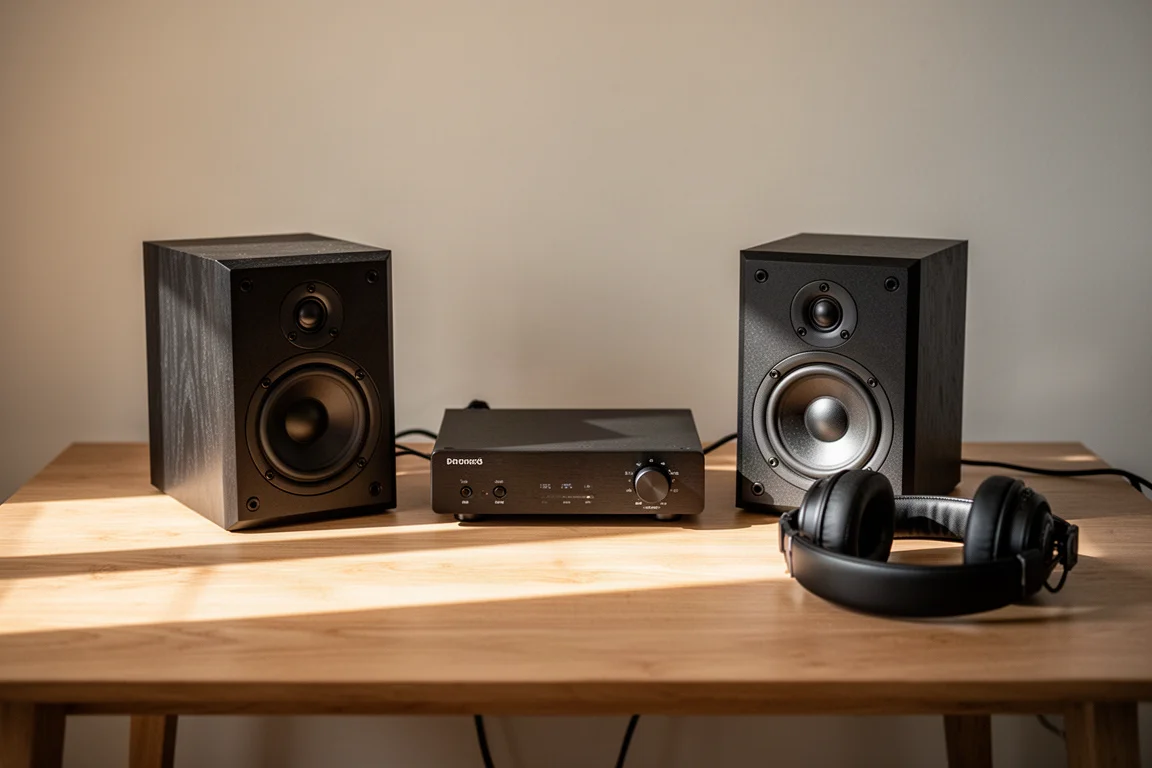
It is also a strong candidate for anyone who wants an inexpensive second system without giving up genuine detail. It is not the right pick for a large room that needs to be filled at high volume, and it is not the right pick if a warm, full-bodied tonal balance is the priority.
Main Strengths: Detail, Imaging, and Bass Punch
The headline strengths are clarity and stereo imaging, and both show up immediately.
Soundstage and Imaging
Imaging is the standout quality. With well-recorded material, the presentation is wide and tall, and centre-focused vocals lock firmly into the middle of the stage. On densely layered tracks, individual instruments separate cleanly and can sit well outside the physical cabinets.
The disappearing act is real. At times the sound stops feeling like it comes from two small boxes and instead seems to arrive from a single, cohesive space. Boundary reinforcement from a rear wall or side walls changes how pronounced that effect is, so placement matters, but the small cabinet can create a convincing sense of space even when it is not pulled far out into the room.
Bass and Mid-range Response
Bass is better than the price implies, provided expectations stay realistic. The low end is neutral rather than boosted, and it rolls off smoothly, so the deepest notes in a track fade away gradually instead of vanishing abruptly. Kick drums and bass lines carry genuine punch.
The published rating claims extension down to 20 Hz, which no speaker of this size will deliver. In practice the roll-off begins somewhere around 55 to 60 Hz, a reasonable result for a compact cabinet. Notes down in the low 30s simply will not be reproduced with any weight.
The mid-range is split. The upper half is detailed and clear, with vocals staying clean even in demanding passages where other budget speakers start to sound resonant. Acoustic guitars come across as crisp and articulate, and even fine details such as the reverb inside a guitar body remain audible. The lower mid-range is thinner, so voices and instruments lose some body, and the overall balance leans bright rather than warm. Many listeners will accept that trade, since detail is harder to add later than fullness.
Things to Consider Before Buying
Treble and Volume Behaviour
The treble is the most uneven part of the design. It is elevated relative to the rest of the sound signature, which makes cymbals and percussion very present but also a little brief and hot. Snare hits push forward, and the top end can sound unrefined and slightly unruly rather than controlled. Piano passages in particular come across as pronounced and in your face.
That brightness scales with volume. Below roughly 75 dB it stays manageable and often sounds lively. Above that point the speaker turns shouty. In a furnished room at a distance, some of that edge is softened by the surroundings, but the underlying balance does not change.
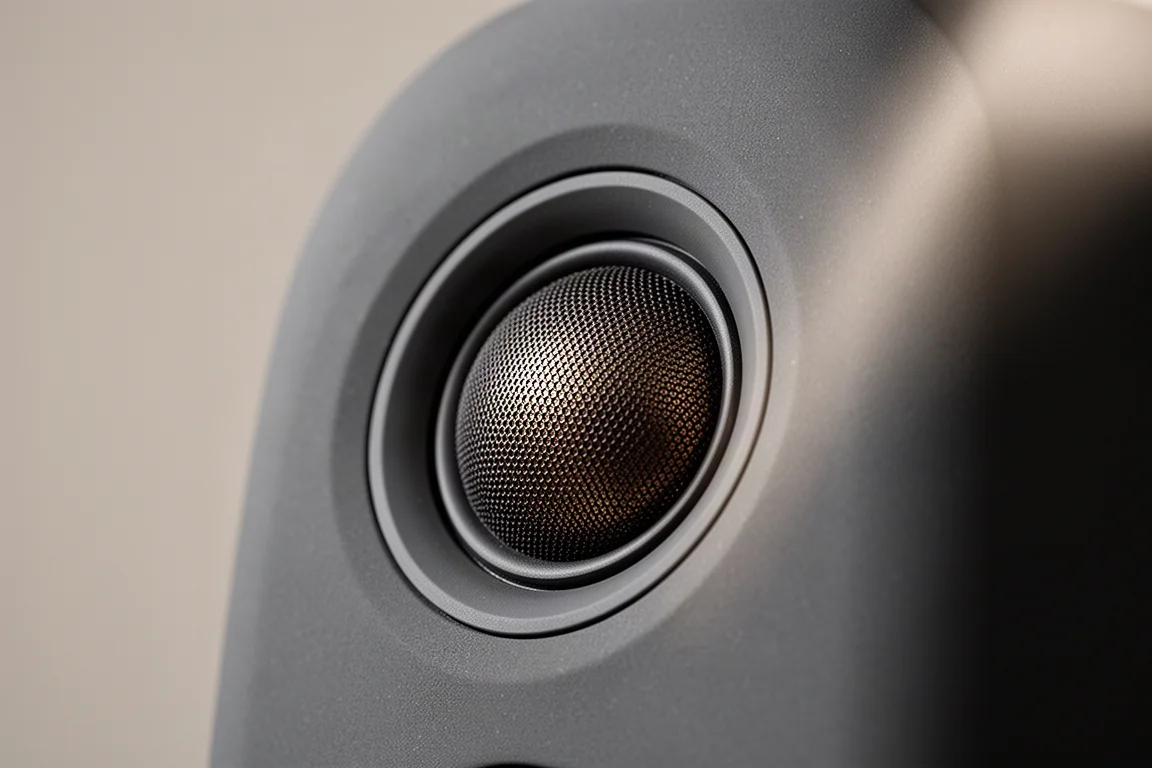
The cabinet is six-ohm nominal and appears to use a crossover, although the tweeter output does not seem to have been brought down to match the woofer. That is the root of the elevated treble.
Cabinet Resonance and Build Quality
Build quality is fair for the money. It is better than entry-level Dayton Audio kits, roughly on par with Polk’s budget cabinets, and not as solid as the Neumi BS5. The front baffle is rounded, the tweeter sits in a small plastic housing, and the grille cutout is a little rough around the edges. The binding posts are surprisingly decent: they do not accept banana plugs vertically, but the openings are wide enough to push a banana plug through, and it holds securely.
The cabinet is not heavily braced, and on certain bass notes it audibly resonates. Wall mounting makes this more obvious, so foam pads at the corners are worth adding before hanging it. Four rubber feet come already installed, and there is a keyhole mount on the back for wall use.
Buying Advice
At $65 to $70, this is close to a no-brainer for a small, detailed speaker used on a desktop, as a surround pair, or as a secondary system. If it is being weighed against the Polk T15, which it closely resembles in form factor, the comparison is not close: the T15 is a much more veiled design with a three-quarter-inch tweeter, and this speaker sounds noticeably clearer for less money. The Sony SS-CS5 does perform better, but it typically sells for around $150 or more, which is a different budget entirely. Tonally, the Moukey also recalls a miniature version of the Yamaha S803, though with less of a U-shaped balance.
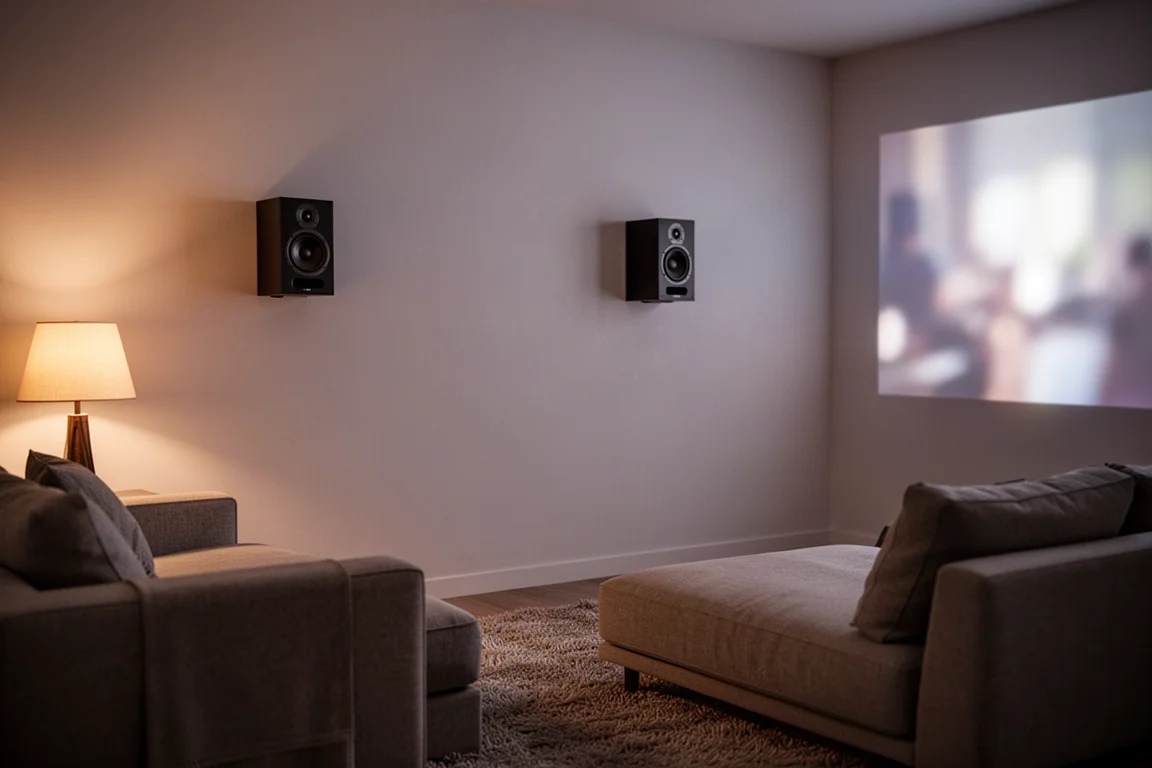
For tinkerers, this speaker is an unusually good platform. The cabinet could be braced further, and a small resistor in line with the tweeter could bring the treble down a couple of decibels to match the woofer more closely. Because it already sounds good out of the box, any of that work is optional rather than corrective.
Conclusion
The Moukey passive bookshelf speaker is not a perfect speaker, and it does not pretend to be one. What it offers at its price is detail, imaging, and neutral bass that hold up well in near-field, moderate-volume listening, along with a bright treble and a lightly braced cabinet that buyers should plan around.
If the system lives on a desk, in a small room, or behind a sofa as surround channels, and if listening happens at reasonable levels, it delivers far more than the price suggests. That combination makes it one of the more sensible budget speaker purchases available right now.
Product link
View more details for Moukey Passive Bookshelf Speaker
This product is mentioned in the review. Check the specifications, options, and compatibility before buying.
View more details for Moukey Passive Bookshelf SpeakerFurther reading
Related Reviews
Bookshelf Speakers
Acoustic Energy A100 Mark II Review: A Compact Standmount With an Expansive Soundstage
The Acoustic Energy A100 Mark II brings clarity, natural tonality and a wide soundstage to an entry-level standmount, with a few setup details worth knowing first.
Bookshelf Speakers
Acoustic Energy AE-100 Mark II Review: Compact Bookshelf Speakers With Standout Imaging
A compact British two-way bookshelf speaker with deep, layered imaging, fast bass, and a slight treble lift to weigh against a crowded $500 field.
Bookshelf Speakers
Acoustic Energy AE100 MK2 Review: Measured Performance and Four Alternatives
A close look at the Acoustic Energy AE100 MK2 bookshelf speaker, what its measured performance reveals, and four alternatives with different trade-offs.