Sleeping Pads
Most Comfortable Sleeping Pads 2026: Six Comfort-Focused Options Compared
Six comfort-focused sleeping pads compared on thickness, pressure relief, warmth, weight, and valve design, with clear guidance on which one suits your sleep style.
Introduction
Comfort is the one sleeping pad specification that never appears on a spec sheet, and it is usually the one that decides whether you sleep through the night or spend it shifting position. This year’s field of comfort-focused pads is the broadest it has been, including the thickest pad we have measured and the widest one we have slept on.
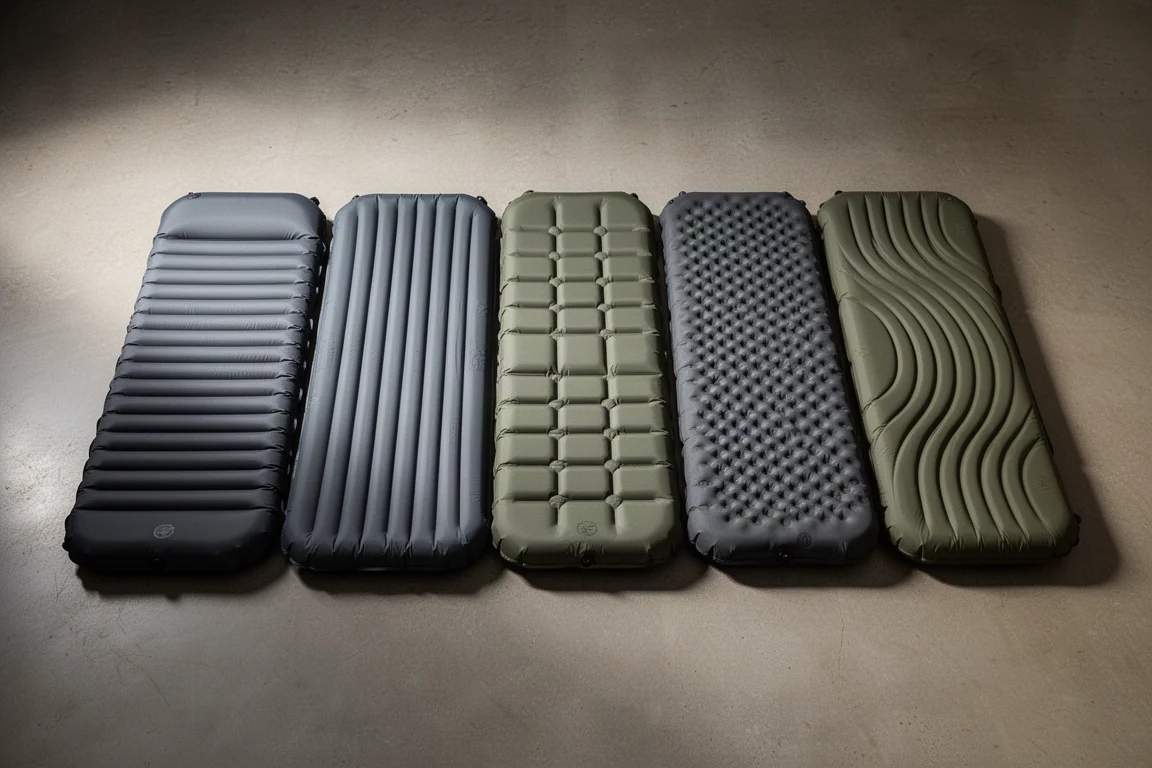
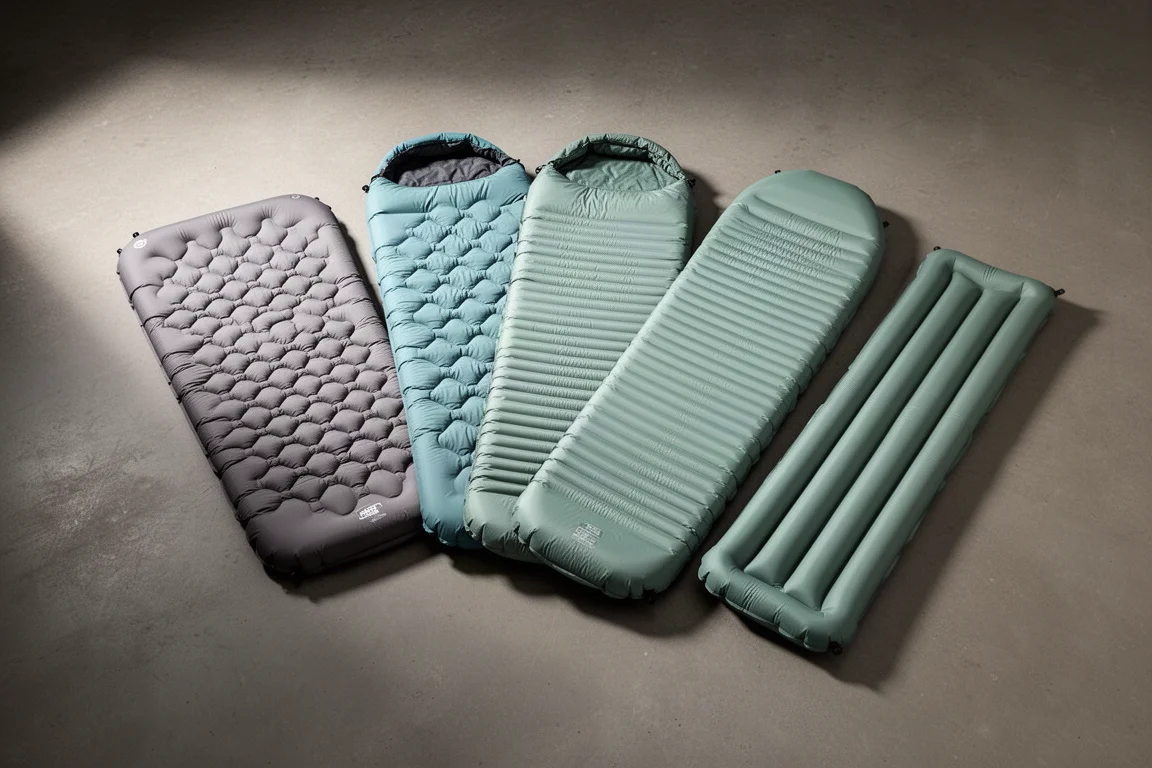
We narrowed a long list down to six pads and slept on each of them for multiple nights, including cold ground around freezing. Three additional sleepers of different body types and sleep positions also tried every pad, and their preferences are noted where they differ from ours. The result is a group that covers side sleepers, back sleepers, heavier sleepers, ultralight travellers, and anyone who simply wants a big, cushy mattress underneath them.
How These Pads Were Compared
Six factors separated these pads from the rest of the market.
Thickness and edge support matter most for heavier sleepers, who can otherwise feel the ground through a hip or shoulder. Baffle design decides how well a pad relieves pressure, and horizontal channels, vertical channels, and raised-pad patterns all behave differently. Warmth was judged both by stated rating and by how each pad actually performed on cold ground. Weight and packed size matter if the pad has to be carried. Valve design turned out to be a bigger deal than expected, because fine-tuning the air inside a pad is how most people dial in comfort. Price was the final filter.
Pads that cannot keep a sleeper warm down to freezing, and pads that sleep noticeably colder than their rating suggests, were left out of this group.
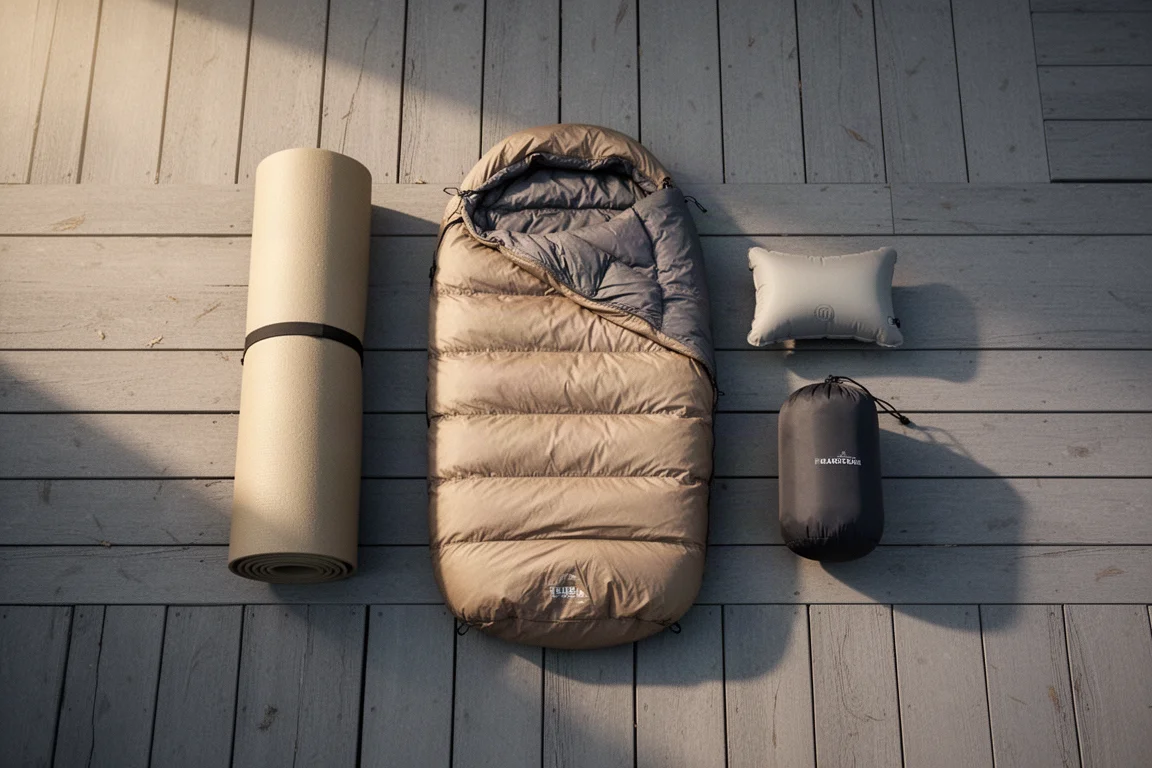
The six pads below run roughly from thickest and cushiest to widest, though the best choice for any individual depends more on sleep position and body type than on the order.
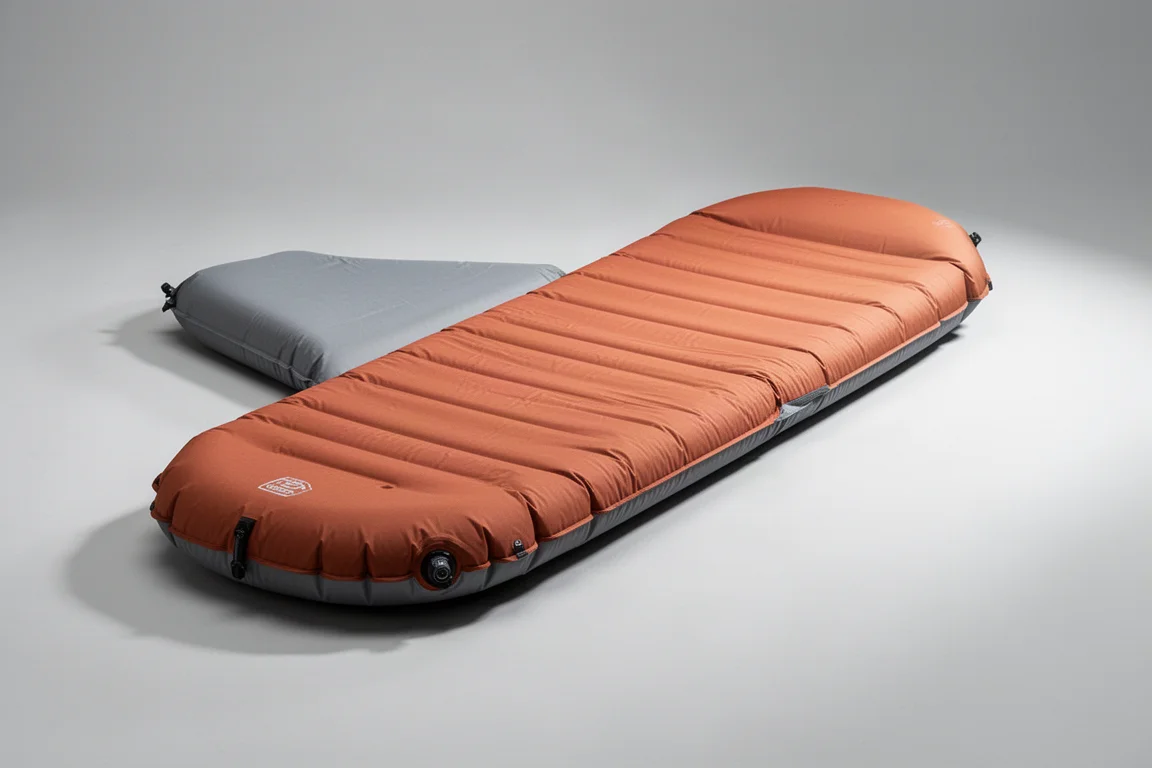
Therm-a-Rest NeoLoft: The Thickest Pad Under a Kilogram
The NeoLoft is the thickest sleeping pad on the market that still weighs under a kilogram, and at 4.6 inches it is the deepest pad we have tested. Therm-a-Rest reaches that depth with a sidewall construction rather than simply adding air volume, which keeps the pad supportive right out to the edges instead of sloping away or collapsing when you roll toward the side. Raised sections along the edges help keep you centred through the night.
The top fabric is a stretchy polyester that feels soft against the skin, and that stretch does real work: it adds a measure of pressure relief that a stiff nylon surface would not. Warmth is the surprise here. Thick pads usually struggle to hold a high rating, but the NeoLoft manages an R-value of 4.7 through Therm-a-Rest’s ThermaCapture and Triangular Core Matrix construction, and it stayed plenty warm on cold ground around freezing.
The trade-offs are price and weight. It costs well over $200 and weighs over 800 grams, though it is not the heaviest pad in this group. Comfort is more subjective. The NeoLoft still uses horizontal baffles, which are essential to how it manages warmth and stability but are less kind to side sleepers, since lying on an arm can leave it numb. The stretchy surface and the ability to let some air out help considerably, and because the pad is so deep it tolerates deflation well. Release too much air, though, and it can start to feel balloony. The two-valve layout, one for inflation and one for deflation, also makes small air adjustments fiddly, because it is easy to open the deflation valve too far and dump the whole pad.
It suits heavier sleepers who need depth to avoid bottoming out, and anyone who simply loves a thick, cushy mattress. Two of our three additional sleepers picked it as their favourite.
Exped Ultra 5R: The Lightest and Warmest Option
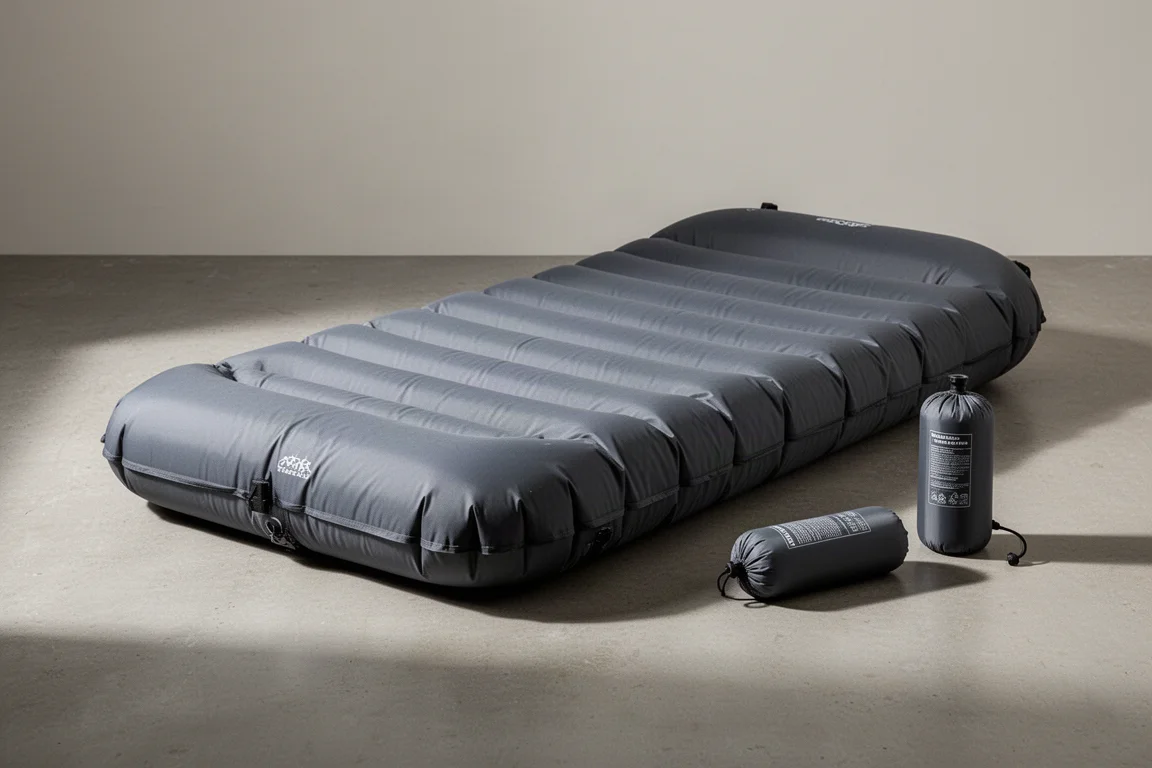
The Ultra 5R is the lightest and warmest pad in this group, a combination that is hard to beat for anyone carrying their sleep system. It has been used well below freezing and stayed toasty, and in practice it sleeps a little warmer than its rating would suggest. If weight matters more than warmth, the Ultra 3R, particularly in the mummy shape, drops more grams while still keeping a sleeper warm down to freezing.
The surface is slightly stretchy and slightly soft, not quite as plush as the NeoLoft but still very comfortable to lie on. The baffles run vertically down the length of the pad, a layout that generally suits side sleepers better than horizontal channels. At three inches it is not a thick pad, but the outer baffles carry a little extra depth, and the whole thing sleeps thicker than the number suggests.
There is little to criticise here. Vertical baffles are not for everyone, so it is worth lying on one before committing. The valves sit on the underside of the pad, and there are two of them, one for inflation and one for deflation; top-mounted valves are easier to reach and easier to fine-tune. And while three inches is plenty for most sleepers, it is not the deepest option in this group.

For most people this is simply a great pad. It becomes the obvious pick for anyone building the lightest possible kit, and it remains warm enough for three-season use and beyond.
REI Helix: The Best Pressure Relief
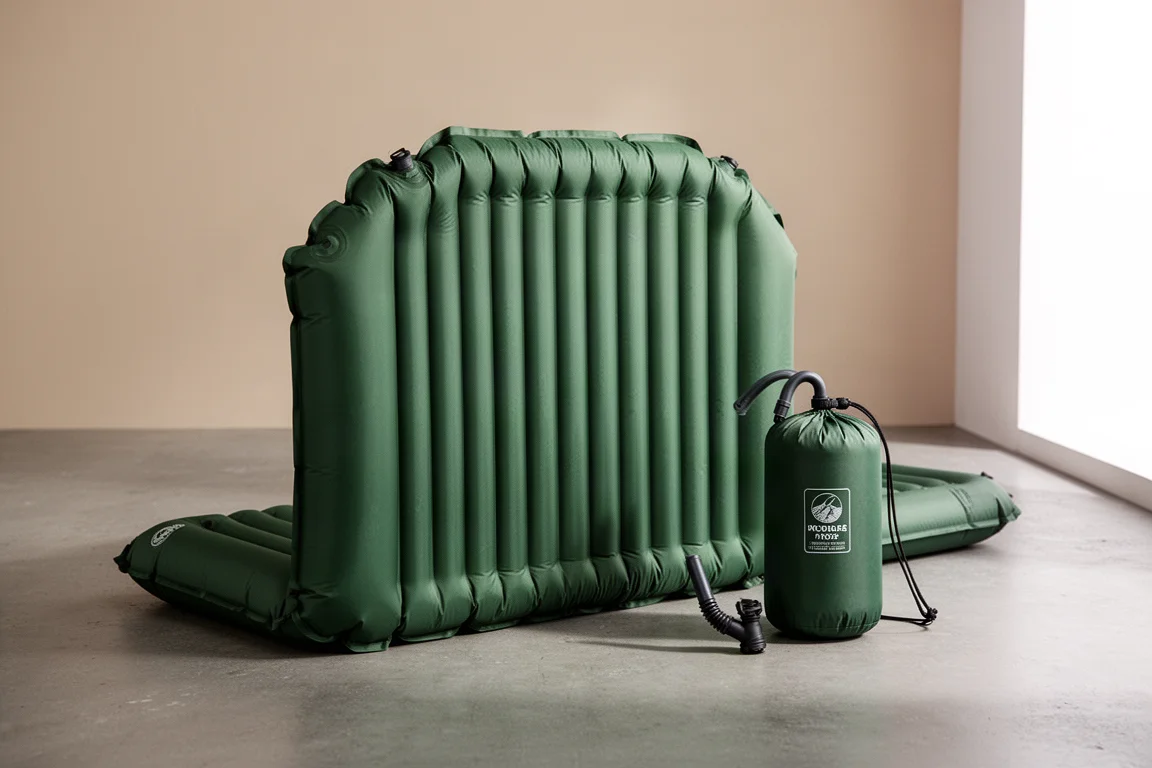
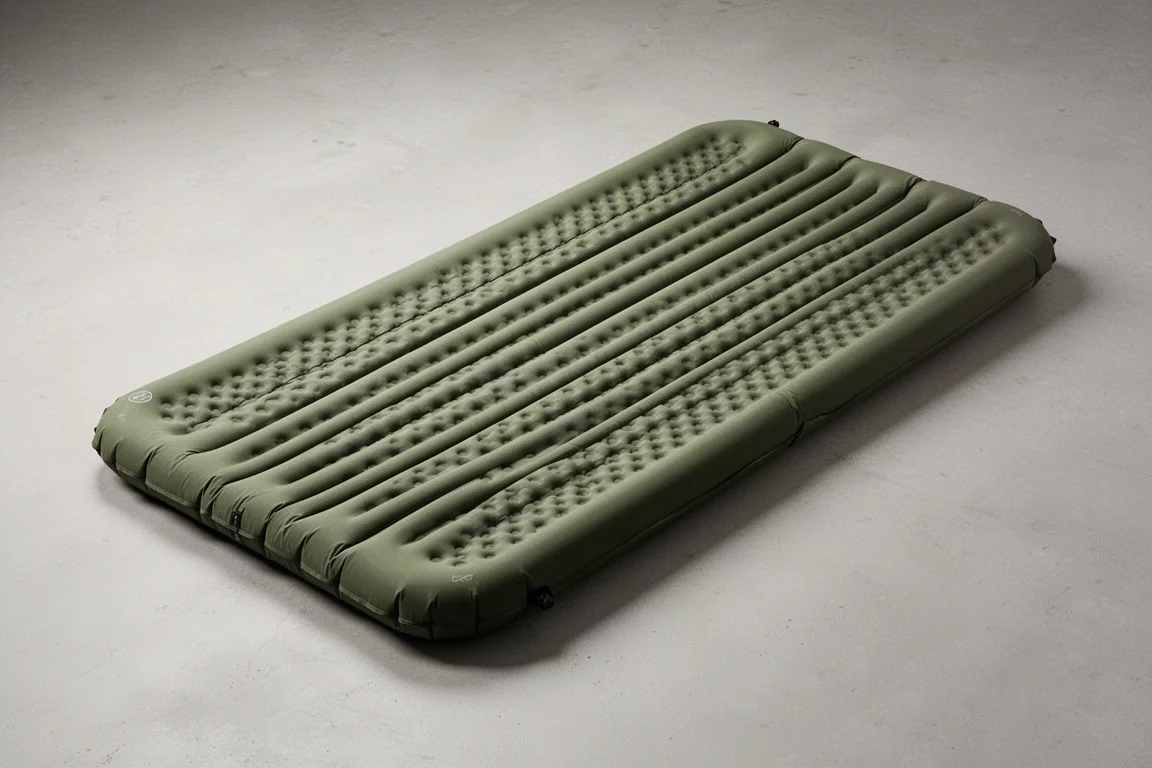
The Helix has been a favourite for years, and it remains the most effective pad in this group at relieving pressure. Its surface is a grid of raised pads separated by deeper recessed channels. Lying on it compresses the raised areas, which behave like small air springs, and because there are so many of those points the relief is spread evenly rather than concentrated. What separates the Helix from other pads using a similar pattern is the height difference between the bottom of the recessed channels and the top of the raised pads. The greater that distance, the more those raised areas compress, and the more pressure comes off hips, shoulders, and arms. It is also a very warm pad, and a very well priced one.
The downsides are real but specific. The valve system is poor: two valves, one for inflation and one for deflation, both mounted on the underside of the pad. It also needs to be inflated firmer than most pads to get the most out of that pressure relief, which runs against the instinct to let air out. At three inches it sleeps thinner than its depth suggests, and heavier sleepers, particularly those over 220 pounds, may feel a hip and shoulder reaching the ground. It is also a pad that rewards a full night of use before you judge it.
Zenbivy Flex Air: Softer Surface and a Better Valve
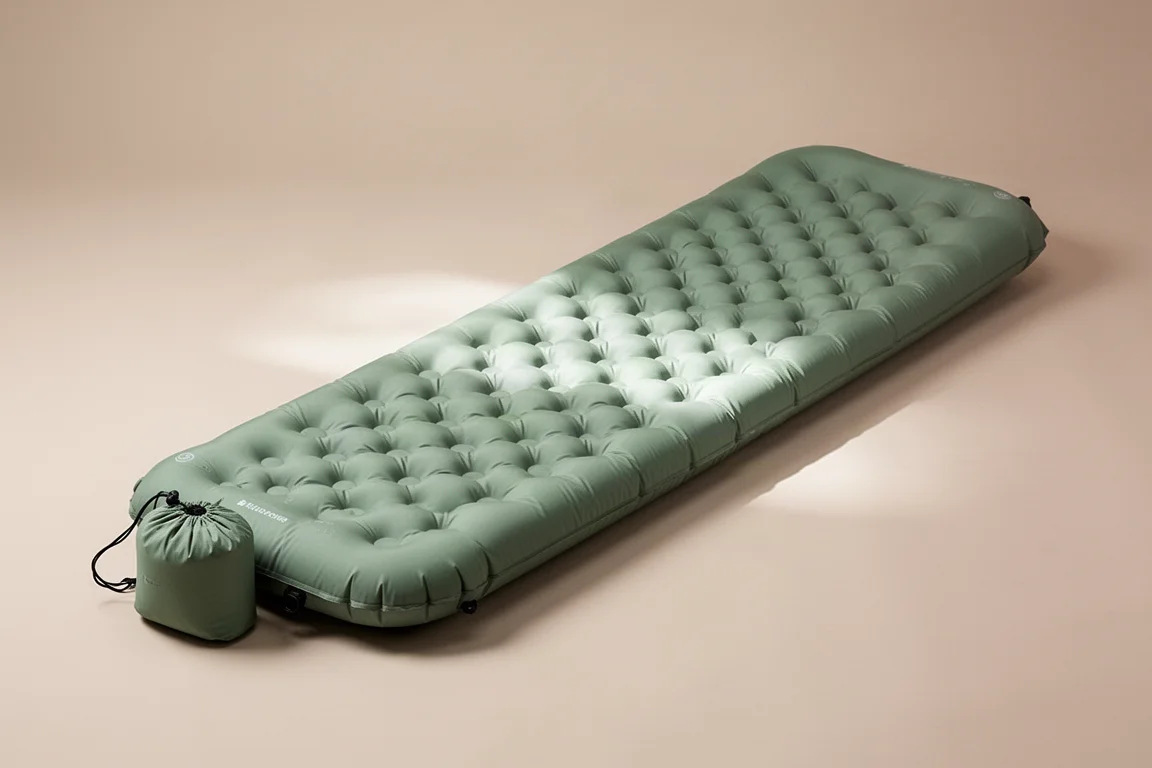
The Flex Air uses a baffle pattern close to the Helix’s, and the differences between the two are what matter. The valve is a two-way inflate and deflate design mounted on top of the pad, which makes adjusting the air inside genuinely easy, including while you are lying on it. The top fabric is stretchier and softer than the Helix’s, a meaningful difference if you sleep directly on the pad rather than in a base layer.
Pressure relief is very good but a step behind the Helix, because the height difference between the recessed channels and the raised pads is smaller. It shares the Helix’s other weakness as well: it feels thin under a heavier sleeper, and bottoming out is possible.
It is the right choice for anyone who likes the idea of the Helix but wants a softer, stretchier surface and a valve that is actually pleasant to use.
NEMO Quasar 3D: Supportive for Back Sleepers
The Quasar 3D is a pad many people have wanted assessed from a comfort angle, and its strength is support. It uses curved horizontal baffles rather than straight ones, a shape that feels noticeably more comfortable than a conventional horizontal channel, and it adds a raised head section and raised sides. Lying on your back, the pad feels stable and planted in a way that softer, thicker pads do not.
The compromises are weight and warmth. It is the second heaviest pad here, and the least warm: it will keep you comfortable down to about freezing and no further. And although the baffles are curved, they are still horizontal, which makes the Quasar less effective for side sleepers and for pressure relief than the vertical and raised-pad designs elsewhere in this group.
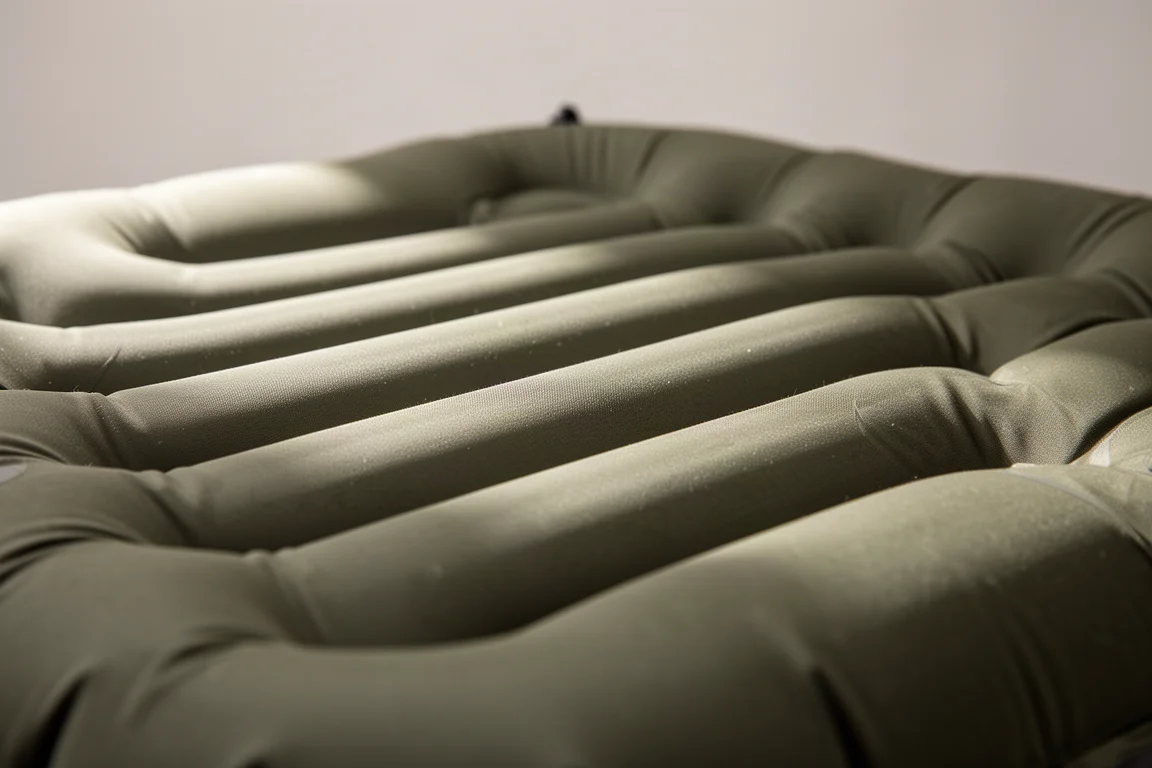
If you sleep on your back, the support is worth the trade-offs, and this is one of the few pads here designed around that position rather than adapted to it.
Big Agnes Boundary Deluxe: The Widest Option
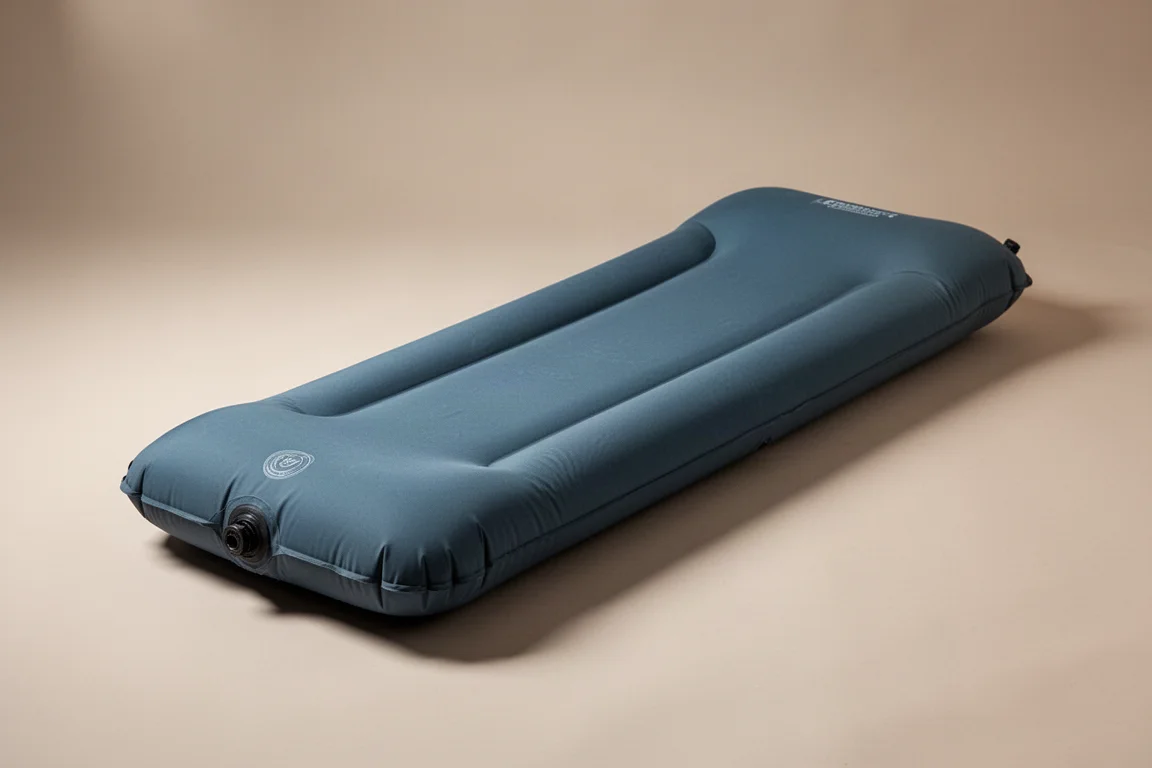
This is the 30-inch wide version of the Boundary Deluxe, and it is the only 30-inch wide pad on the market that is still reasonably light, warm, and comfortable. That width is the whole point. Broad back sleepers stop feeling like they are running out of pad, and side sleepers who curl up with their knees drawn in and their hips pushed back no longer hang off the edge.
Pressure relief comes from a hybrid surface of small dimples and lengthwise vertical channels. It is not as effective as the Helix or the Flex Air, but it is better than a straightforward vertical-baffle pad. The valve sits on top of the pad, where it should. Warmth is dependable: the Boundary Deluxe uses synthetic fill insulation and sleeps as warm as its rating suggests, which has not always been true of pads that rely on reflective insulation.
The obvious cost is weight. At over a kilogram it is the heaviest pad in this group. It is also wide enough that it may not fit in many one-person tents, and it can crowd a two-person tent if both occupants use one or if it is paired with a 25-inch wide pad. The top fabric is not as soft as the best here, though that matters less if you sleep in a base layer. It was the clear favourite of one of our additional sleepers.
Buying Advice: Matching a Pad to Your Sleep Style
Start with how you sleep, not with the spec sheet.
Side sleepers under about 220 pounds get the best results from a raised-pad surface, because that is where pressure relief is strongest. The REI Helix leads here, and the Zenbivy Flex Air follows closely with a softer surface and a better valve. Heavier sleepers, and anyone who wants a genuinely deep, cushy mattress, should look at the Therm-a-Rest NeoLoft, which has the depth to stop a hip or shoulder from reaching the ground. Back sleepers should look at the NEMO Quasar 3D for its support and raised head section. Sleepers who are broad across the shoulders, or who curl into a fetal position, will get the most from the 30-inch Big Agnes Boundary Deluxe. And anyone counting grams should start with the Exped Ultra 5R, which is both the lightest and the warmest pad here.
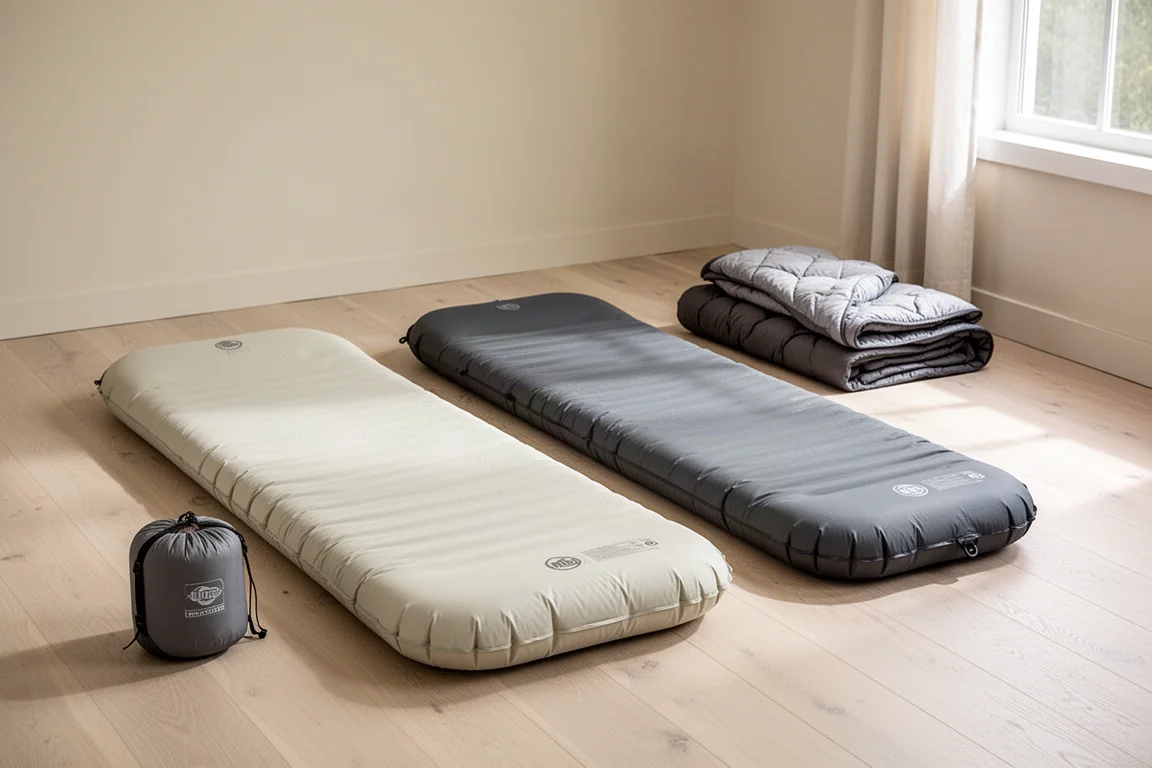
Two practical points are worth remembering. First, almost every pad here can be fine-tuned by letting out a little air, and thicker pads tolerate that better than thin ones; a pad that feels firm on the shop floor is often not the pad you want at 2 a.m. Second, pay attention to the valve. Being able to adjust the air inside a pad without releasing all of it is a small detail that affects comfort every single night.
Warmth deserves a caution as well. A stated rating is not a guarantee, and some pads that look impressive on paper sleep colder than their numbers promise. Every pad in this group has been used on cold ground and can be trusted to keep a sleeper warm down to freezing.
Conclusion
There is no single most comfortable sleeping pad, because comfort depends on how you sleep and how much you weigh. What this group does offer is a clear match for almost every sleeper.
The REI Helix remains our top comfort pick, thanks to pressure relief that nothing else here quite matches. The Therm-a-Rest NeoLoft is the other standout, and the pad to choose if you want the deepest, cushiest surface available under a kilogram, along with warmth that holds up around freezing. Beyond those two, the right answer is simply the one that fits your sleep position: the Quasar 3D for back sleepers, the Boundary Deluxe for anyone who needs width, the Flex Air for a softer surface and a better valve, and the Ultra 5R for anyone who has to carry it.
Further reading
Related Reviews
Sleeping Pads
Best Backpacking Sleeping Pads 2026: Nine Pads Rated on Price, Comfort, Warmth, and Weight
Nine backpacking sleeping pads compared on price, comfort, warmth, and weight, from a $65 summer pad to a year-round option rated at R-7.3.
Sleeping Pads
Best Backpacking Sleeping Pads: Comfort, Warmth, and Weight Compared
A practical comparison of the Nemo Quasar 3D, Therm-a-Rest NeoAir XTherm Max, and Big Agnes Rapide SL for backpackers choosing between comfort, warmth, and packed weight.
Sleeping Pads
Best Backpacking Sleeping Pads: Ultralight, Winter, Comfort and Budget Picks
A practical roundup of the sleeping pads that stand out for ultralight weight, winter warmth, pressure relief and value, plus three popular pads that fell short.