High-End Audio
Morance Link 10N vs NAD M66: Two Premium Streaming Preamps Compared
A detailed comparison of two high-end streaming preamplifiers: the purist Morance Link 10N and the DSP-equipped NAD M66. We break down build, sound, features, and value.
Introduction
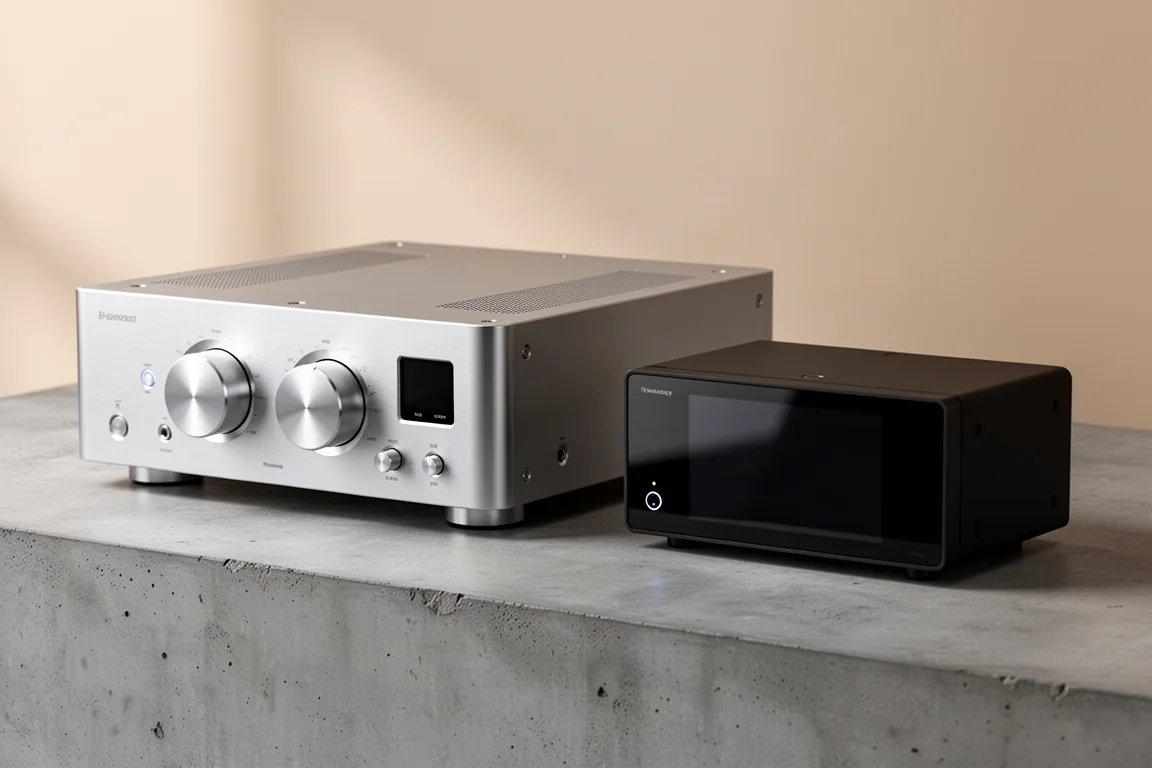
The Morance Link 10N and the NAD M66 are two high-end streaming preamplifiers that approach the category from opposite directions. The Link 10N costs $14,000 in the US, exactly twice the price of the NAD M66. That price gap buys a fundamentally different design philosophy: the Morance prioritizes signal purity with no room correction or DSP bass management, while the NAD embraces digital intelligence with Dirac Live room correction and sophisticated bass management for up to four subwoofers.
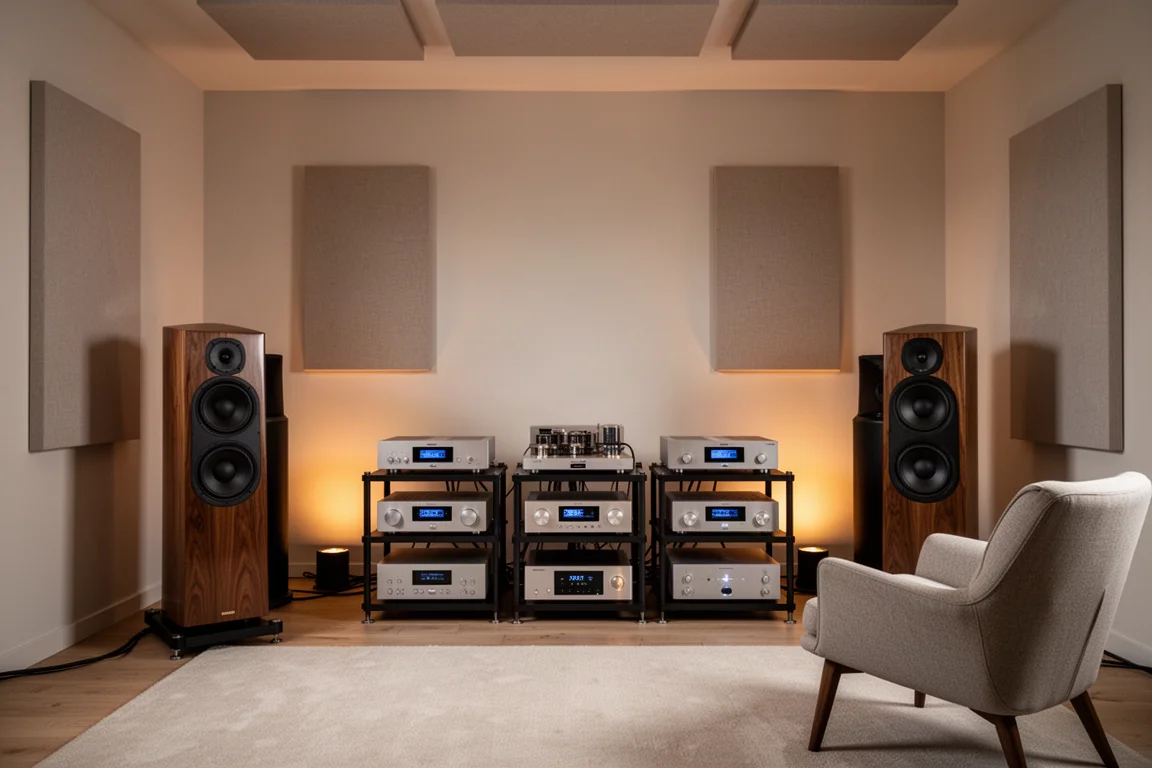
This comparison examines build quality, features, sound character, and real-world value to help you decide which approach makes more sense for your system and your room.
Evaluation Criteria
We assessed both preamps on build and materials, connectivity and streaming support, sound quality with and without DSP, and the practical value of their respective feature sets. The goal is to clarify who each unit is for, not to declare a universal winner.
Morance Link 10N: Purist Streaming Preamp
The Morance Link 10N is a substantial piece of equipment. At 33 kg (73 lb), it weighs more than four times the NAD M66’s 8 kg (17 lb). That mass comes from two toroidal transformers, one dedicated to the digital boards and one to the analog boards, plus copper shielding in a triple-layer chassis and isolated sub-enclosures. Inside, separate compartments physically shield circuit blocks from electrical noise.
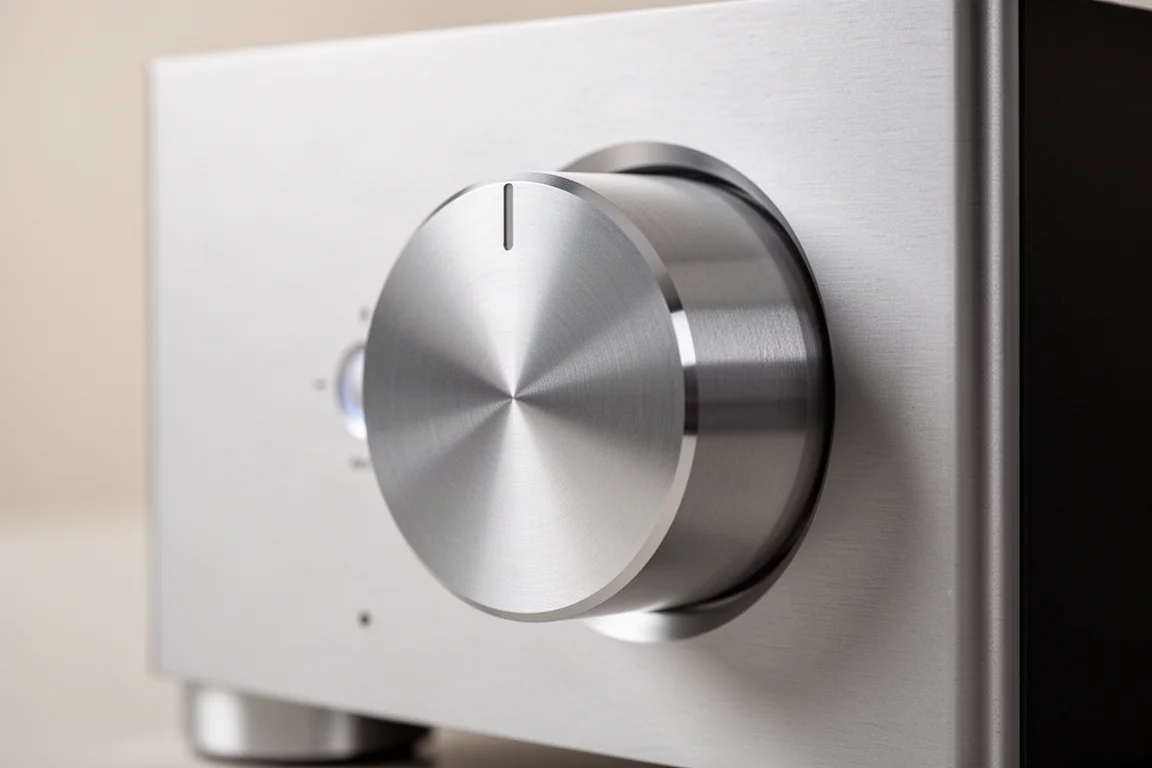
The Link 10N avoids off-the-shelf DAC chips. Instead, it uses the Morance musical mastering decoder, which upsamples all signals to DSD 256 before passing them through a low-pass filter. Morance also avoids op amps where possible, substituting proprietary HDAM (hyperdynamic amplifier module) circuits built from discrete components. The result is a streaming preamp that delivers a more substantial, refined, and complete sound than the NAD M66 when both are run without DSP. The Link 10N supports balanced and single-ended connections, HDMI ARC, coax, optical, and USB, along with dedicated line-level outputs. Its streaming board supports Roon Ready, Apple AirPlay 2, Spotify Connect, Tidal, and Qobuz. The front panel uses a non-touch screen with twin D-pad controls, but the aluminium rotaries feel significantly more luxurious than the NAD’s plastic knob.
NAD M66: DSP-Driven Streaming Preamp
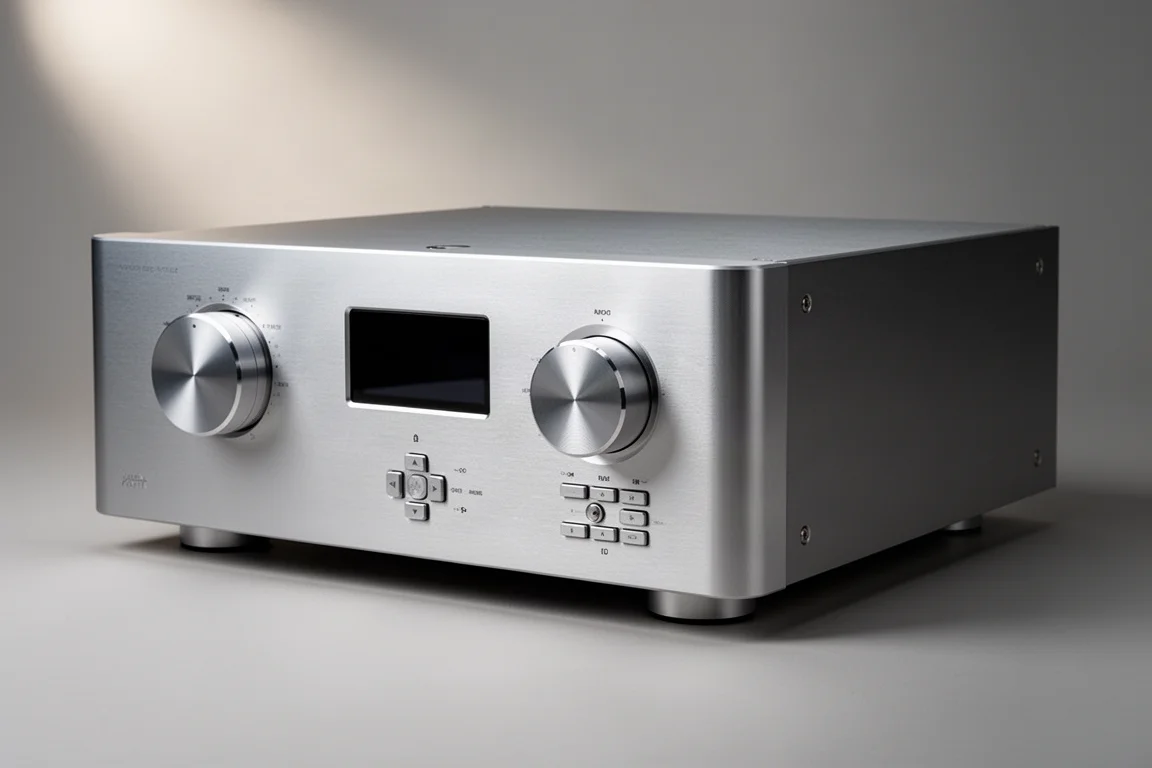
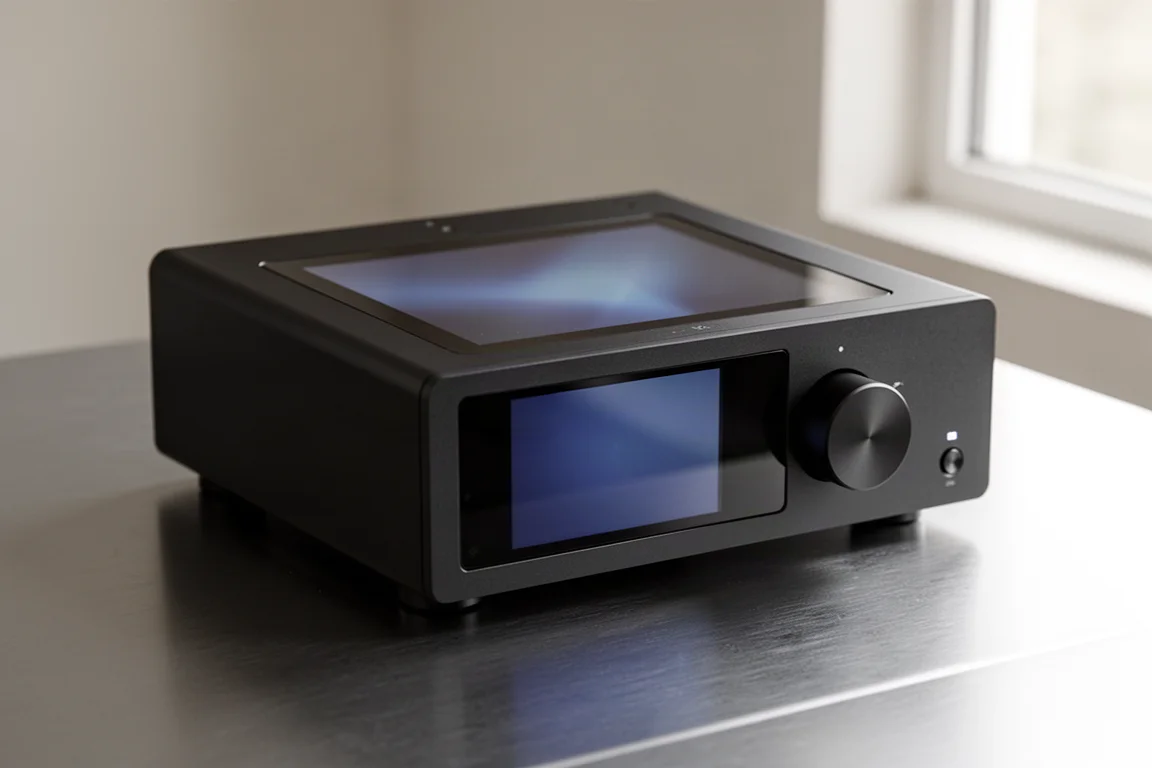
The NAD M66 takes a different path. It weighs 8 kg and features a contemporary touchscreen that feels responsive and smartphone-like. Its DAC is built around an ESS 938 Pro chip, a widely used component in high-end audio. The M66’s key advantage is its digital feature set: Dirac Live room correction, which can tame bass resonances and correct speaker group delay issues, and sophisticated bass management that supports up to four subwoofers.
The M66 offers balanced and single-ended connections, HDMI ARC, coax, optical, USB, and adds AES/EBU. Its streaming board supports Roon Ready, Apple AirPlay 2, Spotify Connect, Tidal, and Qobuz. The companion app handles settings and occasional tweaks. Without DSP, the M66 sounds leaner and more forensic than the Link 10N, with less body and connective tissue. However, engage Dirac Live or add a properly integrated subwoofer, and the gap narrows considerably.
Sound Quality Comparison
In a controlled comparison using balanced connections into the same power amplifier and floorstanding speakers, the differences were immediate but not night and day. Through the Link 10N, vocal performances carried proper chest resonance and a sense of wholeness. The M66 presented more forensic detail but lacked the connective tissue that makes music sound like a performance in a room. On sparse indie tracks, the NAD could sound lean, while the Morance added weight and meaning. Even on bass-heavy material, the NAD could not match the Morance’s foundational solidity.
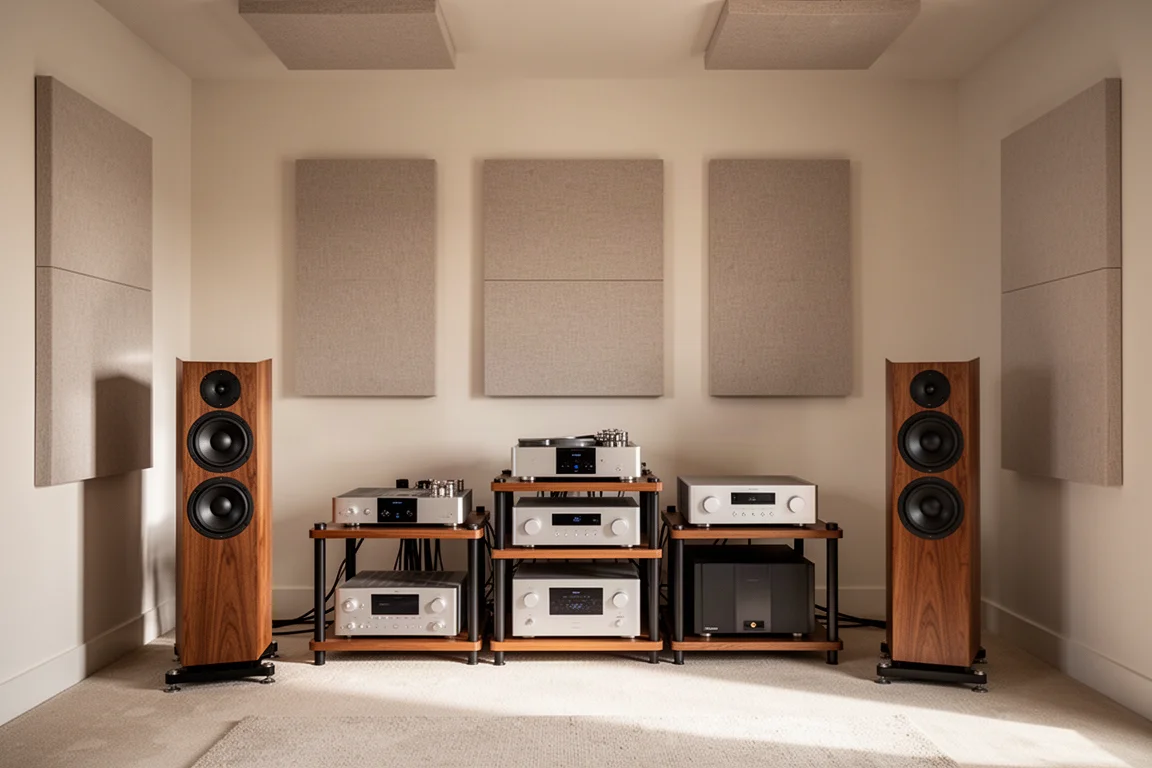
These differences stem from the conversion philosophy and circuit design. The NAD relies on an off-the-shelf DAC chip and conventional op amps, while the Morance uses its musical mastering decoder, discrete HDAM circuits, dual toroidal transformers, and stricter board isolation. The Link 10N keeps music together while revealing just as much detail, whereas the M66 pulls music apart to examine the pieces.
Real-World Considerations
The M66’s digital intelligence can be a decisive advantage in typical listening rooms. Most rooms suffer from low-frequency standing waves, and many listeners need help below 40 Hz. Dirac Live and multi-subwoofer bass management can address these issues in ways the Link 10N cannot. The Link 10N offers only a single RCA subwoofer output with a variable low-pass filter adjustable from 40 to 120 Hz in 20 Hz increments, with no DSP crossover or phase adjustment. That is a courtesy, not a full integration solution.
For listeners with well-treated rooms, or those who prefer to avoid DSP entirely, the Link 10N’s purist approach pays off. For everyone else, the M66’s room correction and bass management may matter more than analog purity.
Buying Advice
The NAD M66 remains the smarter purchase for most real-world situations. It costs half as much, offers superior digital features, and its sound quality improves significantly when its DSP is engaged. If your room has acoustic challenges, if you need to integrate multiple subwoofers, or if you simply want the best value in high-end streaming, the M66 is the clear choice.
The Morance Link 10N justifies its premium for a specific audience: listeners with good rooms or acoustic treatment, those who trust discrete components over op amps, and those who prefer not to have their DAC built around an off-the-shelf chip. The Link 10N succeeds by doing less, but doing it better. It delivers a more substantial, refined sound that makes you forget about the gear and remember why you love music. At twice the price, it offers what might be nearly twice the musical satisfaction, provided you measure performance in musical engagement rather than feature count.
Conclusion
Both preamps are exceptional, but they serve different priorities. The NAD M66 is a feature-rich, future-proof choice for most listeners, especially those who need room correction and subwoofer integration. The Morance Link 10N is a purist statement for those with the right room and the budget to prioritize signal purity above all. Your room and your listening habits will determine which is the better investment.
Further reading
Related Reviews
High-End Audio
Accuphase E-3000 Review: A Class AB Integrated Amplifier Built to Last
The Accuphase E-3000 is the entry point into a legendary Japanese high-end line. Here is how it sounds, how it is built, and who should consider it.
High-End Audio
Arreté Floorstanding Speakers and Benchmark HPA2: A Premium Pairing Worth Hearing
A close look at how Arreté floorstanding speakers and Benchmark HPA2 power amplifiers pair up, what each component contributes, and what to weigh before buying.

High-End Audio
Aurelia Acoustics MRB1 Review: Marble Cabinets and a Big, Lively Sound
The Aurelia Acoustics MRB1 pairs a marble cabinet with Accuton ceramic drivers and a lively, spacious sound that stays easy to listen to. Here is what to know before buying.