Subwoofers
Monoprice THX 8-Inch Subwoofer Review: Compact Bass for Small Rooms
A compact, THX-rated 8-inch subwoofer with switchable sealed and ported modes, measured output limits, and honest guidance on which rooms it suits.
Introduction
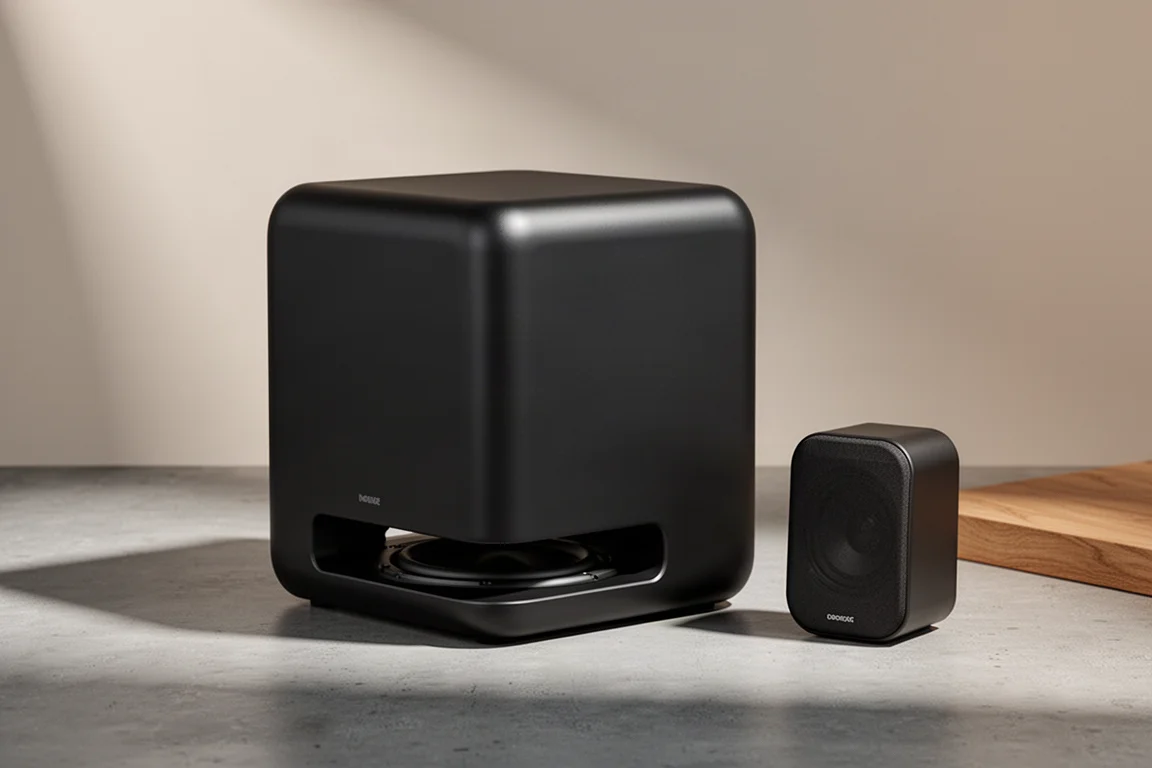
An 8-inch subwoofer is an unusual place to start for anyone chasing deep bass, but it is a very sensible one for anyone without a dedicated theater room. The Monoprice THX 8-inch subwoofer is aimed squarely at that situation: compact spaces, apartment living, and systems where a large cabinet simply is not an option.
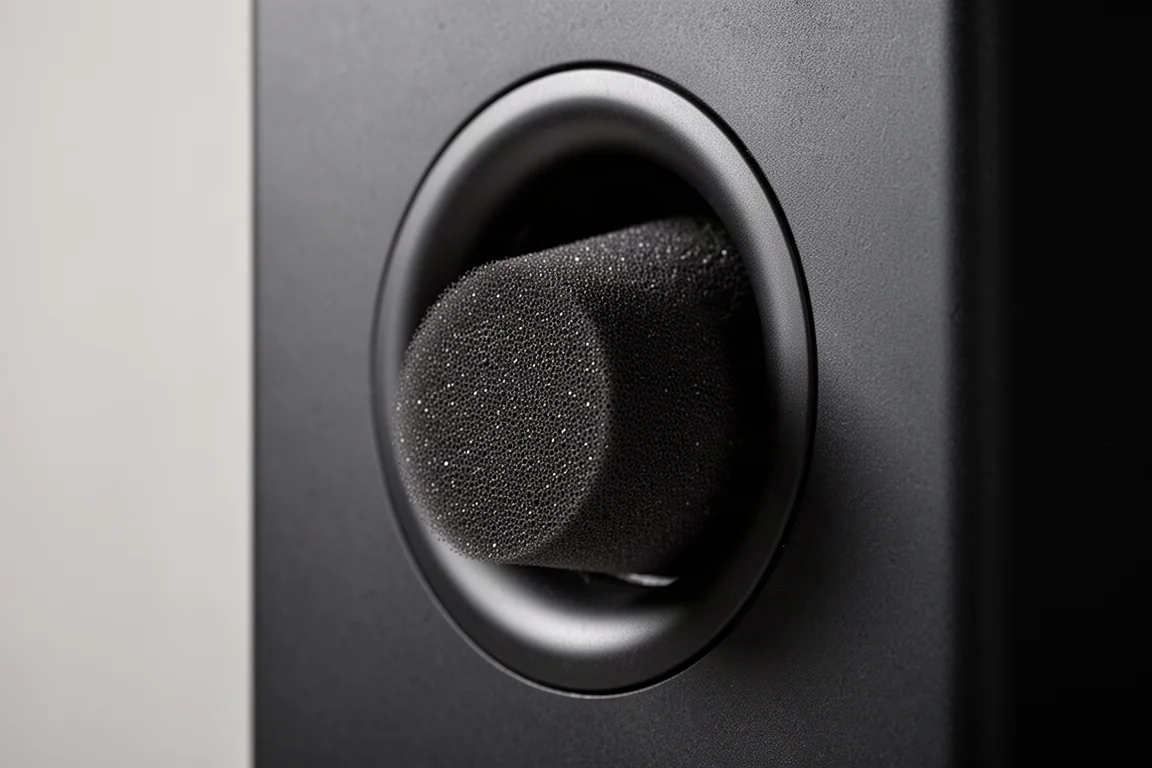
What makes it more interesting than its size suggests is flexibility. It arrives as a sealed design with a foam plug fitted into the port, and that plug can be removed to run the subwoofer ported instead. That single change alters how low it plays, how steeply it rolls off, and how much output it can deliver before its internal limiter steps in.
Who This Subwoofer Is For
This model is THX rated for compact room sizes, which is an accurate description of its intended home: a smaller living room, a bedroom, or an apartment where a 12-inch cabinet would dominate the space. It is small enough to sit discreetly in a room, and it is not finished in gloss black. That detail matters more than it sounds. Gloss cabinets reflect light and can pull attention away from a screen in a darkened room, so a matte finish is simply easier to live with.
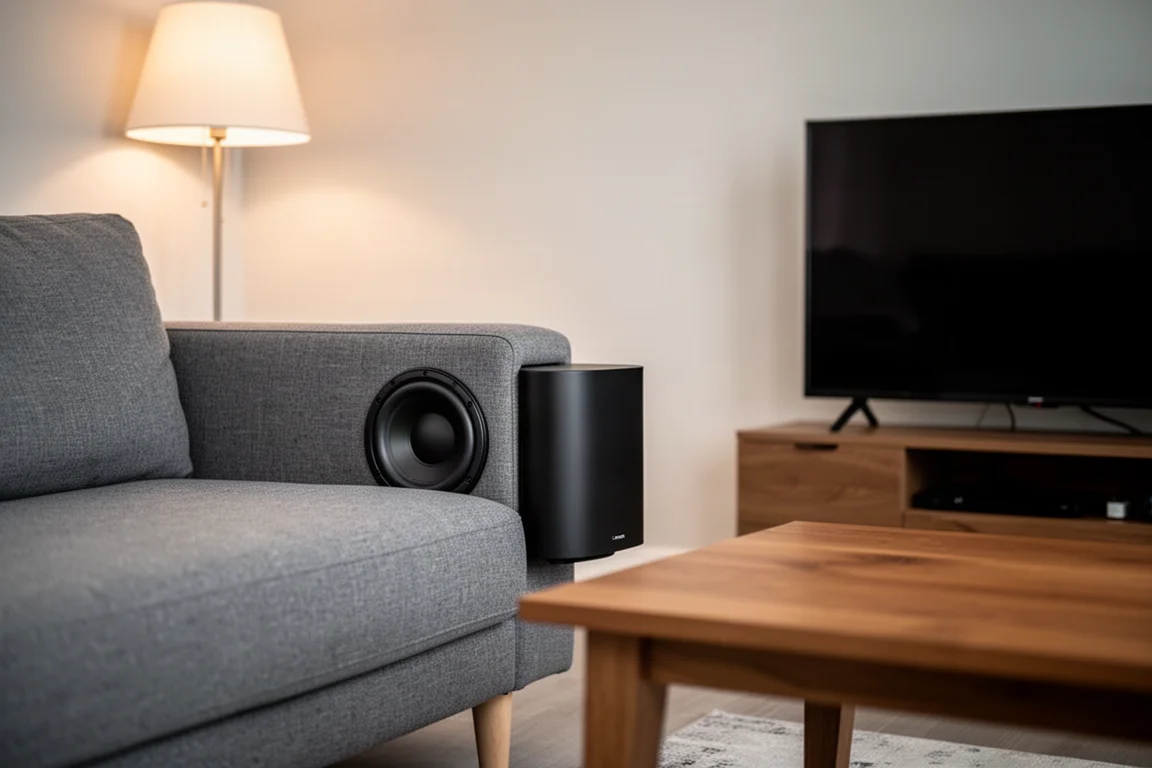
The driver is downfiring, meaning it faces the floor rather than out into the room. That protects the cone from accidental contact and makes the cabinet easier to position without worrying about curious hands or pets. Placement still matters, but the subwoofer itself is forgiving about where it sits.
Design and Build Quality
The cabinet feels solid, with good internal bracing and no obvious weak points in construction. The 8-inch driver uses a stamped steel frame, a poly cone, and a large ferrite magnet on the back. There is nothing exotic in that parts list, but it is sensible for the job, and the driver performs well within the role it was given.
Around the back, the plate amplifier offers more than a single fixed setup. There is a variable crossover, a set of EQ profiles, and a THX mode. In THX mode the crossover is bypassed and the input level is managed by the amplifier itself, so a receiver handles bass management and the subwoofer simply amplifies what it receives. That is the configuration used for the performance figures discussed below, and it is the simplest way to run the subwoofer in a typical home theater system.
Sealed or Ported: What the Measurements Show
Frequency response was measured from 10 Hz to 500 Hz in both configurations, though the practical working range sits well below 200 Hz. Above that point the response rolls off naturally, likely because of driver inductance, so there is little reason to push a crossover much higher.
Ported mode is the louder of the two, sitting roughly 4 to 5 dB above sealed mode for the same input voltage. It also rolls off more steeply below about 40 Hz, and especially below 30 Hz. Sealed mode gives up that output advantage but rolls off more gradually and extends a little lower, with more usable response below 20 Hz.
In-room behavior changes the picture. Expect the subwoofer to reach down to roughly 30 Hz in a typical room, with cabin gain contributing a useful lift at the bottom end. Below that, the rolloff is steep, and no amount of placement will turn this into a 20 Hz specialist.
Placement matters as much as the plug. A ported subwoofer placed close to a wall tends to excite room modes in the 40 to 60 Hz region, which can make bass sound heavy or boomy. A sealed subwoofer generally behaves better right up against a wall. If the cabinet has to sit out in the room, a few feet from the wall, ported mode is often the cleaner option. These are tendencies rather than rules, and some experimentation in the actual room is the only way to know which configuration suits a given space.
Output Limits and Real-World Expectations
Subwoofers below 12 inches are usually limited by the protective limiter in their plate amplifier rather than by distortion. The amplifier will accept a larger input signal but will only deliver so much output, and that ceiling exists to protect the driver from damage and to keep warranty claims in check.
In ported configuration, this subwoofer reaches about 98 dB before roughly 5 dB of compression sets in. In sealed configuration, average output from about 40 Hz upward sits around 84 dB, and with the same compression behavior the practical ceiling lands closer to 93 to 94 dB. Multi-tone distortion stays below roughly 20 dB above 60 Hz, which is not a range where that kind of distortion is likely to be audible, but it provides a useful reference point for future comparisons.
What that means in practice: this subwoofer handles content down to about 40 Hz without difficulty and reaches into the low to mid 30s reasonably well, but not at extreme volume. If genuine 20 Hz output at high levels is the goal, a 10-inch or 12-inch model is the realistic starting point. Running two of these units is another route, and it improves output and consistency across a room without requiring a larger single cabinet.
Things to Consider Before Buying
Expectations are the main thing to manage. This is a compact, value-focused subwoofer, and it is honest about that. It will not pressurize a large room or deliver subsonic effects at reference levels, and buyers who expect that will be disappointed.
The room is the other variable. Measurements taken in isolation say nothing definitive about how the subwoofer will behave in a specific space, because room modes, placement, and any EQ applied by an AV receiver or by the subwoofer’s own processing will shape the result. Room correction or one of the built-in EQ profiles can override much of what the raw data shows, so treat the figures as a baseline rather than a prediction.
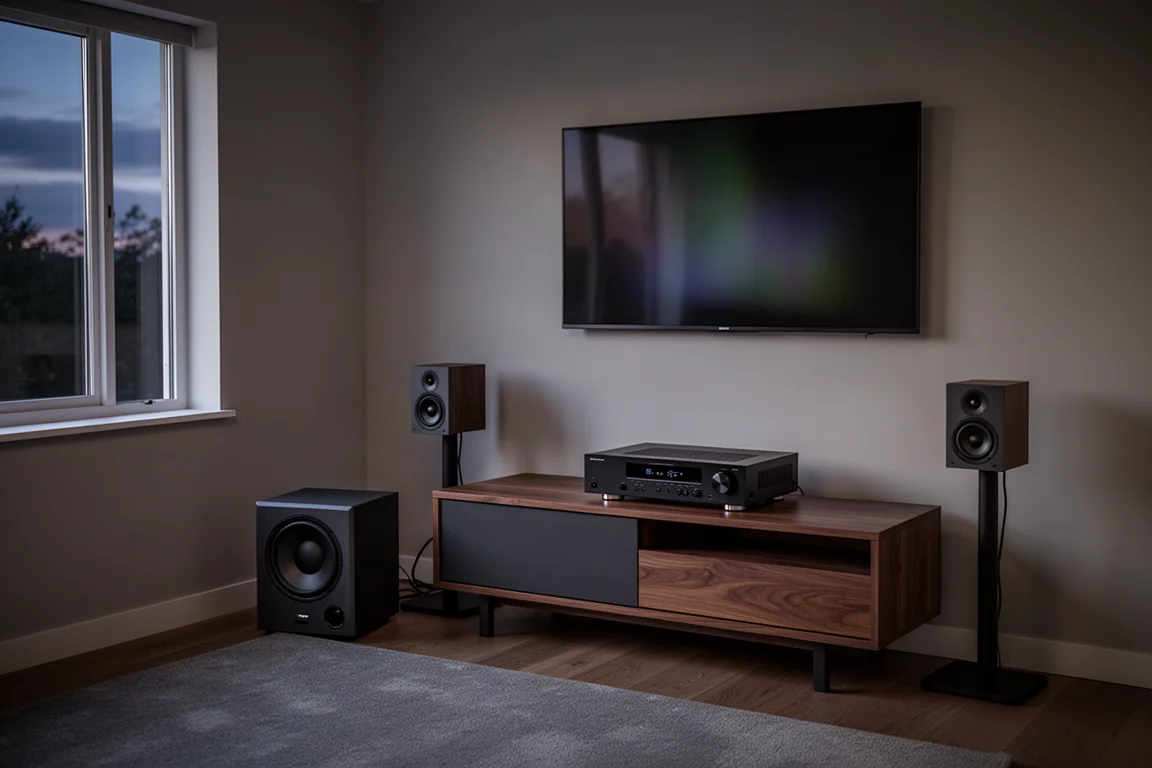
For apartment living, the modest low-frequency extension is arguably a feature rather than a compromise. Bass that stops short of the subsonic region travels through walls less aggressively, which keeps the peace with neighbors while still giving movies and music real weight.
Buying Advice
This subwoofer makes sense when the room is the constraint. Small living rooms, apartments, bedrooms, and secondary systems are where it fits best, and where its combination of compact size, downfiring driver, matte finish, and switchable sealed or ported operation is genuinely useful.
It is also available as a kit with five compact satellite speakers for about $400, which is a straightforward way to build a complete small-room surround system around it.
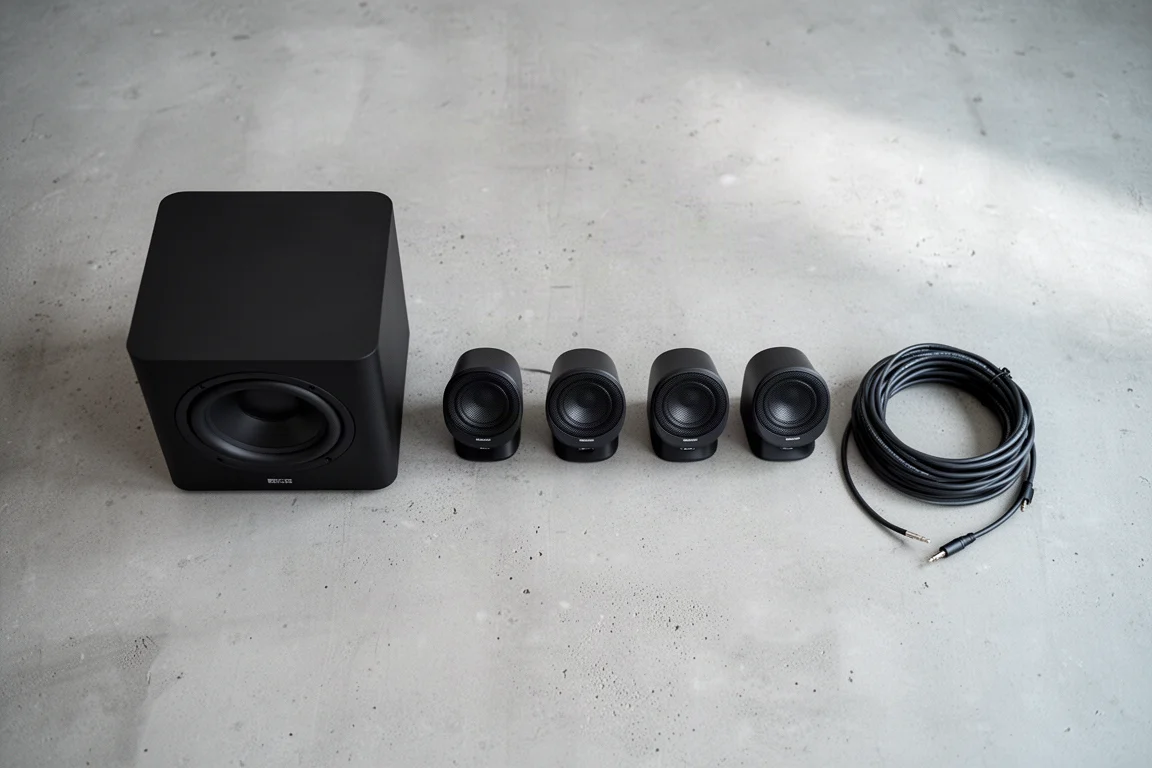
Buyers who only need a single subwoofer and want the lowest possible entry point should watch for promotional pricing, since value is central to the case for this model. Running two units is worth considering for anyone who wants more headroom without moving up to a larger cabinet.
Conclusion
The Monoprice THX 8-inch subwoofer is a well-built, compact subwoofer with a clear purpose: bring real bass to a small room without taking over the space or the budget. Ported mode gives more output, sealed mode gives more extension and easier placement near a wall, and neither will reach 20 Hz at high volume. It is not designed to. Judged against what it is meant to do, it is a sensible choice for anyone building a modest system in a modest room.
Product link
View more details for Monoprice THX 8-inch Subwoofer
This product is mentioned in the review. Check the specifications, options, and compatibility before buying.
View more details for Monoprice THX 8-inch SubwooferFurther reading
Related Reviews
Subwoofers
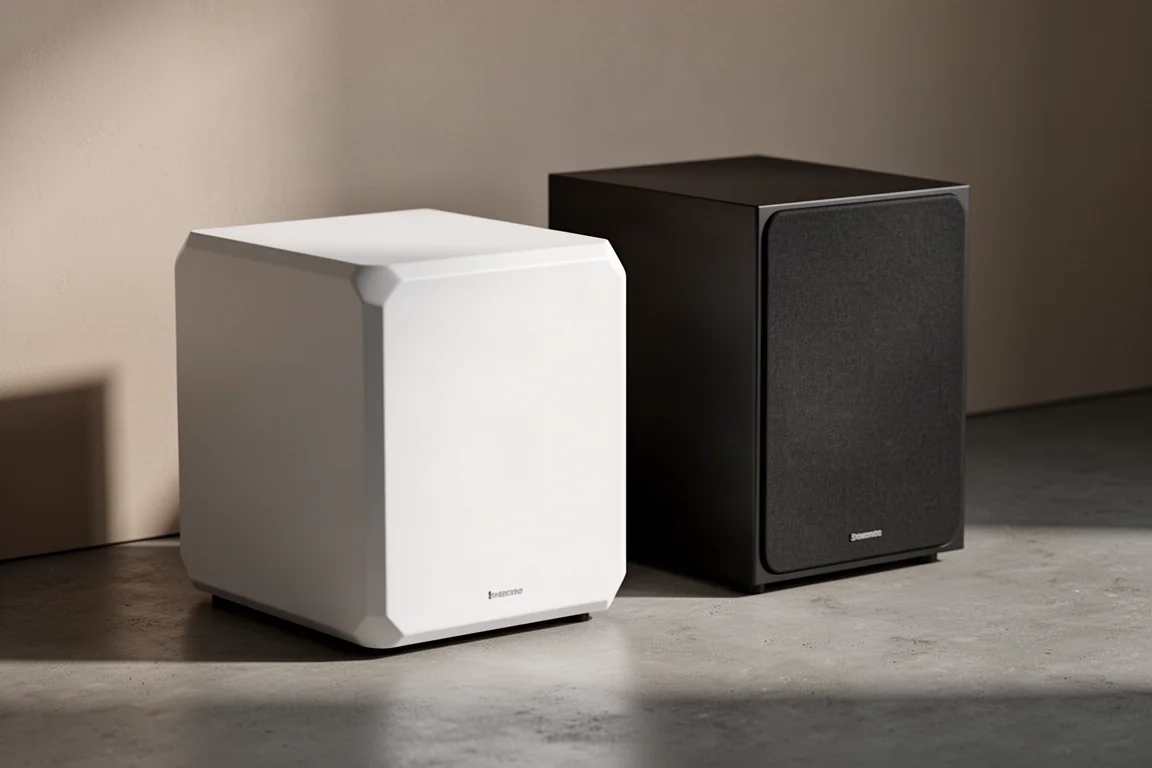
Arendal 1961 Subwoofer 1S Review: Beautiful Build, Modest Punch at $1,000
A sealed $1,000 subwoofer with a gorgeous cabinet, plus three lower-priced alternatives that deliver more impact for movie nights.
Subwoofers
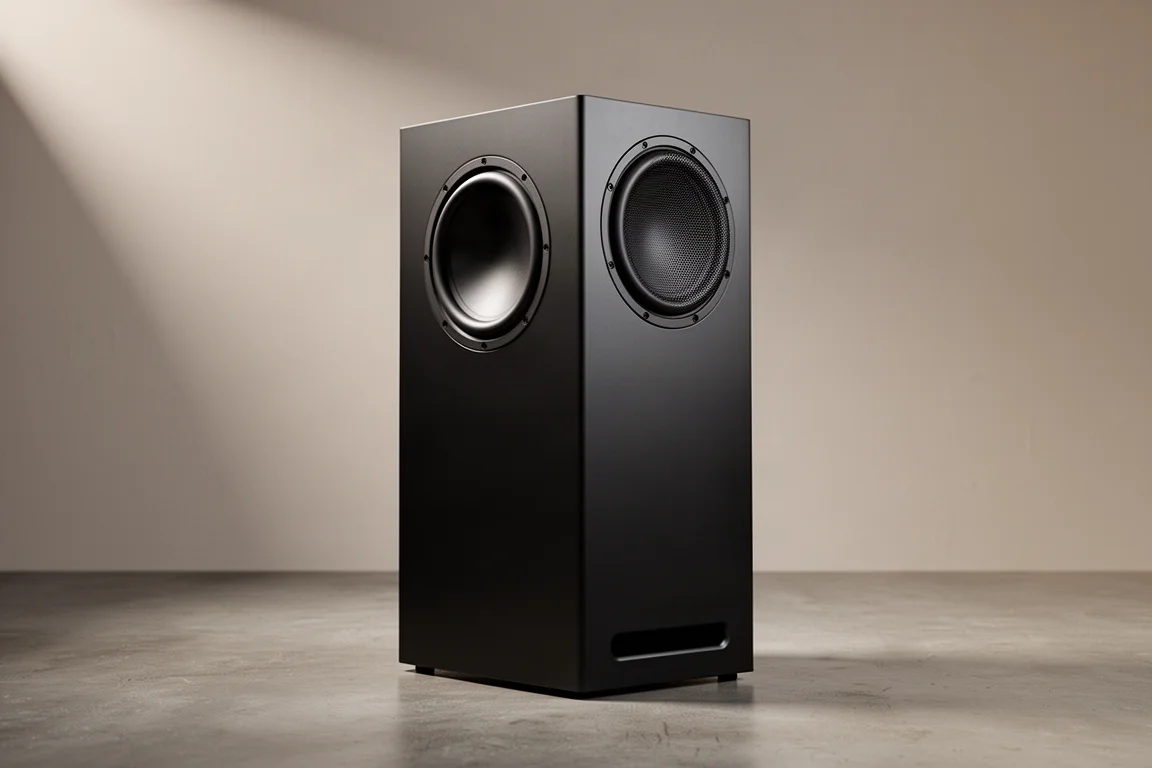
Arendal Sound 1723 2V Subwoofer Review: Dual 13.8-Inch Drivers Under $3,000
A flagship ported subwoofer with dual opposing 13.8-inch drivers, a 1,200W RMS amplifier, app-based DSP, and a 10-year warranty.
Subwoofers
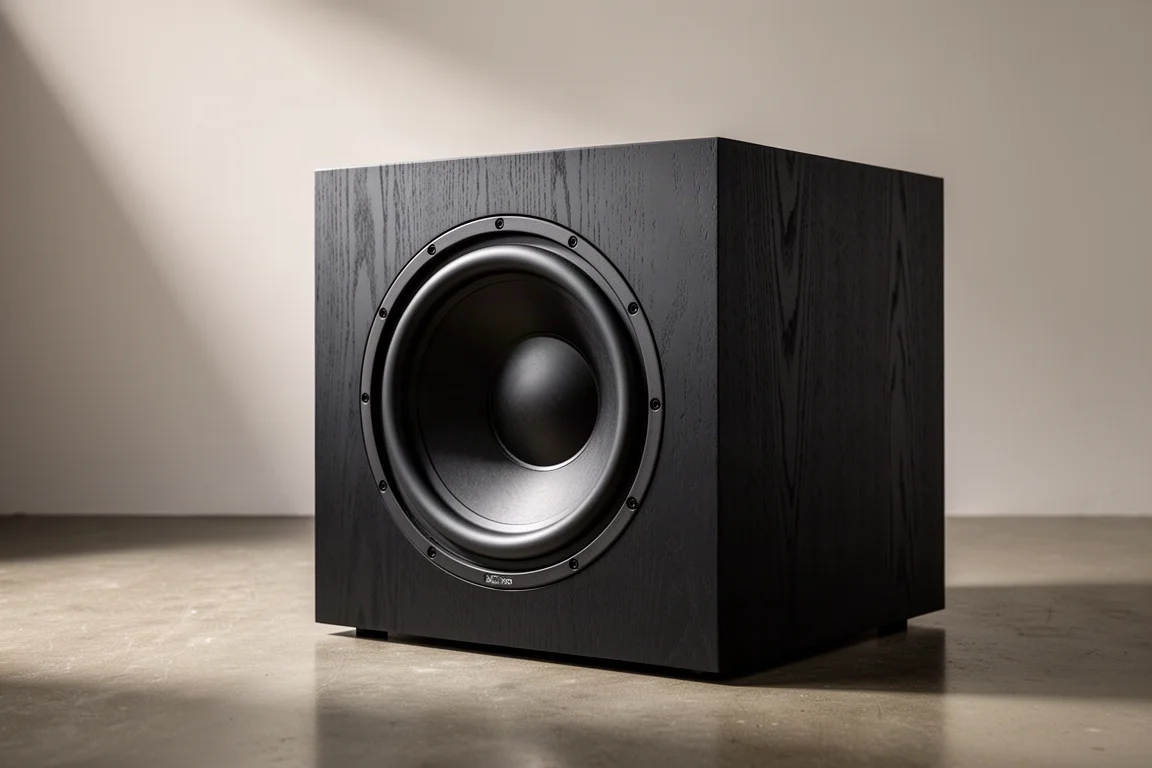
Ascendo 16 Sub Active Sealed Review: Sealed Bass Built on Real Engineering
A close look at the Ascendo 16 Sub Active Sealed, a 16-inch sealed home theater subwoofer with independently verified measurements, a purpose-built driver, and genuinely controlled output.