Home Audio Amplifiers
Monoprice Multi-Channel Amplifiers Compared: 2, 3, and 5 Channel Budget Power
A practical look at Monoprice budget multi-channel power amplifiers, with measured power, noise figures and advice on which channel count fits your system.
Introduction
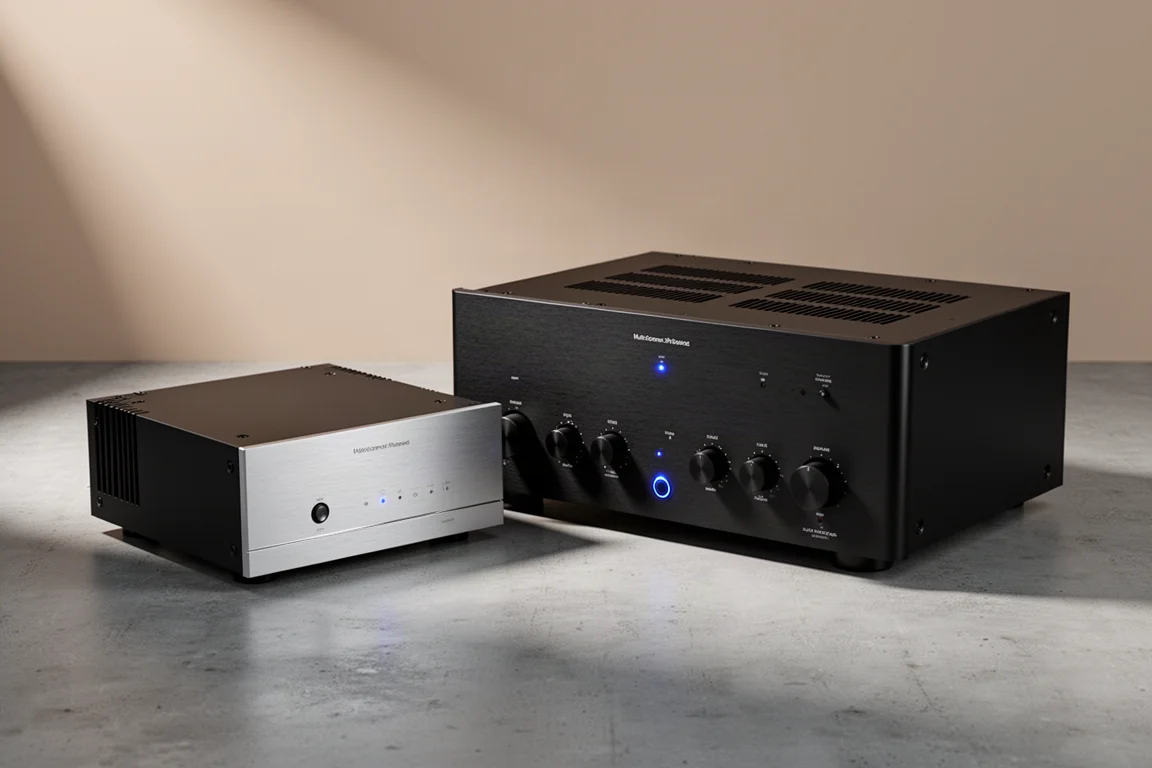
Monoprice has spent years pushing budget audio hardware into territory that usually belongs to premium brands, and its line of multi-channel power amplifiers is one of the clearest examples yet. The two, three and five channel models share a single basic design and a single rated power figure of 90 watts per channel, which keeps the decision simple: how many channels does your system actually need?
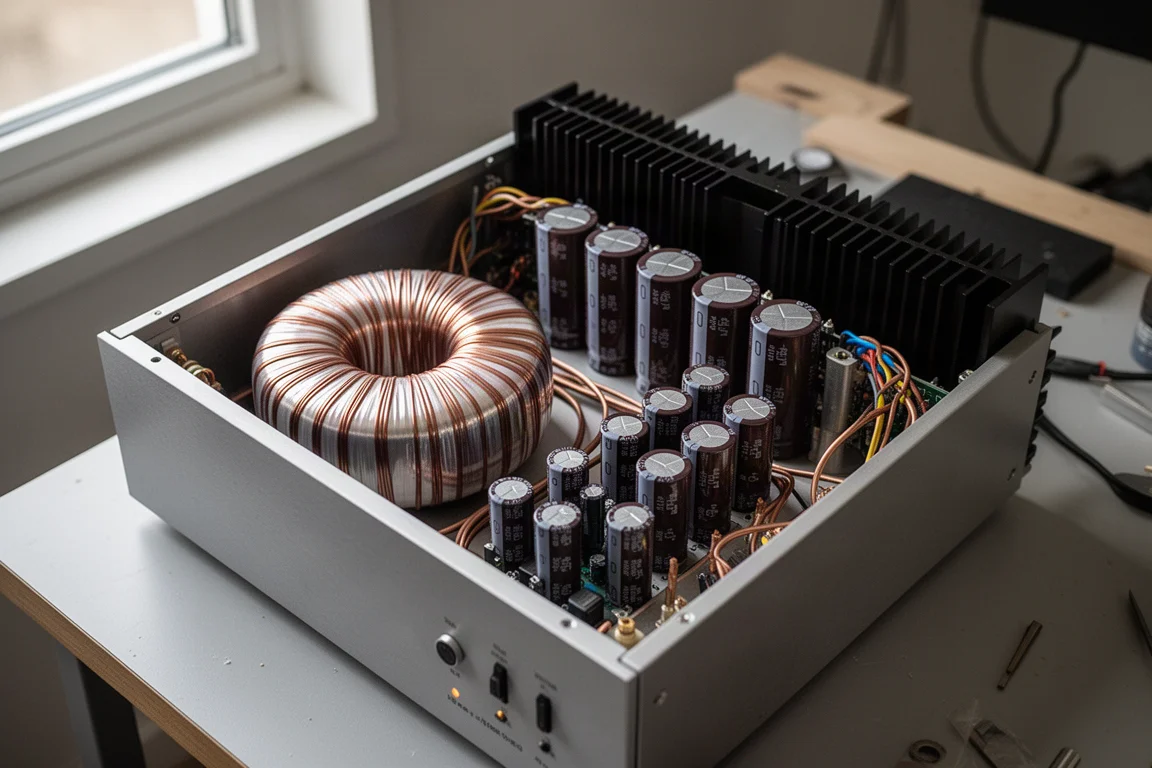
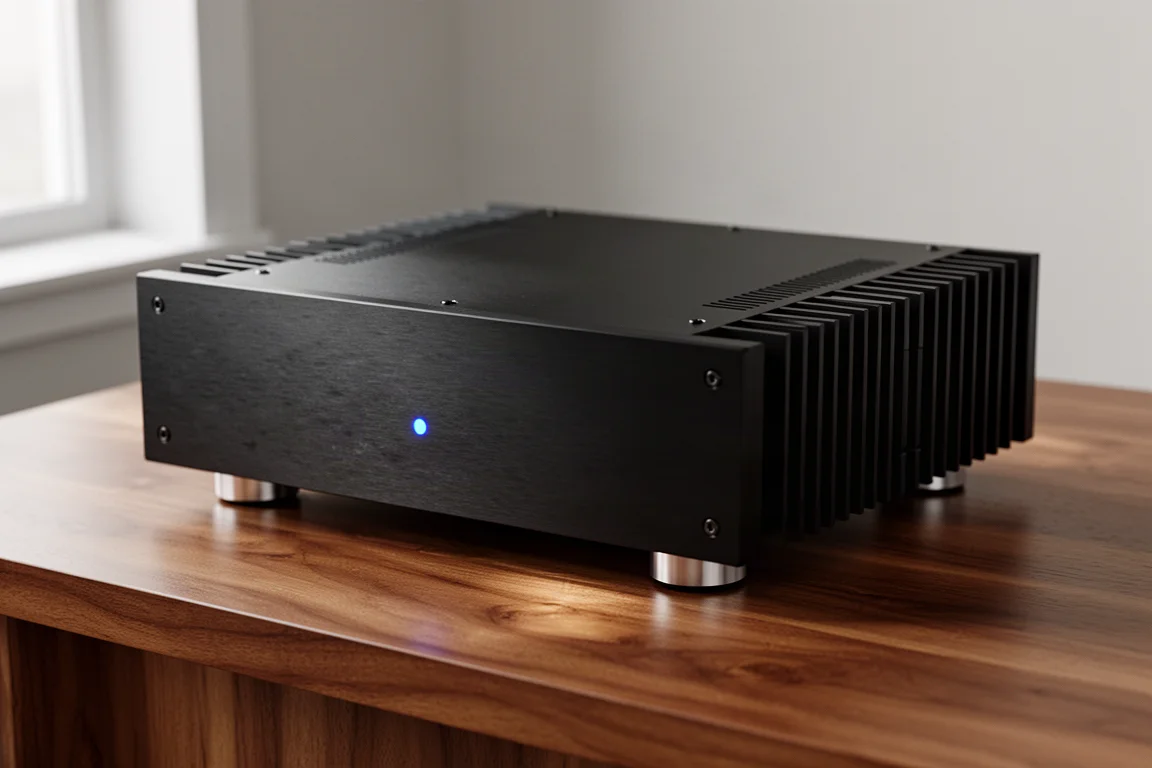
All three are linear Class AB amplifiers built around a toroidal transformer, a substantial heat sink and cooling fans that spin up briefly at startup. Inside, you get generous power supply capacitors: two 10,000 microfarad, 63 volt capacitors in the two-channel model, and four of them in the five-channel version. The chassis is plain but tidy, with a blue indicator when the amplifier is powered correctly and a red one if a fault occurs.
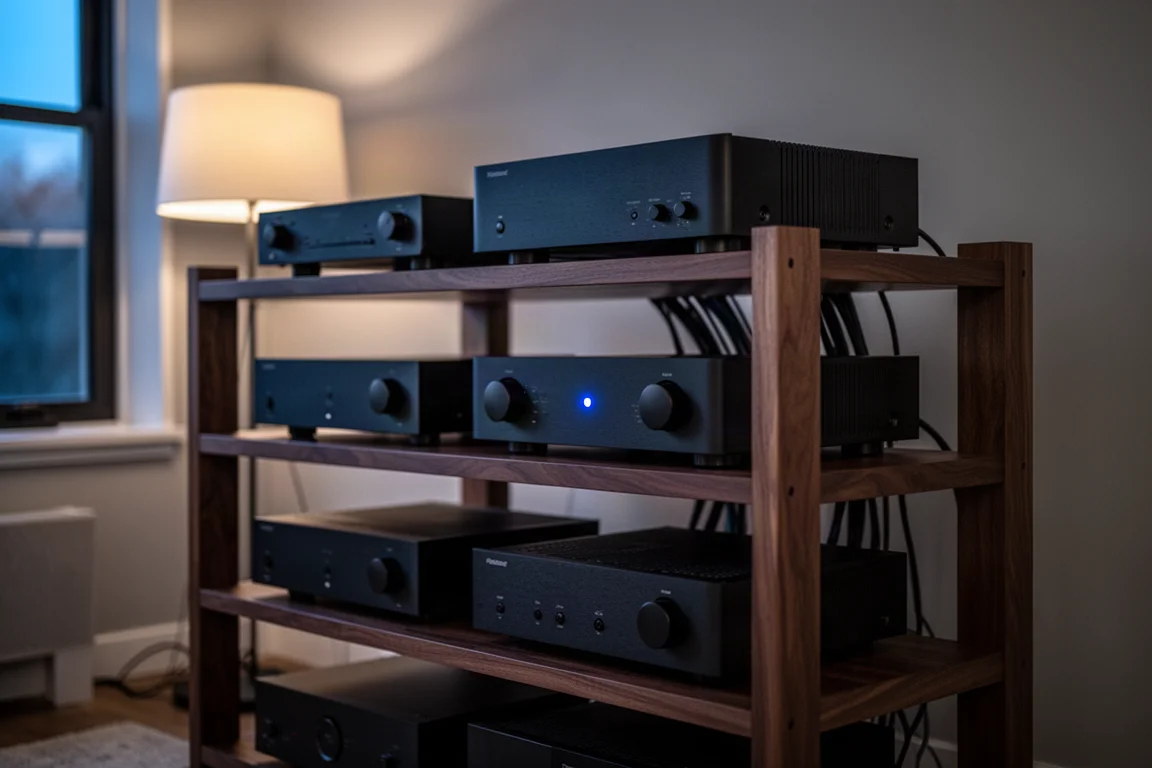
What makes the line interesting is how the measurements line up against the published specs. Rated power has been set conservatively, at the knee of the distortion curve, and every model measured here delivered more than its rating. Prices have also been falling since launch, which changes the value calculation considerably.
What Matters in a Budget Multi-Channel Amplifier
Four things separate a genuinely useful budget amplifier from a disappointing one.
Power supply quality comes first. A toroidal transformer and a large capacitor bank give an amplifier the reserve it needs when several channels are working at once, and that reserve is what keeps dynamics intact instead of collapsing under load.
Honest power ratings matter just as much. A conservative rating at the knee of the distortion curve means the amplifier will actually deliver its published figure with all channels driven, not just one channel for a fraction of a second.
Noise floor at one watt is the third measure worth checking. A figure of 80 dB or better suggests a quiet amplifier that will not hiss through high-sensitivity speakers, and anything in the mid-80s is very good. Finally, channel-to-channel consistency tells you how carefully the amplifier was built and matched.
Monoprice 2-Channel Amplifier: The Standout Value
The two-channel model launched at $400 and has since dropped below $300, which makes it the most compelling amplifier in the line. It is rated at 90 watts per channel into 8 ohms with both channels driven, and bench measurements came in above that: 103 watts per channel at 0.1 percent distortion and 118 watts at 1 percent, both channels driven into 8 ohms. A dynamic burst test into 4 ohms reached 250 watts, which points to real headroom in the supply.
Bandwidth is wide. A full power sweep at 140 watts into 4 ohms stayed stable from 10 Hz to 80 kHz within 0.8 dB, with no shutdowns or odd behaviour. Distortion sits between 81 and 86 dB SINAD depending on output level, and the noise floor measured around 86 dB at one watt, a result that suggests a very quiet amplifier even with sensitive speakers.
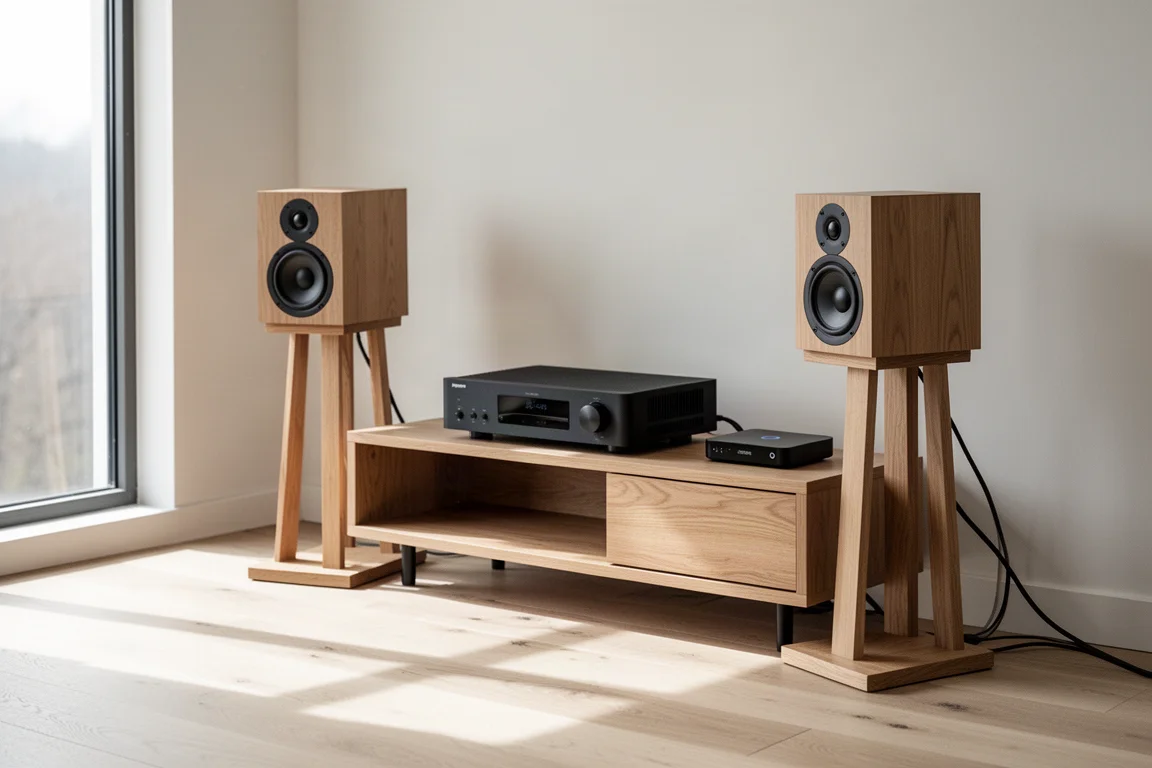
That combination makes it easy to build around. A streaming DAC with a built-in preamp and a pair of budget bookshelf speakers is enough for a complete two-channel system, and the total can land near $1,500. It is also a sensible first step for anyone who wants to add clean power to an existing setup without replacing it.
Monoprice 3-Channel Amplifier: Same Rating, More Channels
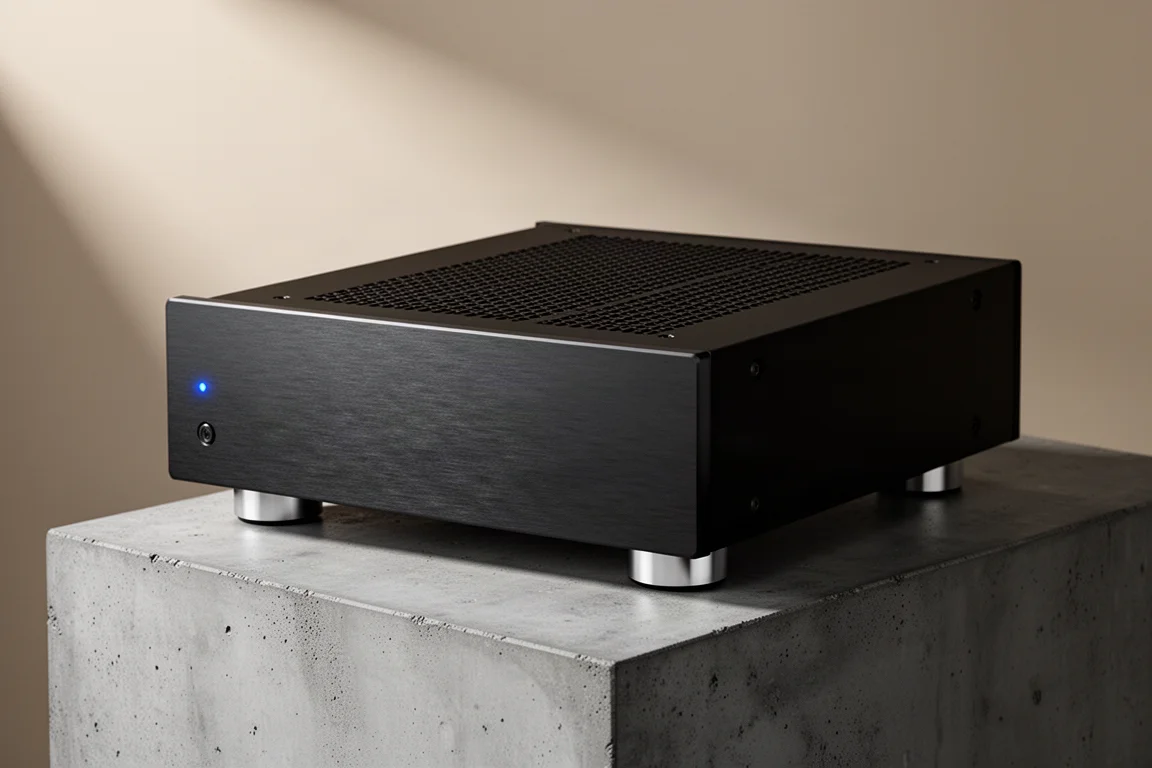
The three-channel amplifier launched at $500 and carries the same 90 watts per channel rating, with slightly larger power supply capacitors than the two-channel version. It met its rated power without trouble, but the measurements were less consistent from channel to channel, with one channel showing noticeably higher distortion than the others.
The distortion spectrum also showed more power supply noise than the two-channel model, and SINAD landed in the low to mid 70s, roughly 10 dB below its smaller sibling. None of that is alarming for a budget amplifier, and for centre-channel duty or a modest surround setup it remains perfectly workable. It is simply not the strongest performer in the family.
Monoprice 5-Channel Amplifier: Power for a Full Surround Setup
The five-channel model launched at $600 and has since been available for around $415. It uses four 10,000 microfarad capacitors and is rated at 90 watts per channel with all five channels driven. Measured output exceeded that comfortably: 101 watts per channel at 0.1 percent distortion and 109 watts at 1 percent, five channels driven into 8 ohms.
Channel matching here is tighter than on the three-channel model, and a dynamic burst test delivered 150 watts per channel into 8 ohms with all five channels working. Noise at one watt measured in the low 80s, and unbalanced inputs were actually 2 to 3 dB quieter than balanced ones. For a full surround system, or for adding height channels to a processor that already has a solid foundation, this is the most useful of the multi-channel options.
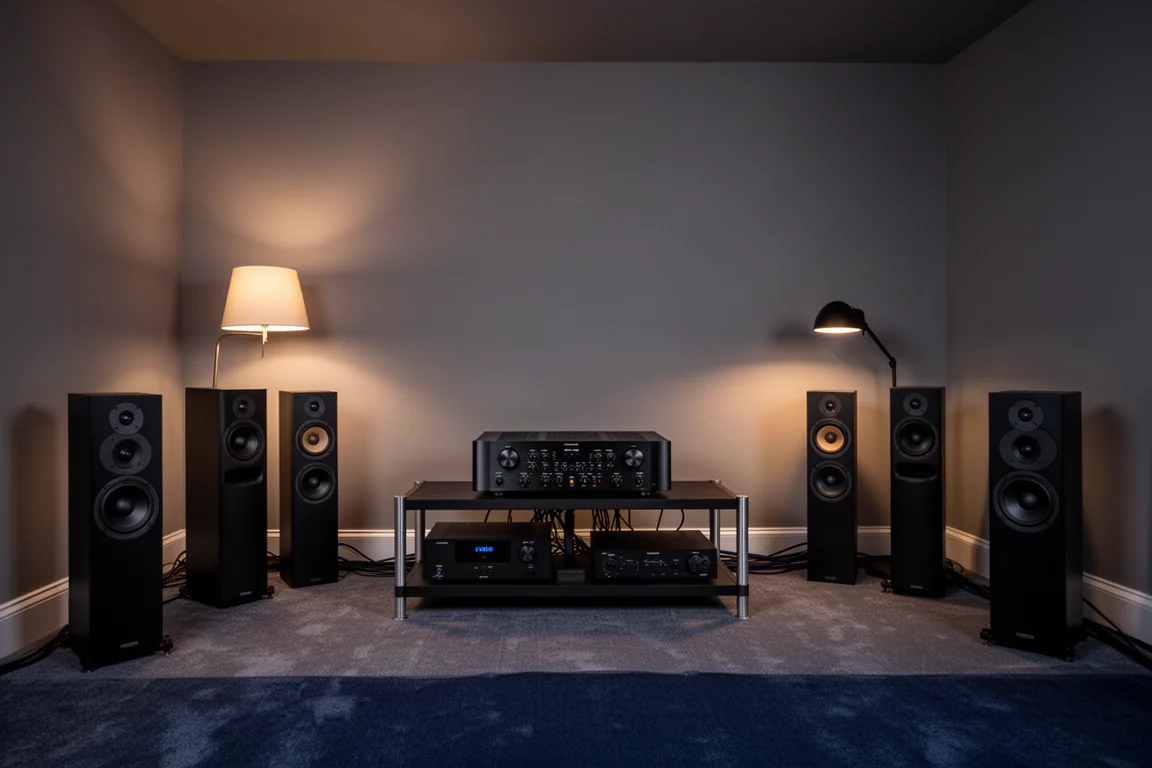
Think of it as a way to add power where an AV receiver runs out of headroom, rather than as a replacement for a high-end amplifier. In that role it is straightforward to live with and easy to justify.
Living With These Amplifiers: Gain, Noise, and Inputs
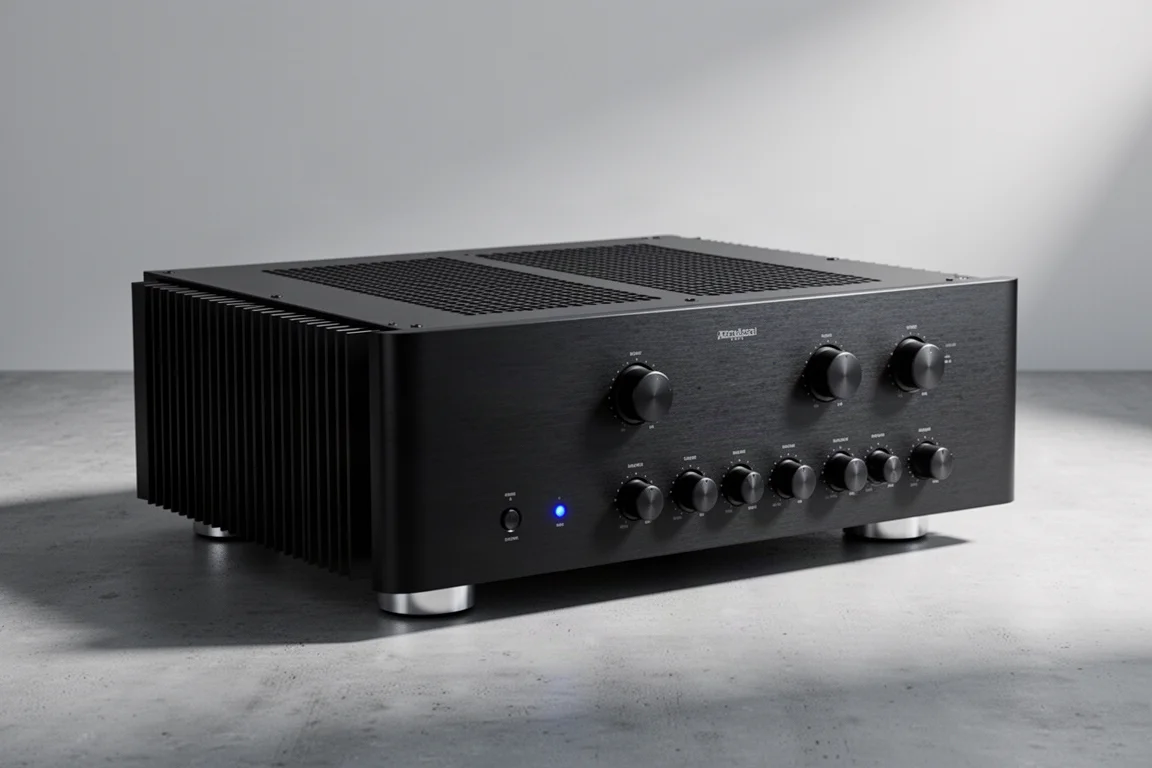
Gain is 28 dB across the range, balanced or unbalanced, and 1.1 volts RMS is enough to drive any of them to full output. That means almost any AV receiver with preamp outputs, and any streaming DAC with a preamp stage, can drive these amplifiers without strain.
The XLR inputs are best treated as a convenience rather than a feature. The signal path is not fully differential, and balanced connections showed no measurable advantage; on the five-channel model they were slightly noisier than the unbalanced inputs. Channel-to-channel crosstalk measured around 60 dB down at 10 kHz and about 50 dB down at 20 kHz, which is in line with what a good AV receiver delivers.
Cooling is handled by a heat sink and fans that run briefly at startup, and each amplifier carries a three-year warranty.
Buying Advice: Matching an Amplifier to Your System
If you are building a stereo system or adding a first dose of clean power to an existing one, the two-channel amplifier is the one to buy. It measures the best of the group, costs the least, and pairs easily with a streaming DAC and a pair of budget speakers.
If you need to drive more speakers, the five-channel model is the better multi-channel choice thanks to its tighter channel matching and stronger measured consistency. The three-channel sits between them: it does the job, but it is the least impressive of the three on the bench.
One model in the range is worth skipping. Monoprice also sells a seven-channel version, and the sample that was measured showed layout and wiring problems that produced poor results, so it is not recommended here. Prices on the rest of the line have dropped repeatedly since launch, and the three-year warranty applies across the family.
Conclusion
These amplifiers are not state of the art, and they do not pretend to be. What they offer is honest rated power, a proper toroidal power supply, a quiet noise floor and a three-year warranty at a price few competitors can match. The two-channel model is the clear pick for most buyers, the five-channel is the sensible choice for surround systems that need more drive, and the three-channel fills the gap for centre-channel duty. If you want more headroom than an AV receiver can provide without spending premium money, this line is worth a close look.
Further reading
Related Reviews

Backpacking Gear
Building a 10 lb Base Weight: An Ultralight Backpacking Gear List
A practical walkthrough of the ultralight pieces behind a 10 lb base weight, from a 765 g pack and a roomy one-person tent to a full camp chair and a dependable water filter.

Road Bikes
10 New Road Bikes Worth Watching: Aero, Titanium, Steel and Endurance Standouts
A practical roundup of 10 new road bikes, from aero flagships chasing single-watt gains to titanium, steel and endurance platforms built for real roads.

Bikepacking Gear
11 Bikepacking Essentials for Long-Distance Cycling
Eleven bikepacking essentials for long-distance cycling, from a steel gravel frame and a two-person tent to helmet lights, packable gloves, and a frame bag that puts weight in the right place.