Home Theater Speakers
Monoprice Monolith THX-365T Review: Capable Output, Needs Equalization
A THX-rated three-way mini tower with strong output and low distortion, but a response that only reaches its potential once room correction is applied.
Introduction
Monoprice built the Monolith line around a straightforward idea: put serious driver hardware into a plain cabinet and charge far less than the premium brands do. The THX-365T Mini Tower follows that formula closely. It is a THX-rated three-way tower that sells for around $450 for a single speaker, which works out to roughly $900 for a pair.
The short version is that this speaker can play loud with very little distortion, and its sensitivity is high enough to sit comfortably in a home theater system. What it does not do is arrive with a flat, neutral response. There is a mild lift in the upper bass, a broad elevation through the upper midrange and lower treble, and a narrow cancellation higher up. With equalization those traits are largely correctable, and the speaker becomes genuinely enjoyable. Without it, the same traits are difficult to ignore.
That distinction shapes everything below. The hardware is capable, but the out-of-box tuning asks the buyer to do some work.
Who This Speaker Is For
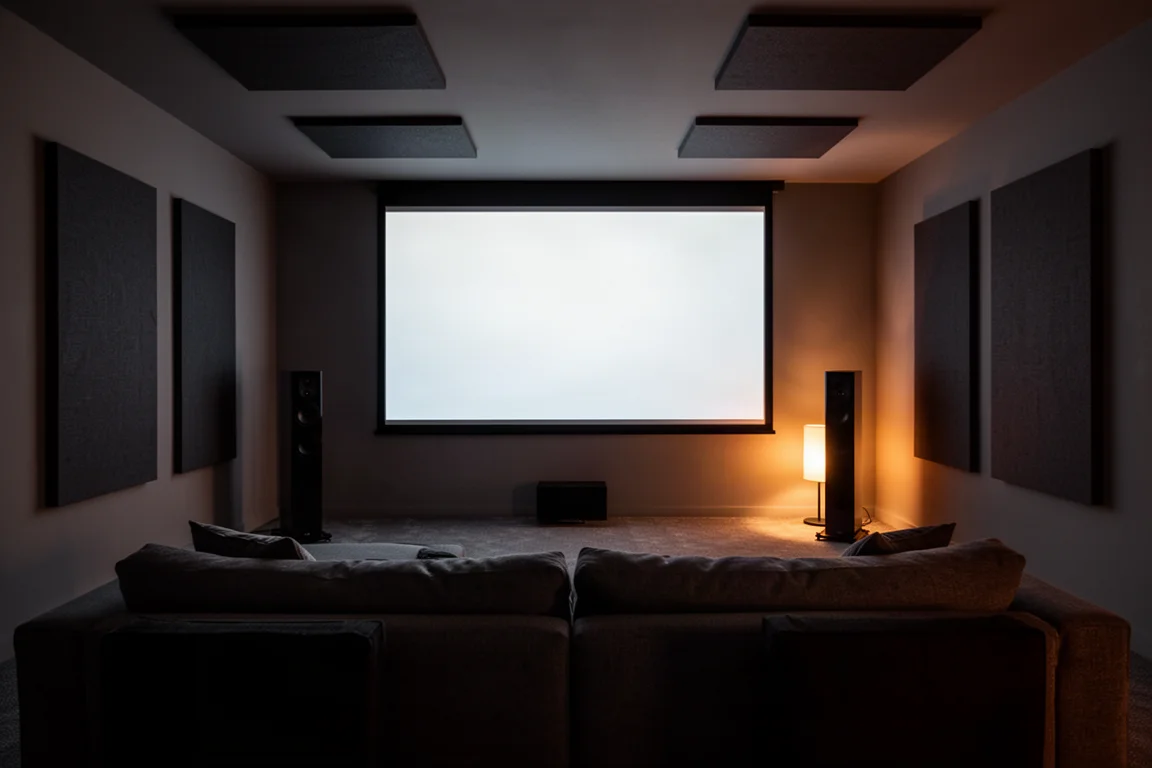
The THX-365T makes the most sense for listeners assembling a home theater system around an AV receiver with built-in room correction, whether that is Dirac, Audyssey, or a comparable system. In that setup, the response issues described later in this article are exactly the kind of thing automatic correction is designed to address, and the speaker’s output capability and low distortion are free to do their job.
It is also a speaker for people who already own, or plan to own, a subwoofer. The rated low-frequency extension sits at 84 Hz, so the cabinet is not trying to cover the bottom octave on its own. That is normal for a THX-rated design in this size class and it is not a flaw, but it does mean the total system cost includes a subwoofer.
Finally, it suits listeners who care about dynamic headroom more than absolute neutrality. If your priority is a speaker that stays clean at high volume during movie playback, this is the right conversation. If your priority is a speaker that sounds correct with no processing at all, it is the wrong one.
Design and Driver Layout
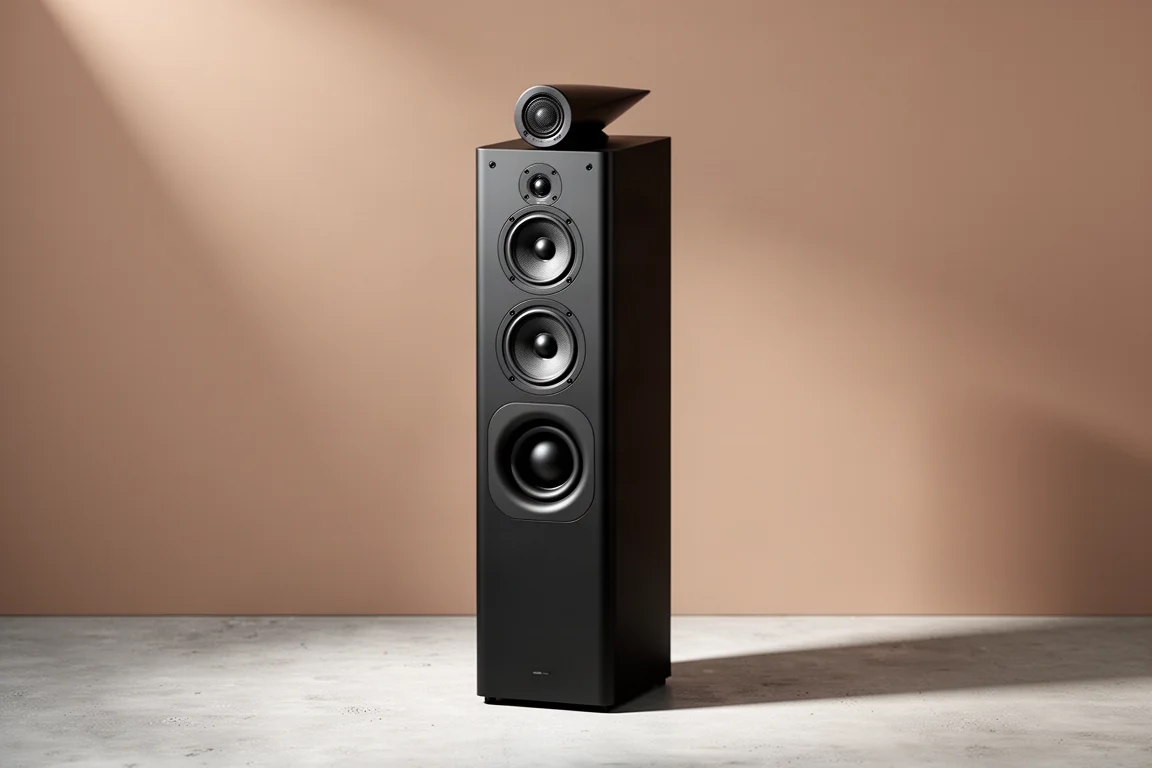
The cabinet is a three-way design. Two woofers handle the low end and hand off to a two-inch dome midrange at roughly 500 Hz. That dome sits in its own small sub-enclosure inside the cabinet, which is a meaningful detail because it isolates the midrange from the pressure generated by the woofers below it. A dome tweeter takes over somewhere around 1.9 to 2 kHz. The passive crossover that manages the three-way section is mounted at the bottom of the cabinet.
An upward-firing module caps the top of the speaker for height-channel effects. Its performance is not part of this assessment, so treat it as a design feature rather than a verified strength.
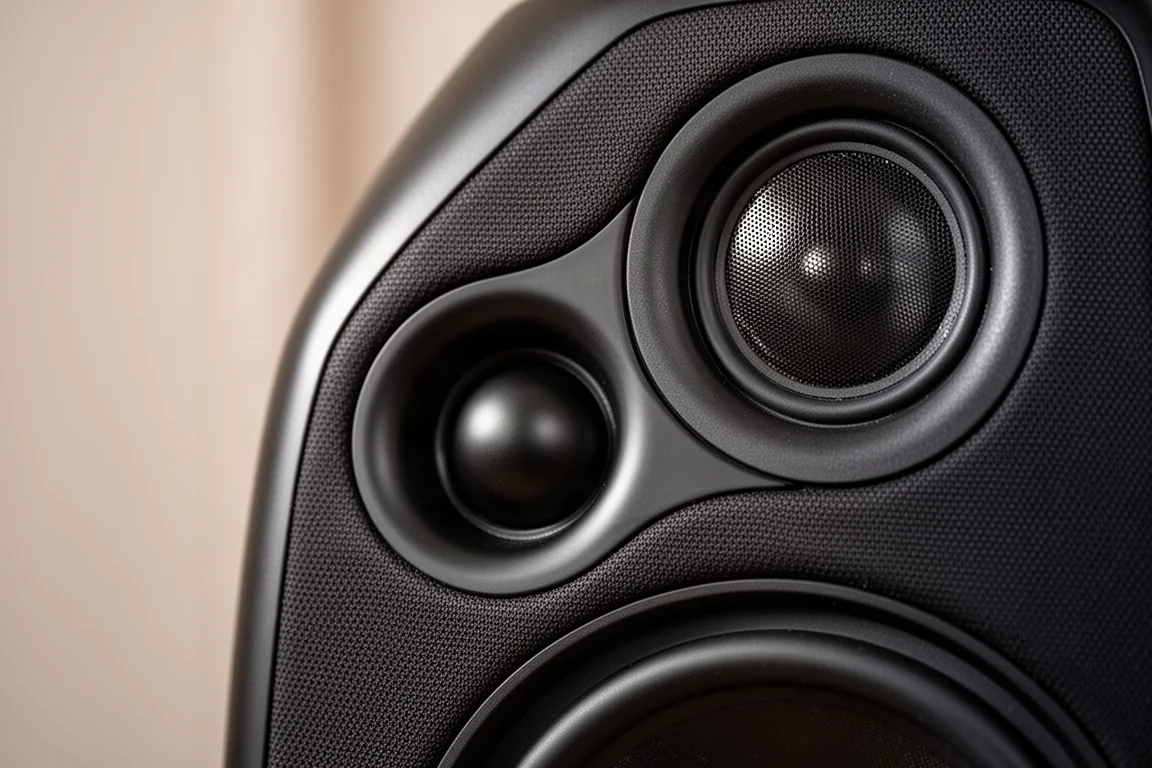
The cabinet itself is a compact tower rather than a full-size floorstander, which is what the Mini Tower name refers to. That smaller footprint makes placement easier in rooms where a large tower would dominate, and it keeps the driver array close together, which helps the midrange and tweeter behave as a coherent source within a reasonable listening window.
Main Strengths: Output, Sensitivity, and Distortion
Sensitivity is rated at 88.6 dB, which is a healthy figure for a home theater speaker and means the speaker does not demand enormous power to reach satisfying levels.
The distortion performance is the strongest part of the story. At 86 dB, total harmonic distortion stays below the one percent threshold until roughly 70 Hz. At 96 dB, it stays below one percent until roughly 80 Hz. In plain terms, everything above the subwoofer crossover region is reproduced cleanly, and the speaker holds that cleanliness as volume climbs. For movie soundtracks with sudden dynamic swings, that is precisely the behavior you want.
Combined with the THX rating, the picture is of a speaker built to deliver home theater dynamics rather than to chase a flat anechoic curve. Buyers who prioritize impact and clarity at realistic listening levels will find a lot to like here.
Where Linearity Falls Short
The measured response reveals a set of issues that line up closely with what the speaker sounds like in a room.
In the upper bass there is a mild lift centered near 100 Hz. In listening terms it shows up as a bloom in the midrange, most noticeable on male vocals, where the lower register of the voice takes on a little extra weight and warmth.
Higher up, the directivity narrows through the woofer-to-midrange transition and then widens again from roughly 1.5 kHz to 4 kHz. When the response widens like that, more energy is reflected off the side walls, and relative to the midrange the treble reads as elevated. The audible result is a presentation that can sound harsh and grainy through that two to four kilohertz region.
There is also a strong on-axis cancellation near 6 kHz, followed by a rise in output above it, and that combination produces audible sibilance around 8 kHz. The estimated in-room response shows the same peaks and dips, which is a useful confirmation that what the ear picks up is genuinely in the data rather than in the listener’s imagination.
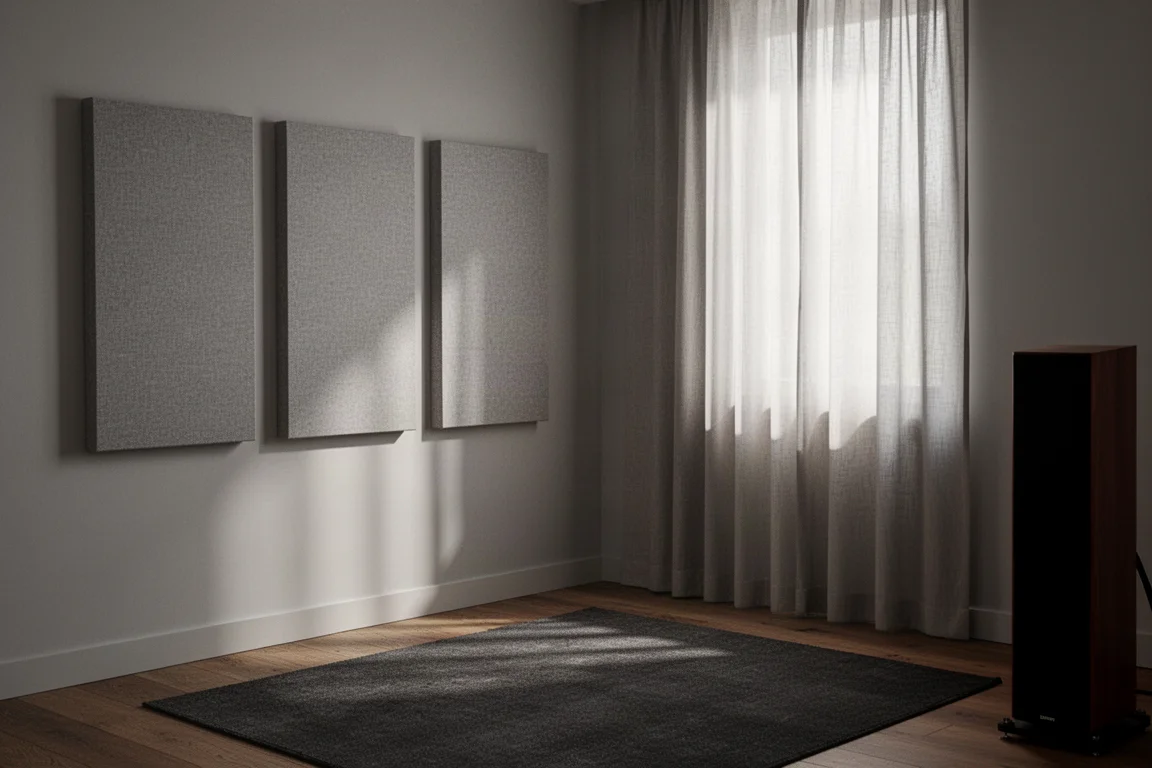
The good news is that these are correctable problems. A filter centered near 3 kHz with a moderate Q and a cut of roughly 3 dB tames the upper midrange harshness, and a cut of about 4 dB across the 8 to 10 kHz region addresses the sibilance. Most automatic room correction systems will move in the same direction if the target curve is set sensibly. There is one more behavior worth noting: as playback level rises from 76 dB through 86, 96, and 102 dB, the compression data shows an enhancement in output rather than the expected loss. That is unusual, and it remains unexplained.
Things to Consider Before Buying
Impedance is the first practical concern. The speaker sits mostly above 4 ohms, but there is a region where it dips to almost 3 ohms, and that can present a real load for many AV receivers. A separate amplifier is the safer recommendation. It is not unreasonable to try a modern receiver first, since the worst likely outcome is that it mutes its outputs under protection, but the amplifier route removes the uncertainty.
The second consideration is the subwoofer. Low-frequency extension is rated at 84 Hz, so the speaker is designed to hand the bottom end to a dedicated sub. Budget for one.
The third is seating and placement. Vertically, listeners can sit within roughly plus or minus 20 degrees of the tweeter axis and still hear something close to the on-axis sound, which is useful for a second row or for elevated surround placement. Staying within about plus or minus 10 degrees, or directly on the tweeter axis, is better still. Horizontally, the dips described above narrow the good listening window to roughly plus or minus 20 to 30 degrees, so wide seating arrangements will benefit from some care in aiming.
Buying Advice
At around $450 per speaker, the value calculation hinges entirely on how you intend to run it. Paired with an AV receiver that offers Dirac, Audyssey, or similar correction, plus a subwoofer, the THX-365T is an easy recommendation: the output capability is there, the distortion performance is there, and the response irregularities are the kind of thing room correction handles well.
Run flat, with no equalization and no acoustic treatment, the calculus changes. The upper midrange elevation and the sibilance around 8 kHz are audible enough to shape the ownership experience, and a buyer who wants a speaker that sounds right the moment it is unboxed should either look elsewhere or plan to add correction and absorption from the start.
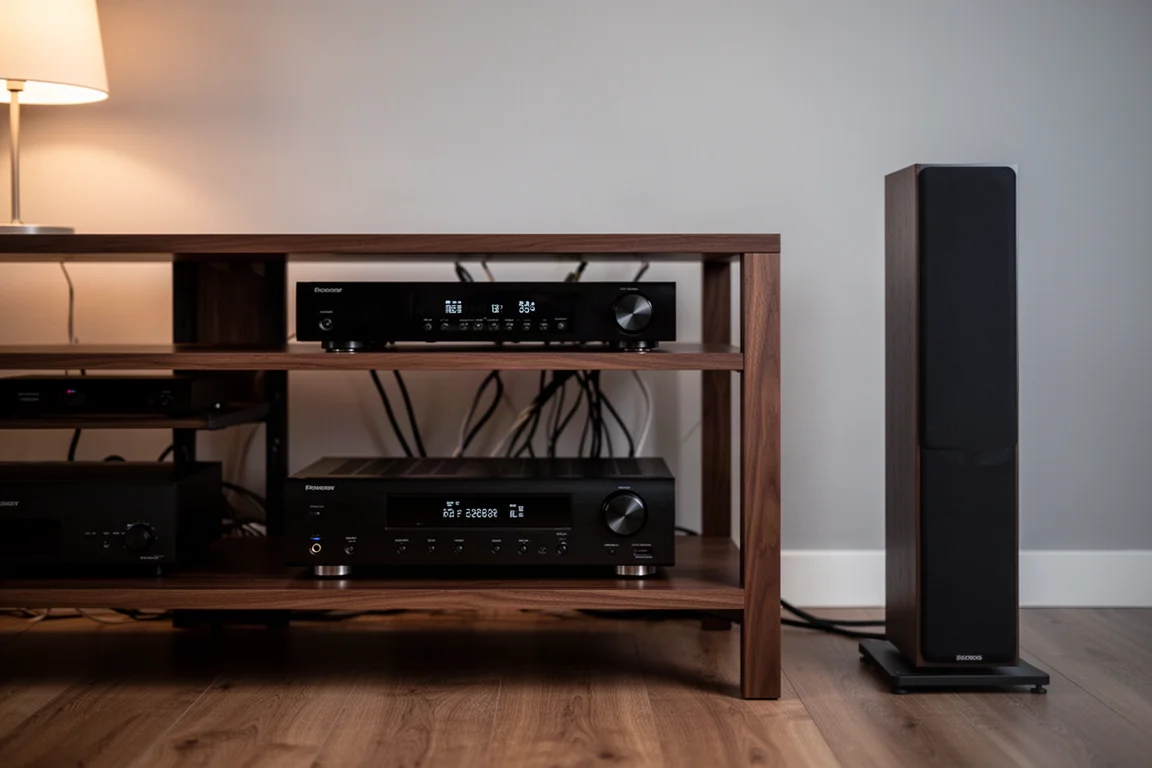
There is also a middle path worth considering. Manual tuning gives you more control than an automatic routine, because you can target the specific regions that matter, listen after each adjustment, and confirm the result by ear rather than trusting a single sweep. Either approach works, but the speaker rewards the buyer who is willing to spend an evening with a measurement microphone and a correction curve.
Conclusion
The Monoprice Monolith THX-365T Mini Tower is a capable home theater speaker with a clear personality. Its sensitivity and distortion figures are strong, it holds together at high volume, and it is priced well below what that combination usually costs. Its weaknesses are all in frequency response linearity: an upper bass lift, a wide elevation through the upper midrange, a narrow cancellation near 6 kHz, and audible sibilance higher up.
None of those are fatal, and all of them respond to equalization. That makes this a speaker for the buyer with a correction-capable receiver and a subwoofer, who wants dynamic headroom and is comfortable tuning the system to get it. Buyers who want neutrality straight out of the box should look at other options, or accept that this one needs a little help to sound its best.
Product link
View more details for Monoprice Monolith THX-365T Mini Tower Speaker
This product is mentioned in the review. Check the specifications, options, and compatibility before buying.
View more details for Monoprice Monolith THX-365T Mini Tower SpeakerFurther reading
Related Reviews
Home Theater Speakers
Arendal 1723 THX S Monitor vs 1723 THX Monitor: Which Two-Way Monitor Fits Your Room?
A practical comparison of the Arendal 1723 THX S Monitor and the larger 1723 THX Monitor, covering driver size, sensitivity, bass extension, and room fit.
Home Theater Speakers
Emotiva A1 Review: A Small Speaker With Serious Surround Flexibility
A sealed two-way speaker built for Dolby Atmos, surround, and compact desktop duty at $179. Here is what it does well and what to check before buying.
Home Theater Speakers
Emotiva C2+ Review: High Output Center Channel With a Narrow Sweet Spot
The Emotiva C2+ delivers serious output, deep bass for its size and high sensitivity, but its widely spaced midrange drivers create a horizontal sweet spot that rewards centered seating.