Turntables
Monolith Turntable Review: An Entry-Level Deck With Features That Earn Their Place
Monolith's first turntable pairs a carbon tonearm and a removable headshell with Bluetooth output and USB recording, aimed at listeners buying their first deck.
Introduction
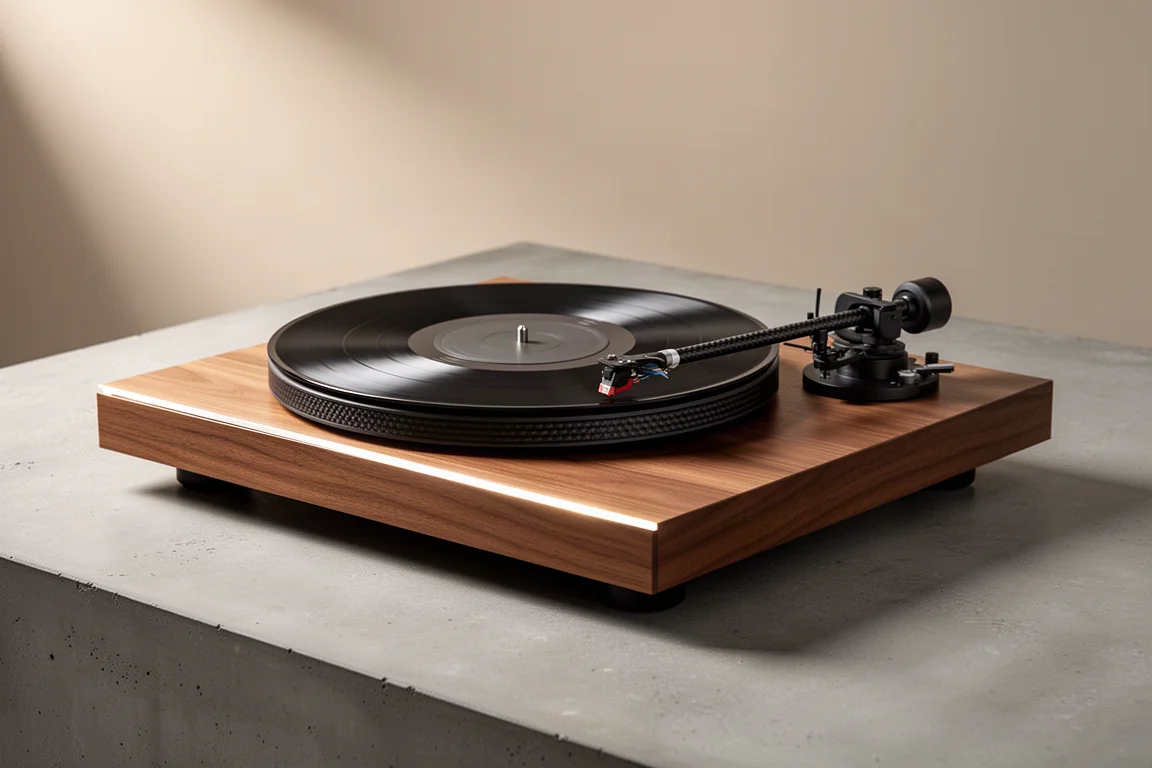
Monolith is Monoprice’s premium audio brand, with speakers, headphones, and amplifiers already in its catalog. The Monolith Turntable is its first move into vinyl playback, and it arrives at $250, alongside a second version at $200 that uses a different cartridge. That places it squarely among the entry-level decks most first-time buyers consider, where the usual trade-off is between basic construction and a short feature list. Monolith’s answer is to keep the price low and load the table with features normally reserved for more expensive models.
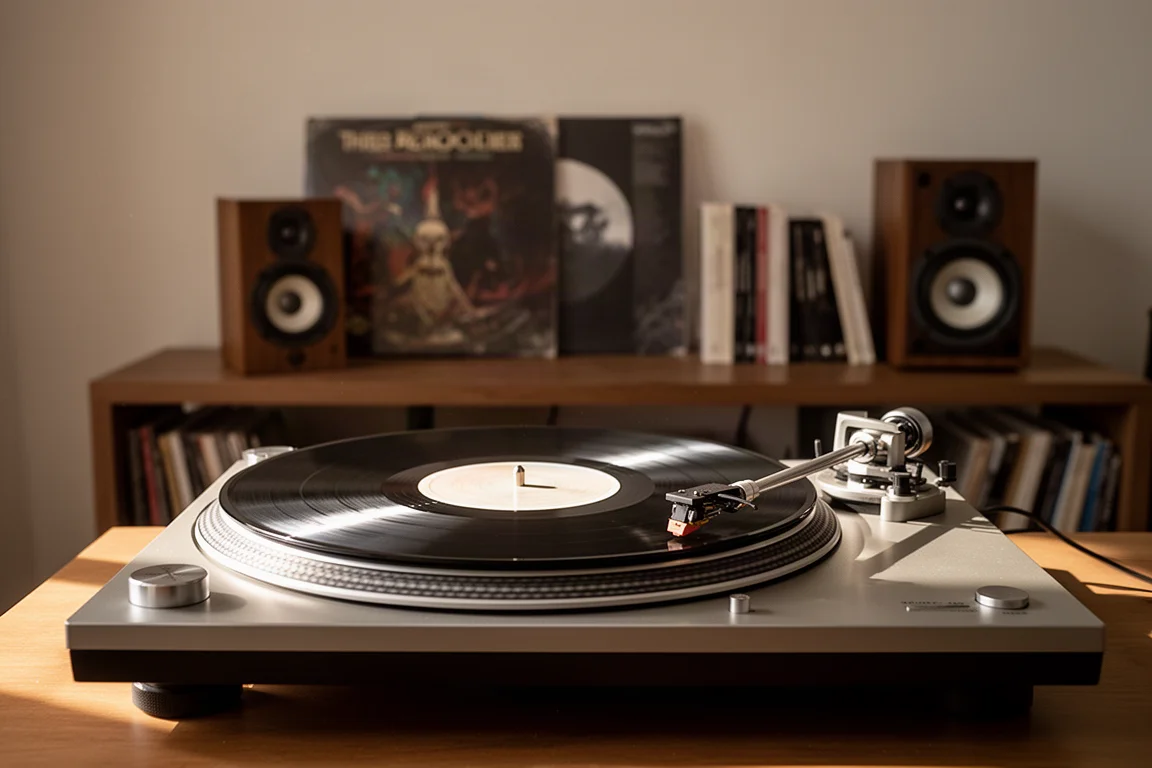
The result is a turntable that looks and feels more expensive than its price suggests, while still asking the buyer to do some work during setup. The sections below cover what the deck does well, where it makes compromises, and who should consider it.
Who This Turntable Is For
This is a beginner-focused deck. It suits listeners buying their first turntable, and it also makes sense as a second table for someone who wants specific features rather than a straight upgrade in build quality.
Its strongest argument is flexibility. A removable headshell makes cartridge swapping straightforward, which turns the table into a platform for experimenting with different sound signatures. For someone just starting out in vinyl, that is an appealing path: a warm cartridge, an analytical cartridge, and a neutral one can all live on the same deck without delicate work.
Collectors who want to digitize a library will also find the USB output relevant. Vinyl purists, by contrast, are unlikely to be interested, since the deck leans on convenience features rather than minimalist construction.
Build Quality and Design
The styling borrows from several modern decks: a slimmer plinth, a wood finish, and a clean, contemporary layout. It reads as a blend of the design language used by Fluance, U-Turn, and Rega, and the resemblance to Fluance is close enough in the details that the two may well share a manufacturing lineage.
From a few feet away it looks excellent, and it holds up at close range as well. In finish terms it compares favorably with more expensive turntables from better-known brands, which is unusual at this price.
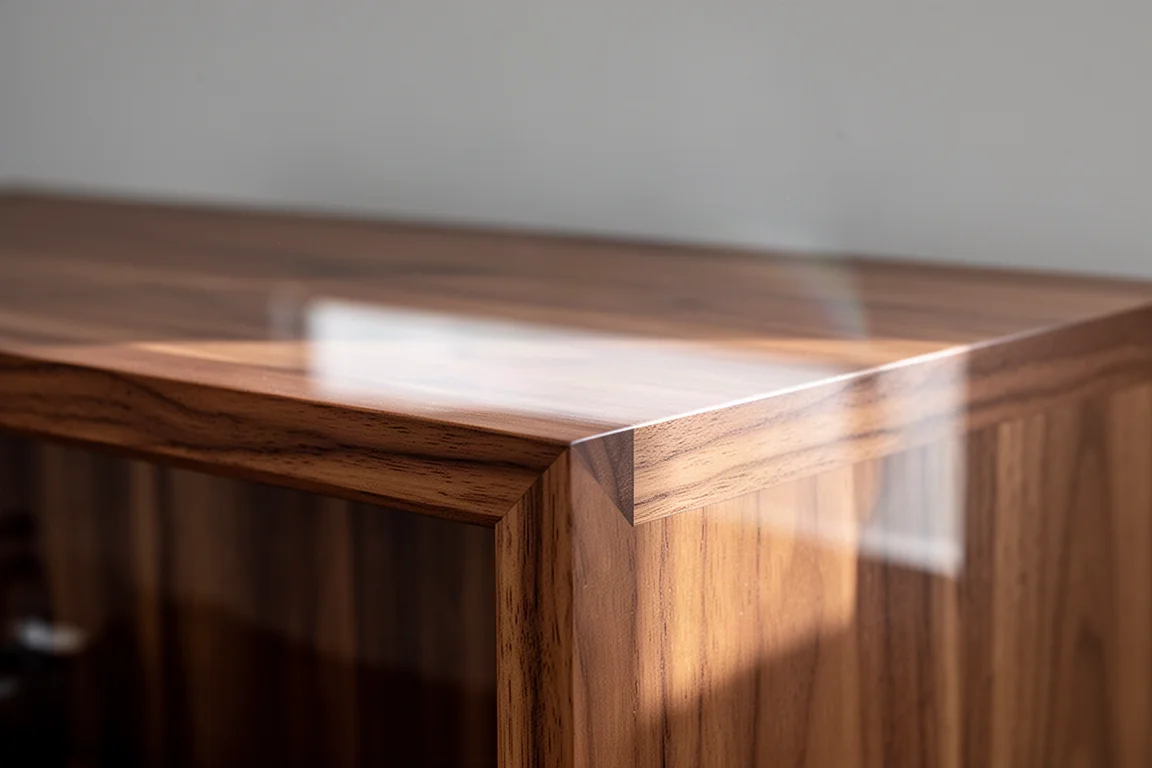
Where it lands is somewhere between its price tag and a much more expensive deck. It does not feel like a $1,000 turntable, but it also does not feel like a $250 one. Build quality is roughly in line with U-Turn, though Fluance decks are noticeably beefier. At $250, it exceeds what most competing tables at the same price offer.
Setup and the Anti-Skate Counterweight
Setup will be familiar to anyone who has balanced a tonearm before. The counterweight slides onto the rear of the arm, and the arm is turned until it floats level. From there, the inner dial is set to zero against the line on the arm, and the whole assembly is rotated one full turn, which equals the two grams of tracking force the supplied cartridge requires.
The anti-skate mechanism is where patience is required. Instead of a dial, it uses a small counterweight suspended on a length of line, with a loop that hooks onto one of several knurled notches on a barb. The amount of anti-skate depends on which notch is used, and the factory position may not sound right in every room. Moving the loop up a notch can settle the balance.
Experienced turntable owners will handle this without much trouble. Buyers with reduced dexterity or weaker close vision may find it fiddly, which is worth knowing given that this is priced as an entry-level deck and will be many buyers’ first setup.
Cartridge, Tonearm, and Connectivity
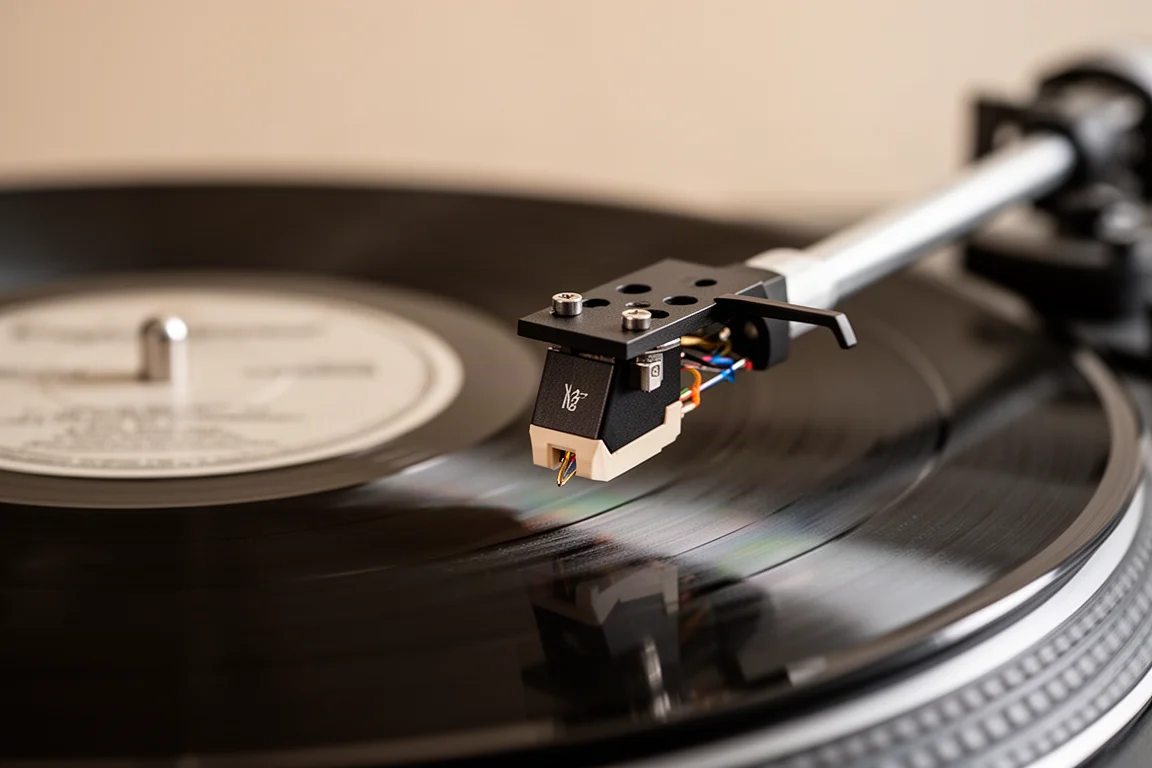
The tonearm is carbon fiber, a material many manufacturers emphasize. The more consequential detail sits at the end of the arm: a removable headshell. Because the arm is straight rather than S-shaped, buyers shopping for a spare headshell need one designed to match a straight arm.
The supplied cartridge is the Audio-Technica AT-VM95E, which sells on its own for roughly $50 to $70. It uses threaded inserts, so mounting requires only the bolts rather than tiny loose nuts, removing one of the more irritating jobs in cartridge swapping.
Sonically, the VM95E sits on the warmer side of neutral. Compared with the Ortofon 2M Red, the 2M Blue, the Nagaoka MP110, and the Ortofon OM5E and OM10, it is less analytical and more full-bodied, with some kick and weight behind it. It is not a fatiguing cartridge, and through the built-in phono preamp it can make a forward-sounding speaker come across as neutral with a touch of warmth.
The integrated phono stage is about what the price implies: it works, and it is adequate. It gets close to the performance of a $500 turntable with a built-in phono amp from a more established brand. Buyers who want more from the deck should treat an outboard phono preamp as the first real upgrade, since the difference between the internal stage and even an affordable external one is significant, and cleaner. The cartridge and the phono stage are the two changes that move the sound the most.
Connectivity is broader than most decks at this price. Bluetooth lets the turntable send audio to powered speakers or Bluetooth headphones, so a record can be played without a wired connection. The USB output records vinyl to a computer in a digital format, using free software with instructions provided in the manual.
Things to Consider Before Buying
There are no automatic features. When the record ends, the platter keeps turning. That is typical of the price range, though at least one competitor offers auto stop, so buyers who value that behavior should weigh it.
The platter rings when tapped. Acrylic and glass platters are popular precisely because they damp that resonance, and this deck does not have that advantage. Buyers sensitive to platter resonance should look elsewhere.
Setup is the other consideration. The anti-skate arrangement and tonearm balancing are manageable, but they are not seamless, and this is a table many people will set up for the first time.
Finally, the extra features are optional by nature. The Bluetooth output is unlikely to be used by most owners, and the internal phono stage is a starting point rather than a destination.
Buying Advice
The clearest way to think about this deck is as a flexible platform. It is on par with U-Turn in overall quality and adds a removable headshell, Bluetooth, an internal phono preamp, and USB recording. Against Fluance, it falls short on build quality, but it costs less and offers more connection options.

For most first-time buyers, the removable headshell is the feature that matters most, because it keeps the upgrade path open. Buying a second cartridge at this price point is realistic, and it will change the sound more than almost anything else. Adding an affordable external phono preamp later is the sensible second step.
The table is easy to recommend for beginners and for anyone who wants these specific features without paying more. Buyers who prioritize platter damping, automatic operation, or heavier construction should look at alternatives.
Conclusion
As a first turntable from Monolith, this is a solid showing. It looks better than its price, comes with a capable cartridge, and includes features that are rare in the category. The compromises are real but predictable: setup takes patience, the platter rings, and the built-in phono stage is a starting point rather than a finish line.
A future version that drops the USB and Bluetooth, adds adjustable feet, and improves build quality at a similar price would be a strong proposition. For now, this deck delivers a good entry into vinyl with room to grow.
Product link
View more details for Monolith Turntable
This product is mentioned in the review. Check the specifications, options, and compatibility before buying.
View more details for Monolith TurntableFurther reading
Related Reviews
Turntables
Best Turntables 2026: Seven Standout Picks From Entry Level to Premium
A practical roundup of seven turntables worth considering, from a US-made budget deck to small-batch premium models with a clear upgrade path.
Turntables
Best Turntables Under $1,000: Five Fully Manual Picks Worth Considering
Five fully manual turntables under $1,000, compared on build quality, cartridges, upgrade potential, and the character of sound each one brings to a system.
Turntables
Best Turntables Under $2,000: Six Vinyl Decks Worth Building a System Around
Six turntables under $2,000, from a value-focused belt-drive deck to a fully balanced design, with the strengths and trade-offs that matter before you buy.