Hi-Fi Amplifiers
Monolith M2100X vs SMSL A300: Which Amplifier Suits Your Speakers?
A practical comparison of a traditional Class AB power amplifier and a compact Class D amplifier, covering power ratings, features, sound character, and speaker pairing.
Introduction
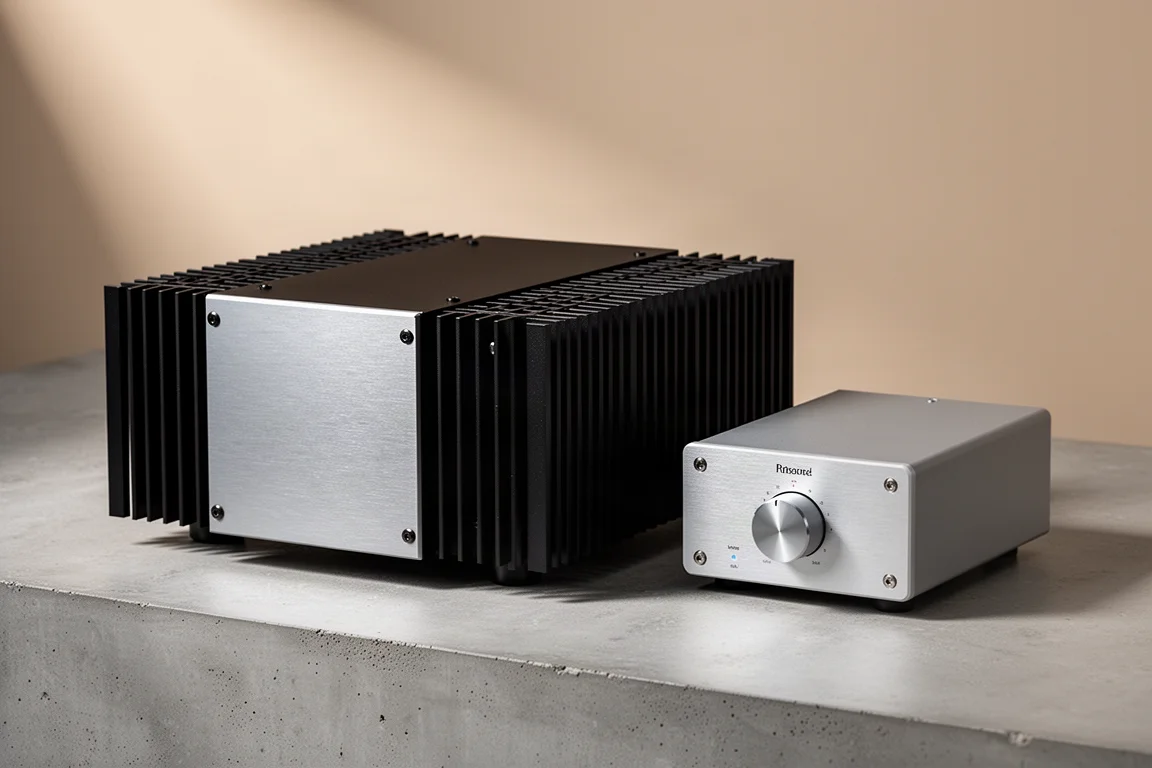
Class AB and Class D amplifiers have converged on price, which makes the choice between them more interesting than it once was. The Monolith M2100X is a traditional two channel Class AB power amplifier at around $400. The SMSL A300 is a compact Class D amplifier at roughly $195, so a pair of them costs about the same as a single M2100X.
Both will drive a normal pair of bookshelf speakers, and both can push a speaker to the point where the speaker, not the amplifier, becomes the limit. The meaningful differences show up in the feature set, in how each one handles demanding material at high volume, and in the character each brings to the midrange and treble.
Design and Connectivity: Two Very Different Approaches
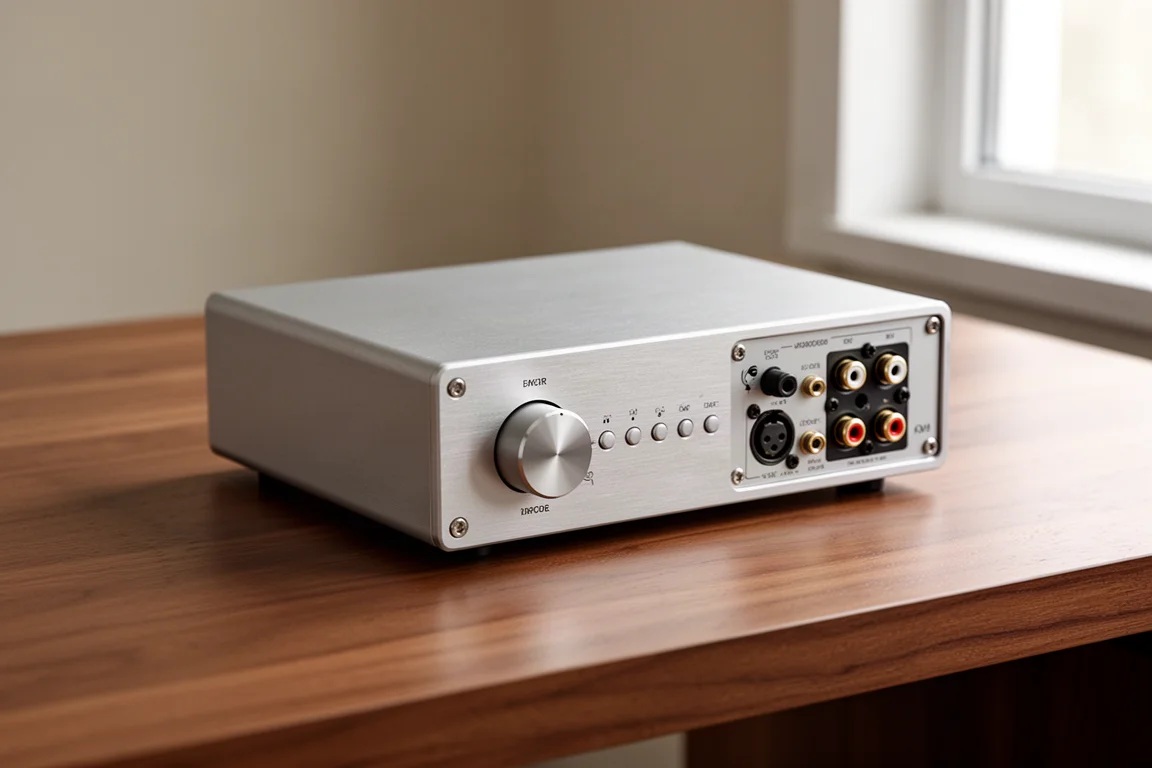
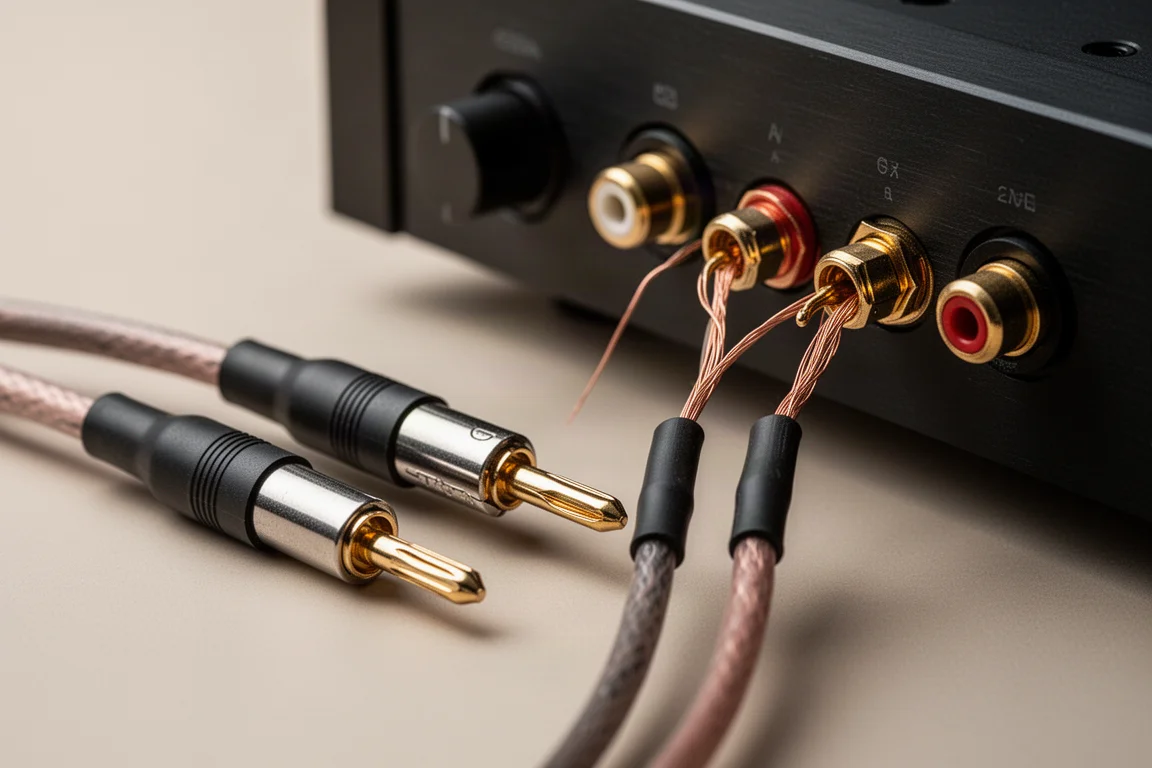
The M2100X is built around a large toroidal transformer and a conventional Class AB layout. Monolith rates it at 90 watts per channel into 8 ohms and 135 watts per channel into 4 ohms. The back panel carries RCA inputs plus XLR connectors, which are included for convenience even though the XLR inputs are unbalanced. It is a pure power amplifier, so there is no volume control, no tone controls, and no input switching. You will need a preamplifier or a source with variable output to use it.
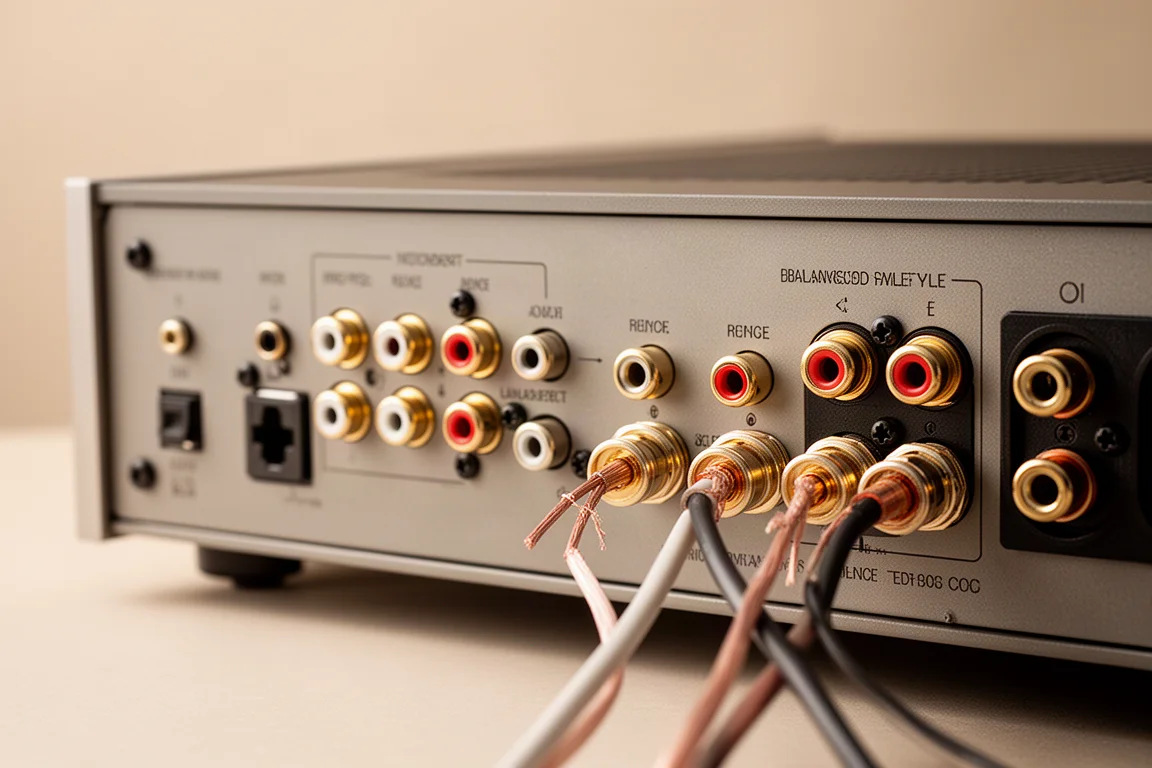
The A300 takes the opposite approach. Manufacturer figures list 85 watts per channel into 8 ohms and 165 watts per channel into 4 ohms, and it can be bridged to deliver 330 watts per channel. Where the M2100X keeps things minimal, the A300 adds multiple inputs, several EQ settings, a low pass filter, Bluetooth, and an onboard volume control. If you would rather have one box that handles source switching and level control on its own, the A300 does considerably more of that work.
Monolith M2100X: Class AB Power and Control
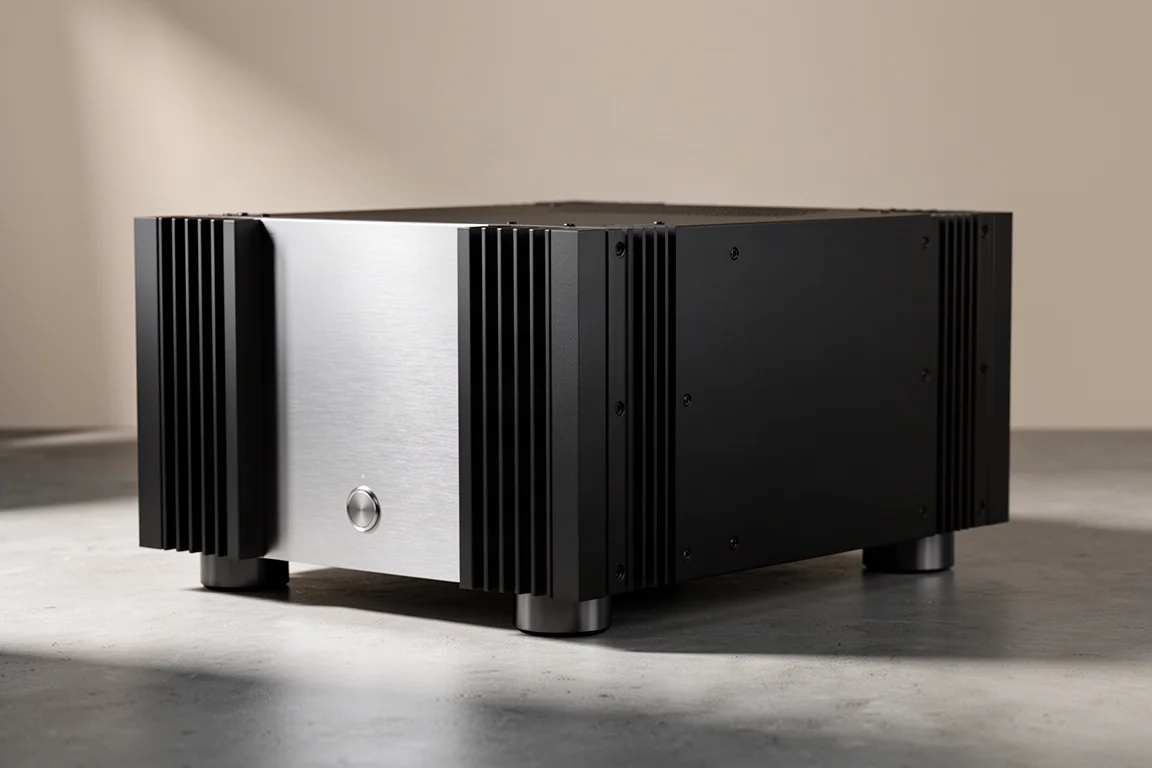
The case for the M2100X is about delivery rather than features. In real world use it is likely to play louder and stay composed with heavy bass material, and its current capacity makes it the more sensible choice for low efficiency speakers that demand more from an amplifier. That composure matters most on bass heavy tracks, where a smaller amplifier can start to sound strained before the speaker does.
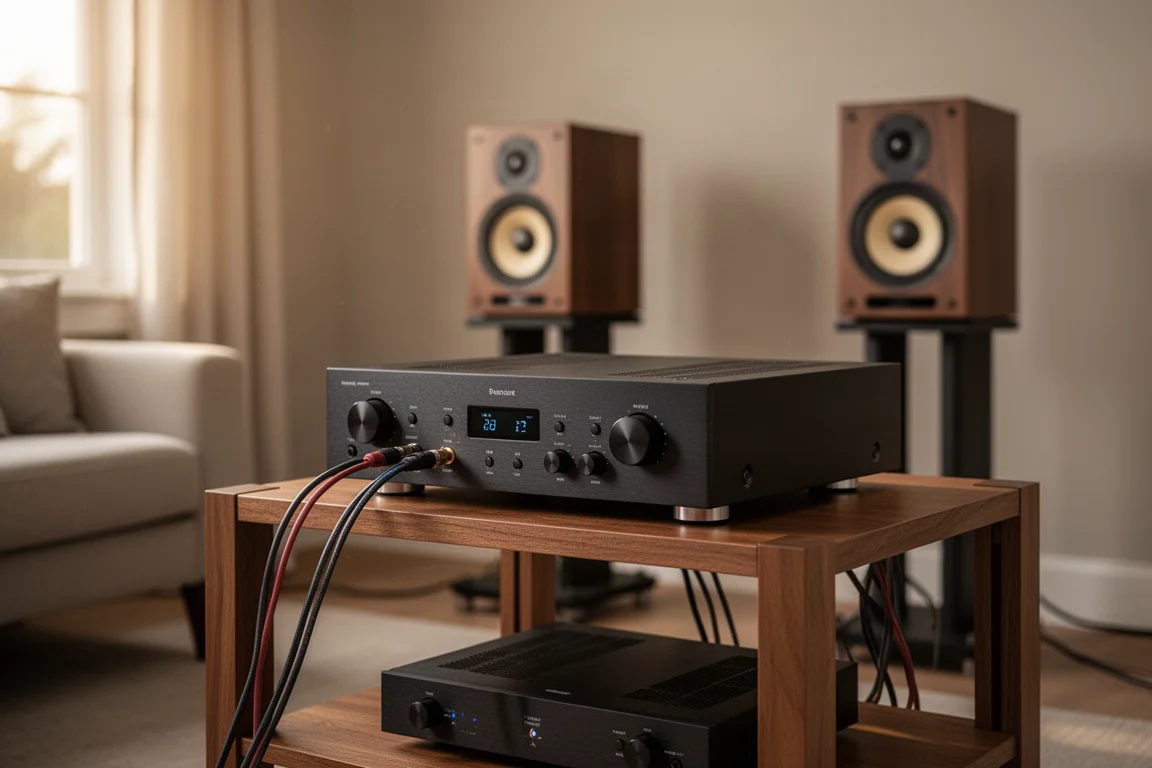
Because there is no volume control and no input selection, the M2100X rewards a system that already has a capable preamp. In exchange, you get a straightforward, traditional power amplifier that is rated to drive both 8 ohm and 4 ohm loads without fuss. Its midrange is a little laid back rather than forward, which is worth remembering when you choose speakers to pair with it.
SMSL A300: Class D Flexibility and Features
The A300 is the more versatile of the two. Multiple inputs, several EQ settings, a low pass filter, Bluetooth, and a volume control mean it can serve as the centre of a simple system without extra components. Its power figures are close to the M2100X in stereo, and bridging unlocks 330 watts per channel for setups that need more headroom.
The price structure is what makes the comparison direct. A single A300 costs roughly half the price of the M2100X, and a pair of them lands at about the same total as one M2100X. The trade-off is that the A300’s character leans slightly brighter on demanding passages, which is something to weigh against its flexibility.
Listening Notes: Where the Two Amplifiers Differ
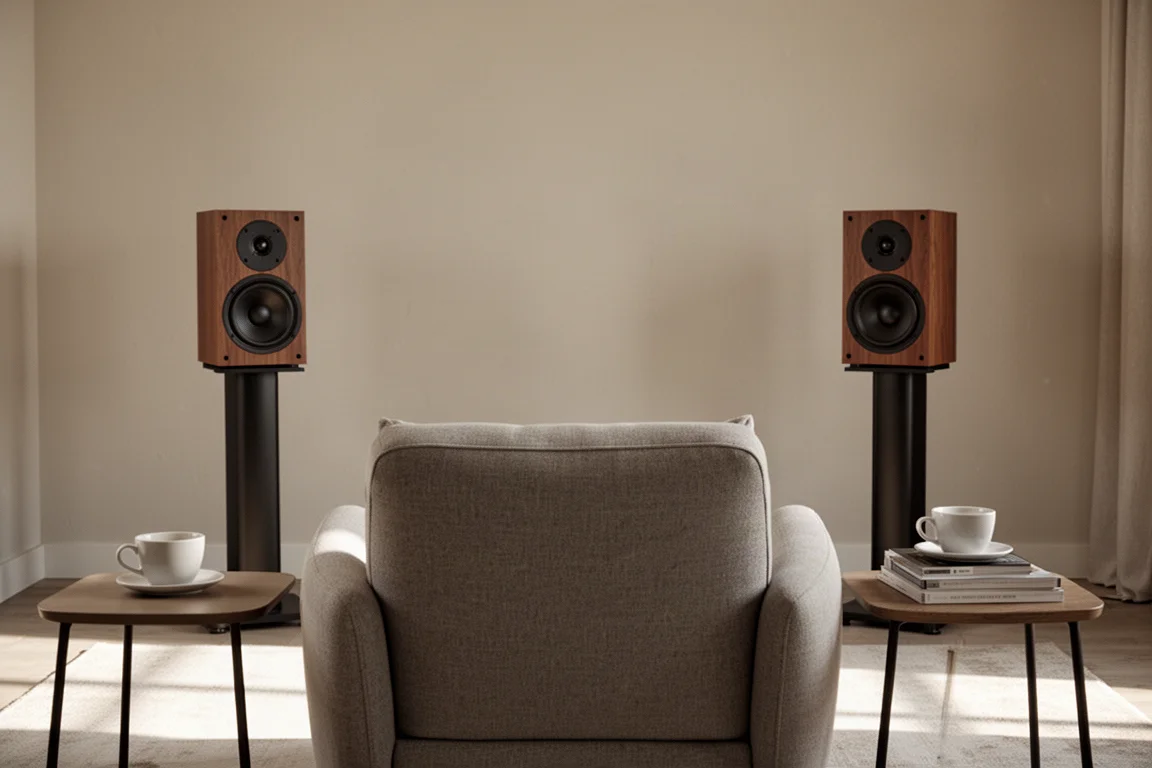
A fair comparison needs an identical front end. Both amplifiers were fed from the same source, with two streamers linked so the same track played in sync, and both ran into a speaker and amplifier switch before a pair of Heco Aurora 300 bookshelf speakers with 6.5 inch woofers. Levels were matched, because the A300’s volume control cannot be bypassed and there is no guarantee its gain would match the M2100X exactly. Listening was done from roughly ten feet back in a living room rather than in the near field, which makes soundstage and spatial cues easier to judge.
On “Evolution” by Korn, at the guitar solo around the 1 minute 10 second mark, the A300 produced more reverb and more clarity. The guitar hung in the air a little longer, the soundstage was more clearly defined, and the center image was tidier, with the drums sitting dead center.
On “You Know You’re Right” by Nirvana, the M2100X set the vocal slightly back in the mix and defined it less clearly, while the bass line in the opening 30 seconds came across as thicker and more palpable. On “Eulogy”, around the 1 minute 40 second mark, the A300 turned slightly harsh through a passage that asks a lot of an amplifier, though its snare hits were noticeably more organic than the M2100X’s, which sounded a touch covered up with less reverb after the initial attack. On the studio version of “Uninvited” by Alanis Morissette, roughly three quarters of the way through, the reverb around the solo vocal was simply easier to hear on the A300.
Taken together, the A300 made the stronger case on space, noise floor, instrument separation, and center image. The M2100X made its case on weight, bass presence, and composure under load.
Speaker Pairing: Matching Amplifier to Loudspeaker
Pairing matters more than any blanket verdict. The M2100X’s more relaxed midrange balances well with forward speakers, such as the first generation Klipsch RP-600M, where the speaker’s assertive midrange and the amplifier’s easygoing character offset each other.
The A300 is the better partner for warmer speakers. The Wharfedale Diamond 11.2, now discontinued, the ELAC Debut Reference, and the PSB Imagine XB all lean warm enough to suit it. With a genuinely neutral speaker such as the ELAC Uni-Fi 2.0, the A300’s lower noise floor and stronger sense of space come through clearly, along with more audible reverb. During this comparison the A300 was left in its flat mode, so its EQ settings remain an extra tool for fine tuning a pairing.
Which Amplifier Should You Choose?
Choose the A300 if you value detail, separation, a lower noise floor, and a more clearly defined center image, and if you want multiple inputs, EQ settings, and Bluetooth in a single compact box. It is also the more affordable entry point, and bridging gives it a path to higher power later.
Choose the M2100X if you have low efficiency speakers, if you listen at higher levels, or if your system already has a preamp and you simply want a robust two channel power amplifier. Its advantage in composure with big bass hits showed up at high playback levels, around 90 dB and above, which is louder than most people listen. Weigh that detail carefully rather than treating it as a blanket win.
Neither amplifier is universally better. The A300 is the cleaner, more detailed and more flexible option. The M2100X is the more powerful and more composed option in real world conditions. The right answer depends on the speakers already sitting in your room.
Conclusion
These two amplifiers reach a similar total price from opposite directions, and each one solves a different problem. The SMSL A300 delivers more detail, better instrument separation, a lower noise floor, and a fuller feature set for less money. The Monolith M2100X delivers more usable power, a thicker bass presentation, and greater composure with difficult loads.
If your speakers are warm or neutral and you want one compact box to run the system, the A300 is the natural fit. If your speakers are forward, inefficient, or you already own a preamp and want headroom to spare, the M2100X is the safer long term purchase.
Further reading
Related Reviews
Hi-Fi Amplifiers
Accuphase E-280 Review: Entry-Level Accuphase With Flagship Attention to Detail
A close look at the Accuphase E-280 integrated amplifier, covering its champagne build, AAVA volume control, sound quality, and the speakers and sources that suit it best.
Hi-Fi Amplifiers
Advance Paris A10 Classic vs Yamaha A-S301: Two Integrated Amplifiers Compared
A practical comparison of a $350 integrated amplifier and a $2,500 reference model, covering the differences that matter and the ones that do not.
Hi-Fi Amplifiers
Affordable Chinese Amplifiers Worth Buying: Five Budget Hi-Fi Amps Compared
A practical look at five affordable amplifiers, what each one does well, and the trade-offs to weigh before you buy.