Turntables
Monolith by Monoprice Belt Drive Turntable Review: An Affordable Way Into Vinyl
A $249 belt drive turntable with a cast aluminum platter, a pre-mounted Audio-Technica cartridge, and a built-in phono stage that holds its own.
Introduction
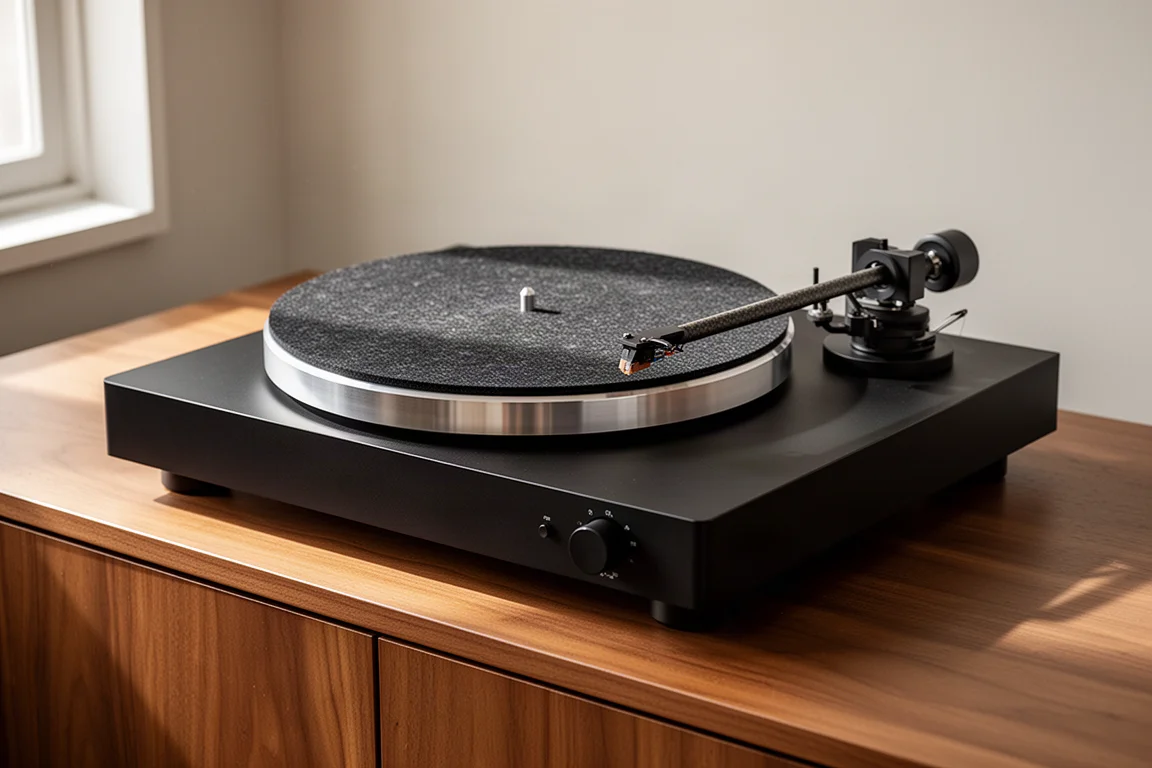
The Monolith by Monoprice Belt Drive Turntable costs $249, and it arrives with a moving magnet cartridge already mounted. That combination is the reason it deserves attention. Plenty of first turntables ask buyers to spend more on a cartridge, a phono stage, or both before they can play a single record.
Monoprice keeps the package simple. The deck is belt driven, the platter is cast aluminum, and the tonearm sits on bearings that feel far better than the price suggests. The sections below cover how it is built, how it sounds, which features matter in daily use, and the two setup details worth knowing before you buy.
Who This Product Is For
This turntable suits listeners who are getting into vinyl for the first time and want a machine that will not fight them. Because the Audio-Technica VM95E moving magnet cartridge is pre-mounted, and because a moving magnet phono stage is built in, a buyer can connect the deck to a normal amplifier or a pair of powered speakers and start playing records the same day.
It also fits a second kind of buyer, someone with a growing record collection who wants a secondary deck for a study, a bedroom, or a second system. The removable headshell makes cartridge swaps straightforward, so the deck can grow with you if you later decide to try a different cartridge.

The feature list adds flexibility that is unusual at this price. Bluetooth lets you send records to wireless headphones or a wireless speaker, which is handy late at night or in a room where running cables is awkward. A USB output is there as well.
Main Strengths
The strongest argument for this turntable is not any single specification. It is the number of small, sensible decisions that usually get cut on budget decks, and how much those decisions change the experience of owning one.
Build Quality That Punches Above Its Price
Start with the platter. It is cast aluminum, a material that is not common on turntables in this bracket, and it sits under a felt mat. The motor pulley is metal rather than plastic, and it looks carefully machined. That detail matters because a plastic pulley is a common shortcut even on decks that cost more.
The tonearm uses a tube that looks like carbon fiber, and the part that really counts, the bearings, feels smooth. There is no rattle and no excess play when you move the arm by hand, which is often the first thing you notice on inexpensive turntables.
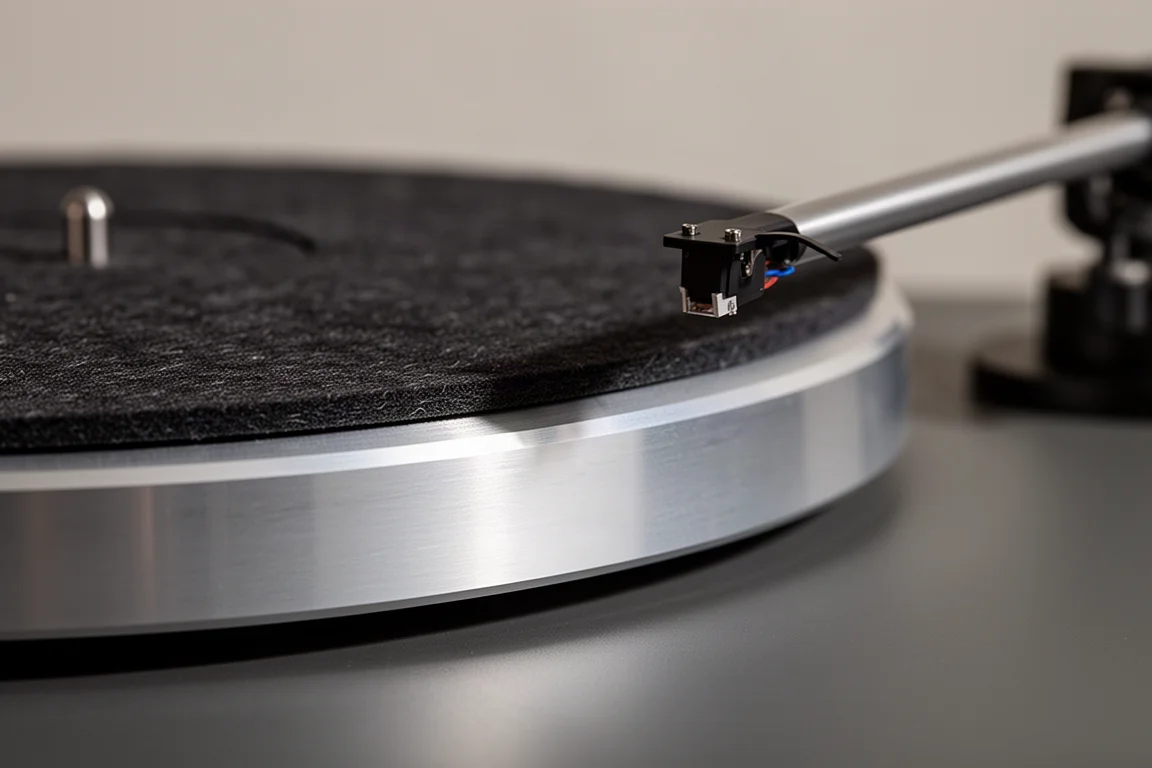
Cueing is the other pleasant surprise. Lower the cueing lever and the arm floats down to the record instead of dropping onto it. That single behaviour makes the deck feel more expensive than it is, and it is gentler on records.
Sound That Makes Vinyl Easy to Love
A budget turntable can easily sound thin, hard, and short on bass, which makes for a poor first impression of analog. This one goes the other way. The presentation is rich, warm, and inviting, with a slightly generous character rather than a lean one.
Just as important is what is missing. Quiet passages stay quiet, with no motor noise or rumble creeping in underneath the music, and the supplied cartridge tracked everything played on it without fuss. Busy blues collections, acoustic records, atmospheric vocal albums, and louder rock all held together, and the deck kept its composure as the volume came up.
Built-In Preamp, Bluetooth, and USB Output
The built-in moving magnet phono stage is defeatable, which means you can bypass it later if you move to an external stage. In a direct comparison, it sounded clearer than the phono stage inside a $995 integrated amplifier, which is not the result most people would expect from a deck at this price.
Bluetooth streaming and the USB output round out the connectivity, and the speed control is refreshingly simple. Switching between 33 and 45 RPM is handled by a knob on the front of the plinth, so there is no need to lift the platter and move the belt by hand.
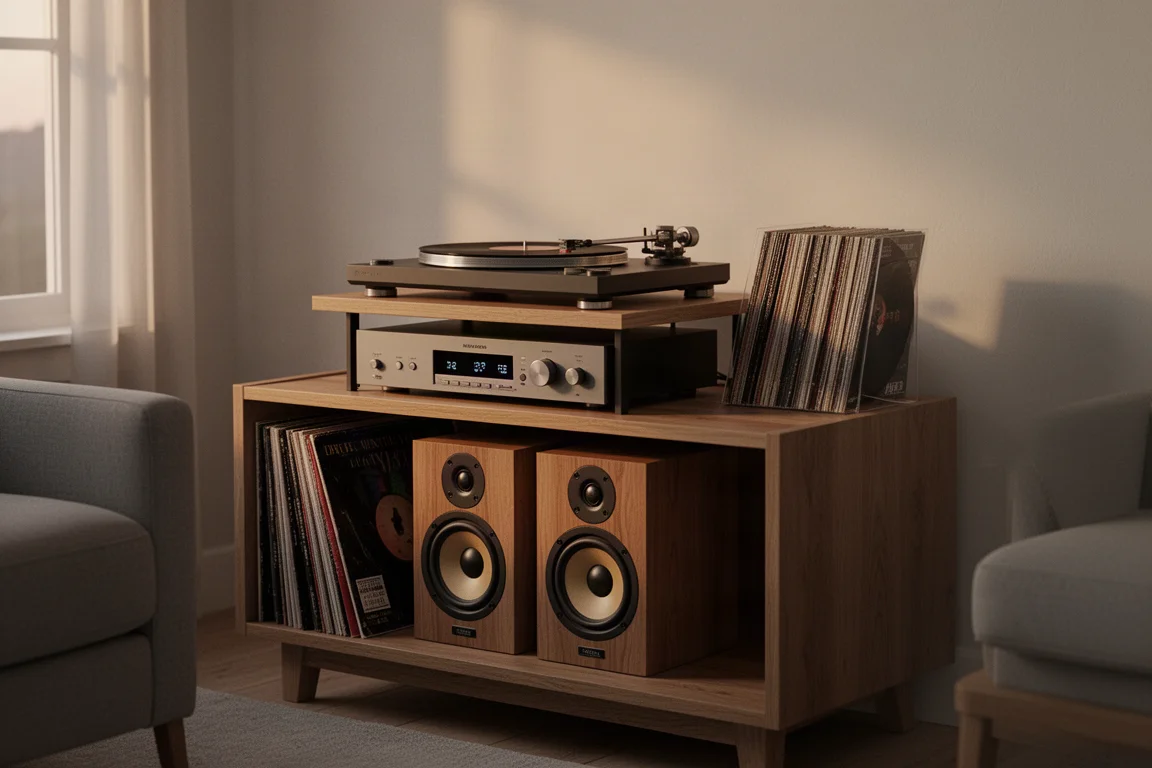
That combination makes the deck easy to live with. You can start with the built-in phono stage and wired speakers, switch to Bluetooth headphones for late listening, and only think about an external phono stage if you eventually upgrade the cartridge.
Things to Consider Before Buying
Two setup steps deserve a warning. The anti-skate mechanism uses a small weight that hangs from the back of the arm on a very fine thread, and the loop where it attaches is difficult to see. It is a short job once the loop is found, but a second pair of eyes helps.
The belt is the second detail. It has to sit at the correct height on the inner rim of the platter. If it rides too high, it slips off the motor pulley within seconds of switching the deck on. Moving the belt lower on the rim solves it completely, and the deck runs normally after that.
Worth noting as well: the warm tonal character leans slightly rich. Listeners who prefer a leaner, more clinical balance may want to hear it before committing. Monoprice backs the deck with a 30-day return policy and a one-year warranty.
Buying Advice
For $249, this is an easy recommendation for a first turntable. The build quality, the quiet background, the built-in phono stage, and the front-panel speed control all address the things that make budget vinyl setups frustrating.
Two alternatives are worth knowing about. The U-Turn Orbit Basic costs $199, but it has no cueing lever unless you pay extra, and changing between 33 and 45 RPM means moving the belt by hand. It also does not feel as solidly built. The Fluance RT81 is another belt drive deck with very solid construction, though a direct comparison is not possible here because it has been several years since that deck was last heard at length.
If you already own this deck and use the supplied cartridge, there is little reason to rush into an external phono stage. Save that upgrade for the moment you also change the cartridge.

The sensible approach is to buy the deck, play records for a few months, and let the cartridge and the built-in phono stage show you what your system can do before spending more.
Conclusion
The Monolith by Monoprice Belt Drive Turntable does what a good entry-level deck should do. It removes the usual barriers, arrives with a cartridge mounted and a phono stage built in, and sounds warm and quiet enough to make a first record collection genuinely enjoyable. At $249, with a cast aluminum platter, a metal motor pulley, and smooth cueing, it is a confident place to start.
Product link
View more details for Monolith by Monoprice Belt Drive Turntable
This product is mentioned in the review. Check the specifications, options, and compatibility before buying.
View more details for Monolith by Monoprice Belt Drive TurntableFurther reading
Related Reviews
Turntables
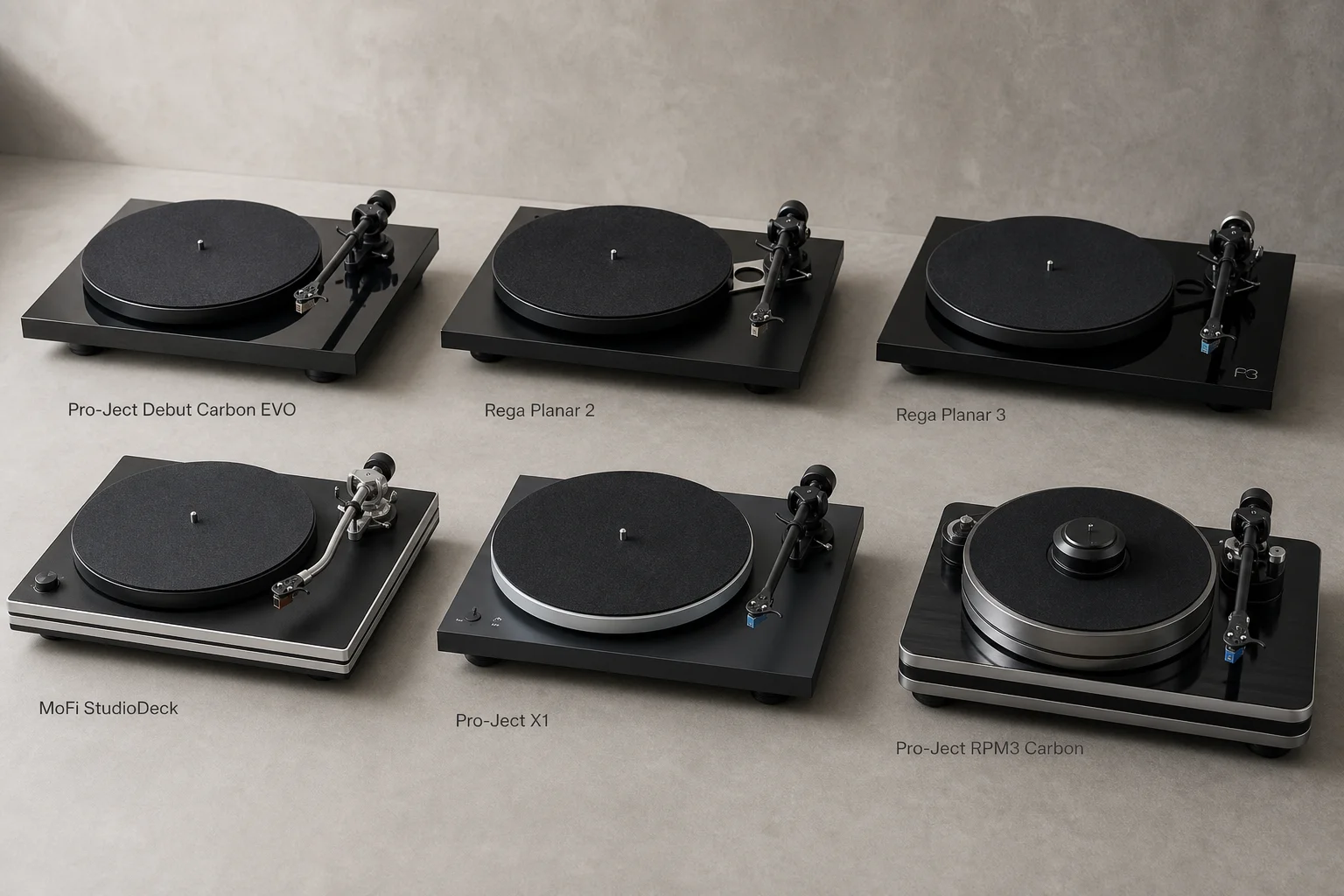
Best Turntables 2026: Seven Standout Picks From Entry Level to Premium
A practical roundup of seven turntables worth considering, from a US-made budget deck to small-batch premium models with a clear upgrade path.
Turntables
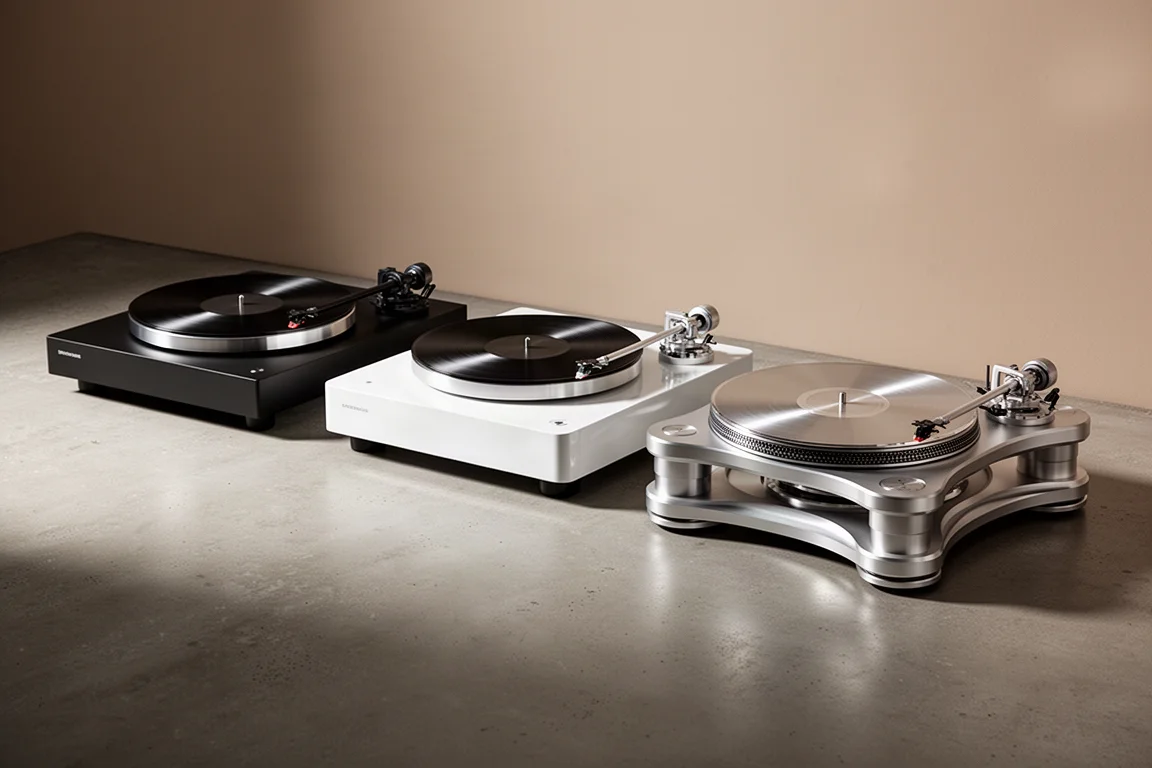
Best Turntables Under $1,000: Five Fully Manual Picks Worth Considering
Five fully manual turntables under $1,000, compared on build quality, cartridges, upgrade potential, and the character of sound each one brings to a system.
Turntables
Best Turntables Under $2,000: Six Vinyl Decks Worth Building a System Around
Six turntables under $2,000, from a value-focused belt-drive deck to a fully balanced design, with the strengths and trade-offs that matter before you buy.